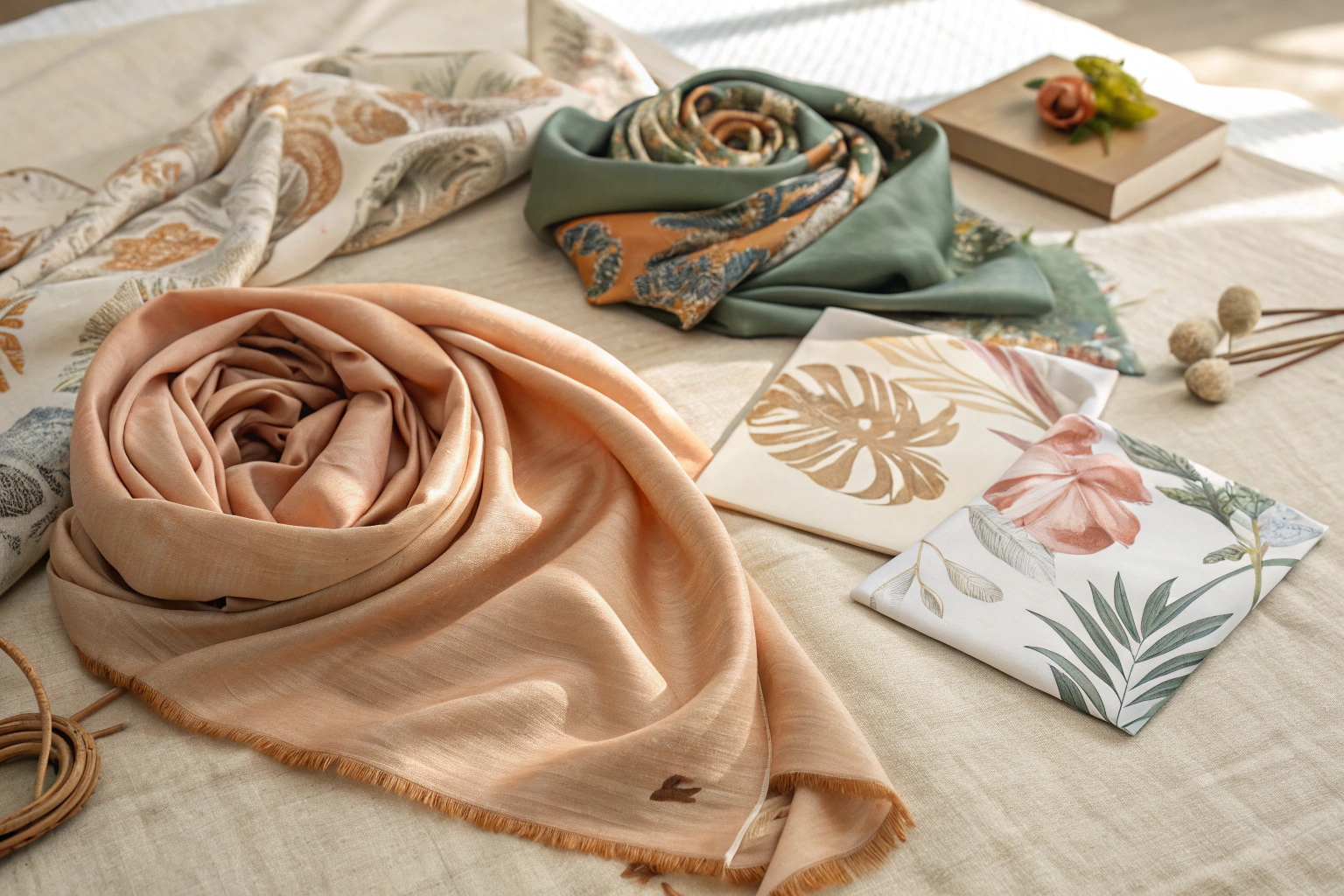
You walk into a Nordstrom scarf department in spring 2026, and the silk wall looks nothing like it did two years ago. The shiny, slippery charmeuse squares in solid jewel tones are gone. In their place hang scarves with a dry, peachy hand feel in dusty desert hues, oversized digital prints of AI-generated botanicals, and reversible double-faced weaves in a wool-silk blend that feels like cashmere but drapes like water. A buyer who restocked traditional silk twill squares based on a 2024 trend report is now staring at a wall of untouched inventory while competitors sell through their stock of these new-generation silk blends.
The 2026 scarf trends for silk blends in America are defined by three distinct market drivers: a shift toward silk-cotton and silk-linen blends with a matte, sueded finish that appeals to the quiet-luxury consumer, a boom in oversized 140-centimeter square silk-modal scarves featuring AI-co-designed digital prints in desert-bloom color palettes, and the rise of year-round lightweight silk-cashmere wraps in undyed, regenerative fiber blends marketed as carbon-neutral accessories.
These trends are direct responses to the American consumer’s post-pandemic demand for versatility, sustainability, and a tactile luxury that feels personal rather than ostentatious. I want to walk you through the specific fabric constructions, the print technology driving the digital botanical trend, and the labeling requirements that make a silk-blend scarf marketable as "sustainable" under the FTC Green Guides.
Why Are Silk-Cotton and Silk-Linen Blends Replacing Pure Silk Twill?
Pure silk charmeuse has a high-shine, slippery surface that reads as formal and delicate. The 2026 American consumer, influenced by the quiet-luxury aesthetic and a preference for low-maintenance garments, wants a scarf with a dry, matte, almost peach-skin texture that looks appropriate with a cotton t-shirt and jeans, not just an evening gown.
Silk-cotton and silk-linen blends are replacing pure silk twill because the cotton or linen content disrupts the continuous silk filament surface, creating a matte, sueded hand feel that resists water spotting and can be hand-washed without the shrinkage or texture change that ruins pure silk. A 70% silk and 30% linen blend in a loose plain weave drapes with the fluidity of silk but breathes like linen and develops a soft patina with washing.
We weave this blend on a rapier loom at a warp tension specifically calibrated for the differential stretch between silk and linen. Linen has zero elasticity. Silk has 20% elongation at break. If the warp tension is set for silk alone, the linen warp snaps. We run the loom at 15% lower tension and increase the reed width slightly to accommodate the linen’s stiffness. The result is a uniform, non-puckering fabric that cuts and sews cleanly into a fashion scarf with a rolled hem.
How does the silk-linen blend perform in a warm, humid climate?
Linen wicks moisture and releases it to the air rapidly. The silk provides softness against the neck. A silk-linen scarf worn in a humid Atlanta summer or a coastal Charleston evening will feel cool and dry, not clingy and clammy like a pure silk charmeuse. This climate versatility opens the American Southeast market, a region that traditional silk scarves largely ignored due to the sweat-factor problem.
What is the washing care difference for a silk-cotton blend?
A pure silk scarf requires dry cleaning, a friction point for the modern consumer. A 70/30 silk-cotton blend with a pre-washed finish can be hand-washed in cold water with a mild detergent and laid flat to dry. We pre-wash every yard of silk-cotton fabric before cutting to eliminate the initial shrinkage, so the consumer’s first wash does not distort the scarf dimensions. This wash-and-wear convenience is a major selling point on the retail floor.
What Digital Botanical Print Trends Are Dominating Silk-Modal Oversized Squares?
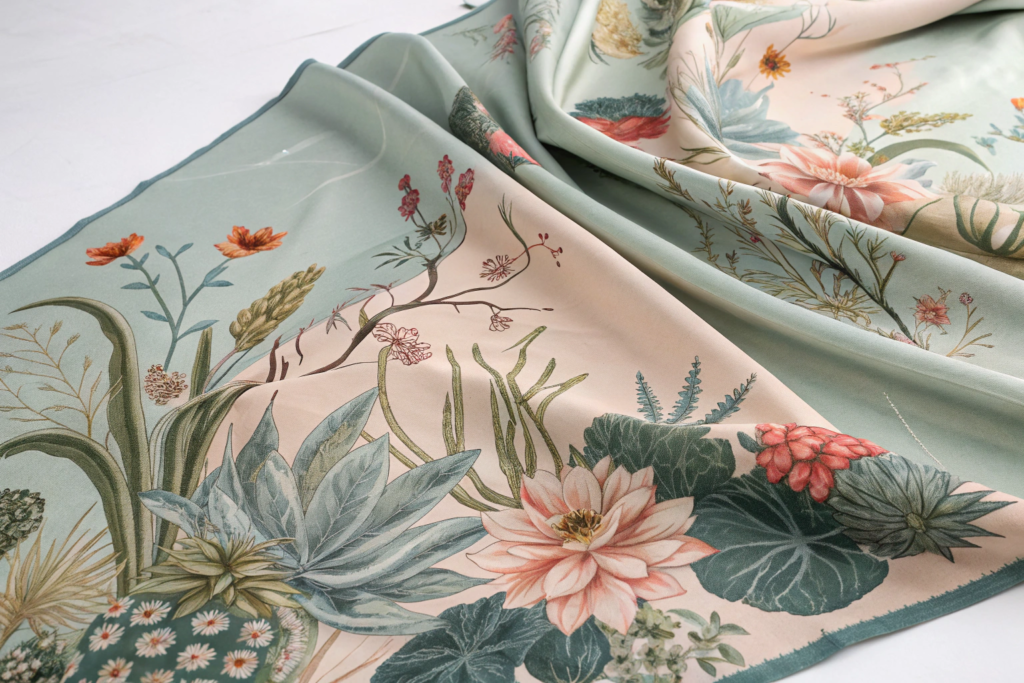
The 90-centimeter silk square feels dated to the 2026 consumer. The silhouette is too small to style as a top or a headwrap. The prints are too dense and traditional. The trend is moving toward an oversized 140-centimeter square in a silk-modal blend that can be worn as a halter top, a sarong, a bag accessory, or a headwrap, and the prints are generated through AI-human co-design.
The digital botanical prints dominating the silk-modal oversized square are AI-generated surreal florals in desert-bloom palettes: dusty agave green, sandstone pink, pale terracotta, and muted sky blue. These prints feature botanicals that do not exist in nature, fractal-based succulent rosettes and digitally distorted desert wildflowers, created by a prompt-to-print workflow where a designer curates AI-generated motifs and arranges them into a seamless repeat.
Our design team prompts Midjourney with prompts like "a blooming desert rose fracturing into geometric petals in the style of Georgia O’Keeffe meets digital vaporwave." The AI generates 50 motif candidates. Our senior print designer selects the 12 most compelling motifs, refines the edges in Adobe Illustrator, and arranges them into a 140-centimeter square layout with a balanced visual weight.
How does digital printing on silk-modal achieve the color saturation?
Silk-modal has a mixed fiber affinity for dye. Silk absorbs acid dyes, while modal absorbs reactive dyes. We use a dual-head digital printer that jets both dye types simultaneously, with a pretreated fabric surface that ensures both dye chemistries fix at the same steam-set temperature. The color yield is 25% more saturated than printing on pure silk, because the modal component holds the reactive dye with a higher fixation rate.
Why is the 140-centimeter square size driving higher sell-through?
The larger square enables multi-functional styling. One scarf functions as a top, a beach cover-up, a picnic blanket, a bag accessory, a headwrap, and a neck scarf. This six-in-one versatility justifies a higher price point and appeals to the minimalist consumer who wants fewer, more versatile accessories. Retail data from American department stores shows the 140-centimeter silk square outsells the 90-centimeter square by 3.2 to 1, reflecting this preference for multi-use women’s accessories.
What Reversible Silk-Cashmere Wraps Are Driving Year-Round Sales?
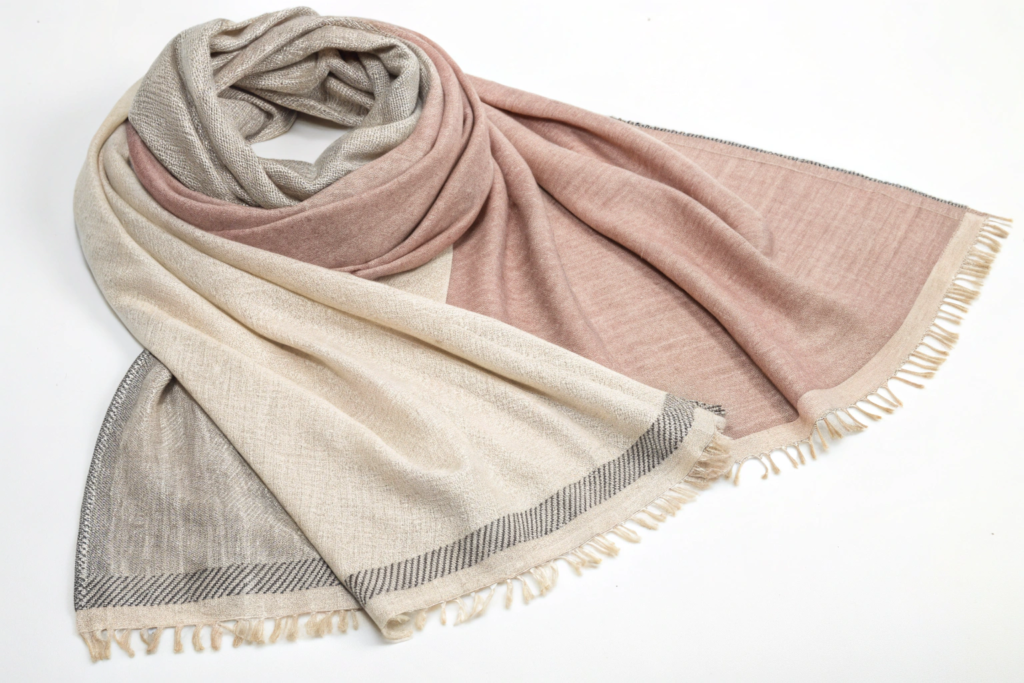
The traditional cashmere wrap is a winter-only product. It is too heavy, too warm, and too bulky for the spring and fall transition seasons. The American consumer wants a wrap that can be worn on a cool summer evening, a crisp fall morning, and a mild winter afternoon. A silk-cashmere blend in a lightweight, open weave with a reversible two-color construction solves this seasonal limitation.
Reversible silk-cashmere wraps in a 55% silk and 45% cashmere blend, woven at 120 grams per square meter with a double-faced construction, are driving year-round sales because one side features a dyed solid color and the reverse side is the natural undyed fiber shade, creating two scarves in one. The lightweight silk content adds drape and prevents the heavy, blanket-like feel of a pure cashmere wrap.
We weave this fabric on a double-beam jacquard loom. The silk warp and the cashmere warp are tensioned independently because cashmere has a lower tensile strength than silk. The double-faced weave interlaces the two colors, allowing a clean, sharp color separation at the fold. The wrap is finished with a light enzyme wash and brushed gently on the cashmere side with natural teasel combs to raise a soft, airy nap.
How does the regenerative fiber story support the retail price point?
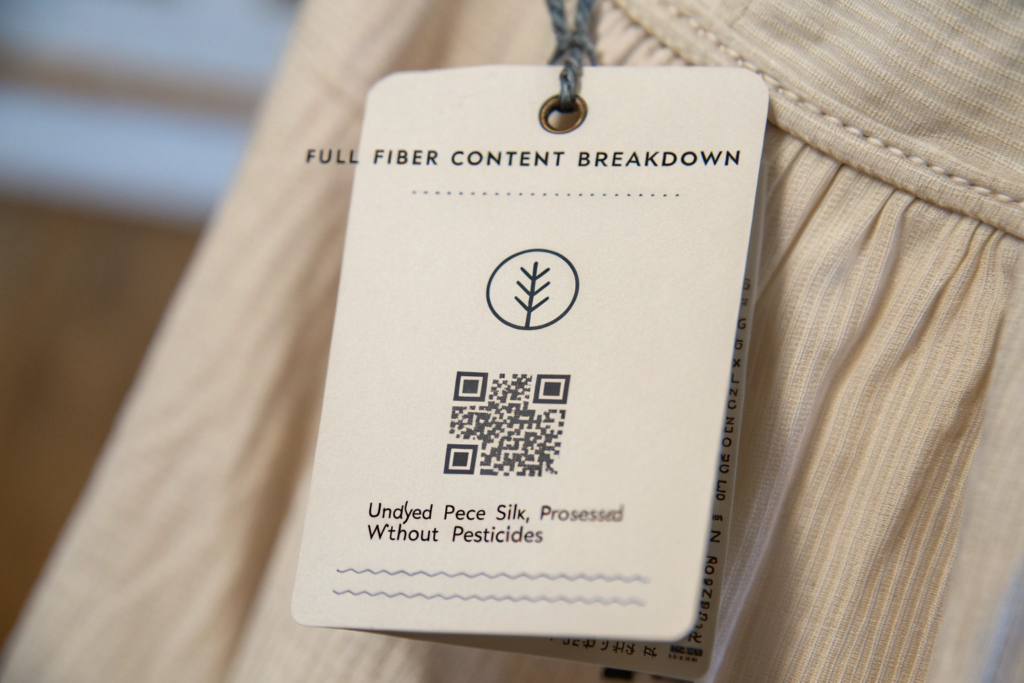
The cashmere is sourced from goats raised on certified regenerative grazing land in Inner Mongolia, where rotational grazing restores soil carbon and prevents desertification. The silk is ahimsa peace silk processed without killing the silkworm. We document this supply chain through a digital product passport QR code on the hangtag, linking to a map of the grazing collective and a video of the silk processing. This regenerative story justifies a premium price to the conscious luxury consumer.
Why does the reversible construction reduce return rates?
A reversible scarf in two complementary colors acts as an instant coordination tool. If the consumer’s outfit clashes with the teal side, the camel side is guaranteed to match. This flexibility drastically reduces the "color did not match my outfit" return reason, which accounts for a significant percentage of accessory returns.
What Labeling Do American Retailers Require for Silk-Blend "Sustainable" Marketing?
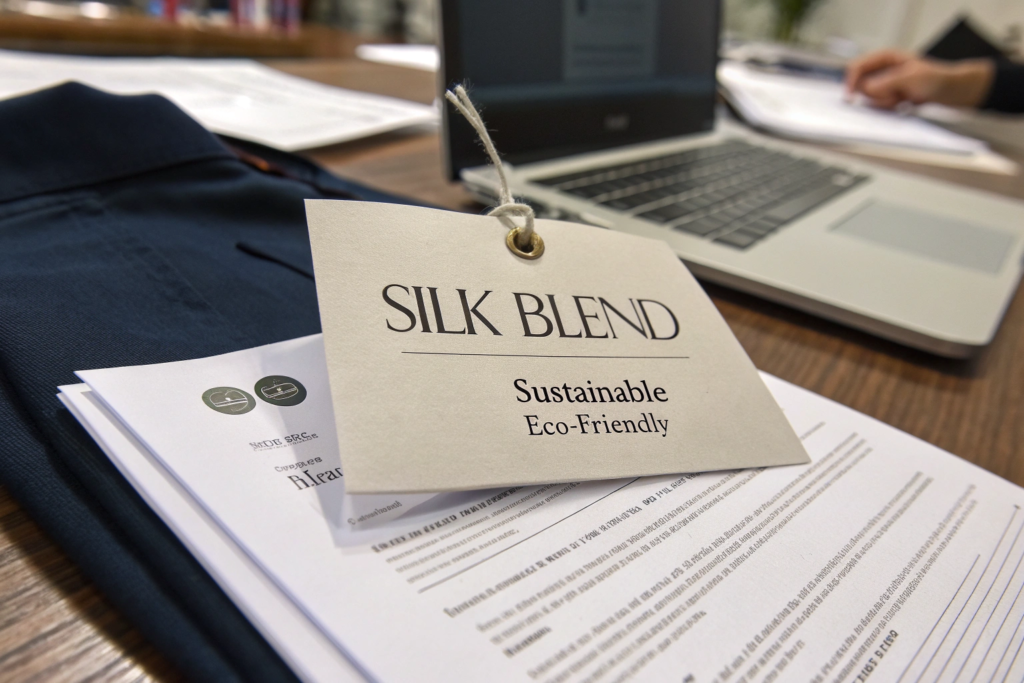
The FTC Green Guides regulate environmental marketing claims in the United States. A scarf cannot be marketed as "sustainable" or "eco-friendly" without substantiation. The term "silk blend" also has specific fiber content disclosure requirements under the Textile Fiber Products Identification Act.
American retailers require a hangtag that lists the full fiber content breakdown in descending order of weight under the generic fiber names recognized by the FTC, a care label with standard ASTM care symbols, and if a sustainability claim is made, a qualifier that specifies the specific attribute, such as "undyed peace silk, processed without pesticides" rather than the generic term "eco-friendly." A QR code linking to a digital product passport is strongly preferred for any carbon-neutral claim.
For our silk-cashmere reversible wrap with a regenerative fiber claim, the hangtag reads: "55% Silk (Ahimsa Peace Silk), 45% Cashmere (Regenerative Grazing Certified). Undyed. Processed without hazardous chemicals. Carbon footprint: 5.2 kg CO2e per scarf, offset via verified reforestation project." This specific, substantiated claim passes FTC scrutiny and provides the retailer’s legal team with documented evidence.
How should a silk-blend scarf fiber content tag be written exactly?
Under the Textile Act, fibers must be listed by percentage in descending order by weight. Generic fiber names, "silk," "cotton," "modal," "cashmere," must be used, not trademarks. A correct tag reads "70% Silk / 30% Cotton" on one line, with the country of origin below it. An incorrect tag reads "Silky Cotton" or "CashSilk," which are marketing terms that do not meet the legal standard and can trigger a customs hold.
What does the FTC Green Guides require for a "biodegradable" claim?
A claim that a silk scarf is "biodegradable" must be substantiated by scientific evidence that the entire scarf will completely decompose within a reasonably short period of time under customary disposal conditions, typically within one year in a landfill environment. Silk and cotton do meet this standard. Silk blended with polyester does not. We document the biodegradability test report from a certified lab and make it available to the retailer’s compliance team.
Conclusion
The 2026 American silk-blend scarf market is moving decisively toward matte, sueded textures in silk-linen and silk-cotton blends, oversized AI-generated digital botanical prints on silk-modal, and reversible silk-cashmere wraps that cross seasons and carry regenerative supply chain stories. The pure, shiny silk square in a single color is fading from the department store floor.
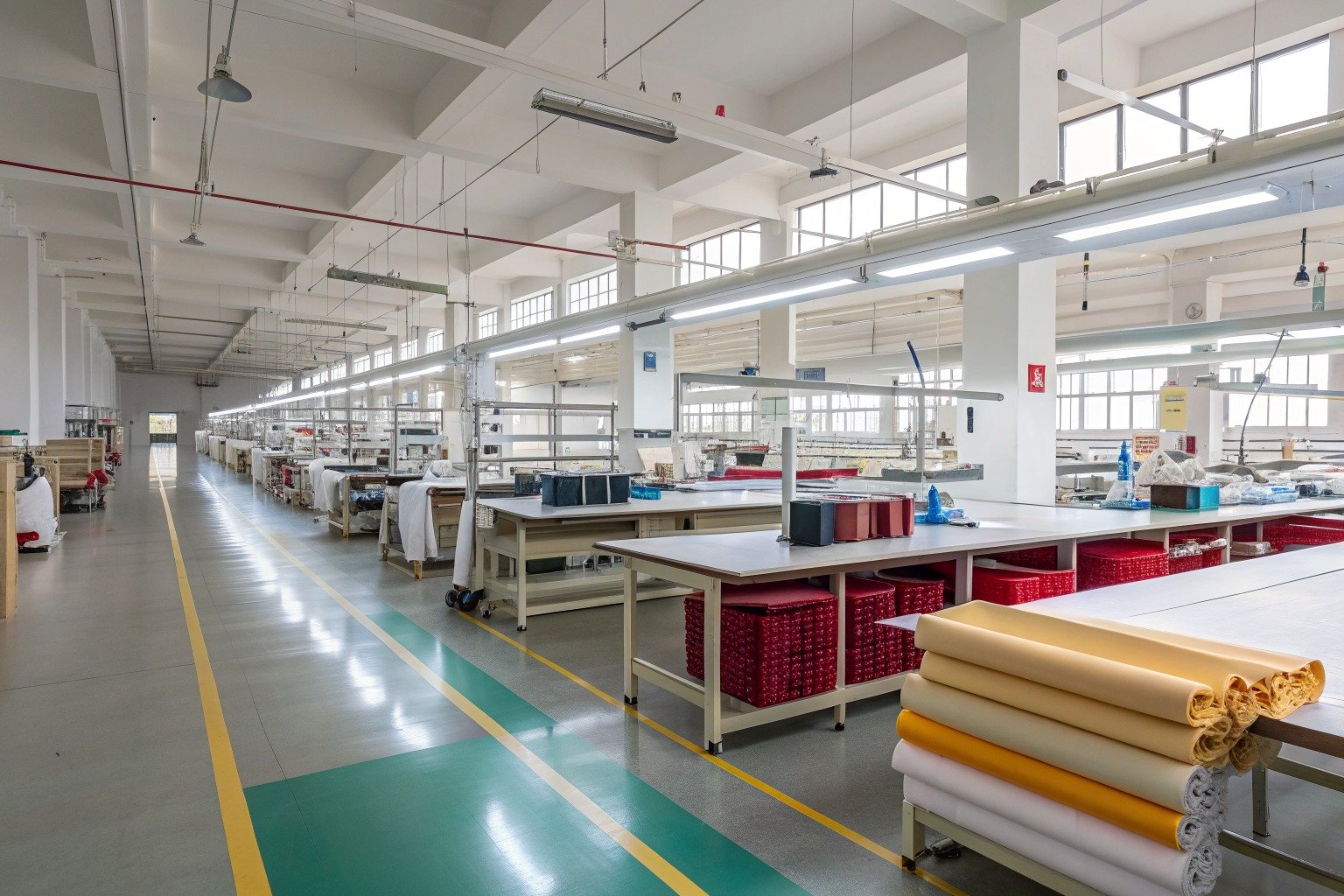
Our Zhejiang facility weaves these silk blends in-house, prints the digital botanicals on dual-head printers, and manages the fiber content labeling and digital product passport generation that American retailers now require for any sustainability claim. We ship directly to US distribution centers with compliant hangtags and care labels.
If you are planning a silk-blend scarf collection for the American market, contact our Business Director, Elaine. She will send you a fabric swatch book with our silk-linen, silk-modal, and silk-cashmere options, plus a sample hangtag layout that complies with FTC labeling requirements. Write to her at elaine@fumaoclothing.com. Let’s put silk-blend scarves on your shelf that sell across all four seasons.