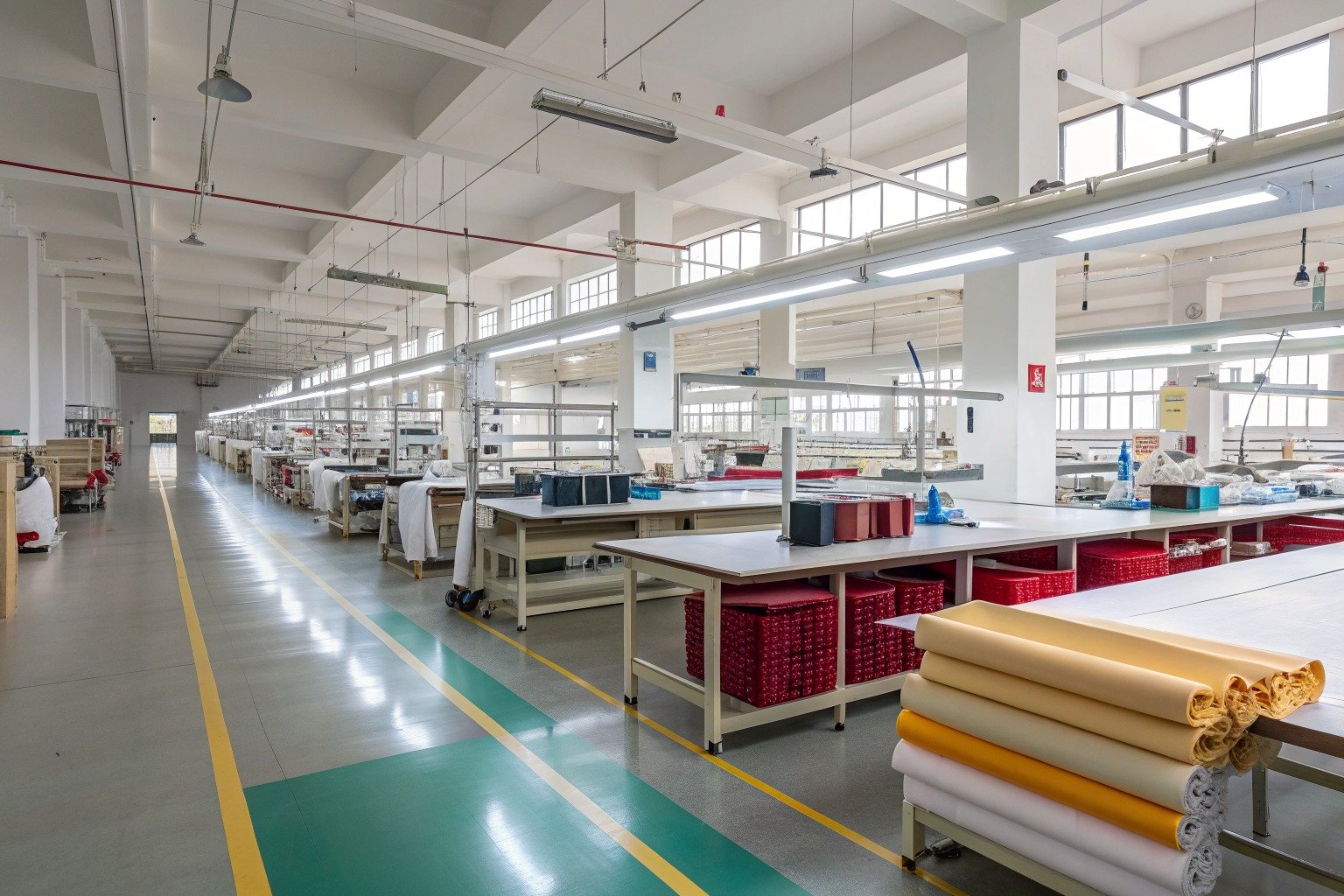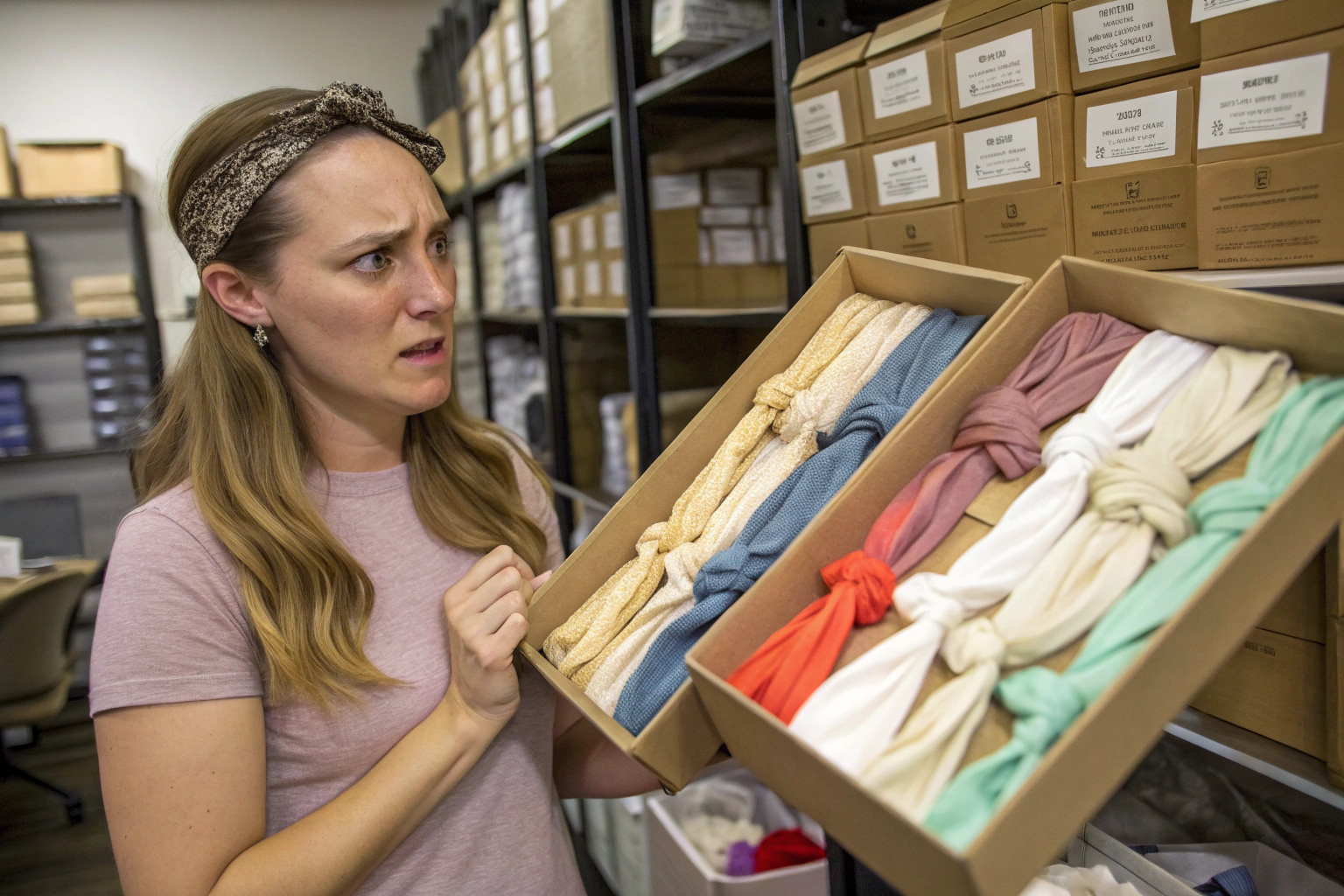
I once had a boutique owner ask me to split her headband order between two factories. One factory made beautiful pre-tied knots but refused to touch self-tie bands. The other specialized in long fabric ties but could not shape a pre-tied bow to save their life. She ended up with two shipments, two sets of shipping fees, two sets of customs paperwork, and worst of all, two slightly different shades of ivory because the dye lots didn’t match. Her collection looked inconsistent on the retail shelf. The extra logistics ate her margin. All because no one told her that a single capable factory could handle both constructions in one consolidated order.
Yes, a professional accessories factory can absolutely produce both pre-tied and self-tie headbands in a single consolidated order. In fact, combining these two constructions is standard practice for experienced manufacturers. The key is working with a factory that has both the skilled hand-finishing team for shaping pre-tied knots and bows, and the industrial cutting and sewing capacity for the long fabric panels required by self-tie styles. A single order also ensures both styles are cut from the same fabric dye lot, guaranteeing perfect color consistency across the entire retail collection.
I run a fashion accessories factory in Zhejiang, and I produce mixed construction orders every single week. A typical order for a US boutique might be 600 pre-tied knotted headbands in floral print and 400 self-tie bands in the same fabric. We cut all 1,000 units from the same rolls, sew them on adjacent lines, and pack them in the same shipment. The boutique saves on freight, and the colors match perfectly on the display rack. I want to explain exactly how this works, why it is more efficient than splitting orders, and what you need to specify to get a flawless mixed shipment.
What Is the Difference Between Pre-Tied and Self-Tie Headband Construction?
The difference sounds obvious. One is already tied. The other you tie yourself. But the manufacturing implications run much deeper than that. Pre-tied headbands are labor-intensive. Each knot or bow is hand-shaped, hand-stitched into position, and then attached to a rigid or elastic headband base. Self-tie headbands are fabric-intensive. They require long, continuous cuts of fabric with clean hemmed edges and often a wired internal structure that allows the wearer to shape the tie. These two products share fabric but diverge completely in assembly technique, labor allocation, and quality control checkpoints.
Pre-tied headband construction involves a shaped base, usually a plastic or wire headband form, covered in fabric with a pre-formed decorative knot, bow, or twist hand-sewn into a fixed position. Self-tie headband construction consists of a long fabric tube or panel, typically 70 to 90 centimeters in length, with finished edges and an internal flexible wire encased along the edges. The self-tie has no rigid base; its structure comes entirely from the way the wearer wraps and knots it.
I have dedicated teams for each construction method. My pre-tied team sits in a well-lit finishing area with hand-sewing needles, hot glue guns, and pressing irons. My self-tie team works on the industrial sewing floor with long-arm machines and wire-insertion tools. They are different skills, but they operate under the same roof, sharing the same fabric stores and quality standards. This is the advantage you get from a factory that does not outsource specialty work.
How Does the Base Structure Differ Between Pre-Tied and Self-Tie Headbands?
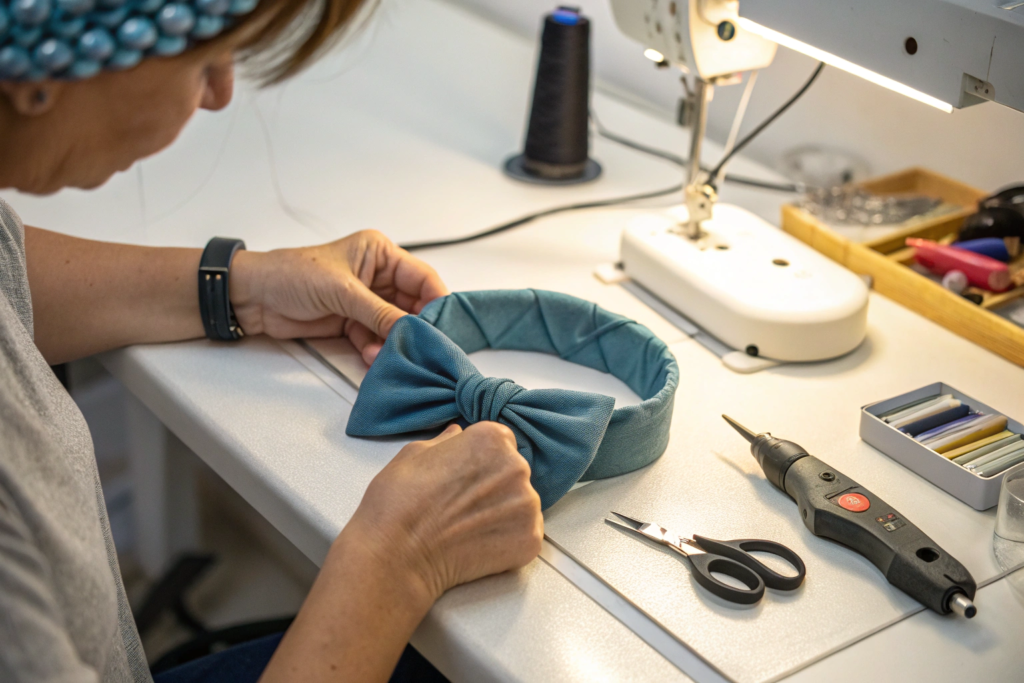
A pre-tied headband requires a rigid or semi-rigid foundation. The most common base is a plastic headband frame, either a flat metal-core band wrapped in plastic or a molded acetate curve. The fabric is wrapped around this frame and secured. The decorative knot or bow is then built on top of this stable platform. The base defines the shape. It sits on the head with a specific spring tension and fit.
A self-tie headband has no rigid base. It is pure fabric with a wire edge. The foundation is a length of flexible galvanized steel wire or plastic-coated copper wire sewn into the side seams. This wire allows the wearer to bend and twist the headband into any shape. The wire must be strong enough to hold a knot but flexible enough to be adjusted without breaking. We use a specific wire gauge with a soft PVC coating that prevents the sharp metal ends from poking through the fabric after repeated bending. This wire-edged ribbon construction technique is deceptively technical. Poorly inserted wire will kink, snap, or poke through the fabric within weeks.
Why Do Pre-Tied Headbands Require More Hand Finishing Than Self-Tie Styles?
A sewing machine can stitch a long, straight self-tie panel in under a minute. A pre-tied knot cannot be fully automated. The fabric must be folded, twisted, gathered, and stitched into a three-dimensional shape that looks balanced and intentional. A lopsided knot or a bow with uneven loops looks cheap.
The hand finishing process for a pre-tied headband involves several manual steps. The fabric piece for the knot is folded and pressed into shape. The folds are tacked down with hidden hand stitches or a low-temperature adhesive. The knot is positioned on the headband base at a precise angle, usually 15 to 20 degrees off center, because a dead-center knot looks awkward on the human head. The attachment is done by hand to ensure the thread tension does not pucker the fabric. A single pre-tied headband can require 5 to 8 minutes of skilled hand work. This labor cannot be outsourced to a machine. The value of skilled hand-finishing in fashion accessories is exactly what gives a pre-tied headband its premium retail price point.
How Does Combining Pre-Tied and Self-Tie Headbands Reduce Total Order Costs?
When a buyer splits a headband order between two factories, they pay for two separate minimum order quantities, two separate shipping consolidations, and two separate sets of bank transfer fees. The unit cost might look lower on paper from each specialist factory, but the total landed cost, including freight and administrative overhead, is almost always higher. Combining both styles in one factory eliminates these duplicated fixed costs. The savings are structural, not negotiated.
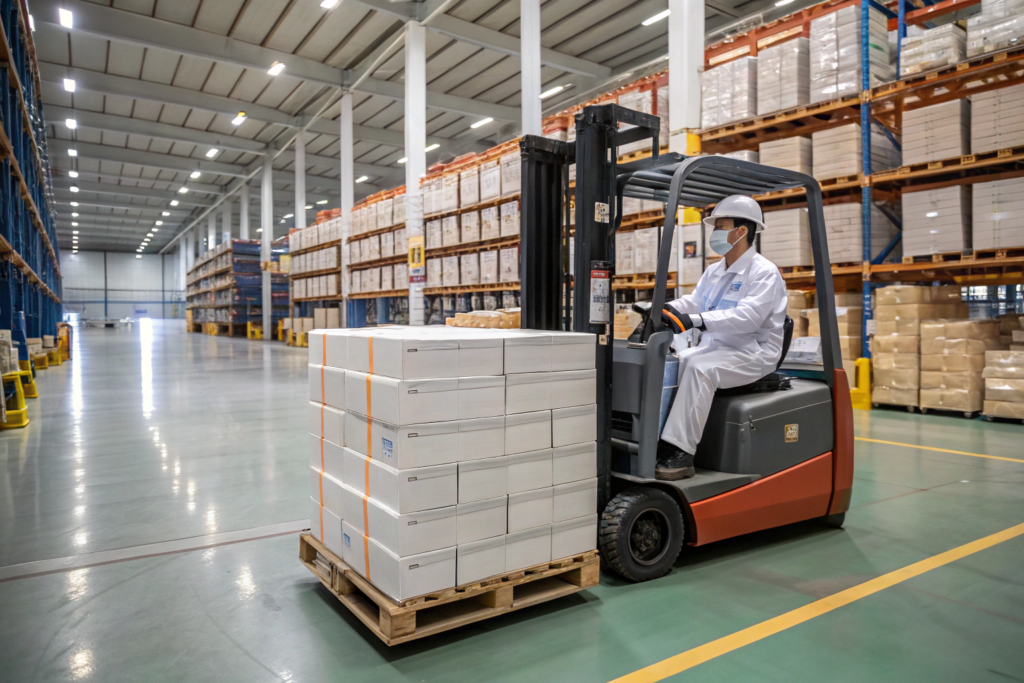
Combining pre-tied and self-tie headbands in one order reduces total costs through shared fabric purchasing, consolidated shipping, and reduced administrative overhead. The factory buys fabric for the entire order at once, qualifying for bulk mill pricing. The finished goods ship in a single container or air freight consignment, cutting freight costs by up to 40% compared to two separate partial shipments. The buyer also processes one letter of credit, one customs entry, and one quality inspection, saving hundreds of dollars in bank and inspection agency fees.
I show my clients the math directly. A recent order for a Canadian boutique combined 500 pre-tied velvet headbands and 500 self-tie velvet bands. The shared fabric purchase saved 8% on the material cost. The single shipment saved approximately $350 in freight compared to two half shipments. The single third-party inspection fee saved another $250. The total combined savings exceeded the cost of the pre-tied hand-finishing labor. The mixed order was actually cheaper than producing the pre-tied bands alone.
How Does Shared Fabric Sourcing Lower the Per-Unit Material Cost?
Fabric mills set their prices based on order volume. An order for 100 meters of custom-printed cotton commands a much higher price per meter than an order for 500 meters. The fixed costs, the screen preparation, the machine setup, the dye bath mixing, are all amortized over the total yardage.
When a buyer combines pre-tied and self-tie headbands, the fabric order consolidates. The pre-tied bands might need 50 centimeters of fabric each for the knot and base wrap. The self-tie bands need 90 centimeters each for the long tie panel. Together, the total fabric consumption qualifies for a higher volume discount tier. Additionally, both styles share the same fabric width, so the marker layout can interleave the pattern pieces to minimize waste. This fabric yield optimization process reduces the fabric cost per headband, sometimes by 10 to 15 percent compared to ordering the two styles as separate production runs from different factories.
What Are the Freight Savings When Shipping a Combined Headband Container?
Ocean freight is priced by the container, or by the cubic meter for less-than-container loads. Two separate half-pallet shipments cost significantly more than one full pallet. The freight forwarder charges a base handling fee per shipment. Customs clearance is charged per entry. The inland trucking delivery has a minimum charge.
A combined order of 1,000 headbands, mixed between pre-tied and self-tie, fits onto a single standard pallet. The freight cost per pallet is a single line item. If those same 1,000 units were split into two 500-unit orders from two factories, the buyer would pay two pallet fees, two handling charges, two customs brokerage fees, and two delivery minimums. The total logistics cost for the split order is typically 30 to 50 percent higher. The logistics cost structure for small import shipments heavily penalizes fragmentation. Consolidation is the single most effective cost lever an importer can pull.
What Quality Control Standards Must Apply to Both Headband Types in a Mixed Order?
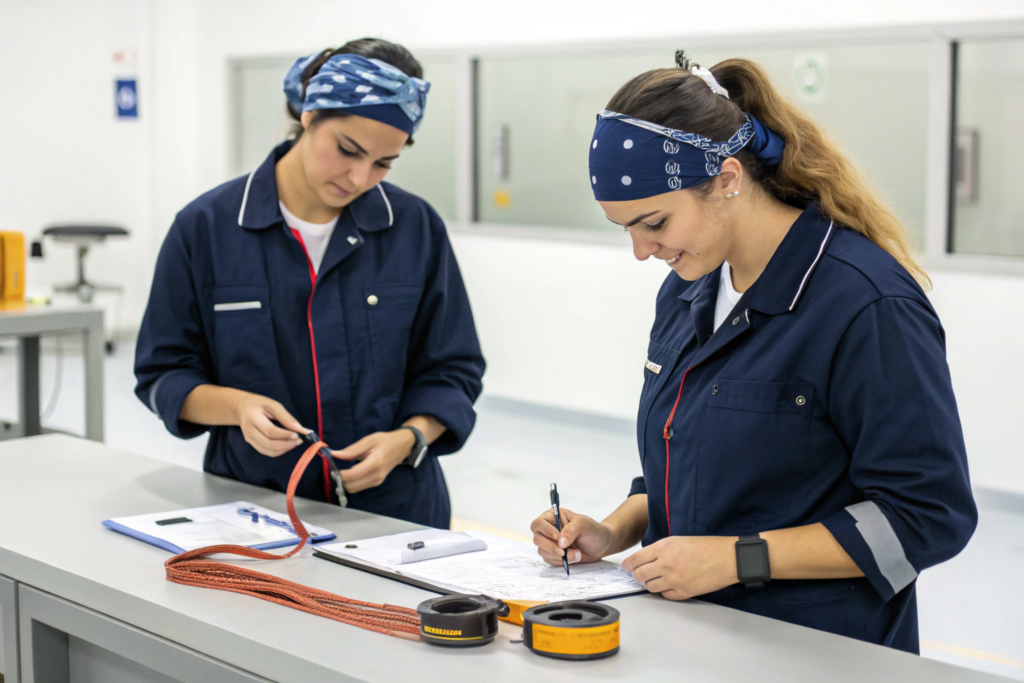
Quality control for a mixed headband order is not just about checking the final product. It is about applying consistent standards across two very different constructions while ensuring the visual presentation is unified. The pre-tied headband must look like it belongs in the same family as the self-tie headband. The colors must match. The fabric texture must be identical. The packaging must present a cohesive brand story. A customer who buys both styles and sees a quality gap will question the brand’s attention to detail.
Quality control for a mixed headband order requires a unified inspection protocol covering three areas: color consistency verification across both styles using the same D65 light booth and the same approved lab dip standard, construction-specific durability tests including knot security pull tests for pre-tied styles and wire-end safety checks for self-tie styles, and packaging uniformity checks ensuring both styles are folded, tagged, and bagged with identical brand presentation.
I assign a single QC inspector to each mixed headband order. This person owns the quality of both styles. They check the pre-tied knots for symmetry and secure attachment. They check the self-tie wires for smooth, rounded ends and proper flexibility. They lay both styles side-by-side under the D65 light and verify the colors match. A single inspector with a single report means the buyer receives a unified quality assessment, not two separate reports that might apply different standards.
How Do You Ensure Color Consistency Between Pre-Tied Knots and Self-Tie Panels?
Color inconsistency between styles made from the "same" fabric is a common and devastating problem. It happens when the pre-tied headband’s knot and the self-tie headband’s panel are cut from different dye lots, or when one style receives a finishing treatment that the other does not, altering the apparent shade.
We solve this by cutting all fabric for a mixed order from the same dye lot. The fabric for the pre-tied knots and the self-tie panels comes off the same roll. We also control the finishing process. If the self-tie panels receive a light starch spray for body, the pre-tied fabric pieces receive the exact same treatment. The final inspection includes a side-by-side comparison under standardized D65 lighting. A spectrophotometer reading is taken from both styles. The Delta E between the pre-tied and self-tie fabric must be below 1.0. This color measurement protocol guarantees that the two styles look identical on the retail shelf.
What Specific Durability Tests Apply to Pre-Tied Versus Self-Tie Headbands?
The failure modes are different. A pre-tied headband fails when the knot unravels, the bow flops, or the decorative element detaches from the base. A self-tie headband fails when the wire kinks inside the fabric channel, the wire end pokes through the stitching, or the fabric frays at the tie ends.
For pre-tied styles, we perform a knot security pull test. The knot is gripped and pulled with a force of 5 newtons. It must not shift, loosen, or detach. The headband base is flexed open and closed 100 times. The fabric wrap must not wrinkle or separate at the ends. For self-tie styles, we perform a wire endurance test. The wire is bent 180 degrees at the midpoint 50 times. It must not kink or break. The wire ends are probed with a finger. There must be no sharp point detectable through the fabric. Both styles also undergo a seam strength test according to ASTM D1683. The standards are different because the products are different, but the testing rigor is identical.
How Should You Specify the Breakdown of a Mixed Pre-Tied and Self-Tie Order?
The difference between a smooth mixed order and a chaotic one is the clarity of the purchase order specification. A vague instruction like "500 pre-tied and 500 self-tie in the same fabric" leaves too many decisions to the factory’s discretion. The factory will guess. Sometimes they guess right. Sometimes they produce 500 pre-tied headbands with knots on the wrong side and self-tie bands with wires too short to tie. The specification document is your contract with the production floor.
Specify a mixed headband order with a detailed line-item purchase order that lists each style separately with its own SKU, quantity, fabric reference, color code, base type, dimensions, and packaging requirement. Include a fabric allocation table showing how many meters are required for each style. Attach a visual reference sheet with photos of the approved pre-tied knot shape from three angles and the self-tie wire-end finish. Specify that both styles must be cut from the same dye lot and reference the lab dip approval number.
I provide my clients with a mixed order specification template. It takes 15 minutes to fill out, and it eliminates 95% of the errors that occur on mixed production runs. The template includes fields for pre-tied knot position, self-tie wire length, and packaging barcode assignment. When the PO is clear, the factory floor knows exactly what to produce. When the PO is vague, they interpret, and interpretation errors are the leading cause of mixed order rejections.
What Information Must Each Headband SKU Include on a Mixed Purchase Order?
Each style in a mixed order needs its own complete identity. A pre-tied headband SKU must specify the headband base material and color, the fabric reference, the knot type including its finished dimensions, the knot position relative to center, the attachment method, and the inner comfort lining if any.
A self-tie headband SKU must specify the finished length and width, the wire gauge and coating type, the end finish such as folded hem or heat-cut, and the edge construction. Both SKUs must reference the same fabric and color code, and both must state "cut from dye lot referenced in lab dip approval number" followed by the specific number. This purchase order specification detail is what transforms a generic headband order into a precisely manufactured product. Without it, the factory fills in the blanks, and the result is a product that matches their assumption, not your expectation.
How Do You Communicate the Packaging Requirements for a Mixed Headband Display?
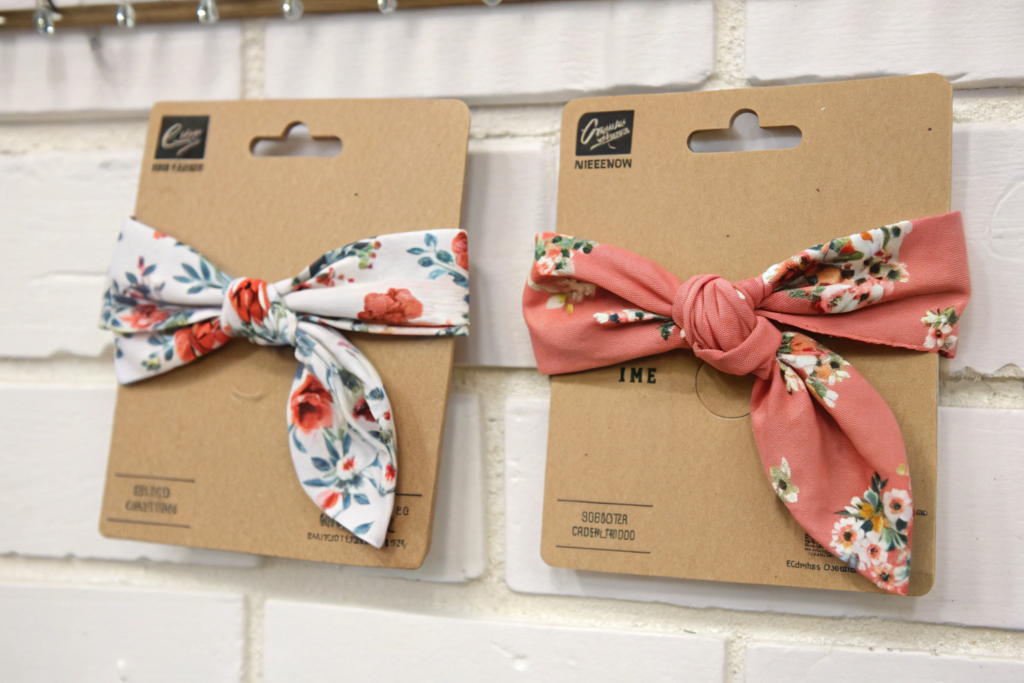
The retail display is the final and often neglected specification. Pre-tied and self-tie headbands often hang on the same retail rack. They need packaging that looks like a family. If the pre-tied band comes on a branded kraft card with a euro slot and the self-tie band comes in a loose poly bag, the brand looks inconsistent.
I ask my clients to provide a packaging diagram for both styles. The diagram shows the card dimensions, the fold position, the barcode placement, and the hang hole specification. For self-tie headbands, which are longer, the fold pattern must be specified so the finished package fits the same display hook spacing as the pre-tied card. We can also provide a single combo display card that holds one pre-tied and one self-tie band together as a gift set. The retail packaging design specification document is finalized before production begins. The packaging materials are ordered alongside the fabric. This parallel procurement ensures the headbands and their packaging arrive at the finishing station simultaneously.
Conclusion
Producing pre-tied and self-tie headbands in one consolidated order is not just possible. It is the smartest way to build a cohesive, cost-effective headband collection. You learned that the two constructions require different skills. Pre-tied bands depend on hand-finishing artisans who shape knots and bows with needle and thread. Self-tie bands depend on industrial sewing lines and precise wire insertion. But these two skill sets coexist in any well-organized accessories factory, and combining the order under one roof unlocks significant savings.
We walked through the cost structure. Shared fabric sourcing from a single dye lot guarantees the pre-tied knot matches the self-tie panel perfectly while lowering the per-meter material cost through volume. Consolidated shipping eliminates duplicate freight, handling, and customs fees. A single quality inspection with a unified protocol ensures both styles meet the same durability and color consistency standards. And we covered the specification document, the purchase order template that tells the factory exactly how to build each SKU, how to attach the knot, how to finish the wire, and how to package the final product so it looks like a family on the retail shelf.
At AceAccessory, I manage mixed headband orders every week for brands across North America and Europe. My factory floor has the pre-tied finishing section and the self-tie sewing line operating side by side, sharing the same fabric inventory and the same quality team. I do not outsource specialty work to unknown third parties. I control the entire process under one roof.
If you are planning a headband collection that includes both pre-tied and self-tie styles, and you want the cost and color consistency advantages of a single consolidated order, I invite you to contact our Business Director, Elaine. She can send you our mixed order specification template and provide a detailed quotation for your specific breakdown. Email your design concepts to elaine@fumaoclothing.com. Let’s produce a headband collection where every piece looks like it belongs together, and arrives together.