You are a buyer for a multi-brand retailer. Your summer purchase order includes 10,000 woven straw sun hats, 5,000 printed silk-modal scarves, and 8,000 acrylic hair claws. Your winter order, placed at the same time, includes 12,000 knit beanies, 8,000 wool-blend scarves, and 6,000 leather gloves. You are currently managing five separate factories: a straw hat specialist in Guangdong, a silk scarf printer in Suzhou, an acrylic injection molder in Yiwu, a knitwear factory in Wenzhou, and a glove maker in Hebei. You spend your days coordinating five sets of project managers, five quality standards, five shipping schedules, and five sets of compliance documents. One factory delays. Another ships defective goods. A third goes silent during Chinese New Year. You are not a buyer. You are an air traffic controller, and your radar screen is full of blinking red dots.
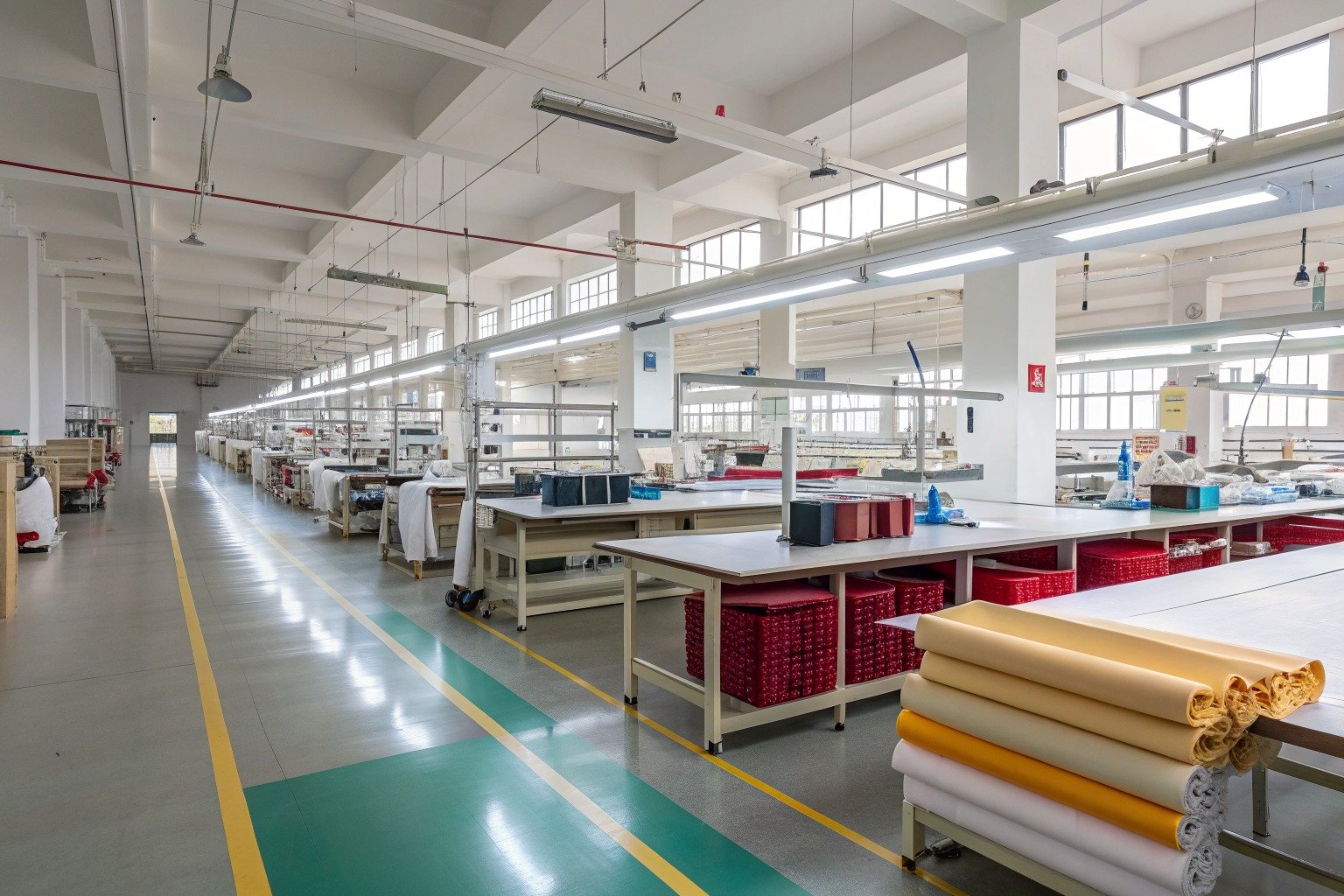
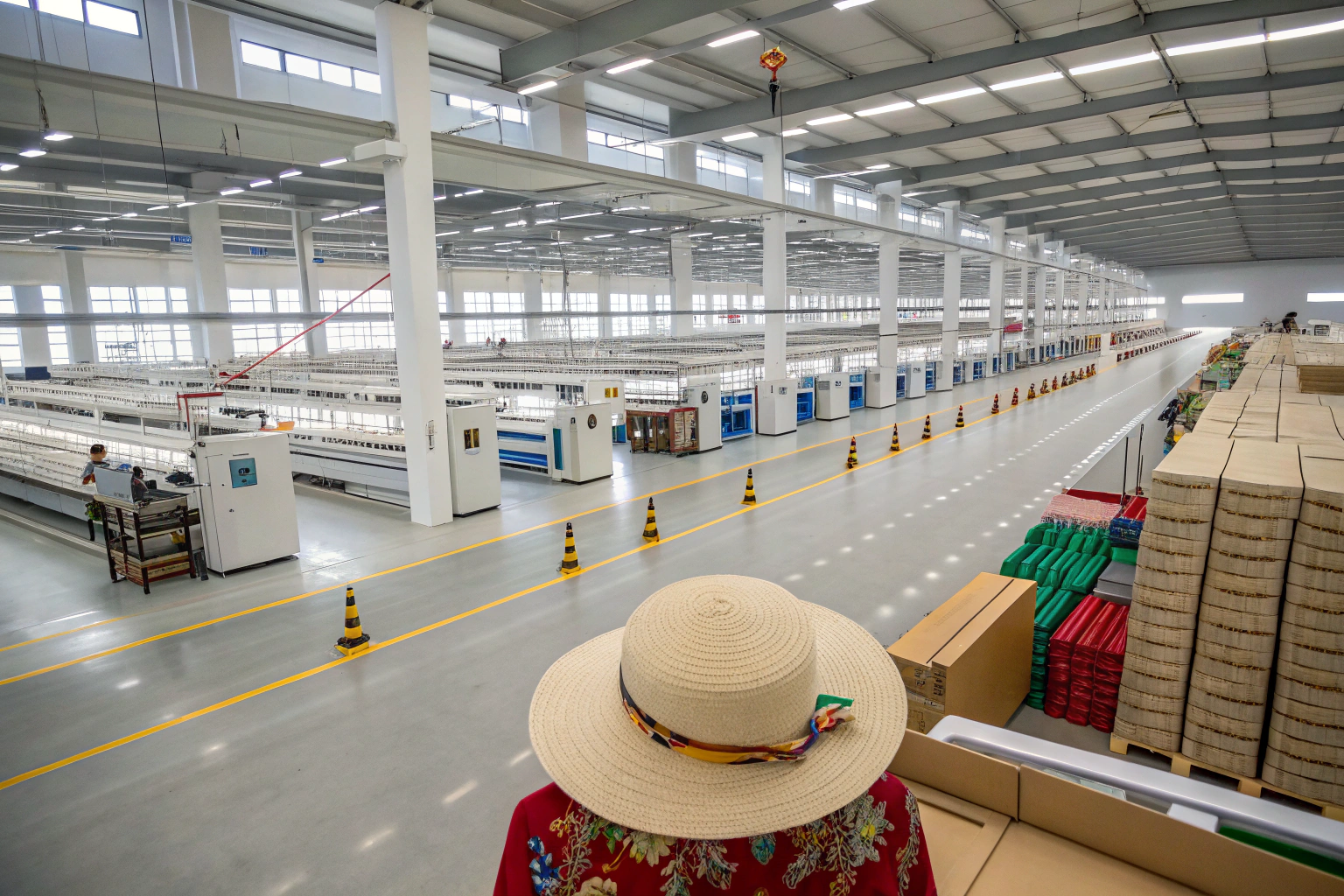
Yes, our factory produces both summer and winter accessories under one roof in Zhejiang. Our facility is organized into dedicated production zones: a straw and fabric hat blocking and sewing zone, a knitwear zone with electronic flat knitting machines for beanies and scarves, a leather and synthetic leather zone for belts and gloves, an acetate and acrylic injection molding zone for hair clips and claws, and a digital printing and dye sublimation zone for printed scarves and headbands. Each zone operates with its own specialized equipment and skilled workforce, but all zones share a centralized quality control laboratory, a single project management team, and one shipping and logistics coordination desk.
Consolidating your summer and winter accessory production into a single factory does not mean compromising on specialization. It means replacing five points of contact with one, five quality standards with one, and five shipping schedules with one consolidated container. I want to walk you through exactly how our multi-zone facility is organized, how we maintain specialized expertise within each zone, and how our centralized project management and QC systems create a simpler, more reliable sourcing experience.
How Is a Multi-Zone Factory Organized to Maintain Specialized Expertise?
The common objection to a multi-product factory is that it cannot possibly be as good at making knit beanies as a factory that only makes knit beanies. This is a valid concern if the factory is a single, undifferentiated production hall where the same workers stitch beanies in the morning and glue leather belts in the afternoon. That is not how a multi-zone factory is organized.
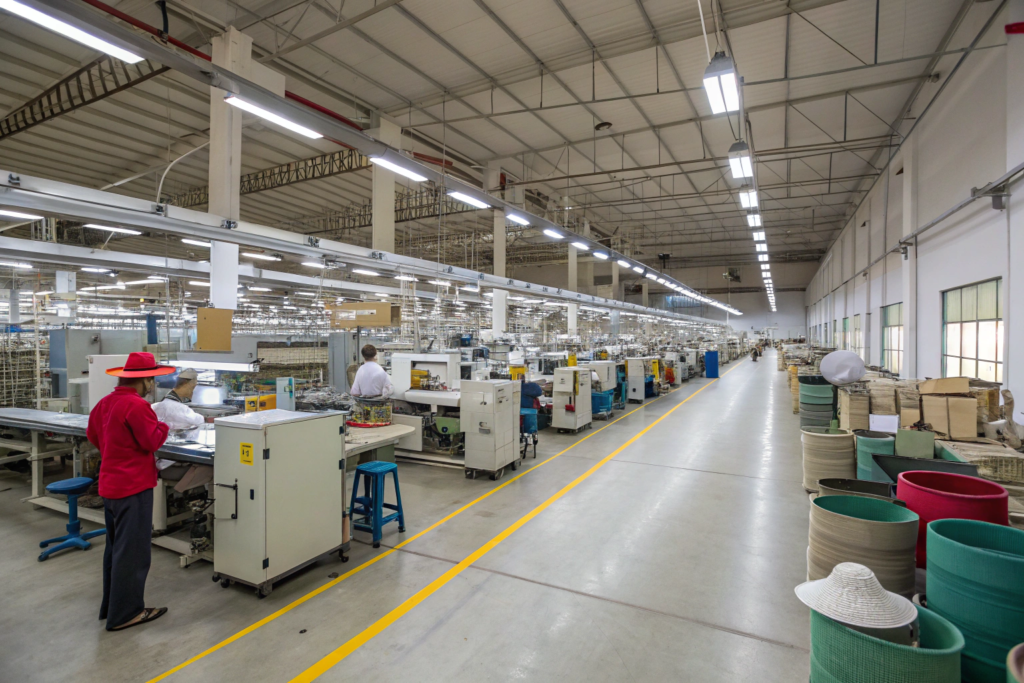
Our multi-zone factory is organized as five physically separated production departments, each with its own dedicated entrance, its own specialized machinery, its own raw material storage area, and its own workforce of skilled technicians who work exclusively in that department. The knitwear zone is managed by a knitwear production manager with 15 years of experience in flat knitting. The straw hat zone is managed by a millinery production manager who trained under a master hat blocker. The workers in each zone do not rotate between zones. A knitter knits. A hat blocker blocks. The specialization is preserved within the department structure.
The centralized functions are the ones that benefit from standardization across product categories: the quality control laboratory, which tests colorfastness, fiber composition, and chemical safety for all products using the same calibrated equipment; the project management team, which follows the same communication protocols and reporting formats regardless of the product; and the logistics desk, which consolidates multiple product categories into single containers. This structure is similar to how large European luxury groups organize their multi-brand production facilities. Our factory organization and capabilities are detailed on our website.
How do you prevent cross-contamination between zones, for example, leather dust on straw hats?
Each zone is a physically enclosed space with its own HVAC air handling system. The leather zone has dust extraction at every sanding and cutting station. The straw hat zone is maintained at a positive air pressure relative to the leather zone, so air flows out of the hat zone, not into it. Raw materials are stored in their own zones. Finished goods are moved directly from the zone to the centralized packing and shipping area without passing through other production areas.
How do you manage a workforce with such different skills?
We hire specialists, not generalists. A hat blocker requires a five-year apprenticeship to master hand-blocking. A knitter requires three years to achieve full proficiency on electronic flat knitting machines. We recruit from the local Zhejiang textile and accessory manufacturing community, where these specialized skills are concentrated. Our compensation structure and career progression paths are designed to retain these skilled workers for the long term.
What Machinery and Technology Are Required for Each Product Category?
The machinery required to produce a knit beanie is completely different from the machinery required to produce an acetate hair claw. A factory that claims to do both must have invested in both machine parks, and those machines must be current, well-maintained, and operated by trained technicians.
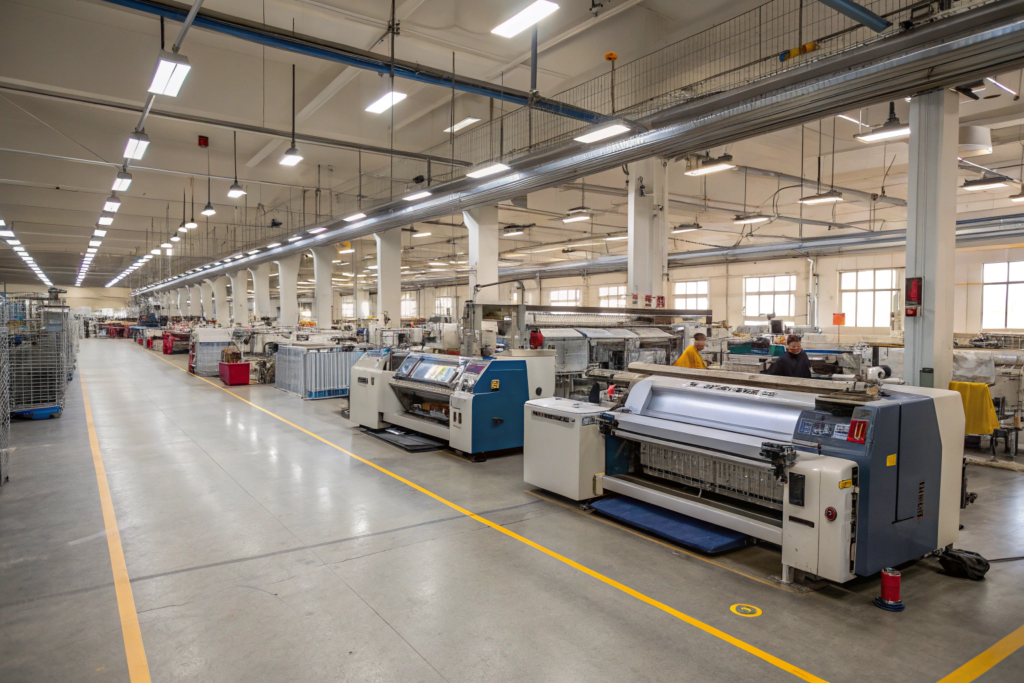
Our knitwear zone operates 200 Shima Seiki electronic flat knitting machines for beanies and scarves, with automatic yarn splicing and digital stitch control. Our straw hat zone operates 20 wooden hat blocking stations with steam boilers, hydraulic brim presses, and a CNC block-carving machine for custom shapes. Our acetate zone operates 15 injection molding machines with automatic material drying and feeding systems, and a CNC mold shop for in-house mold production and maintenance. Our leather zone operates 30 industrial walking-foot sewing machines, edge painting machines, and a laser cutter. Our digital printing zone operates two 12-color digital textile printers with inline steam fixation and reduction clearing.
This is a significant capital investment. A trading company or a small workshop cannot replicate this machine park. When a buyer visits our facility, they walk through each zone and see the specific machines that will produce their specific products. This physical evidence of capability is far more convincing than a website photo. Our production technology and equipment are documented in detail for client review.
How do you maintain and calibrate such diverse machinery?
We employ a team of six maintenance technicians, each specialized in a specific machinery type: knitting machines, injection molding machines, printing machines, and general sewing and finishing equipment. Each machine has a preventive maintenance schedule. The knitting machines are calibrated for stitch length every Monday morning. The injection molding machines have their temperature controllers checked weekly. The maintenance logs are reviewed during our annual ISO 9001 audit.
Can you produce mixed orders from different zones in a single shipment?
Yes, and this is one of the primary advantages of a multi-zone factory. A buyer can order 2,000 straw hats from the hat zone, 3,000 beanies from the knitwear zone, and 1,500 printed scarves from the printing zone, and receive all three product categories in a single consolidated container. The packing list is organized by zone and SKU. The shipping documents are a single set.
How Does a Centralized QC Lab Test Both a Wool Beanie and an Acetate Hair Clip?
A wool beanie requires testing for fiber composition, colorfastness to washing, pilling resistance, and dimensional stability. An acetate hair clip requires testing for spring tension, impact resistance, colorfastness to light, and chemical safety including lead and phthalate content. These are completely different test protocols requiring different equipment and different expertise.
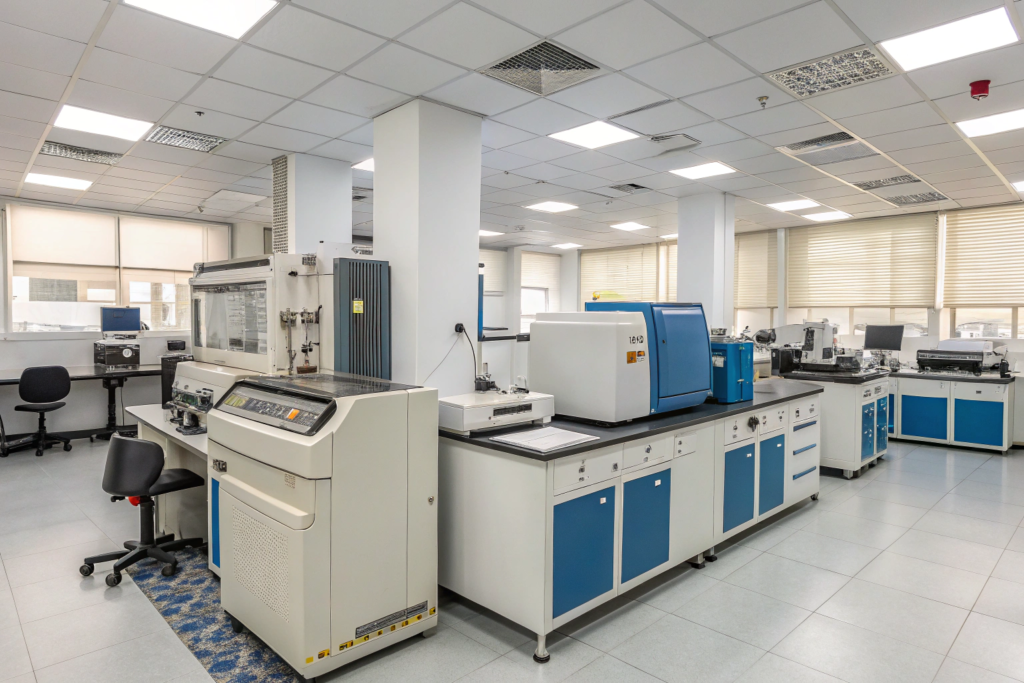
Our centralized QC laboratory is equipped to test the full range of summer and winter accessories. The lab houses: a spectrophotometer for color measurement, an XRF analyzer for heavy metal screening in metal and plastic components, a universal tensile tester for spring tension and seam strength, a Martindale abrasion and pilling tester for knitwear, an ICI pilling box, a washing machine for accelerated wash testing, a Xenon arc lamp for lightfastness, and a controlled humidity chamber for dimensional stability testing. The lab is staffed by three QC technicians, each with specialized expertise in one product category group: knitwear and textiles, hard goods like clips and buckles, and leather goods.
A single buyer ordering beanies, hair clips, and belts receives one consolidated QC report from this single laboratory, applying the same AQL 2.5 sampling standard and the same defect classification system across all product categories. This consistency of quality reporting is difficult to achieve when working with three separate factories, each with their own QC standards. Our quality control laboratory is available for client video tours.
How are chemical safety tests, REACH, CPSIA, managed across multiple product categories?
The XRF analyzer pre-screens all incoming materials for heavy metals regardless of the product category. The same restricted substances list is applied to all products. The same third-party laboratory, typically SGS or Bureau Veritas, is used for batch-specific chemical testing. This centralized chemical management system ensures that a leather belt buckle is tested to the same lead standard as an acetate hair clip.
How do you ensure QC inspectors do not develop a blind spot when switching between products?
Our QC inspectors are assigned to specific product category groups. The knitwear QC inspector only inspects knitwear. The hard goods QC inspector only inspects injection-molded and metal products. They develop deep expertise in their specific defect types and do not lose that focus by switching contexts.
How Does a Single Project Manager Coordinate Multi-Product Orders?
The project manager is the single point of contact for the buyer, but they are not managing the production details of five different zones alone. They are the conductor of an orchestra, not the player of every instrument.
The project manager is assigned to the buyer’s account, not to a specific product zone. When a buyer places a multi-product order, the project manager creates a master production schedule in our ERP system. The system automatically generates separate work orders for each zone, and each zone’s production supervisor is responsible for executing their work order and reporting progress back through the system. The project manager collects the weekly progress data from each zone, compiles it into the single weekly update report for the buyer, and flags any zone that is falling behind schedule.
The buyer receives one email, one report, and one conversation per week. They do not need to chase five factories. The project manager is the single point of accountability. If the beanie zone is delayed, the project manager communicates the delay, the root cause, and the recovery plan. The buyer’s relationship is with the project manager, not with five separate production supervisors.

What happens when a buyer’s order volume fluctuates seasonally between summer and winter products?
This is a key advantage of a multi-zone factory. When summer production is at its peak in March and April, the knitwear zone is in a lower-activity period, and some knitwear workers can be temporarily cross-trained to assist in the straw hat packing area. When winter production peaks in August and September, the opposite cross-training flow occurs. This internal flexibility allows us to scale production capacity seasonally without relying on temporary workers or subcontractors.
How does the project manager handle a quality issue that spans multiple product zones?
If a colorfastness issue is discovered in a printed scarf from the printing zone, the project manager immediately investigates whether the same dye or fabric was used in any headbands or other products from the same buyer. The centralized QC lab can quickly pull the relevant raw material lot records and check if the affected dye lot was used in other zones.
Conclusion
A single factory producing both summer and winter accessories is organized as a set of specialized, physically separated production zones, each with its own machinery, workforce, and production manager. A knitwear zone, a straw hat zone, an injection molding zone, a leather zone, and a digital printing zone operate side by side under one roof. Specialization is preserved within each zone. A centralized QC laboratory, a single project management team, and a consolidated logistics desk provide the buyer with one quality standard, one point of contact, and one shipping container for a mixed summer-winter order.
Our Zhejiang facility is this multi-zone factory. We have invested in the knitting machines, the hat blocks, the injection molders, the sewing lines, and the digital printers to serve brands that sell accessories year-round.
If you are currently managing multiple factories for your summer and winter collections and want to consolidate your sourcing into a single, professionally managed facility, contact our Business Director, Elaine. She will arrange a video tour of each production zone and provide a sample consolidated weekly update report so you can see how simple multi-product sourcing can be. Write to her at elaine@fumaoclothing.com. Let’s simplify your supply chain.