Have you ever ordered a batch of custom silicone hair bands for a charity fun run, only to receive them a week after the event was over? I have watched a race director stand in an empty parking lot, holding a box of beautiful, brightly colored silicone bands with the event date printed on them. The runners had gone home. The bands were now worthless souvenirs of a missed deadline. The director had ordered them six weeks in advance, thinking that was plenty of time. But the factory had taken three weeks just to make the mold. The production was delayed by a week. The shipping took another two weeks. The six-week buffer was not enough. The problem was not the order. It was a misunderstanding of the critical path in silicone production.
AceAccessory is a professional manufacturer and exporter of accessories. We can produce custom silicone hair bands with logos in as fast as 12 to 15 working days for a standard debossed or printed logo, and 18 to 22 working days for a complex, multi-color, or embossed 3D logo that requires a more intricate mold and a longer curing and finishing process.
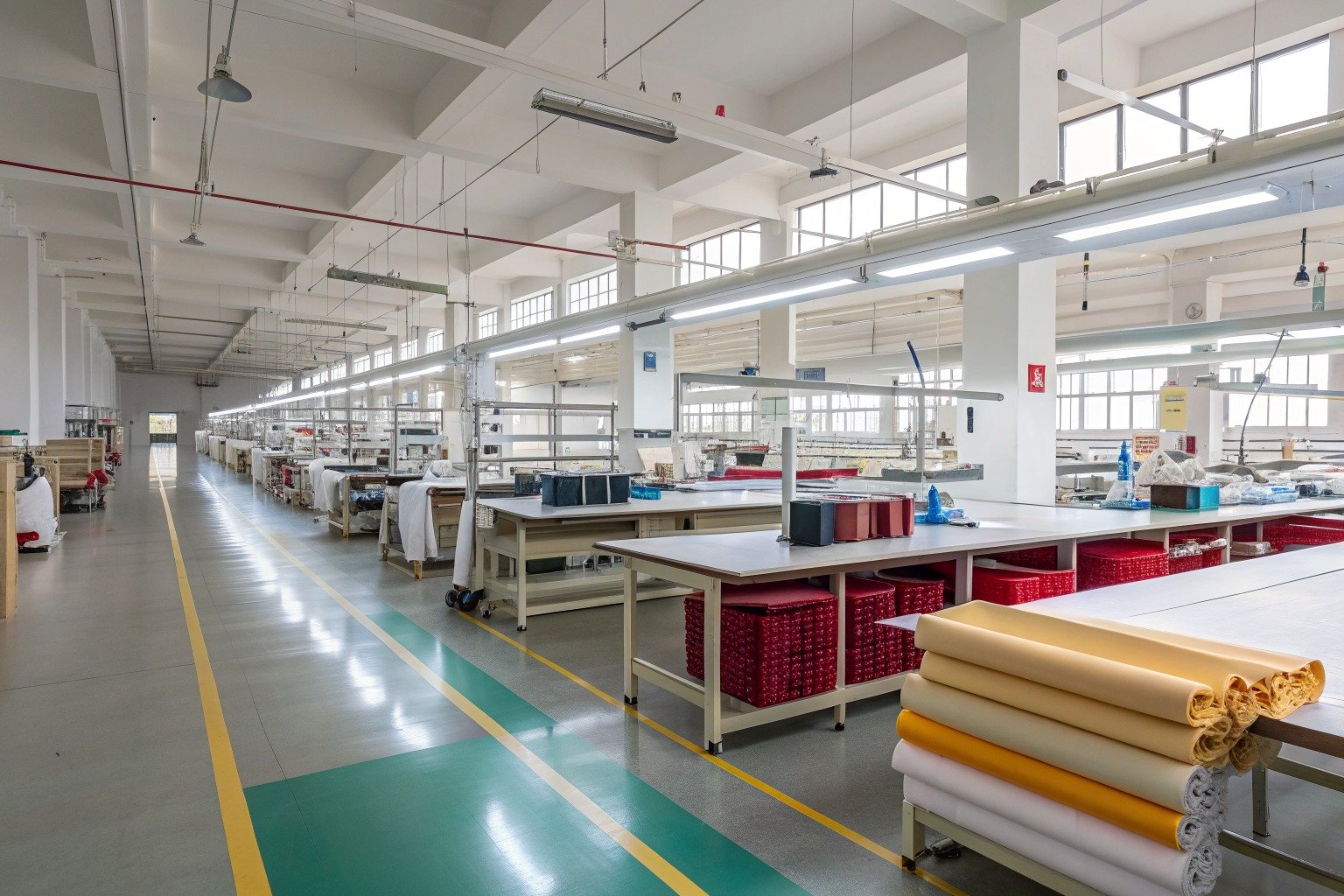
Silicone is a miracle material. It is durable, waterproof, hypoallergenic, and stretches forever. But it is not fast. It is a thermoset material. It must cure under heat and pressure. This chemical reaction cannot be rushed without compromising the physical properties of the band. As a factory owner in Zhejiang with a dedicated silicone molding workshop, I have mastered the precise timeline. Let me walk you through every step, from your logo file to the finished, packaged bands, so you can plan your promotion with absolute certainty.
What Is the Step-by-Step Timeline for a Standard Debossed Logo Band?
The fastest path to a custom silicone band is with a simple, debossed logo. Debossing means the logo is recessed, pressed into the band. It is the most durable and cost-effective method. This timeline is a tight, 15-working-day sequence.
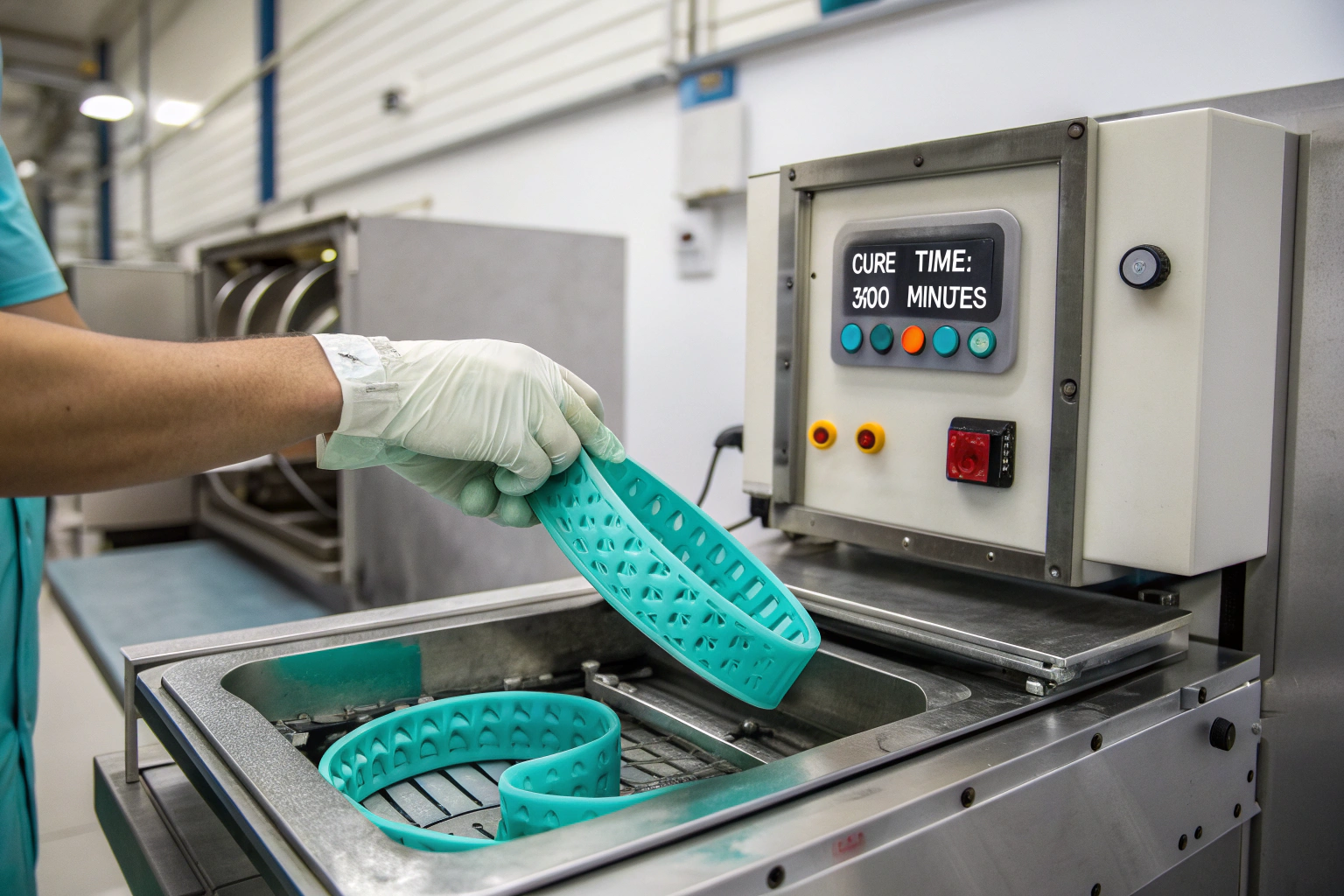
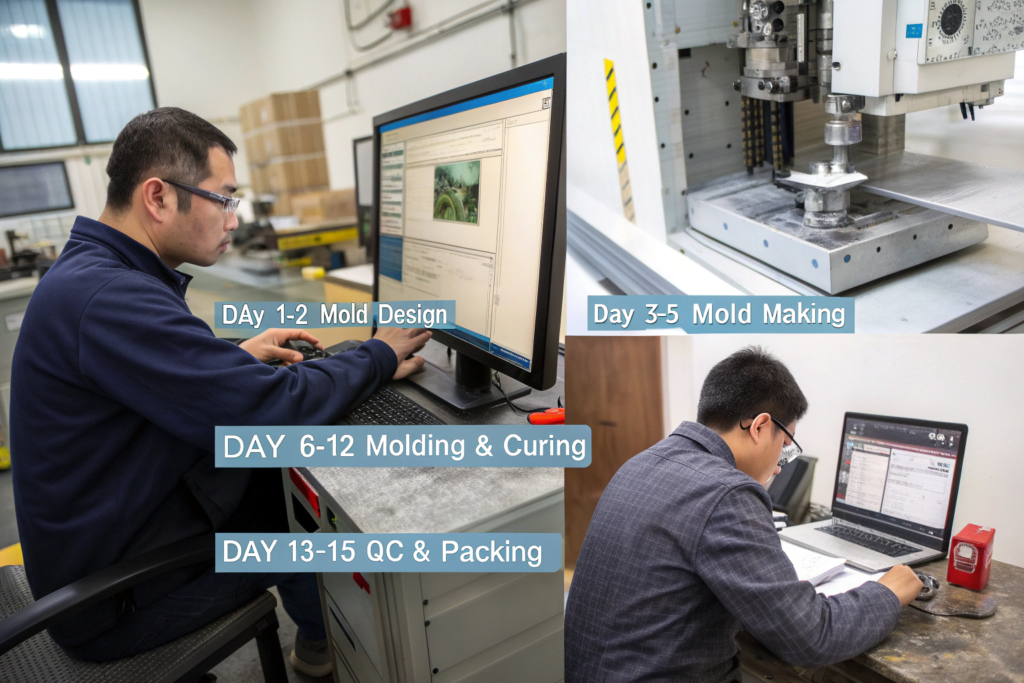
Day 1 is artwork confirmation. You send your vector logo. We check the line thickness. Silicone cannot hold extremely fine, shallow detail. We may need to slightly thicken the lines for a clean deboss. We send you a digital 3D proof showing the exact depth and placement of the logo on the band. You approve it. Day 2 is mold design. The mold is a two-part steel tool. The male part has the raised logo, which will press into the female cavity. Day 3 to 5 is mold machining. We use a high-speed CNC machine to cut the steel. The debossed text must be sharp and perfectly polished. A rough mold surface will produce a fuzzy, unattractive logo. Day 6 is the first mold trial. We load the mold into a compression press. We place a pre-mixed, colored silicone compound into the cavities. The press closes under heat and pressure. The silicone flows, fills the logo details, and cures. The cure time for a standard silicone band is 3 to 5 minutes per cycle. We demold the first test band. We inspect the logo clarity. If it is perfect, we proceed. If not, we make a minor mold adjustment, which can add a day.
Days 7 to 12 are mass production. The mold runs continuously. A single mold typically has 20 to 50 cavities, producing that many bands every 5 minutes. The bands are demolded with a small flash, a thin layer of excess silicone at the parting line. Day 13 is deflashing and finishing. The bands are tumbled in a cryogenic drum. Liquid nitrogen freezes the thin flash, making it brittle. The tumbling media knocks the flash off cleanly, leaving a smooth, perfect edge. The bands are then washed and dried. Day 14 is quality control. Every band is visually inspected for flash remnants, logo defects, or dirt. The elasticity is checked with a quick manual stretch test. Day 15 is packing and shipping. The total in-factory time is 15 working days, or roughly three calendar weeks.
Why Can’t the Silicone Cure Time Be Reduced?
Silicone cures through a platinum-catalyzed addition reaction. The heat accelerates the cross-linking of the polymer chains. If you use too much heat, the surface scorches or the curing is uneven, leading to weak, brittle spots. The 3-to-5-minute cycle at 160 degrees Celsius is the scientifically optimal balance for speed and physical property development. We cannot cheat the chemistry.
What Is the Flash and Why Is Its Removal Critical?
The flash is a paper-thin web of silicone that leaks out at the parting line of the mold halves. It is a natural part of the compression molding process. If it is not completely removed, the band will feel rough and look cheap. The cryogenic deflashing process is the most efficient and cleanest method. It leaves a perfectly smooth, rounded edge.
How Does a Printed or Multi-Color Logo Extend the Timeline?
If a debossed logo is too subtle, a printed logo offers color and high contrast. However, printing on silicone is a specialized process. Standard inks do not stick. They peel off like a sunburned skin. This requires a dedicated step that adds 3 to 5 days to the timeline.
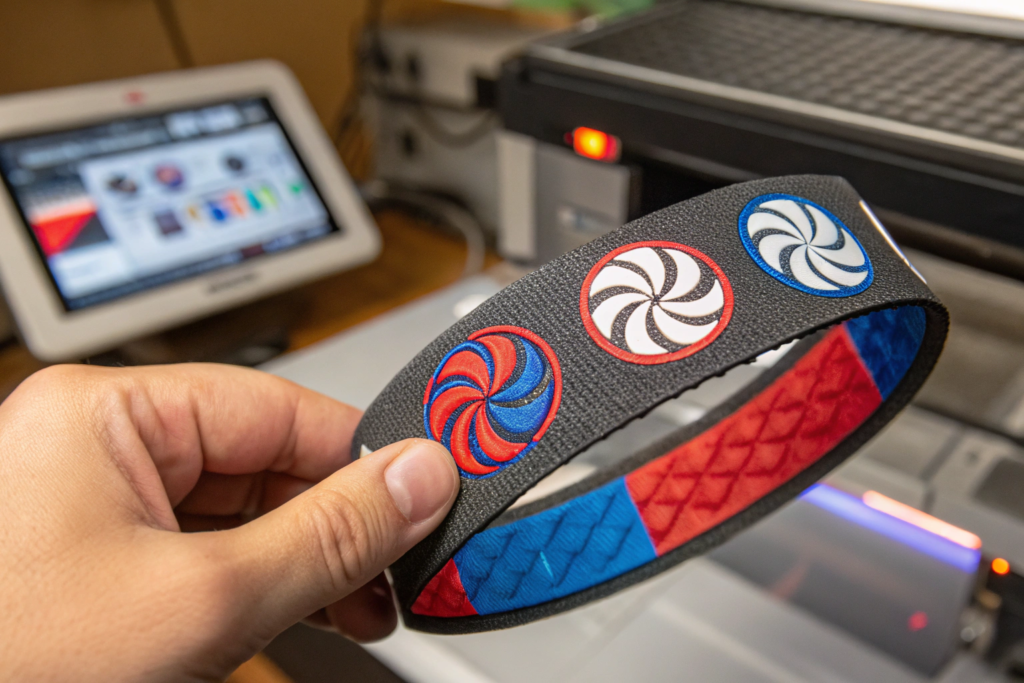
The extended timeline is Days 13 to 17. The base band production is identical up to Day 12. After the bands are deflashed and cleaned, they move to the printing station. We use a special silicone ink. This is a two-part, platinum-catalyzed liquid silicone, similar to the band itself but with a high pigment load. It is screen-printed onto the band surface. The key is the bond. The ink must chemically cross-link with the surface of the cured band. This requires a second cure. The printed bands are placed in a conveyor oven at a lower temperature for a longer dwell time. This second cure activates the platinum catalyst in the ink and fuses it molecularly to the band. It becomes a permanent part of the surface. It will not peel, crack, or fade. For a multi-color logo, each color is printed and cured sequentially. Each color adds a day to the printing process. A three-color logo requires three separate screen-printing and curing steps. This is why the timeline extends. The printing is an entire second manufacturing process.
Why Doesn’t Standard Ink Work on Silicone?
Silicone has a very low surface energy. It repels almost everything. A standard plastic or textile ink will just bead up on the surface or adhere very weakly. The special silicone ink is chemically identical to the band substrate. During the second cure, the cross-linking reaction creates a continuous polymer network between the ink and the band. They become one piece of silicone. This is the only way to achieve a durable, washable print.
What Is the Benefit of a Printed Logo Over a Debossed One?
Color. A debossed logo is the same color as the band. It relies on shadow and texture for visibility. A printed logo can be any color, offering high-contrast, vibrant branding. It is ideal for colorful, complex logos. The trade-off is the slightly longer production time and a higher cost. We advise clients to choose printed for maximum visual pop, and debossed for maximum durability and a subtle, premium feel.
What Role Does the Mold Itself Play in the Production Speed?
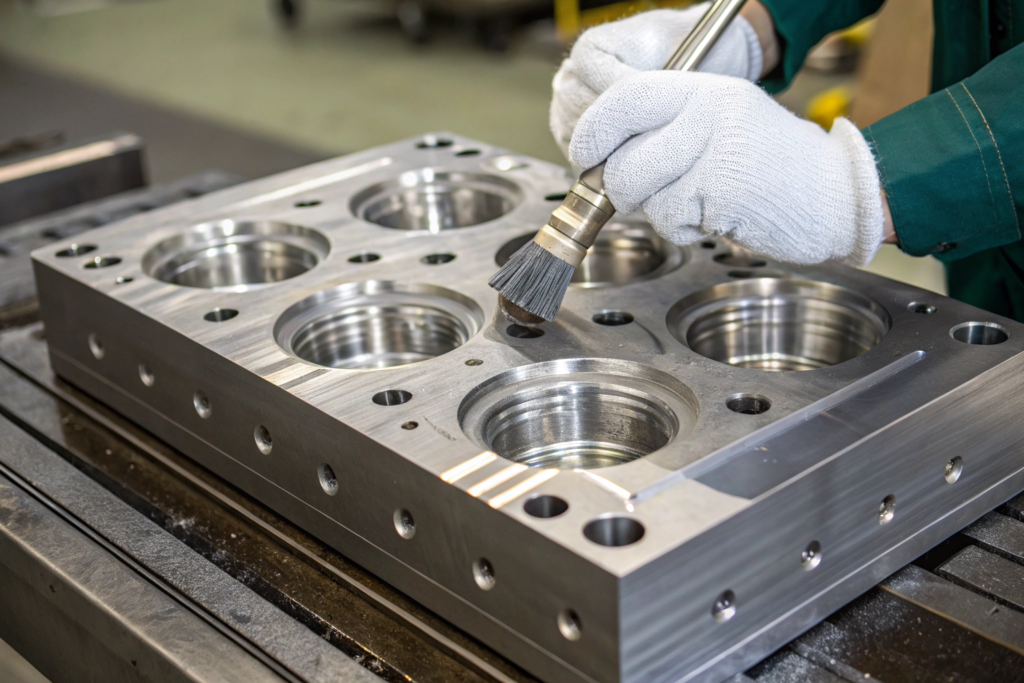
The mold is the single most time-consuming and expensive part of the process. The speed of the entire project depends on the mold’s complexity. A simple, single-cavity experimental mold can be made quickly. A high-production, multi-cavity mold takes time to machine and polish, but it is what enables the later high-speed production.
The mold determines the band’s final quality and the production output. A mold made from low-grade steel will corrode from the silicone’s acids. It will produce rough bands after a few hundred cycles. Our molds are made from hardened, high-chrome S136 tool steel. This steel is specifically designed for corrosive plastics and silicones. It takes longer to machine, but it produces a perfectly polished cavity that lasts for hundreds of thousands of cycles. The mold also incorporates a sophisticated cooling channel system. Drilled channels circulate temperature-controlled oil through the mold, keeping the temperature perfectly uniform. This uniform temperature is essential for consistent curing and minimum cycle time. A mold without these channels will have hot and cold spots, causing warped bands and longer, inconsistent cure times. The mold is not just a shape. It is a precision thermal management device. The upfront investment in a high-quality mold pays back exponentially in fast, reliable production.
How Is the Logo De-embossed into the Mold?
The logo is engraved into the mold cavity using a CNC electrode discharge machine. A graphite electrode, perfectly machined with the logo in reverse, is used to spark-erode the steel, creating the recessed logo cavity. This EDM process is slow and meticulous but produces an incredibly sharp, crisp detail. The quality of this engraving directly determines the quality of the debossed logo on the band.
What Is a Multi-Cavity Mold and How Does It Speed Up Production?
A single-cavity mold makes one band every 5 minutes. For an order of 1,000 bands, that would take over 80 hours of continuous machine time. A 50-cavity mold makes 50 bands every 5 minutes. The same order is produced in under 2 hours of machine time. The mold is more expensive upfront, but the production speed is an order of magnitude faster. For any commercial order over 100 pieces, a multi-cavity mold is essential for a viable timeline and cost.
How Are the Finished Bands Packaged for Promotional Use?
A promotional silicone band is a branding vehicle. The packaging is the billboard. For a charity event, a corporate giveaway, or a retail product, the band must be presented in a way that maximizes the logo’s visibility and communicates the message instantly.
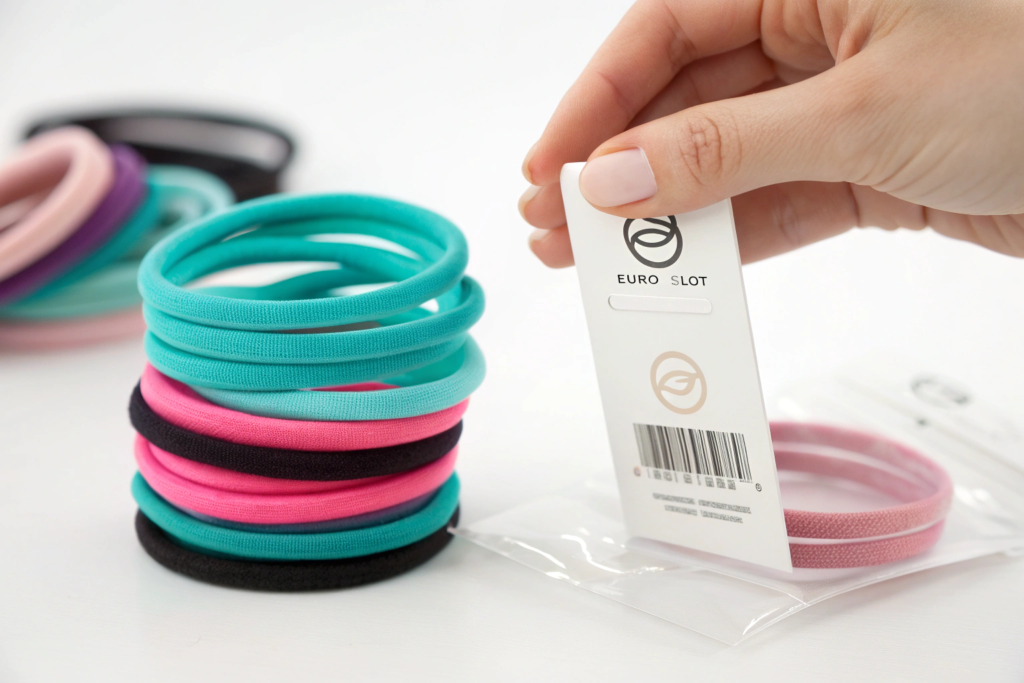
We offer two standard packaging options. The first is the "Banded Card." The silicone band is stretched over a pre-printed, folded piece of cardstock. The band holds the card closed, and the card displays the branding, the event date, and a call-to-action. The card has a euro-slot for pegboard hanging. This is the most popular retail option. The second is the "Zip-Lock Bag." Each band is sealed in a small, clear polybag. A separate, small printed insert card is dropped inside, or the logo is printed on the band itself and is visible through the bag. This is more cost-effective for bulk giveaways. The packaging process adds one to two days to the final shipment date. We manage this as part of the standard 15-day timeline. For a truly urgent order, we can ship the bands loose in bulk, and the client can package them locally. This can save up to two days. The packaging choice is a balance of budget, brand presentation, and speed.
Why Is a Euro-Slot Header Card Important for Retail?
The euro-slot allows the band to hang neatly on a standard retail pegboard hook. It presents the product facing forward, maximizing logo visibility. Without it, the product sits in a messy pile in a bin, invisible. The header card transforms a simple rubber band into a valued, purchasable accessory.
What Information Is Printed on the Packaging Insert?
The insert is a small piece of real estate with a big legal job. It must include the material (100% Silicone), the care instructions (Wash with soap and water), the safety warning (Not suitable for children under 3 years due to choking hazard), the country of origin, and the importer’s company details. We manage this regulatory content for our clients, ensuring compliance with US and EU labeling laws.
Conclusion
Producing custom silicone hair bands with logos is a disciplined, 15-to-22-day chemical and mechanical process. The critical path runs through mold fabrication, the irreversible thermoset curing time of the silicone, and the specialized post-processing for any printed or multi-color logos. A simple, debossed, single-color band can be reliably produced in 15 working days. A complex, multi-color printed logo extends this timeline by a week. The investment in a high-quality, multi-cavity, corrosion-resistant steel mold is what makes the production phase fast and consistent.
In our Zhejiang factory, the silicone molding workshop runs on a tight, digitally managed schedule. The mold design, the CNC machining, the compression presses, the cryogenic deflashers, and the specialized silicone printing carousel are all integrated into a single, fast-track production cell.
If you have an upcoming event, a product launch, or a promotional campaign that requires custom silicone hair bands, I invite you to contact our Business Director, Elaine. She can immediately confirm the feasibility of your logo, provide a 3D proof, and give you a guaranteed delivery date based on the current mold schedule. Send her an email at elaine@fumaoclothing.com. Let us create a band that stretches your brand far and wide.