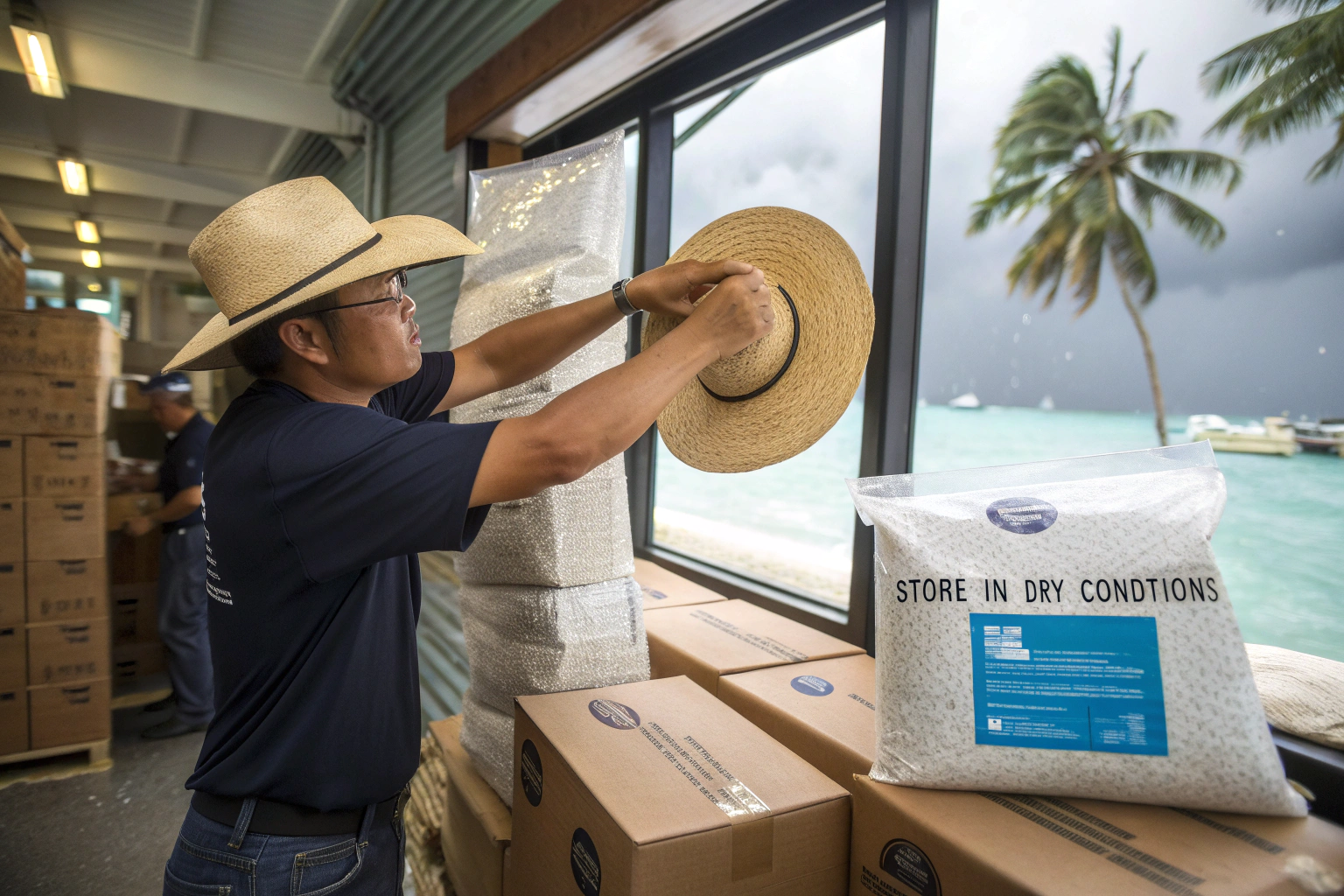
A buyer from a Miami-based resort wear brand once called me with a devastating problem. She had received a container of 5,000 handcrafted straw hats from another factory. The hats had spent 32 days at sea from Southeast Asia to Florida. When the container doors opened, the smell hit her first. A musty, earthy, unmistakable odor of mold. The hats were spotted with black and green mold colonies. The straw was softened and discolored where the mold had fed on the natural fibers. The entire shipment was unsellable. The insurance claim was denied because mold is considered a preventable loss resulting from inadequate packing, not an insurable peril. She lost the product cost, the freight cost, and the season’s revenue from her bestselling hat style. She asked me how we prevent this.
To avoid mold on straw hats during long sea freight, you must control three factors: the moisture content of the straw before packing, the humidity inside the packaging during transit, and the ventilation of the carton and container. The solution is a multi-layer defense. Dry the hats to below 14% moisture content. Pack them with silica gel desiccants inside breathable, moisture-resistant packaging. Use ventilated cartons and container desiccants. And ship during periods when the container is less likely to experience extreme temperature and humidity fluctuations.
At Shanghai Fumao, we ship straw hats to resort wear brands, cruise lines, and beach retailers across North America and Europe. We have learned through years of experience and a few painful early lessons exactly how to protect natural fiber products during long ocean voyages. Let me walk you through our mold prevention system.
Why Are Straw Hats So Vulnerable to Mold During Sea Freight?
Straw is a natural cellulose fiber. It is organic material that mold and mildew can digest. Mold spores are everywhere. They are in the air, on the straw, on hands, on packing surfaces. They are invisible and unavoidable. The spores themselves are not the problem. The problem is moisture. Mold spores require three things to germinate and grow. A food source, which the straw provides. Oxygen, which is present in the air. And water, which is the control variable.
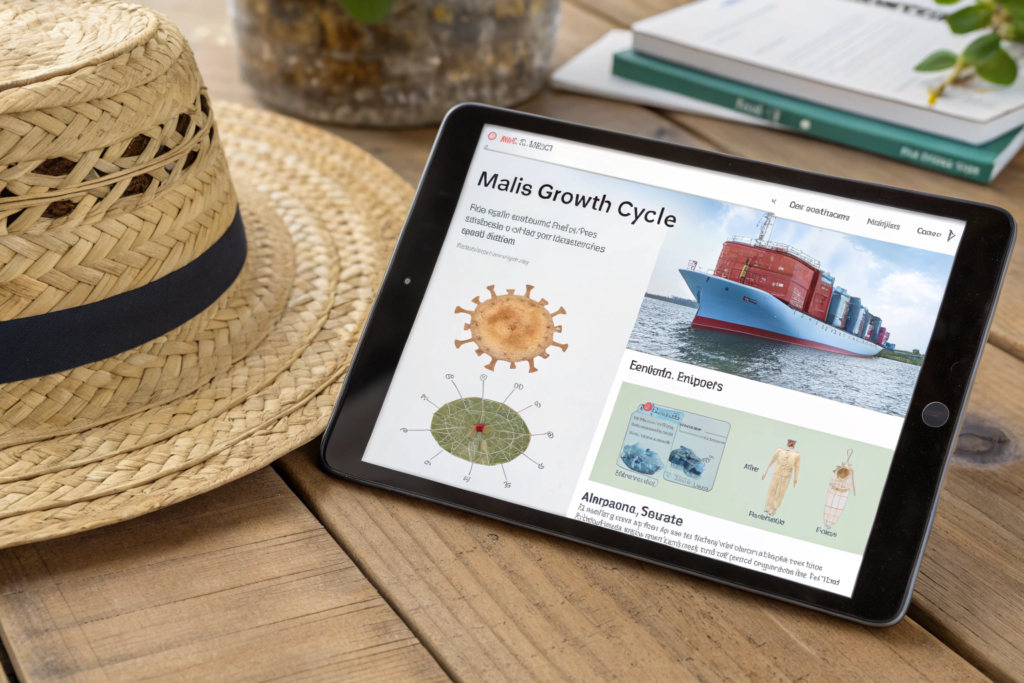
A shipping container is a hostile environment for natural fibers. As the container travels from warm, humid latitudes to cooler regions, or experiences day-night temperature cycles, the air inside reaches its dew point. Moisture condenses on the container walls, the ceiling, and the cargo. This is called container rain. The condensed water drips onto the cartons and soaks into the straw. Even without visible condensation, the relative humidity inside a container can exceed 90% for extended periods. At 70% relative humidity and above, dormant mold spores on the straw can germinate within 48 to 72 hours. At 90% humidity, the growth is explosive. Understanding mold growth conditions on organic materials explains why sea freight is such a high-risk environment for straw hats.
What Moisture Content Is Safe for Straw Before Packing?
The moisture content of the straw itself is the first and most important control point. Straw that is packed with a high internal moisture content will mold regardless of the packaging. The moisture is already inside the fiber, available to the mold spores.
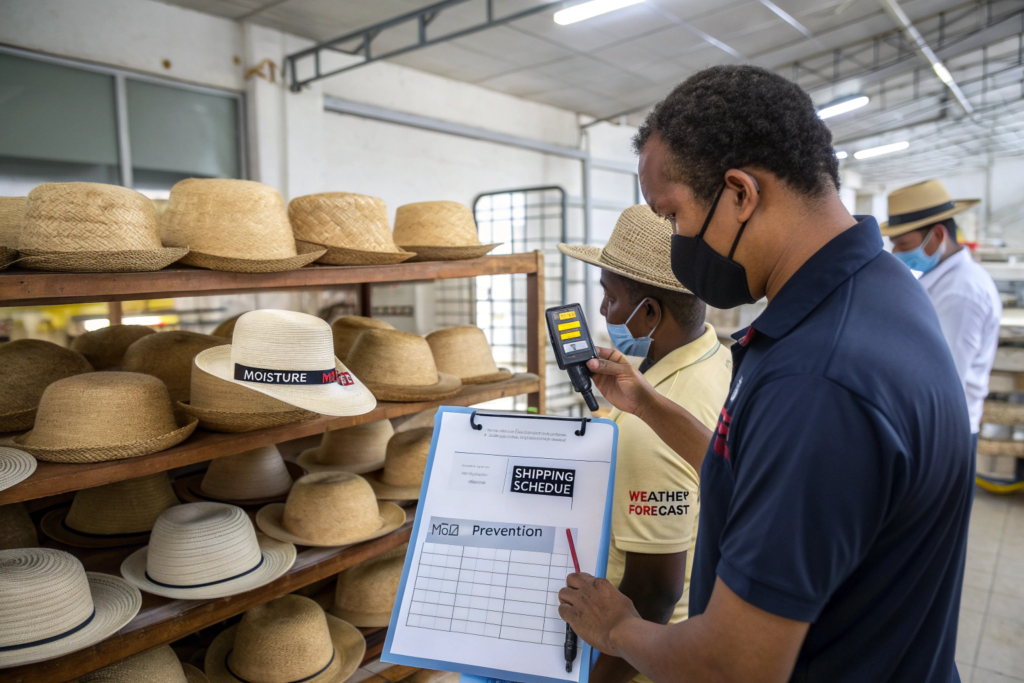
The safe moisture content for storing and shipping straw is below 14%. At this level, there is insufficient free water in the fiber for mold spores to germinate. We measure the moisture content of every batch of straw hats before packing using a calibrated moisture meter designed for natural fibers. The probe is inserted into the straw at multiple points on multiple hats. If the average moisture content is above 14%, the hats are moved to a drying room with dehumidified air and held there until the moisture content drops to the safe level. This is a non-negotiable step in our packing process. We do not pack straw hats with high internal moisture, period. Professional straw and natural fiber moisture management is the foundation of mold prevention.
How Do Container Temperature Swings Create Condensation?
A shipping container is a metal box. It conducts heat rapidly. During the day, the sun heats the container. The air inside warms and expands, absorbing moisture from the cargo. At night, the container cools. The air contracts. The moisture it absorbed during the day condenses on the coolest surfaces, the container walls and ceiling. This condensation drips or runs down onto the cargo.
The temperature swing between day and night on a tropical sea route can be 15 to 20 degrees Celsius. The container interior can reach 60 degrees Celsius during the day and drop to 25 degrees at night. Every cycle pumps moisture out of the cargo and into the container air. Even straw that was packed at a safe moisture content can absorb this ambient moisture over a 30-day voyage, raising its internal moisture content above the mold threshold. The packaging must protect the hats from this ambient moisture. Understanding container climate dynamics during sea freight is essential for designing an effective mold prevention strategy.
What Packaging Materials and Methods Prevent Mold During Transit?
Packaging is the barrier between the straw hat and the hostile container environment. The goal is not to create a perfectly sealed, anaerobic environment, which is impossible and would create its own problems. The goal is to buffer the hat against the humidity swings of the container, to absorb any moisture that enters the package, and to allow any moisture generated by the hat itself to escape.
A sealed plastic bag with no desiccant is a mold incubator. The bag traps moisture inside with the hat. The temperature cycles cause the moisture to condense inside the bag. The hat sits in a humid micro-environment for weeks. Mold grows explosively. The packaging must breathe while still blocking external moisture.
Why Are Breathable, Moisture-Resistant Bags Better Than Sealed Plastic?
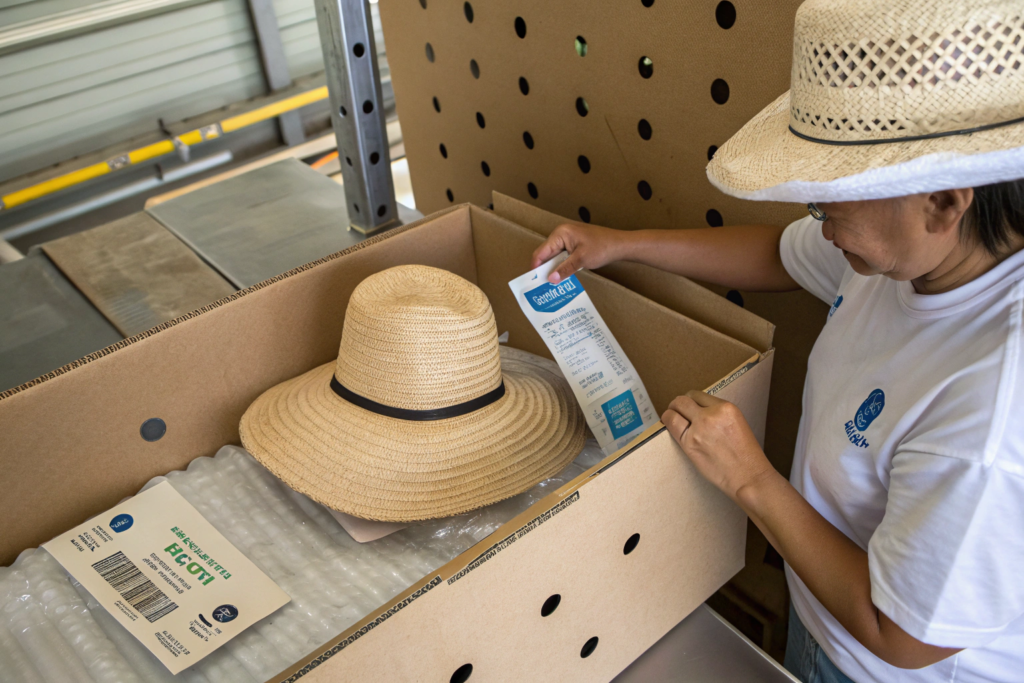
A breathable, moisture-resistant bag made from a material like Tyvek or a micro-perforated non-woven polypropylene allows water vapor to pass through slowly while blocking liquid water. If the hat generates some internal moisture during the voyage, the moisture can escape through the bag rather than being trapped against the straw. If the external environment is dry, the bag allows the hat to equilibrate. If the external environment becomes extremely humid, the bag slows the moisture ingress, giving the desiccant inside the bag time to absorb it.
Sealed plastic bags, such as standard polyethylene poly bags, are vapor barriers. They trap whatever moisture is inside at the time of sealing. They also trap any moisture that evaporates from the hat during temperature cycles. Over a 30-day voyage, the inside of a sealed plastic bag containing a natural fiber product will almost certainly reach a humidity level that supports mold growth, unless a very large quantity of desiccant is included. Breathable bags are a safer choice for organic materials. Professional protective packaging for organic products requires selecting the right barrier material for the specific product.
How Do Desiccants and Humidity Indicator Cards Work Inside the Pack?
Silica gel desiccants absorb moisture from the air inside the package. They reduce the relative humidity in the immediate environment of the hat. A sufficient quantity of desiccant can keep the humidity below the 70% threshold required for mold germination, even if the external container humidity spikes.
The desiccant must be food-grade and non-toxic. It must be packed in a breathable sachet, typically made from Tyvek or a similar material, that allows moisture vapor to pass through to the silica gel. The quantity of desiccant is calculated based on the volume of the package and the expected duration of the voyage. A typical straw hat carton requires a 50-gram to 100-gram desiccant sachet. A humidity indicator card is a small paper card with spots that change colour at different humidity levels. It is placed inside the package, visible through the bag. The card allows the recipient to immediately verify that the hat was stored in a safe humidity environment during transit. A blue spot indicates safe, dry conditions. A pink spot indicates that humidity exceeded the safe threshold. If you are sourcing desiccant solutions for export packaging, the correct type and quantity are critical.
How Should Cartons and Containers Be Prepared for Straw Hat Shipments?
The individual hat packaging is the first line of defense. The carton and the container are the second and third lines. The carton must provide physical protection and allow some air exchange. The container must be managed to minimise the humidity swings that drive condensation.
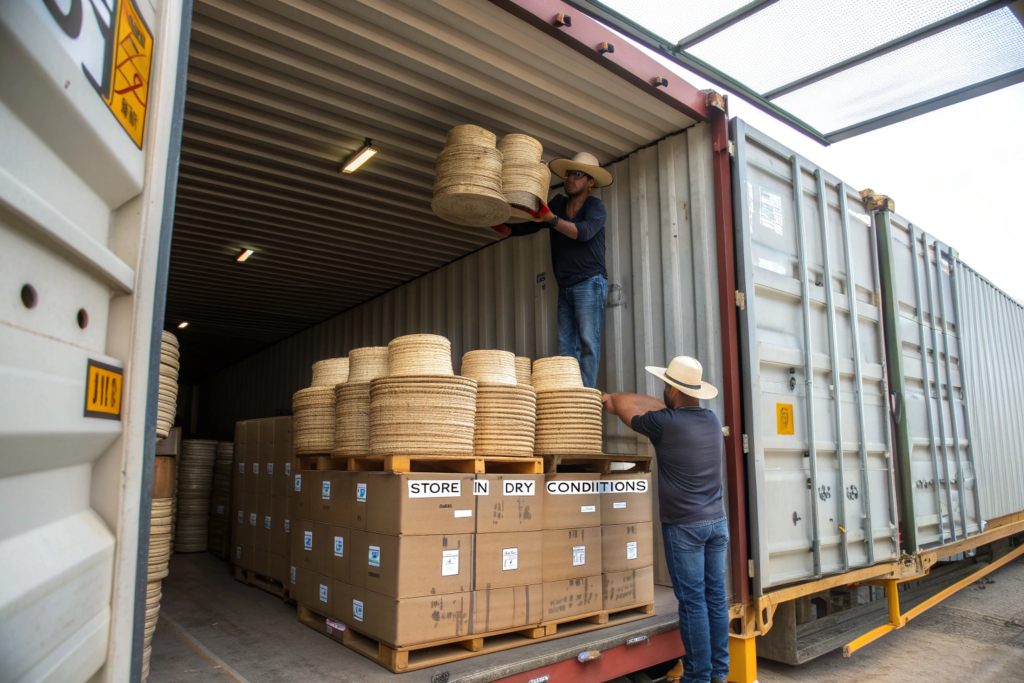
A sealed container is a closed system. The moisture that the cargo and the wooden pallets and the cardboard cartons release during the voyage has nowhere to go. Container desiccants, often called desiccant poles, absorb this ambient moisture. They are hung on the container walls, usually 6 to 12 poles per 20-foot container, depending on the cargo and the route. The desiccant poles can absorb several litres of water each, significantly reducing the humidity inside the container. The cost is modest compared to the value of the cargo.
Why Should Cartons Have Ventilation for Organic Materials?
Cartons packed with natural fiber products should have small ventilation holes. The holes allow air to circulate slowly through the carton, preventing the buildup of a stagnant, humid micro-environment inside the carton. The holes should be small, typically 5 to 10 millimetres in diameter, to allow air exchange without compromising the carton’s structural integrity or allowing pests to enter.
The cartons should be double-wall corrugated for strength. Single-wall cartons can collapse when exposed to high humidity, crushing the hats inside. The cartons should be stored on pallets, not directly on the container floor. The container floor can become wet from condensation. Pallets create an air gap that prevents the cartons from absorbing moisture from the floor. The pallets themselves must be made from heat-treated, dry wood to avoid introducing additional moisture and pests into the container. Understanding export carton specifications for sea freight is essential for protecting natural fiber products.
How Do Container Desiccants and Data Loggers Work Together?
Container desiccant poles are hung along the container walls before loading. They absorb moisture from the container air throughout the voyage, reducing the relative humidity and minimising condensation. The poles are typically filled with calcium chloride, which is highly hygroscopic. The absorbed moisture is trapped as a gel inside the pole, so it cannot drip back onto the cargo.
A temperature and humidity data logger is a small electronic device placed inside the container. It records the temperature and humidity at set intervals, typically every 30 or 60 minutes, for the entire duration of the voyage. When the container arrives, the data logger is retrieved and the data is downloaded. The data shows the humidity profile of the voyage. If the humidity exceeded safe levels for an extended period, the data provides evidence for an insurance claim or a supplier corrective action. The data logger is a low-cost insurance policy. It costs $50 to $100 and provides an objective record of the container environment. Professional container moisture management solutions combine desiccants and data loggers for maximum protection.
What Pre-Shipment Procedures Ensure Hats Arrive Mold-Free?
Mold prevention starts long before the container is loaded. It starts with the condition of the straw when it arrives at our factory, the drying process before packing, and the timing of the shipment to avoid the worst climatic conditions. These pre-shipment procedures are as important as the packaging itself.
At Shanghai Fumao, we have integrated mold prevention into our standard production and packing process for all straw hats. These are not optional steps for clients who request them. They are standard operating procedures for every straw hat order, regardless of destination.
How Do We Measure and Control Straw Moisture Before Packing?
Every incoming batch of straw material is checked with a moisture meter upon arrival. If the moisture content is above 14%, the material is moved to our drying room. The drying room is a controlled environment with industrial dehumidifiers that maintain a relative humidity of 30% to 40%. The straw is stored on open racks that allow air to circulate around all surfaces. The drying time depends on the initial moisture content, typically 24 to 72 hours.
Before packing, every finished hat is spot-checked with a moisture meter. The measurement is taken at multiple points, including the crown, the brim edge, and any decorative bands or trims that may retain moisture. The moisture content is recorded on the production batch record. Only hats that measure below 14% moisture content are released for packing. This is a hard standard. We do not ship hats that exceed it. Professional straw moisture measurement and control is a discipline that protects your inventory.
Why Is the Shipping Season a Factor in Mold Risk?
The time of year affects mold risk significantly. Shipping from Asia to North America or Europe during the summer monsoon season, typically May through September, exposes the container to the highest temperatures and the highest humidity levels. The risk of condensation and mold is highest during this period. Shipping during the cooler, drier months of October through April reduces the risk, but does not eliminate it.
If a shipment must move during the high-risk season, we increase the quantity of desiccant in each carton and the number of container desiccant poles. We may also recommend a faster shipping method, such as a direct vessel with a shorter transit time, or even air freight for very high-value orders. The incremental cost of additional desiccant or a faster vessel is a fraction of the cost of a mold-damaged shipment. Understanding seasonal climate risks for ocean freight helps you plan your production and shipping calendar to minimise mold exposure.
Conclusion
Avoiding mold on straw hats during long sea freight requires a multi-layer defense that controls moisture at every stage. Dry the hats to below 14% moisture content before packing. Pack them in breathable, moisture-resistant bags with silica gel desiccants and humidity indicator cards. Use ventilated double-wall cartons stored on pallets. Prepare the container with desiccant poles and a temperature and humidity data logger. Ship during cooler, drier months when possible, and increase desiccant quantities during high-risk periods.
No single layer is sufficient alone. The combination works because each layer addresses a different point in the moisture chain. The drying controls internal moisture. The bag and desiccant control the micro-environment. The carton and container desiccants control the macro-environment. The data logger provides verification.
At Shanghai Fumao, this mold prevention protocol is standard for every straw hat shipment. We do not treat it as an optional extra or a client-specific request. It is built into our production, packing, and shipping process because we have learned that preventing mold is far cheaper and easier than compensating for a mold-damaged shipment.
If you have experienced mold damage on your straw hat imports and you need a factory that takes this risk seriously, please contact our Business Director Elaine at elaine@fumaoclothing.com. She can explain our full mold prevention protocol, provide photos of our packing process, and ensure your next shipment of straw hats arrives as fresh and beautiful as the day they left our factory.