Have you ever tried to order a matching family set of winter gloves, only to have the factory tell you they can do the adult sizes, but the kids’ sizes are a separate order with a separate minimum? I saw a boutique brand owner nearly cry over this. She had a beautiful design. A parent-and-child matching set. It was a guaranteed seller for the holiday season. But the factory forced her to buy 1,000 adult gloves and 1,000 children’s gloves. She knew she only needed 300 kids’ pairs. The factory was inflexible. The deal collapsed. The problem was not the design. It was the factory’s inability to mix sizes on one production line.
AceAccessory is a professional manufacturer and exporter of accessories. Yes, we absolutely produce both children’s and adult’s gloves in one consolidated order. Our flexible production lines and shared material sourcing allow us to combine multiple sizes and age groups under a single purchase order with a blended minimum quantity.
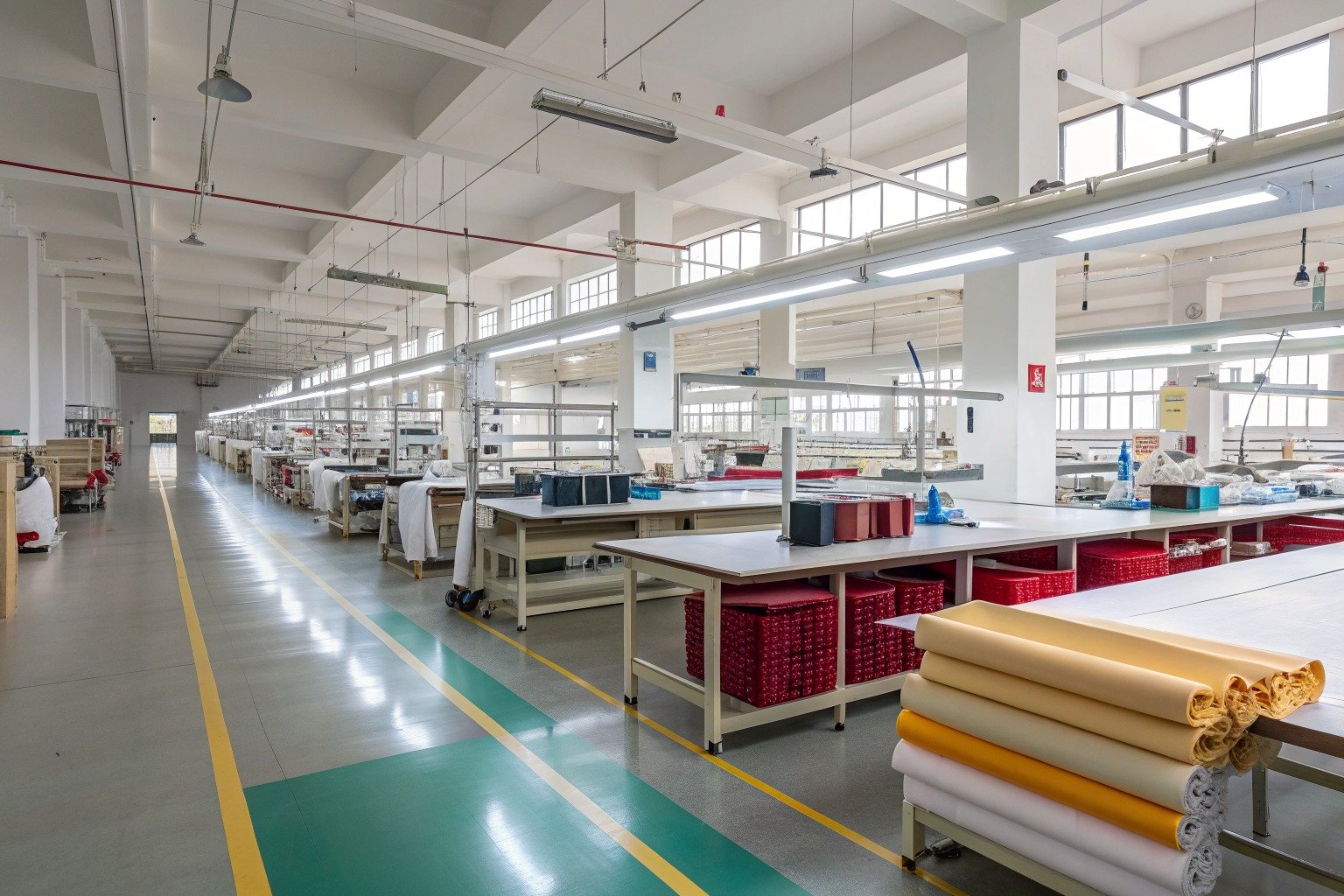
A glove is a glove, but the anatomy of a child’s hand is completely different from an adult’s. The fingers are shorter and chunkier. The wrist is narrower. The safety regulations are much stricter. You cannot just shrink an adult pattern and call it a kids’ glove. As the owner of a factory in Zhejiang, I set up our cutting and sewing floor specifically to handle multi-size family orders. Let me explain exactly how we do this. This will show you how to simplify your supply chain and launch a successful matching collection.
What Are the Technical Differences Between Adult and Kids’ Gloves?
The adult glove is built for performance and durability. The child’s glove is built for safety and ease of use. These are two different engineering briefs. When we combine them in one order, we are managing two separate sets of patterns and components. But we do it under one roof.
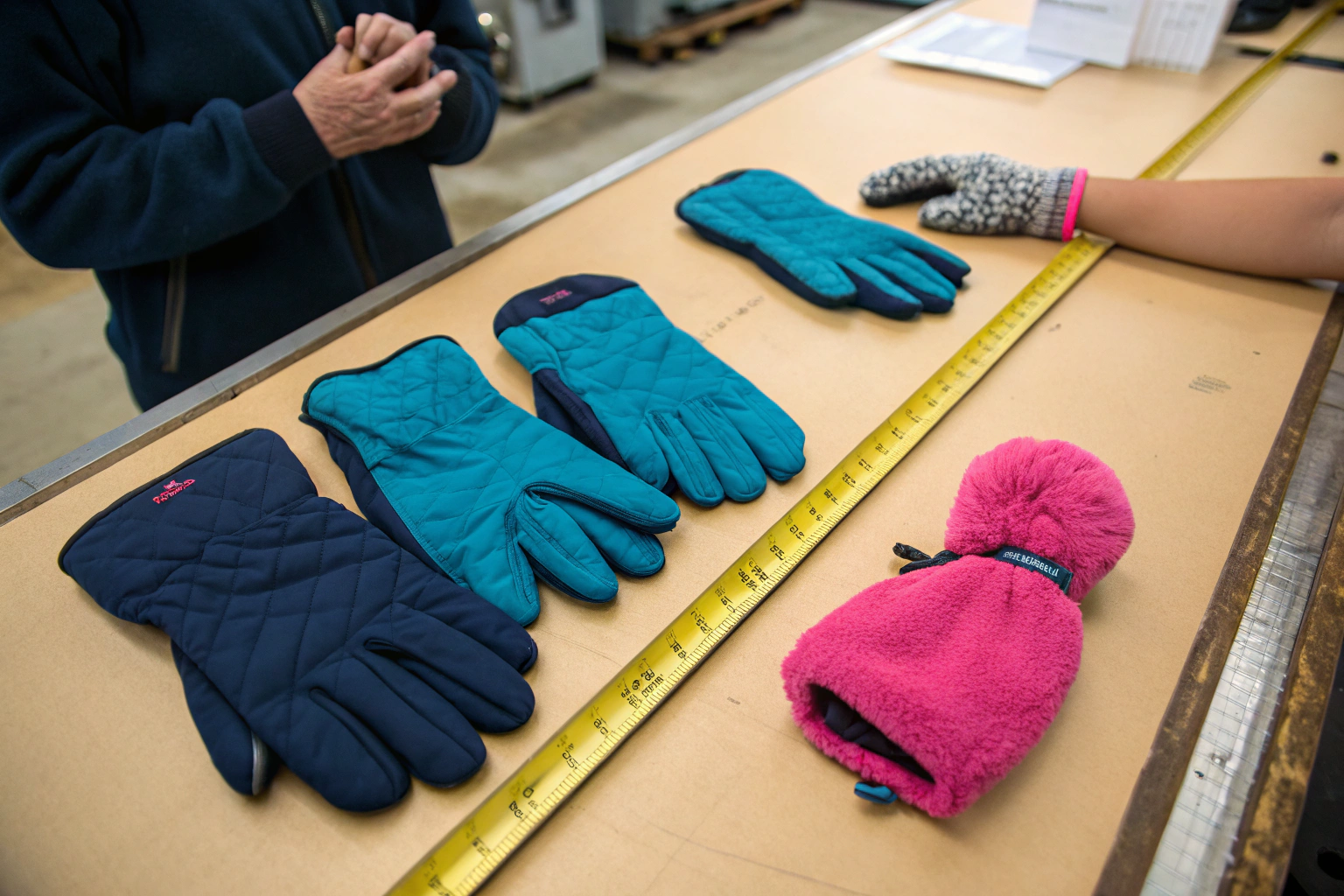
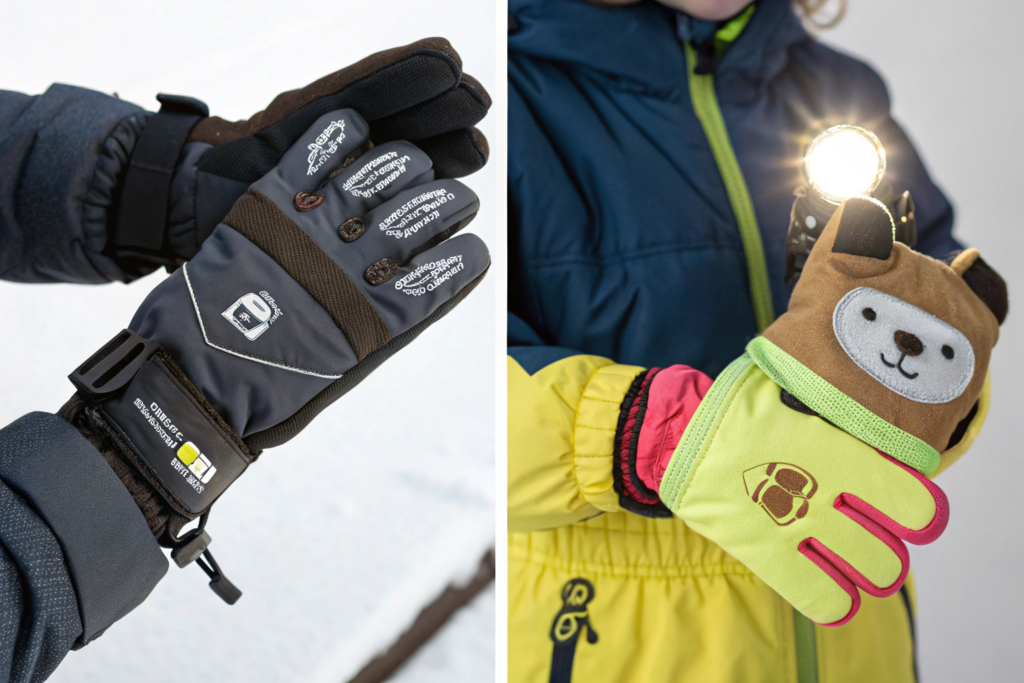
The biggest difference is the finger curve. Adult fingers are longer. The index finger and middle finger have a specific spread. We use a pre-curved pattern. The glove naturally rests in a gripping position. A child’s hand is more of a paddle. The fingers are short and the palm is round. We use a straighter pattern with a wider palm gusset. The second difference is the cuff. Adults can pull a tight, long cuff over a jacket sleeve. Children struggle with this. They need a wide, elasticated, slip-on cuff. Often, we add a zipper or a large Velcro tab to the kids’ version. This helps a toddler get their hand in without frustration. Our design team adjusts the pattern grading for each age group.
Why Do Children’s Gloves Require Stricter Safety Standards?
A child explores with their hands. They pull at seams. They put fingers in their mouth. A loose button or a sharp rivet is a choking hazard and a laceration risk.
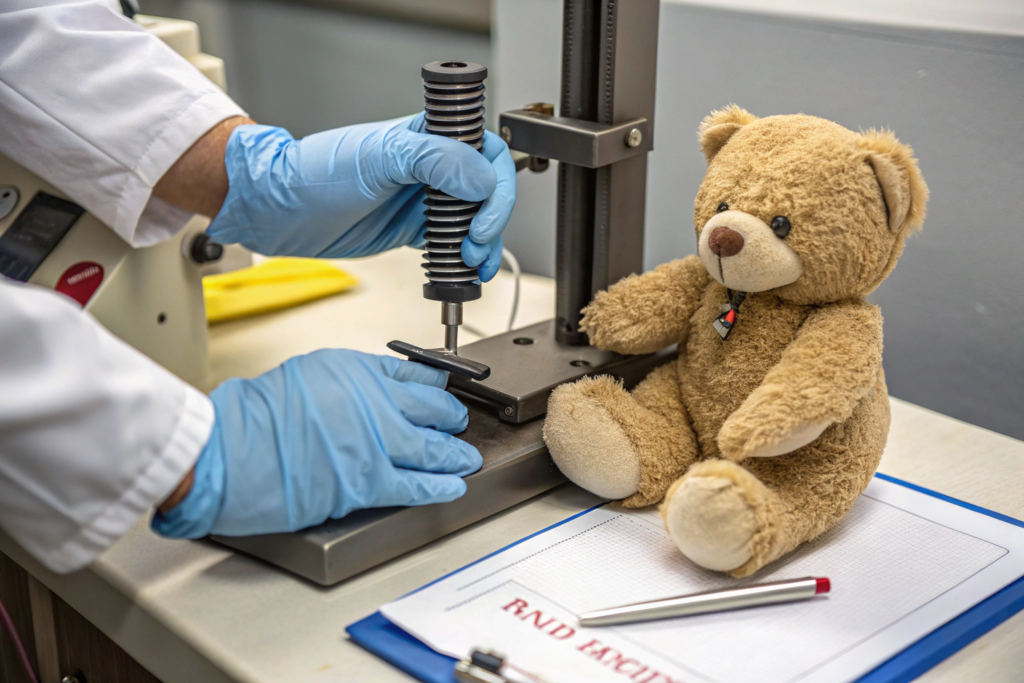
We follow the EU EN 71 safety standard for children’s products. This means no small parts can detach under a 90-newton pull test. We sew decorative elements, like animal ears or logos, with a reinforced lock-stitch. We do not use glass beads or sequins on kids’ gloves. For cords, we follow the EN 14682 standard. No drawstrings are allowed around the neck. The wrist elastic must be safe. These rules do not apply to adult gloves. So, we segregate the kids’ production batch. We use a dedicated machine line for the children’s gloves to prevent a mix-up with sharp adult hardware. This is a critical child product safety compliance step.
How Does Sizing and Grading Work for Mixed Orders?
Grading is the science of scaling a pattern. A size 6 is not just a stretched size 3. The proportions change.
We use an anthropometric data table. It tells us the average hand circumference and finger length for a 2-year-old, a 6-year-old, and a 12-year-old. We create a base size for "toddler" and a base size for "youth." We grade up and down from there. The adult size uses a separate base pattern. In a combined order, you might select "Toddler (2-4 yrs)," "Youth (6-10 yrs)," "Adult Small," and "Adult Large." You allocate your quantity to each size. We cut the fabric simultaneously using a digital plotter. It optimizes the layout to minimize fabric waste across all the sizes. This smart nesting saves you material cost and makes the single order viable.
How Do You Manage Material Sourcing for Dual-Size Orders?
Matching the color across adult and kids’ fabrics is a chemical challenge. An adult winter glove might use a premium wool blend. A child’s glove might use a cuddly polyester fleece. Wool and polyester absorb dye differently. If we use the exact same dye, the color looks completely different.
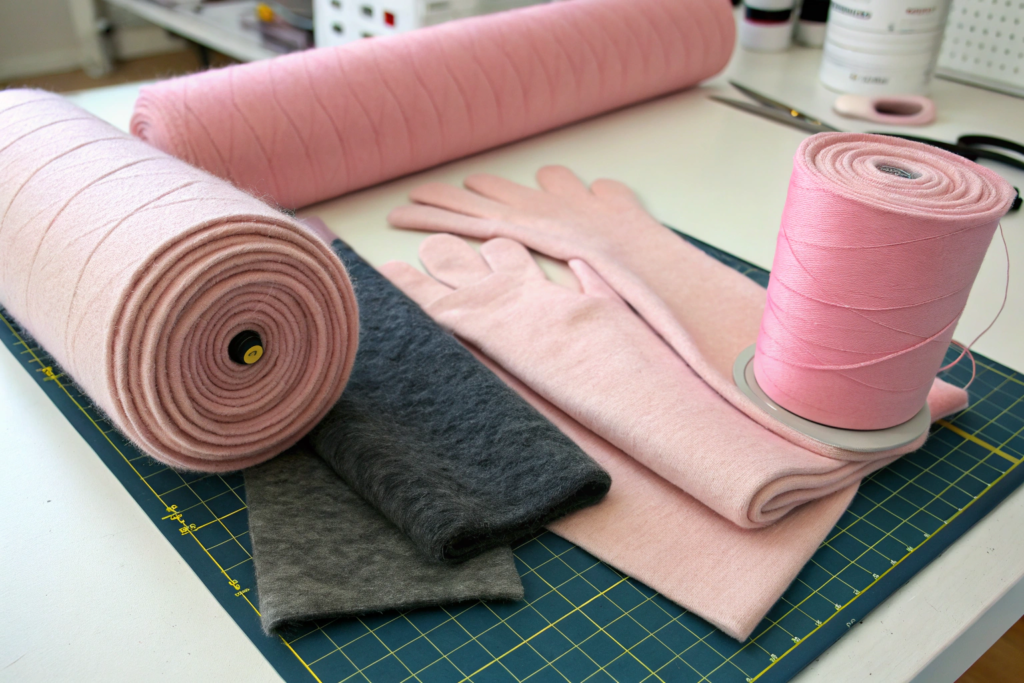
We solve this with "color mapping." We take the client’s Pantone reference. Our dyer creates a specific recipe for the wool and a different recipe for the fleece. The goal is visual unity under daylight. They might look slightly different under a spectrometer, but to the human eye, they look like a perfect family match. We also source the lining together. The adult glove might have a Thinsulate thermal lining. The child’s glove might have a simpler microfleece lining. But we make sure the lining color is consistent across the set. We cut a master swatch panel and keep it in the lab. We check every batch of raw material against this master. This ensures the adult glove you receive in October matches the kids’ glove you receive in the same shipment.
Can You Use the Same Outer Fabric for All Sizes?
Sometimes, yes. If the adult glove is a lightweight fashion glove, we can use the same acrylic knit for the children’s mittens. This is ideal for matching sets.
But for performance winter gloves, it is not recommended. A heavy, stiff fabric that protects an adult skier is too bulky for a child’s small hand. The child cannot make a fist. They cannot grip a ski pole. They get frustrated and take the gloves off. That defeats the purpose. We advise clients to use a "fabric family." For example, a thick cable-knit for adults and a fine-gauge jersey knit in the same yarn color for kids. The texture is different, but the visual brand identity remains strong. Our project managers guide you through these fabric sourcing decisions.
How Do You Minimize Fabric Waste with Small Sizes?
Children’s gloves use less fabric. That seems obvious. But the off-cuts are proportionally larger. A tiny mitten leaves a strange-shaped hole in the fabric roll.
We use a computer-aided design marker. It is a digital puzzle. It fits the large adult palm pieces into the big empty spaces. It slots the tiny toddler thumb pieces into the gaps. This "combined marker" is the financial magic behind the single order. It saves up to 15% on fabric compared to cutting the adult and kids’ orders separately. This efficiency is how we keep the overall price competitive, even with the added complexity. It is a smart use of lean manufacturing principles.
Can You Mix Different Glove Styles in One Consolidated Order?
Orders get complex. A family brand might want a technical five-finger glove for dad, a flip-top mitten for mom, and a slip-on mitten for the baby. These are not just different sizes. They are different styles. Different patterns. Different components.
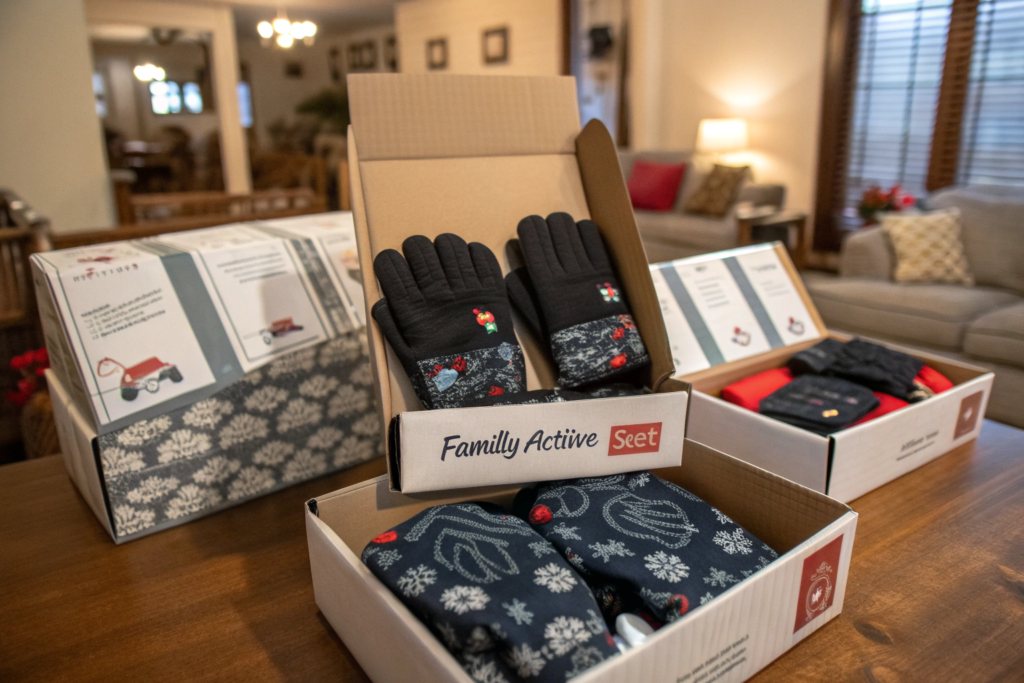
We can combine these. We treat each style as a "sub-order" within the master purchase order. The key to making this work is component sharing. We try to use the same label, the same snap button, and the same hang tag across all styles. This reduces the chance of a factory error. We also use a "grouping" code in our production software. All items for the "Family Active Set" are linked. The software tracks the cutting, sewing, and finishing of each style. It alerts us if the adult gloves are finished but the baby mittens are delayed. We synchronize the final inspection. The entire family set goes through the light box together. We pack them into the shipping cartons together. This guarantees you receive the full collection at the same time. No waiting for the kid’s order to arrive a week later.
What Is the Benefit of Shipping Mixed Sizes Together?
Retail sell-through. A customer sees the parent glove on the shelf. They ask, "Do you have this in my child’s size?" If the answer is no, you lose the sale.
When the adult and child gloves arrive together, you can merchandise them as a story. You create a point-of-sale display: "His & Hers & Littles." The visual impact of the matching set triples the shelf appeal. It also makes your e-commerce photography faster. You shoot the family flat lay in one session. The shipping carton also clears customs as one unified consignment. There is one bill of lading. One customs declaration. This simplifies your logistics and reduces broker fees. It is a seamless way to manage retail inventory.
How Do You Label Individual Sizes in a Mixed Box?
Imagine a carton with 100 pairs of gloves, mixed sizes and mixed ages. You do not want your warehouse team guessing which is which.
We attach a clear, illustrated size tag. For children’s gloves, we do not just put "S." A parent might not know their child’s glove size. We put "Age 2-4 Yrs" with a cute bear icon. For adult, we put the standard S, M, L. The barcode is unique per size. The carton is packed in "ready-to-shelf" polybags. Each bag has a euro-slot hang hole. You open the shipping carton. You take out the pre-bagged gloves. You hang them directly on the retail hook. No repackaging labor. This is the kind of thoughtful service that makes our factory a preferred partner for multi-size children’s accessory brands.
How Does Quality Control Differ for Adult and Kids’ Production?
The QC checklist for children’s gloves is three times longer than for adult gloves. The inspection starts with the materials. Children’s skin is more sensitive. We test for formaldehyde, heavy metals, and phthalates. The report must show "Not Detected."
The physical test is also different. An adult glove might be tested for waterproofness. A child’s glove is tested for flammability. A child near a campfire is a risk. The fabric must be flame-retardant or pass a surface flash test. We also check the seams more aggressively. Children pull their gloves off by the fingertips. They use their teeth. The seam strength test uses a higher Newton force for kids’ sizes because the point pressure is higher. We also do a visual "needle detection" scan. Every children’s glove passes through a metal detector tunnel. This picks up any broken sewing needle that might have snapped off inside the batting. This is the zero-tolerance safety standard our quality control team guarantees.
What Are the Specific Chemical Restrictions for Kids’ Gloves?
REACH regulation is strict for all gloves. But for kids, the "Substances of Very High Concern" list is absolute. No phthalates in the waterproof membrane. No PFCs in the water-repellent coating.
We source a special kids-grade waterproof lining. It uses a paraffin-based treatment, not a fluorocarbon. It is slightly less durable than adult-grade, but it is safe. We test the final product at an Intertek lab. We present the "Certificate of Compliance" with every shipment. This documentation protects your brand from a safety recall. It is a critical part of importing children’s products into the EU and US.
How Do You Prevent Mixing Adult Components with Kids’ Gloves?
An adult snap button is a choking hazard for a baby. A mix-up in the cutting room is a serious mistake. We use strict visual factory controls.
The children’s line is color-coded. The work tables are blue. The bins are blue. The adult line is gray. The cutting tickets are pink for kids and white for adults. The components are stored in separate, locked cages. A worker from the adult line does not walk over and grab a part from the kids’ line. This "zoning" prevents cross-contamination. It is an extension of our 5S lean workplace organization. It is the invisible discipline that keeps your order correct and your customers’ children safe. It is the professional, reliable service we are known for in Zhejiang.
Conclusion
Combining children’s and adult’s gloves in a single order is not just possible. It is a smart business strategy. It simplifies your logistics. It saves fabric through combined cutting markers. It ensures your family set matches perfectly in color and quality. The key is choosing a factory that does not treat these as separate businesses.
At our Zhejiang facility, we have the pattern grading expertise, the child-safe material library, and the segregated production lines to handle mixed orders seamlessly. Our design team helps you adapt the adult styling to toddler proportions. Our quality control team applies the rigorous safety tests that kids’ products require. Your matching parent-and-child collection will arrive in one shipment, ready to sell as a unified retail story.
If you have a family glove collection on your drawing board, I invite you to reach out to our Business Director, Elaine. She can walk you through our blended MOQ options, our kids’ safety certifications, and our sizing charts. She can arrange for you to receive a matching sample set so you can see the family look in person. Send her an email at elaine@fumaoclothing.com. Let’s create gloves that keep every generation warm and stylish.