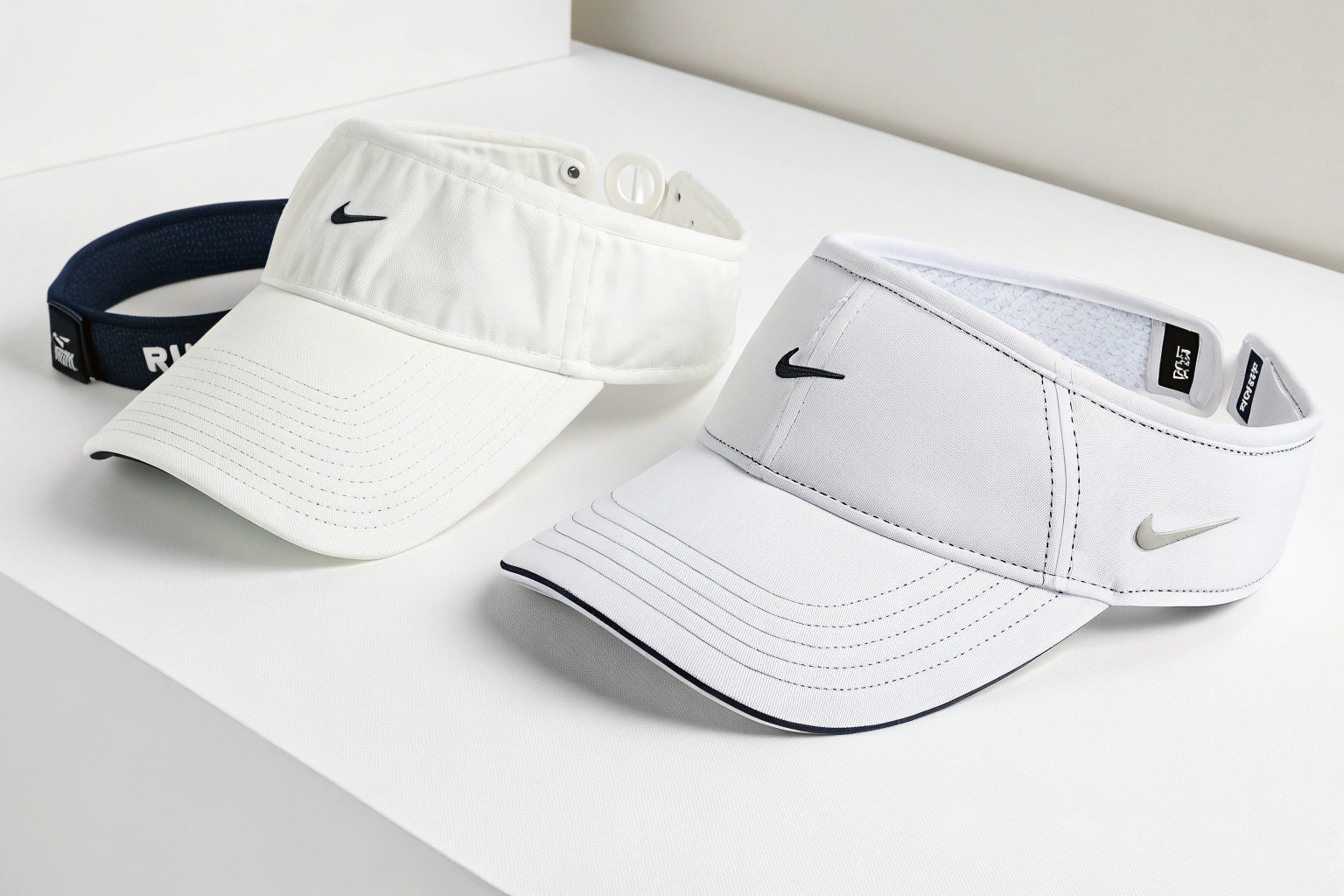
A buyer from a US-based tennis equipment brand once sat in my showroom with a problem that should have been simple. She needed 2,000 visors and 3,000 caps for her brand’s Spring 2026 court collection. The visors and caps were designed as a coordinated range. Same fabric. Same colour. Same branding. Same target customer. She had approached three factories. One only made structured caps and could not produce visors with a sweatband. Another made visors but could not achieve the pre-curved peak and the structured crown required for a performance tennis cap. The third could make both but quoted wildly different quality standards, making it clear that the visor and the cap would not look like they came from the same brand. She asked me if one factory could truly do both to the same standard.
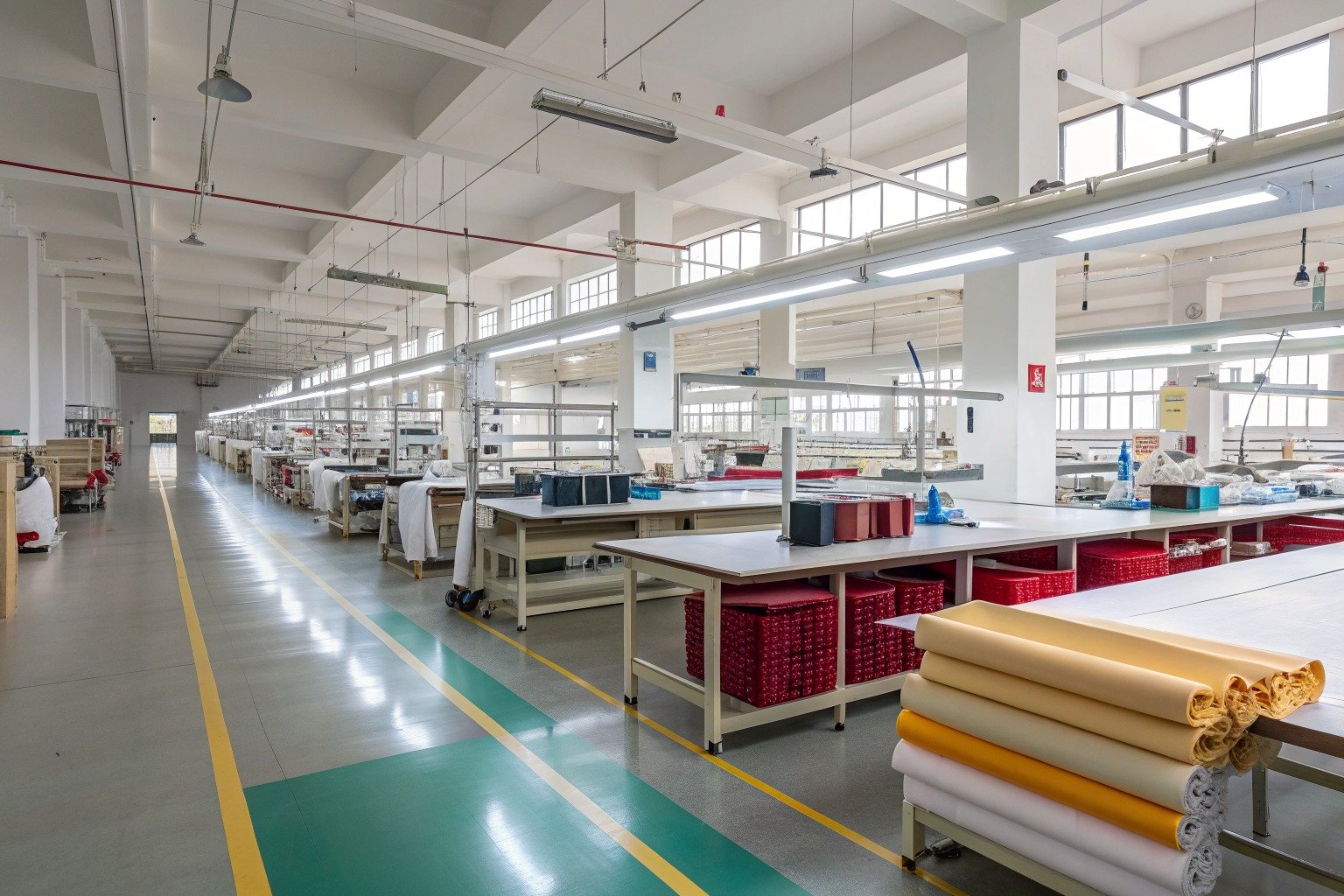
Yes, our factory can produce both visors and full caps for tennis brands within a single consolidated order. We have dedicated production lines for both product types, with shared access to the same technical fabrics, the same moisture-wicking sweatbands, the same underbrim materials, and the same branding techniques. A single project manager coordinates the entire order, ensuring consistent quality, coordinated sampling, and consolidated shipping.
At Shanghai Fumao, we have been producing tennis headwear for performance brands across North America and Europe for years. We understand that a tennis visor and a tennis cap are not two different products. They are two expressions of the same brand identity, designed to be worn by the same athlete, often in the same match. Let me explain how we make this work and why it matters for your tennis brand.
What Are the Key Production Differences Between Visors and Full Caps?
A tennis visor and a tennis cap share critical performance components but differ fundamentally in their upper construction. The visor has no crown. The cap has a structured or semi-structured crown. This difference drives different production equipment, different sewing sequences, and different quality checks. A factory that understands both understands that the shared components must be identical, and the different components must be executed with equal precision.
The shared components are what tie the collection together. The sweatband that wicks moisture. The dark underbrim that reduces glare. The hook and loop closure that ensures a secure, adjustable fit. The fabric that breathes and dries quickly. These components must be exactly the same on the visor and the cap. If the visor has a premium terrycloth sweatband and the cap has a cheap foam sweatband, the collection fails as a coordinated range.
How Does a Tennis Visor Construct Without a Crown?
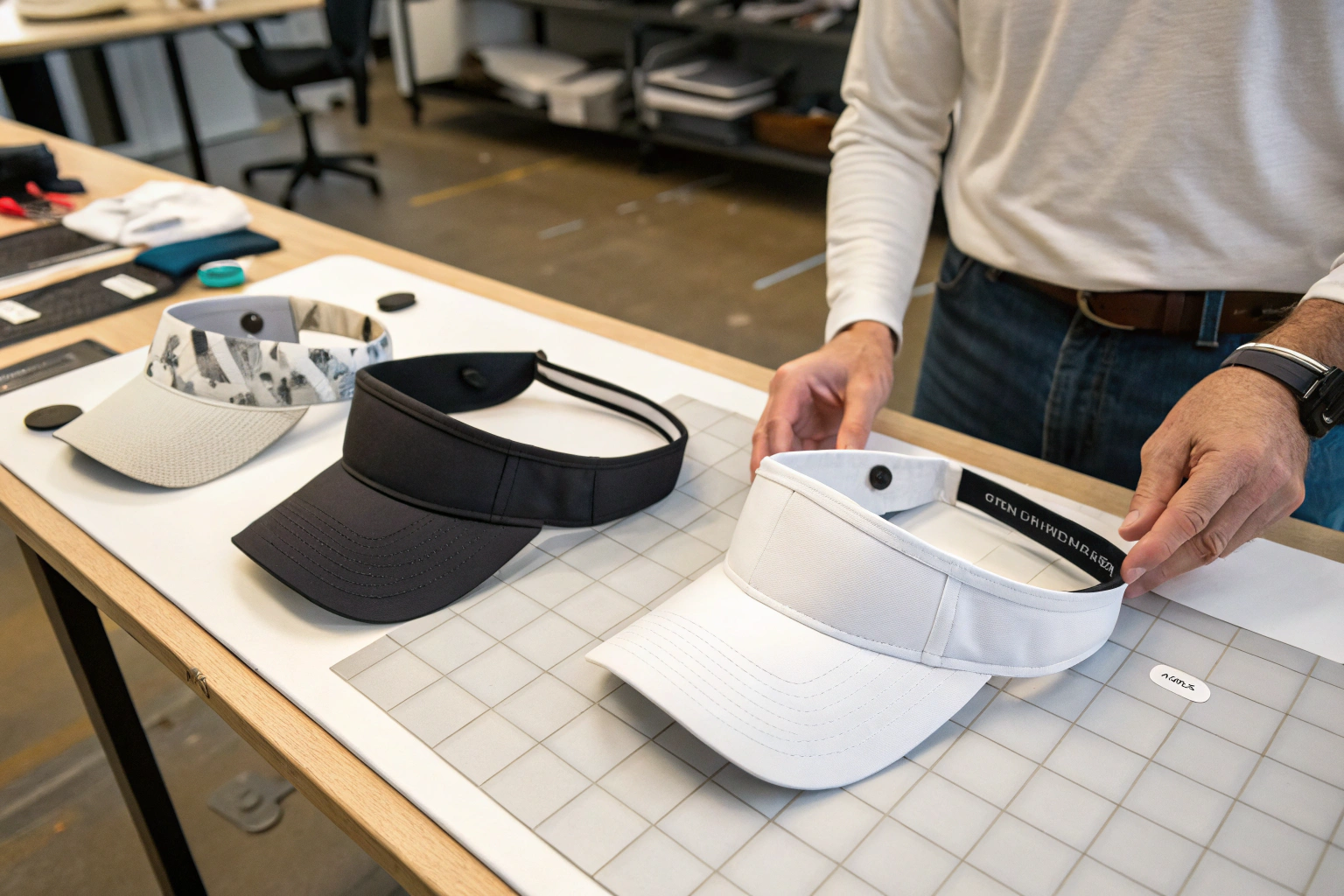
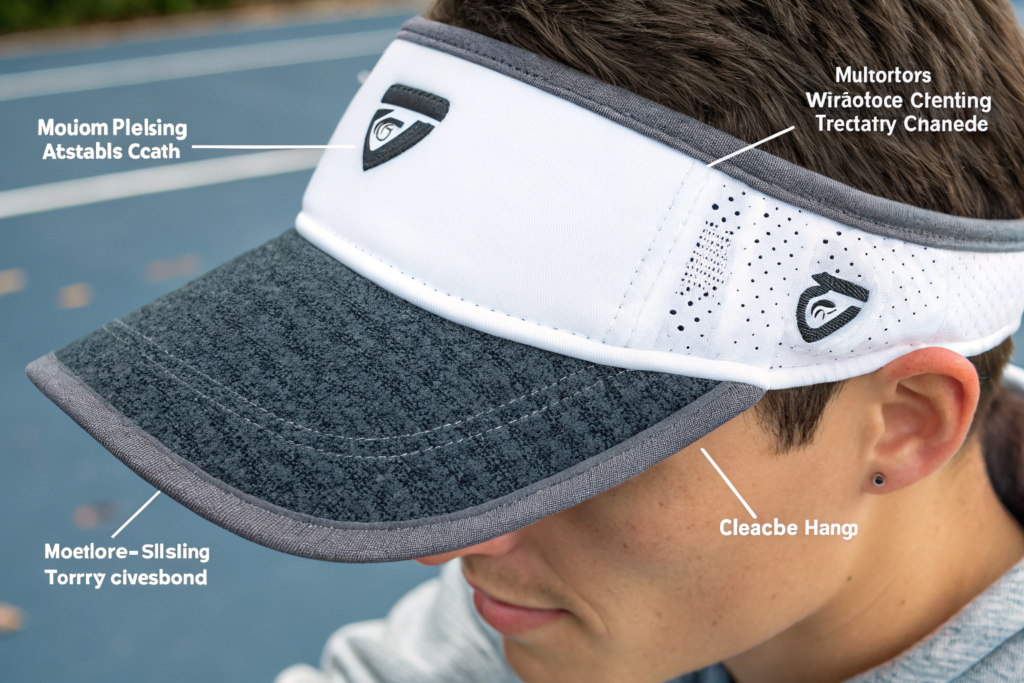
A tennis visor consists of a visor panel, a sweatband, a crown band or strap system, and an adjustable closure, typically a hook and loop strap at the back. The visor panel is the functional equivalent of the cap’s brim. It provides shade and glare reduction. It must be stiff enough to hold its shape during intense movement but lightweight enough to be comfortable for hours of play.
The sweatband is stitched to the inside of the crown band. It wraps around the forehead and absorbs perspiration before it can drip into the eyes. The crown band sits on the head, holding the visor in place. There is no fabric covering the top of the head. This open design provides maximum ventilation, which is why many tennis players prefer a visor over a cap in hot conditions. The construction is deceptively simple. Every seam must be smooth against the skin. The sweatband must be precisely aligned. The closure must adjust easily and hold securely during rapid lateral movements. A poorly made visor slips, irritates, or fails to absorb sweat. Professional tennis visor construction techniques require attention to these performance details.
What Defines a Performance Tennis Cap?
A performance tennis cap has a structured or semi-structured crown with ventilation eyelets, a pre-curved visor, a moisture-wicking sweatband, and an adjustable closure. The crown is typically made from a lightweight, breathable performance fabric such as polyester mesh or a moisture-wicking polyester blend. The front panels are often structured with a buckram or fused interfacing to maintain a clean, athletic silhouette even when the cap is worn for hours.
The pre-curved visor is a critical tennis-specific feature. Tennis players need to see the ball clearly against the sky. A flat visor creates a visible line in the upper field of vision. A pre-curved visor follows the natural curve of the forehead and stays out of the player’s sightline. The dark underbrim, typically black or dark grey, absorbs reflected light rather than bouncing it into the eyes. The sweatband is the same performance material used in the visor. It must wick moisture and dry quickly. The ventilation eyelets, usually embroidered or laser-cut, allow heat to escape from the top of the head. All of these features are designed for the specific demands of tennis. Understanding performance tennis cap specifications ensures your product meets the functional expectations of serious players.
How Does Our Factory Ensure Consistency Across Both Products?
The greatest risk in a coordinated visor and cap programme is inconsistency. The visor looks slightly more blue. The cap looks slightly more grey. The visor sweatband is plush. The cap sweatband is thin. These inconsistencies destroy the perception of a coordinated collection and undermine the brand’s quality image. The consumer does not know why the two products look different. They just know that something is off.
At Shanghai Fumao, we eliminate this risk through a shared material supply chain, a unified quality control system, and a single project management point. The visor and the cap are not made by different teams with different standards. They are made by teams that share the same fabric inventory, the same component inventory, and the same quality benchmarks.
How Do We Manage Shared Materials for a Coordinated Collection?
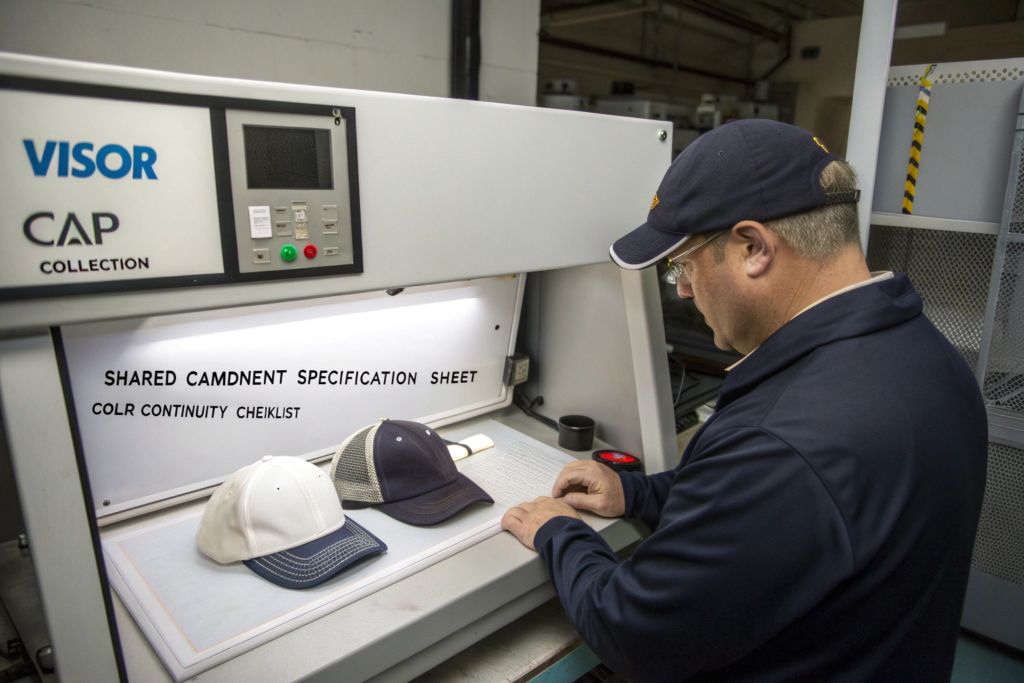
When your order is confirmed, our procurement team orders the fabric for the entire programme at once, not separately for visors and caps. The polyester performance mesh, the moisture-wicking sweatband material, the dark underbrim fabric, and the hook and loop tape are ordered from the same dye lot. This ensures colour continuity across both products.
The materials are received into our central inventory and issued to the visor line and the cap line from the same batch. A QC check verifies the colour and the quality of each material before it is issued. The visor line and the cap line use the exact same sweatband material from the exact same roll. They use the exact same underbrim fabric from the exact same dye lot. There is no possibility of colour variation between the two products because they are made from the same materials. This is the most fundamental and most important step in creating a coordinated collection. Professional material lot control in apparel manufacturing is essential for multi-product brand consistency.
What Are the Shared QC Standards for Both Products?
The visor and the cap are inspected against a single set of quality standards for the shared components. The sweatband must meet the same absorbency and colourfastness standard on both products. The dark underbrim must have the same light absorption rating. The hook and loop closure must meet the same cycle durability standard. The fabric must have the same UPF rating and colourfastness.
The QC team uses a shared inspection checklist for the common components. The product-specific inspection criteria are also aligned. The visor’s crown band tension must match the cap’s crown fit. The visor’s peak stiffness must match the cap’s brim stiffness. The branding, whether it is an embroidered logo, a heat transfer, or a woven patch, must be identical in size, placement, and colour on both products. The final AQL inspection samples from both products and verifies cross-product consistency. If the visor passes and the cap fails on a shared component, both are held until the issue is resolved. Professional cross-product quality consistency in manufacturing ensures your brand’s collection looks like a collection, not two unrelated products.
What Performance Features Are Essential for Tennis Headwear?
Tennis headwear is performance equipment, not just a fashion accessory. The player depends on the visor or cap to manage sweat, reduce glare, stay securely in place during explosive movements, and remain comfortable for hours in direct sun. A product that fails any of these functions fails the player.
Our design and production team treats tennis headwear as a performance product. The materials, the construction, and the quality tests are selected and designed for the specific demands of the sport. We ask the brand what conditions their target player faces. Hot and humid? Dry and high-altitude? Indoor under bright lights? The answers guide the material and feature specifications.
Why Is the Sweatband the Most Critical Component?
The sweatband is the interface between the product and the athlete. It must absorb perspiration, wick it away from the skin, and dry quickly. A sweatband that saturates and drips sweat into the player’s eyes is a failure. A sweatband that feels abrasive after hours of wear is a failure. A sweatband that retains odour after washing is a failure.
We use a high-density terrycloth cotton-polyester blend for our tennis sweatbands. The cotton provides absorbency. The polyester provides wicking and quick-drying. The terrycloth loop construction provides a soft, plush feel against the forehead. The sweatband is treated with an antimicrobial finish to resist odour. It is tested for absorbency, wicking rate, and colourfastness to sweat. The sweatband on the visor and the sweatband on the cap are identical. The player who wears the visor for one match and the cap for the next expects the same sweat management performance. Understanding moisture-wicking textile technology for sportswear is essential for selecting the right sweatband material.
How Does the Dark Underbrim Improve On-Court Vision?
The dark underbrim is a functional feature that reduces glare. When sunlight hits a white or light-coloured brim underside, it reflects up into the player’s eyes. This reflected glare is particularly problematic when serving, when the player is looking up at the ball against the sky. A dark underbrim, typically charcoal grey or black, absorbs this light rather than reflecting it.
The underbrim fabric must be colourfast to sweat and sun exposure. It must not fade to a lighter shade after weeks of use. It must be lightweight so it does not add weight to the visor or brim. We use a black or charcoal polyester fabric that is bonded to the visor panel during construction. The underbrim is inspected for colour consistency and light absorption under a calibrated lightbox. If you are developing performance tennis visors with glare-reducing features, the underbrim colour and material are functional specifications, not just design choices.
Conclusion
One factory can absolutely produce both visors and full caps for tennis brands to a consistent, performance-driven standard. The capability requires dedicated production lines for each product type, shared access to the same technical materials from the same dye lots, unified quality control standards for shared components, and a single project management point for the entire coordinated programme.
The benefits of consolidation are clear. Guaranteed colour and material consistency between the visor and the cap. Consistent performance features, especially the sweatband and the underbrim, that the athlete can rely on regardless of which product they choose. Lower total landed cost from consolidated shipping and documentation. And the simplicity of a single point of contact for sampling, production, and logistics.
At Shanghai Fumao, our tennis headwear production lines are configured to deliver this consistency. Our material procurement team orders for the entire collection at once, from the same dye lots. Our QC team inspects the visor and the cap against the same shared component standards. Our project managers coordinate sampling and production so both products are ready to ship together. We understand that a tennis visor and a tennis cap are two expressions of the same brand promise.
If you are planning a tennis headwear collection and you want a manufacturing partner who can deliver both visors and caps to the same performance and quality standard, I encourage you to contact our Business Director Elaine at elaine@fumaoclothing.com. Send her your design concepts, your performance requirements, and your volume projections. She will provide a consolidated quotation, coordinate sampling for both products, and assign a project manager who will own your collection from first sample to final shipment. Your athletes deserve headwear that performs as one collection. Let us build it for you.