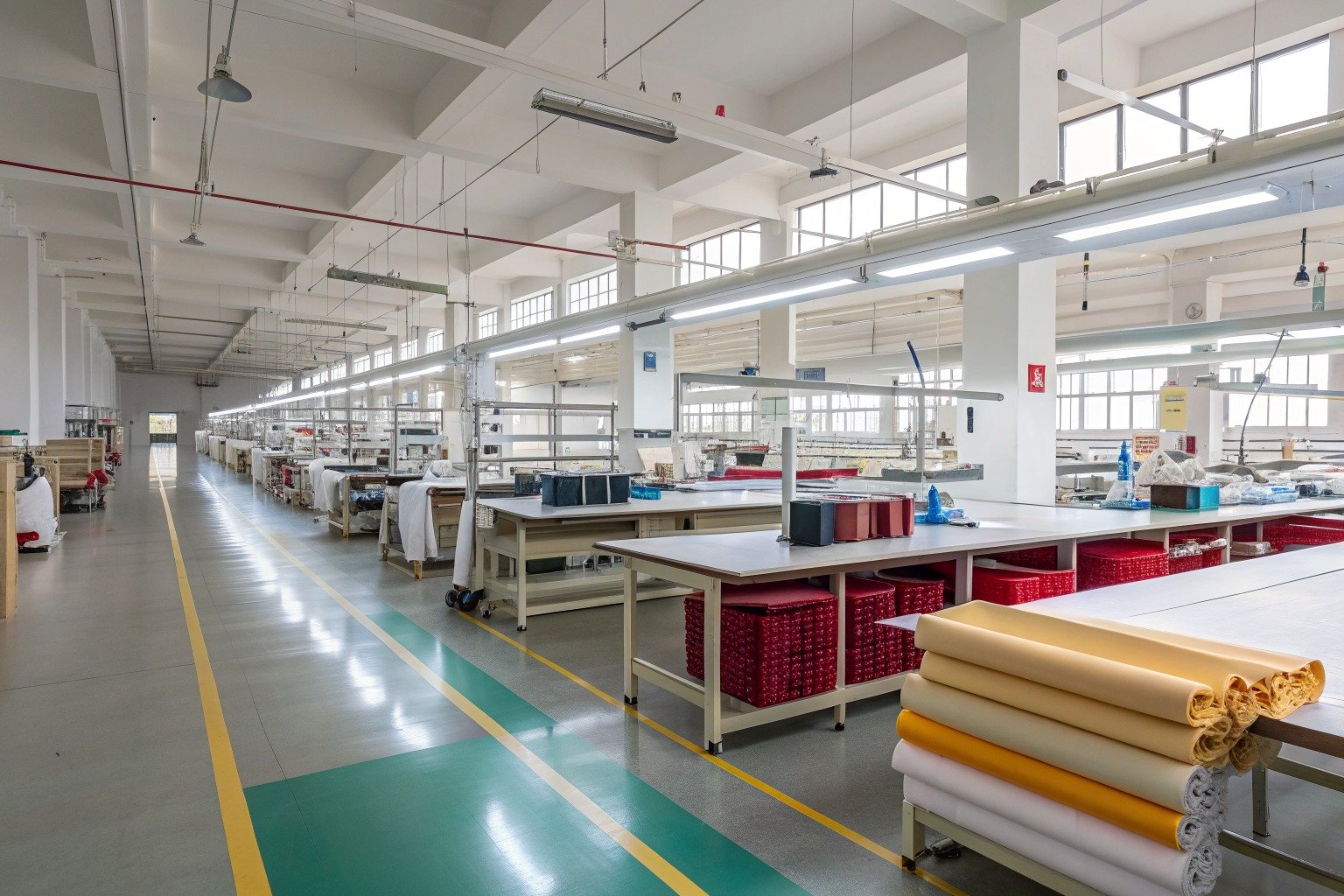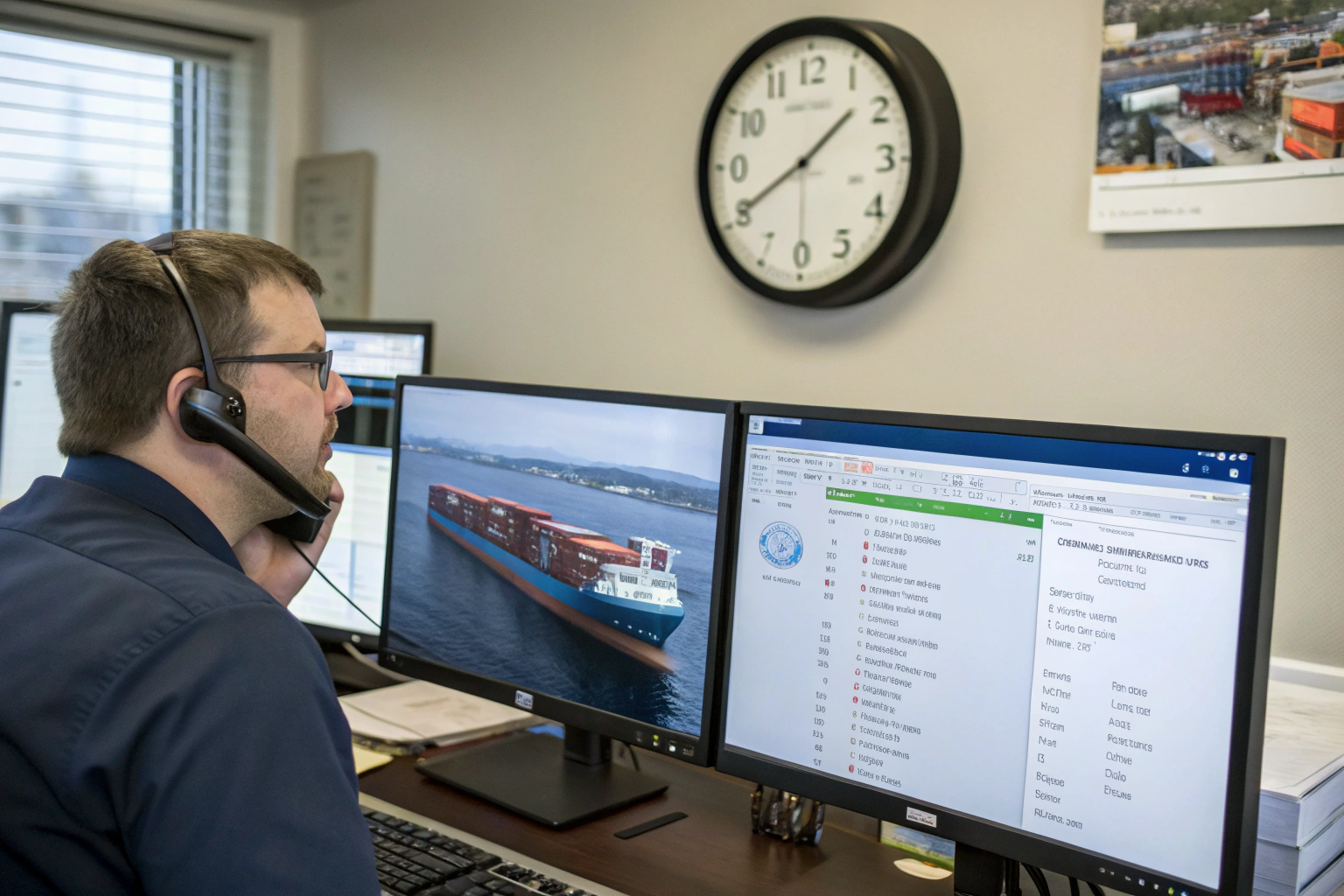
A buyer from a US promotional products company once called me at 9:30 PM China time. Her shipment of 30,000 custom scarves was scheduled to depart the port of Shanghai in 14 hours. The container was already at the terminal. The bill of lading had been drafted. The customs entry had been prepared. And then her client called. The delivery address had changed. The goods could not go to the original distribution centre in New Jersey. They had to go to a different facility in California. A completely different port. A completely different inland routing. She was panicked. She asked me if it was too late to change. I told her it was late, but not too late.
Our team handles a last-minute address change for a US shipment by immediately contacting the shipping line and the freight forwarder to request a bill of lading amendment, updating the commercial invoice and packing list, and communicating the change to the US customs broker to ensure the entry is filed against the correct destination. The timeline and cost depend on the stage of the shipment. Changes before vessel departure are manageable with amendment fees. Changes after vessel departure are more complex and may require re-routing at the destination port.
At Shanghai Fumao, we ship hundreds of containers to the United States every year. Address changes happen. They are stressful, but they are manageable when you have experienced logistics staff, established relationships with forwarders and shipping lines, and a clear process for executing changes quickly and correctly. Let me explain exactly how we handle this situation.
What Are the Critical Time Windows for a Shipment Address Change?
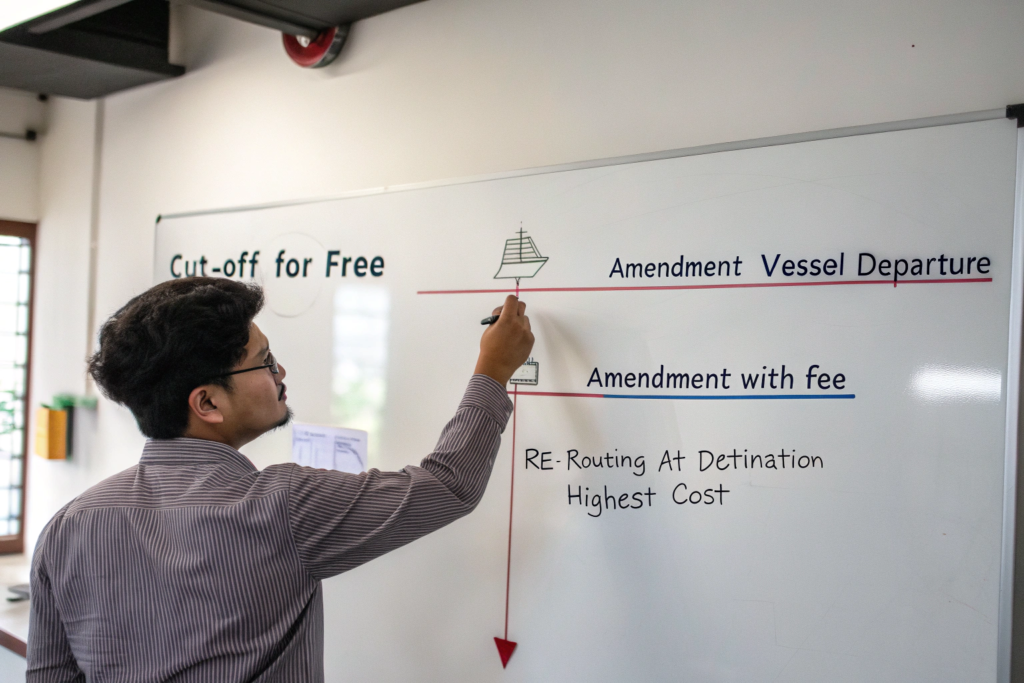
The cost and feasibility of an address change depend entirely on when you catch it. There are three critical windows. The first window is before the container is loaded onto the vessel. This is the easiest and cheapest time to make a change. The bill of lading has not been finalised. The shipping line can amend the consignee or notify party details with a simple amendment instruction and a small fee, typically $50 to $150. The container routing has not been set in stone.
The second window is after vessel departure but before the container arrives at the destination port. The bill of lading has been issued. Amendments are still possible, but they are more expensive and require more documentation. The shipping line will charge an amendment fee, and the customs entry at destination may need to be amended. The third window is after the container has arrived at the destination port. At this point, the goods have already been entered into the destination port’s system. Changing the delivery address requires re-routing the container, which incurs port storage fees, re-handling charges, and possibly customs re-entry fees. This is the most expensive and time-consuming scenario.
How Do We Execute a Change Before Vessel Departure?
When you notify us of an address change before vessel departure, our logistics coordinator immediately contacts the freight forwarder with the new consignee and delivery address details. The forwarder contacts the shipping line to request a bill of lading amendment. The amendment changes the consignee field, the notify party field, or both, depending on your instructions.
Simultaneously, our documentation team updates the commercial invoice and the packing list to reflect the new delivery address. These documents must match the bill of lading and the customs entry. A mismatch between documents causes delays at the destination port. The updated documents are sent to you for approval within hours. Once approved, they are sent to the forwarder and to the US customs broker. The customs broker amends the entry to reflect the new destination. The container sails with the correct destination. The process is complete before the vessel leaves the port. This is the ideal scenario, and we work to execute it as quickly as possible. Understanding bill of lading amendment procedures is essential for navigating this first window successfully.
What Happens If the Container Has Already Sailed?
If the container has already sailed, the bill of lading amendment is still possible, but it requires more coordination. The shipping line will process the amendment, but they will require a letter of indemnity from the shipper. This letter confirms that the shipper accepts liability for any consequences of the amendment. The amendment fee is higher, typically $200 to $400.
The US customs broker must also amend the entry. If the entry has already been filed against the original port of discharge, the amendment may require changing the port code, which is a more complex amendment type. The broker will advise on the feasibility and the cost. If the change involves a different port of discharge, the container may need to be re-routed. This involves the shipping line arranging for the container to be discharged at the new port and trucked to the new delivery address. Re-routing fees, port handling charges at the new port, and potential storage charges at the original port all apply. The total cost can run to several hundred dollars. Professional container re-routing and amendment costs should be understood before you make the change, so you can make an informed decision about whether the change is worth the cost.
What Documentation Updates Are Required for an Address Change?
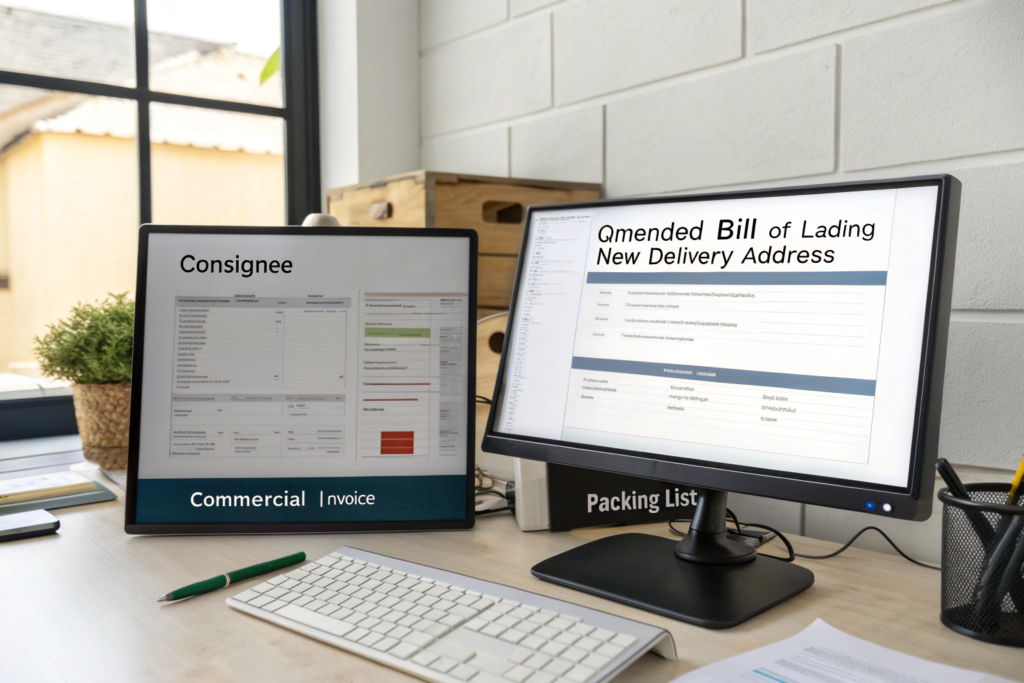
An address change is not just a matter of telling the shipping line a new address. Every document in the shipment package must be updated to reflect the new destination. A mismatch between any two documents can cause the container to be held at the destination port, incurring demurrage charges of hundreds of dollars per day.
The documents that must be updated include the bill of lading, which is the contract of carriage and the document of title. The commercial invoice, which states the seller, the buyer, and the delivery terms. The packing list, which details the cartons and the contents. The certificate of origin, if the shipment requires one for duty preference claims. The customs entry, which is filed electronically with US Customs and Border Protection. All of these documents must show the same consignee and the same delivery address. We maintain a documentation checklist for every shipment. When an address change is requested, we run through the checklist and update every affected document systematically.
How Do Incoterms Affect Responsibility for Address Changes?
The Incoterm, or International Commercial Term, that governs your shipment determines who bears the risk and the cost of an address change. Under FOB terms, the buyer assumes risk and cost once the goods are loaded onto the vessel. An address change after loading is technically the buyer’s responsibility and cost. Under CIF or DDP terms, the seller retains responsibility for the goods until they arrive at the named destination. An address change before arrival may be the seller’s responsibility.
In practice, we handle the logistics of the address change regardless of the Incoterm. We have the relationships with the forwarder and the shipping line. We can execute the change faster than the buyer can from overseas. We then pass through any amendment fees or re-routing charges to the buyer, or absorb them depending on the circumstances and the commercial agreement. The key is to execute the change first and resolve the cost allocation second. The priority is getting your goods to the right place. Professional Incoterms and shipping responsibilities should be clearly stated in every purchase order to avoid disputes when changes occur.
What Role Does the US Customs Broker Play in the Change?
The US customs broker is your representative before US Customs and Border Protection. The broker files the entry that allows your goods to enter US commerce. When the delivery address changes, the broker must amend the entry to reflect the new destination. If the change involves a new port of discharge, the broker must file an entry amendment with the new port code.
The broker will also coordinate the final delivery trucking from the port to the new address. If the original trucking arrangement was to New Jersey and the new address is in California, the broker must arrange entirely new trucking. The cost difference can be significant. We work with a network of US customs brokers who are familiar with our shipments and can execute amendments quickly. Our project manager communicates directly with the broker to ensure the amendment is filed correctly and the delivery is arranged without delay. Understanding the US customs broker role in imports helps you appreciate why a responsive, experienced broker is a critical part of the address change process.
How Does Our Team Minimise the Cost and Disruption of a Change?
An address change, especially a late one, will incur costs. Our job is to minimise those costs and to communicate them to you transparently so you can make an informed decision. We do not simply execute the change and send you a surprise invoice. We present you with the options, the costs, and the timeline implications of each option.
Sometimes the most cost-effective solution is not to amend the bill of lading at all, but to arrange for the goods to be received at the original destination and then re-consigned to the new address through a domestic trucking arrangement. This avoids ocean freight amendment fees but adds domestic transportation cost. We calculate both options and present them to you. The decision is yours.

What Are the Typical Fees for Different Types of Changes?
A simple bill of lading amendment to change the consignee name or the notify party, without changing the port of discharge, typically costs $50 to $150. This is the most common scenario. A change to the port of discharge, which requires re-routing the container, costs $300 to $800, plus any additional ocean freight charges if the new port is on a different service loop. Storage charges at the original port, if the container has already arrived, can add $50 to $150 per day.
The customs broker will also charge an amendment fee, typically $50 to $150 for a simple entry amendment and $100 to $300 for a more complex amendment involving a port code change. The total cost of an address change can range from under $200 for a simple amendment before sailing to over $1,500 for a complex re-route after arrival. We provide a detailed breakdown of all anticipated fees before proceeding with the change. Understanding ocean freight amendment and re-routing fees helps you budget for the unexpected.
How Do We Communicate the Change Status to You in Real Time?
When you notify us of an address change, you receive an immediate acknowledgement from your project manager. Within hours, you receive a status update confirming that the amendment request has been submitted to the shipping line or the forwarder, and an estimated timeline for the amendment to be processed.
If the container has not yet sailed, you receive confirmation of the amended bill of lading, usually within 24 hours. If the container is in transit, you receive updates at each stage. Amendment requested. Amendment approved. New bill of lading issued. Customs broker notified. Entry amended. Final delivery arranged. You are never left wondering whether the change has been made. Our project manager uses a shipment tracking system that provides real-time visibility, and she communicates critical updates by email and by phone if the situation is urgent. Professional shipment visibility and communication standards are a core part of our logistics service.
Conclusion
A last-minute address change for a US shipment is a high-pressure situation, but it is manageable with the right team, the right relationships, and the right process. The critical factor is timing. A change before vessel departure is a paperwork exercise with modest fees. A change after vessel departure is a logistics operation with higher costs. A change after arrival at the destination port is the most expensive and disruptive scenario.
At Shanghai Fumao, we have handled address changes at every stage of the shipping process. Our logistics team has direct relationships with major freight forwarders and shipping lines, enabling us to request and process amendments quickly. Our documentation team updates all shipping documents systematically to ensure consistency. Our project managers communicate the status of the change to you in real time. We treat your address change with the same urgency that you do.
If you are shipping accessories to the United States and you need a factory with the logistics expertise to handle the unexpected, including last-minute address changes, please contact our Business Director Elaine at elaine@fumaoclothing.com. She can explain our shipping and logistics capabilities and introduce you to the project management team that will keep your shipments on track, even when plans change.