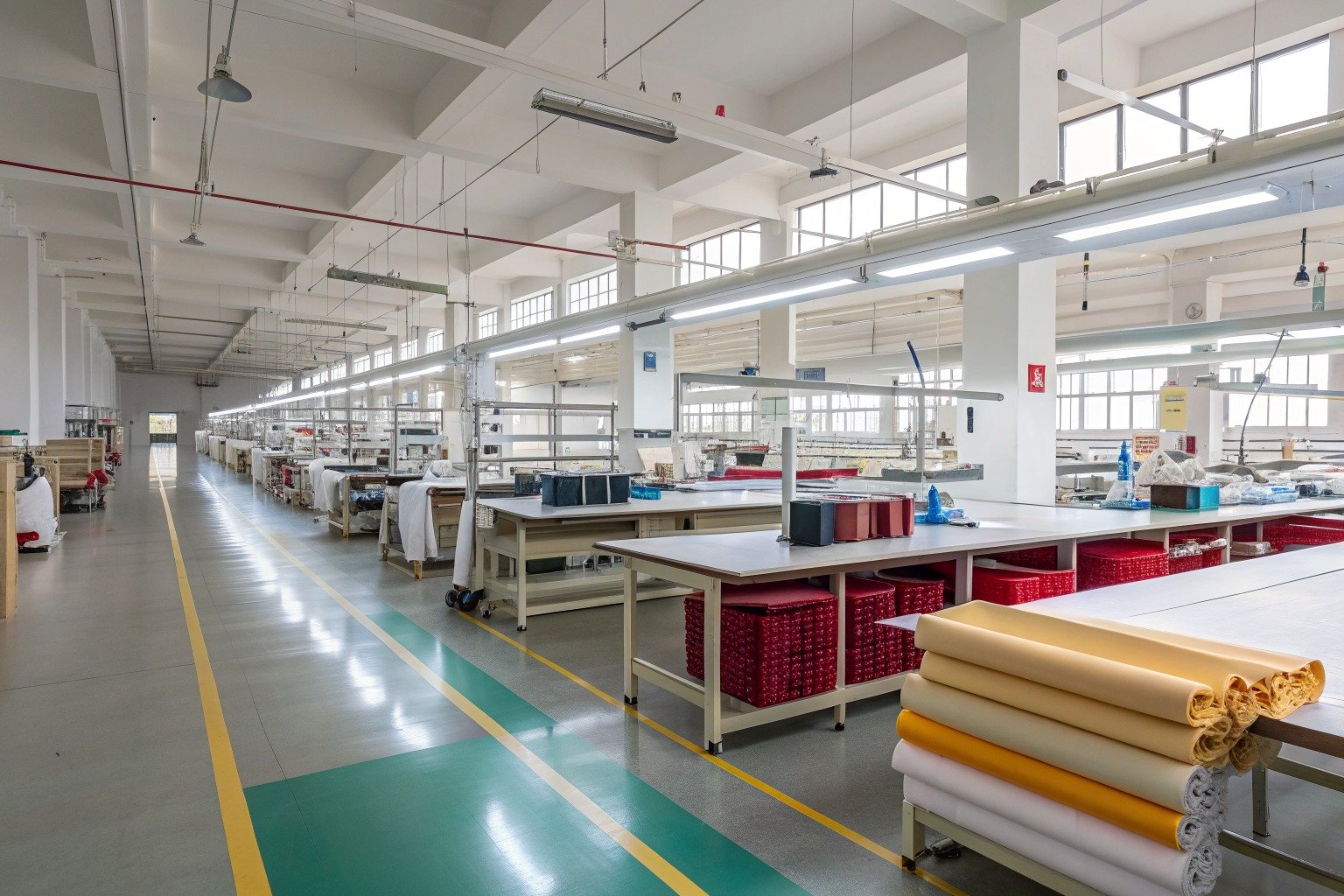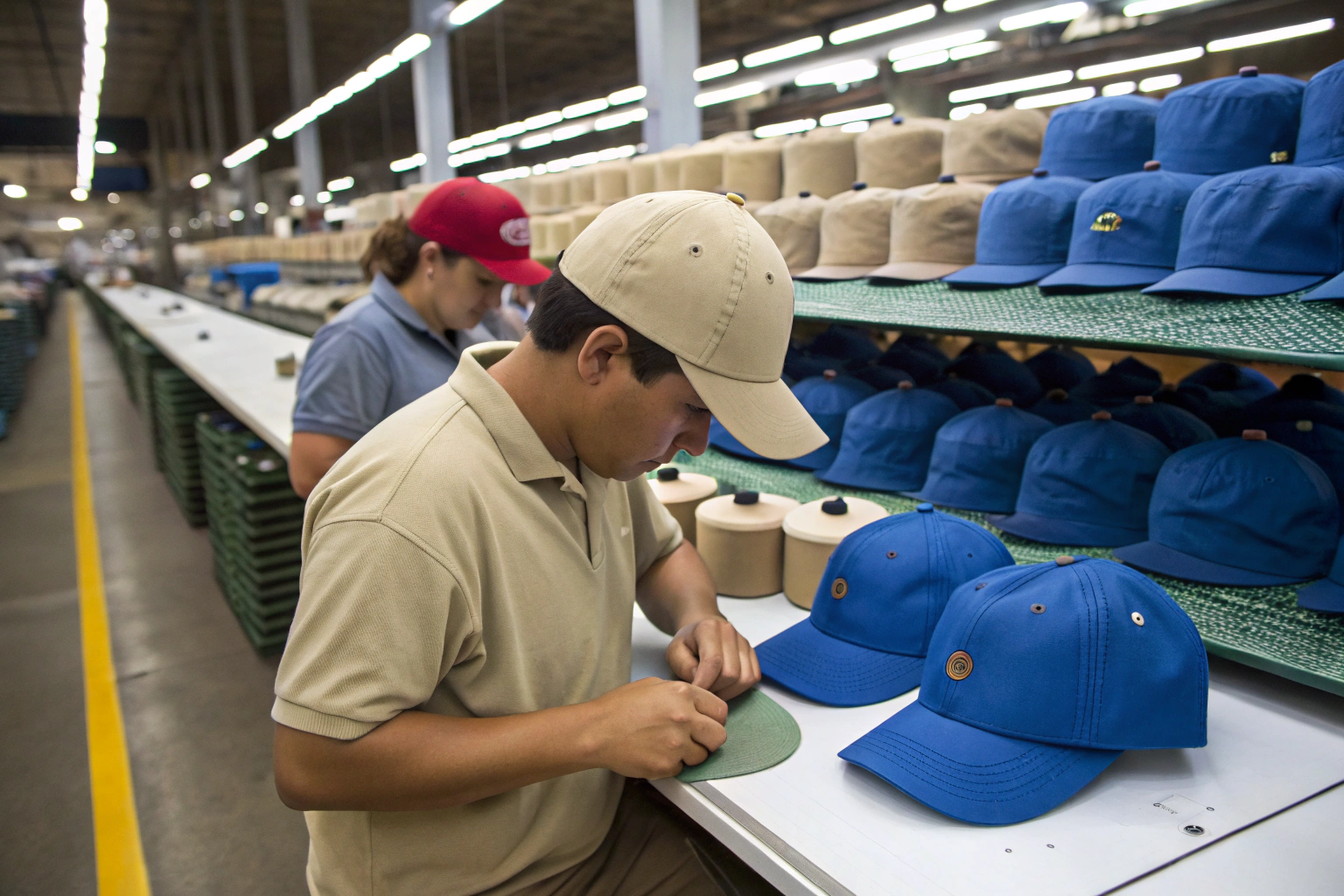
A sports brand buyer from Colorado once sat in my office and asked me this exact question. His company sold two distinct cap lines. A classic cotton dad hat for their casual lifestyle customer, and a technical polyester performance cap for their running and outdoor customer. He had been splitting production between two factories. The cotton factory did not understand performance fabrics. The polyester factory could not get the soft, worn-in feel right on cotton. His logistics were a nightmare. Two shipments. Two sets of documentation. Two quality standards to manage. He asked if a single factory could handle both. I walked him onto our production floor and showed him both caps running simultaneously on adjacent lines under the same roof.
Yes, a well-equipped factory can produce both cotton and polyester baseball caps on the same production floor, often on parallel lines or on the same line with minor changeovers. The critical requirements are sewing machines configured for different fabric weights, operators trained in both natural and synthetic fabric handling, and separate quality control protocols for each material type. At AceAccessory, we run cotton caps and polyester caps daily, often in the same week for the same client.
The capability to handle both materials is not just about having the right machines. It is about having a workforce that understands how cotton behaves differently from polyester and adjusts their handling accordingly. Let me explain how we make this work.
What Are the Key Differences Between Cotton and Polyester Cap Production?
Cotton and polyester are not just different words on a label. They are fundamentally different materials that behave differently under the needle, under the iron, and on the wearer’s head. A factory that treats them the same will produce at least one of them poorly.
Cotton is a natural fiber. It breathes. It absorbs moisture. It wrinkles. It shrinks under heat. It has a soft, matte hand feel that improves with washing. Polyester is a synthetic polymer. It wicks moisture away rather than absorbing it. It resists wrinkles. It is dimensionally stable under heat. It has a smooth, sometimes slick hand feel. These differences dictate every step of the manufacturing process, from cutting to sewing to finishing.
How Does Fabric Cutting Differ for Cotton Twill Versus Polyester Mesh?
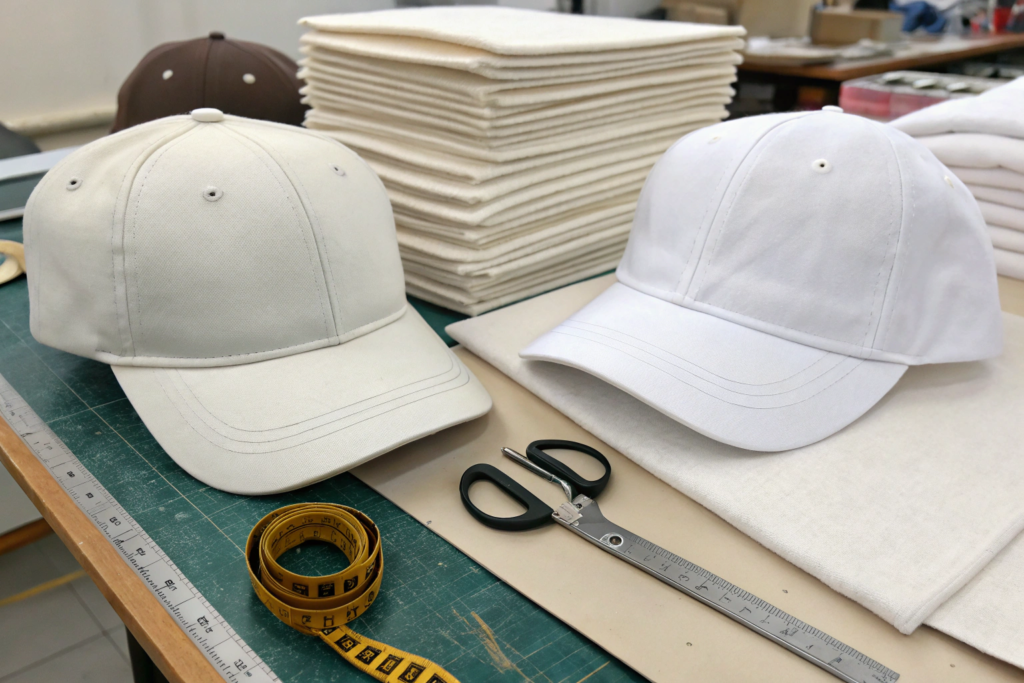
Cotton twill is stable and easy to cut. It lays flat on the cutting table. The layers grip each other, so a stack of fifty plies stays aligned when the cutting blade passes through. A sharp steel blade on a vertical cutting machine handles cotton twill efficiently.
Polyester performance fabrics, especially lightweight mesh or ripstop, are slippery and heat-sensitive. The layers slide against each other. A dull blade can snag the fabric or create frayed edges. For delicate polyester fabrics, we use a band knife cutter or a laser cutter. The laser cutter seals the cut edge of polyester, preventing fraying, which is a common quality issue on synthetic caps. The cutting speed for polyester is often slower than for cotton because the operator must manage layer alignment more carefully. This is why a production line running polyester requires different cutting station equipment and operator training than a line dedicated to cotton. Understanding fabric cutting methods for apparel manufacturing is essential for a factory that processes multiple material types.
Why Do Thread Tension and Needle Selection Vary Between Materials?
Polyester thread on a polyester cap. Cotton or poly-core thread on a cotton cap. The thread must match the fabric for strength, stretch recovery, and dye compatibility. Using cotton thread on a polyester cap results in seam failure because the cotton thread absorbs moisture and degrades while the polyester fabric remains intact.
Needle selection is equally specific. Cotton fabrics are forgiving on needle type. A standard sharp point needle works well. Polyester knits and microfiber fabrics require a ballpoint needle that slides between the yarns without cutting them. A sharp needle on polyester knit can create small holes that grow into visible runs during wear. Our sewing technicians change needles and adjust thread tension when switching between cotton and polyester cap production. A tension setting that produces a flat, even seam on cotton may pucker or skip stitches on polyester. Professional sewing machine setup for different fabrics is a skill that separates a specialist factory from a generalist one.
How Does Our Production Line Handle Both Materials?
The secret to producing both cotton and polyester caps in one factory is not a magical universal machine. It is organization. We structure our cap production area to handle both materials without cross-contamination, without machine settings errors, and without quality compromises.
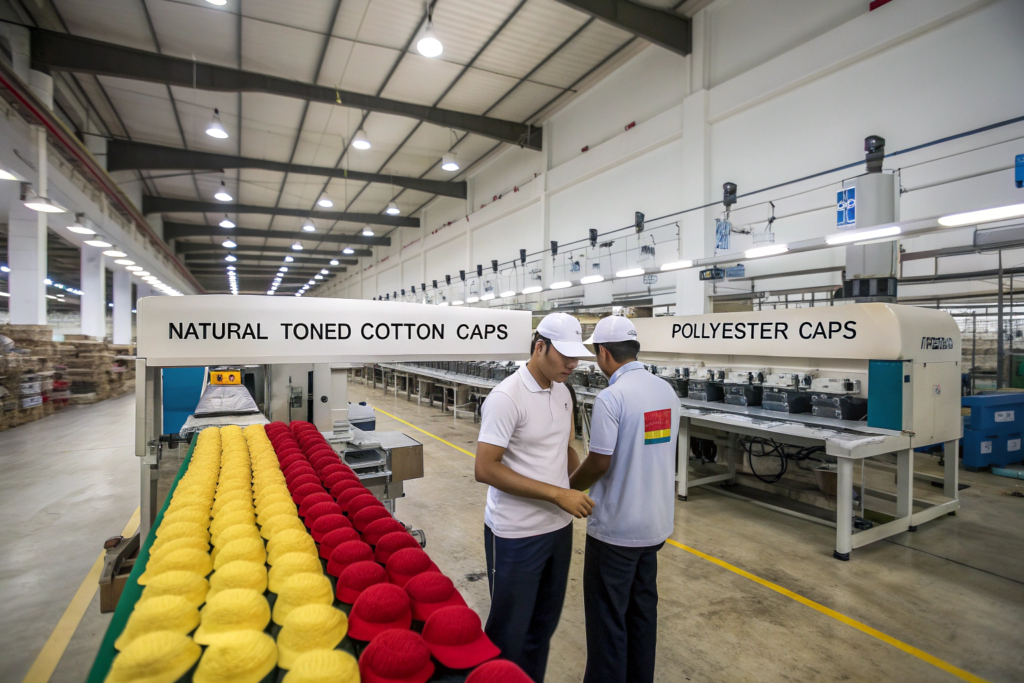
Our production floor has dedicated zones, not necessarily separate buildings or even separate rooms, but clearly defined areas where the equipment and the operator training are optimized for the material at hand. A cap moves through its zone from cutting to sewing to finishing without mixing with caps made from the other material.
What Machine Adjustments Are Needed When Switching Materials?
The switchover from cotton cap production to polyester cap production on the same sewing line takes approximately thirty minutes. The sewing technician adjusts the thread tension on every machine. Cotton requires moderate tension. Polyester mesh requires lighter tension to prevent puckering. The presser foot pressure is adjusted. Cotton needs firm pressure to feed evenly. Slippery polyester needs lighter pressure to prevent the top ply from sliding ahead of the bottom ply.
The feed dogs, the metal teeth that pull the fabric through the machine, are also checked. Fine polyester fabrics require feed dogs with more teeth per inch for even feeding without marking the fabric. The ironing stations are adjusted too. Cotton caps are shaped with steam and a hot iron. Polyester caps are shaped with lower heat to prevent melting or glazing the fabric surface. Some polyester caps use a cool press or an air-form finishing machine instead of a traditional iron. These adjustments are standard operating procedure. The cost of skipping them is a production run of caps with puckered seams, uneven topstitching, or shiny iron marks. Disciplined production line changeover procedures protect quality during material switches.
How Are Operators Trained to Handle Both Fabric Types?
An experienced cap sewer does not just know how to sew. They know how fabric behaves. A sewer working on cotton caps knows to expect some natural shrinkage when the cap hits the steam iron and adjusts the seam allowance pre-emptively. A sewer working on polyester knows the fabric will not shrink, so the seam allowance is exact from the start.
We cross-train our operators. A new sewer starts on cotton caps because cotton is the more forgiving material. Once they demonstrate consistent quality, they train on polyester caps under the supervision of a senior sewer. The training covers fabric handling, machine adjustment, defect recognition, and quality standards specific to each material. A sewer who can work both materials is more valuable to the factory and produces more consistent quality for our clients. This investment in cross-training in manufacturing means we can allocate labor flexibly depending on which material is in higher demand that week.
What Quality Control Checks Differ Between the Two Materials?
A quality control checklist that works for cotton caps misses critical defects on polyester caps, and vice versa. The two materials fail in different ways. Our QC process recognizes this and applies material-specific inspection criteria.
Cotton caps tend to fail on shrinkage distortion, color bleeding in the sweatband, and seam puckering after washing. Polyester caps tend to fail on seam slippage, snagging, and heat damage from logo application. A good QC inspector knows which defects to look for based on the material in front of them.
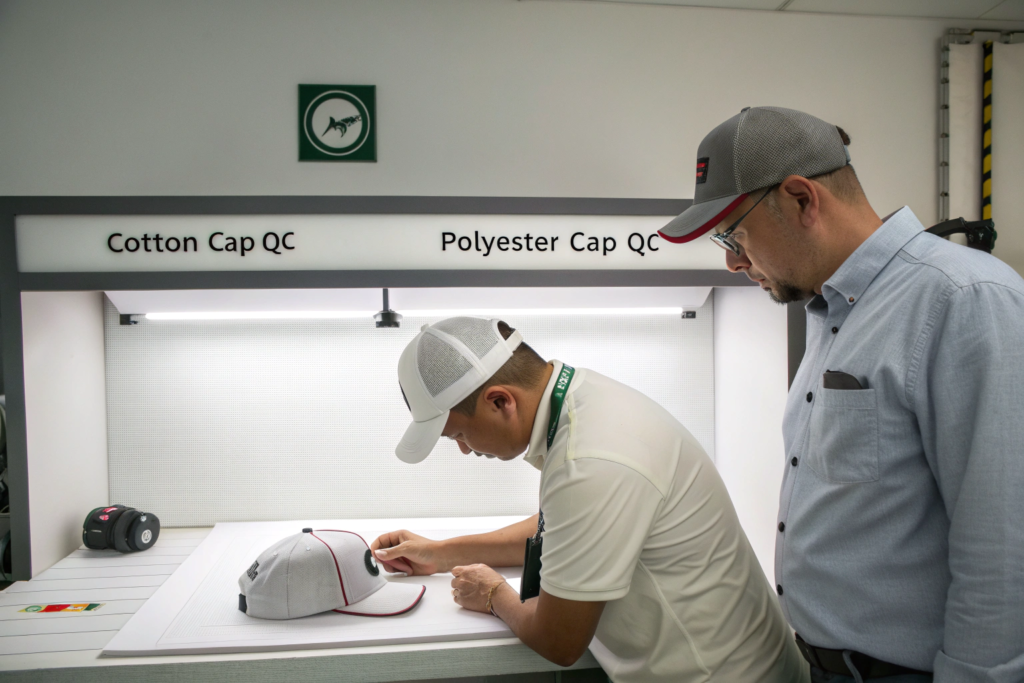
What Are the Common Defects in Cotton Cap Production?
Cotton caps present defects related to the material’s natural characteristics. Shrinkage distortion is the most common. The cap panels are cut to size, but steam finishing can shrink the cotton unevenly, causing the crown to twist or the brim to warp. Our QC team measures every cotton cap against a template after finishing to ensure the shape is correct.
Color inconsistency between panels is another cotton-specific risk. Cotton absorbs dye at slightly different rates depending on the fiber source, the yarn twist, and the fabric batch. We check panel-to-panel color consistency under a lightbox for every cotton cap. The sweatband is also inspected for colorfastness. A cotton sweatband that bleeds dye onto the wearer’s forehead on a hot day is a return waiting to happen. We test sweatband colorfastness with a wet-fabric rub test. If color transfers to the test cloth, the batch is rejected. Understanding textile quality defects and prevention helps buyers communicate their quality expectations clearly.
What Defects Are Unique to Polyester Cap Manufacturing?
Polyester caps have their own failure modes. Seam slippage is the most common. Polyester yarns are smooth and can slide past each other under tension, causing seams to open up even though the thread did not break. Our QC team tests seam strength on every polyester cap batch by applying a calibrated pull force to the seams. Seams that slip open at less than the specified force are rejected.
Heat damage from logo application is another polyester-specific risk. Heat transfer logos and silicone patches are applied with a heat press. If the press temperature is too high or the dwell time too long, the polyester fabric can glaze, melt, or develop a shiny iron mark that is permanent and visible. Our heat press operators use calibrated digital presses with material-specific settings. The QC team inspects the area around every applied logo for heat damage. Snagging is also a concern. Polyester mesh and microfiber can snag on rough surfaces during production. We inspect the finished cap surface under angled light to catch snags that are invisible under direct light. Professional quality control for synthetic apparel requires material-specific knowledge and inspection techniques.
How Can a Single-Factory Strategy Benefit Your Cap Sourcing?
Consolidating your cotton and polyester cap production with a single factory is not just about convenience. It delivers measurable business benefits in cost, quality, and speed to market. The Colorado buyer I mentioned earlier reduced his total landed cost by 8% within six months of consolidating with us, primarily through consolidated shipping and reduced sampling coordination overhead.
A single factory that produces both cap types gives you a single point of accountability. One project manager. One quality standard. One shipping schedule. One invoice. The simplification is valuable in itself, but the deeper benefit is strategic. Your factory now understands your full brand range, not just one material segment.
How Does Consolidated Shipping Reduce Your Landed Cost?
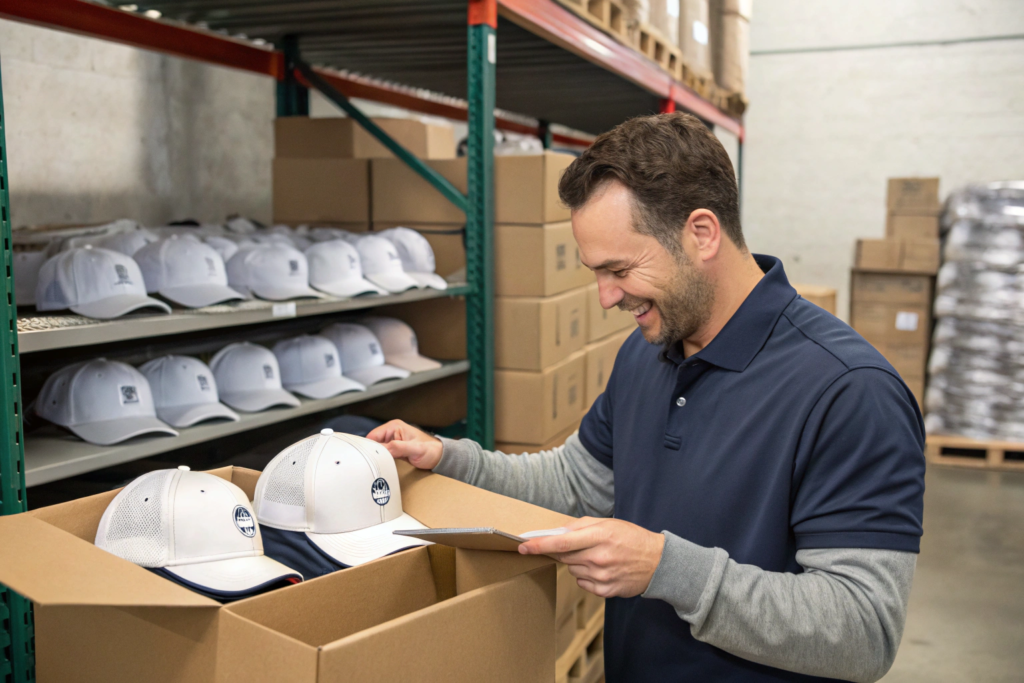
Shipping 500 cotton caps and 500 polyester caps from two different factories means paying for two minimum freight charges, two sets of documentation fees, and two customs clearance charges. Shipping 1,000 caps from one factory means one freight charge, one set of documents, and one customs clearance. The freight cost per cap drops significantly.
Beyond the direct freight savings, you save time. Managing one shipment instead of two frees up your logistics coordinator’s hours. You track one container instead of two. You process one customs entry instead of two. The administrative savings are real, even if they are harder to quantify on a per-unit basis. Consolidated international shipping cost optimization is one of the fastest ways to improve your import margins.
Why Does a Single Quality Standard Across Materials Strengthen Your Brand?
Your brand is a single entity in your customer’s mind. The customer who buys your cotton dad hat and loves it will try your polyester performance cap next season. They expect the same level of quality. If the cotton cap had clean topstitching and a perfectly shaped brim, they expect the polyester cap to have the same. They do not know or care that the materials are different.
A single factory that produces both caps can apply a unified quality philosophy across your entire range. The stitch density, the brim curve, the sweatband comfort, and the overall attention to detail feel consistent. This consistency builds brand trust. The customer learns that any cap with your label meets a certain standard, regardless of the fabric. This is how strong brands are built. Consistent brand quality assurance through manufacturing requires a manufacturing partner that sees your full product line, not just isolated SKUs.
Conclusion
A well-equipped factory can absolutely produce both cotton and polyester baseball caps on the same production floor. The capability requires the right cutting equipment for each material, sewing machines with adjustable tension and feed settings, operators trained in both natural and synthetic fabric handling, and quality control protocols specific to each material’s failure modes.
At AceAccessory, we run cotton caps and polyester caps daily. Our production floor is organized to handle both materials without cross-contamination or quality drift. Our operators are cross-trained. Our QC teams use material-specific checklists. Our project managers coordinate consolidated shipments that reduce your freight costs and simplify your logistics. Our clients enjoy the simplicity of a single point of contact for their entire cap collection, from the classic cotton dad hat to the technical polyester performance cap.
If you are currently splitting your cap production between multiple factories and you want to explore consolidation with a single qualified partner, please contact our Business Director Elaine at elaine@fumaoclothing.com. Send her your cap designs, your material specifications, and your volume projections. She will provide a consolidated quotation, arrange sampling for both cotton and polyester styles, and demonstrate how a single-factory strategy can improve your margins and simplify your life.