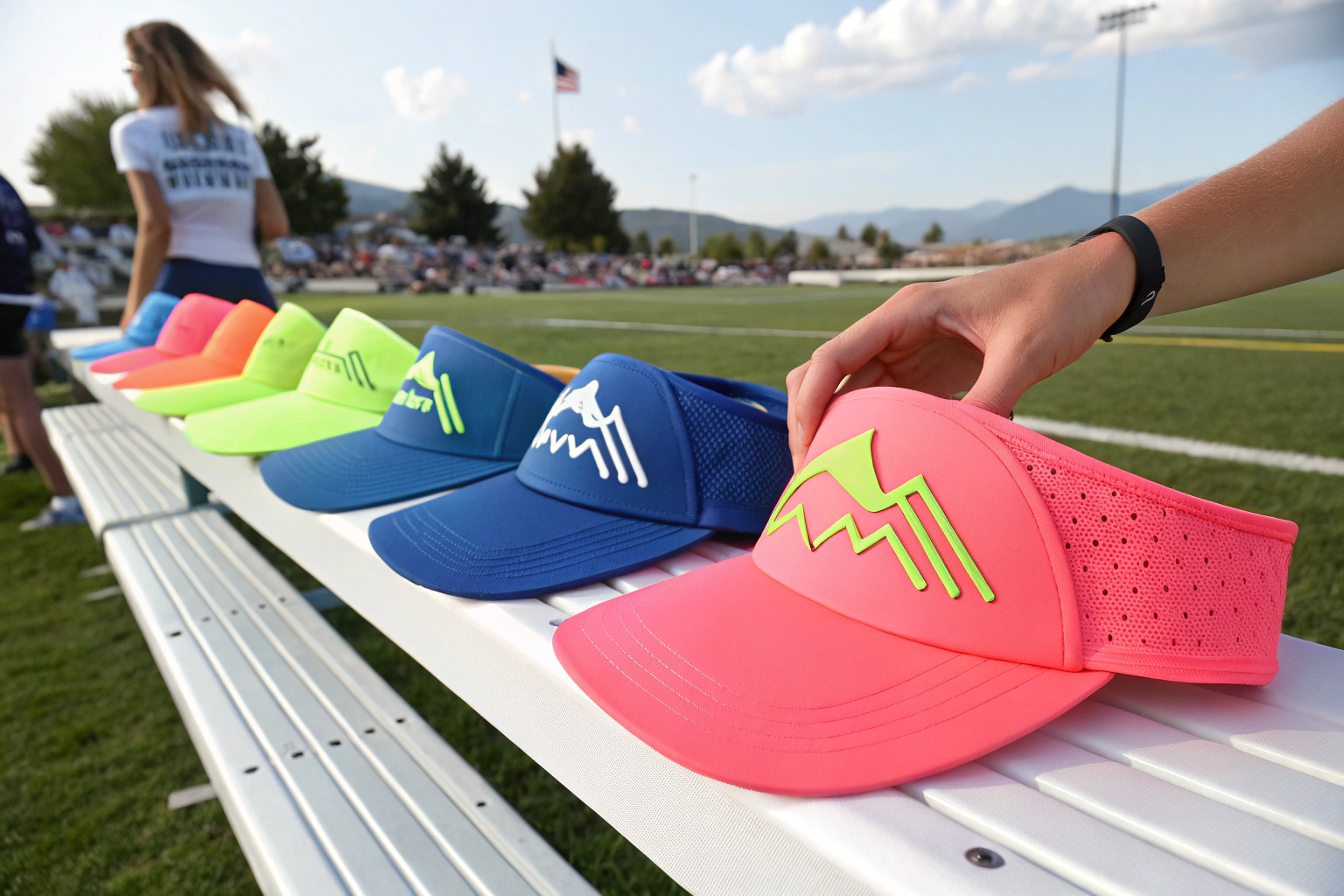
A youth soccer league director from Colorado called me in March with a problem. Her league’s annual summer tournament was three months away, and she needed 1,200 custom foam visors shaped like mountain peaks for the team gift bags. Every promotional product supplier she contacted quoted her minimums of 2,500 or 5,000 pieces and lead times that pushed delivery into August. She was ready to cancel the visor idea entirely and order generic baseball caps that would end up in the trash by July. I told her to hold off on the caps. We delivered her mountain-peak visors in June, at a quantity that fit her budget, and the kids wore them proudly through the entire tournament weekend. That moment taught me that minimum order quantities for custom products are not fixed numbers. They are a reflection of a factory’s flexibility, its equipment setup, and its willingness to solve a client’s real problem rather than just fill a production slot.
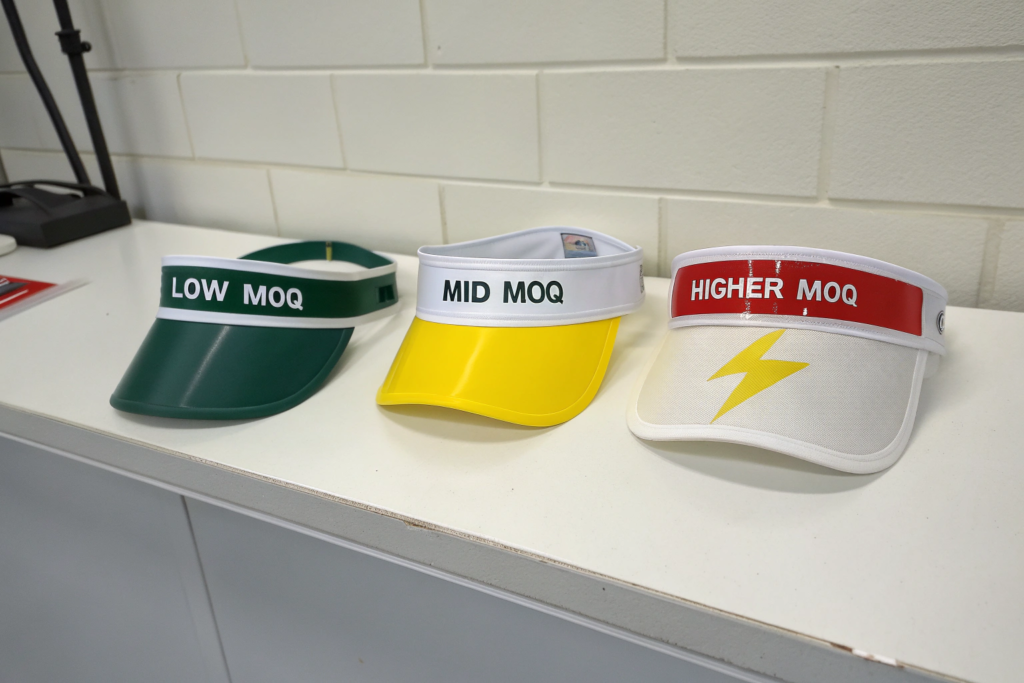
The minimum order quantity for custom shaped foam visors for sports typically starts at 500 to 1,000 pieces per design, depending on the complexity of the custom shape, the number of color variations, and whether the visor requires additional customization like printed logos, woven labels, or custom packaging. At our factory, we have lowered the barrier to 300 pieces for a single design in a single colorway because we understand that sports teams, running clubs, charity events, and boutique fitness brands need smaller, more targeted production runs than the mass-market promotional products industry typically accommodates.
This lower minimum is possible because we have invested in digital die-cutting technology that eliminates the need for expensive steel rule dies for simple custom shapes. It is possible because we stock blank foam visor sheets in a wide range of colors, ready to be cut to any shape our clients can design. And it is possible because we have built our production scheduling around flexibility rather than maximum efficiency. I want to walk you through exactly how custom foam visor orders work, from the minimum quantity thresholds and the factors that influence them, to the customization options available and the lead times you should plan for your event or retail launch.
What Factors Determine the Minimum Order Quantity for Custom Foam Visors?
The minimum order quantity is not an arbitrary number pulled from a pricing sheet. It is calculated based on the setup costs and material consumption associated with your specific design. Every custom production run requires a setup process. Cutting dies must be created or digital cutting paths must be programmed. Machines must be calibrated. Material must be allocated. The minimum order quantity is the point at which the revenue from the order covers these fixed setup costs plus the variable production costs with a sustainable margin. If the factory allows you to order below that threshold, it is effectively subsidizing your order, which is not sustainable for either party.
Understanding the specific factors that drive the MOQ for your project empowers you to make design choices that can lower the threshold. If you are flexible on certain specifications, you can often reduce the minimum without sacrificing the visual impact or functionality of the visor. The three primary factors are the complexity of the custom shape, the number of color variants within a single order, and the type and placement of branding or decoration.
How does the complexity of the custom die shape affect the minimum?
The cutting die is the tool that stamps your custom visor shape out of the foam sheet. For simple shapes, a gentle curve, a standard sports visor silhouette with a slightly extended brim, we can use a digital oscillating knife cutter. This machine reads a digital vector file of your shape and cuts it directly from the foam sheet with no physical die required. The setup cost is essentially the labor to program the cutting path, which is minimal. This allows us to offer the 300-piece entry-level minimum. For complex shapes, a visor with intricate internal cutouts, a jagged edge pattern, or a highly detailed logo silhouette integrated into the brim shape, a digital knife may not achieve the required precision or speed for production quantities. We need to fabricate a steel rule die. This is a custom-made cutting tool with sharp steel blades bent and mounted into a plywood base in the exact shape of your visor. The die fabrication costs several hundred dollars and takes several days. This cost must be amortized across the production run. If you order 300 pieces, the die cost per piece is high. If you order 1,500 pieces, the die cost per piece becomes negligible. This is why complex shapes that require a steel rule die typically carry a higher minimum order quantity, usually 1,000 pieces or more. The die cutting process is a significant investment that makes economic sense only at scale.
Why do multiple color variations increase the minimum order per design?
Color variation is a hidden MOQ multiplier. Each colorway requires a separate production setup. The cutting machine or die must be loaded with a different color foam sheet. The operators must reset and recalibrate. The finished pieces must be sorted and packaged separately to prevent color mixing in the final shipment. If you order 300 visors total, but you want them in four different team colors, that is effectively four separate production runs of 75 pieces each. The per-unit labor cost for 75 pieces is significantly higher than for 300 pieces of a single color. The MOQ reflects this. We typically require a minimum of 300 pieces per design, but that minimum applies per colorway as well for very small runs. For orders with multiple colorways, we often recommend consolidating the visor body color and expressing team differentiation through a printed logo or a removable sweatband insert rather than a completely different foam color for each team. This allows you to order a single production run of the foam body and then differentiate the teams with a lower-cost, lower-setup decoration process. The color variation impact on production is a real operational factor that affects pricing and minimums.
What Customization Options Are Available for Shaped Foam Sports Visors?
The custom shape is the foundation of your visor’s identity. The customization options layered on top of that shape are what transform a generic foam visor into a branded team accessory, a memorable event giveaway, or a retail-ready product. The foam visor category has evolved dramatically from the simple, single-color, promotional product of the past. Modern digital printing, laser cutting, and advanced material options have opened up design possibilities that rival custom apparel in visual impact.
We offer six primary customization dimensions for shaped foam visors. Material type and thickness, color matching, cutting technique, surface decoration, functional add-ons, and packaging. Each dimension offers multiple options at different price points and with different minimum quantity implications. The art of designing an effective custom visor program is to select the combination of options that maximizes visual impact within your budget and quantity constraints.
How does digital printing vs. screen printing change the design possibilities?
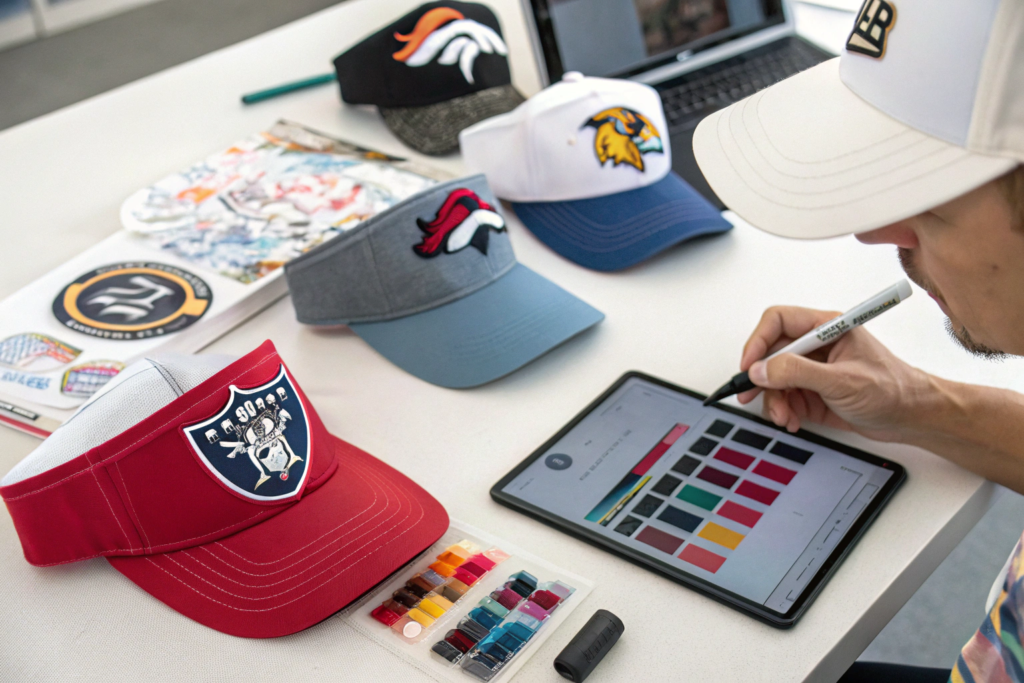
Screen printing is the traditional method for decorating foam visors. It produces a durable, opaque, and vibrant print. It is cost-effective at quantities of 500 pieces and above because the screen setup cost is amortized over the production volume. However, screen printing is limited in the number of colors it can economically reproduce. Each color requires a separate screen, and each screen adds setup cost. A design with five or six colors becomes expensive quickly. Digital printing, specifically UV-curable inkjet printing directly onto the foam surface, removes this limitation entirely. There is no screen and no color limit. You can print a full-color photograph, a complex gradient, or a multi-color team mascot illustration with no additional setup cost beyond the digital file preparation. Digital printing is also the only method that can economically print variable data, meaning each visor in the run can have a unique name, number, or QR code. This is a powerful feature for sports events where participants want their race bib number or team roster name on their visor. The trade-off is that digital printing on foam has a slightly different finish than screen printing. The ink sits more on the surface and may have a different sheen. We work with clients to test both methods on their specific foam material and design to determine the best match. The digital vs screen printing comparison is one of the first conversations we have during the design phase.
What functional add-ons like sweatbands and reflective trim are popular for 2026?
The 2026 sports visor market is demanding more than just sun protection. Athletes and event participants expect performance features integrated into the visor design. The most requested functional add-on is a built-in moisture-wicking sweatband. We offer two attachment methods. The first is a sewn-in terry cloth or microfiber sweatband that is permanently attached to the inner brim of the visor. This provides maximum absorption and a secure fit but limits the ability to replace the sweatband after heavy use. The second is a hook-and-loop attachment system that allows the wearer to remove and wash or replace the sweatband. This is preferred by running clubs and triathlon teams who use the visors repeatedly in high-sweat conditions. The second major trend is reflective trim for visibility. A reflective piping sewn along the edge of the visor brim or a reflective heat-transfer logo on the front panel dramatically increases the wearer’s visibility to vehicles during early morning or evening runs. We source our reflective materials from suppliers certified to high-visibility safety standards such as ANSI/ISEA 107. This feature transforms the visor from a simple sun shade into a piece of safety equipment, which adds perceived value and justifies a higher price point for the event organizer or retail buyer. Other growing add-on requests include a silicone grip strip on the inner brim to prevent the visor from sliding during intense activity, and a small, hidden zip pocket on the strap for a key or a gel packet. These performance visor features are defining the premium tier of the custom sports visor market.
What Is the Typical Lead Time for a Custom Foam Visor Order?
Lead time is the silent partner in every custom product conversation. You can design the most brilliant visor shape and negotiate the perfect minimum order quantity, but if the production timeline does not align with your event date or retail floor set, the project fails. Custom foam visors are not an off-the-shelf product. They require a sequence of production stages that each consume time, and those stages cannot be compressed indefinitely without risking quality.
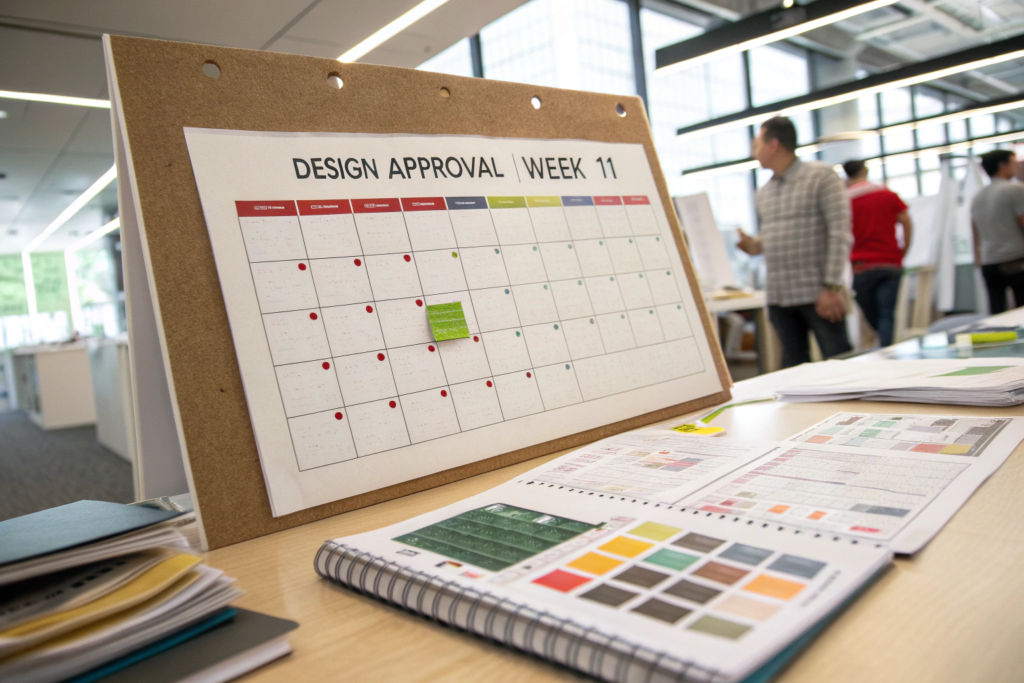
The standard lead time for a custom shaped foam visor order is five to seven weeks from final design approval to delivery at a US port or distribution center. This timeline breaks down into approximately one week for material preparation and cutting tool setup, two to three weeks for bulk production and decoration, and two to three weeks for ocean freight and customs clearance. Rush orders can be compressed to three to four weeks using air freight and prioritized production scheduling, but the freight cost increases substantially. I want to break down the timeline so you can plan your project with realistic expectations and avoid the panic of a last-minute order.
How long does the die fabrication and sample approval phase take?
The die fabrication phase is the first major time block after you approve the final design. For a simple shape cut with a digital oscillating knife, there is no physical die to fabricate. The programming of the cutting path takes one to two days, and a sample can be cut and shipped to you within three to five business days. For a complex shape that requires a steel rule die, the die fabrication process takes seven to ten business days. The die maker bends the steel blades to your exact shape, mounts them in the plywood base, and tests the die on sample foam material. Once the die passes internal testing, we cut a set of pre-production samples and ship them to you by express courier. International courier delivery to the US takes three to five business days. You review the samples, provide feedback or approval, and return any marked-up samples. This approval loop, including your review time and shipping in both directions, typically consumes one to two weeks. This sampling and approval process is the most variable part of the timeline because your review speed directly affects the schedule. We provide a prepaid return shipping label with every sample shipment to eliminate the delay of arranging your own courier.
What shipping options are available for time-sensitive sports events?
Sports events have fixed dates. A tournament on June 15th is on June 15th, regardless of production delays. The shipping method is your primary tool for managing the delivery timeline when the production schedule is tight. Standard ocean freight from our port in China to a major US West Coast port takes approximately 14 to 18 days on the water, plus 3 to 5 days for port unloading, customs clearance, and trucking to your destination. This is the most cost-effective option and the one we recommend for orders placed with at least 8 weeks of lead time before the event date. For orders with compressed timelines, we offer air freight consolidation. The goods are flown to a US hub airport, cleared through customs, and delivered by ground within 5 to 7 business days from the ship date. The cost premium for air freight on foam visors, which are lightweight but voluminous, is typically two to three times the ocean freight cost. The calculation is whether the air freight premium is worth the certainty of on-time delivery for your event. For a charity run with 2,000 participants, the answer is almost always yes. The cost of 2,000 disappointed participants is far higher than the air freight surcharge. We work with our logistics partners to provide air freight and express shipping quotes alongside the ocean freight quote so you can make an informed decision based on your specific timeline and budget.
How Do You Ensure Consistent Quality Across a Small Batch Order?
A small batch order presents a specific quality challenge. In a large production run of 10,000 pieces, a few defective units represent a fraction of a percent and are absorbed within the overage allowance. In a batch of 300 pieces, every single unit matters. A defect rate of even two percent means six unhappy customers who might be the team captain, the event organizer, or the CEO’s spouse. The quality control system for small batch production must be tighter, not looser, than the system for mass production.
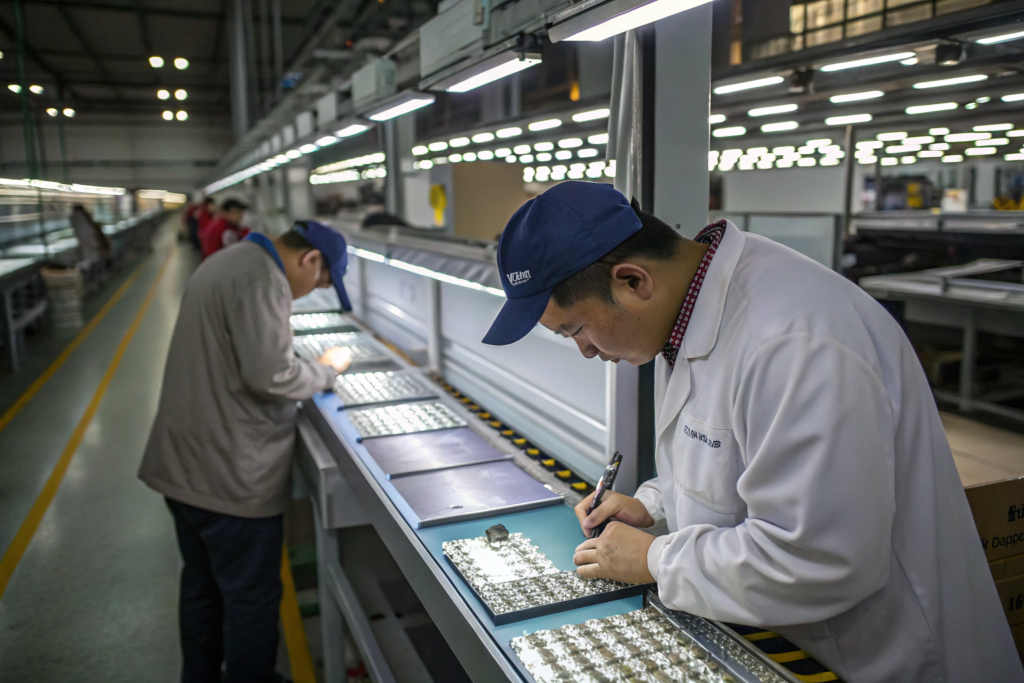
We address this by applying the same AQL statistical sampling methodology to small batches that we apply to large ones, but with a more conservative acceptance threshold. We also assign our most experienced operators to small batch runs because their skill reduces the variability that a less experienced operator might introduce. The goal is to produce a small batch with the consistency and precision of a large production run, ensuring that every visor in the order meets the same standard.
Why is AQL sampling even more important for small quantity orders?
AQL stands for Acceptable Quality Limit. It is a statistical sampling method that determines how many units from a production lot must be inspected and how many defects are allowed before the lot is rejected. For a standard order of 5,000 visors with an AQL of 2.5 Level II, the inspector examines 200 pieces and can accept up to 10 defects. For an order of 300 visors, the same AQL level requires inspecting 50 pieces with an acceptance limit of 3 defects. However, the smaller lot size means that each defect represents a larger percentage of the total order. A single uncorrected defect in a 300-piece order is 0.33% of the order. In a 10,000-piece order, that same defect is 0.01%. The customer perception of quality is driven by the percentage of defective pieces they encounter, not the absolute number. For small batch orders, we tighten the AQL to 1.5 or even 1.0, which means we inspect a slightly larger percentage of the lot and accept fewer defects. This AQL inspection standard provides a scientifically valid, internationally recognized method for ensuring that your small batch meets the same quality perception as a large production run. We provide the AQL inspection report with every shipment so you have documented evidence of the quality level.
How does operator experience affect the consistency of custom shaped cuts?
Cutting a custom visor shape from foam is not a fully automated process. Even with a steel rule die or a digital cutter, a human operator loads the material, positions the die or initiates the cutting cycle, and removes the cut piece. The consistency of the final product depends significantly on the skill and experience of this operator. An experienced operator knows how to position the die on the foam sheet to avoid natural variations in material thickness. They know the correct press pressure for the specific foam density they are cutting. They detect a dulling die by the sound of the cut before it produces a single defective piece. For small batch orders, we assign our senior cutting operators, team members with a minimum of five years of experience on the specific equipment used for your visor shape. This is not a random assignment. It is a deliberate quality decision. The cost of the experienced operator’s slightly higher hourly rate is negligible compared to the cost of remaking even a dozen defective visors from a small batch. This skilled labor quality impact is a real factor in production consistency. A factory that treats small orders as training opportunities for new operators will produce inconsistent results. A factory that assigns its best people to every order, regardless of size, will produce consistent quality that builds long-term client relationships.
Conclusion
The custom shaped foam visor is a deceptively powerful product. It sits at the intersection of sun protection, team identity, event memorabilia, and retail fashion. A well-designed visor becomes a keepsake that lives in a gym bag, a car glove box, and a vacation suitcase long after the event is over. The minimum order quantity is the gateway to bringing that product to life, and understanding the factors that shape that number empowers you to make informed design and budget decisions.
We have walked through the specific drivers of minimum order quantities, the impact of shape complexity, color variations, and die fabrication costs on the final threshold. We have explored the rich customization landscape, from digital printing to reflective trim, that transforms a foam shape into a branded asset. We have mapped the production timeline from design approval to delivery, and we have examined the quality control rigor that ensures every piece in a small batch meets the same standard as a mass production run.
If you have a sports team, a running club, a charity event, or a fitness brand that needs custom shaped foam visors, I invite you to start a conversation with us. Send us your logo and your idea for a visor shape, even if it is just a rough sketch. We can provide a feasibility assessment, a minimum order recommendation based on your specific design, and a production timeline that aligns with your event date. Our Business Director Elaine manages our sports accessories and custom foam programs. Reach out to her directly at elaine@fumaoclothing.com. Let’s create the visor that your athletes will wear with pride.