
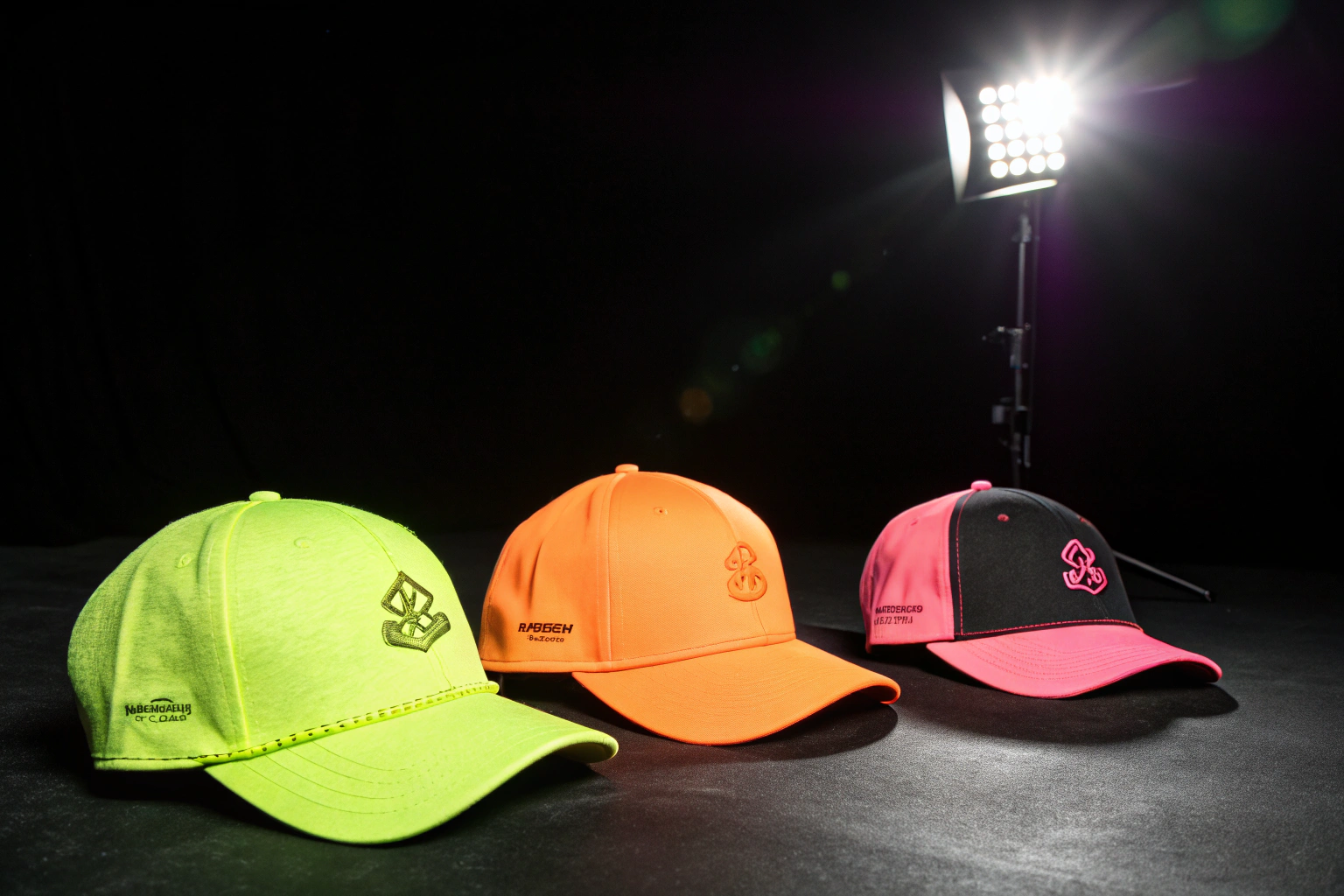
You walk through a streetwear trade show in early 2026. Every booth has a wall of baseball caps. Black, navy, heather grey, olive. The same muted palette that has dominated headwear for five years. Then you turn a corner and see a cap that stops you. The crown is a searing, electric lime green. The visor is a contrasting hot pink. The logo is embroidered in a glowing, almost-white citrus yellow. The cap looks like it is powered by electricity. A buyer next to you picks it up, holds it under the booth lights, and says, "Finally, something that doesn’t look like a dad hat." Neon is back, but not the way it looked in the 1980s or the 2010s.
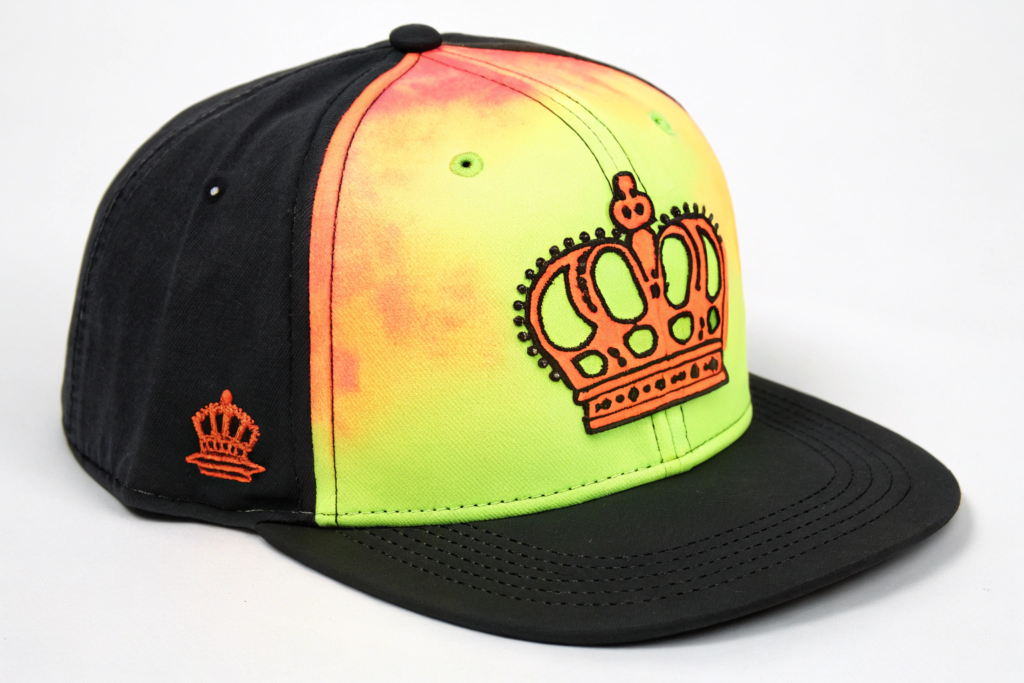
The 2026 neon color trends for baseball caps are driven by three distinct aesthetics: "Solar Flare" neon, which uses a single, all-over, high-saturation fluorescent color across the entire crown and visor, often in lime, electric coral, or blazing orange, creating a monochromatic, high-impact statement piece; "Cyber Contrast" neon, which pairs a neon crown with a completely black or charcoal visor and back panels, a technique called "color-blocking" that frames the neon and makes it appear even brighter by contrast; and "Micro-Neon" accents, where the cap itself is a muted, neutral base but the embroidery, the eyelets, the top button, and the undervisor edge are stitched or molded in a neon thread or plastic, providing a subtle, wearable pop of color for consumers who want the trend without the full-electric look.
Neon is not just a color choice. It is a material and dyeing challenge. Fluorescent dyes are chemically different from standard pigments. They have lower lightfastness, they require specific fabric pretreatments, and they look completely different under natural light versus artificial light. I want to break down exactly how we achieve each neon trend in our Zhejiang facility, what materials and dyes we use, and how we ensure a neon cap looks as bright on day 100 as it did on day one.
What Is "Solar Flare" Neon and How Do You Achieve a Full-Neon Crown?
A standard dyed polyester cap uses conventional disperse dyes that absorb visible light and reflect back a specific color. A neon cap requires fluorescent dyes that do something chemically different: they absorb invisible ultraviolet light and re-emit it as visible light. This is why a neon cap appears to glow. It is literally producing more visible light than is hitting it.
"Solar Flare" neon is achieved by dyeing the polyester crown fabric in a high-temperature dye bath containing a fluorescent disperse dye at a concentration 30% to 50% higher than a standard dye formulation. The fabric is pretreated with an optical brightening agent that enhances the UV absorption of the polyester fibers. After dyeing, the fabric is not heat-set at the standard 180 degrees Celsius, which can degrade fluorescent dye molecules, but at a lower temperature of 150 degrees Celsius with a longer dwell time. The result is a cap crown that appears to emit light under both natural sunlight, which contains UV, and under artificial UV "blacklight" in a club or event setting.
The dyes we use for Solar Flare neon are specifically formulated for fluorescence. They are not the same as the neon pigments used in screen printing ink, which sit on the fabric surface. These are fiber-reactive fluorescent disperse dyes that penetrate the polyester filament and become part of the fiber structure. This is critical for wash fastness and color longevity. Our custom cap dyeing process is calibrated specifically for these fluorescent dye formulations.
How does the fabric base color affect the neon result?
Fluorescent dye works best on a pure white base fabric, where its vibrant glow can truly shine unimpeded. Any subtle tint in the base fabric, such as the faint, sun-bleached yellow of an aged optical brightener or the soft blush of a slightly off-white weave, will dull the fluorescence, muting its electric radiance and leaving it with a muted, less striking hue. To ensure maximum luminosity and that signature neon pop, we meticulously select a specific grade of polyester fabric—smooth, crisp, and uniformly pristine—for all neon dye lots. This fabric boasts a certified CIE whiteness index above 150, a benchmark that guarantees its surface is not just white, but a brilliant, almost ethereal canvas that reflects and amplifies the dye’s vivid spectrum, ensuring every neon shade bursts forth with its full, dazzling intensity.
How long does the neon color last before fading?
Fluorescent dyes have inherently lower lightfastness than conventional dyes because the same molecular structure that creates the fluorescence is more susceptible to photodegradation. A standard polyester cap might retain its color for 200 hours of direct sunlight exposure. A neon cap, without UV inhibitors, might fade visibly after 50 hours. We add a UV absorber and a hindered amine light stabilizer to the dye bath, which extends the fade resistance to approximately 120 hours.
What Makes the "Cyber Contrast" Color-Blocked Neon Cap So Visually Effective?
The human eye perceives color relative to its surroundings. A neon orange swatch on a white background looks vibrant. The same swatch on a black background looks like it is emitting its own light. This is the principle of simultaneous contrast, and the Cyber Contrast cap exploits it deliberately.
The Cyber Contrast cap pairs a full-neon crown, dyed in Solar Flare lime, coral, or orange, with a deep black or charcoal visor, back panels, and closure. The black sections are dyed with a super-deep black disperse dye that achieves a CIELAB L* value, a measure of lightness, below 15. The neon crown is surrounded by this near-total light absorption, which makes the fluorescence appear dramatically more intense. The cap looks like two completely different caps stitched together, a design technique that streetwear and festival-wear brands are adopting rapidly.
Producing a color-blocked cap with a neon crown and a black visor requires two separate fabric dye lots, which are then cut and sewn into the different panels of the cap. The seam where the neon crown meets the black visor is a potential visual failure point if the black dye bleeds into the neon fabric during washing. We prevent this by applying an anti-bleeding agent to the black fabric after dyeing, which locks the dye molecules inside the fiber and prevents cross-staining.
How is the seam between the neon and black panels finished to look clean?
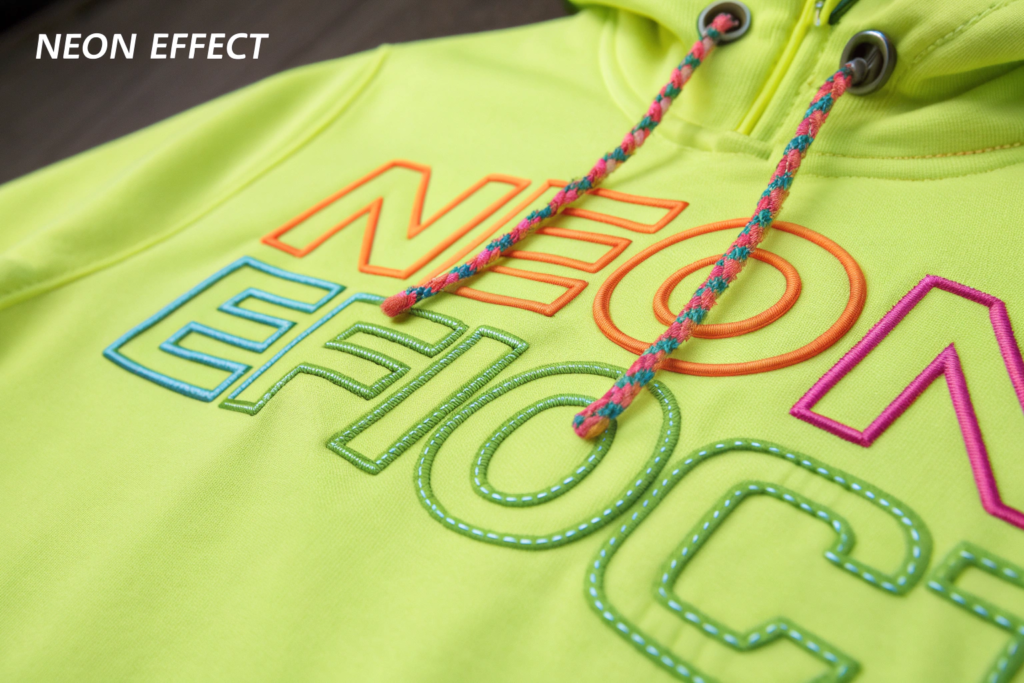
A standard seam would create a visible line where the two colors meet, which could look messy if the panels are even slightly misaligned. We use a flatlock stitch with a matching thread for each color, neon thread on the neon side, black thread on the black side. The seam is pressed open and topstitched on both sides, creating a clean, deliberate color boundary.
Does the neon-to-black color-blocked cap require special washing care?
The anti-bleeding treatment is effective, but we recommend washing the cap in cold water separately for the first wash to prevent any loose surface dye from the black panels from tinting the neon panels. The care label includes this instruction.
How Does "Micro-Neon" Embroidery and Trim Offer a Subtler Take on the Trend?
Not every consumer wants to wear a cap that can be seen from space. The Micro-Neon trend offers a commercial, wearable entry point to the neon trend. The cap itself is a safe, neutral color, heather grey, cream, olive, but the details are neon.
Micro-Neon is achieved by using fluorescent polyester embroidery thread for the front logo and fluorescent-dyed plastic for the top button and the eyelets. The neon thread is solution-dyed, meaning the fluorescent pigment is mixed into the molten polyester before the filament is extruded. This produces a thread with vastly better lightfastness than a thread that is surface-dyed. The neon eyelets and top button are injection-molded from a fluorescent masterbatch polypropylene.
The neon embroidery on a neutral background is effective because the contrast is high and the neon color is concentrated in a small, high-detail area, the brand logo. The consumer’s eye is drawn to the logo, and the neon thread ensures the logo is the most visible element on the cap. Our embroidery department stocks fluorescent thread in eight standard neon shades.
What is the most popular Micro-Neon color combination for 2026?
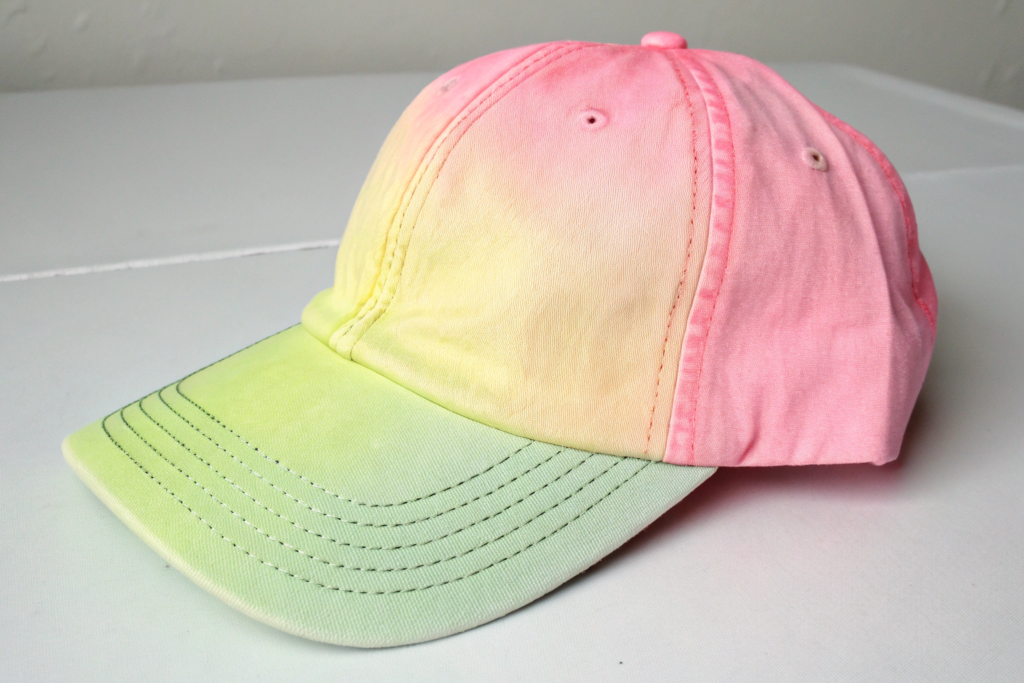
A heather grey crown, its soft, misty hue evoking the gentle hush of dawn over rolling hills, takes center stage as the most requested combination—adorned with vibrant hot pink neon embroidery that shimmers like scattered stardust against the muted backdrop. Matching hot pink eyelets, delicate and lace-like, peek through the crown’s edges, adding a playful, flirtatious touch that catches the light and dances in the eyes. The heather grey serves as a versatile canvas, seamlessly blending into both casual daytime ensembles and elegant evening looks, making it universally wearable across every occasion. The hot pink, bold yet balanced, injects a surge of bright, energetic life into any outfit, reading as fashion-forward and contemporary without ever feeling overwhelming or garish. It’s a harmonious collision of calm sophistication and youthful exuberance, creating a headpiece that commands attention while remaining effortlessly chic.
Can the undervisor be a Micro-Neon accent?
Yes, the undervisor, the fabric on the underside of the brim, is a popular placement for Micro-Neon. When the wearer looks straight ahead, the cap appears to be a standard neutral color. When they tilt their head up or take the cap off, the neon undervisor flashes. It is a hidden detail that rewards a second look.
What Quality Testing Ensures the Neon Color Holds Up Over Time?
A neon cap that fades to a pale pastel after three washes is a customer return waiting to happen. The consumer buying a neon cap has high expectations for the color intensity and will notice immediately if the cap looks duller than when they purchased it.
We test every neon dye lot for wash fastness using the AATCC Test Method 61-2A, which simulates five home launderings in a single accelerated laboratory test. The cap is washed at 40 degrees Celsius with standard detergent. The color change is measured with a spectrophotometer and must achieve a grey scale rating of 4.0 or higher for the Solar Flare and Cyber Contrast caps, and a 4.5 for the Micro-Neon embroidery. We also test lightfastness using a Xenon arc lamp according to AATCC Test Method 16.3, exposing the cap to 40 hours of simulated sunlight. The color change must not exceed a grey scale rating of 3.5.
These are rigorous standards for fluorescent-dyed textiles. Many neon products on the market would fail a 40-hour Xenon test with a grey scale rating of 2 or lower, indicating significant, visible fading. Our UV stabilizer additive and our lower-temperature heat-setting process are the factors that enable our neon caps to achieve a passing rating.
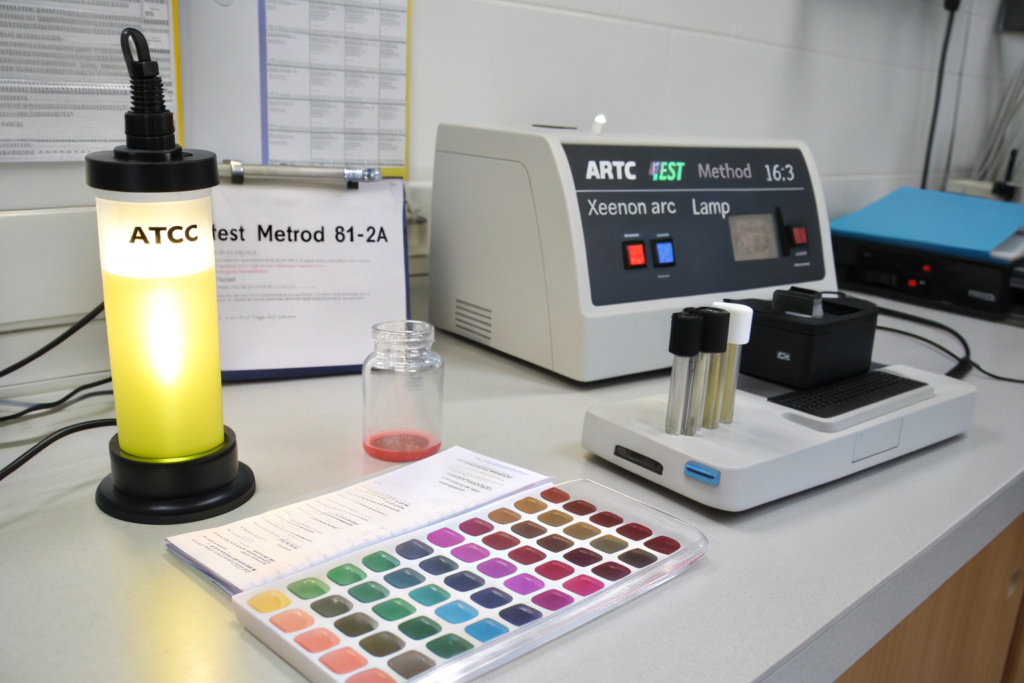
How does the Xenon arc test simulate real-world wear?
Forty hours in a Xenon arc lamp at a specific irradiance level simulates approximately three to four months of intermittent outdoor exposure. A cap worn daily for a summer would experience roughly this amount of light. The test gives us confidence that the neon color will survive the season for which it was purchased.
Is the colorfastness to crocking, rubbing, also tested for neon dye?
Yes, fluorescent dyes can sometimes have poorer crocking fastness, meaning the color rubs off onto other surfaces, than conventional dyes. We test dry and wet crocking according to AATCC TM8. The color transfer to the white test cloth must achieve a grey scale rating of 4.0 or higher under both dry and wet conditions.
Conclusion
The 2026 neon trends for baseball caps offer three distinct intensity levels: the all-over Solar Flare neon for the bold consumer, the Cyber Contrast color-blocked neon with a black visor for the streetwear enthusiast, and the Micro-Neon accents on a neutral base for the consumer who wants a subtle pop of color. Achieving durable neon color requires fluorescent disperse dyes, UV stabilizer additives, lower-temperature heat-setting, and rigorous testing for wash fastness, lightfastness, and crocking. The result is a cap that looks as electric on the final wear as it did on the first.
Our Zhejiang facility produces all three neon cap styles. We stock the fluorescent dyes, the optical brighteners, the UV stabilizers, the neon embroidery threads, and the neon eyelet and button plastics. Our dyeing and finishing processes are calibrated for the specific requirements of fluorescent color.
If your brand is developing a neon cap collection for 2026 and needs a factory with the technical dyeing capability and the quality testing regimen to support it, contact our Business Director, Elaine. She will send you a neon color swatch card with our eight standard fluorescent shades, a sample Solar Flare cap, and our lightfastness and wash fastness test reports. Write to her at elaine@fumaoclothing.com. Let’s make caps that glow.




