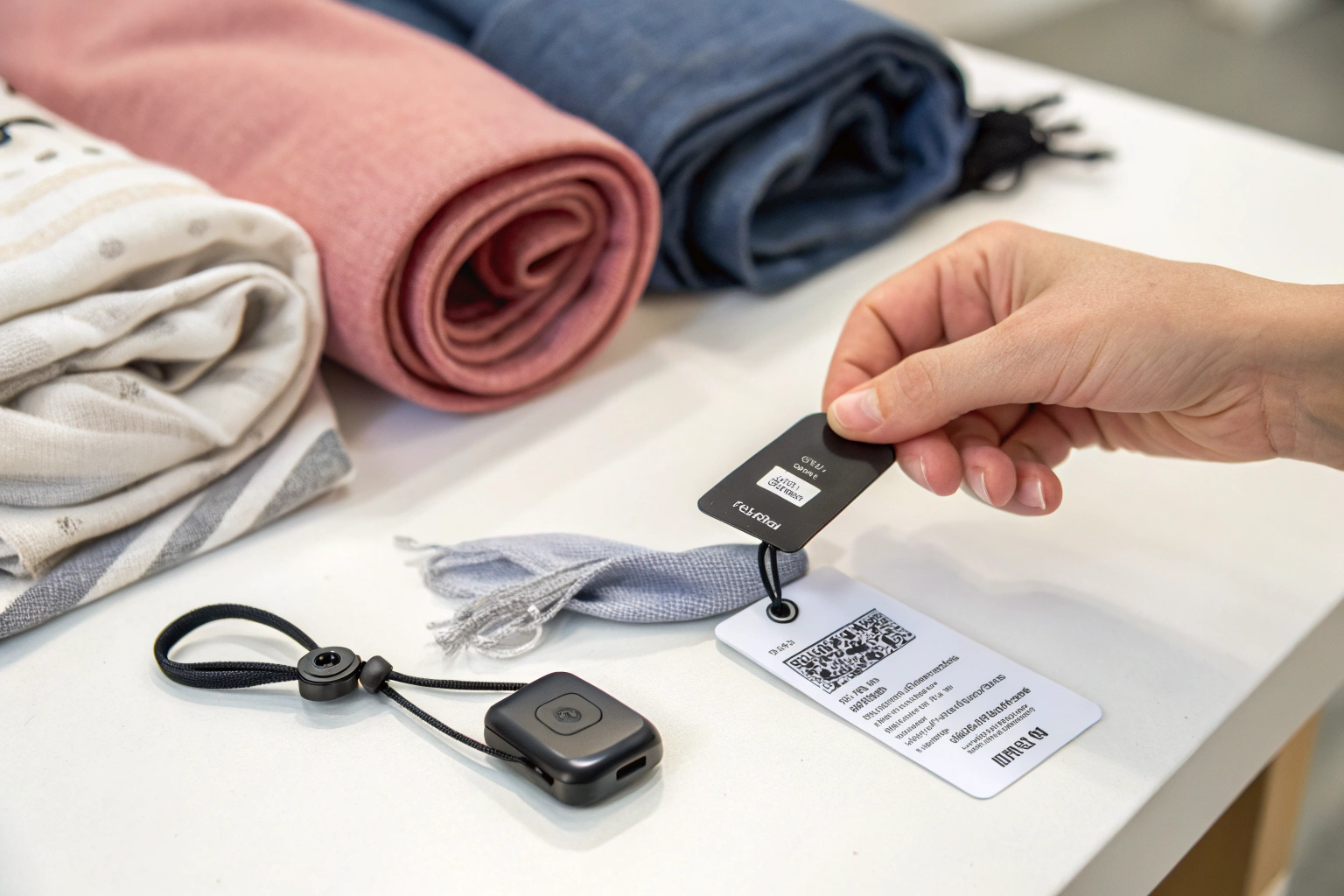
A boutique chain owner in London called me last month, frustrated and a little embarrassed. Her stores had just completed a seasonal inventory audit, and the loss rate on her scarf category was three times higher than any other accessory. Scarves were small, easy to conceal, and had no security tags attached when they arrived from her previous supplier. Her store staff had been manually applying adhesive tags, which were inconsistent, sometimes damaging the delicate silk, and often being removed by shoplifters in seconds. She asked me if our factory could integrate the security tags at the point of production so that every scarf arrived on her shop floor already protected, consistently applied, and undamaged. I told her we absolutely could, and we walked through the specific tag types and placement options that would work best for her fabrics.
Yes, AceAccessory can add anti-theft tags to scarves as an integrated part of the production process. We apply them at the finishing and packing stage, before the scarf is folded and placed in its retail packaging. We can attach a range of tag types, including sew-in radio frequency fabric labels, discreet adhesive-backed acousto-magnetic strips, and hard, removable pin-based tags secured through a brand label or a specially reinforced seam. The attachment method is specified by you and tailored to the fabric type and the retail environment. A silk charmeuse scarf requires a different approach than a chunky knit wool scarf. Integrating this at the factory level ensures that the tag is placed correctly without damaging the product, is compliant with your store’s specific electronic article surveillance system, and arrives at your distribution center or store fully retail-ready, saving your staff labor and eliminating the risk of inconsistent in-store application. I will explain the specific tag technologies available, how we select the placement and attachment method for different scarf fabrics, and how we test the tags to ensure they alarm correctly at the door without damaging the product.
What Types of Anti-Theft Tags Are Suitable for Fabric Scarves?
The type of anti-theft tag you choose must be compatible with both the scarf’s fabric and the electronic article surveillance, or EAS, system installed at the retail store. A tag that works perfectly on a thick wool scarf may be completely unsuitable for a delicate, lightweight silk. The attachment method is just as important as the tag itself. A poorly attached tag that damages the fabric during application or that a shoplifter can remove too easily is worse than no tag at all because it creates a false sense of security and ruins a sellable product. There are three primary technologies that are suitable for textile accessories like scarves, each with its own profile.
What Are the Differences Between RF, AM, and RFID Security Tags?
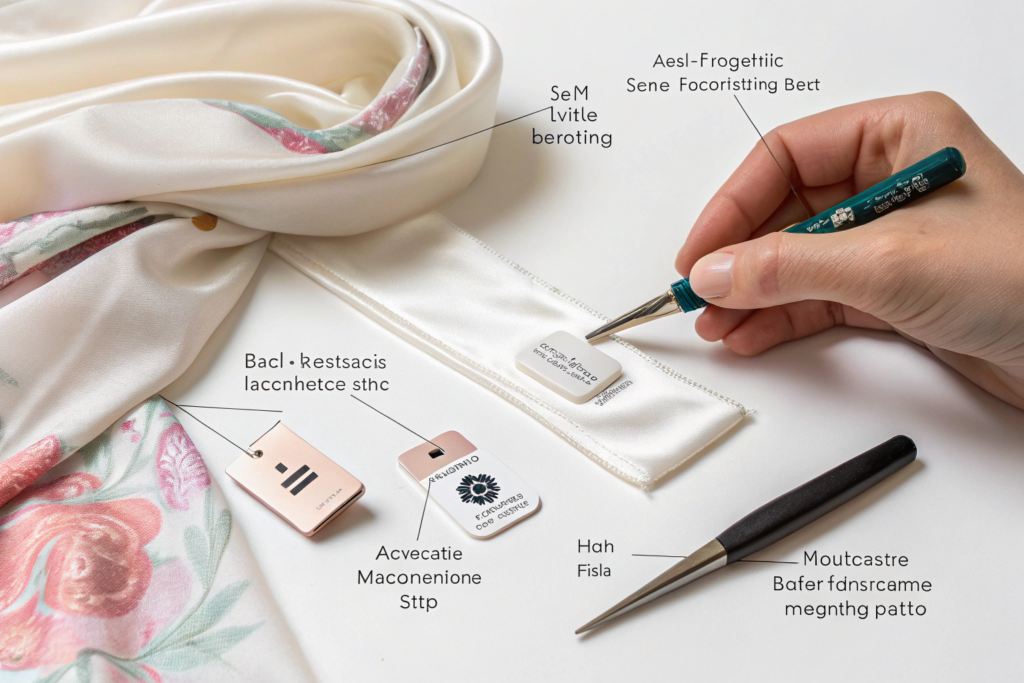
The three standard electronic article surveillance technologies used in fashion retail are radio frequency, or RF, acousto-magnetic, or AM, and radio frequency identification, or RFID. An RF system operates at 8.2 MHz. The tag is a simple, flat, flexible circuit, usually a small, sticker-like label with a visible metallic coil pattern. It is the most common and cost-effective system. The detection pedestals at the store entrance emit a specific radio frequency, and the tag’s circuit resonates in response, triggering the alarm. RF tags are effective and inexpensive, and the adhesive-backed version is suitable for items where the tag can be hidden from direct view and is not subjected to excessive bending.
An AM system operates at 58 kHz. It uses a tag that contains a small strip of a special magnetostrictive metal. When pulsed by the magnetic field at the store’s exit gates, the strip vibrates strongly at that exact frequency, triggering the alarm. The two important characteristics of AM tags are that they are generally narrower than RF labels and, crucially for a fashion accessory, they can be cleanly deactivated and reactivated without any visible change to the tag. This allows a customer to try on the scarf, leave the fitting room, and the tag can be reactivated if they do not purchase it. AM tags are very common in European apparel retail.
An RFID tag is a step up in technology from both AM and RF. It is a tiny microchip attached to an antenna on a thin, flexible inlay that can be sewn directly into a care label. Unlike RF or AM tags, which simply signal their presence, an RFID tag carries a unique serial number. When scanned by an RFID reader, that specific, individual scarf is identified. This provides not just anti-theft security but also high-speed inventory counting, allowing a store associate to scan an entire shelf of scarves in seconds. The RFID inlay can be integrated into a woven brand label or a small, soft fabric tag that is sewn into the seam. It is completely invisible to the customer and cannot be found and removed by a shoplifter because there is nothing visible to find. The technology is a significant leap forward in retail security and inventory management.
Why Is the Attachment Method, Sew-in, Adhesive, or Pin, Critical for Delicate Fabrics?
The method of attaching the tag to the scarf is the most critical design decision. It must balance security with absolute fabric integrity. For delicate silk, viscose, or fine modal scarves, a sew-in tag is the premium choice. An RFID inlay or a thin RF label is encased within a small piece of soft fabric, and this fabric is then sewn directly and securely into the existing brand label or a side seam using fine-gauge thread. The tag is permanent, comfortable against the skin, and totally invisible. The sewing process is gentle, with a controlled thread tension, and it causes no damage to the delicate scarf fabric. It transforms the security tag from an add-on into an integrated part of the product.
An adhesive-backed flat AM or RF tag is a more versatile method. It is applied directly onto the scarf’s care content label, which is typically a sturdy, non-woven polyester fabric. The adhesive is a strong, permanent, pressure-sensitive type, and the tag is placed in a flat, non-moving area where it will not be repeatedly bent or flexed during folding. This attachment method avoids sewing entirely. However, it is not suitable for application directly onto a delicate silk surface, where the adhesive could leave a residue or, if the tag were carelessly removed, pull at the fabric threads.
A hard, removable pin-based tag is the most visually deterrent option but also the riskiest for a delicate scarf if applied incorrectly. The pin must never be punched through the fashion fabric itself, as that would leave a permanent hole. Instead, it must be carefully secured through the thickest, most reinforced part of the brand label or a specially added, reinforced hang tag loop. The tag is visually obvious to a potential thief, but it also prevents the customer from trying the scarf on naturally. This inventory-tracking technology is rapidly becoming an industry standard, and you can learn more about it from resources on RFID in retail.
How Does the Factory Integrate Tag Application into the Finishing Process?
Adding a security tag to a scarf cannot be a clumsy, after-the-fact operation. It must be integrated into the final finishing and quality control workflow so that it is applied with the same precision and consistency as the hand-rolled hem or the brand label. This requires a defined placement specification, a trained workforce, and a verification step to ensure that every single scarf alarms correctly before it leaves the factory. The integration process is designed to add security without disrupting the production flow or compromising the scarf’s finish.
What Is a "Tag Placement Diagram" and Why Is It Essential for Consistency?
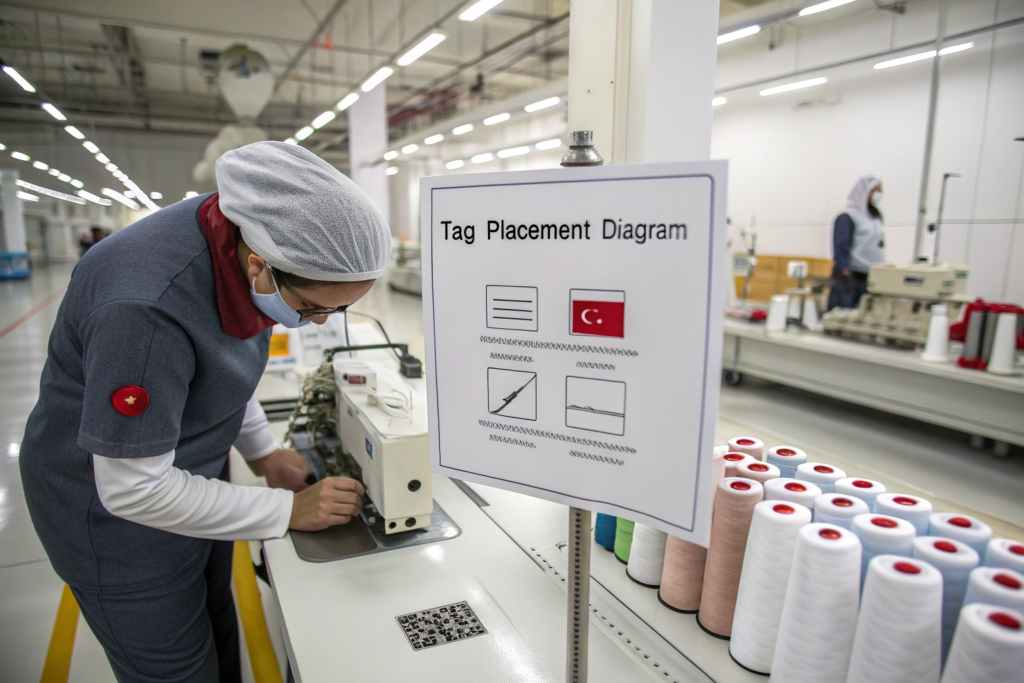
A Tag Placement Diagram is a simple, visual work instruction that removes all guesswork from the tag application process. It is a line drawing, a photograph of the specific scarf style, with a bright, clear mark indicating the exact, approved location for the security tag. The diagram is laminated and posted at the finishing station where the tags are applied. For a sew-in RFID tag, the diagram would show that the tag is to be sewn into the inner left side of the main brand label, with a note on stitch length and thread color. For an adhesive AM tag, the diagram specifies that the tag is to be placed on the back of the woven care content label, oriented vertically, and pressed firmly.
This document is not created by the factory in isolation. It is approved by you, the brand owner or the retail buyer. During the pre-production sample stage, we send you a placement sample. You see exactly where the tag sits, feel how it affects the drape, and confirm that it will work with your visual merchandising and store security systems. Once approved, the diagram becomes the binding standard for the entire production run. This ensures that every one of your 5,000 scarves has the tag in the identical, undetectable spot, and that no scarf is damaged by a rogue, undocumented application.
How Do You Verify the Tags Activate and Deactivate Correctly Before Packing?
Applying the tag is only half the job. The tag must be verified as live and functional before the scarf is packed. A tag that is dead on arrival provides no security and is a customer service problem waiting to happen. The verification step is integrated directly into our final QC checklist, right after the tag application. Our finishing station is equipped with a small, handheld tag verifier that matches your store’s EAS system type, whether it is RF or AM. The operator simply passes the tagged scarf near the verifier. A green light and an audible beep confirm the tag is live, resonant, and properly functioning.
For a removable, high-end pin tag, the operator also physically tests that the pin mechanism locks securely and that the alarm sounds when the tag is brought near a dedicated detacher. If a scarf fails the verification test, it is immediately routed to a reject station, and the tag is re-applied or replaced. The failed tag is discarded, and the issue is logged. This quality gate is the final assurance that you will not receive an order where 2% of the security tags are dead and your stores must scramble to manually re-tag them. This attention to detail is a core part of our process, similar to how we handle all special requirements for retail.
How Do You Choose the Right Tag for Different Retail Environments?
The security tag is a direct extension of the brand’s retail experience, and the choice of tag type should be aligned with the store environment, the brand positioning, and the loss prevention strategy. The same scarf destined for a quiet, high-end boutique requires a completely different security approach than one headed for a high-traffic, high-theft urban department store. The tag profile, its visibility, and its reusability must all be calibrated to the selling environment.
When Is a Discreet RFID Tag the Right Choice for a Luxury Brand?
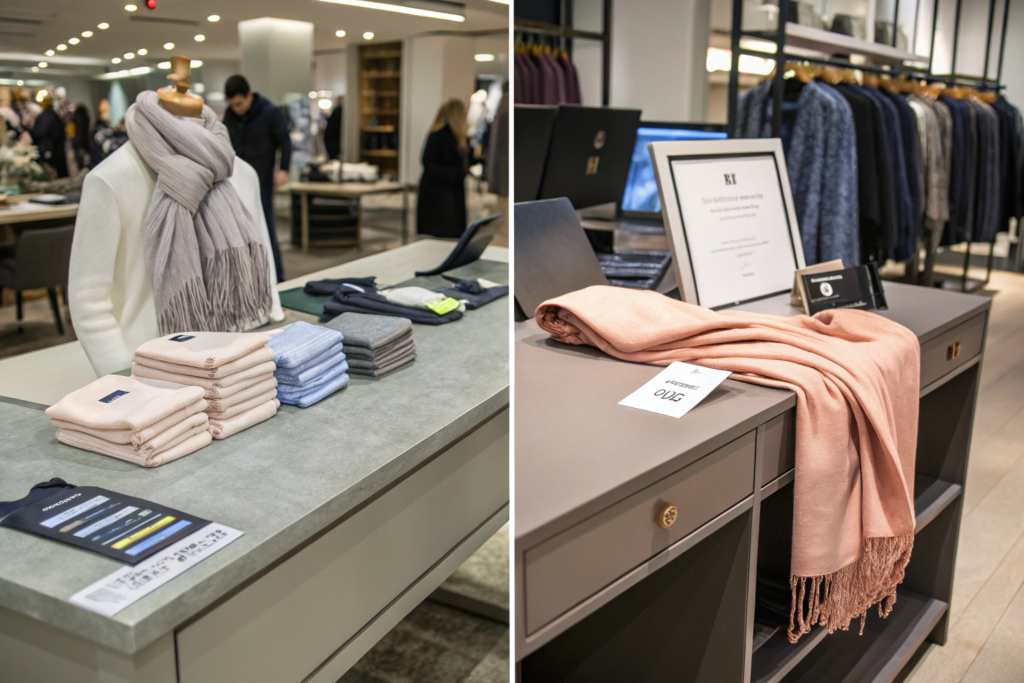
A luxury boutique selling a $300 silk scarf is selling a tactile, sensory, and deeply personal experience. A bulky, hard plastic tag punctured through the fabric is aesthetically unacceptable and physically damaging. The customer must be able to handle the scarf, feel its hand, and drape it against their skin without an obstructive piece of hard plastic. In this environment, a discreet, sewn-in RFID tag is the only appropriate choice. The tag is totally hidden inside the brand label or a seam. It is soft, flexible, and completely imperceptible to the customer. It fulfills the security requirement by silently triggering the store’s alarm system if an item is stolen, but it does not interfere with the luxury buying experience. It also provides the brand with the high-end inventory management capabilities of RFID, allowing for instant, accurate stock counts of their valuable inventory without manually scanning every delicate piece.
Why Might a Department Store Require a Removable Hard Tag?
A large, high-volume department store or an outlet retailer has a different risk profile and operational model. Their primary concern is often deterring a quick, opportunistic grab of a lower-priced, high-volume item. In this scenario, a visible, hard, reusable security tag is the correct tactical choice. The tag is a visual deterrent. A potential thief sees a scarf with a hard tag and recognizes that it will take time, tools, and noise to remove, and they will likely choose an unprotected item elsewhere. The hard tag is also designed for a high-velocity checkout process. The cashier uses a magnetic detacher that instantly removes the tag in under a second. The tag is then collected and reused on incoming stock.
The critical element we manage for this type of tag is the attachment point. The pin must be inserted not through the delicate fashion fabric, but through a thick, reinforced, specially added security loop or the multi-layered brand label. We test this attachment repeatedly during sampling to ensure that the weight of the hard tag does not pull, distort, or tear the label. This secure, non-damaging attachment point is a specific design detail you must spec with a factory that understands the different operational realities of a luxury boutique and a busy department store, which is why brands use our custom accessory security solutions for their retail goods.
Conclusion
Adding anti-theft tags to scarves at the factory level is a process of integrating security seamlessly into the product’s design and finishing. It begins with choosing the correct technology for your fabric and your retail environment, whether it is a discreet, sewn-in RFID tag for a luxury boutique or a visible hard tag for a high-volume store. The key to a perfect result is a precise, factory-integrated attachment method that uses pre-approved placement diagrams to ensure consistency and dedicated post-application QC verification to guarantee that every delivered tag is functionally live.
The result of this system is that your scarves arrive at the store floor fully protected, with zero staff labor required for tagging, zero damage from improvised in-store application, and a level of consistent, reliable security that dramatically reduces inventory loss. Your store associates can focus on selling and customer service rather than acting as security guards. Your scarves are protected, and your brand experience is uncompromised.
If you are a retail buyer or a brand owner who has been frustrated by inconsistent in-store tagging, or by inventory loss on your scarf category, contact our Business Director Elaine at elaine@fumaoclothing.com. Tell her about your specific store security system, your scarf fabrics, and your brand’s retail environment. She can coordinate a placement sample for your approval, showing the exact tag type and attachment location, and provide a QC protocol for ensuring 100% tag functionality before shipping. Let us secure your beautiful scarves without damaging a single thread.