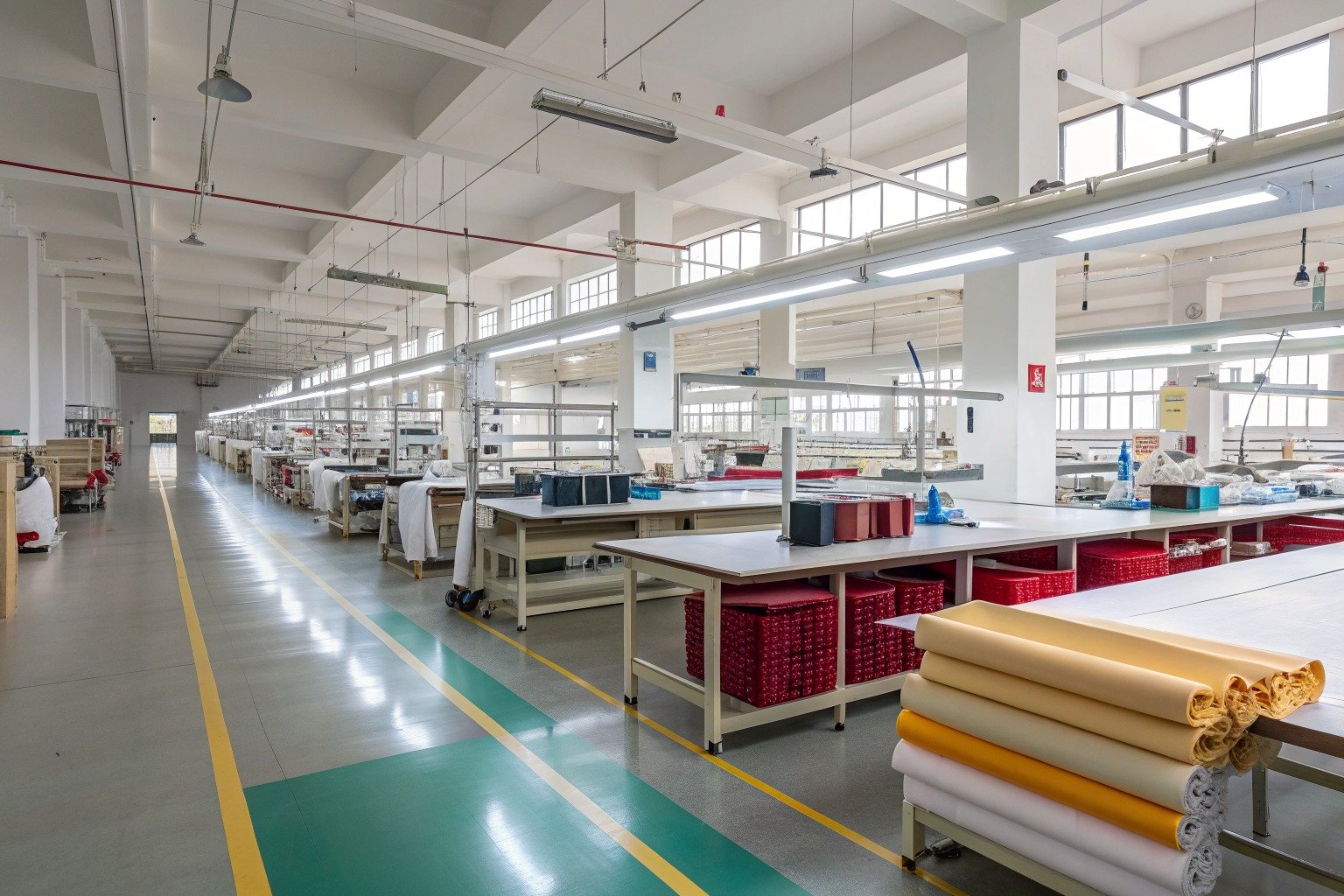
I made a mistake early in my sourcing career that shaped how I evaluate suppliers to this day. I found a factory through an Alibaba search that had beautiful photos, responsive salespeople, and a price quote that was 30% below the next competitor. I asked them one question: "Can you make this?" They said yes. I placed the order. The samples arrived, and they were perfect. I placed the production order. Then the problems started. The shipment was six weeks late. Half the units had inconsistent stitching. The factory stopped responding to my emails for days at a time. I later learned that the samples were made by a specialized sample-making studio in a different city, and the actual production was outsourced to a small workshop that had never exported to my market. I had asked the wrong question, and I paid for it with a lost season.
The top five questions to ask a new accessory supplier before placing an order are designed to test not just their claimed capabilities, but their actual operational practices, their communication discipline, and their experience with your specific product category and target market. You ask who will manage your account day-to-day and how they communicate. You ask for recent shipping records to your target market, with customer names redacted. You ask to see the actual production line where your product category is made. You ask how they handle a specific quality or timeline problem they will inevitably face. And you ask for a detailed breakdown of their quality control gates, with actual inspection records from a recent order. Each of these questions is designed to elicit evidence, not promises. I will explain what to listen for in the answers and what red flags signal that you should keep looking.
Who Will Manage My Account and How Do You Handle Communication?
The most important person in your sourcing relationship is not the sales manager who closes the deal, not the factory owner who gives the tour, and not the quality inspector who checks the final shipment. It is the project manager assigned to your account. This person is your daily point of contact, your problem-solver, your translator of factory reality into actionable information. A factory that cannot name a specific person who will own your account, or that tells you to email a general sales inbox, is signaling that your order will be handled by whoever happens to pick up the phone. A factory that assigns a named project manager with direct contact information and a defined communication schedule is signaling that your business will be managed proactively.

What Communication Cadence Should You Expect During Production?
A professional project manager does not wait for you to ask for updates. They provide updates on a defined, predictable schedule that allows you to plan your own work. You should ask the supplier to describe their standard communication cadence during a typical production cycle, and you should listen for specific, calendar-linked touchpoints, not vague promises.
The answer you want to hear includes a kickoff confirmation within 24 hours of the purchase order being received, confirming receipt of the order and the start of material sourcing. A pre-production sample submission with photos and measurement data before mass production begins, with a clear approval gate that requires your written confirmation before the line proceeds. A mid-production update at approximately 30% completion, with inline QC photos and a production progress percentage. A pre-shipment inspection report at 100% completion, with AQL sampling results, defect counts, and packing photos, sent before the container is loaded. A shipping confirmation with the vessel name, container number, seal number, and estimated arrival date, sent within 24 hours of the container departing.
A supplier whose answer is "we will update you regularly" without defining what regularly means is not demonstrating a documented communication process. A supplier who can describe these specific touchpoints and the format of the updates, email with attached photos and a checklist, WhatsApp message with real-time production floor photos, is demonstrating a communication discipline that has been systematized, not improvised. The project manager’s ability to answer this question with specific details also tells you whether they personally understand the production flow or are simply a sales interface with no operational knowledge. At AceAccessory, we assign every client a named project manager before the first purchase order is signed, and that person’s direct contact information, including mobile messaging for urgent matters, is on the purchase agreement.
How Do You Test Responsiveness Before Committing to an Order?
Responsiveness during the sales phase is a strong predictor of responsiveness during production. A supplier who responds to your RFQ within hours and answers your follow-up questions thoroughly is demonstrating the communication behavior you can expect throughout the relationship. A supplier who takes three days to reply to a pre-order question is showing you exactly how long you will wait for an answer when a production issue needs escalation.
You can test responsiveness deliberately. Send an email at an unusual time, such as late in the evening your time, which is the supplier’s working morning, and note the response time. Send a follow-up question that requires the supplier to check something specific, such as "Can you confirm the exact width of the elastic used in sample HC-042 and whether it is available in 3mm incrementally smaller?" A supplier who replies with a specific answer, possibly after a short delay to measure the sample, is engaged and detail-oriented. A supplier who replies within minutes with a generic "yes, we can do that" without checking is prioritizing speed over accuracy, and that habit will produce errors on your production order.
Send a question that you already know the answer to, as a verification test. If you have already received a material specification from a different source, ask the supplier the same question and compare the answer. A supplier who admits they do not know and will check is honest. A supplier who fabricates a confident-sounding but incorrect answer is fundamentally untrustworthy. The pre-order communication phase is your opportunity to evaluate the supplier’s character without financial exposure, and the questions you ask during this phase should be treated as diagnostic tests, not just information gathering.
Can You Show Me Shipping Records for North American Clients?
Samples prove a factory can make a perfect prototype. Shipping records prove the factory has successfully delivered commercial quantities to real customers in your market, navigating customs clearance, logistics documentation, and the compliance requirements that only actual export experience can teach. A new supplier who cannot or will not show you evidence of recent North American shipments is either inexperienced in your market or hiding something about their export history. A supplier who provides records willingly and whose records align with independently verifiable data is demonstrating the transparency of an established, trustworthy exporter.

What Specific Documents Should You Request and Review?
The primary document to request is the bill of lading for several recent shipments to North American destinations. The bill of lading is the contract of carriage between the shipper and the ocean carrier. It identifies the shipper, the consignee, the vessel, the port of loading, the port of discharge, the container number, and the cargo description. The supplier should redact the consignee name and address for client confidentiality, but the other fields should be visible and verifiable.
Examine the shipper field. It should show the factory’s legal company name and address, consistent with the information on their quotation and their website. A bill of lading where the shipper is a different trading company name is not necessarily disqualifying, as many factories export through affiliated trading companies, but the relationship should be explained clearly and documented. Examine the port of discharge. It should be a North American port, such as Los Angeles, New York, Savannah, Vancouver, or Montreal, not a transshipment hub where goods might be re-exported to another market. Examine the sailing date. It should be recent, within the last 12 months. Examine the cargo description. It should describe products in the same category as the products you are sourcing, not unrelated goods.
The container number on the bill of lading can be entered into the carrier’s online container tracking portal. A valid container number will return a tracking history showing the vessel movement and the discharge at the stated port. A container number that returns no result is a fabricated document. You can also request a copy of the commercial invoice and packing list for the same shipment, with client information redacted, to see the unit quantities and values of a real export transaction to your market. A factory that provides these documents promptly and whose documents are internally consistent and externally verifiable has passed a significant credibility test. Access to US import data resources can supplement your document review by confirming the factory’s general trade activity aligns with its documented claims.
How Can You Cross-Reference Their Claims with Independent Trade Data?
Third-party trade data platforms, such as Panjiva or ImportGenius, compile customs declaration information and make it searchable. These platforms are the independent verification layer for the shipping records the factory provides. Search the factory’s name, and if they export under a related trading company name, search that entity as well.
The platform will show the factory’s actual shipment history over the past 12 to 24 months, including the number of shipments, the consignee names of receiving companies on the US side, the product descriptions and HTS codes, the shipment ports and destinations, and the shipment volumes and frequencies. Cross-reference this data against the redacted bills of lading the factory provided. The shipment count and the sailing timeframe should be broadly consistent. The consignees shown in the trade data may include recognizable brands or retailers. A factory claiming to supply major US retailers whose names do not appear in the consignee data has either overstated their client list or ships through an intermediary whose name appears instead, which is a relationship structure you need to understand.
A factory whose self-reported shipping records align closely with the independent trade data has demonstrated transparency and honesty. A factory whose records contradict the independent data, or who refuses to provide any shipping records, has not yet earned the trust required for a significant purchase order. The time to discover a discrepancy between claimed and actual experience is before your money is committed, not after.
Can I See the Actual Production Line Where My Product Will Be Made?
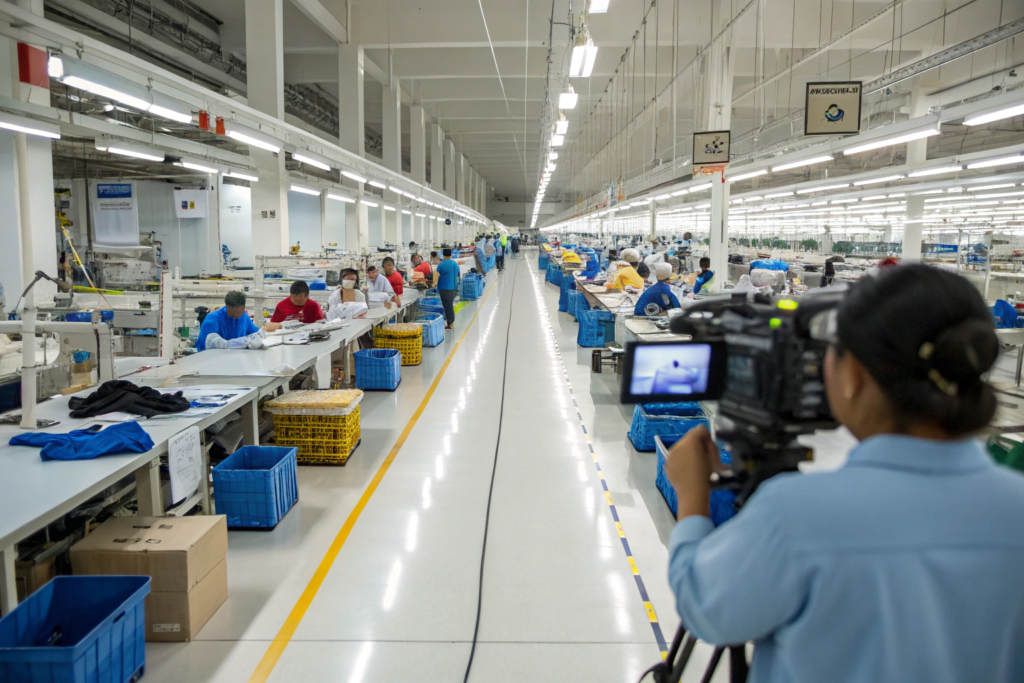
A factory that is proud of its production floor will welcome your visit and allow you to walk through the areas where your product category is manufactured. A factory that makes excuses, that the floor is under renovation, that the workers are on break, that the area is restricted for proprietary reasons, is hiding something. The production floor tells the truth about a factory’s real capabilities, its organization, its equipment, its worker skill level, and its true production volume, in a way that a showroom never can. If an in-person visit is not practical before placing a trial order, you can still observe the production environment through a live, unscripted video call.
What Visual Signs on the Factory Floor Indicate Reliability?
When you walk through or video-tour a production floor, you are looking for visual evidence of management discipline and production capability that cannot be faked for a single scheduled visit. Aisles should be wide enough for material movement and clearly marked, with no boxes, tools, or debris obstructing the walkways. An obstructed aisle indicates poor housekeeping discipline and, more seriously, a fire safety hazard that suggests the factory does not take regulatory compliance seriously. Organized, labeled storage for raw materials, work-in-progress, and finished goods demonstrates that the factory has a system for tracking material flow.
Inline quality control stations should be integrated into the production line at intervals. You should see an inspector checking a sample of units from the preceding operation at a designated station with a lightbox, a measurement tool, and a reject bin. The absence of visible inline QC suggests that quality checking happens only at the end of the line, if at all, which means defects are caught after the entire production value has been added to the defective unit, making correction expensive and unlikely. Worker concentration is a visual signal. Workers who look up, stare at visitors, or stop working when you pass are either not accustomed to visitors, indicating the factory does not host many buyers, or are performing for a staged visit. Workers who briefly glance and return to their tasks are behaving normally in a factory where visitors are routine and production is the priority.
The overall noise level, lighting quality, and ventilation are indicators of the working environment that you can assess instantly. A factory that is excessively loud, dimly lit, or oppressively hot and unventilated is not providing a work environment conducive to consistent quality, because fatigued, uncomfortable workers make errors. These conditions also represent a red flag for social compliance, which matters directly to your retail customers.
How Can You Verify That the Factory Is Not Outsourcing Production?
Outsourcing production to unvetted subcontractors is a common practice, and it is the single greatest source of undisclosed supply chain risk. The factory that shows you a beautiful production floor but actually sends your order to a small, uninspected workshop down the road is exposing you to quality failures, delivery delays, and potential social compliance violations that could damage your brand.
During your tour or video call, ask to see the production schedule board or the digital production planning system. The schedule should list active orders with client names or codes, product descriptions, quantities, and delivery dates. Your order, or orders of a similar product type and volume, should logically appear on this schedule. If the schedule is blank, contains only generic entries, or is clearly a freshly printed prop, the factory may not have enough genuine production activity to fill a schedule honestly.
Watch the work-in-progress on the production line. The units in progress should match the product types the factory claims to produce. A line set up for cotton hat sewing but whose work-in-progress bins contain leather bags is a line whose real production does not match its claimed production. If your specific product category uses specialized equipment, a fabric cutting table, a plating line, a resin molding press, confirm that the equipment is physically present, powered on, and in use, not sitting idle under a dust cover in the corner. A factory with no visible cutting tables is not cutting your fabric in-house. A factory with no electroplating line is sending your metal components to an outside plater, which is an undisclosed subcontractor.
How Did You Handle a Specific Production Problem on a Recent Order?
Every factory experiences production problems. Material delays, color matching failures, mechanism defects, and logistics disruptions are normal parts of manufacturing. The difference between a factory you can trust and one you cannot is not whether problems occur. It is how the factory responds when they do occur. A factory that can describe a specific past problem in detail, explain the root cause they identified, walk you through the corrective action they took for the client, and describe the process change they made to prevent recurrence is demonstrating a learning culture and a client-focused mindset.

What Details in Their Answer Signal a Genuine Quality Culture?
Listen for specificity. A factory that describes a specific, dated problem with a specific product, a specific batch, and a specific resolution is drawing from real experience. A factory that responds with a generic statement like "we have very good quality, so we do not have problems, but if any issue came up we would fix it immediately" is either not being honest or has not processed enough orders to have encountered the normal range of manufacturing challenges. Neither is reassuring.
Listen for root cause identification. A good answer traces the problem to its origin, whether it was a material issue, a process deviation, or a design specification that was not robust enough for production conditions. A factory that describes only the symptom and the fix, "the color was wrong so we remade the batch," without explaining why the color was wrong and what was changed to prevent future color errors, has fixed the immediate order but not the underlying process.
Listen for client communication. How and when was the client informed of the problem? Was the client given options with specific cost and timeline trade-offs, or was a solution imposed without the client’s input? A factory that describes proactively informing the client within hours of discovering the problem, presenting clear options, and letting the client choose the path forward is demonstrating a partnership mindset. A factory that describes solving the problem internally and informing the client only after it was resolved is demonstrating a paternalistic mindset that denies the client the opportunity to make business decisions based on real-time information.
Listen for follow-up. Did the factory check in with the client after the corrective order shipped to confirm the problem was resolved? This small gesture signals that the factory cares about the outcome, not just the transaction. At AceAccessory, we maintain a corrective action log for every product line, and we review that log with clients before each reorder to confirm all previous issues remain resolved and no new issues have been introduced.
How Do You Assess Their Defect Rate and QC Gate Structure?
Ask for a specific recent QC report, not the summary page, but the detailed inspection data with individual defect findings. The report should be dated, tied to a specific order or batch number, and show the AQL sampling level used, the sample size, the number of defects found categorized by defect type and severity, and the final pass or fail determination.
A genuine QC report has defects. A report with zero defects across every category is not a QC report. It is a ceremonial document produced for marketing purposes. Real production generates real defects, and a real QC system records them honestly. The defect types recorded tell you what the factory’s QC inspectors are trained to look for. A report that lists specific defect categories, stitching inconsistency, dimensional deviation, color mismatch, surface blemish, with specific counts, demonstrates a trained inspection team using defined standards. A report that says only "Pass, Quality Good" with no data demonstrates a QC process that exists on paper only.
Ask how the factory’s QC gates are structured. The answer should describe multiple inspection points, not a single final check. Incoming material inspection, first-piece approval before mass production, inline inspection during production, and final AQL inspection before packing is the standard sequence for a quality-focused factory. A factory that only mentions final inspection is a factory where defects are discovered after the product is finished, which means the choice is between shipping defective goods or missing the delivery deadline, and neither option serves the client.
Ask what happens to a batch that fails final inspection. A factory that reworks or replaces failed batches, documents the re-inspection, and adjusts the production schedule to accommodate the rework, all while keeping the client informed, is demonstrating that quality requirements have real operational consequences in their factory. A factory that ships failed batches with a negotiated discount after the fact is demonstrating that quality is a negotiation variable, not a fixed standard. Industry reference on acceptance sampling standards helps you evaluate whether the supplier’s AQL levels and sampling plans are appropriate for your product category and risk tolerance.
Conclusion
Asking a new accessory supplier the right questions before you place an order is the highest-return investment of time you can make in your sourcing process. The cost of a failed order, measured in lost revenue, damaged customer relationships, recovery logistics, and wasted management attention, is orders of magnitude larger than the cost of the due diligence that would have prevented it. These five questions are designed to move the conversation beyond promises and into evidence.
You ask who will manage your account to verify that a specific, named person with direct contact information and a defined communication schedule will own your production from order to delivery, not a rotating cast of sales representatives. You ask for shipping records to your market to verify with documented evidence, cross-referenced against independent trade data, that the factory has real, recent experience exporting your product category to your regulatory environment. You ask to see the actual production line to verify with your own eyes, whether in person or via live video, that the equipment, workforce, and work-in-progress match the factory’s claims and that inline QC is visibly integrated into the production flow.
You ask how they handled a specific past problem to evaluate their learning culture, their communication integrity, and their commitment to corrective action that prevents recurrence. You ask for a detailed QC report and defect rate data to verify that their quality system generates real inspection data with measured defect rates, not ceremonial pass stamps. A supplier who answers these five questions with specificity, evidence, and transparency has demonstrated the operational maturity and the partnership orientation that form the foundation of a reliable, long-term sourcing relationship.
If you are currently evaluating new accessory suppliers, including AceAccessory, and you want to put these five questions to the test in a structured supplier qualification conversation, contact our Business Director Elaine at elaine@fumaoclothing.com. Tell her you read this article and want to schedule a call where she answers each of these five questions with the specific evidence relevant to your product category and your target market. A factory that is willing to be held to this standard is a factory worth your time. I look forward to your questions.