
A boutique owner from Melbourne called me on a Monday morning in a near panic three weeks before her biggest wholesale event of the year. She had tested her new scarf designs at a small market stall, and the response was so strong that she had booked a booth at the national gift fair. But she had not yet ordered any commercial inventory. She needed 500 printed scarves in three designs, and she needed them on her display table in Melbourne in fourteen days. I told her we could do it, and I meant it, but only because I knew exactly what was in stock, what could be printed immediately, and how each day of the process would be used. The scarves shipped on Thursday of that same week via air express and arrived the following Wednesday. She made the fair.
A small trial order of 500 scarves can be shipped by air from our factory in as fast as 5 to 7 business days from design approval to dispatch when using stocked blank fabrics and digital printing. If the fabric requires custom dyeing or the scarves need screen printing with specialty inks, the timeline extends to 10 to 14 business days. Air express transit to most US, European, and Australian destinations adds 3 to 5 business days. This means a trial order of 500 digitally printed scarves on stocked fabric can be in your hands approximately 10 to 12 business days after you give us the final design approval, with about half of that time being factory production and half being air transit time. I want to walk you through the exact process so you can see where the time goes, what choices you can make to compress it further, and why pre-stocking popular fabrics is the single biggest accelerator.
What Factors Determine the Production Speed of a Scarf Trial Order?
The production timeline for a scarf trial order is not a single fixed number. It is the sum of several sequential and parallel steps, each with its own time requirement, and the overall speed is determined by the slowest of these steps. Understanding which steps you can accelerate through design choices and which steps have a fixed minimum time allows you to make informed trade-offs between speed, customization, and cost.
How Does Fabric Availability Affect the Production Start Date?
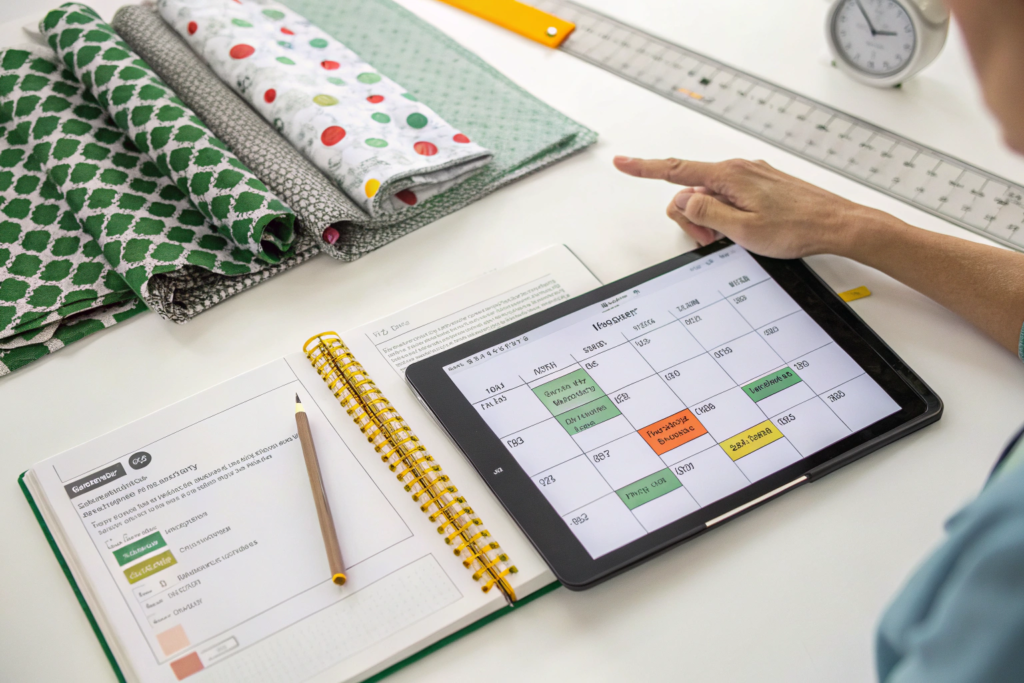
Fabric availability is the gate that determines when production can physically begin. If the required base fabric is in our inventory as a stocked item, production can start within one business day of design approval. The design file goes to the digital printer, and the fabric is pulled from the warehouse and loaded onto the machine. If the fabric must be ordered from a supplier, the entire production timeline shifts to the right by the fabric lead time, which is typically one to three weeks depending on the supplier and the specific material.
Our fabric inventory is built around the materials most commonly used in scarf production, and stocking these fabrics in white or natural ready-to-print form is how we achieve fast-turn trial orders. We keep stock of silk twill in standard weights, 8, 10, and 12 momme, in white. Modal and cotton voile blends in white and natural are stocked. Polyester satin and chiffon in white for digital print applications are maintained. Polyester crepe de chine is regularly available. Linen and linen blends for the resort and summer scarf market are also kept in inventory.
If your design requires a base fabric that is not on this stocked list, a specific jacquard weave, a pre-dyed base fabric, a silk and cashmere blend, the production coordinator will identify the lead time for that material and communicate it to you before you commit to a timeline. The choice to use a stocked fabric for a trial order is a strategic one. It accelerates production from weeks to days. Once the trial order proves the design and the market, you can plan a larger production order with the specialty fabric, allowing the normal lead time comfortably. This distinction between stocked and made-to-order materials is central to understanding how we structure efficient scarf sampling and small-batch fulfillment at AceAccessory.
What Is the Difference in Speed Between Digital Printing and Screen Printing?
The printing method is the second major time driver after fabric availability. Digital printing and screen printing have fundamentally different setup requirements, and the speed difference between them is measured in days, not hours. Digital printing is the fast method and is almost always the right choice for a trial order of 500 scarves. The approved design file is prepared with color separations and then sent directly to the fabric printer. There is no screen fabrication step, no color mixing for individual screens, and no setup time on the printing table. The printer lays ink directly onto the fabric from the digital file. The printing for 500 scarves, which is approximately 350 to 400 meters of fabric depending on the scarf dimensions, is completed in a single production day on our digital textile printers.
Screen printing requires the fabrication of a physical screen for each color in the design. A design with four colors requires four screens. Each screen is coated with a light-sensitive emulsion, exposed with the color separation artwork, and washed to create the open mesh areas through which ink will pass. Screen fabrication takes two to three days for a multi-color design. The screen printing setup on the printing table, including color mixing and registration alignment, takes an additional day. For a trial order of 500 units, the per-unit cost of screen setup is disproportionately high because the setup cost is amortized over a small quantity. Screen printing becomes cost-effective at higher volumes, typically above 1,000 to 2,000 units per design, where the per-unit printing cost drops below digital printing and the initial setup time is absorbed into a larger production run.
Digital printing also offers superior design flexibility for trial orders. You can print multiple colorways of the same design, or multiple different designs, within the same 500-unit order without any additional setup cost or time. With screen printing, each additional colorway requires additional screens and additional setup. For a trial order intended to test multiple designs or colorways in the market, digital printing is both faster and more economical.
What Is the Step-by-Step Timeline for 500 Scarves by Air?
A timeline that counts in days, not weeks, requires that every handoff between production stages is immediate, that no batch sits waiting for the next available machine, and that the quality inspection is integrated into the flow rather than being a separate gate that consumes an additional day. The following is the actual production sequence for a 500-unit digitally printed scarf trial order on a stocked base fabric.

How Long Does Digital Printing, Cutting, and Hemming Take?
The production clock starts on Day 1, the business day after design approval and purchase order confirmation. The design file is pre-press checked for resolution, color profile, and any scaling issues. The fabric is pulled from inventory, inspected for any weaving flaws, and loaded onto the digital printer. The printing runs continuously and is typically completed within a single production shift for a 500-unit quantity. The printed fabric is heat-set to cure the ink and ensure wash fastness. Day 1 is the print production day.
Day 2 is the cutting and preparation day. The printed fabric is spread on the cutting table, and the scarf panels are cut using either a CNC fabric cutter for precise, repeatable dimensions or hand-cutting with templates for delicate fabrics like silk twill. The cut panels are sorted by design and colorway, counted, and moved to the hemming station. Day 2 also begins the hemming process, with the first cut panels moving into the sewing line by the afternoon.
Day 3 and Day 4 are the hemming and finishing days. For 500 scarves with a simple rolled hem or a fine machine hem, our sewing team of specialists completes the hemming in one and a half to two production days. The hemming method affects speed. A machine-stitched baby hem is faster than a hand-rolled hem. A hand-rolled hem on silk twill requires skilled artisans who work at a fixed pace to maintain quality; this finish adds approximately one day to the hemming timeline for 500 units compared to a machine hem. After hemming, each scarf is trimmed of loose threads, steam-pressed to remove any handling creases, and folded to the specified retail presentation.
What Happens During the Final QC and Packing Stage?
Day 4 afternoon and Day 5 are the quality control and packing stage. The final QC inspection is conducted on an AQL sampling basis. For a 500-unit trial order, the inspector pulls a random sample based on the AQL level agreed with the client, inspects each scarf for print quality, color accuracy against the approved proof, hem consistency, fabric integrity, and any spots or marks from handling, and documents the findings. If the sample passes inspection, the full batch is released for packing. If the sample fails, the identified defect is corrected, either by re-hemming affected units or by reprinting if the print defect is systemic. A defect found at this stage is the primary risk to the timeline.
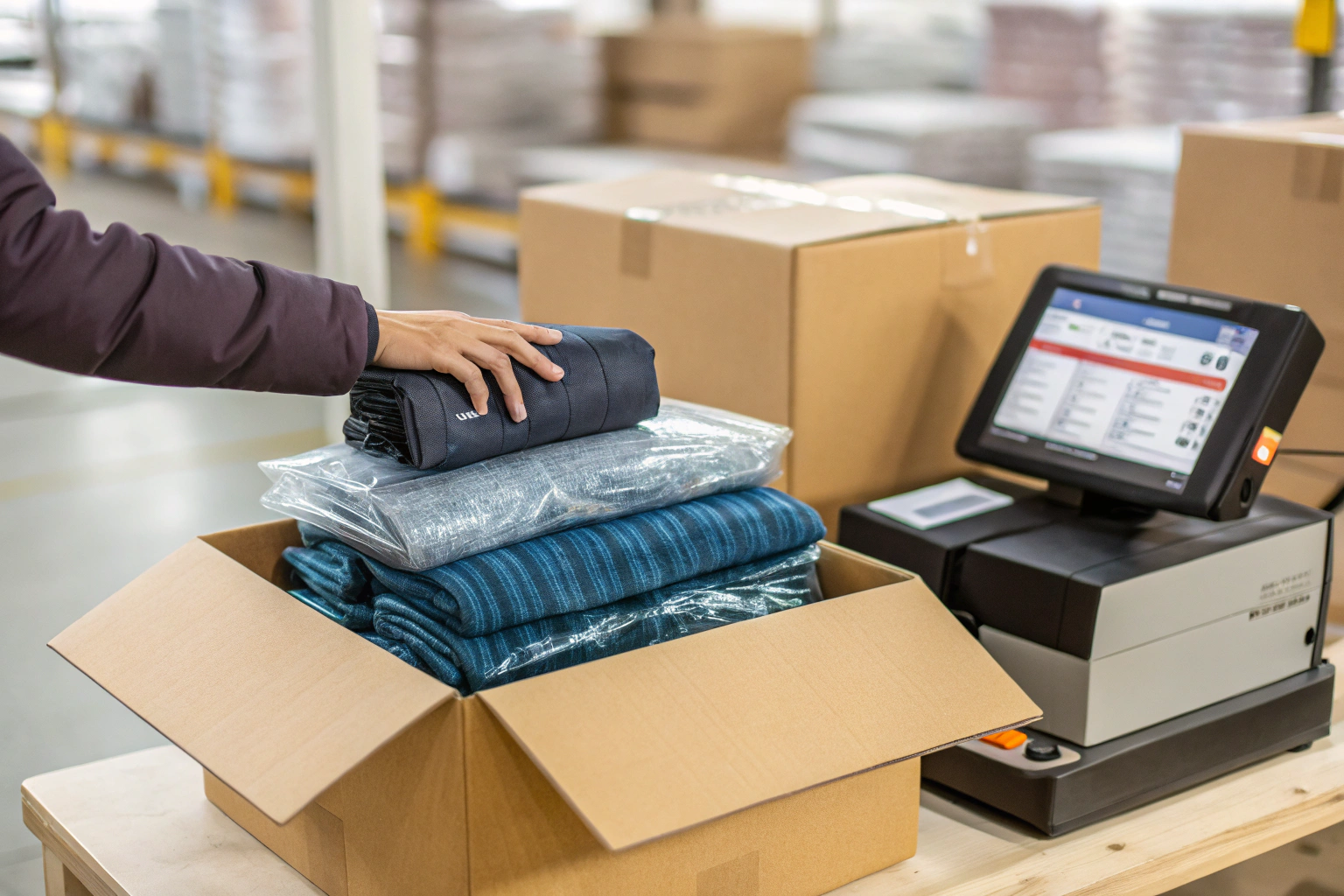
Each scarf is individually folded and inserted into its retail packaging, whether that is a branded polybag, a belly band, a gift box, or a simple tissue wrap with a sticker. The packaging specification is confirmed before production begins so that the packing team knows exactly the presentation required. The packed scarves are placed into an export carton rated for air freight handling. The carton is weighed, an air waybill is generated, and the shipment is collected by the express courier on the afternoon of Day 5. The factory phase is complete. The transit phase begins. This streamlined approach to planning air freight logistics is essential to ensure no time is lost between final inspection and the courier’s scheduled pickup.
How Can You Shorten the Door-to-Door Timeline for an Air Freight Trial Order?
The factory’s internal production timeline is only half of the door-to-door equation. The transit time, the customs clearance process, and the final delivery depend on the shipping method you choose, the accuracy of the documentation, and decisions you make before the shipment leaves the factory. Optimizing the logistics leg can save you days.
Which Air Express Services Offer the Fastest Delivery to the US and Europe?
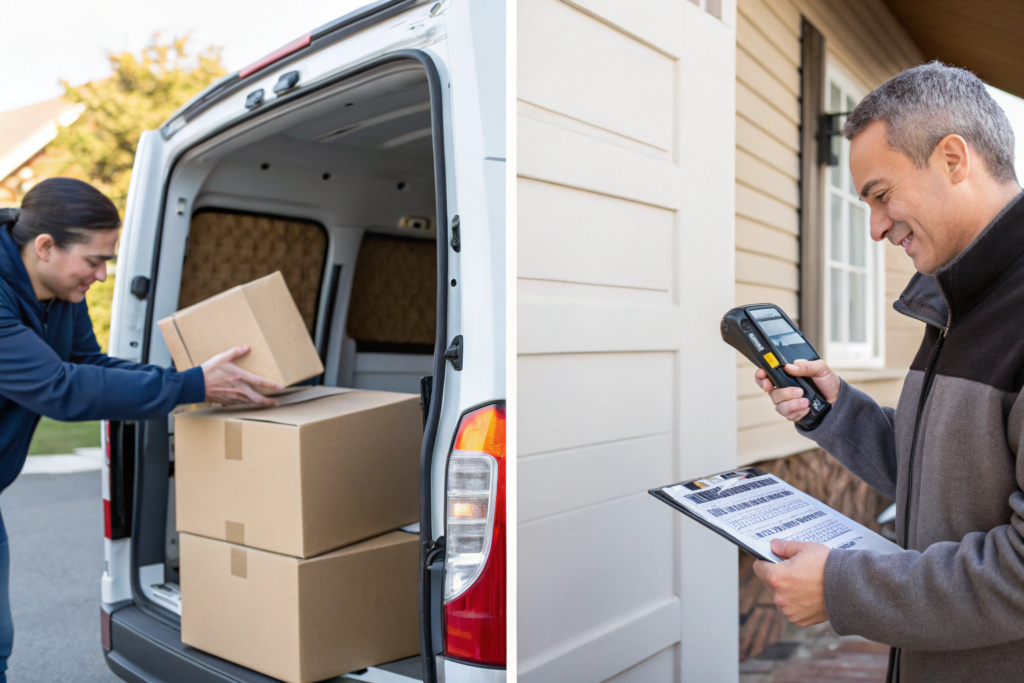
The international express courier networks, including DHL, FedEx, and UPS, provide the fastest and most reliable door-to-door service for a trial order of 500 scarves. Each of these carriers offers an express service level that delivers from our factory in Zhejiang to most major business addresses in the US, Europe, and Australia in three to five business days.
DHL Express is generally the fastest carrier for shipments from China to Europe, with typical delivery to major cities in Germany, the UK, and France in three business days. FedEx International Priority and UPS Express Saver provide similar three-to-five-day delivery to US destinations. The specific delivery day depends on the destination postal code and whether the address is in a major metro area or a more remote location. A rural or regional address can add one business day to the standard delivery window.
Economy express services, which use the same courier networks but with slightly lower priority handling, add one to two business days to the transit time and cost approximately 20% to 30% less. For a trial order where speed is the primary objective, the premium express service is the appropriate choice. The cost difference, perhaps a hundred to two hundred dollars depending on carton weight and destination, is a small fraction of the value of getting the scarves onto a trade show display table or in front of a wholesale buyer on time.
How Do You Prevent Customs Clearance Delays on Small Air Shipments?
Customs clearance is the single largest variable in the air freight timeline. A shipment that sails through customs without inspection adds zero days. A shipment held for a documentation review or a physical inspection adds one to three days, or longer if a customs broker needs to be engaged to resolve a classification question.
Preventing customs delays begins with accurate documentation. The commercial invoice must describe the goods using clear, specific language that matches the HTS code classification. "500 printed modal scarves" is a good description. "Textile samples" is vague and more likely to trigger a review. The HTS code on the invoice must be correct for the specific fiber composition of the scarves. A cotton scarf and a polyester scarf have different HTS codes, and using the wrong code can trigger a classification query from customs.
The declared value must reflect the actual transaction value, the price you paid for the goods, not an arbitrary low number intended to reduce duty. A declared value of $1.00 on a carton of scarves is a red flag for customs and will result in a valuation review and delay. The correct value, honestly declared, generally clears faster than a suspiciously low value. The consignee information must be complete and accurate, including a contact phone number for the recipient, which the express courier uses to resolve any delivery issues. A missing phone number can cause a one-day delay if the courier cannot locate the address and cannot reach the recipient.
For shipments to the European Union, the economic operator registration and identification number, commonly called the EORI number, of the importing entity must be on the customs documentation. For shipments to the US, the importer of record’s customs bond information must be correctly referenced if the value exceeds the de minimis threshold. These administrative details, handled correctly, allow the shipment to pass through customs as a routine low-value entry with automated clearance. Consulting customs clearance requirements before shipping ensures your documentation package is complete and compliant with the destination country’s specific entry requirements.
Conclusion
Shipping a small trial order of 500 scarves by air is a fast and reliable process when the factory has the right materials in stock and the right production workflow dialed in. A digitally printed scarf order using our stocked base fabrics can be produced, quality checked, packed, and handed to the express courier within 5 to 7 business days of your design approval. The air express transit adds 3 to 5 business days. The entire process, from the moment you say "proceed" to the moment you open the carton in your hands, fits comfortably within two weeks.
The choices that maximize speed are choosing a base fabric from our stocked inventory, selecting digital printing over screen printing for the trial quantity, and specifying a machine-finished hem or a simple hand-rolled hem rather than a complex multi-step finish. Accurate and complete customs documentation, provided before the shipment departs, prevents the customs delays that can add unpredictable days to the transit time. The economic trade-off for this speed is a slightly higher per-unit print cost for digital versus screen, and a higher freight cost for air express versus consolidated air or ocean. For a trial order intended to validate designs, secure wholesale accounts, or meet an event deadline, this is usually a sound investment.
A trial order is not just about the product. It is about testing the factory’s ability to execute a complete commercial transaction, from production through logistics, on a compressed timeline. A factory that can deliver 500 scarves in two weeks with clean quality, accurate packaging, and smooth customs clearance is demonstrating the operational competence that will scale to your full production orders.
If you have a scarf design ready for a trial order and want to know exactly when you can hold the finished product in your hands, contact our Business Director Elaine at elaine@fumaoclothing.com. Send her your design files, your fabric preference, your packaging specification, and your delivery address. She can confirm fabric stock availability within hours and provide you with a day-by-day production and shipping schedule that shows you exactly when your trial order will dispatch and when it will arrive at your door. Your designs deserve a fast, professional path from digital file to physical product. Let us show you how quickly that path can be.




