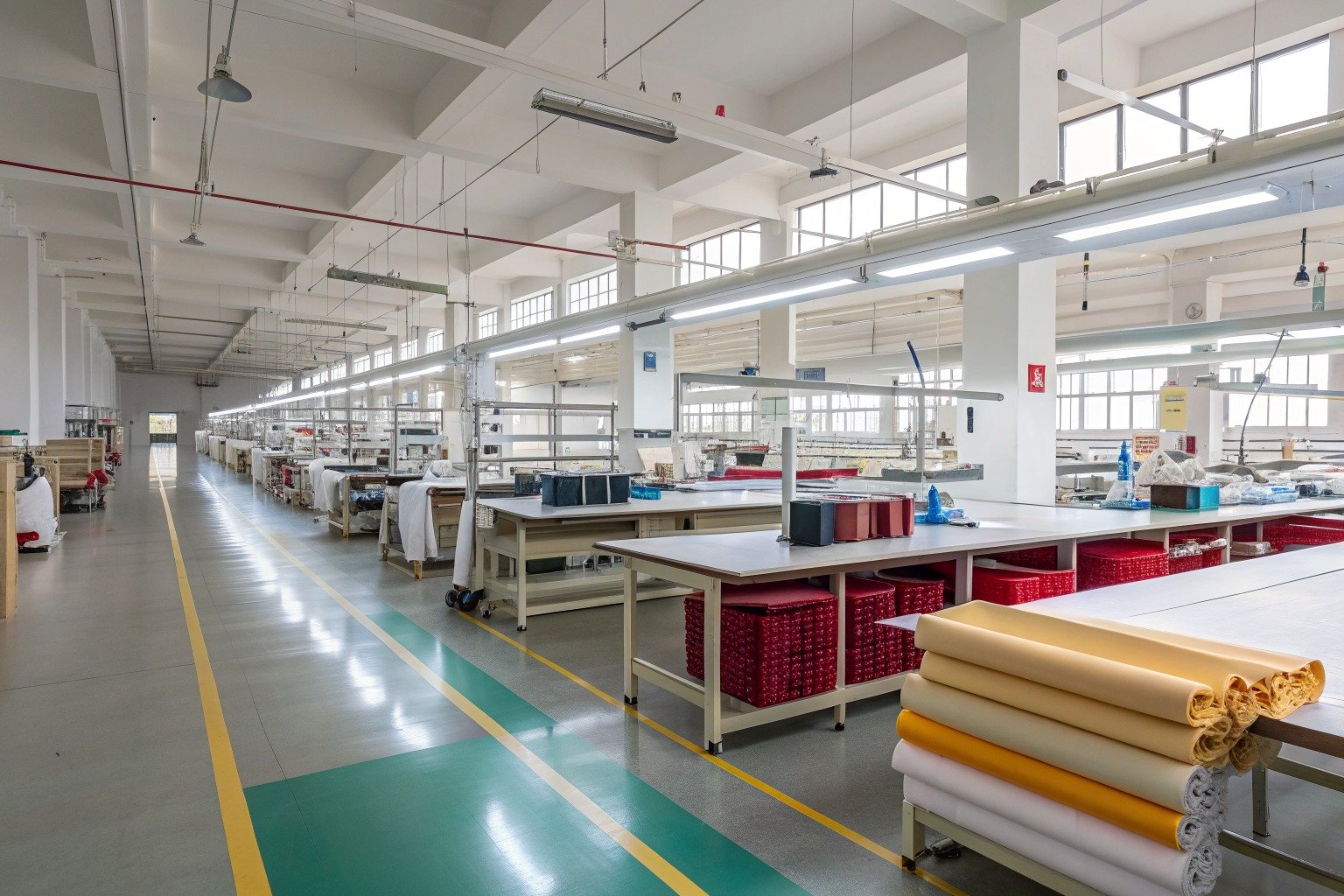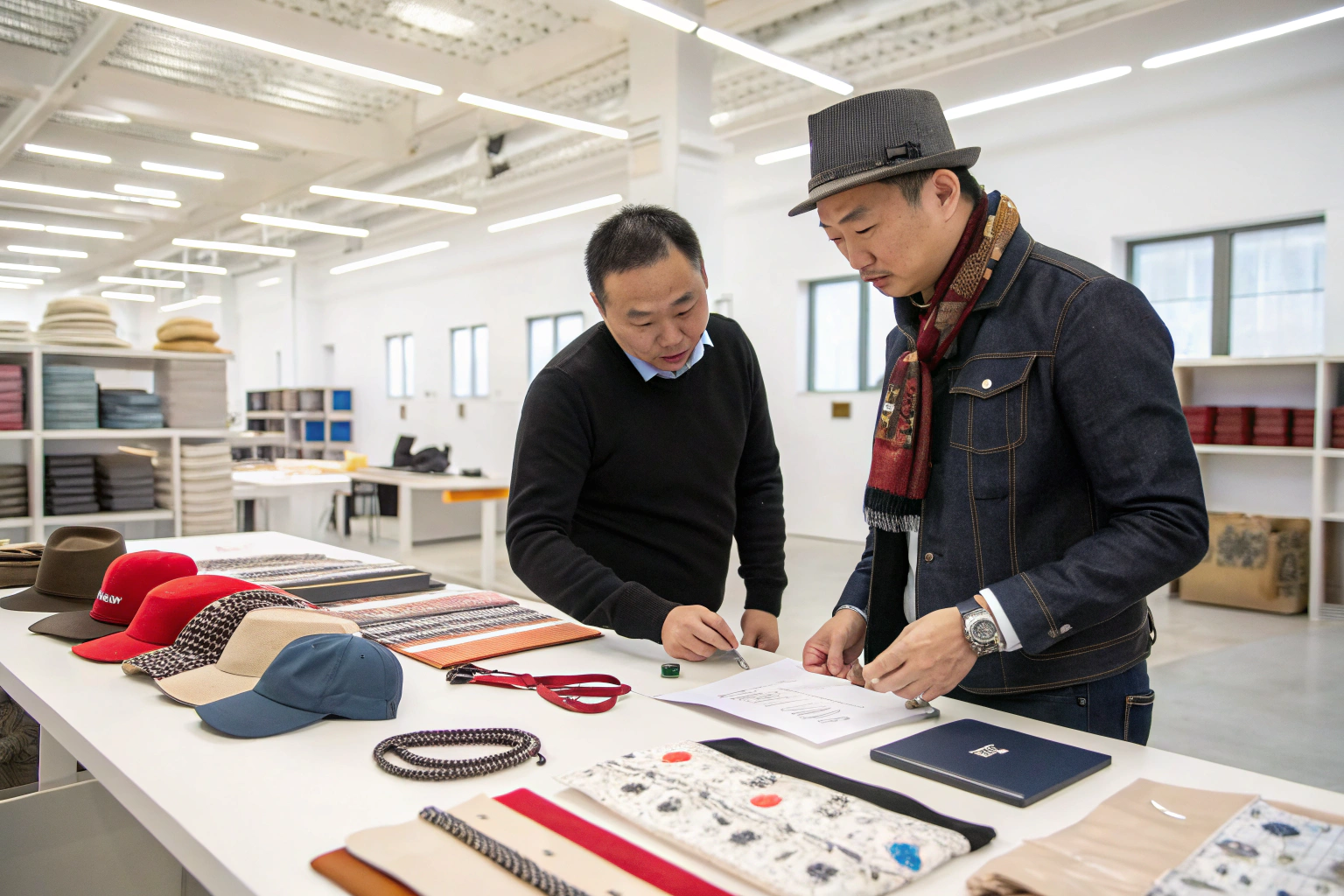
I remember sitting in a coffee shop in New York with a brand owner who had just flown back from a sourcing trip to another province in China. He was exhausted and frustrated. He had visited three factories that all promised they could do private label. But when he pressed them on the details, the minimum order quantities for custom packaging, the lead time for custom color matching, the process for registering his brand’s barcode, and the availability of compliance documentation for US retailers, the conversations fell apart. The factories could make the product, but they could not build the brand. He asked me why our factory seemed to handle all of those details as standard procedure when other factories treated them as special requests. The answer, I told him, is that we built our entire production model around the private label customer, not around our own in-house brand.
US importers prefer our factory for private label accessories because we provide the full operational infrastructure that a brand needs to launch and scale, not just the manufacturing capacity to cut and sew products. We offer low minimum order quantities that allow brands to test new designs without overcommitting capital. We have an in-house design team that translates a brand’s creative vision into production-ready tech packs, complete with custom color matching, custom material sourcing, and custom packaging development. We maintain a current, comprehensive library of US retailer compliance documentation, including BSCI audit reports, phthalate-free certifications, and product testing records from accredited laboratories, that private label brands need to onboard with major department stores and online marketplaces. And we provide a dedicated, English-fluent project manager who serves as the brand’s single point of contact from development through delivery, ensuring that the brand owner’s experience is collaborative, transparent, and efficient. I will walk through each of these reasons in detail so you can understand what a private-label-optimized factory looks like in practice.
What Low Minimum Order Quantities Make Private Label Testing Viable?
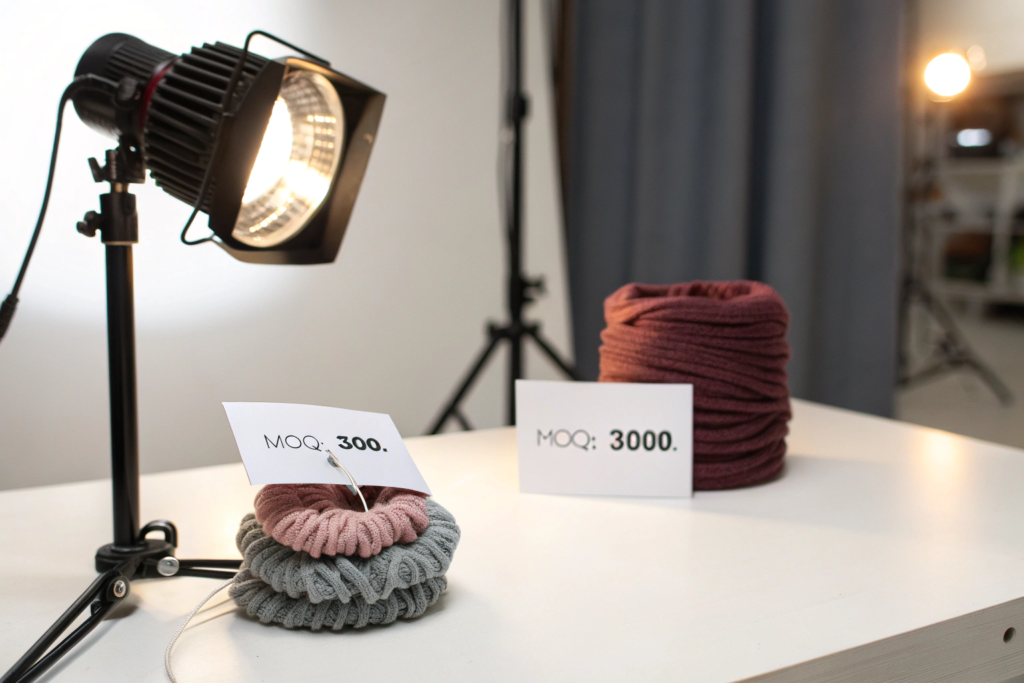
Private label brands, especially in their first few seasons, live and die by cash flow. A brand owner who is launching a new line of accessories typically needs to test multiple designs, multiple colorways, and multiple product categories simultaneously to build a coherent collection. A factory that requires 2,000 or 3,000 units per design effectively forces the brand to concentrate its entire seasonal budget on one or two SKUs. If those SKUs do not sell through at forecast, the brand’s working capital is trapped in unsold inventory, and the business is at risk. A factory that offers per-design minimums in the low hundreds of units allows the brand to spread its budget across a diversified collection, test the market with real sales data, and then scale the winners.
How Do Our Scalable Production Runs Support Emerging Brands?
Our factory is structured to accommodate what I call the ladder of growth. An emerging brand’s first order is often a trial order. The brand needs 300 to 500 units of a new hair clip design, in two or three colorways, with custom color-matched resin, a branded hangtag, and a specific retail-ready polybag. This order size is not profitable for a factory optimized for mass production, but it is viable for a factory that has a dedicated small-batch production line, in-house sample room capacity, and a packaging team accustomed to changing over branding elements quickly. We handle the trial order as a complete, miniaturized version of a full-scale production run, not as a favor we are doing for a small client.
If the trial order sells through successfully and the brand is ready to scale, our production model scales with them. The same molds, the same material specifications, and the same packaging design that were developed for the trial order are used for the reorder at 1,500 units, and then the reorder at 5,000 units. The brand does not need to redevelop the product at a different factory when volume increases. The production simply moves from our small-batch line to our high-volume line, with the same project manager, the same quality standards, and the same compliance documentation. This continuity eliminates the re-sourcing cycle that consumes time and introduces quality risk as brands grow.
The commercial arrangement that makes this scalable model work is our tiered pricing structure. The unit price at 300 pieces reflects the higher per-unit cost of a short production run. The unit price at 1,500 pieces is lower. The unit price at 5,000 pieces is lower still. The brand knows the cost structure upfront and can plan its margin as volume grows. This tiered pricing is documented in the initial quotation, so there are no surprises when the brand is ready to scale. The approach aligns with established best practices in inventory management for small businesses, which emphasize matching purchase quantities to realistic demand forecasts.
Why Is Dedicated Sample Room Capacity Crucial for Custom Development?
Private label development is an iterative process. The first sample is rarely the final product. The brand owner receives the sample, evaluates it, and provides feedback. The color needs to be adjusted. The logo placement needs to shift by three millimeters. The packaging insert needs a different paper weight. Each of these adjustments requires a revised sample. A factory that outsources its sampling to a third-party sample studio, or whose sample room is so overloaded with large-brand work that small-brand revisions wait in a queue, will take weeks to turn around each revision. A brand with a seasonal deadline simply cannot afford that timeline.
Our factory maintains a dedicated sample room that is resourced specifically for custom and private label development work. The sample room team includes pattern makers, cut-and-sew technicians, resin mold specialists, and packaging mockup designers. They work exclusively on development orders, not on production line support. This dedicated capacity means a revision request from a private label client is scheduled and executed within days, not weeks. The sample room also maintains a library of previous development work for each brand, so when a brand returns for a new season, the team can reference the brand’s color palettes, logo files, packaging specifications, and past revision history without starting from zero. This institutional memory accelerates development and prevents the repeat of past errors.
How Does Our Design Team Translate Your Brand Vision into Production?
The gap between a beautiful brand concept and a commercially viable, production-ready product is where many private label projects fail. A brand owner may have a clear vision for the aesthetic, the target customer, and the retail price point, but may lack the technical knowledge to specify the correct material, the appropriate construction method, or the cost-effective decoration technique. Our design team exists to bridge that gap. We do not simply take orders. We provide design development as a core part of our private label service.
Can You Help Source Custom Materials and Match Brand Pantone Colors?
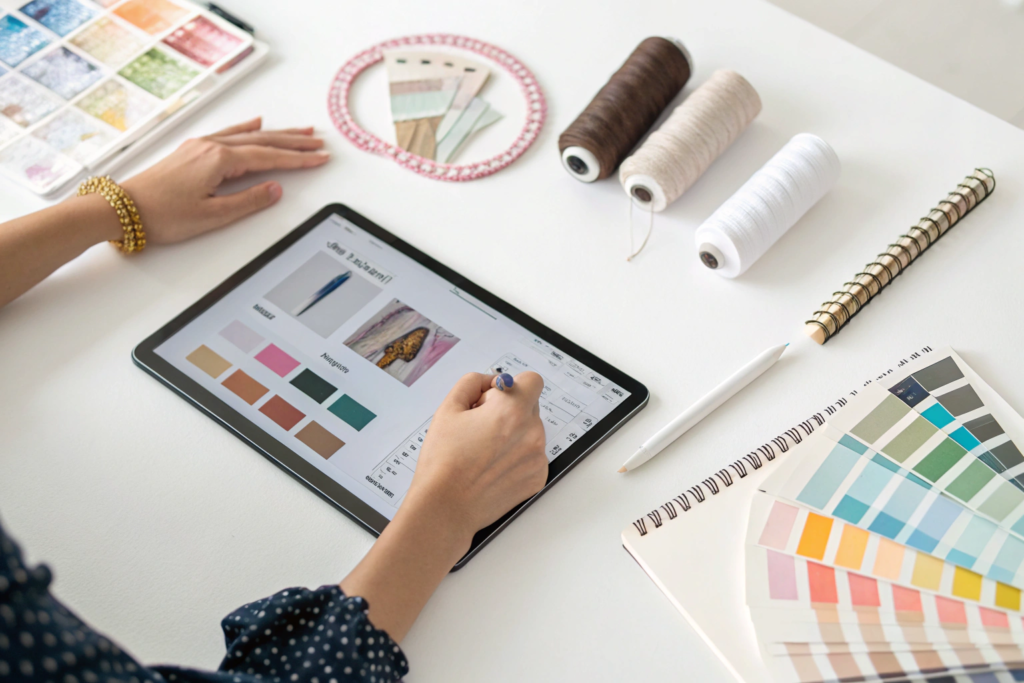
A private label brand’s identity is often built on specific, recognizable design elements. A signature color, a specific metal finish, a particular fabric texture. Off-the-shelf materials from a supplier’s standard catalog rarely meet the brand’s exact specification. Our design team includes material sourcing specialists who work with a network of fabric mills, resin compounders, metal plating subcontractors, and trim suppliers to develop custom materials that match the brand’s requirements.
The color matching process begins with the brand’s Pantone reference or a physical color swatch. Our color technician formulates a pigment recipe to match the reference on the specific substrate, whether it is dyed fabric, tinted resin, or electroplated metal. A lab dip or a color chip is produced and sent to the brand for approval. If the match is not exact, the formulation is adjusted and a revised chip is produced. This cycle continues until the brand approves the color. The approved formulation is then documented and locked as the brand’s custom color standard. All future production orders reference this locked standard, ensuring color consistency across seasons.
This custom material development is treated as a standard part of our private label onboarding, not as an extra service with a premium fee. Our commitment is to ensure that the brand’s products are unique and distinct, starting from the raw materials. We have integrated this philosophy directly into our custom accessory development process, making it a repeatable, scalable system rather than a one-off effort.
What Tech Pack Support Do You Provide to Ensure Accurate Production?
A tech pack is the engineering document that translates creative design into repeatable manufacturing instructions. A complete tech pack includes dimensioned technical drawings of the product from multiple angles, a bill of materials listing every component with its specification and supplier, construction details including stitch types, seam allowances, and assembly sequence, decoration specifications including print or embroidery placement, size, and color callouts, and packaging specifications including the folding method, the insert placement, and the barcode position.
Many private label brand owners do not arrive at our factory with a complete, production-ready tech pack. That is expected and normal. Our design team takes whatever the brand provides, a sketch on a napkin, a mood board, a reference sample from a competitor, a partially complete CAD drawing, and develops the full production tech pack. The tech pack becomes the single source of truth for every department that touches the product, from the material procurement team to the cutting table to the QC inspector. The brand reviews and approves the tech pack before production begins, so there is a documented, mutually agreed specification against which the finished product will be measured.
The tech pack also serves as the foundation for the brand’s intellectual property protection. By documenting the exact material formulations, component sources, and construction methods, the brand has a proprietary manufacturing specification that can be protected. While we do not patent or legally protect the brand’s designs, which is the brand’s responsibility, we do maintain strict client confidentiality. A brand’s tech pack, material formulations, and packaging designs are never shared with or shown to another client.
What US Retail Compliance Documentation Do We Provide Upfront?
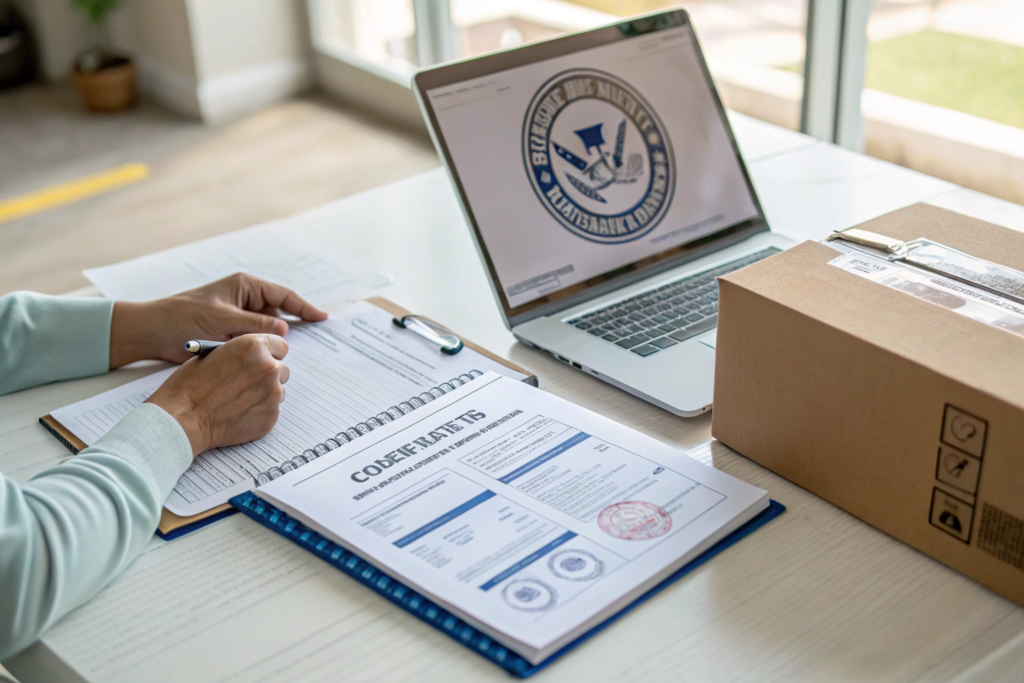
For a US importer, and particularly for a private label brand that wants to sell into department stores, big-box chains, or curated online marketplaces, the factory’s compliance status is not a nice-to-have. It is a prerequisite for doing business. A brand that presents a beautiful product to a buyer at Macy’s, Nordstrom, or Target will not receive a purchase order if the factory behind that product cannot produce a current, passing social compliance audit, a product safety test report, and a documented chain of custody for restricted substances. Our factory provides this documentation as a standard part of our private label onboarding package, not as a response to a frantic request three days before the buyer’s deadline.
How Do Our BSCI and Quality Audits Streamline Retailer Onboarding?
Major US retailers require their private label and branded vendors to source from factories that meet specific social compliance and quality management standards. The retailer’s vendor compliance department will request the factory’s audit report before approving the vendor for production. If the factory cannot produce the report, or if the report shows failing grades, the vendor is blocked. The product cannot be ordered. The shelf space is gone.
Our factory maintains a current amfori BSCI social compliance audit with a strong rating. The BSCI audit covers labor rights, working hours, fair wages, workplace health and safety, environmental management, and business ethics. The audit is conducted by an independent, accredited third-party auditing firm on a semi-announced basis. A valid, passing BSCI report is accepted by the vast majority of US retailers as evidence of social compliance. We provide the full audit report, not just the certificate, to our private label clients for inclusion in their retailer vendor application package.
In addition to the social compliance audit, we maintain ISO 9001 certification for our quality management system. This certification demonstrates that our factory has documented, audited processes for every stage of production, from incoming material inspection to final QC and shipping. The ISO certification, combined with the BSCI audit, satisfies the two primary documentation requirements of most US retailer vendor compliance programs. A private label brand that works with our factory can submit our audit and certification documents as part of their retailer onboarding package and typically clear the compliance gate in days rather than weeks. You can learn more about the specific standards required by referring to the amfori BSCI platform.
What Product Safety Testing and Phthalate-Free Certifications Are Available?
Beyond the factory-level audits, retailers require product-level safety testing. The specific tests depend on the product category, the materials, and the intended user. A hair clip for adults requires different testing than a hair clip marketed for children. A belt with a metal buckle requires different testing than a scarf with no hardware.
Our factory maintains an ongoing product testing program with internationally accredited laboratories, including SGS, Intertek, and Bureau Veritas. We have current test reports for our standard material formulations covering lead content, phthalate content, and flammability, all in compliance with US Consumer Product Safety Commission requirements. For children’s products, we have phthalate-free certification demonstrating that all plasticized components contain less than 0.1% of each of the six restricted phthalates.
For a private label brand launching a new product using a new material or a new component, we coordinate the required product testing as part of the development process. The brand does not need to identify the applicable ASTM standards, find a testing lab, ship samples, and interpret the results independently. Our compliance team manages the testing logistics, and the test report is delivered to the brand as part of the final development documentation package. This turnkey testing support removes a significant administrative and technical burden from the brand owner and ensures that the product is legally compliant before it ships to the US.
How Does Our Dedicated Project Manager Simplify Your Sourcing Experience?
The single most common complaint I hear from importers who have worked with other factories is that they never know who to contact. They emailed the salesperson who closed the deal, but the salesperson has moved on to new leads. They called the production manager, but the production manager does not speak English. They sent a message to the general factory inbox, but no one responded for a week. This fragmented communication model is stressful, inefficient, and a primary reason why importers switch suppliers.

What Does a Single Point of Contact Mean for Issue Resolution?
When a US importer partners with our factory, they are assigned a dedicated project manager before the first purchase order is signed. This person is an experienced, English-fluent professional who understands the entire production process, from material sourcing through shipment. The project manager is the importer’s single point of contact for everything. Design questions, sample revisions, production status updates, QC report reviews, packaging approvals, logistics coordination, and invoice inquiries, all go to one person. The project manager either answers the question directly or coordinates internally to get the answer and responds promptly.
This single point of contact model is particularly valuable when an issue arises. A shipment is delayed by a port closure. A material lot fails incoming QC. A packaging supplier delivers a carton with an incorrect barcode. The project manager identifies the issue, often before the client notices, develops a resolution plan with the relevant internal departments, and communicates the situation to the client with specific options. The client is not left to navigate the factory’s internal organizational chart to find the person who can fix the problem.
The project manager also maintains the client’s complete history. Past orders, approved samples, material formulations, packaging specifications, QC reports, and communication threads are all organized by client and accessible. When the client returns for a reorder six months later, the project manager retrieves the historical files and ensures the new order matches the approved baseline. Nothing is lost to staff turnover or institutional forgetfulness. This supply chain communication model is what differentiates a transactional supplier from a strategic manufacturing partner.
How Do Proactive Updates Prevent Problems Before They Escalate?
A reactive project manager waits for the client to ask for an update and then scrambles to provide one. A proactive project manager provides updates on a scheduled cadence so the client is never in the dark. Our project managers follow a defined communication schedule for every order. A kickoff confirmation is sent within 24 hours of purchase order receipt. A pre-production sample approval request is sent before mass production begins. A mid-production update with inline QC photos is sent at approximately 30% completion. A pre-shipment inspection report is sent at 100% completion. A shipping confirmation with tracking details is sent within 24 hours of vessel departure.
These proactive updates eliminate the "just checking in" emails that eat into a brand owner’s time and create anxiety. The brand owner knows exactly when the next update will arrive and what it will contain. If an issue arises that falls outside the scheduled update cadence, the project manager communicates immediately. A proactive communication culture means that problems are surfaced early, when resolution options are still available. A production delay identified at 30% completion can be mitigated with a shipping method change. A delay identified at 100% completion can only be reported, apologized for, and endured.
Conclusion
US importers prefer our factory for private label accessories because we have built our entire operation around the specific needs of the brand-building customer. Low minimum order quantities and dedicated sample room capacity allow emerging brands to test the market and scale their winners without overcommitting capital or enduring development timelines that kill seasonal momentum. An in-house design team with material sourcing and color matching capability translates a brand’s creative vision into a production-ready, proprietary product, complete with a full tech pack that protects the brand’s intellectual property. A current, comprehensive suite of US retailer compliance documentation, including BSCI audit reports and product safety testing, enables private label brands to clear the vendor compliance gate at major department stores quickly and confidently. And a dedicated, English-fluent project manager provides a single point of contact and a proactive communication cadence that transforms the sourcing experience from a fragmented, stressful chore into a collaborative, efficient partnership.
The result of this operational model is that our private label clients spend less time managing their factory and more time building their brand, marketing their products, and growing their sales. That is the value proposition that a professional private label factory delivers.
If you are a US importer or brand owner developing a private label accessories line and you want to experience a factory partnership that is structured around your specific needs, contact our Business Director Elaine at elaine@fumaoclothing.com. Tell her about your brand, your product category, your target retailers, and where you are in your development cycle. She can connect you with a project manager who can walk you through our private label onboarding process, provide sample development timelines, and share our compliance documentation package. Let us show you why our clients stay with us for the long term.