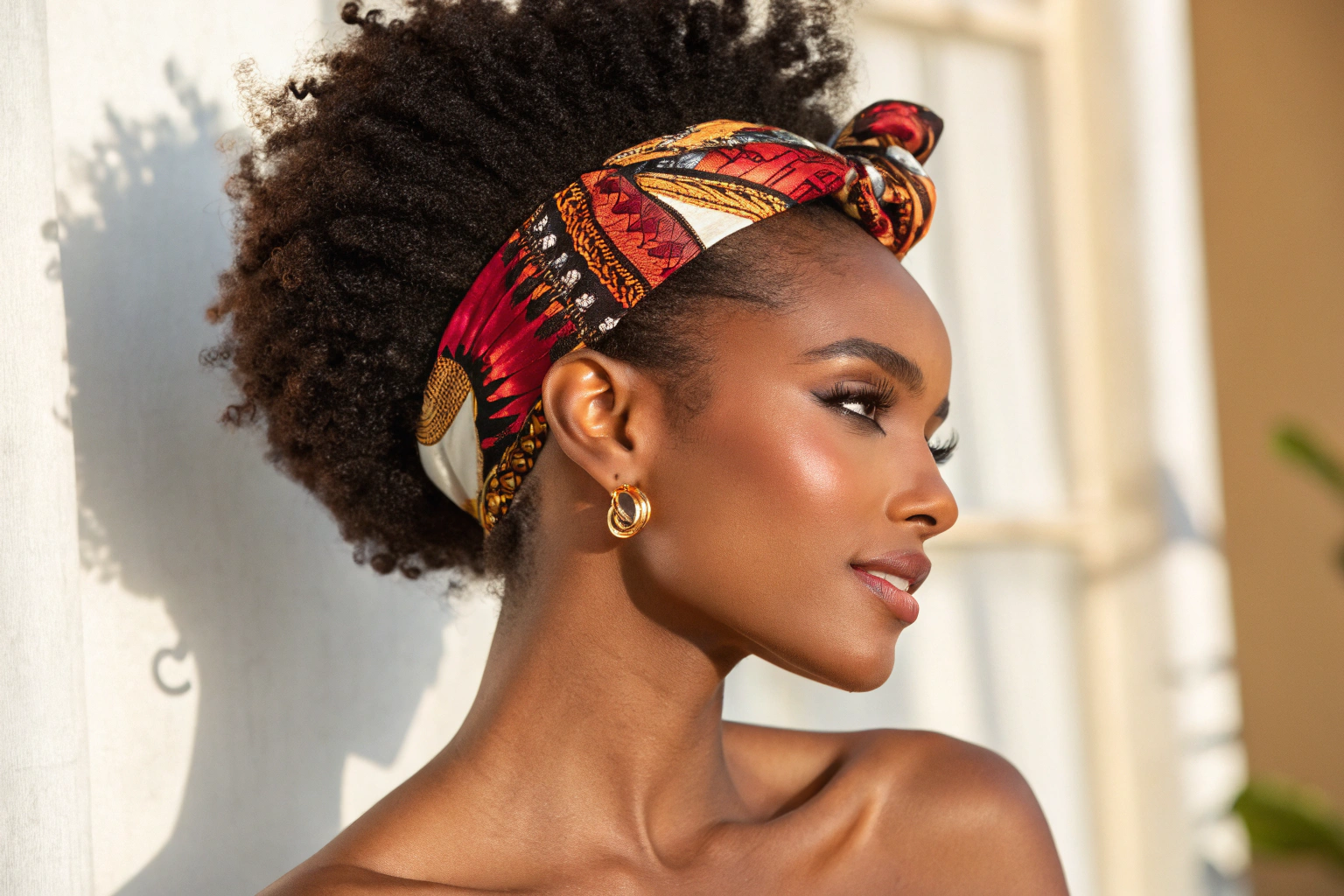
I have listened to a specific frustration from Black customers and the brands that serve them for years. A woman walks into a beauty supply store or scrolls through an online accessories boutique. She sees hundreds of hair bands. She picks one up, stretches it between her fingers, and knows instantly it will not work. It is too tight, too narrow, and too flimsy. It will snap when she tries to wrap it around her thick ponytail, or it will grip too aggressively and cause breakage at her delicate edges. She puts it back. A brand that offers her a hair band designed specifically for her hair texture, with grip that does not pull, width that provides coverage, and materials that retain moisture rather than wick it away, has earned a loyal customer who will reorder and tell her friends.
The 2026 hair band trends for African American hair types center on functional, protective design that does not compromise on style. Satin and silk-lined bands that protect edges and prevent moisture loss are the dominant material story. Extra-wide, reinforced elastic bands that securely hold thick, dense hair without excessive tension are the functional standard. Bold, culturally resonant prints and sculptural resin designs that serve as statement accessories, not just utilitarian tools, are the fashion-forward direction. And multi-pack sets offering varied hold levels for different styles, from a loose pineapple for sleeping to a firm hold for an active workout, are the commercial model that drives volume. I will walk through each of these trends in detail so you can build a hair band assortment that genuinely serves this customer.
Why Are Satin and Silk-Lined Hair Bands the Foundation of Protective Styling?
The core functional requirement for a hair band designed for textured hair is that it must not damage the hair. Traditional elastic bands, cotton-covered bands, and bands with exposed metal joiners create friction against the hair shaft, lifting the cuticle, causing snagging, and over time leading to breakage. Textured hair, which is naturally drier and more fragile at the cuticle layer due to the curl pattern preventing natural sebum from traveling down the hair shaft, is particularly vulnerable to friction damage and moisture loss. A hair band that actively protects the hair while holding it is not a luxury add-on. It is a functional necessity for this customer.
How Do Satin, Charmeuse, and Mulberry Silk Differ in Performance?
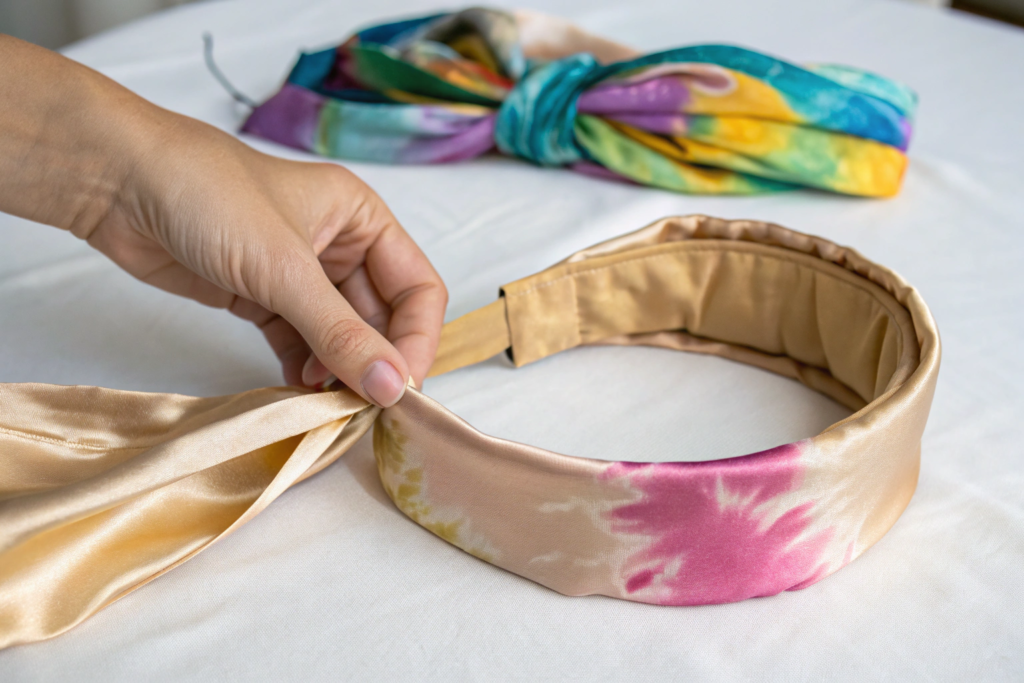
The three materials most commonly used for protective hair bands differ in cost, durability, and performance, and understanding those differences allows you to position products at different price tiers. Satin is a weave structure, not a fiber. Satin can be made from silk fibers, creating silk satin, or from synthetic fibers such as polyester or nylon, creating synthetic satin. The defining characteristic of satin weave is its smooth, lustrous surface with minimal friction against the hair. Synthetic satin is affordable, widely available in an unlimited color range, and performs the friction-reduction function effectively. It is the entry-level and mid-tier material for protective hair bands.
Charmeuse is a specific type of satin weave that is particularly lightweight and lustrous, with a glossy front and a matte back. Silk charmeuse is made from silk fibers and is the premium material in the protective hair accessory market. It provides the lowest friction surface, excellent temperature regulation, and natural protein fiber compatibility with hair keratin. Mulberry silk is the highest grade of silk, produced by silkworms fed exclusively on mulberry leaves. The fibers are longer, stronger, and more uniform than other silk types, producing a fabric with exceptional smoothness and durability. Mulberry silk hair bands are the luxury tier, retailing at a significant premium.
The performance difference between synthetic satin and real silk matters for moisture retention. Textured hair requires moisture to maintain elasticity and prevent breakage. Cotton and other absorbent materials wick moisture away from the hair. Synthetic satin is less absorbent than cotton but still not completely non-absorbent. Silk is naturally protein-based and does not absorb moisture from the hair. A silk-lined hair band helps the hair retain its moisture balance over hours of wear or overnight. For a customer with high-porosity hair that loses moisture quickly, that moisture retention difference is noticeable and worth paying for. You can learn more about the specific benefits of natural fibers for hair health from resources on natural hair care practices, which discuss how protein-based fabrics interact with hair keratin.
Why Is Elastic Tension Calibration Crucial for Edge Protection?
The edges, the fine, delicate hairs along the hairline, are the most fragile hair on the head. They are the first to break under excessive tension. A hair band that is too tight, too thin, or that grips too aggressively will literally saw away at the edges over repeated wear, causing traction alopecia, a permanent form of hair loss caused by prolonged tension on the hair follicle.
A hair band designed for textured hair must have elastic tension that is firm enough to hold thick, heavy hair securely but gentle enough to not create a ring of tension around the hairline. This is not achieved by simply using a weaker elastic, which would not hold the hair adequately. It is achieved by distributing the tension across a wider band surface area. A wide band, 2 to 4 inches instead of the standard half-inch elastic hair tie, applies the same total holding force across a larger contact area, dramatically reducing the pressure per square inch on the hairline and edges. The edges are protected because the force is distributed, not concentrated.
The elastic should also have a soft recovery. It should stretch smoothly under tension and return gently, without a sudden, aggressive snap-back that would jerk the hair. The elastic core is typically encased in the satin or silk fabric, with the fabric gathered along the elastic rather than stretched tight. This gathered construction allows the fabric to absorb some of the tension, further softening the feel against the hair. When the band is removed, it should slide off easily without catching or pulling individual strands. This combination of width, distributed tension, and smooth removal is the functional specification that defines an edge-protective hair band. At AceAccessory, our product development involves testing across multiple hair textures to ensure that the hold is secure without being damaging.
What Sizes, Shapes, and Grips Work Best for Thick and Coily Hair Textures?
A hair band that simply stretches does not guarantee it can hold a full, dense head of type 4 hair during movement. The physics of holding a high-volume, coiled mass require specific design features beyond basic elasticity. The grip mechanism, the structural integrity, and the dimensional size must all be engineered for the mass and texture of the hair they are intended to secure.
What Are the Advantages of Spiral, Coil, and Extra-Wide Band Shapes?
The shape of the hair band directly determines how the holding force is distributed through the hair mass. A standard thin elastic band creates a single, narrow ring of tension around the gathered hair. On thick, dense hair, this narrow ring acts like a tourniquet. It concentrates all the holding pressure onto a thin line of hair strands, causing discomfort, dents, and breakage at that one point. The hair can also slip out from either side of the narrow band because there is insufficient surface contact to grip the full volume.
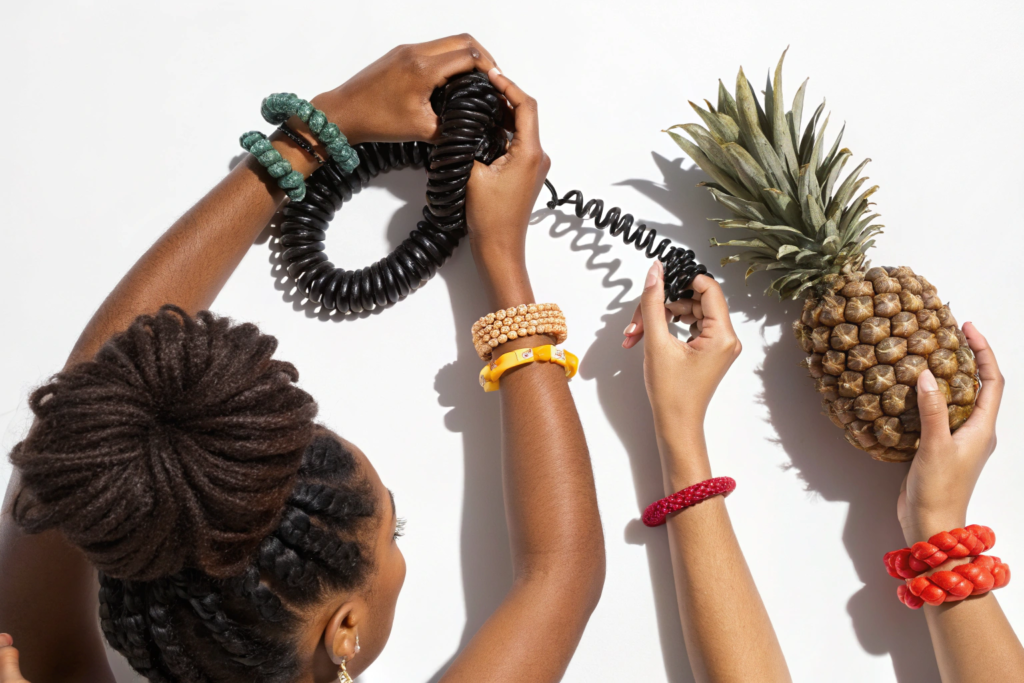
A spiral or coil-shaped hair band, often made from a plastic or resin monofilament formed into a continuous spring-like helix, solves this problem by wrapping around the hair bundle multiple times along its length. Instead of a single ring of tension, the hold is distributed across multiple contact points along the length of the ponytail. This distributes the load, eliminates the single tight ring, and grips the hair along a larger surface area. The coil shape is easy to apply. You simply wind it around the hair, and it holds without needing to be tied or doubled. It is a favorite for securing puffs, pineapple up-dos, and the ends of braids.
An extra-wide fabric band, 3 to 5 inches in width, distributes the tension across a broad, flat surface against the head. This is the design principle behind the wide headwrap-style band that is worn to push the hair back from the face or to secure the hairline during sleep. The width prevents the band from rolling or twisting into a thin rope, which would concentrate pressure at a single point. For gifted and luxury sets, this wide band category is seeing particular innovation in velvet burnout fabrics and custom-shaped internal padding that adds volume without adding tension.
How Do Non-Slip Inner Grips Improve Hold Without Causing Breakage?
A smooth satin or silk hair band has low friction against the hair, which is excellent for preventing cuticle damage during removal but challenging for holding the band in place on very sleek or very heavy hair. The band can slide backward off the head or down the ponytail, requiring the wearer to constantly readjust. The functional solution is a non-slip inner grip that provides mechanical hold without sacrificing the protective smoothness of the outer surface.
The most effective non-slip grip for textured hair is a thin, strategically placed strip of medical-grade silicone gel or a soft velvet ribbon attached to the inner lining of the band. The grip strip makes contact with the hair at the interior of the band, providing enough friction to hold the band in position. The strip is narrow, usually a quarter-inch to a half-inch wide, and is embedded so it does not create a raised ridge that would cause a dent. The gel material is soft and pliable, not a hard, sticky plastic. It does not pull or snag individual strands when the band is removed.
For heavy, dense hair, a band that combines a wide, satin-lined body for overall protection with a discreet inner silicone or velvet grip strip for positional hold offers the best of both functional requirements. The band protects the hair along its entire contact area, does not apply excessive tension, and stays exactly where the wearer puts it through hours of activity, dance, workout, or a full day at work. This is the functional specification that premium protective hair bands are engineered to meet. Understanding the properties of medical-grade silicone can help brands specify safe, non-irritating materials for these skin-contact grip elements.
What Color and Pattern Trends Are Resonating in 2026 Hair Accessories?
Color and pattern in the textured hair accessories market are not merely decorative. They are an expression of cultural identity and personal style. The 2026 trends reflect a convergence of Afro-centric print traditions, minimalist earth-tone aesthetics that complement a wide range of skin tones, and the growing demand for accessories that can transition seamlessly from a professional environment to a social event. The right color palette allows a brand to serve a customer who may want a bold Ankara print headwrap for a cultural celebration and a neutral, clay-toned coil set for her yoga class.
How Are Ankara and Kitenge Prints Being Incorporated into Stretch Fabrics?
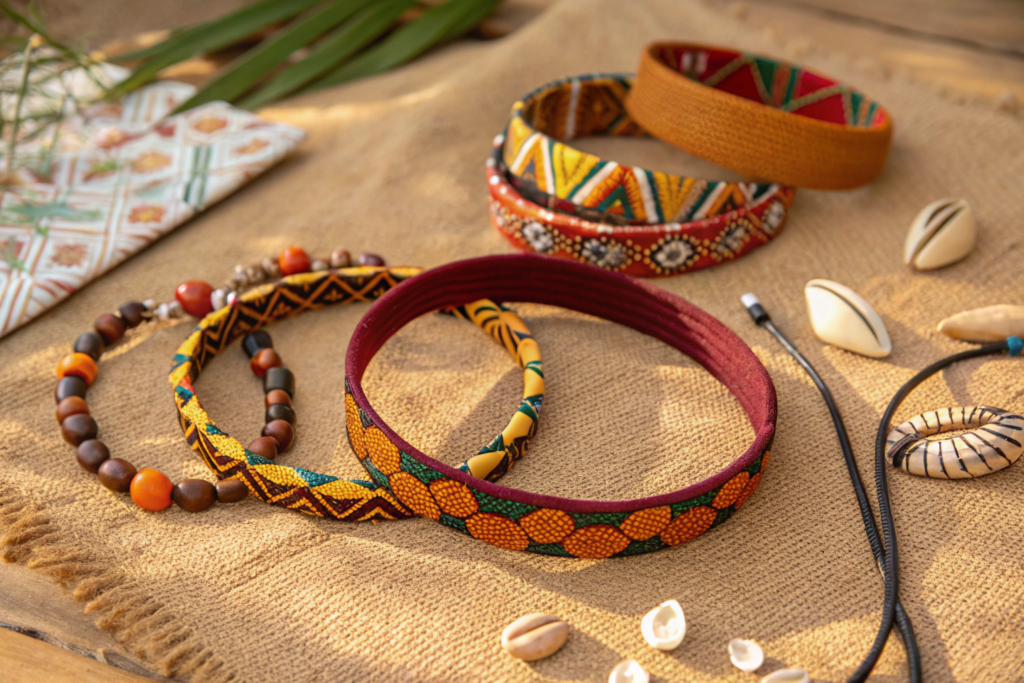
Ankara, also known as African wax print, and Kitenge, the East African equivalent, are cotton fabrics characterized by vibrant, bold, geometric, and symbolic patterns. These fabrics are culturally significant across the African continent and the diaspora. Traditionally, they are used for garments and headwraps that are tied and styled manually. The innovation for 2026 is the incorporation of these prints onto stretch fabric hair bands that are pre-styled and easy to wear, making the Ankara aesthetic accessible for everyday use rather than requiring the time and skill of traditional headwrap tying.
The technical challenge is that authentic Ankara fabric is a non-stretch cotton. To make a stretch hair band, the Ankara print pattern is licensed or reproduced onto a stretch knit fabric, typically a polyester-spandex blend, using digital sublimation printing. The print retains the visual vibrancy and the characteristic slight blur or crackle effect of the wax printing process, but the base fabric gains the stretch and recovery required for a functional, easy-on-easy-off hair band. The result is a product that carries the cultural aesthetic of a traditional African print in a modern, convenient format.
The patterns chosen for 2026 range from classic, repeating geometric motifs in bold primary colors to more subdued, modern interpretations in monochromatic or tonal color schemes. The bolder prints are popular for statement accessories and festival wear. The tonal interpretations, for example, a navy-on-navy geometric pattern, appeal to the customer who wants a subtle cultural reference that is appropriate for a professional or business casual dress code. This range allows a brand to serve the customer across multiple occasions and dress codes with the same essential product format.
Why Are Skin-Tone Complementing Nudes and Bold Resin Colors Trending?
The nude and earth-tone color trend is partly a response to the demand for inclusive neutral tones that actually match a diverse range of skin complexions. The old definition of nude as a single, light beige color has been thoroughly rejected by the market. In 2026, nude hair accessories come in a range of shades from deep espresso and rich brown to warm caramel, golden bronze, and terracotta. A woman with deep skin can find a hair band in a tone that complements her complexion. A woman with warm, olive undertones can find a caramel or bronze shade that harmonizes with her skin.
Resin material, which can be tinted to any color and take on a high-gloss polished finish, is the preferred medium for the bold, sculptural end of the trend. Chunky resin hair cuffs that snap into place, coil bands in translucent jewel tones, and statement resin claw clips that can handle thick hair are all trending. The colors are often saturated, bold jewel tones, deep burgundy, emerald green, cobalt blue, and amber. The resin trend is about visibility. It is an accessory meant to be seen, to contrast with the hair color, and to serve as a focal point of the hairstyle. For a brand, offering a curated palette of these nude tones and bold resin colors is a direct signal of inclusivity and market awareness. At AceAccessory, our color matching process works directly from a brand’s specific Pantone or skin-tone palette reference to ensure consistency across production runs.
How Should Brands Structure Hair Band Assortments for Different Hair Densities?
A brand that sells a single hair band and markets it as universal is excluding a significant portion of the textured hair market. The hair density, strand thickness, and style requirements differ enormously from person to person, and a woman with fine, type 3 curls has fundamentally different hold requirements than a woman with dense, type 4C coils. Structuring an assortment by hold level addresses the functional reality of the customer and allows the brand to sell multiple products to the same customer for different occasions. A customer who buys a firm-hold band for her high-intensity workout may also buy a soft-hold satin band for sleeping and a medium-hold fashion band for brunch.
What Is the Best Way to Categorize Bands by Hold Level?
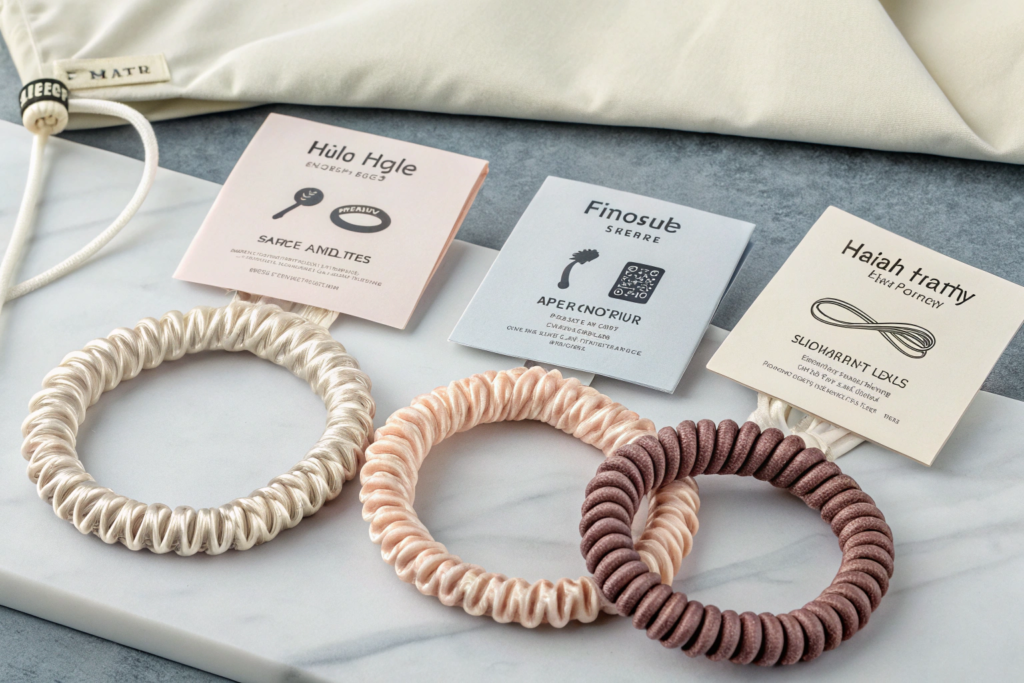
A three-tier hold level categorization is the most intuitive for the customer and the most effective for structuring a wholesale assortment. Light hold bands are designed for fine to medium density hair, for protective sleep styles, and for loose, casual styling. They are typically narrow satin scrunchies, thin seamless elastic bands, or small coil bands. They provide enough hold to gather the hair without compression and are safe for delicate edges and overnight wear.
Medium hold bands are designed for medium to thick hair and for everyday styling. This is the volume category. Wide fabric headbands, standard spiral coils, and medium-width elastic bands with a non-slip grip fall into this tier. They hold a full ponytail, a bun, or a pineapple securely through a typical day’s activity.
Firm hold bands are designed for very thick, dense hair and for active, high-movement situations. Extra-large coils, extra-wide reinforced elastic bands, and double-wrap bands that can be looped multiple times are in this category. A customer who does high-intensity interval training, dance, or runs outdoors needs a firm-hold band that will not slip, loosen, or snap. This customer is often the most underserved by standard accessory brands and is the most loyal once she finds a product that works. You can structure your purchase order to sample across these categories and understand your specific customer mix.
Why Are "Pineapple" and Sleep-Specific Styles Growing in Demand?
The pineapple is a protective night-time hairstyle where the hair is gathered very loosely into a high, forward-leaning ponytail or puff on the top of the head. The style prevents the hair from being crushed or rubbed against the pillow during sleep. A hair band designed specifically for the pineapple style is extra-large to accommodate all the hair gathered at the crown, uses a soft, wide band to avoid creating a dent at the hairline, and is often made from satin or silk charmeuse to match the moisture-retentive properties of the satin pillowcase or bonnet the customer is also using.
Sleep-specific styles are a growing subcategory because the customer base has been educated on protective night-time routines. A brand that offers a pineapple-specific band bundled with a matching satin scrunchie and packaged as a "night hair care kit" is solving a specific problem that the customer understands and values. This kit format also increases the average order value and positions the brand as a knowledgeable, caring participant in the customer’s hair health journey, rather than just a seller of fashion accessories. Detailed hair care and styling guides provide more background on these and other protective styling techniques that are driving product demand.
Conclusion
The 2026 hair band trends for African American hair types are defined by a fusion of protection, performance, and personal expression. The foundation is satin and silk-lined construction that prioritizes moisture retention and friction reduction. The functional standard is wide, tension-distributed bands with calibrated elastic recovery and optional non-slip inner grips. The fashion direction ranges from culturally vibrant Ankara-inspired prints to inclusive skin-tone nudes and bold sculptural resin shapes. The commercial structure that serves the market best is a hold-level tiered assortment that recognizes the diverse density and styling needs within the community, including specific solutions for protective styles like the pineapple.
A brand that enters this market with a well-researched, thoughtfully designed assortment signals to its customer that it sees her specific needs and has engineered a solution for her. That signal of respect and understanding builds the brand loyalty that drives repeat purchases across multiple categories.
If your brand is developing a hair accessories line designed for African American hair types and you need a manufacturing partner who understands the functional specifications, the material requirements, and the aesthetic trends specific to this market, contact our Business Director Elaine at elaine@fumaoclothing.com. Tell her about your target customer, your desired hair types you intend to serve, and your initial assortment ideas. She can coordinate functional samples in a range of hold levels, material swatches including satin, silk charmeuse, and performance velvets, and a development timeline that aligns with your seasonal collection launch. Your customer’s crown deserves accessories that protect it and celebrate it.