

I spent a week at a trade show in Miami two Julys ago, and I noticed something about the attendees. They all stopped at the baseball cap booths. They touched the fabric. They held the caps up to the light and looked through the weave. They put them on their heads and stood there for a few seconds, silently evaluating whether their scalp was going to sweat through the fabric in the Florida humidity. The buyers who were serious about summer caps did not ask about the logo placement first. They asked, "What is this made of?" They knew from experience that a summer baseball cap made from the wrong fabric would sell once, generate returns or complaints, and never reorder. The fabric choice was the product.
The best fabric for a breathable summer baseball cap is a lightweight, moisture-wicking polyester mesh or a polyester-cotton blend with a visible open-weave structure, often combined with a performance finish that actively pulls moisture away from the skin. Cotton twill, the traditional baseball cap fabric, can work for summer when it is brushed into a lightweight drill and treated for enhanced breathability, but untreated heavy cotton holds sweat and dries slowly. The optimal fabric choice depends on the intended use. Performance polyester mesh is best for active outdoor wear and athletic applications. Lightweight cotton blends and brushed cotton twills are best for fashion and lifestyle caps where a natural fiber hand-feel and a classic appearance are priorities. I will break down the properties of each fabric category, explain how to evaluate breathability in a cap fabric, and provide guidance on cap construction features that work together with the fabric to create a genuinely cool, comfortable summer cap.
What Makes a Baseball Cap Fabric Breathable and Cool-Wearing?
Breathability in a fabric is not a single property. It is the result of several physical characteristics working in combination. A fabric can be lightweight but not breathable if it has a tight weave that traps air. A fabric can be open-weave but uncomfortable if it is made from a fiber that does not wick moisture. Understanding the specific mechanisms of heat and moisture transfer through cap fabrics helps you specify the right material and evaluate fabric samples with a critical eye.
How Do Air Permeability and Moisture Wicking Differ in Cap Fabrics?
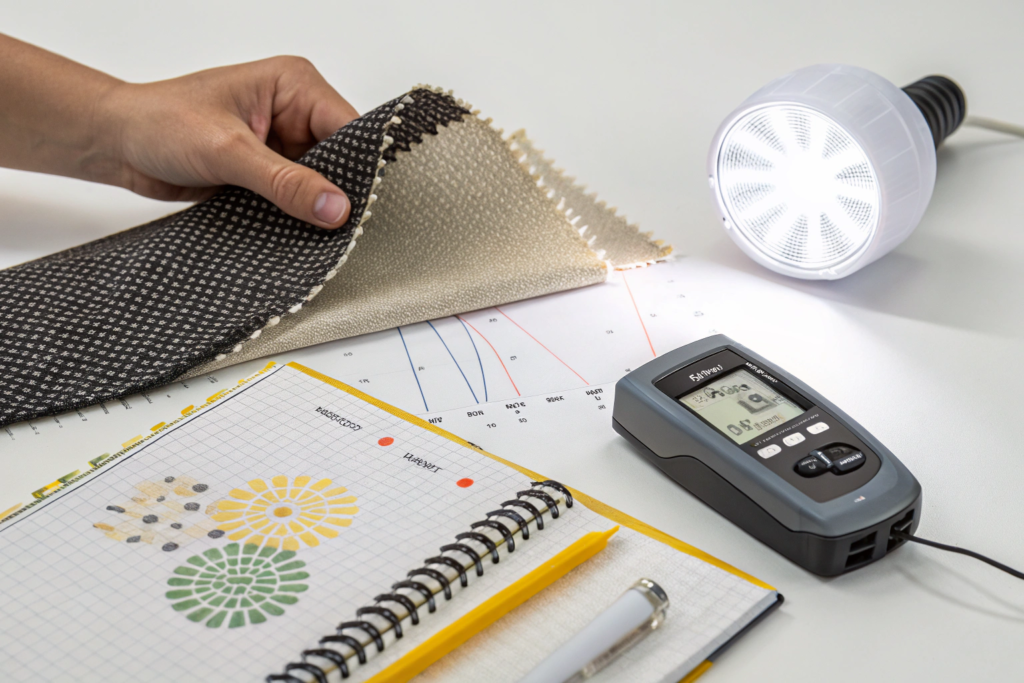
Air permeability is the measure of how easily air passes through a fabric. For a summer baseball cap, high air permeability is desirable because it allows body heat to escape from the head through the cap crown, cooling the wearer. Air permeability is primarily determined by the weave structure and the yarn thickness. An open, plain-weave mesh with visible gaps between yarns has high air permeability. A tightly woven twill with minimal gaps has low air permeability. A cap made from a tight twill traps body heat inside the crown, creating a hot, sweaty environment regardless of the fiber content.
Moisture wicking is the fabric’s ability to move liquid sweat away from the skin to the outer surface of the fabric, where it can evaporate. Wicking is primarily determined by the fiber chemistry and by the capillary action created by the spaces between yarns. Polyester and other synthetics are naturally hydrophobic. They do not absorb water into the fiber, so moisture is transported along the fiber surface through capillary action to the outside. Cotton is naturally hydrophilic. It absorbs water into the fiber itself, where it is held until it evaporates slowly. A cotton cap absorbs sweat and stays wet against the skin. A wicking polyester cap moves sweat away from the skin and dries quickly.
The ideal summer cap fabric combines high air permeability with effective moisture wicking. A polyester mesh with an open, hole-patterned knit structure allows air to flow directly through the crown. At the same time, the polyester fiber surface transports any sweat that does form away from the skin, where airflow accelerates evaporation. This combination, active airflow through the fabric plus active sweat transport, is what makes a cap feel cool and dry during summer activity. A cap that has air permeability but no wicking will feel drafty but still clammy. A cap that has wicking but low air permeability will feel less clammy but still hot because body heat is trapped. Both properties matter. Standardized methods for measuring fabric breathability and moisture management exist and can be referenced in your material specification to ensure the mill’s performance claims are backed by verifiable test data.
What Is the Difference Between Single-Layer and Structured Crown Construction?
The fabric is not the only factor that determines how hot a cap wears. The crown construction, meaning the layers of material that make up the front panels of the cap, has a major impact on breathability. A structured crown cap has a stiff buckram backing fabric laminated or sewn behind the front panels. This buckram gives the cap its rigid, high-profile shape that stands up even when not on a head. The buckram layer also blocks airflow through the front of the cap, which is the largest surface area of the crown. A structured cap traps more heat than an unstructured cap, regardless of the face fabric.
An unstructured crown cap has no buckram backing. The front panels are the same fabric as the rest of the crown, with perhaps a lightweight fusible interfacing for slight shape retention. An unstructured cap is inherently more breathable because there is no solid layer blocking airflow. It also packs flat, which is a secondary benefit for travel and retail display. For summer, unstructured crowns in a breathable mesh or lightweight twill are the coolest-wearing option.
A middle-ground option is the structured cap with a mesh back. The front panels are structured with buckram for shape, but the back panels are a polyester mesh that allows heat to vent through the rear of the cap. This construction provides the best of both worlds. A crisp, structured front that holds its shape for logo presentation and a breathable back that vents heat. This is the classic trucker cap construction, and it remains popular for summer because it works. The heat that builds up inside the front crown escapes through the open mesh back panels, creating passive ventilation across the scalp.
Which Polyester Mesh and Performance Fabrics Perform Best in Heat?
Performance polyester fabrics are the dominant choice for active summer baseball caps, and the category includes several distinct fabric types that look and feel different from one another. The classic trucker mesh, the modern performance knit, and the lightweight nylon ripstop each have advantages and trade-offs that affect the cap’s appearance, durability, and cooling performance. Choosing the right one for your specific customer and channel requires understanding these differences.
What Is the Best Weave Structure: Honeycomb Mesh, Pique, or Ripstop?
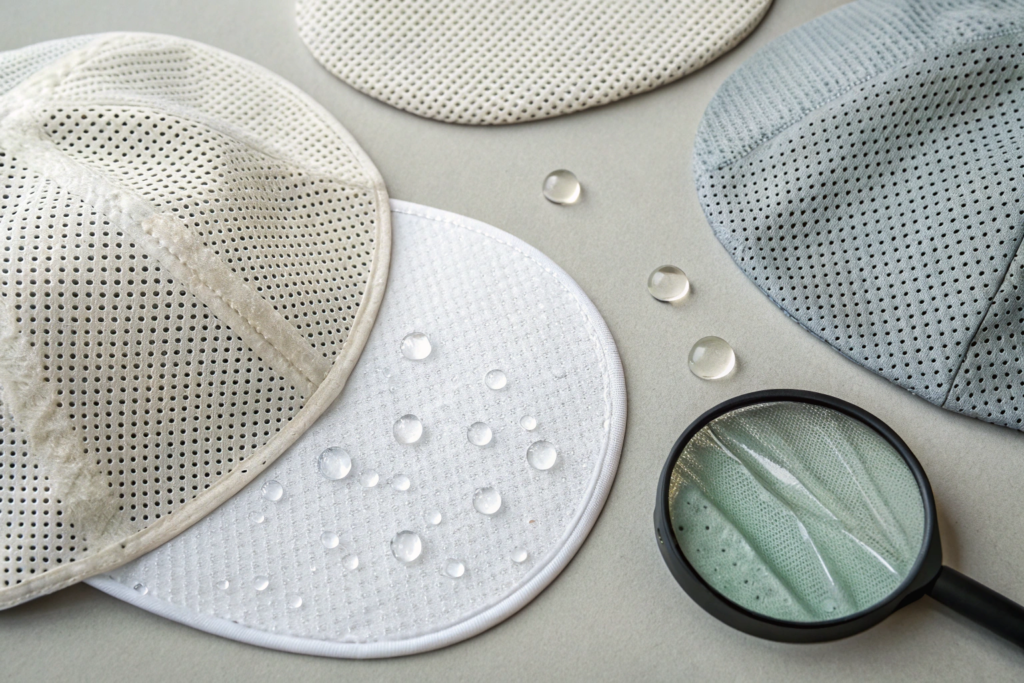
Honeycomb mesh is the most breathable cap fabric structure available. It is a knit fabric with a repeating hexagonal or diamond-shaped hole pattern produced by a specific stitch configuration. The holes are large enough to see through and allow direct air passage. A cap made from honeycomb mesh is essentially an open ventilation grid on the head. The trade-off is that honeycomb mesh provides zero sun protection to the scalp through the fabric holes, and the large-scale texture limits the surface quality available for detailed embroidery or complex prints. Honeycomb mesh is best used for the back panels of a trucker cap, where its ventilation performance is fully utilized while the solid front panel handles the branding.
Pique knit is a finer-gauge performance fabric with a subtle textured surface created by a waffle or honeycomb stitch pattern of much smaller scale than honeycomb mesh. The pique texture creates tiny air channels between the fabric surface and the skin, which promotes airflow and reduces the sticky, clingy feeling of a flat knit against sweaty skin. Pique knit is a popular choice for all-over performance caps because it has a clean, modern appearance that accepts embroidery and printing well, while providing significantly better breathability than a flat jersey knit.
Ripstop nylon is a woven fabric, not a knit. It has a distinctive grid pattern of heavier reinforcing threads at regular intervals, which prevents tears from propagating. Ripstop nylon is extremely lightweight and provides excellent wind resistance while being reasonably breathable for a woven fabric. It is popular for outdoor and hiking caps where durability, water resistance, and packability are priorities. Ripstop does not breathe as well as polyester mesh, but its combination of light weight and toughness makes it the right choice for caps used in active outdoor settings where the cap will be subjected to abrasion, moisture, and frequent packing and unpacking into backpacks and luggage.
How Do Polyester Blends Affect Durability, Feel, and Print Quality?
Polyester is rarely used in a 100% formulation for cap fabrics. Blends are common because they combine the performance properties of polyester with desirable characteristics of other fibers. A polyester-cotton blend, typically in a 65% polyester and 35% cotton ratio, is widely used for summer fashion caps. The polyester provides wicking performance, and the cotton provides a soft, natural hand-feel that many consumers prefer to the slick, technical feel of pure polyester. The cotton also makes the fabric more breathable than a tight-weave pure polyester, as cotton fibers swell slightly when they absorb moisture, opening the weave structure at a microscopic level.
A polyester-spandex blend with a small percentage of elastane, typically 2% to 5%, adds stretch and recovery to the cap. A stretch cap conforms to the head more comfortably and fits a wider range of head sizes within a single size offering. The stretch is particularly valued in unstructured, low-profile caps that rely on a snug fit rather than an adjustable strap for fit adjustment. The spandex component does not reduce breathability measurably at the low blend ratios used in cap fabrics.
A 100% recycled polyester fabric, made from post-consumer plastic bottles and spun into performance yarns, offers the same wicking and breathability performance as virgin polyester with a sustainability story that resonates with outdoor and active lifestyle brands. The hand feel is indistinguishable from virgin polyester to most consumers, and the performance test results are equivalent. The recycled content gives the brand a verifiable environmental claim that can be communicated on the hangtag. Many performance mills now offer recycled polyester options, and the cost premium relative to virgin polyester has narrowed significantly as production scale has increased. Brands seeking specific certifications for their sustainable material claims can specify the Recycled Claim Standard or Global Recycled Standard to verify recycled content.
Is Cotton Still a Viable Choice for Summer Baseball Caps?
Cotton baseball caps are the original, the classic, and they are not going away. The question for summer is not whether cotton can be used, but which specific cotton fabric construction is appropriate for hot weather and how the cap design can be adapted to compensate for cotton’s known limitations in moisture management. A heavy, 10-ounce brushed cotton twill cap is a fall and winter cap. A lightweight, 5 to 6-ounce cotton drill with a washed finish and an unstructured crown is a viable summer cap for the right customer and the right channel.
What Is the Difference Between Brushed Cotton, Washed Cotton, and Chino Twill?
Brushed cotton is a twill fabric whose surface has been mechanically abraded with fine wire brushes to raise a soft, fuzzy nap. The brushing process breaks the surface fibers and creates the soft, suede-like hand-feel that makes a brushed cotton cap feel expensive and comfortable. The downside for summer is that the raised nap traps air and reduces the fabric’s ability to pass heat and moisture. A brushed cotton cap is warmer on the head than an unbrushed cotton cap of the same weight. For summer, lightly brushed or unbrushed finishes are preferred.
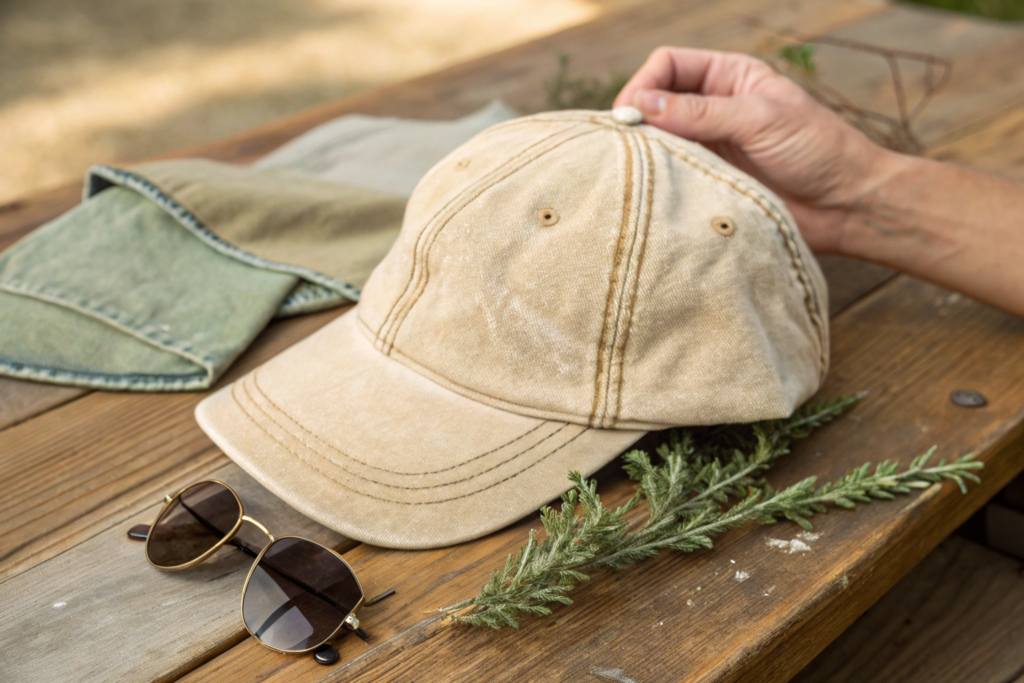
Washed cotton is a twill fabric that has been garment-washed or fabric-washed after weaving to soften the hand, remove residual shrinkage, and give the fabric a relaxed, lived-in appearance. The washing process removes the stiff sizing that makes new cotton fabric feel crisp and boardy. A washed cotton cap has a soft, comfortable feel against the skin immediately, with no break-in period. The washing process also slightly opens the weave structure, marginally improving breathability. For summer lifestyle caps, washed cotton is the preferred option over stiff, unwashed cotton.
Chino twill is a medium-weight cotton twill with a distinct diagonal weave line, a smooth face, and a crisp drape. It is the classic baseball cap fabric, and it is used in both structured and unstructured caps. For summer, a lightweight chino twill in the 5 to 6 ounce per square yard range, with an unbrushed face and a pre-washed finish, is a solid choice. It breathes adequately for casual wear, holds its shape well, and accepts embroidery and printing crisply. It does not perform as well as a polyester mesh in high-heat, high-exertion conditions, but for a fashion cap worn around town, at a barbecue, or on a boat, lightweight chino twill is entirely appropriate and the natural fiber hand-feel is a selling point for many consumers.
How Does Cap Construction Improve Breathability in Cotton Caps?
The construction details of a cotton cap can be designed to compensate for the inherent breathability limitations of cotton fabric. An unstructured crown removes the heat-trapping buckram layer. This is the single most effective construction choice for improving the cool-wearing performance of a cotton cap. Eyelet ventilation is essential. Metal eyelets or embroidered eyelets sewn into the crown panels create permanent ventilation holes that allow body heat to escape. The industry standard is two eyelets per cap, but for summer caps, some brands specify four or even six eyelets for increased ventilation.
A cotton cap that combines an unstructured crown, a lightweight washed cotton twill fabric, and multiple ventilation eyelets is a legitimate summer cap. It will not perform at the level of a polyester trucker mesh in extreme heat and activity, but it will serve the lifestyle customer well. The key interaction to understand is that cotton absorbs sweat, and if the cap has adequate ventilation, that absorbed sweat can evaporate and cool the head through evaporative cooling, the same principle that makes a wet bandana feel cool. A cotton cap with no ventilation holds the sweat and becomes a hot, wet compress. A cotton cap with good ventilation allows the sweat to evaporate and provides a cooling effect. The ventilation eyelets are not decorative. They are functional, and they matter far more in a cotton cap than in a polyester mesh cap.
What Cap Features Enhance the Cooling Effect of Breathable Fabrics?
The fabric is the primary driver of thermal comfort, but cap features including the sweatband, the lining, the visor material, and the adjustment mechanism all interact with the fabric to determine the overall cooling performance of the cap. A cap made from the most breathable mesh in the world can still feel hot and uncomfortable if the sweatband is a thick, non-wicking cotton that saturates with sweat and drips onto the wearer’s face. The features must be specified with the same care as the fabric.
Why Are Moisture-Wicking Sweatbands and Mesh Back Panels Essential?
The sweatband is the most important non-fabric component of a summer cap. It is the interface between the cap and the wearer’s forehead, the zone of maximum sweat production on the head. A cotton sweatband absorbs sweat and holds it. After 30 minutes of activity in the heat, a cotton sweatband is saturated. It no longer absorbs additional sweat, so sweat drips down the forehead onto the face or into the eyes. A saturated cotton sweatband also feels heavy, wet, and uncomfortable against the skin.
A polyester or polyester-blend moisture-wicking sweatband with a textured waffle or honeycomb knit structure absorbs sweat from the skin and transports it to the outer surface of the sweatband, where it can evaporate. The sweatband stays drier against the skin, and the evaporation of sweat from the outer surface actually provides a slight cooling effect. The sweatband should also be constructed with a black or dark-colored facing fabric. A black sweatband hides sweat staining over the life of the cap. A white or light-colored sweatband develops visible yellow staining that makes the cap look dirty and old prematurely.
Mesh back panels work on the same principle as the breathable fabric but applied at the construction level. A cap with a solid fabric front and a mesh back allows heat building up inside the crown to vent out the back. The mesh back panels should be a true open-hole polyester mesh, not a visually textured but functionally solid knit. A mesh that you can see your fingers through when you hold it up to light is functional. A mesh that blocks light is primarily decorative. The combination of a wicking sweatband and functional mesh back panels transforms even a cotton-front cap into a viable summer option.
Do UV-Protective and Silver-Lined Materials Actually Reduce Heat?
UV-protective fabrics are treated to block ultraviolet radiation from reaching the skin through the fabric. For a baseball cap, the primary UV protection is mechanical shading. The visor shades the face and the crown shades the scalp. The UV treatment reduces the amount of UV radiation that penetrates through the fabric itself, which is relevant for wearers who are bald or have thinning hair and for caps worn at high altitude where UV exposure is more intense. UV treatment adds a small cost and does not affect the feel or breathability of the fabric. It is a legitimate feature for summer caps marketed to outdoor enthusiasts.
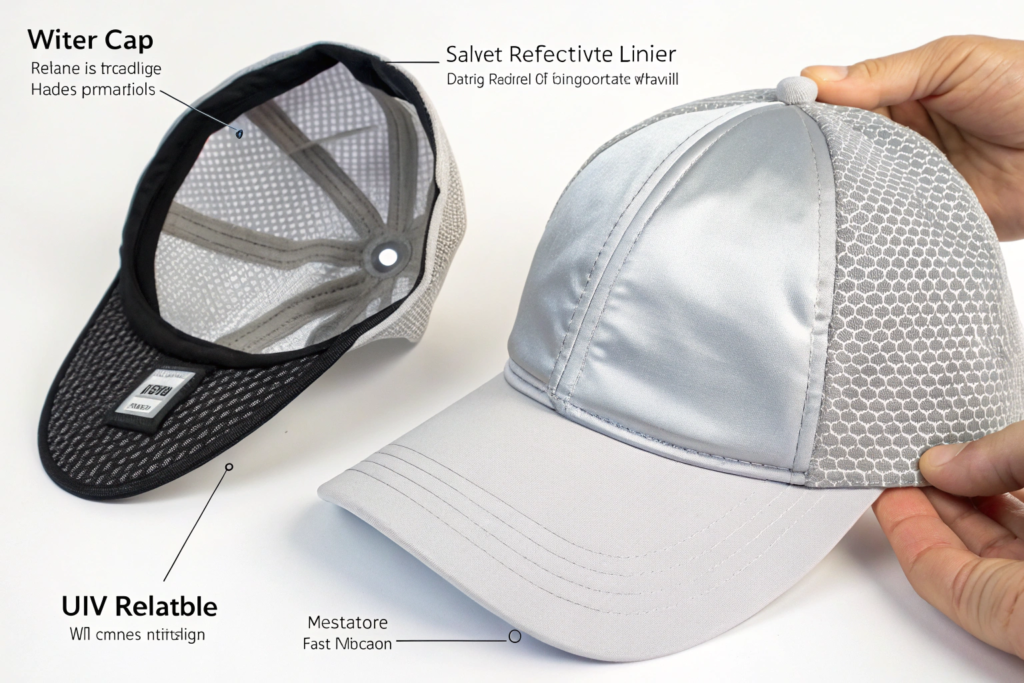
Silver-lined or silver-infused fabrics are marketed as having cooling properties because the reflective surface reflects some of the radiant body heat back toward the head, theoretically reducing heat buildup. The actual cooling effect of a silver lining in a cap is subtle and difficult for a wearer to detect. The mechanics of cap cooling are dominated by convection and evaporation, airflow carrying away heat and sweat evaporating from the skin. A thin silver lining provides a measurable but small reduction in radiative heat loss because the cap is already a physical barrier to radiative heat loss. Silver antimicrobial treatments are more impactful for summer caps because they inhibit the growth of odor-causing bacteria in the sweatband and the crown fabric, keeping the cap fresher through multiple wearings between washes.
Cooling cap claims that reference advanced materials should be evaluated critically. A cap with a silver lining but no ventilation eyelets and a thick cotton sweatband will still feel hot, regardless of the silver marketing story. The functional hierarchy for a summer cap is airflow first through mesh and eyelets, moisture management second through the wicking sweatband and the breathable fabric, and radiant barriers and antimicrobials third as supporting features that add incremental value on top of a solid foundation of airflow and moisture management. Resources from performance textile research can provide technical validation of whether a branded cooling fabric technology delivers measurable results under standard test methods.
Conclusion
The best fabric for a breathable summer baseball cap is not a single answer. It is a choice that depends on the customer, the use case, and the brand positioning. For active outdoor performance and athletic use, a polyester honeycomb mesh back with a structured front and a moisture-wicking sweatband is the coolest-wearing, highest-performance option. For lifestyle and fashion caps, a lightweight washed cotton twill with an unstructured crown, multiple ventilation eyelets, and a wicking sweatband delivers a natural fiber hand-feel with adequate summer breathability. For outdoor and hiking caps, a ripstop nylon with mesh ventilation panels provides durability, packability, and wind resistance with reasonable airflow.
The common threads across all effective summer cap designs are the commitment to visible, functional ventilation through mesh, eyelets, or both, an uncompromising specification for a moisture-wicking sweatband in a dark color, and the elimination of unnecessary insulation layers such as thick buckram in the crown and heavy brushed finishes on the fabric. A cap that gets these three fundamentals right, airflow, sweat management, and minimal insulation, will feel noticeably cooler on the head than a cap that prioritizes only appearance.
If you are developing a summer baseball cap program for the 2026 season and want to ensure your fabric and feature specifications deliver genuine cooling performance, contact our Business Director Elaine at elaine@fumaoclothing.com. Send her your target retail price point, your intended customer and use case, and any sustainability or branding requirements. She can provide fabric swatches across the performance and lifestyle spectrum, from honeycomb mesh to washed chino twill, along with test data on air permeability and moisture wicking. She can also arrange prototyping with the construction features we have discussed, so your first sample is not just a design concept but an optimized summer cap ready for wear testing.




