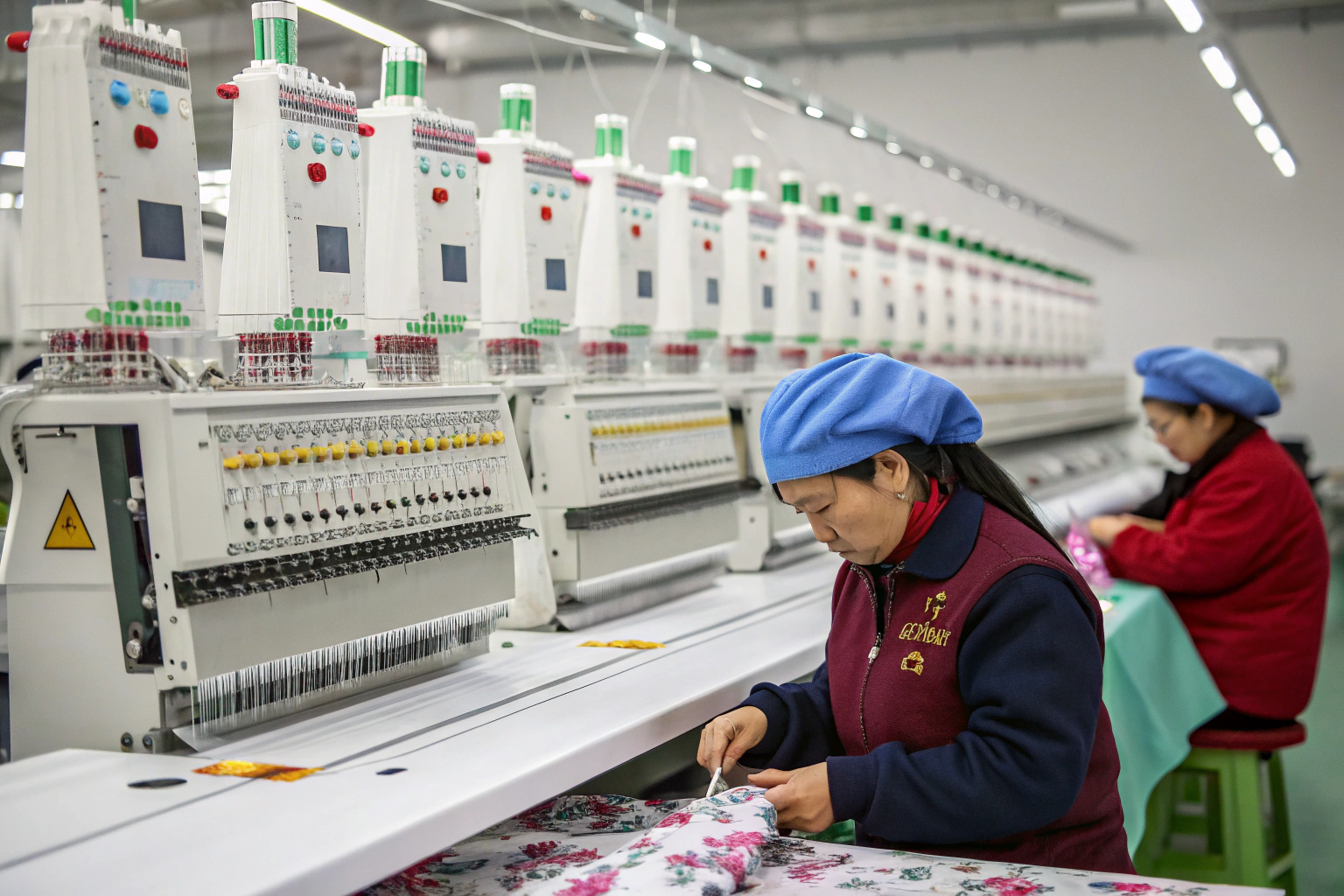
I remember a client named Isabella who ran a luxury bridal boutique. She had a vision for a line of silk scarves with a delicate, tone-on-tone floral embroidery along the edges—a detail that would elevate a simple accessory into an heirloom keepsake. She spent months contacting scarf factories she found online. The responses were disheartening: "We only do printed scarves," or "Minimum 5,000 pieces for custom embroidery," or, worst of all, they said they could do it, sent a sample, and the embroidery was puckered, uneven, and pulled the delicate silk out of shape. She was looking for a specific, high-value craftsmanship, but she was being met with mass-market limitations. If you are like Ron, you know that the most profitable niches are often found in these specialized, high-skill categories. The fear of being told "No, it’s too complicated" or receiving a substandard sample that shatters your brand vision is a constant barrier to creating truly differentiated products.
Finding a Chinese manufacturer for embroidered edge scarves requires looking beyond generic scarf factories and seeking out a partner with a specific combination of capabilities: in-house digitizing for embroidery files, a modern multi-head embroidery machine park, and, critically, a deep material science understanding of how to stabilize delicate scarf fabrics (silk, chiffon, modal) during the embroidery process. This is not a capability every factory has. You must vet potential partners by asking about their specific embroidery machine types, their experience with your chosen fabric, and their stabilization techniques. A factory that can expertly handle an embroidered edge is a factory with a high degree of technical sophistication.
I run AceAccessory in Zhejiang Province. We are located in an ecosystem rich with specialized textile crafts, including high-quality embroidery. Over the years, we have invested in the technology and, more importantly, the specific material knowledge required to embroider beautifully on the most challenging fabrics. An embroidered edge scarf is a symphony of opposites: the rigid structure of dense thread stitched onto the fluid drape of silk. If you get the stabilization wrong, the fabric puckers. If you get the tension wrong, the thread snaps. If you get the digitizing wrong, the design looks amateurish. Let me walk you through exactly what you need to look for in a manufacturing partner and how we solve these technical challenges to produce a flawless, luxurious embroidered edge scarf.
Why Is Specialized Machinery Critical for Quality Scarf Edge Embroidery?
The most common mistake buyers make is assuming that "embroidery is embroidery." They think any factory with an embroidery machine can handle a delicate silk scarf edge. This is wrong. The machinery required for quality scarf edge embroidery is specific and represents a significant capital investment.
The Machine Requirement: High-Speed, Multi-Needle, Bridge-Type Machines with Precision Tension Control.
- Multi-Needle Capability: A beautiful scarf edge often involves multiple thread colors or a specific, premium thread type (like silk or rayon). A machine with multiple needles can switch colors automatically without stopping, ensuring seamless color changes and a clean design.
- Bridge-Type Construction: This is critical. A bridge-type machine has the needle head moving over a fixed, flat table. This provides a Stable, Vibration-Free Platform for the fabric. This is essential for delicate fabrics that would be distorted by the vibration of a less robust machine.
- Precision Thread Tension Control: This is the secret to preventing puckering. Advanced machines have digital, per-needle tension control. The tension can be precisely calibrated for the specific thread and fabric combination. The tension required for a heavy wool scarf is completely different from the tension required for a 6-momme silk chiffon. A factory without this level of control will produce puckered, amateurish results.
The Difference Between "Having a Machine" and "Having the Right Machine":
Many generalist factories have old, single-head, flatbed embroidery machines. They are fine for putting a logo on a baseball cap. They are Insufficient for the intricate, edge-to-edge, multi-color, high-density embroidery required for a luxury scarf edge. The fabric will shift. The tension will be inconsistent. The result will be a mess.
At AceAccessory, our embroidery workshop is equipped with modern, bridge-type, multi-head machines with advanced digital tension control. We invested in these machines specifically because we saw the demand for highly differentiated, premium embroidered products like custom scarves and shawls . This is the right tool for the job.
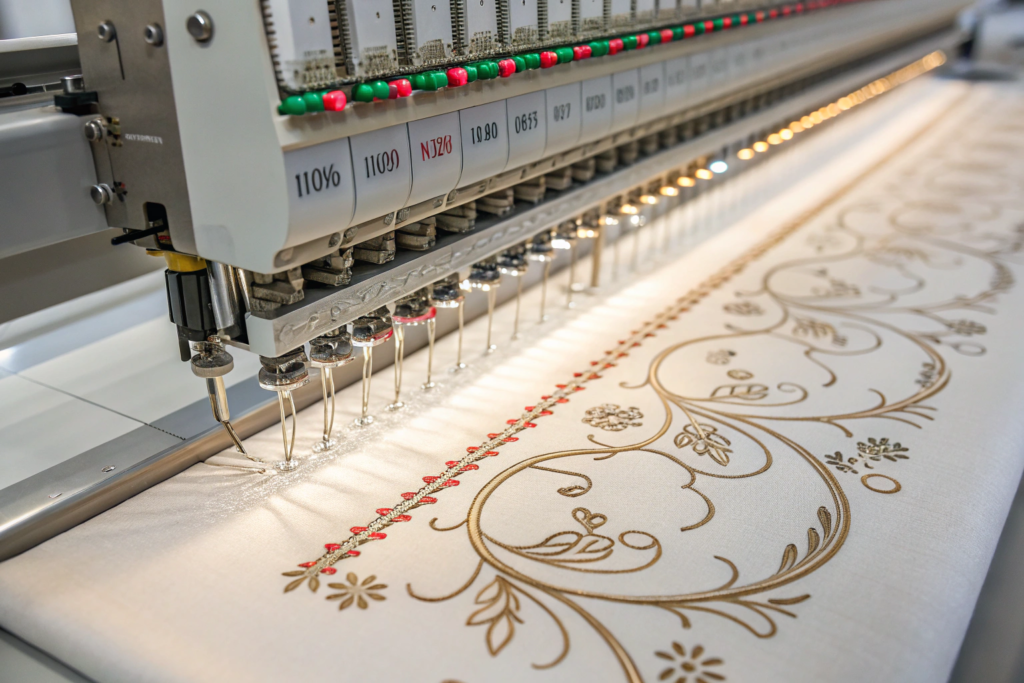
What Is the Difference Between a Single-Head and Multi-Head Embroidery Machine?
This is a fundamental distinction that affects both capability and commercial viability. A potential partner should be able to clearly articulate their machine park.
- Single-Head Machine:
- How It Works: One needle head stitches one item at a time. The operator must manually change thread colors.
- Use Case: Prototyping, samples, very small runs (1-50 pieces), personalized items.
- Limitation: Extremely Slow and Labor-Intensive for Bulk Production. Producing 1,000 embroidered edge scarves on a single-head machine would take weeks and be impossibly expensive.
- Multi-Head Machine:
- How It Works: Multiple needle heads (e.g., 6, 8, or 12 heads) operate simultaneously, stitching the same design on multiple items at once. Multiple needles on each head provide automatic color changes.
- Use Case: Bulk Commercial Production. Efficient, fast, and consistent. This is the only viable option for producing an order of 500+ scarves at a reasonable cost and timeline.
- Our Standard: At AceAccessory, we use multi-head machines for production. This ensures speed, cost-efficiency, and, crucially, Identical Output Across Every Unit. Every scarf in the batch will have the identical, perfectly placed embroidery.
When vetting a factory, ask them: "How many heads do your production embroidery machines have?" The answer will immediately tell you whether they are set up for commercial production or just for hobbyist/sample-level work. For a production run, you need a multi-head solution.
How Does a "Hooped" vs "Hoopless" System Affect Delicate Silk?
This is the question that separates a technical expert from a generalist. The method of holding the fabric stable during the embroidery process is critical for delicate materials.
The Traditional Hoop Method:
- Process: The fabric is tightly clamped between two rigid rings (the hoop).
- The Problem for Delicate Silk: When the hoop is tightened, it Stretches and Distorts the delicate weave of the silk. It can leave Permanent Hoop Marks —a visible ring that ruins the scarf. Furthermore, the rigid hoop does not accommodate the fluid drape of the fabric well.
The Advanced Hoopless System (Preferred for Scarves):
- Process: The fabric is not clamped in a ring. Instead, it is secured to a Flat, Sticky Stabilizer Sheet that is attached to the machine’s pantograph. The embroidery is stitched, and then the stabilizer is simply dissolved or torn away.
- The Advantages:
- Zero Hoop Marks: No distortion, no unsightly rings. The fabric remains pristine.
- Ideal for Finished Edges: A hoopless system allows you to embroider right up to the very edge of a finished scarf, which is often impossible with a hoop.
- Superior Stabilization for Fluids: It holds the delicate fabric perfectly flat without stretching, preventing the puckering and waving that plague poorly managed embroidery.
At AceAccessory, we use a Hoopless Magnetic Frame System for our delicate scarf work. This technology represents a significant investment, but it is non-negotiable for achieving a flawless, luxury finish on silk, chiffon, and modal. When you ask a factory about their stabilization method, and they don’t know what a hoopless system is, they are not the right partner for your premium embroidered scarves .
How Do You Prevent Puckering and Distortion on Delicate Fabrics?
Puckering is the ruin of an embroidered scarf edge. It is the tell-tale sign of a factory that does not understand the physics of thread and fabric. Preventing it requires a carefully engineered system of Stabilization, Tension, and Digitizing.
The Three Pillars of Puckering Prevention:
-
The Right Stabilizer (The Foundation):
- The Problem: The embroidery thread is dense and heavy. It wants to contract and pull the lightweight fabric with it, causing waves and puckers.
- The Solution: A Backing Stabilizer is placed behind the fabric to give it tensile strength and resist the pull of the thread. For a delicate scarf, the stabilizer must be:
- Tear-Away: It must be removed cleanly after embroidery, leaving no residue.
- Soft and Lightweight: A heavy, stiff stabilizer will ruin the drape of the scarf.
- Specific to the Fabric: We use a different stabilizer for silk chiffon (a fine, water-soluble film) than we do for a heavier wool challis (a soft, tear-away cotton mesh).
-
Precision Thread Tension (The Balance):
- The Problem: If the machine’s top thread tension is too tight, it pulls the bobbin thread up, creating a "tunneling" effect and causing the fabric to bunch.
- The Solution: We program a Lower Top Thread Tension for delicate fabrics. The stitch is formed not by pulling the fabric tight, but by gently interlocking the threads within the fabric’s natural plane.
-
Intelligent Digitizing (The Blueprint):
- The Problem: A poorly digitized design has too many stitches in one area, or the stitches all run in the same direction, creating a directional "pull" on the fabric.
- The Solution: The digitizer (the person who programs the embroidery file) is an artist and an engineer. They must:
- Optimize Stitch Density: Use the minimum number of stitches required for coverage.
- Vary Stitch Angle: Alternate the angle of the fill stitches to distribute the "pull" force evenly, preventing directional warping.
- Program "Pull Compensation": This is a sophisticated setting where the machine deliberately stitches slightly beyond the intended boundary, knowing that the thread will contract slightly once finished. The result is a perfectly filled, crisp edge.
At AceAccessory, this is our core expertise. Our digitizing team has decades of combined experience. They create files that are beautiful and engineered to stitch perfectly on the specific fabric you have chosen. This is the art and science of high-end embroidery.
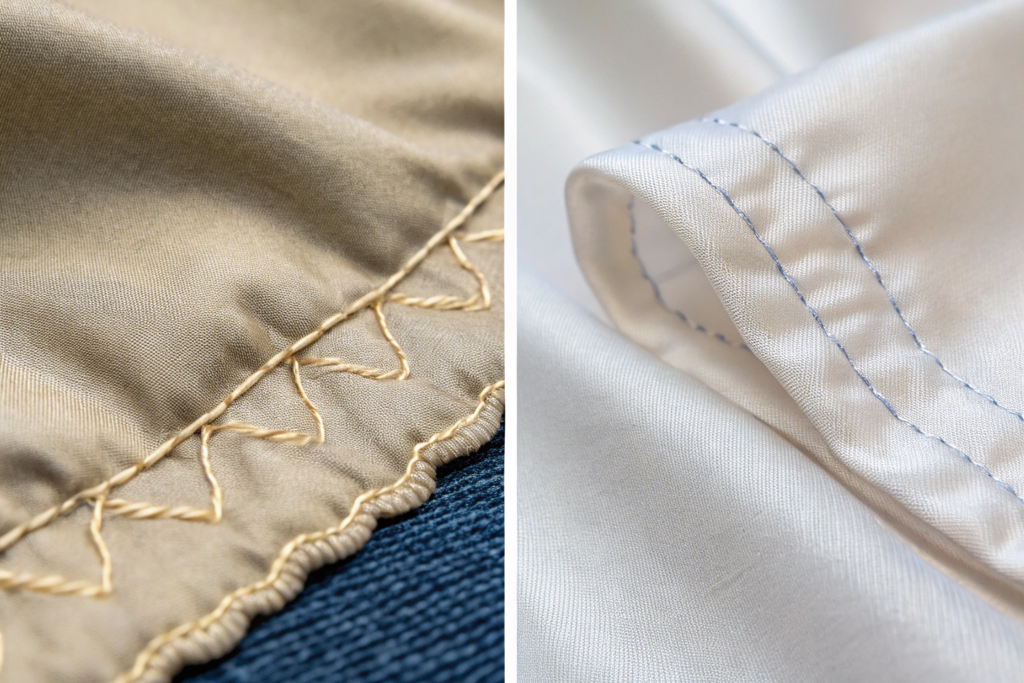
What Role Does a Water-Soluble Backing Play in Sheer Silk Embroidery?
Water-soluble backing (WSS), also known as "wash-away" stabilizer, is a revolutionary material for embroidering on sheer, delicate, or high-value fabrics where any remaining stabilizer would be unacceptable.
The WSS Advantage for Sheer Silk Scarves:
- Complete Removal: A sheer silk chiffon scarf is translucent. Any conventional tear-away stabilizer left on the back would be visible and ruin the luxury feel. WSS Dissolves Completely in Water, leaving absolutely no residue. The back of the embroidery is as soft and clean as the front.
- Superior Support During Stitch-Out: WSS is available as a thin, clear, plastic-like film. It provides excellent, rigid support for the delicate fabric during the intense perforation of the embroidery needle. It completely prevents the fabric from being pushed down into the needle plate.
- Clean Edge Definition: For intricate, densely stitched patterns, WSS helps achieve incredibly sharp, crisp edges to the embroidered motifs.
Our Protocol for Sheer Silk:
- We hoop a sheet of WSS Film.
- We carefully float the finished silk scarf on top of the hooped WSS, using a temporary fabric adhesive spray to secure it.
- The design is stitched.
- The excess WSS is torn away.
- The scarf is gently hand-washed or steamed. The remaining WSS inside the stitches dissolves completely.
- The result is a perfectly embroidered scarf with zero backing residue and a flawless drape.
When you ask a factory "How do you handle stabilization for sheer silk?," and their first response is "Water-soluble backing," you know you are talking to an expert. This is a core part of our advanced textile handling .
How Does "Pull Compensation" Digitizing Create a Perfect Edge?
This is a sophisticated piece of the puzzle that is invisible to the eye but crucial to the final result. Embroidery thread has a physical property: it Contracts slightly after it is stitched. A straight line of stitches, once released from the hoop, will be slightly shorter than it was programmed to be.
The Problem Without Pull Compensation:
- The digitizer programs a perfect 10cm x 10cm square.
- The machine stitches it.
- The fabric is released from the hoop.
- The thread contracts by 2%.
- The final shape is 9.8cm x 9.8cm, and it may be slightly distorted.
The Solution with Pull Compensation:
- The digitizer knows the thread will contract. They program a 10.2cm x 10.2cm square.
- The machine stitches the slightly larger shape.
- The thread contracts.
- The final shape is a perfect 10cm x 10cm.
This compensation is applied to every element of the design. Corners are sharpened. Curves are smoothed. The density of stitches is increased slightly in areas that tend to pull inward. It is a complex mathematical process that requires an experienced digitizer using sophisticated software.
At AceAccessory, our digitizers are masters of pull compensation. This is why our embroidered edges are consistently crisp, flat, and perfectly aligned with the scarf border. It is a level of technical precision that is invisible to the customer but defines the premium quality of the finished product. This is our commitment to manufacturing excellence .
What Questions Should You Ask to Vet a Factory’s Embroidery Capability?
Finding a manufacturer that says they can do embroidered edges is easy. Finding one that can actually execute it at a commercial scale with consistent quality is an art. You need to ask the right, specific questions to separate the talkers from the doers.
Here is the Essential Vetting Checklist you should use when evaluating a potential partner for your embroidered scarf project.
The 5 Non-Negotiable Questions:
-
"May I see examples of edge embroidery you have done on a fabric similar to mine (e.g., silk chiffon, modal)?"
- What to Look For: They should immediately provide clear, high-resolution photos or, ideally, physical samples. You are looking for Flat, Unpuckered Fabric and Clean, Consistent Stitching.
- Red Flag: They only show you embroidery on heavy cotton or baseball caps. They do not have relevant experience.
-
"Is your digitizing done in-house or outsourced?"
- What to Look For: In-House is a Major Advantage. It means faster turnaround, better communication between the digitizer and the machine operator, and a single point of accountability for quality.
- Red Flag: They outsource digitizing. This creates a game of telephone between you, the factory, and a third-party digitizer. Errors, delays, and design misinterpretations are common.
-
"What type of stabilizer do you recommend for my fabric, and why?"
- What to Look For: They should ask you about the fabric weight and transparency before answering. They should use terms like "water-soluble film," "tear-away soft mesh," or "cut-away" and clearly explain their choice.
- Red Flag: They look confused by the question or give a generic answer like "we use good stabilizer."
-
"What is your maximum stitch density, and how do you manage it for lightweight fabrics?"
- What to Look For: They understand that too many stitches in a small area will cut the fabric. They talk about stitch optimization and pull compensation.
- Red Flag: They don’t know their maximum density or say "density doesn’t matter."
-
"Can you provide a fully finished ‘Gold Seal’ pre-production sample with the exact embroidery before bulk production?"
- What to Look For: An immediate "Yes, of course." This is standard professional practice.
- Red Flag: They want to charge you a massive fee for the sample or try to convince you that a digital rendering is enough. You must see and approve a physical, finished sample on your actual fabric.
At AceAccessory, we welcome these questions. We are proud to answer them with detailed technical explanations and relevant physical samples. This is the conversation that separates a commodity supplier from a professional craftsman . Let’s walk through the most powerful question in more detail.
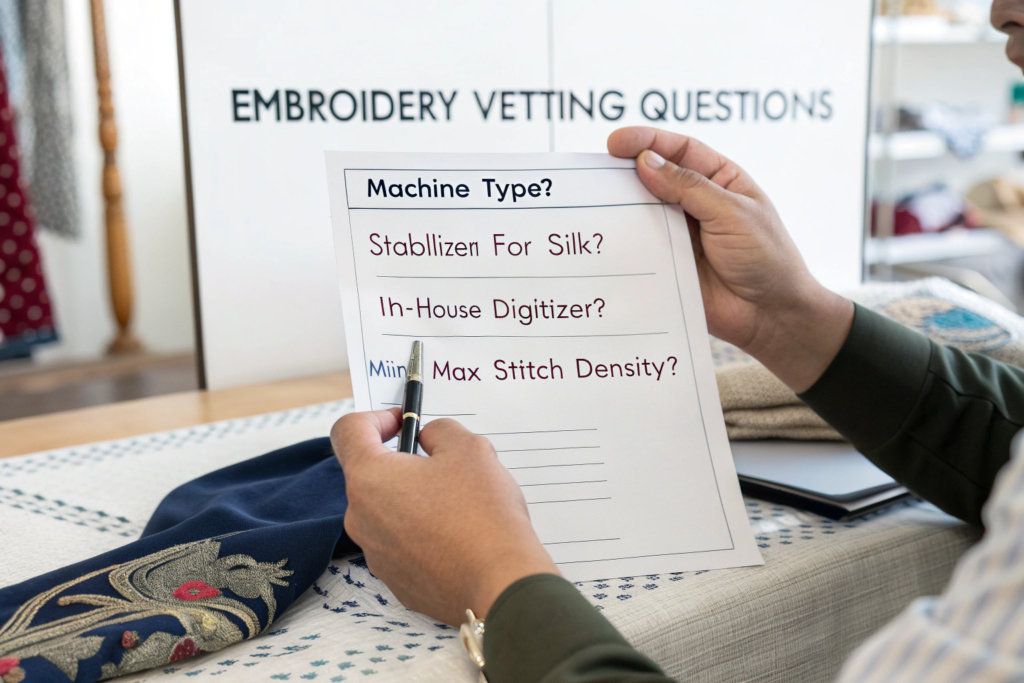
Why Is Asking "Is Your Digitizing In-House?" So Revealing?
This single question is perhaps the most powerful diagnostic tool you have. The digitizing is the DNA of the embroidery. It is the computer file that controls the needle. A beautiful design poorly digitized will stitch out terribly. A simple design brilliantly digitized will stitch out beautifully.
In-House Digitizing:
- Integrated Workflow: The digitizer works on the same team, in the same building, as the machine operator. If a design isn’t stitching out perfectly on the first sample, the digitizer walks to the machine, observes the problem, and modifies the file on the spot. This loop takes Minutes.
- Accountability: One company is responsible for the final result. There is no finger-pointing between a factory and an external digitizer.
- Brand Understanding: Our digitizers become familiar with your brand’s aesthetic DNA. They understand the specific look and feel of your embroidery style.
Outsourced Digitizing:
- Fragmented Workflow: The factory sends your design to a freelance digitizer or a digitizing service, often in a different country. Communication is via email. Turnaround is days. Revisions are slow and frustrating.
- Misinterpretation Risk: The external digitizer never sees the actual fabric. They work from a flat image. The resulting file may look perfect on screen but fail miserably on the physical material.
- Lack of Accountability: When the sample comes back wrong, the factory blames the digitizer. The digitizer blames the factory’s poor instructions. You are stuck in the middle.
At AceAccessory, our digitizing team is In-House. They sit 50 feet from the embroidery machines. This integration is the single biggest factor in our ability to produce flawless, consistent, and beautiful embroidery. It is a cornerstone of our customization service .
How Can a "Gold Seal" Sample Save Your Production Run?
This is the final, non-negotiable step before you authorize a large, expensive production run. A "Gold Seal" Sample is a fully finished, perfectly executed pre-production sample that is made using the Exact Same Materials, Machines, and Operators that will be used for the bulk order.
Why "Gold Seal" Approval Is Mandatory:
- It Is the Physical Contract: A digital rendering is a promise. A Gold Seal sample is The Law. It is the physical standard against which the entire bulk production will be measured. Both you and the factory sign off on this sample. It is kept under lock and key in our Quality Control office, and a signed copy is sent to you.
- It Reveals Hidden Problems: A design that looks beautiful on paper may reveal practical issues only when stitched. The stitches might be too dense and make the edge stiff. The thread color, while matching the Pantone chip, might look completely different when stitched onto the scarf fabric. The Gold Seal sample is the place to discover and fix these issues, not after 1,000 pieces are already produced.
- It Aligns All Stakeholders: It provides a single, unambiguous reference for the factory’s QC team, the production manager, and your brand team. There is no debate about what "good" looks like. It looks exactly like the Gold Seal sample.
The Cost of Skipping This Step:
A client once pressured us to skip the Gold Seal sample to save one week. We reluctantly agreed. The bulk order of 800 printed and embroidered scarves arrived. The client was horrified. The embroidered edge was beautiful, but the printed background color, which had been approved on a different fabric swatch, clashed terribly with the embroidered element. The entire order was a loss. That one-week "saving" cost them an entire season.
At AceAccessory, the Gold Seal sample is a Mandatory Gate in our workflow for any custom embroidery project. We will not proceed to bulk production without it. It is our quality guarantee, and it is your brand protection.
Conclusion
Finding a Chinese manufacturer capable of delivering exquisite embroidered edge scarves is a search for a partner with a rare and specific blend of technical capability and artistic sensitivity. It requires looking beyond the capabilities of a generic scarf printer and finding a workshop that has invested in the right machinery, mastered the complex physics of stabilizing delicate fabrics, and integrated the critical function of in-house digitizing.
The difference between a beautiful, luxury heirloom and a puckered, misshapen disappointment lies in the details: the use of hoopless magnetic frames, the precise application of water-soluble stabilizers, the sophisticated programming of pull compensation, and the unwavering discipline of the Gold Seal sample approval process. These are the marks of a true professional.
You do not need to be an expert in embroidery physics to source a beautiful product. You just need to ask the right questions and partner with a factory that answers them with clarity, confidence, and a demonstrable body of work.
If you have a vision for an embroidered edge scarf and are looking for a partner who can execute it with technical precision and artistic flair, we can provide the expertise you need. We can walk you through the material and design options and provide a vetted sample. Contact our Business Director, Elaine. She can arrange for a digitized sample of your design concept and provide a detailed quote. Email Elaine at: elaine@fumaoclothing.com