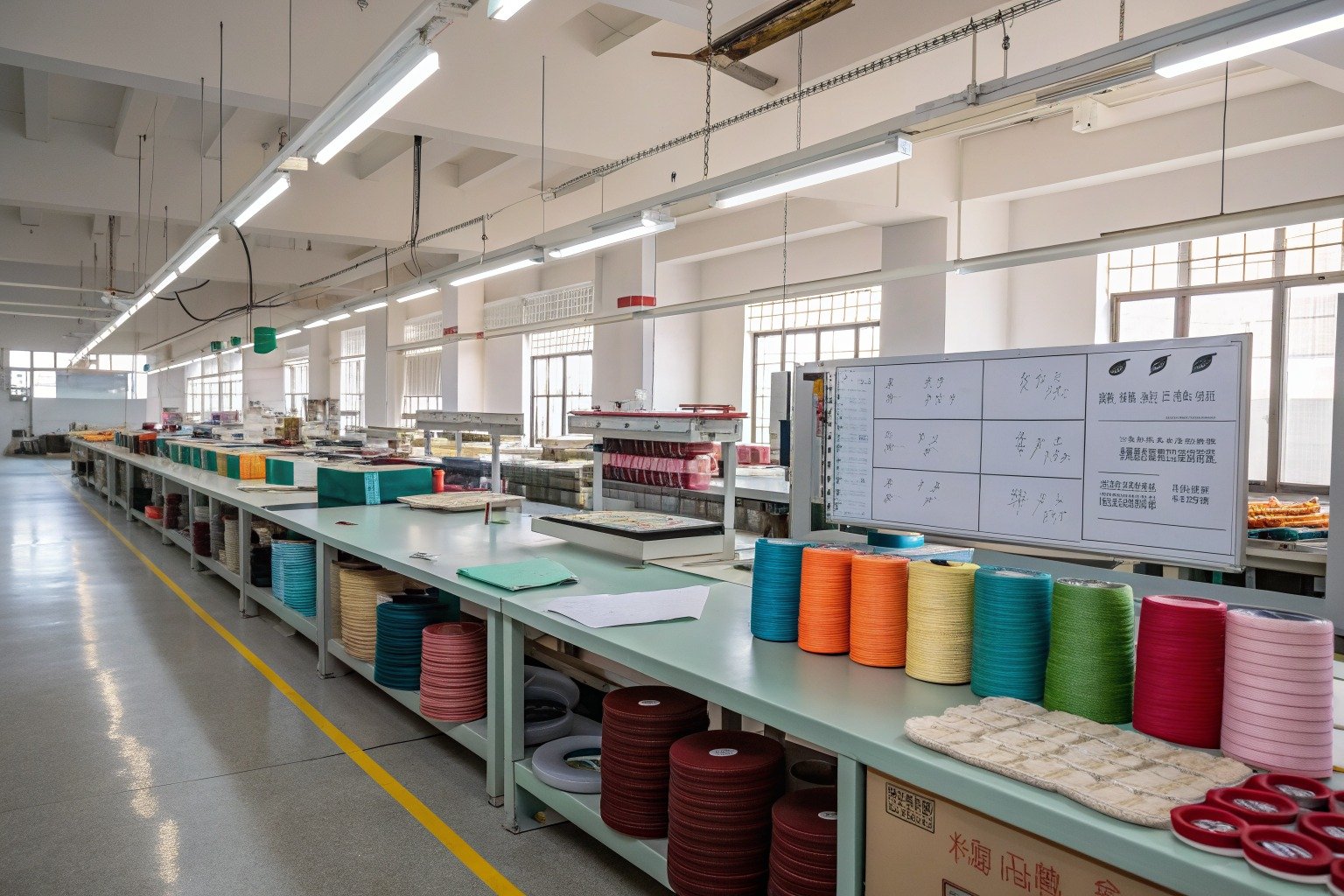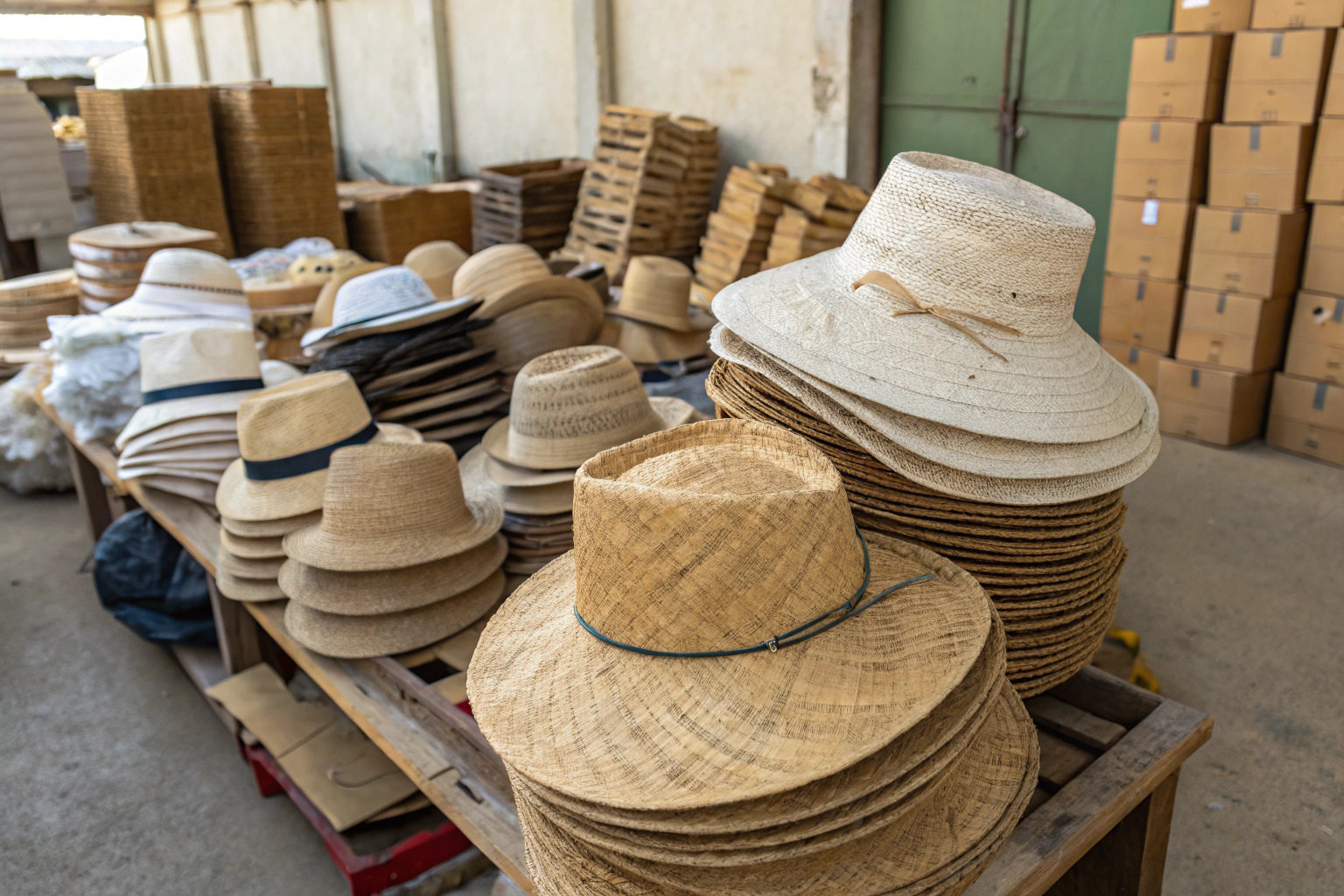
A few years ago, a boutique owner named Lisa called me with a shipping problem. She had ordered 100 straw fedoras and 100 cotton bucket hats for her summer collection. The factory shipped them in two separate pallets: one pallet of lightweight straw hats and one pallet of heavier cloth hats. She paid for 2 cubic meters of space but only used about 1.2 cubic meters of actual product. The rest was Air. She paid freight on air. Worse, when the pallets arrived, the straw hats were in perfect condition, but the cloth hats were wrinkled and misshapen because they had been packed too loosely and had shifted during transit. She asked me, "Why can’t they just pack them together? It would save space and keep everything snug." If you are like Ron, you understand that freight is one of your largest variable costs. The fear of paying to ship air or, conversely, receiving a box of crushed and misshapen hats is a constant logistical headache.
Mixing straw hats and cloth hats in a single carton is generally not recommended for efficient, damage-free shipping. The fundamental reason is the conflict in structural rigidity and weight. Straw hats are rigid, crushable shells that require a large, fixed volume to maintain their shape. Cloth hats are malleable and compressible. If packed together, the cloth hat will inevitably shift, settle, and become a crumpled mess, or the straw hat will be crushed by the cumulative weight and pressure of the cloth hats. The most efficient method is to segregate them into separate cartons but consolidate those cartons onto a single mixed pallet or container.
I run AceAccessory in Zhejiang Province. We ship thousands of hats every month, ranging from delicate straw hats to soft cloth bucket hats . I have seen the aftermath of creative but disastrous packing experiments. The warehouse is a laboratory of physics. You learn very quickly that Air is the Enemy of Freight Cost, but Movement is the Enemy of Product Integrity. The key to efficient mixed-category shipping is not forcing them into the same box. It is orchestrating them into the same Pallet or Container. Let me walk you through the specific packing physics of straw and cloth hats, and show you the professional methods we use to maximize space while ensuring every hat arrives retail-ready.
Why Is Mixing Rigid and Soft Hats in One Box Problematic?
The conflict between a straw hat and a cloth hat in a confined space is a classic physics problem. They have fundamentally different Material Properties.
A Straw Hat is a Structure. It is designed to hold a specific shape. The crown is hollow. The brim is a flat, rigid plane. It has high Compressive Strength in certain directions (top-down on the crown edge) but is extremely Fragile in others (side pressure on the brim will crack it). Critically, a straw hat is Incompressible. You cannot squeeze a straw hat into a smaller space without permanently destroying it. It defines a Fixed Volume that must be respected.
A Cloth Hat is Fabric. It has no inherent rigid structure (unless it has a stiff interfacing). It is Compressible. You can fold it, roll it, or squish it. It will fill whatever void is available.
The Problem in a Single Carton:
If you place a rigid straw hat in a carton, and then place a soft cloth hat next to it or on top of it, two destructive things happen during transit:
- Settling and Migration: The vibration of the truck and ship causes the cloth hat to Settle. It compresses under its own weight and the weight of items above it. It migrates into the Hollow Crown of the straw hat and into the gaps around the brim. The cloth hat is no longer a distinct item; it becomes a formless, wrinkled lump wedged against the straw.
- Pressure Transfer: If the cloth hat is placed on top of the straw hat, the weight of the cloth hat (and any cartons stacked above) is transferred through the soft fabric directly onto the Straw Brim. The brim is designed to hold its own weight, not the weight of a dense, shifting mass of fabric. Over the 20-day ocean voyage, this constant pressure will warp the brim or crack the straw weave.
The result is a box that contains One Ruined Straw Hat and One Wrinkled, Deformed Cloth Hat. The savings in carton cost are wiped out by the loss of the product. At AceAccessory, we strictly segregate these categories at the Carton Level. We use cartons specifically designed for the structural needs of each hat type.

How Does Vibration During Ocean Freight Cause Settling and Damage?
Ocean freight is not a smooth ride. The container ship’s engine creates a constant, high-frequency Vibration. The rolling of the ship creates a lower-frequency Swaying Motion.
This vibration acts like a Paint Shaker on your cartons. It causes any loose material or any compressible item to Settle and Densify.
The "Popcorn" Effect:
Imagine a carton filled with rigid straw hats and a few soft cloth hats. The vibration causes the soft hats to act like Lubricant. They wiggle and shift, finding the path of least resistance. They settle into the hollow crowns of the straw hats. They compact into the corners.
The Consequences of This Movement:
- Abrasion: The cloth hat rubs against the rough straw weave for thousands of miles. This causes Pilling on the cloth hat and can Scuff the dye or finish on the straw hat.
- Deformation: The cloth hat, once settled into an odd shape (e.g., stuffed inside a straw crown), will take on that shape. The fibers will Crease. When the customer unpacks it, it looks like a crumpled rag, not a new hat.
- Crushing: As the soft items settle, the Void Space at the top of the carton increases. The carton flaps lose tension. The carton becomes less rigid. When the next carton is stacked on top, the top flaps collapse, transferring the stacking weight directly onto the uppermost hat instead of the carton walls.
This is why we use Void Fill (air pillows or kraft paper) in cartons of mixed soft goods, but we never rely on void fill to protect a rigid item from a soft one in the same box. The physics of vibration will always defeat a loose packing arrangement. This is a core principle of our packaging engineering .
Why Does Carton Stacking Strength Depend on Uniform Internal Support?
A corrugated carton derives most of its Stacking Strength not from the cardboard walls alone, but from the Internal Support provided by the contents. This is a critical, often overlooked principle of logistics.
The Ideal Carton: The contents fill the carton Snugly and Uniformly. The items inside act as a Monolithic Block. When weight is placed on top of the carton, the force is transmitted through the Corners and the Faces of the contents, as well as the carton walls.
The Mixed Rigid/Soft Carton:
- Day 1: The carton is full. Cloth hat is fluffy. Straw hat is rigid. The carton feels solid.
- Day 10 (Mid-Ocean): Vibration has caused the cloth hat to compress and settle. The internal volume has Decreased. The contents are no longer supporting the carton faces. There is a Gap between the top of the hats and the top flaps.
- Result: The carton walls are now bearing All the Weight. The carton Bulges at the sides. The top flaps Sag. The stacking strength of that carton has dropped by 40-60% .
When the carton bulges, the pallet stack becomes unstable. Cartons shift. The strapping loosens. The entire pallet can collapse.
This is why we use Inner Carton Fitments (die-cut cardboard forms) for rigid hats. The fitment creates a Uniform, Incompressible Block inside the carton. For cloth hats, we use Tight, Full-Carton Packing so the fabric itself, under slight compression, provides uniform support. Mixing the two creates an Unstable System that is guaranteed to fail during transit. This is why we advise our clients against it for their fashion accessories .
What Is the Professional Method for Consolidating Straw and Cloth Hats?
The solution to the straw/cloth hat problem is not to force them into the same box. The solution is to Consolidate at the Pallet Level. This is the professional, scalable method used by every major retailer and importer.
Here is the AceAccessory standard protocol for a mixed order of straw and cloth hats:
-
Segregated Cartonization:
- Straw Hats: Packed in their own dedicated cartons. These cartons are typically Flat and Wide to accommodate the brim diameter without bending. They use Die-Cut Cardboard Fitments to immobilize the hat crown and brim.
- Cloth Hats: Packed in their own dedicated cartons. These cartons are typically Taller and Square. The hats are often nested or folded (using tissue paper to prevent creasing) to maximize density.
-
The Layered Pallet Build:
- Bottom Layer: Straw Hat Cartons. Why? Because they are Wide and Flat. They create a very Stable Base for the pallet. They are also Fragile, so they should never have heavy items stacked on top of them.
- Slip Sheet: A sheet of heavy-duty kraft cardboard is placed over the layer of straw hat cartons. This Distributes Weight evenly and prevents the edges of the top cartons from digging into the top of the straw cartons.
- Top Layer: Cloth Hat Cartons. These cartons are Heavier and more Structurally Rigid (because they are packed tight). They can safely sit on top of the slip sheet without crushing the straw hats below.
-
Pallet Securing:
- Edge Protectors: Heavy-duty plastic or fiberboard angles are placed on all four vertical corners of the pallet.
- Strapping: Polyester strapping is tensioned tightly around the entire load, compressing it into a single, solid block.
- Stretch Wrap: The pallet is wrapped multiple times to lock the cartons together and provide a moisture barrier.
This method allows us to ship Straw Hats and Cloth Hats on the Same Pallet, in the Same Container, achieving maximum freight efficiency with Zero Damage Risk. This is the professional standard we apply to all our hat shipments .
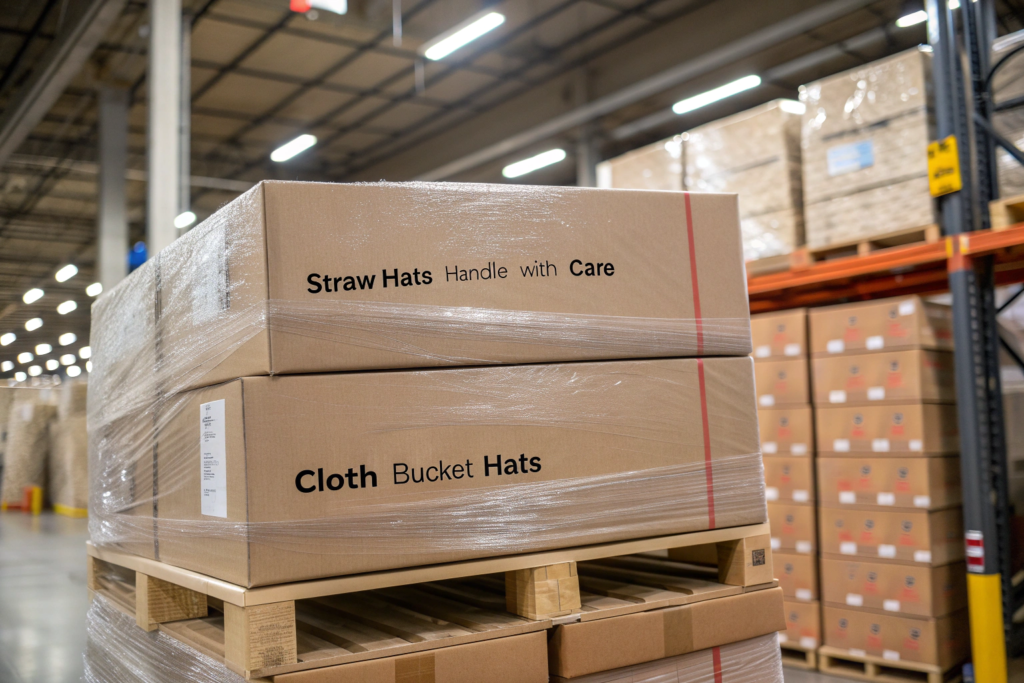
How Does Layering Heavy Cloth Hats on Top of Straw Cartons Prevent Crushing?
This is a specific application of Load-Bearing Physics. The goal of pallet building is to create a Column of Strength.
Why Straw Cartons on the Bottom:
- Footprint Stability: A straw hat carton is wide (e.g., 18" x 18"). A cloth hat carton is smaller (e.g., 14" x 14"). Placing the wider carton on the bottom creates a Larger Footprint. The pallet is less likely to tip.
- Protection of Fragile Brims: The straw hat brim is the most vulnerable part. It is a flat, brittle plane. If we put a heavy cloth hat carton Directly on top of a straw hat carton, the weight of the cloth carton (which can be 15-20 lbs) is concentrated on the Edges and Corners of that carton. Those edges align perfectly with the Brim of the straw hat inside. This creates a Pressure Point that will snap the brim.
The Role of the Slip Sheet:
The Heavy-Duty Cardboard Slip Sheet (usually 3mm thick) is the critical intermediary. It acts as a Load Spreader.
- Without Slip Sheet: Weight of Top Carton -> Edges of Top Carton -> Edges of Bottom Carton -> Straw Hat Brim (CRUSH).
- With Slip Sheet: Weight of Top Carton -> Slip Sheet (distributes weight across entire 18"x18" surface) -> Top Face of Bottom Carton -> Carton Walls (STRUCTURE).
The weight is transferred to the Strong Vertical Walls of the bottom carton, not the delicate brim inside. The straw hat inside feels almost no additional pressure. This simple piece of cardboard is one of the most cost-effective damage prevention tools in our warehouse. It allows us to safely stack Heavy Cloth Hats over Fragile Straw Hats .
What Are the Optimal Carton Dimensions for Nesting Cloth Hats Efficiently?
While we don’t mix straw and cloth in the same box, we aggressively optimize the packing density of the Cloth Hat Cartons. The goal is to fit as many cloth hats as possible into the smallest possible cube without causing permanent creases.
This is achieved through Nesting and Controlled Compression.
The "Cone Stack" Method for Bucket Hats:
- Step 1: The first bucket hat is placed in the carton, crown down. The soft brim naturally flares out.
- Step 2: The second bucket hat is placed inside the first one, crown down. The crowns Nest together like stacking cups.
- Step 3: Repeat for 6-12 hats, depending on fabric thickness.
- Step 4: Tissue paper is placed over the top hat. The carton flaps are closed.
This method uses the Hollow Crown Volume efficiently. It also provides Mutual Support. The hats support each other’s brims, preventing them from being flattened.
Optimal Carton Dimensions:
For standard adult bucket hats, we use cartons that are approximately 14" x 14" x 12" (35cm x 35cm x 30cm). This size is not arbitrary. It is designed to fit:
- Pallet Efficiency: Two of these cartons fit side-by-side perfectly on a standard 48" x 40" pallet with zero overhang.
- Container Efficiency: The dimensions are modular to the internal width of a shipping container, minimizing wasted air space.
At AceAccessory, our packing engineers use CAD software to model carton loads. We calculate the Cube Utilization for every hat style. This ensures that when we build the pallet of cloth hats to go on top of your pallet of straw hats, it is as dense and freight-efficient as possible. This is how we protect your margin .
When Is a Compartmentalized Carton a Viable Solution for Mixed Orders?
There is one specific scenario where mixing straw and cloth hats in a single carton is acceptable: Small Quantity, High-Value Retail Assortments. Think of a curated gift set or a small boutique order of 20 units total.
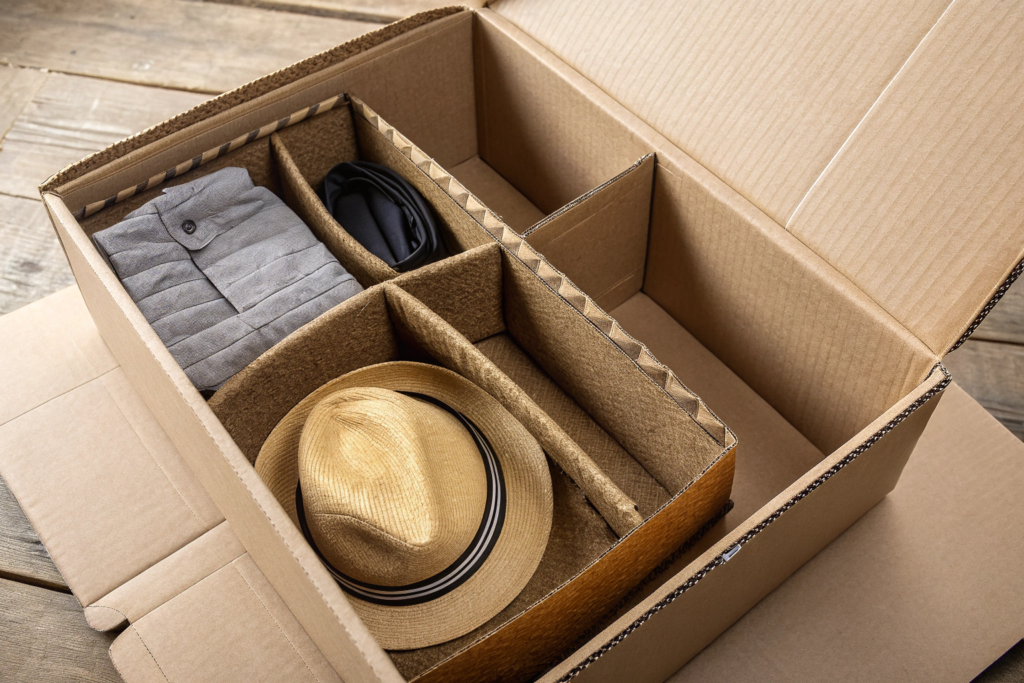
For these niche applications, we can engineer a Compartmentalized Carton. This is not a standard box. It is a custom-engineered packaging solution.
The Engineering:
- Die-Cut Insert: We design a heavy-duty corrugated insert that fits snugly inside the master carton.
- Physical Separation: The insert has a Large, Oval Cutout that perfectly cradles the straw hat. It has a Separate, Smaller Compartment for the folded cloth hat. The two items Never Touch.
- Load Transfer: The insert is designed so that stacking weight is transferred through the Vertical Walls of the Insert, not through the hats themselves.
The Trade-Offs:
- Cost: This custom insert requires a Cutting Die ($100-$200) and more expensive corrugated material. The per-unit packaging cost is significantly higher than standard cartons.
- Cube Efficiency: This single carton takes up more space than two separate, optimized cartons. You are paying to ship more Air and more Cardboard.
When Is It Worth It?
- DTC (Direct-to-Consumer) Gift Sets: You are selling a "Summer Hat Duo" and shipping it directly to the customer in this branded box. The unboxing experience justifies the cost.
- Ultra-Small Wholesale Orders: A boutique orders 10 straw hats and 10 cloth hats. Splitting them into two cartons of 10 would result in two half-empty cartons (very inefficient). One compartmentalized carton is actually more space-efficient than two half-empty cartons.
At AceAccessory, we offer this as a Value-Added Service for clients who need a premium, turnkey presentation. We manage the design and production of the insert. However, for 95% of our wholesale and e-commerce fulfillment clients, the Segregated Pallet Method is the most cost-effective and protective solution.
How Do Die-Cut Inserts Protect Brim Shape and Crown Height?
A straw hat is essentially a Sculpture. It has a specific Brim Curve and Crown Height. A generic box full of crumpled paper does not protect the sculpture. It just immobilizes it in a distorted position.
A Die-Cut Insert is a Negative Space Mold. It is the exact inverse of the hat’s shape.
Protection Mechanisms:
- Brim Support: The insert has a Precision-Cut Slot that the brim slides into. The slot is cut at a specific angle to match the Flange (the downward curve) of the brim. This supports the brim along its entire circumference. It prevents the brim from flattening out or warping.
- Crown Suspension: The insert has a Raised Arch or a Recessed Cavity that the crown rests in. This prevents the weight of the hat from resting on the Peak of the Crown (which would cause a dent). It also prevents the hat from shifting side-to-side.
- Zero Contact: The insert is designed so that the top flaps of the carton Do Not Touch the top of the straw crown. There is an engineered Air Gap of at least 0.5 inches.
This is the same engineering principle used to ship high-end electronics or medical devices. We apply it to fashion hats when the product value and order profile justify it. For a standard $15 wholesale straw hat, the insert cost is prohibitive. For a $75 hand-woven Panama hat, the insert is mandatory. We guide our clients to the right solution based on their product tier.
What Is the Cost-Benefit Analysis of Custom Inserts vs Segregated Pallets?
Let’s make this concrete. Imagine you are shipping 120 Straw Hats and 120 Cloth Hats.
Option A: Compartmentalized Cartons (120 cartons total)
- Insert Tooling Cost: $150 (One-time)
- Carton + Insert Cost per Unit: $2.25
- Total Packaging Cost: 120 x $2.25 = $270
- Carton Dimensions: 20" x 20" x 12" (Larger due to insert bulk)
- Total Volume: 120 cartons x 2.77 cubic feet = 332 Cubic Feet.
Option B: Segregated Pallets (10 Straw Cartons + 8 Cloth Cartons)
- Straw Carton Cost: $0.85 (Standard die-cut, no fancy insert)
- Cloth Carton Cost: $0.65 (Standard RSC carton)
- Total Packaging Cost: (10 x $0.85) + (8 x $0.65) = $13.70
- Total Volume: Straw (10 cartons x 2.5 cu ft) + Cloth (8 cartons x 1.8 cu ft) = 39.4 Cubic Feet.
Analysis:
- Packaging Cost: Option A is $256 more expensive.
- Freight Volume: Option A takes up 8.4 Times More Space. At an LCL rate of $95/CBM, Option A would cost roughly $800 more in ocean freight.
Conclusion:
For this quantity, Option B (Segregated Pallets) is overwhelmingly superior. It saves over $1,000 in combined packaging and freight costs.
The Break-Even Point for compartmentalized cartons is typically when the Order Quantity is under 24 total units. At that micro-scale, the freight savings from a single box outweigh the higher packaging cost. At AceAccessory, we run this analysis for our clients. We don’t guess. We calculate the optimal solution based on your specific order profile. This is the kind of logistics intelligence that adds real value.
How Do You Handle Mixed Orders of Accessories for Boutique Shops?
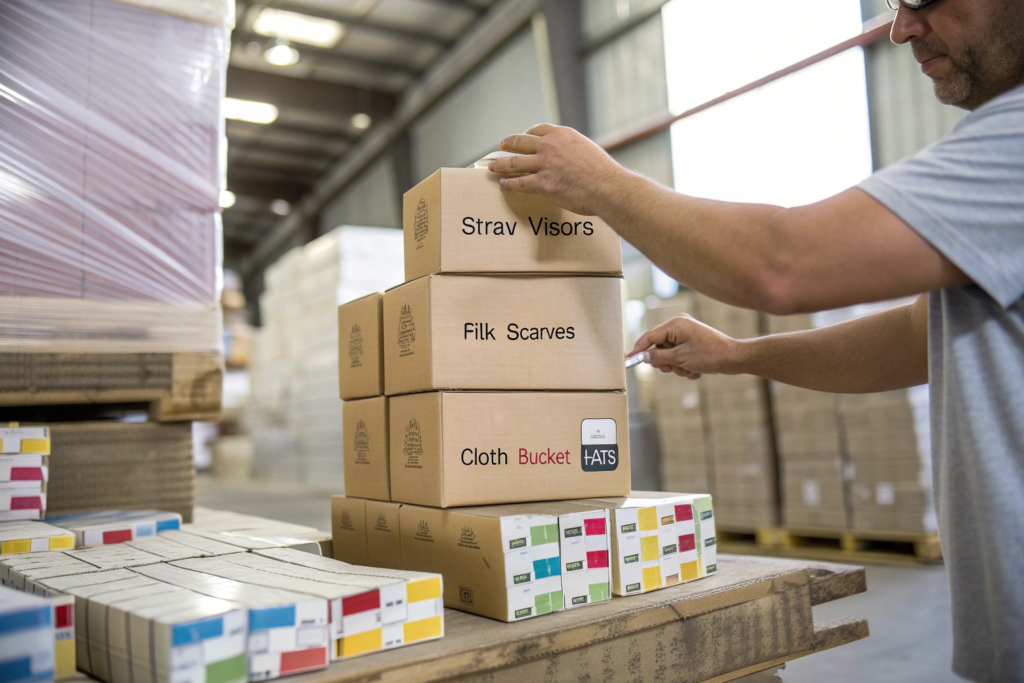
This is the real-world scenario for many of our clients. They are not ordering 1,000 of one SKU. They are ordering a Curated Assortment: 50 straw visors, 75 cloth bucket hats, 100 silk scarves , and 60 hair claws . They need this entire collection to arrive together, ready for a floor set.
This is where the art of Mixed Pallet Consolidation comes into play. It is a core competency of AceAccessory.
Our Boutique Fulfillment Protocol:
- SKU-Level Cartonization: Each product type is packed in its own Optimal Carton. The straw visors are in flat, wide boxes. The cloth hats are in square boxes. The scarves are in small, dense boxes. The hair claws are in very small cartons.
- The "Tetris" Pallet Build: Our warehouse supervisor looks at the collection of cartons like a puzzle. They start with the Widest, Flattest Cartons (Straw Visors) to build a stable base. They then fill in the gaps with the Smaller, Denser Cartons (Scarves, Hair Claws). They use the Square Cartons (Cloth Hats) to build up the layers.
- Void Fill and Edge Protection: Any small gaps between cartons on the pallet are filled with Inflatable Air Pillows or Kraft Paper to prevent shifting. The entire pallet is secured with edge protectors and strapping.
- Single Consolidated Shipment: The boutique owner receives One Pallet. They cut the stretch wrap, and inside is their entire seasonal collection, organized by carton label, ready to be stocked on the shelf.
This service is invaluable for small business owners. It saves them from managing three different freight shipments, three different customs clearances, and three different receiving appointments. It simplifies their life and allows them to focus on selling. This is the power of working with a full-service accessories partner .
Can You Pre-Pack a Mixed Assortment Carton for Direct-to-Store Delivery?
Yes, this is a specialized service called "Retail-Ready Packaging" or "Shelf-Ready Merchandise." It is the next level beyond just putting items in a carton.
In this scenario, we don’t just pack the straw hats and cloth hats separately on the pallet. We create a Custom Display Carton that contains a Pre-Planned Assortment.
Example: "Summer Headwear Assortment"
- Outer Carton: A high-quality, branded white carton with a tear-away perforated lid.
- Inside: A custom die-cut tray.
- Compartment 1: 4 Straw Fedoras (Assorted Colors)
- Compartment 2: 6 Cloth Bucket Hats (Assorted Patterns)
- Compartment 3: 4 Silk Bandanas (Assorted Prints)
The Boutique Owner’s Experience:
- They receive the carton from UPS/FedEx.
- They tear off the perforated lid.
- The Tray Inside is beautifully arranged and ready to be placed directly on the sales floor.
- No unpacking. No sorting. No steaming. It is Shelf-Ready.
The Cost and MOQ:
This level of customization requires a Die-Cut Tray and Branded Outer Carton. The MOQ is typically 50-100 Assortment Cartons. The per-unit packaging cost is higher, but it is offset by the Labor Savings at the store level and the Increased Sales Velocity from a beautiful, curated display.
At AceAccessory, we manage this entire process. We can design the tray, source the carton, pack the assortment, and ship it directly to individual store locations. This is a turnkey solution for brands that want to control their in-store presentation and simplify their store operations.
How Does Consolidation Reduce the Risk of Partial Shipment Delays?
This is a critical operational benefit that is often overlooked. When you source straw hats from Factory A and cloth hats from Factory B, you have Two Points of Failure. If Factory A has a labor shortage, your straw hats are delayed. You either ship the cloth hats alone (paying LCL freight) or you hold the cloth hats (incurring storage fees and missing your sales window).
When you consolidate with AceAccessory, we have One Point of Accountability. We manage the production of both the straw and cloth hats. We synchronize the production schedules so they finish at the same time. We build the Single Consolidated Shipment.
If there is a delay with the straw material, we know about it early. We can adjust the cloth hat schedule to match. We can communicate One Clear Update to you: "Both items are delayed by 4 days. New ship date is June 20th."
You never face the dilemma of "Split Shipment or Storage Fees." Your entire collection arrives together, on one truck, ready for your floor set. This Supply Chain Resilience is a major advantage of working with a multi-category manufacturer. It removes the stress and uncertainty of coordinating multiple independent vendors. It allows you to plan your business with confidence. This is the peace of mind we provide to our brand partners .
Conclusion
The question of mixing straw hats and cloth hats in one carton is a perfect microcosm of the larger challenges of global logistics. The intuitive desire to save space by combining items must be balanced against the unforgiving physics of vibration, pressure, and material incompatibility. While the two hat types are fundamentally unsuited to share a single carton, they can be efficiently and safely consolidated at the pallet and container level through disciplined engineering and strategic layering.
For larger orders, the segregated pallet method—straw cartons on the bottom, cloth cartons on top, separated by a load-spreading slip sheet—provides the optimal balance of freight efficiency and product protection. For smaller boutique assortments or premium gift sets, custom compartmentalized cartons or retail-ready displays offer a value-added solution that justifies the higher packaging cost through enhanced presentation and reduced store labor.
The key takeaway is that efficient logistics is not about finding a one-size-fits-all box. It is about applying the right packing strategy to the specific physical properties of the product and the specific needs of the sales channel. This requires a manufacturing partner with deep experience in both product handling and supply chain management.
If you are planning a multi-category hat order and want to ensure it arrives efficiently and in perfect condition, we can help you design the optimal packing and palletization strategy. Contact our Business Director, Elaine. She can provide a cube utilization analysis for your specific assortment. Email Elaine at: elaine@fumaoclothing.com