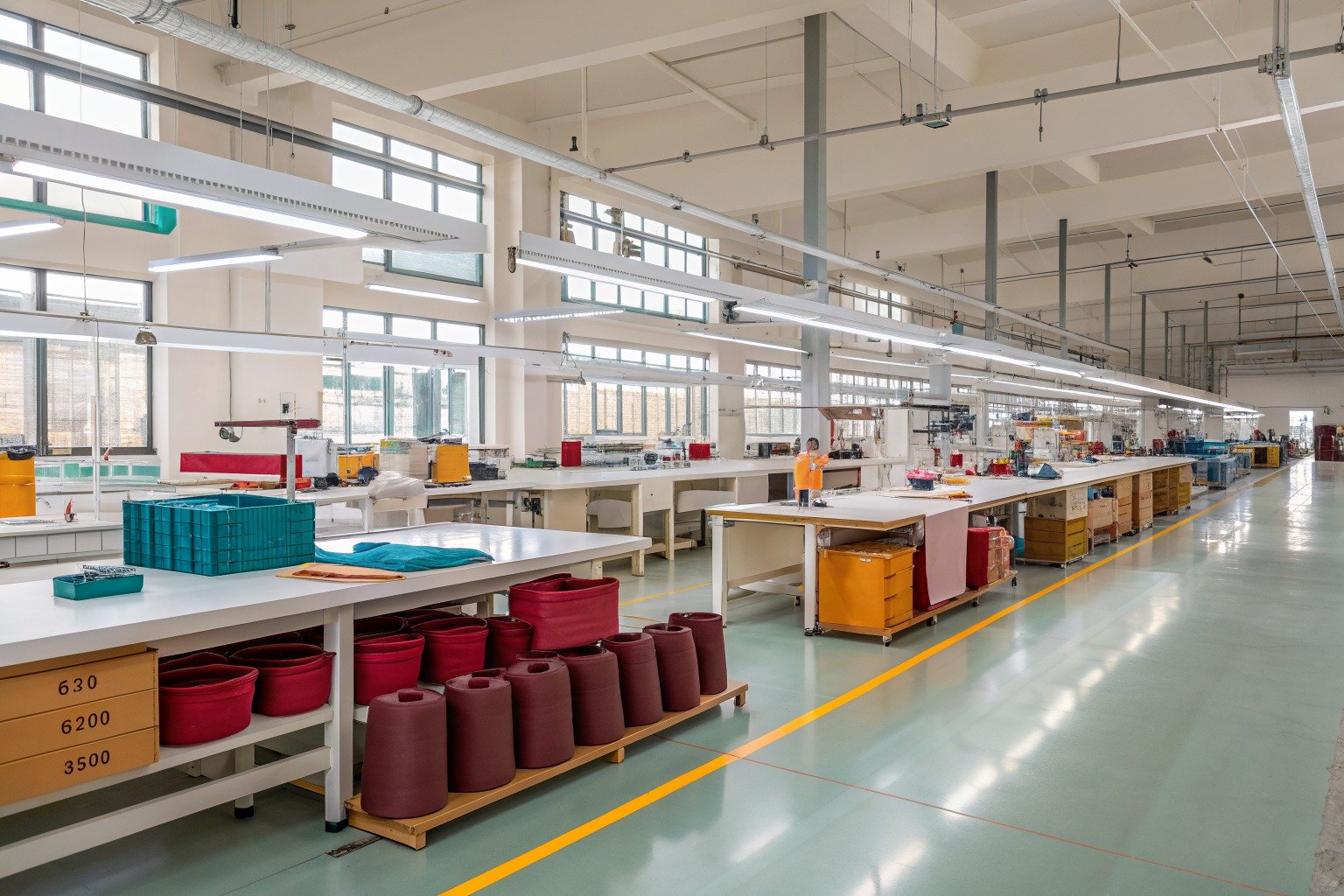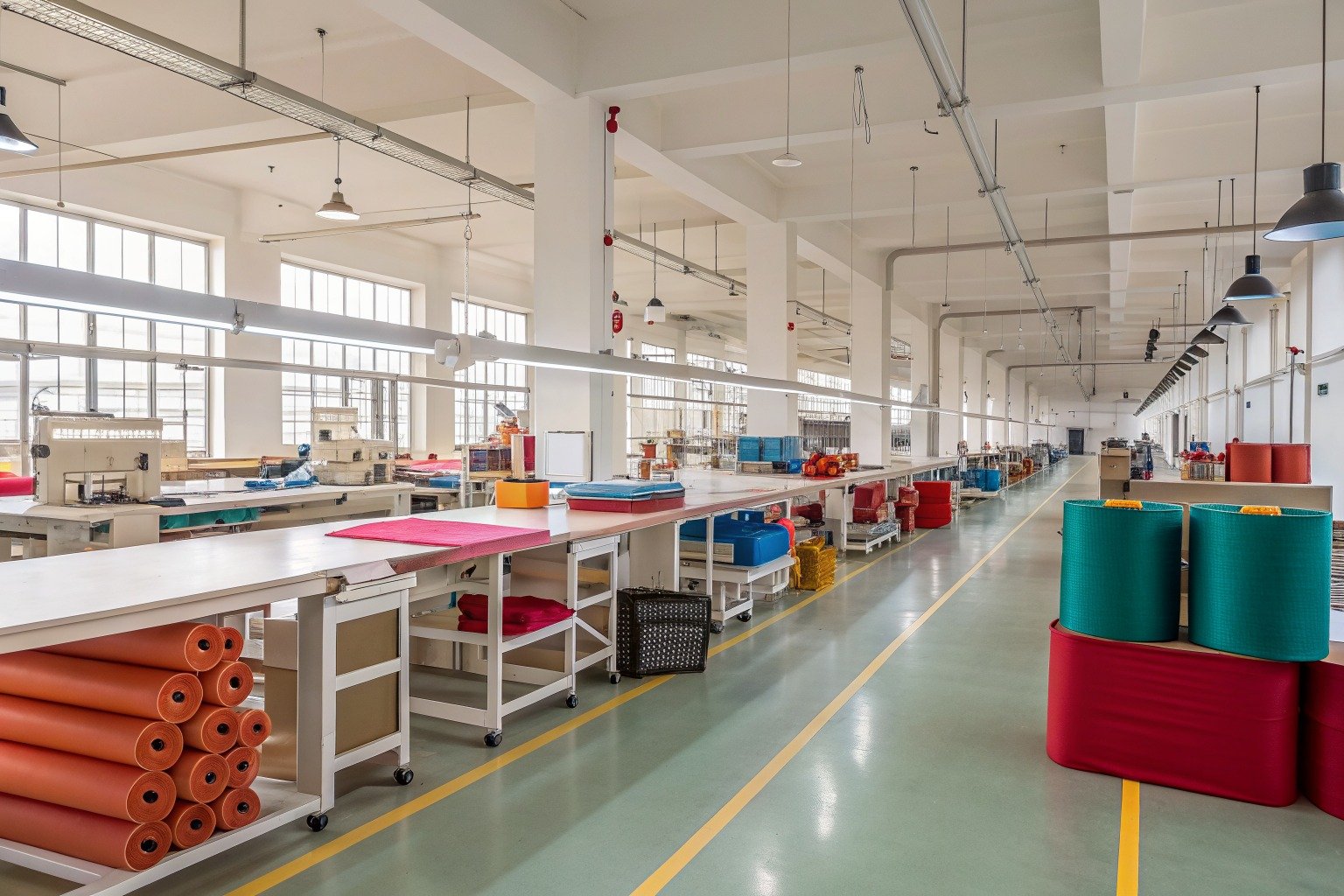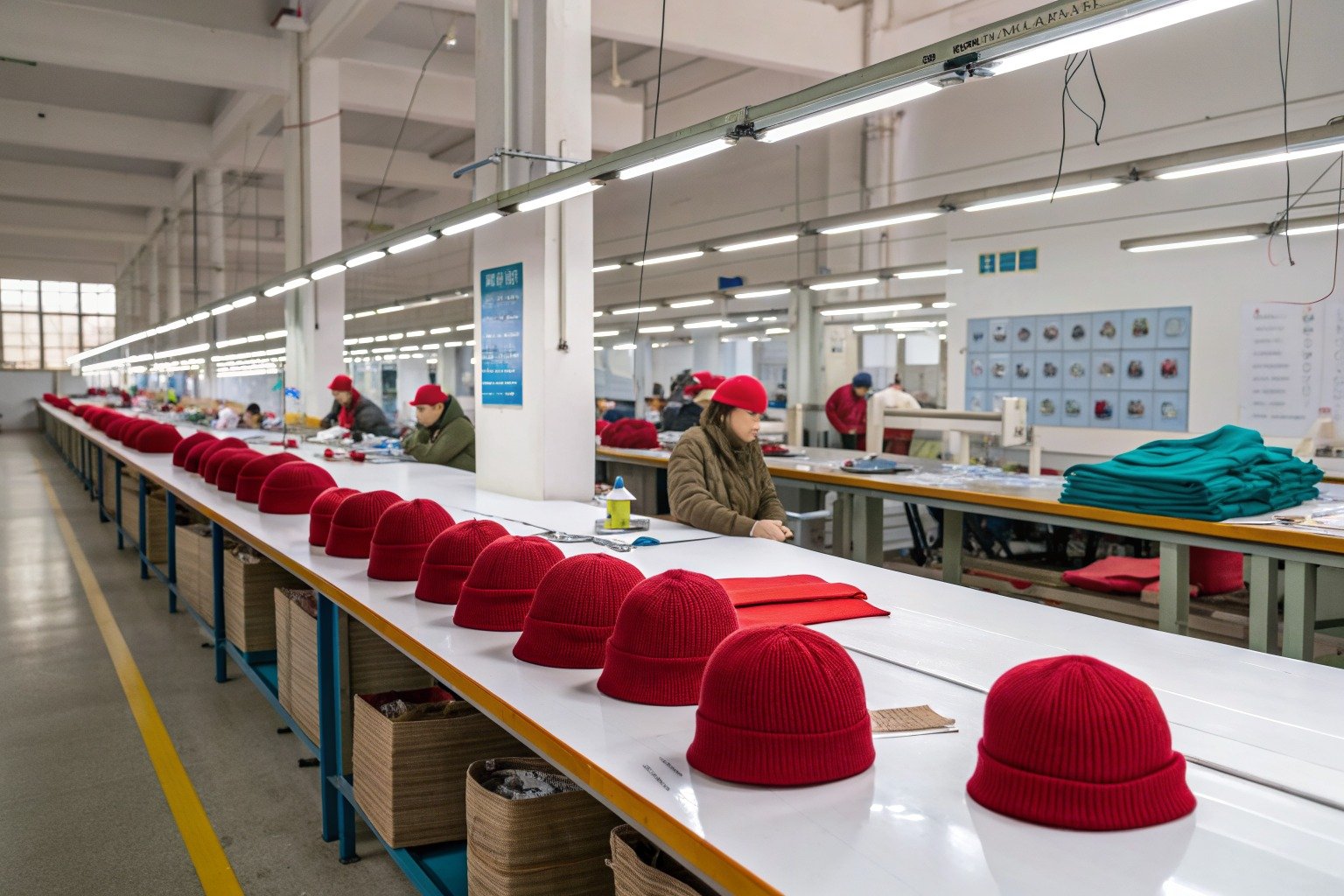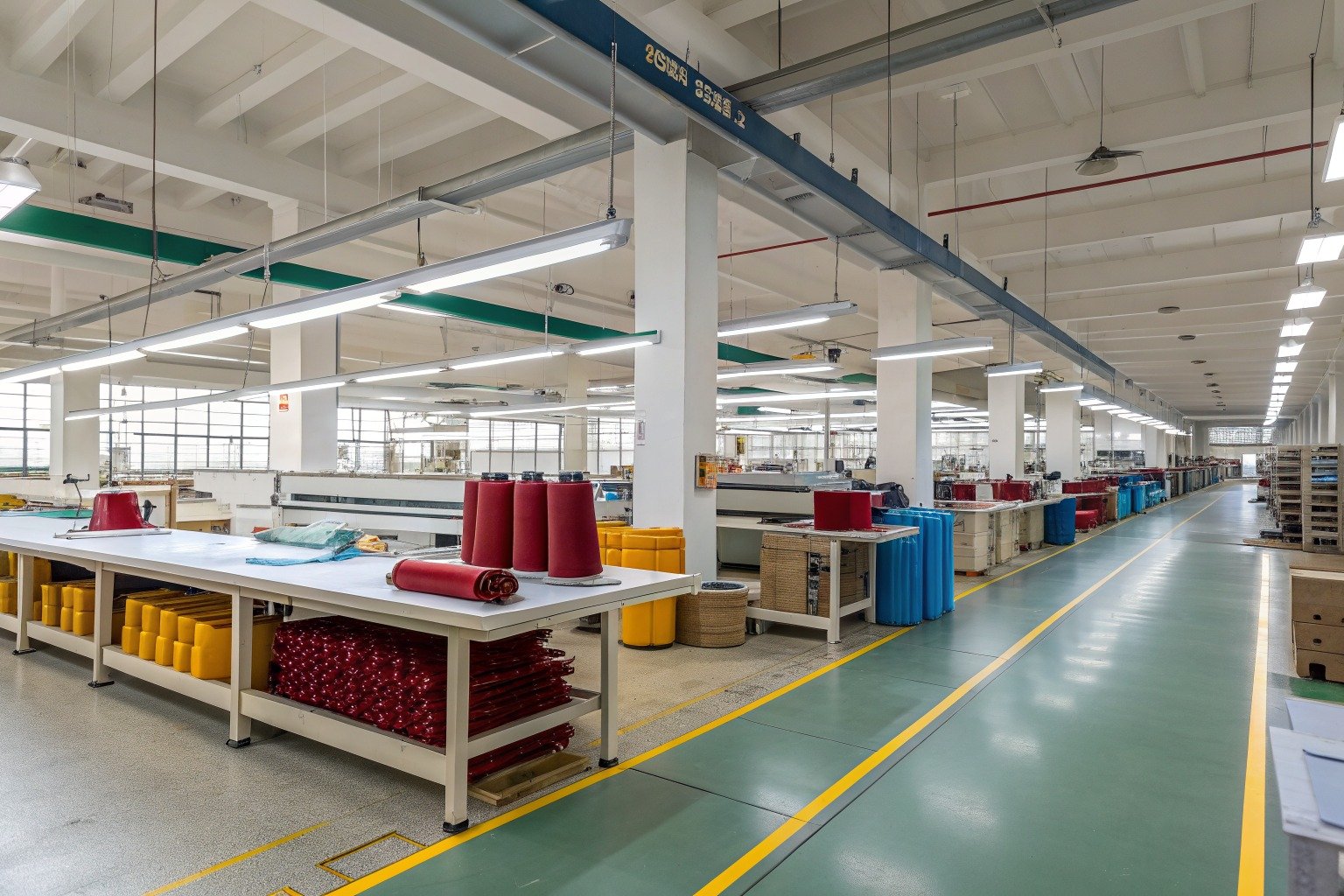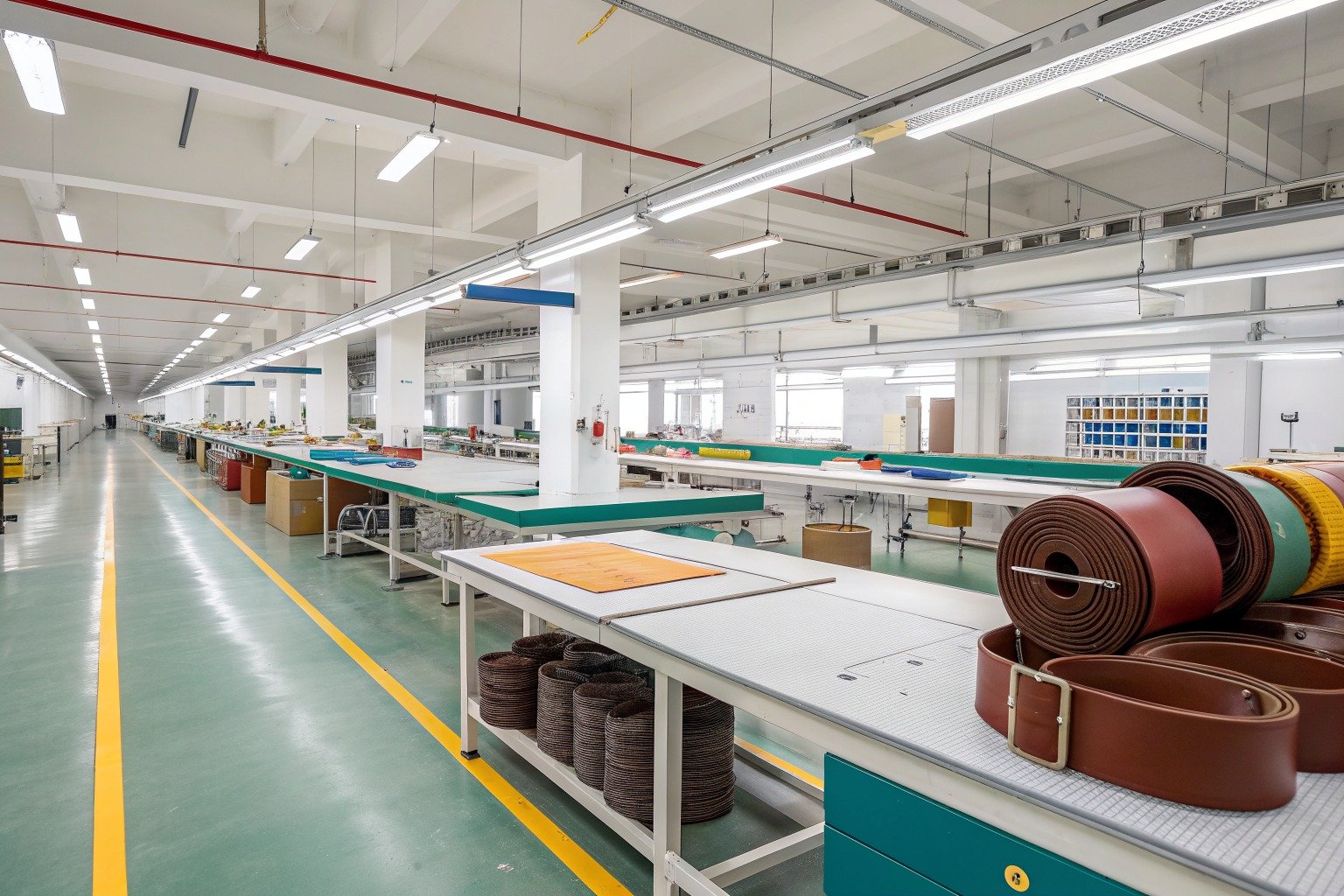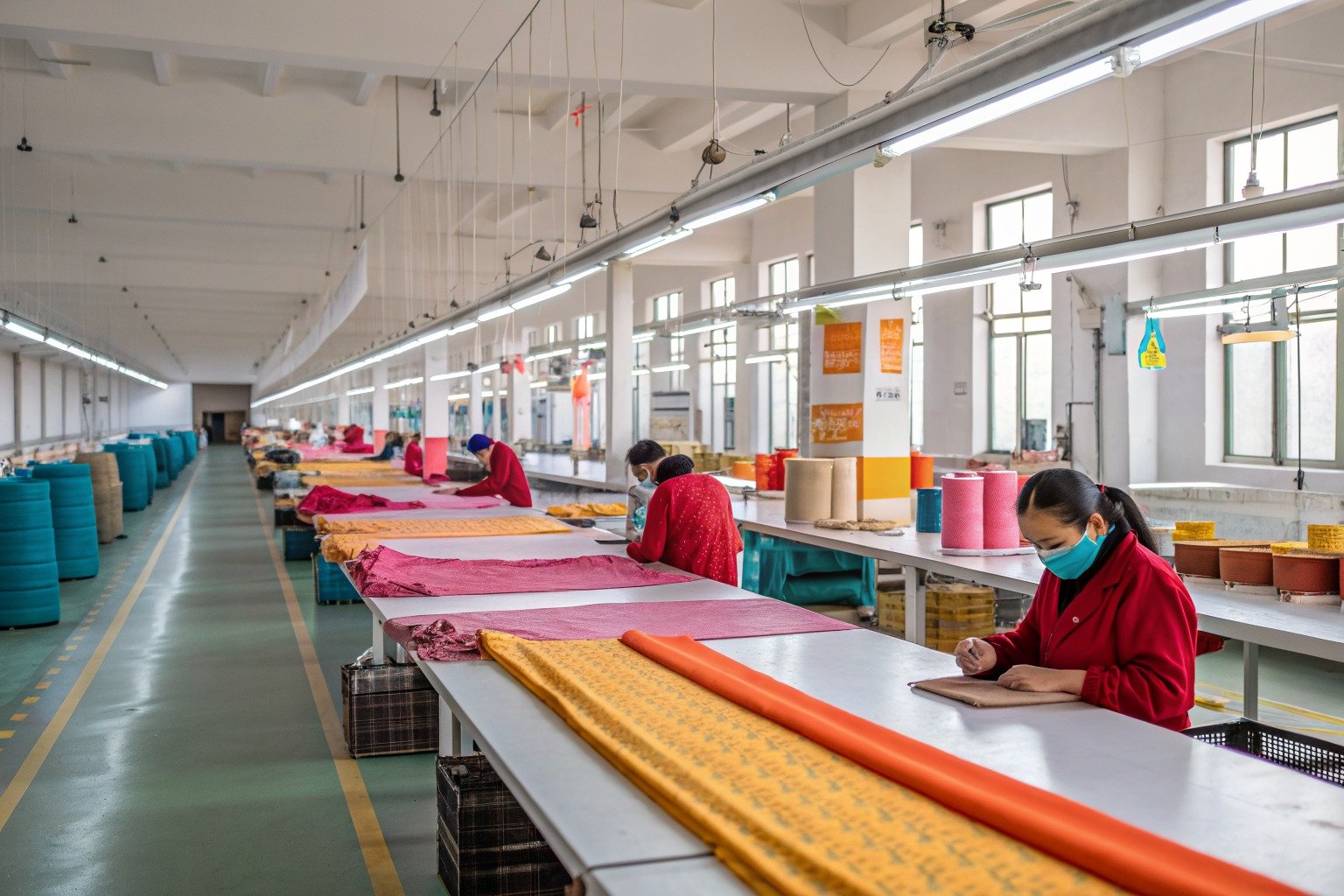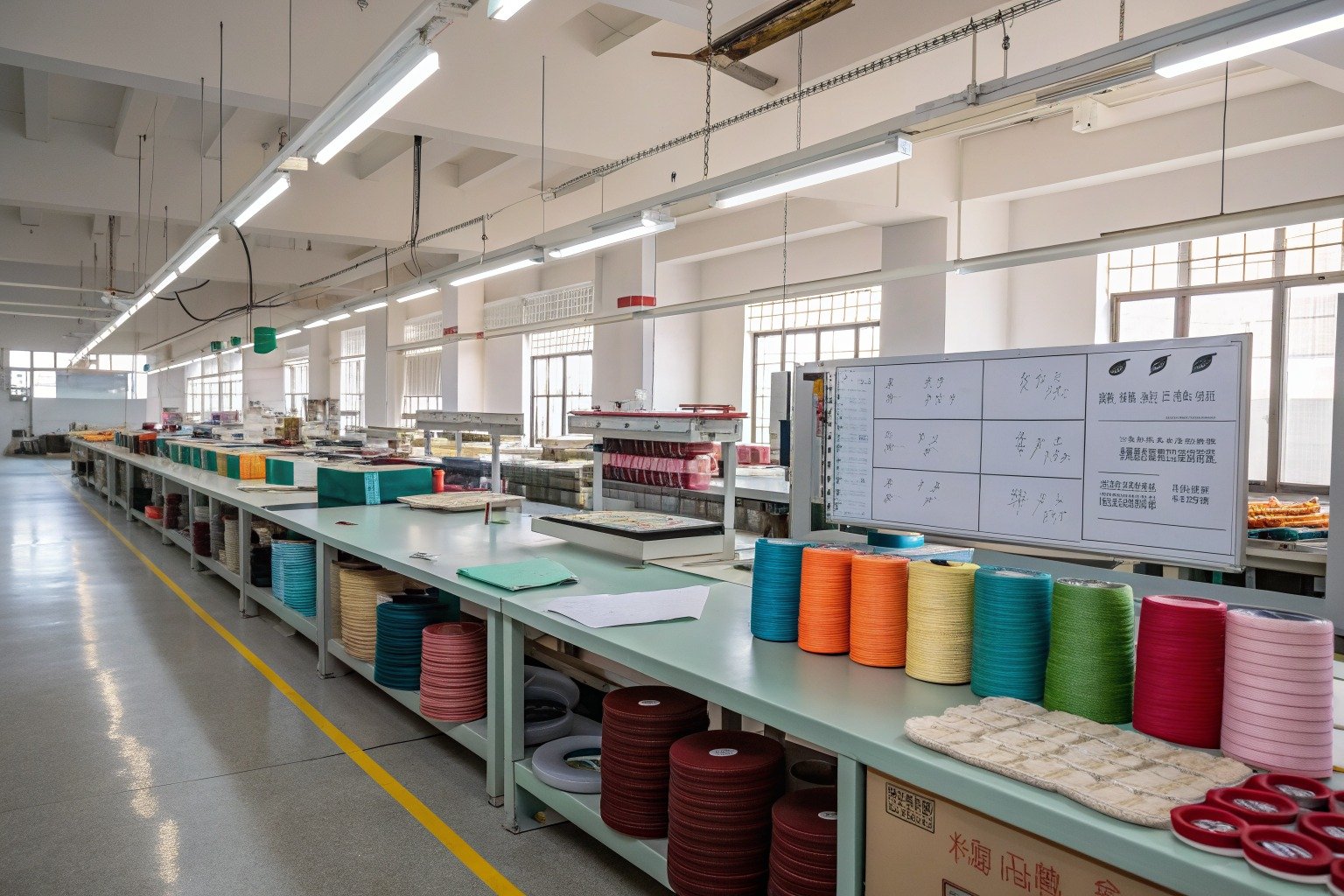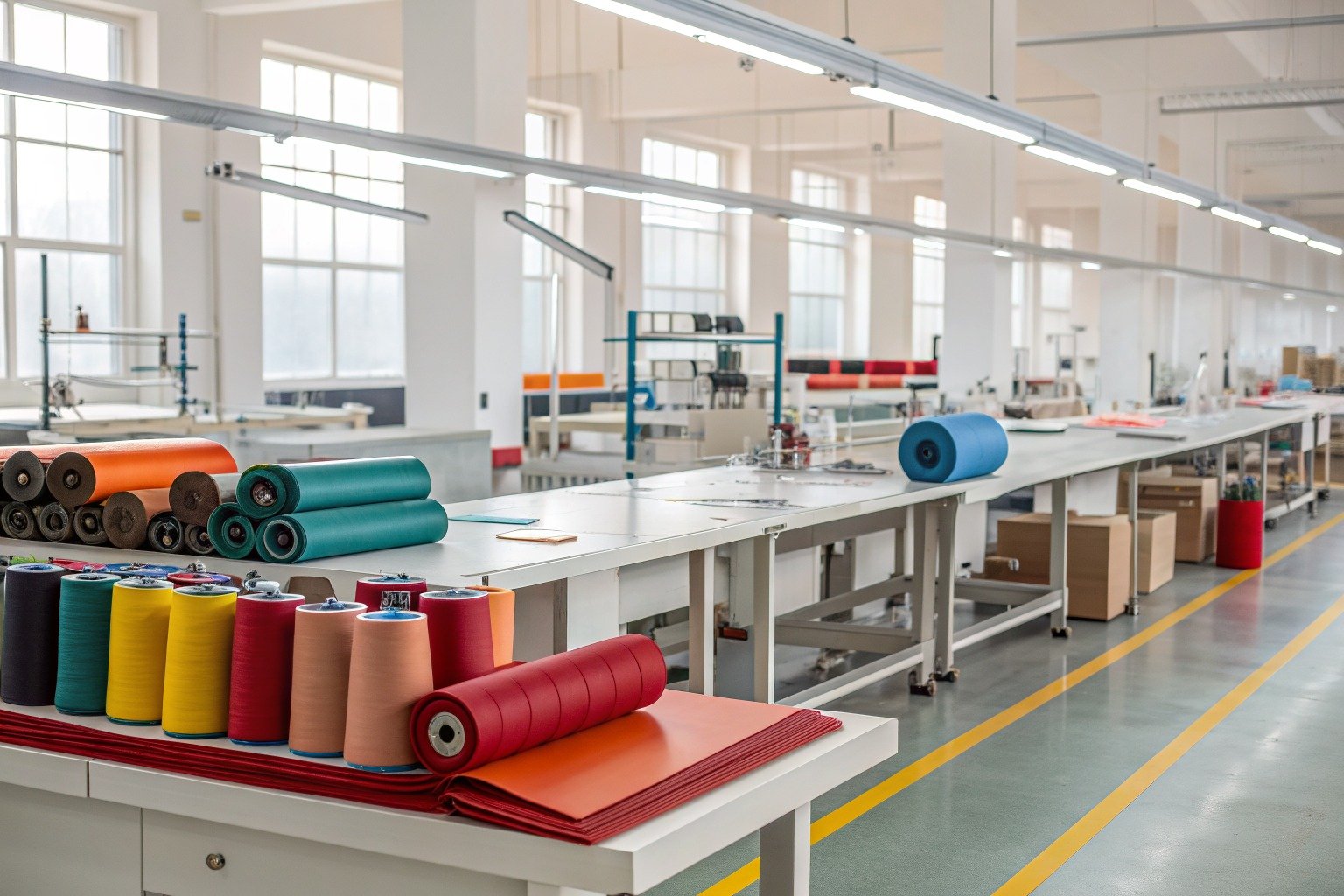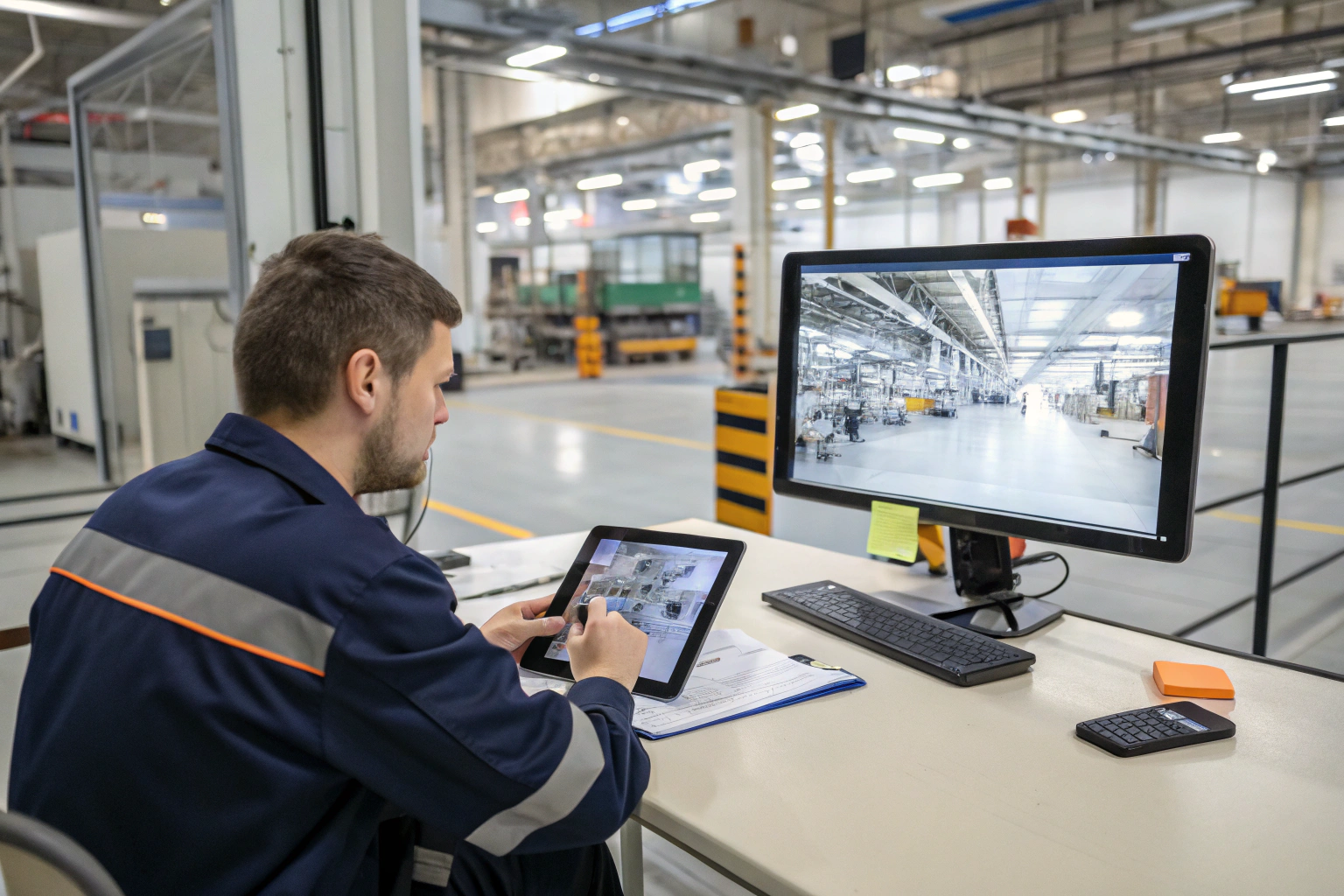
A few years ago, a buyer named David reached out to me about a large order of knit beanies . He had been sourcing from a trading company in Yiwu for two years. The prices were good. The communication was friendly. But his last shipment had arrived with inconsistent sizing and loose threads. He was frustrated. He asked me, "Can you just walk me through your factory on a video call? I need to see where my money is going." I picked up my phone, walked him through our knitting floor, showed him the QC light table, and introduced him to our production manager. He placed a $40,000 order the next day. He told me later, "Seeing the floor clean and the workers focused gave me a level of confidence that 100 emails couldn’t." If you are like Ron, you understand that a polished Alibaba storefront and a slick PDF catalog are not guarantees of quality. The fear of sending a large deposit to a virtual stranger and hoping for the best is a rational, deeply felt anxiety.
US importers ask for factory videos before placing orders because video verification serves as the most effective remote due diligence tool available. It allows the buyer to confirm the physical existence of the factory, assess its operational scale and cleanliness (a proxy for management quality), verify that the factory is a manufacturer and not a trading company, and observe the working conditions and specialized equipment relevant to their product category. A live, interactive video walkthrough provides a level of visceral assurance that static photos and digital certificates cannot replicate.
I run AceAccessory in Zhejiang Province. I have been on both sides of the camera. I understand the skepticism. I know that the Chinese sourcing landscape is filled with virtual offices, shared showrooms, and middlemen posing as factory owners. I actually welcome the video call request. It is an opportunity for me to prove that AceAccessory is exactly who we say we are: a clean, modern, professional manufacturer with deep expertise in fashion accessories . A factory that is proud of its operation has nothing to hide. A factory that makes excuses has everything to hide. Let me walk you through exactly what US importers are looking for in these videos, what questions you should ask, and how to spot the red flags that signal a potential sourcing disaster.
How Does a Live Video Walkthrough Verify Factory Authenticity?
The most powerful aspect of a factory video is its Immediacy. A pre-recorded, edited video is a marketing asset. It can be shot in a rented space. It can be filmed months ago. It has limited evidentiary value.
A Live Video Call (via WhatsApp, WeChat, or Zoom) is a Verification Event. It provides three layers of authentication that a static photo cannot.
- Proof of Life: You are seeing the factory in Real Time. You can ask the person holding the camera to "Turn left at the red fire extinguisher" or "Wave to the worker in the blue shirt." This interactivity proves the person is physically present in the space they claim to be.
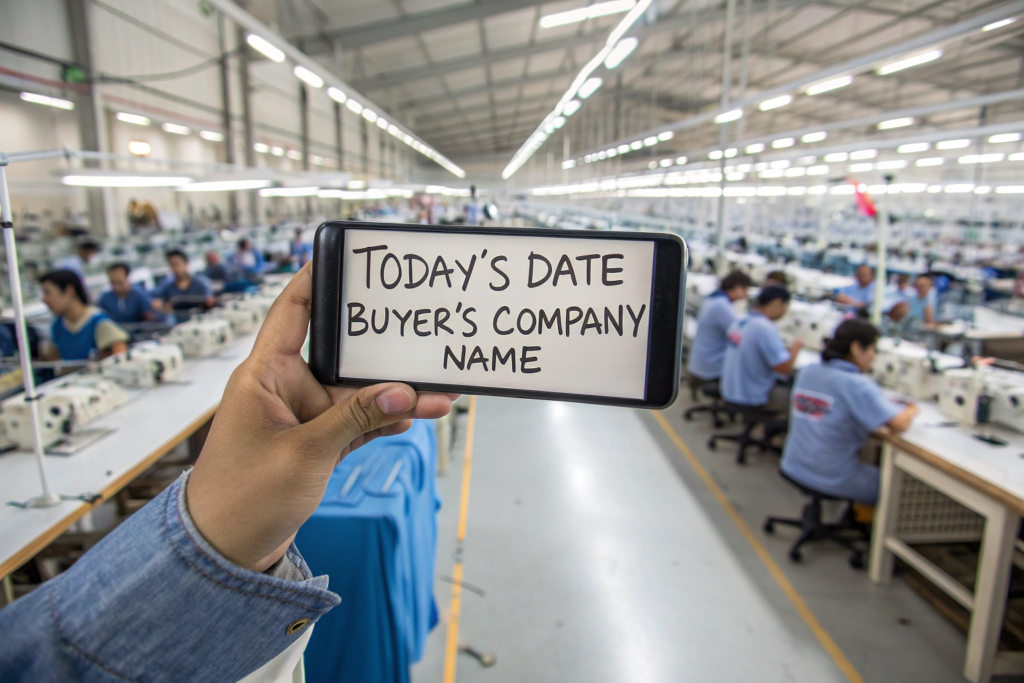
- The Date Stamp: As shown in the Recraft image, we always start our tours by holding up a whiteboard with Your Company Name and Today’s Date. This is a simple, low-tech way to prevent the use of recycled video footage. It anchors the video to your specific inquiry.
- Spatial Awareness: You can gauge the Scale of the operation. A photo can make a small 10-person workshop look like a corner of a big factory. A video panning across the entire floor shows you the Actual Square Footage and Headcount.
At AceAccessory, our project managers are trained to conduct these tours efficiently. We do not need "24 hours’ notice." We can typically accommodate a video call request within the hour during working hours. We want you to see the reality of our manufacturing floor , not a staged set. This responsiveness is a green flag for importers like Ron.
Why Is a Date-Stamped Whiteboard the "Gold Standard" for Remote Verification?
This is a simple but brilliant technique that has become the industry standard for remote due diligence. Its power lies in its Simplicity and Difficulty to Fake.
A professional photoshopper can alter a date on a digital photo. A scammer can find an old video of a real factory online and claim it is theirs. It is extremely difficult to convincingly fake a Live Video with a Handwritten, Customized Sign.
Here is what we write on our board:
- Client Name: "For [Your Company Name]"
- Date: "[Month] [Day], 2026"
- Inspector: "Project Manager: Elaine"
When you see this board held up in the first frame of the video, and then the camera pans without cutting, it creates an Unbroken Chain of Evidence. It proves that the person holding the camera is in that specific place, on that specific day, for you.
This simple act signals a high level of Professionalism and Compliance. A factory that understands the importance of the date-stamped whiteboard is a factory that understands the needs of Western importers. A factory that seems confused by the request or makes excuses is a factory that likely has no experience with professional buyers. At AceAccessory, this is our Standard Operating Procedure. It sets the right tone of transparency from the very first second of the call.
How Can You Spot a "Trading Company Showroom" vs a Real Factory Floor?
This is the most critical skill a remote buyer can develop. Trading companies are legitimate businesses, but they are Intermediaries. They add a markup and often have less control over quality and production timelines. If you are paying a "factory price," you should be getting "factory access."
Here are the visual cues that distinguish a Trading Company Showroom from a Real Factory Floor.
| Feature | Real Factory Floor | Trading Company Showroom |
|---|---|---|
| Sound | Loud. Constant hum of machines, compressed air, radio music. | Quiet. Office sounds, keyboard clicking. |
| Lighting | Harsh, uniform industrial fluorescent or LED high-bay lights. | Soft, track lighting to make products look good. |
| Floor Condition | Scuffed, marked with tape lines for walkways, slight dust or material scraps. | Pristine, polished tile or wood laminate. |
| Samples | Raw castings, unpolished parts, work-in-progress (WIP) bins. | Only finished, perfect, packaged samples on neat shelves. |
| Workers | Focused on machines or handwork. Not looking at the camera. | Few people, often in street clothes, not uniforms. |
The Key Question: Ask to see the "Raw Material Warehouse." A real factory has pallets of raw acetate sheets, barrels of dye, or spools of yarn. A trading company has a closet with a few boxes of samples. If they cannot show you the raw materials that go into your products , they are not making them.
At AceAccessory, we make a point of walking through the Material Warehouse during the tour. We show the stacks of acetate for hair claws and the yarn for beanies . It is a tangible proof of our manufacturing capability.
What Specific Operational Details Do Experienced Buyers Look For?
Beyond just confirming the building exists, experienced importers like Ron use the video call to assess the Operational Maturity of the factory. They are looking for Visual Evidence of Systems. A clean floor is nice. A Systematic Process is essential.
Here are the specific details I train my team to highlight during a tour because I know they matter to professional buyers:
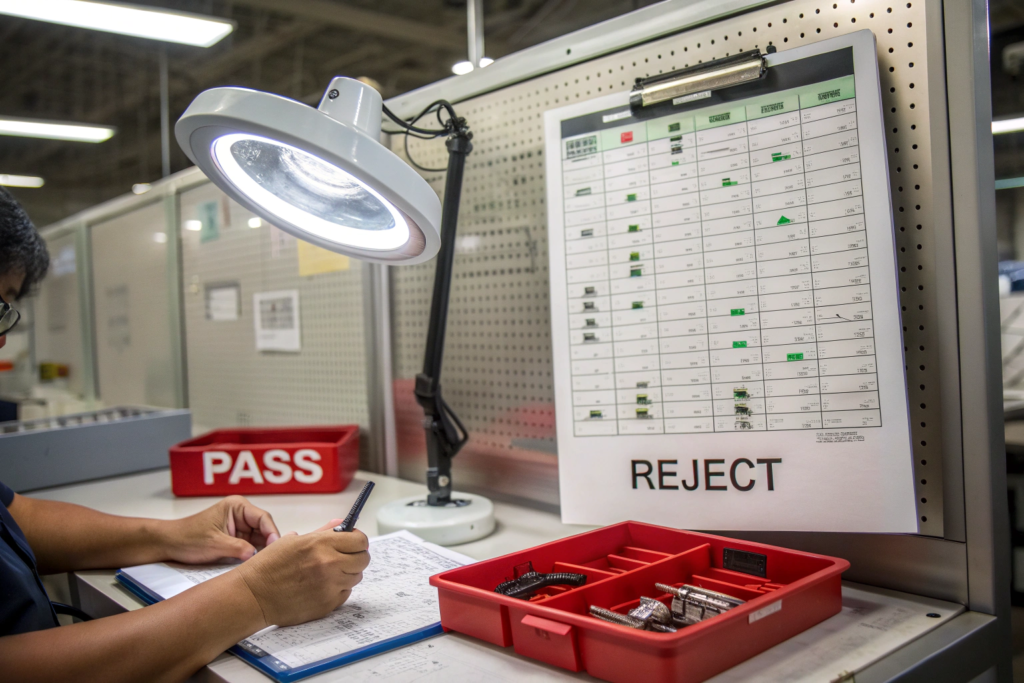
- The QC Light Table: We show a dedicated station with a Daylight-Balanced Lamp (D65) . This proves we don’t just inspect items under dim warehouse lighting. We check color and surface defects under standardized, bright light.
- In-Line Documentation: We show a clipboard or digital screen at the end of a sewing line. It tracks Hourly Output vs Target and Defect Rate. This shows we manage production actively, not passively.
- Tool Calibration Stickers: We zoom in on a digital caliper or a tension meter. It has a sticker from a third-party lab showing the Calibration Date. This is a tiny detail that signals a high level of quality maturity. It means we care about the accuracy of our measurements.
- Mold Storage: We show the locked, organized Mold Storage Room. This proves we have long-term clients and we protect their intellectual property .
These details are not about being fancy. They are about Risk Reduction. A factory with a messy QC station and no documentation is a factory that ships defects. A factory with an organized, lit, documented QC station is a factory that catches defects before they leave the building. This is what our quality control system looks like in practice.
Why Does Cleanliness and Organization Correlate with On-Time Delivery?
This is a principle I have observed over 15 years in manufacturing. Clutter is a Leading Indicator of Delay.
A factory with boxes stacked in walkways, loose material scraps on the floor, and tools scattered on workbenches is a factory with a Dysfunctional Workflow. When a factory is disorganized:
- Time is Wasted Searching: Workers spend 20% of their day looking for the right elastic or the correct screwdriver.
- Defects Increase: Parts get dirty or scratched from being on the floor.
- Bottlenecks are Invisible: Management cannot see where the work-in-progress is piling up because the pile is just part of the general mess.
A clean, organized factory is a Lean Factory. Clear walkways mean material flows efficiently. Labeled bins mean components are never mixed up. A clean floor means the management respects the work and respects the client’s product.
This organizational discipline translates directly into Schedule Adherence. A messy factory is always "surprised" by delays. A clean factory sees the bottleneck developing and fixes it before it impacts the ship date.
At AceAccessory, we adhere to 5S Workplace Organization principles (Sort, Set in Order, Shine, Standardize, Sustain). When a buyer sees a clean, marked floor and shadow boards for tools, they subconsciously register: "This team has its act together. They will hit my deadline." This is the silent message of a clean factory.
How Can You Assess Worker Skill and Morale Through a Video Call?
You cannot talk to the workers directly, but you can observe Body Language and Pace. The workforce is the engine of the factory. A demoralized, slow-moving workforce produces slow, low-quality work.
Positive Signs (Green Flags):
- Focused Concentration: Workers are looking at their tasks, not at the camera. They are in a state of flow.
- Steady, Rhythmic Movement: On a sewing line, the hands move in a consistent, practiced pattern. There is no frantic rushing, but no slouching either.
- Comfortable Posture: Workers are seated on ergonomic chairs with proper back support. They are not hunched over on low stools.
- Clean Uniforms: They are provided with and wear clean company uniforms. This is a sign of professional management.
Negative Signs (Red Flags):
- Excessive Camera Awareness: Workers stop work and stare. This suggests they are not used to visitors and may be in a poorly managed or undisciplined environment.
- Visible Fatigue or Discomfort: Workers rubbing their necks, standing up frequently, looking pained. This leads to high turnover and inconsistent quality.
- Empty Workstations: Many empty chairs on a "full production" day. This indicates labor shortages or poor scheduling.
At AceAccessory, we have a Stable, Experienced Workforce. Our average employee tenure is over 5 years. When we do a video tour, you see a team of skilled artisans working calmly and efficiently. You see a Professional Environment, not a chaotic sweatshop. This is a powerful, unspoken testament to our reliability as a manufacturing partner .
What Are the Red Flags That a Factory Video Should Trigger?
Just as there are green flags, there are Major Red Flags that should cause you to immediately pause or walk away from a supplier. A factory video is not just about seeing what they want to show you. It is about noticing what they avoid showing you and how they react to the request.
Red Flag 1: The "Broken Camera" or "Poor Connection."
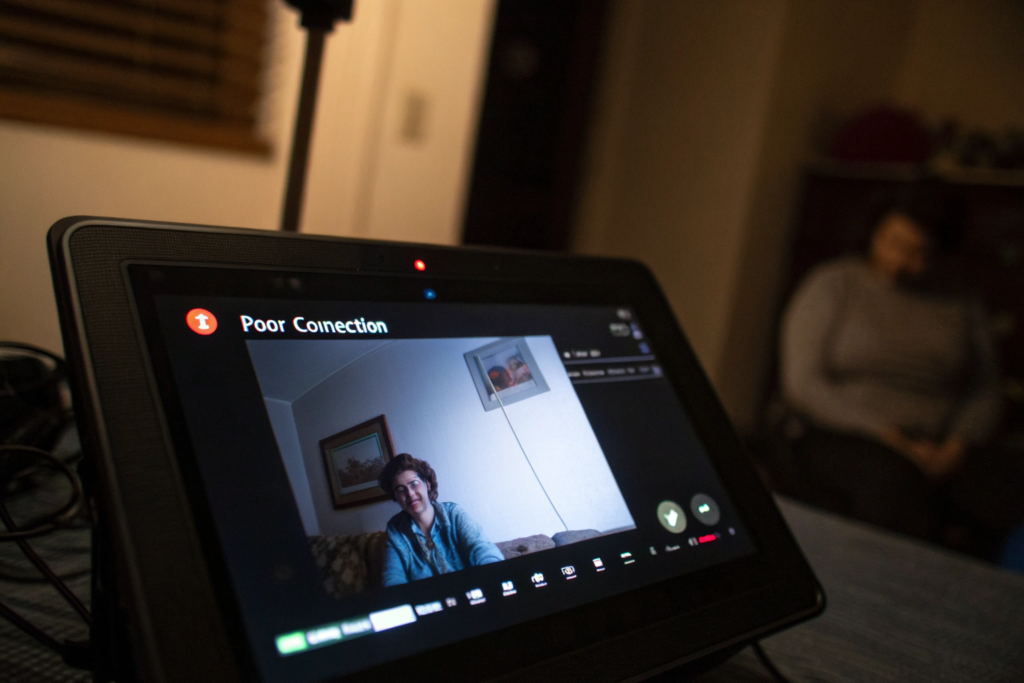
In 2026, a factory that cannot conduct a 5-minute WhatsApp video call with a clear picture is either lying about their identity or hiding their conditions. Stable internet and modern smartphones are ubiquitous in Zhejiang manufacturing hubs. The "poor connection" excuse is almost always a cover for "I’m in a dirty workshop I don’t want you to see" or "I’m in an office, not a factory."
Red Flag 2: The "Secret Process" Defense.
You ask to see the plating line for your belt buckles . They say, "Sorry, that area is trade secret. No cameras allowed." While some high-tech electronics assembly might have legitimately restricted areas, a fashion accessories plating line is not a state secret. This is a dodge. They are either using a dirty, non-compliant outside vendor or the plating is done in unsafe conditions.
Red Flag 3: The "Outsourced Finishing" Surprise.
You are touring a factory that makes straw hats . You ask to see the sewing and finishing department. They say, "Oh, we send that out to a village workshop. We can’t show you that." This is a critical disclosure that should have been made upfront. You are now exposed to Unknown Quality and Ethical Risks in an un-audited subcontractor facility. You have lost control of your supply chain.
Red Flag 4: Overly Scripted Tour.
The person holding the camera moves quickly, pans away from certain areas, and ignores your requests to "Stop there" or "Zoom in on that." They are controlling the narrative to hide a problem area.
At AceAccessory, we have Zero Red Flags. We show the plating room (with proper ventilation). We show the finishing tables. We answer "Stop and Zoom" requests patiently. Our transparency is our strongest sales tool.
Why Does a Reluctance to Show Raw Material Storage Indicate a Middleman?
This is a definitive test. A factory must consume raw materials to produce goods. If they are a manufacturer, they have an Incoming Materials Warehouse or a dedicated Raw Material Staging Area.
Ask these specific questions during the tour:
- "Can you show me the acetate sheets for my hair claws ?"
- "Can you show me the spools of yarn for the beanies ?"
A Real Manufacturer’s Response:
"Sure, follow me to the material warehouse." They show you pallets of raw plastic sheets, stacks of metal buckle components, or shelves of dye barrels. They can tell you the supplier and the grade of the material.
A Middleman’s Response:
- Deflection: "The material is at our other warehouse." (Where? How far?)
- Excuse: "It’s locked up for the night." (It’s 2:00 PM local time.)
- Vagueness: "We use many materials. Too many to show."
A middleman does not stock raw materials. They buy Finished Goods from a real factory. They have no material warehouse to show you. Catching them in this lie saves you from paying a hidden markup and losing visibility into your actual supply chain. At AceAccessory, our material warehouse is Open for Inspection. We are proud of the quality of our inputs.
How Should You React If a Factory Refuses to Pan the Camera to the QC Desk?
This is a high-alert moment. The QC Desk is the Nerve Center of Quality. It is where defects are logged, analyzed, and prevented. A factory that refuses to show it is a factory that does not have a functioning QC system.
The Polite but Firm Approach:
"I appreciate you showing me the production line. Quality control is very important to my company. Could you please pan the camera over to the QC inspection station? I’d like to see the checklist they are using today."
If They Refuse or Obfuscate:
They might say:
- "The QC manager is at lunch." (The desk should still be there).
- "We don’t have a fixed desk. We do QC everywhere." (This means no systematic QC).
Your Response Should Be Decisive:
"I understand. However, a documented QC process is a requirement for us to do business. If we cannot verify that today, we will need to schedule a follow-up call specifically to review the QC logs and station. Can we schedule that for tomorrow?"
This response achieves two things:
- It communicates that you are a Serious, Professional Buyer who will not be brushed off.
- It gives them a Face-Saving Exit if the reason was legitimate (e.g., the area was temporarily messy).
If they still refuse or make excuses for the follow-up call, Walk Away. The risk of receiving a container of defective fashion accessories is too high. Life is too short to deal with opaque suppliers.
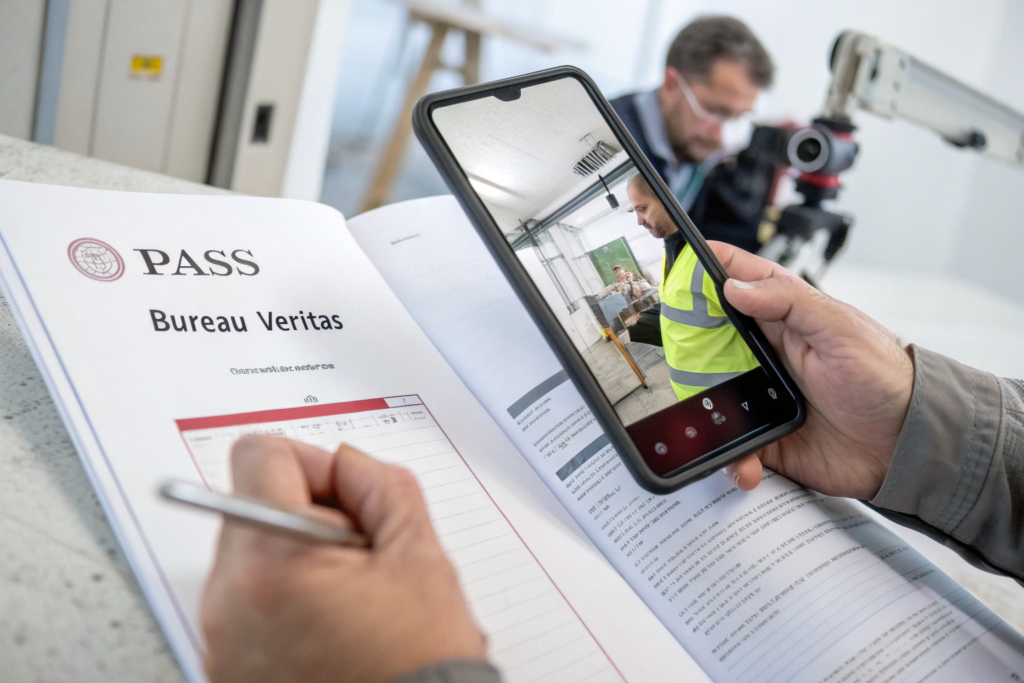
How Do You Use Video to Supplement Third-Party Audit Reports?
A third-party audit report (from SGS, BV, or Intertek) is a valuable Snapshot in Time. It provides independent verification of systems and compliance. However, it has two limitations:
- It is Historical: The audit happened on a specific day. What is happening today?
- It is Generic: The audit covers broad categories like fire safety and payroll. It may not dive deep into the specific manufacturing process for your product.
The Live Video Call is the perfect complement. It provides Real-Time, Product-Specific visibility.
Here is how I advise clients to use video to enhance the value of an audit report:
- Validate the Audit Finding: The audit says "Inline QC checkpoints are established." Ask the video guide: "Show me the inline QC checkpoint for the hair claw assembly line." You see the station, the inspector, and the checklist. The audit is validated.
- Focus on Your Product: The audit doesn’t mention the specific mold for your custom belt buckle . Ask the video guide: "Show me the mold storage area. Zoom in on the mold with my company name engraved on it." You see your asset. You know it exists and is secure.
This combination of Formal Audit + Informal Video creates a powerful, multi-dimensional view of the factory. It moves you from Trust to Verify.
At AceAccessory, we maintain a current BSCI Social Compliance Audit. We provide this report to clients. But we also encourage the live video walkthrough. We want you to see the clean floor and the organized QC desk with your own eyes, on your own schedule. This is the full picture of our quality assurance commitment.
Can You Ask to See Specific Mold Storage for Your Custom Designs?
Yes, and you absolutely should. This is one of the most valuable uses of a video call. It provides Physical Proof of Asset Ownership.
If you have paid for a custom mold for a hair claw or buckle , you need to know:
- It Exists: It is not just a 3D rendering.
- It Is Stored Properly: It is on a rack, in a clean environment, not on a damp floor where it will rust.
- It Is Yours: It has your company name or a unique ID number engraved on it.
During the video call, ask:
"Can you walk to the mold storage room and show me the steel mold for [My Product Name]?"
A trustworthy factory will walk you there. They will pan the camera across the rack. They will zoom in on the side of the mold where the engraving is. They might even pick it up to show you the cavity.
This is a powerful moment. It proves that the factory has a System for Asset Management. It proves they are organized enough to know exactly where your specific mold is among hundreds. It proves they respect your Intellectual Property enough to keep it separate and labeled.
At AceAccessory, we keep a Digital Mold Library with photos of every client’s mold on the shelf. We can pull up the photo and then show you the live video of the exact same mold. This level of transparency builds unshakeable trust.
How Can You Verify That Inline QC Checks Are Actually Being Performed?
The audit report says they do inline checks. The factory manager says they do inline checks. How do you know it is actually happening right now on your production line?
Use the video call to observe Behavioral Evidence.
Ask to see the "Work-in-Progress" (WIP) Bins.
- "Zoom in on that bin of un-assembled hair clips ."
- Green Flag: You see a small Red Tag or a Reject Sticker on a few pieces in the bin. This proves that someone is actively inspecting and separating defects. A bin with zero rejected pieces is a bin that has not been inspected.
- Red Flag: The bin is a jumbled mess of good and obviously broken pieces. No inspection has occurred.
Ask to see the QC Log Sheet.
- "Can you show me the QC log for this line from this morning?"
- Green Flag: They flip open a clipboard or show a tablet screen. There are entries. Numbers are written down. Times are noted.
- Red Flag: They say, "We don’t write it down. The inspector just knows." Or they show you a blank sheet.
This real-time observation is the Ultimate Audit. It shows you the Actual Operating Culture of the factory, not just the policy in a binder. At AceAccessory, our QC logs are Live Documents. We are happy to show them on video because they demonstrate our commitment to Continuous Improvement.
Conclusion
The request for a factory video before placing an order is not an imposition or a sign of distrust. It is a fundamental shift in the balance of power in global sourcing. It is the remote buyer’s most effective tool for cutting through the digital noise and verifying the physical reality of their supply chain. It transforms the sourcing process from a gamble based on photos and promises into an informed decision based on observable facts.
Through a live, interactive walkthrough, US importers can authenticate the factory’s existence, gauge its operational maturity through details like QC stations and material storage, and assess the intangible but critical factors of workforce morale and management discipline. The presence of green flags like a date-stamped whiteboard and organized workflow provides a visceral confidence that static documents cannot. The appearance of red flags like a "broken camera" or a reluctance to show raw materials provides an early warning system against fraud and incompetence.
At AceAccessory, we embrace this new era of radical transparency. We view the video call not as a hurdle, but as an opportunity to differentiate ourselves from the vast sea of unverified suppliers. We are proud of our clean floors, our organized systems, and our skilled team. We want you to see them.
If you are evaluating a new supplier and want to schedule a live video walkthrough of our Zhejiang facility, we are ready when you are. Contact our Business Director, Elaine. She can arrange a video call that fits your schedule and walk you through every department relevant to your project. Email Elaine at: elaine@fumaoclothing.com