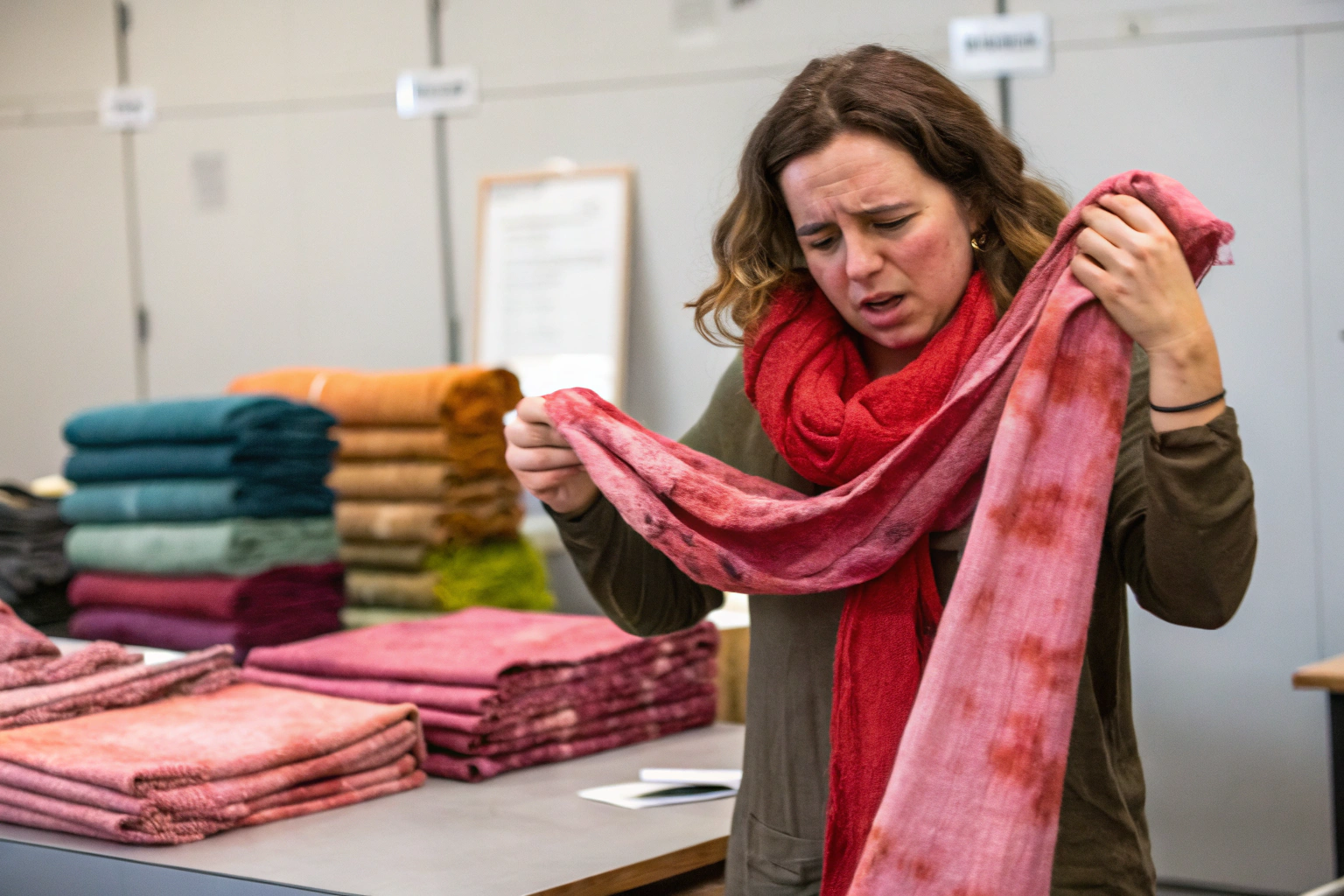
I remember a disaster from 2018. A client from Sweden ordered 5,000 scarves. Beautiful silk blend. Deep navy blue color. She sold them in her boutique. Then customers started coming back. The navy blue turned purple after one wash. Some scarves stained white shirts. She lost $30,000 in returns. She blamed me. But I had tested the scarves. I had my standard wash test. It passed. The problem was her customers used hot water. My test used cold water. I learned that day. One test is not enough. You need multiple tests. Now I run five different wash tests for every scarf and shawl. I want to teach you these tests. So you never have my Swedish client's pain.
The best wash tests for colorfast scarves and shawls are the AATCC Test Method 61 for colorfastness to washing, ISO 105-C06 for domestic washing, the crocking test for rubbing color transfer, the perspiration test for sweat resistance, and the lightfastness test for sun fading. Run all five tests before bulk production. Each test simulates a different real-world condition. A scarf can pass the wash test but fail the crocking test. That means it will stain your customer's white collar. Test everything. Approve nothing based on one test alone.
You might think wash tests are only for big brands. Or only for expensive products. That is wrong. Every scarf and shawl needs testing. Even cheap polyester ones. Especially cheap ones. Because cheap dyes bleed more. And your customer does not care about the price. They care about the stain on their $200 white shirt. Let me walk you through the five tests we run. I will explain each one simply. I will tell you what numbers to look for. And I will tell you how to avoid my past mistakes.
What Is The AATCC Wash Test For Scarves?
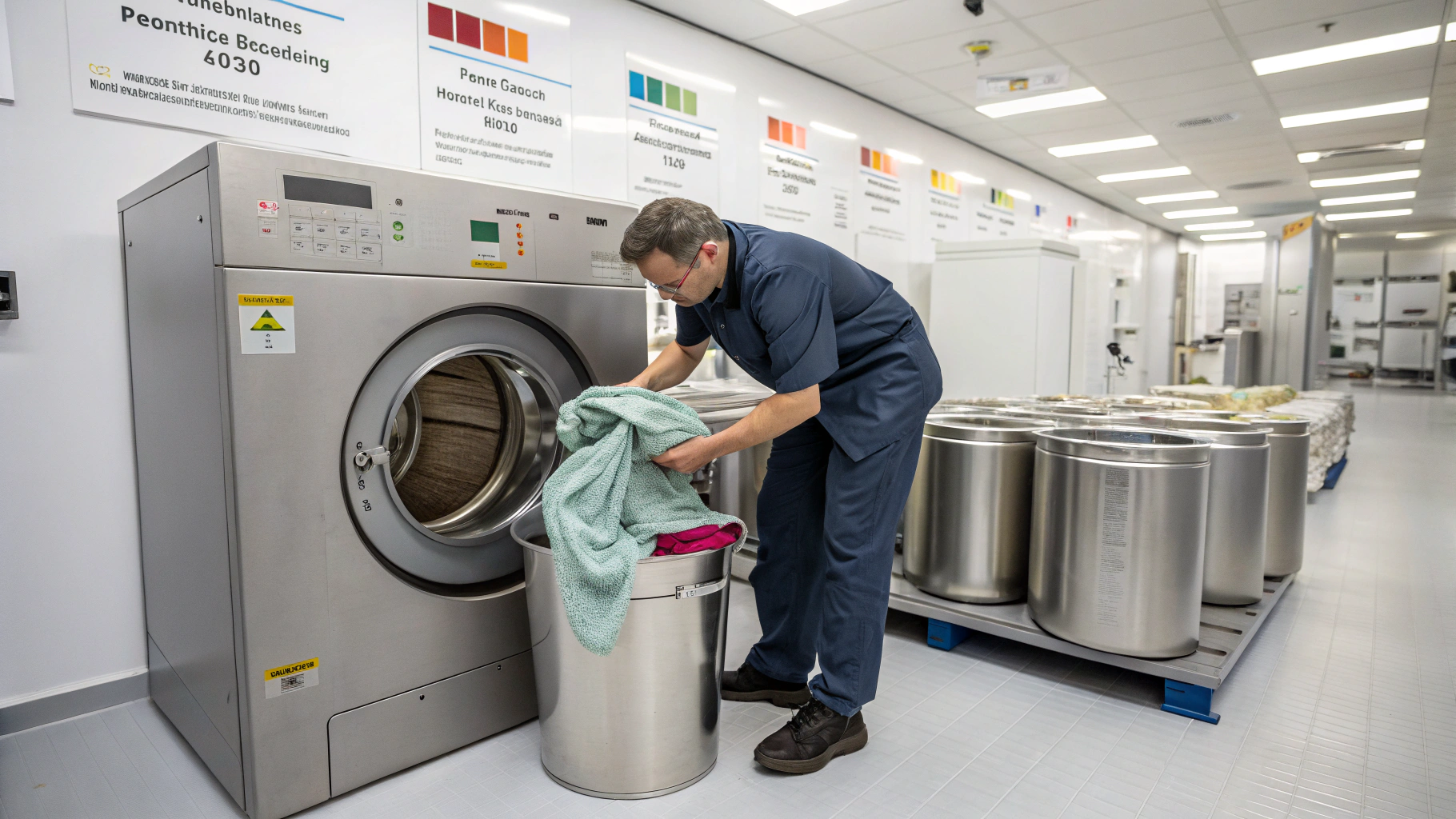
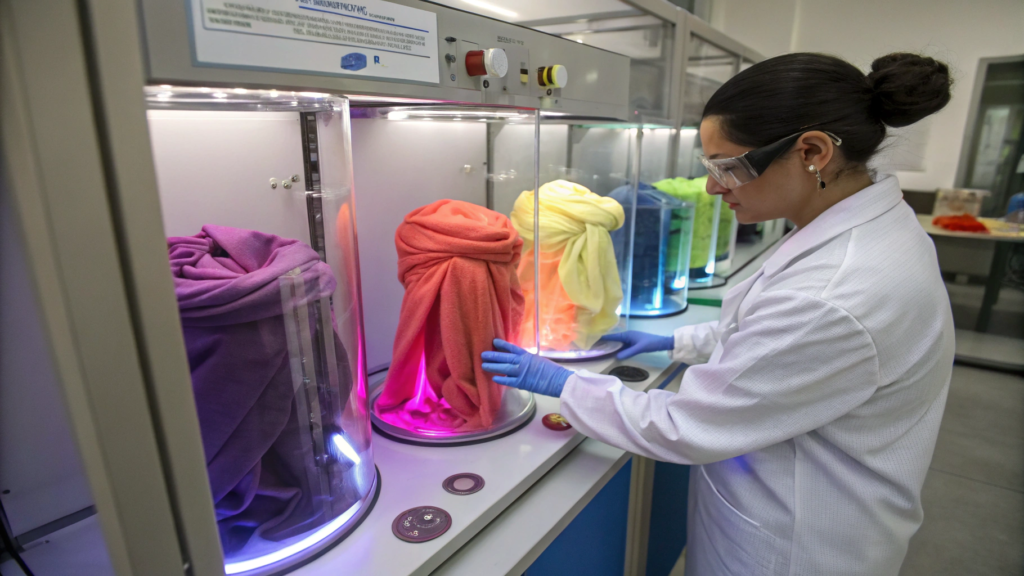
The AATCC wash test is the American standard. Most of my US clients ask for it first. It simulates 5 home washes in one machine cycle. The machine spins the fabric with steel balls. This creates friction. It also adds detergent and heat. After 45 minutes, we take the fabric out. We compare it to an unwashed piece. We look for color change. We also look for staining on multifiber fabric. A client from New York once skipped this test. She trusted her Chinese supplier. The scarves looked fine out of the box. But after 3 washes, the red dye bled into the white stripes. She had to recall 2,000 scarves. She paid $10,000 in shipping and refunds. Now she never skips the AATCC test.
The AATCC 61 wash test uses a Launder-Ometer machine. We set the temperature to 120°F (49°C) for wool and silk. For cotton and polyester, we use 160°F (71°C). We run the test for 45 minutes. This equals 5 home machine washes. After the test, we grade color change on a 1 to 5 scale. Grade 5 means no change. Grade 4 means slight change. Grade 3 means noticeable change. Grade 2 means much change. Grade 1 means severe change. We also grade staining on multifiber fabric. Acceptable score is Grade 4 or higher for both change and staining.
Let me share real data from a recent scarf order. A red silk scarf tested at 120°F. It scored Grade 4.5 for color change and Grade 4.0 for staining. That is a pass. A black wool shawl scored Grade 5.0 for color change and Grade 4.5 for staining. That is excellent. But a bright yellow polyester scarf failed badly. Tested at 160°F, it scored only Grade 3.5 for color change and Grade 3.0 for staining. The color changed from bright yellow to pale yellow. And it stained the white test fabric yellow. We rejected that batch. We asked our dye supplier to reformulate. The second batch passed with Grade 4.5.
We use AATCC standard test methods for all our fabrics. They update their methods every year. We buy the new standards. We train our lab team. This is not cheap. The test equipment costs $15,000. The training costs $5,000 per year. But we pay it. Because accurate testing saves you money. One failed order costs more than all our testing equipment.
What temperature should I use for my scarves?
It depends on your care label. If your label says "hand wash cold," use 80°F. If it says "machine wash cold," use 100°F. If it says "machine wash warm," use 120°F. If it says "machine wash hot," use 160°F. Be honest with your customers. Do not put "hand wash cold" if the fabric needs hot water to get clean. Your customer will ignore your label. They will wash warm. Then they will blame you. I suggest you design for machine wash cold. Most customers wash everything on cold now. It saves energy. It saves their clothes. And it saves your scarves. Test at 100°F. If it passes, you are safe.
How many wash cycles should I test?
The AATCC test does 5 cycles. But that is not enough for products that get washed often. Scarves get washed less than shirts. Maybe 10 times per year. So 5 cycles equals 6 months of use. That is okay for fast fashion. But for premium scarves, test 20 cycles. We have a special test. We run the AATCC method 4 times. That equals 20 home washes. We charge extra for this. $100 per test. But it is worth it for high-end brands. A client from Italy does this for all her silk scarves. Her scarves retail for $200 each. She cannot have returns. She tests 20 cycles. Her return rate is under 1%. That is excellent.
How To Test For Color Crocking On Shawls?
Crocking is the transfer of color from your product to another surface. This is a huge problem for shawls. They rub against necks, coats, and bags. A client from Canada learned this hard way. She sold beautiful black wool shawls. They passed the wash test. They looked perfect. But her customers wore them with white winter coats. The black dye rubbed off onto the coat collars. She got 100 complaints in one week. She had to refund $15,000. The problem was crocking. The dye was not fixed properly. Now we test every dark-colored shawl for crocking. Wet and dry.
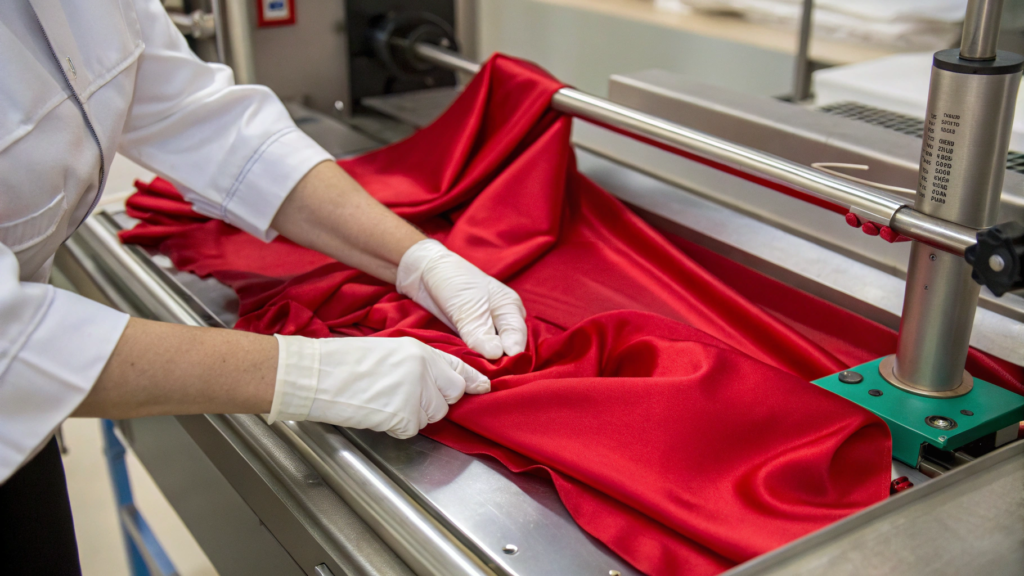
The crocking test uses a crockmeter machine. We rub a white cotton cloth against the colored fabric. We do two tests. Dry crocking uses a dry white cloth. Wet crocking uses a white cloth that is 65% wet. We rub the cloth back and forth 10 times. Then we grade the staining on a 1 to 5 scale. Grade 5 means no transfer. Grade 4 means slight transfer. Grade 3 means moderate transfer. Grade 2 means significant transfer. Grade 1 means severe transfer. Acceptable score is Grade 4 or higher for dry crocking and Grade 3.5 or higher for wet crocking.
Here is our crocking test data from last season. A black wool shawl scored Grade 4.5 for dry crocking and Grade 4.0 for wet crocking. That is a pass. A navy cashmere shawl scored Grade 4.0 dry and Grade 3.5 wet. That is borderline but acceptable. A dark red polyester shawl failed badly. It scored only Grade 3.5 dry and Grade 3.0 wet. The dye was not fixed to the fiber. It sat on the surface. When we rubbed it, the dye came off easily. We rejected that batch. We asked our dye house to use a different fixing agent. The second batch passed with dry crocking Grade 4.5 and wet crocking Grade 4.0. A brown cotton shawl scored Grade 5.0 dry and Grade 4.5 wet. That is perfect.
Crocking is worse on synthetic fabrics. Polyester and nylon do not absorb dye well. The dye sits on top. Natural fibers like wool and cotton absorb dye inside the fiber. So they crock less. If you are making dark polyester shawls, be very careful. Test twice. Ask for crocking test standards from your factory. If they do not know what crocking is, find another factory.
How can I prevent color crocking?
Three ways work well. First, use better dye. Reactive dyes bond to the fiber. Direct dyes sit on top. Reactive dyes cost 20% more but crock 50% less. Pay the extra. Second, use a fixing agent. This is a chemical that locks the dye. We add it in the last rinse. It costs $0.05 per scarf. That is nothing. Third, wash the fabric after dyeing. A post-dye wash removes loose dye. Many factories skip this to save water. We do not skip it. We wash every dark fabric twice. Our water bill is higher. But our crocking scores are better.
We also offer a fixative treatment service for extra protection. This is for premium products. We apply a special chemical that bonds dye to fiber. It costs $0.10 per shawl. It improves crocking by 1 full grade. A Grade 3.5 becomes Grade 4.5. Worth it for expensive products.
What is the difference between crocking and bleeding?
Bleeding is when dye comes off in water. Crocking is when dye comes off by rubbing. A scarf can bleed but not crock. Or crock but not bleed. Test both. I had a client with a purple scarf. It did not bleed in the wash test. But it crocked badly on white shirts. She was confused. She thought passing wash test meant everything was fine. It is not. Crocking is a separate problem. Always test both. The equipment is different. The fix is different. Bleeding needs a better wash-off process. Crocking needs a fixing agent. Know the difference. Test for both.
What Is The ISO 105-C06 Domestic Wash Test?
My European clients ask for ISO tests. Not AATCC. ISO is the international standard. It is similar to AATCC but different in small ways. The temperature is the same. The time is the same. But the detergent is different. ISO uses ECE detergent with no optical brighteners. AATCC uses their own detergent with brighteners. This matters. Brighteners make white fabrics look whiter. They can hide yellowing. So ISO tests are stricter for color change. A client from Germany learned this. Her scarves passed AATCC but failed ISO. The ISO test showed yellowing. The AATCC test did not. Because the brighteners hid it. Now she requires both tests.
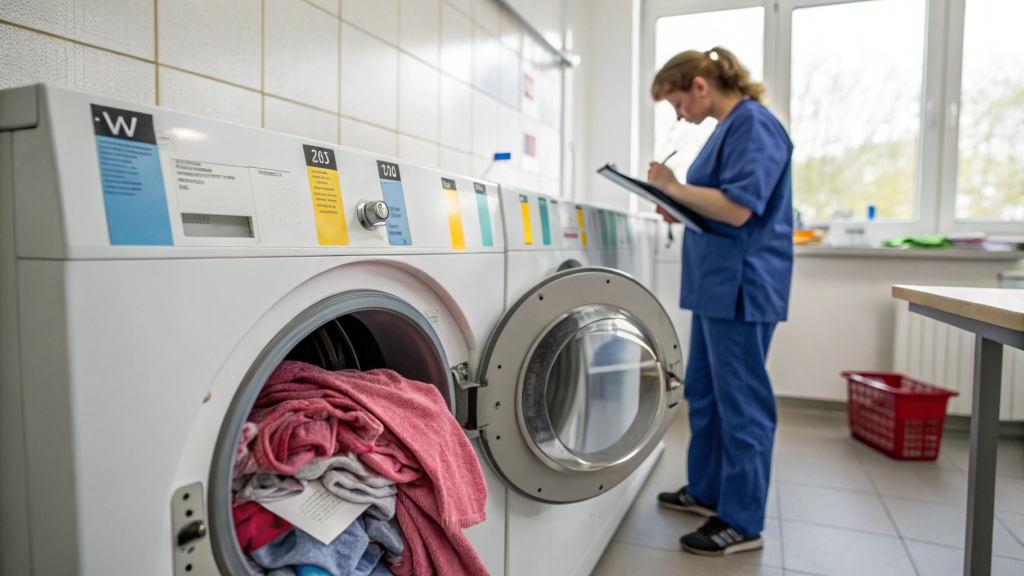
ISO 105-C06 tests colorfastness to domestic washing. We use ECE reference detergent without optical brighteners. The test runs at 104°F (40°C) for 30 minutes. We add 25 steel balls for friction. After the test, we grade color change and staining on a 1 to 5 scale. Acceptable score is Grade 4 or higher. The ISO test is stricter than AATCC because it has no brighteners. If your scarf passes ISO, it will pass any home wash. We recommend ISO for European buyers and AATCC for American buyers. For both markets, run both tests.
Let me compare AATCC and ISO for you. AATCC uses detergent with brighteners and runs hotter at 120°F or 160°F for 45 minutes with 50 steel balls. ISO uses detergent without brighteners and runs at 104°F or 122°F for 30 minutes with 25 steel balls. So AATCC is harder on heat and friction. ISO is harder on chemical detection because no brighteners hide the yellowing.
A scarf can pass one and fail the other. We had a beige silk scarf. It passed AATCC with Grade 4.5. It failed ISO with Grade 3.5. Why? The ISO detergent showed yellowing. The AATCC brighteners hid it. The client was selling to both US and EU. She had to reformulate the dye. The new formula passed both. It cost her $500 in extra lab work. But she avoided returns.
We follow ISO international standards for all our European orders. We have the certificates. We train our team every year. If you sell to Europe, you need ISO. If you sell to US, you need AATCC. If you sell to both, test both. Do not assume one is enough.
Which wash test should I use for my brand?
Ask your retailer. Walmart requires AATCC. Target requires AATCC. Macy's requires AATCC. Zara requires ISO. H&M requires ISO. Primark requires ISO. If you sell online directly to customers, choose based on your main market. US market means AATCC. EU market means ISO. UK market means ISO even after Brexit. Russian market follows GOST standards, which are similar to ISO. We have a client in Australia. She uses ISO because Australia follows European standards. When in doubt, test both. It costs double. But it saves you from a failed shipment. One failed shipment costs 10 times more than extra testing.
What is the difference between ISO 105-C06 and ISO 105-C10?
C06 is for domestic washing. C10 is for industrial washing. Most scarves and shawls are not industrially washed. So you do not need C10. But some wool shawls are dry cleaned. For dry cleaning, use ISO 105-D01. That test uses perchloroethylene solvent. We run this test for wool and cashmere shawls. The pass rate is high because dry cleaning is gentle. Grade 5 is common. But be careful. Some customers ignore the "dry clean only" label. They wash at home. Then the shawl shrinks. They blame you. So I recommend making scarves that can be hand washed. Not dry clean only. It is safer for you.
How To Test For Perspiration And Lightfastness?
Sweat and sun are the hidden killers of scarves. Your customer wears a scarf around her neck. She sweats. The sweat has acid and salt. It can change the color. Then she walks outside. The sun shines on the scarf. UV light fades colors. A client from Florida learned this. She sold bright pink scarves. They looked beautiful in her store. But her customers wore them to outdoor events. After two weeks, the pink turned orange. The sun bleached the dye. She got bad reviews. She stopped selling scarves for one year. Now she tests for lightfastness. She uses UV-resistant dyes. Her scarves last all summer.
The perspiration test uses artificial sweat. We make two types. Acid sweat at pH 5.5 and alkaline sweat at pH 8.0. We soak the fabric in sweat for 30 minutes. Then we put it between glass plates under pressure. We leave it in an oven at 100°F for 4 hours. Then we grade color change. Acceptable score is Grade 4 or higher. The lightfastness test uses a Xenon arc lamp. This simulates sunlight. We expose the fabric for 20 hours, 40 hours, or 100 hours. Grade 4 or higher for 40 hours is acceptable for most scarves. For outdoor use, demand Grade 4 at 100 hours.
Different dyes perform very differently. Reactive dyes on cotton score Grade 4.5 for both acid and alkaline sweat, and Grade 5 for lightfastness. That is excellent. Acid dyes on silk score Grade 4.0 for acid sweat, Grade 3.5 for alkaline sweat, and Grade 4 for lightfastness. That is acceptable but borderline on alkaline sweat. Disperse dyes on polyester are the worst. They score Grade 3.5 for acid sweat, Grade 4.0 for alkaline sweat, but Grade 5 for lightfastness. The acid sweat test fails. Why? Because acid sweat breaks down disperse dye. The dye migrates to the surface. It looks blotchy.
If you make polyester scarves for hot climates, use vat dyes. They cost 50% more. But they score Grade 5.0 on all tests. A client in Singapore uses vat dyes for all her scarves. Her customers sweat a lot. The scarves stay perfect. She charges higher prices. Customers pay because the quality is there.
For lightfastness, blue and red fade fastest. Black and brown fade slowest. A yellow scarf can turn white in 20 hours of strong sun. We use Xenon lamp testing equipment from Atlas. It costs $50,000. It is the industry standard. We test every summer scarf for 40 hours. That equals 2 weeks of strong sun. If it passes, it is safe. For beachwear scarves, we test 100 hours. That equals 2 months of beach sun. Very few scarves pass this. Only vat dyes and high-quality reactive dyes.
How do I read a lightfastness rating?
The industry uses the Blue Wool Scale. It goes from 1 to 8. 1 is very poor. 8 is excellent. Most scarves are rated 4 to 6. A rating of 4 means the color will fade noticeably after 1 month of sun. A rating of 6 means the color will fade slightly after 1 year of sun. A rating of 8 means no fading for 5+ years. Ask your factory for the Blue Wool rating. Do not accept below 4 for indoor scarves. Do not accept below 5 for outdoor scarves. We have a client in Arizona. Very strong sun. She demands Blue Wool rating 6. Her supplier complained it was too expensive. She found a new supplier. Pay for the quality. Your customers will notice.
What is the difference between perspiration and saliva test?
Saliva test is for children's products. Scarves are not usually for children. But some small shawls are for babies. If you make baby products, you need the saliva test. It is similar to perspiration but with different pH. Baby saliva is pH 7.5. We use the same method as perspiration. But the pass standard is stricter. Grade 4.5 minimum. Because babies put everything in their mouths. We have children's product safety certifications for our baby accessories. Ask Elaine about this if you make children's scarves.
Conclusion
Wash testing is not optional. It is protection. Protection for your brand. Protection for your customers. Protection for your money. I learned this through painful mistakes. The Swedish client who lost $30,000. The Canadian client with stained winter coats. The Florida client with sun-faded scarves. Each mistake taught me a lesson. Now I teach these lessons to you.
The five tests I shared are the minimum. AATCC or ISO for washing. Crocking for rubbing. Perspiration for sweat. Lightfastness for sun. Run them all. Do not skip any. A scarf can pass four tests and fail one. That one failure will cause returns. Test everything before bulk production. Not after. After is too late.
At Shanghai Fumao, we run these tests on every fabric batch. We have our own lab. We have trained technicians. We have the expensive machines. We do this because we care about your success. When your scarves stay beautiful after 10 washes, your customers trust you. They buy again. They tell their friends. That is how brands grow. I invite you to see our lab. Come to Zhejiang. I will show you our testing process. Or send us your fabric. We will test it. We will send you a full report. No charge for the first three tests. That is my promise.
To start testing your scarf and shawl collection, please email our Business Director, Elaine. Her email is elaine@fumaoclothing.com. Tell her you want to discuss wash tests. She will connect you with our lab manager. You will get a testing plan. You will get clear pass/fail grades. You will get peace of mind. No more surprises. No more returns. Just beautiful, colorfast scarves that your customers will love wash after wash.