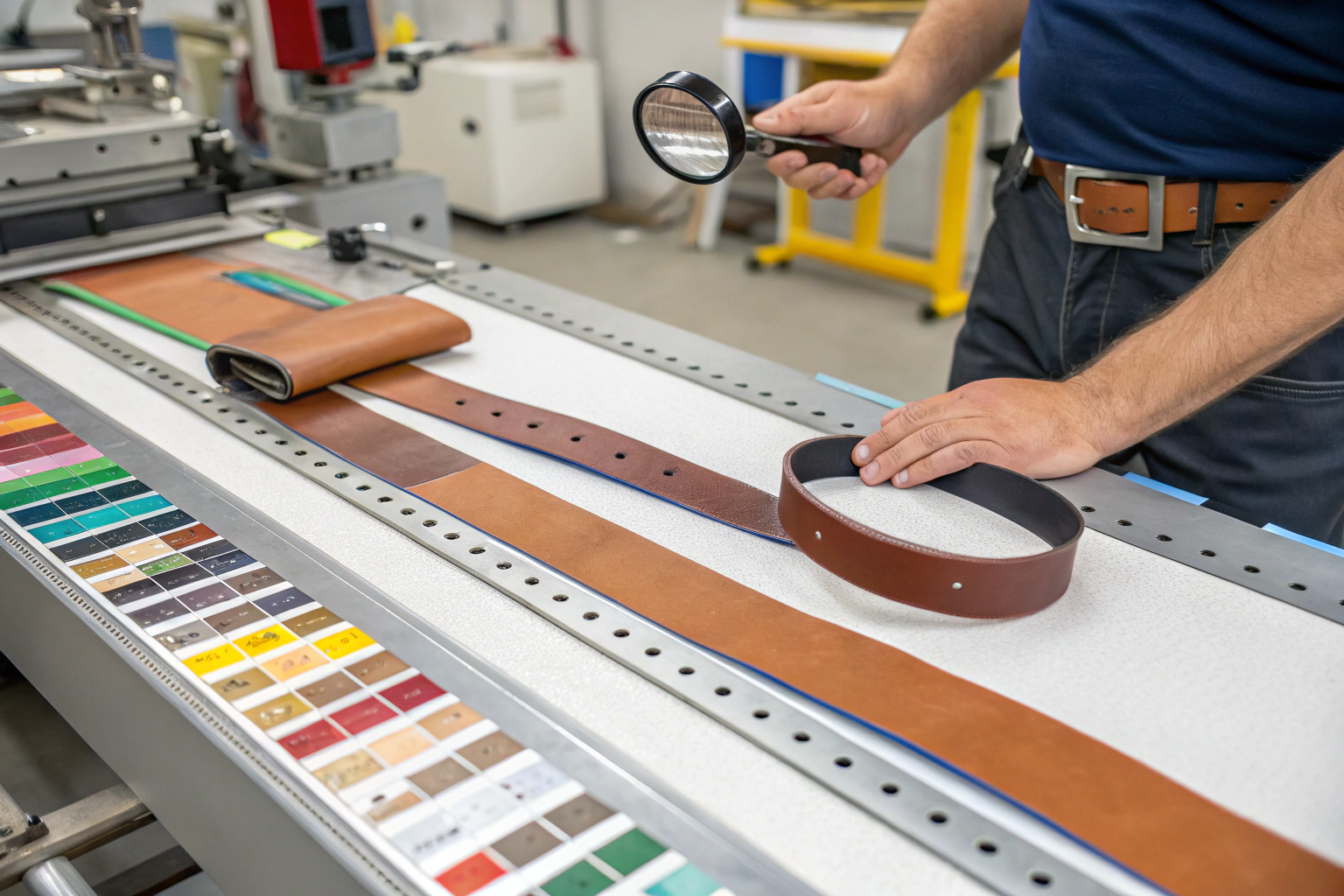
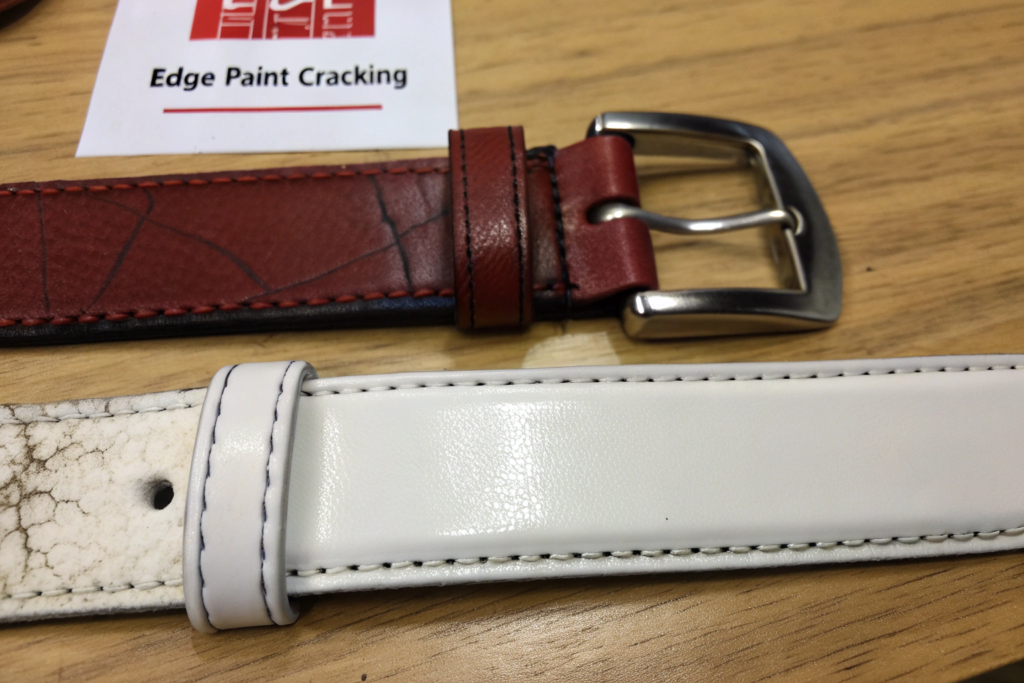
A menswear brand owner once sent me an urgent email, attaching photos of returned belts. The edge paint on his best-selling leather belts was cracking after only a few weeks of wear. The paint was a beautiful, deep burgundy. The leather was premium Italian cowhide. But the paint cracked at the buckle hole, where the belt bends the most. He had spent thousands on a product that was failing at the most visible point. "Why did this happen?" he asked. The answer was simple: the edge paint formulation was too rigid for the flex requirements of a belt. No one had tested it.
Chinese belt manufacturers request a sample of the intended edge paint flexibility because edge paint is not a one-size-fits-all coating. The flex requirement for a thick leather work belt worn daily is fundamentally different from that of a delicate fashion belt worn occasionally. The edge paint must bend, stretch, and compress with the leather without cracking, peeling, or discoloring. By testing a physical sample of the paint’s flexibility, the factory can match the specific paint chemistry—its elasticity, hardness, and adhesion properties—to the intended use of the finished product.
At our factory in Zhejiang, we treat edge paint selection as a technical specification, not an afterthought. The paint is the seam that holds the visual identity of the belt together. When it fails, the customer sees a damaged product, not a damaged paint layer. I want to explain the chemistry behind edge paint flexibility, the testing methods we use, and why this seemingly small detail has an outsized impact on your brand’s return rate.
What Is Edge Paint and Why Does Its Flexibility Matter?
Edge paint, also known as edge coat or edge dye, is a specialized coating applied to the cut edges of a leather belt. Its primary function is aesthetic: it seals the rough, fibrous edge of the leather, giving it a smooth, polished, and colored finish that matches or contrasts with the belt’s surface. But its secondary function is structural. The edge paint must create a durable, flexible skin that protects the leather edge from moisture, abrasion, and delamination.
Flexibility matters because a belt is not a static object. It is repeatedly bent, pulled, and twisted. The buckle hole area, where the prong enters the leather, is the most concentrated flex point. Every time the wearer puts on or takes off the belt, the leather at the buckle hole bends to a tight radius. The edge paint on this hole must stretch on the outer edge of the bend and compress on the inner edge, thousands of times over the life of the belt. If the paint is too rigid, it cannot stretch; it cracks like old varnish. If it is too soft, it remains sticky and picks up dirt and lint.
What is the chemistry difference between rigid acrylic and flexible polyurethane edge paints?
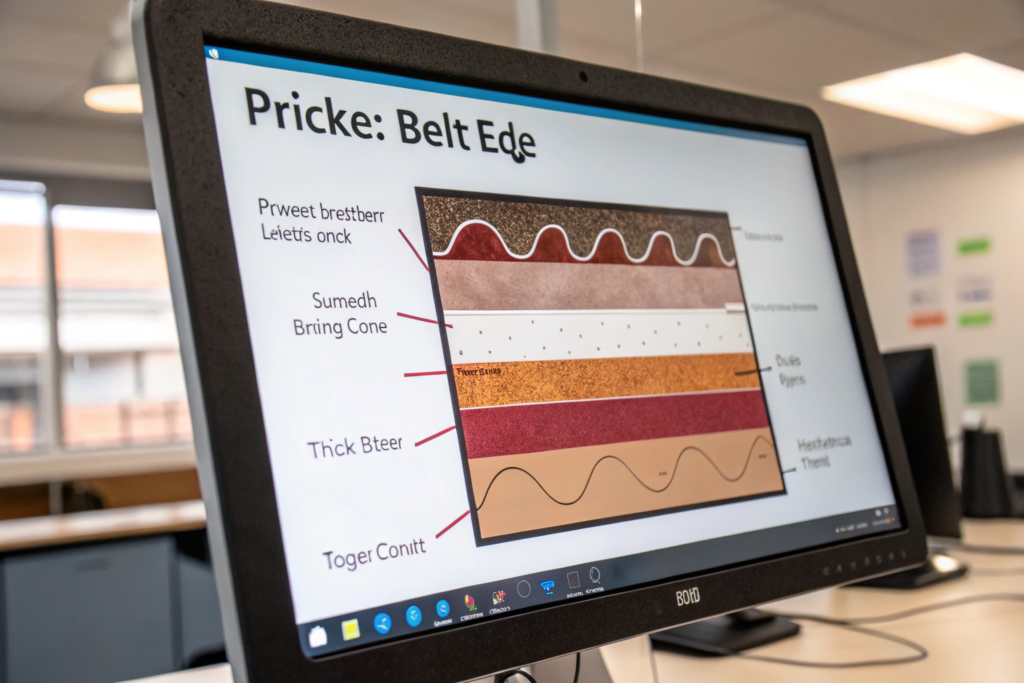
Edge paints are generally formulated from two families of polymers: acrylics and polyurethanes. Acrylic-based paints are harder and more rigid. They form a tough, brittle shell that resists abrasion well but cracks when flexed. They are suitable for rigid, flat products like keychains or bag stiffeners that do not bend. Polyurethane-based paints contain elastic segments in their polymer chains. These segments allow the paint film to stretch and recover without cracking. A high-quality polyurethane edge paint can elongate significantly before breaking, making it the preferred choice for belts and other flexible leather goods. Within the polyurethane family, the flexibility can be tuned by the manufacturer by adjusting the ratio of hard to soft segments in the polymer. This is why a sample of the intended flexibility is needed; not all polyurethane paints are equally flexible. This polyurethane coating flexibility chemistry resource explains the polymer science.
Why does the belt’s bending radius dictate the paint’s required elasticity?
The tighter the bend, the greater the strain on the paint film. A thick work belt that bends around a large diameter needs less paint flexibility than a thin fashion belt that folds sharply around a small buckle. The bending radius is a critical parameter. We calculate the expected surface strain during bending based on the belt thickness and the minimum bend radius, which is typically the radius of the buckle pin or the tightest fold the belt will experience. The edge paint’s elongation at break must exceed this calculated strain by a safety margin. A flexibility sample allows our paint technician to verify that the selected paint meets this specific engineering requirement.
How Is a Flexibility Sample Created and What Does the Factory Look For?
When we request a flexibility sample, we are not asking for a subjective opinion like "soft" or "hard." We are requesting a physical reference that defines the mechanical properties of the desired edge paint in objective terms. This reference can be provided by the brand in several ways: a physical swatch of a competitor’s belt whose edge finish you admire, a pre-made flexibility test strip from an edge paint supplier, or a detailed technical data sheet specifying the required elongation percentage and Shore hardness.
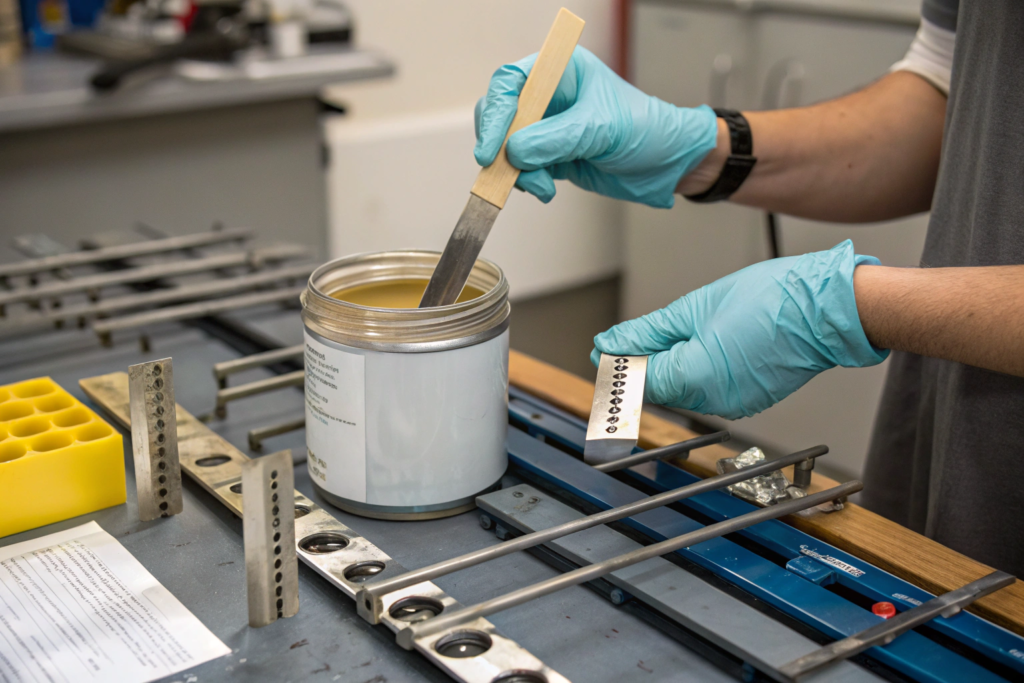
We then create a set of test strips from our in-house edge paint library. These strips are thin metal or leather blades coated with different edge paint formulations, ranging from very rigid to very elastic. We present these to the client for a physical evaluation. The client bends, twists, and stretches each strip, selecting the one that matches their intended flexibility. This physical sample is then sealed, approved, and used as the binding reference standard for the production run.
What is a flex test strip and how does it standardize the approval process?
A flex test strip is a standardized sample, typically a metal spatula or a strip of vegetable-tanned leather, onto which the edge paint is applied and cured to a specified thickness. The strip is presented to the client with a series of other strips representing different points on the flexibility spectrum. The client selects the strip that represents their desired hand-feel and performance. The chosen strip is labeled, sealed in a tamper-evident bag, and signed by both parties. This becomes the "golden edge paint sample." During production, the QC team compares the edge paint on the bulk goods to this reference strip by performing a physical bend test. This eliminates the subjectivity of verbal descriptions like "a bit more flexible." This standardized physical reference samples in manufacturing practice is fundamental to quality assurance.
How do we test the adhesion of the paint to the specific leather you chose?
Flexibility is irrelevant if the paint peels off the leather. Adhesion testing is performed in parallel with flexibility testing. We apply the selected edge paint to a sample of the exact leather that will be used in production. After curing, we attempt to peel the paint off using a cross-hatch tape test. A grid of small cuts is made through the paint film, a standard adhesive tape is applied and ripped off, and the amount of paint removed is assessed. A passing result shows minimal to no paint removal. This test is repeated after the flexibility test to ensure that repeated bending does not compromise adhesion. The specific leather’s surface finish, oil content, and porosity all affect adhesion, which is why the test must be performed on the actual production leather. This cross-hatch adhesion test standard is an internationally recognized method.
What Happens If the Wrong Edge Paint Flexibility Is Used on a Belt?
The consequence of using the wrong edge paint flexibility is not a subtle aesthetic issue. It is a fast track to customer returns, negative reviews, and brand damage. The belt is a high-touch product. The customer sees and feels the edge every time they put it on. A crack is immediately visible and tactile. It makes the belt feel cheap, regardless of the quality of the leather or the buckle.
The failure modes are specific. A paint that is too rigid cracks at the flex points, primarily the buckle hole and the keeper loop. The cracks are sharp to the touch and catch on clothing. A paint that is too soft or improperly cured remains tacky, picking up dust, lint, and dye from denim. It also has poor abrasion resistance, so it scuffs and wears away quickly on the edges of the belt loop. A paint with poor adhesion peels away from the leather in strips, exposing the rough, unfinished edge beneath. Each failure mode is a preventable outcome of the wrong paint selection.
How does edge paint cracking differ from peeling in a warranty claim?
A warranty claim for cracked edge paint typically points to a flexibility mismatch. The paint was too rigid for the bending radius of the belt. This is a material specification failure, and it often affects a large percentage of the production run. A warranty claim for peeling edge paint, where the paint separates from the leather in strips, typically points to an adhesion failure. This could be caused by incompatible leather surface treatment, insufficient curing, or a missing primer layer. The distinction matters for the corrective action. Cracking requires a reformulation of the paint to a more flexible variant. Peeling requires an investigation of the surface preparation and priming process. Both failures are avoidable with proper testing of the flexibility sample at the development stage.
Why do extreme temperatures amplify edge paint flexibility failures?
A belt in a parked car in summer can reach temperatures over 60 degrees Celsius. At this temperature, an edge paint that was adequately flexible at room temperature may soften too much, becoming sticky and prone to deformation. Conversely, a belt shipped in an unheated cargo hold in winter can experience sub-zero temperatures, where a paint that was fine at room temperature becomes brittle and shatters on the first bend. We test edge paint flexibility across a temperature range, typically from minus 15 to plus 60 degrees Celsius, to ensure that the paint performs in all real-world conditions the belt will encounter during shipping and use. This temperature cycle testing for coatings simulates these extremes.
How Should a Brand Specify Edge Paint Flexibility to a Manufacturer?
The most common mistake brands make when specifying edge paint is providing only a Pantone color number. Color is important, but it tells the factory nothing about the required mechanical performance. A complete edge paint specification includes both the color and the flexibility requirements.
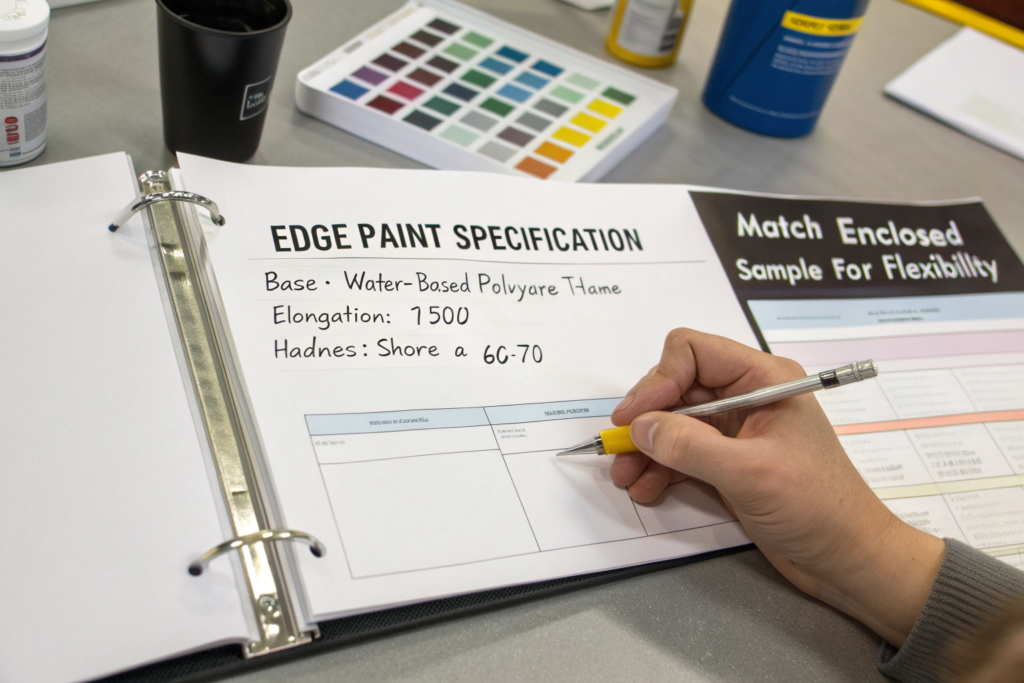
If you do not have the technical vocabulary to specify the flexibility in engineering terms—such as elongation percentage or Shore hardness—the best method is to provide a physical reference sample. This sample is your "flexibility standard." Combined with the color standard, usually a Pantone number, it gives the factory a complete, unambiguous target. The specification should also include any special performance requirements, such as "no cracking after 10,000 flex cycles" or "must not become tacky at 60 degrees Celsius."
What is the difference between specifying "flexible" and providing a Shore hardness number?
"Flexible" is a subjective word. The factory’s interpretation of "flexible" may differ from yours. Shore hardness is an objective, measurable scale that quantifies the indentation resistance of a material. Shore A is used for softer rubbers and flexible plastics, including cured edge paint films. A Shore A hardness of 50 is quite soft and flexible, suitable for a highly flexible belt. A Shore A hardness of 90 is quite hard and rigid, suitable for a stiff product. Specifying a Shore A range, such as 60 to 70, gives the factory a measurable target. We can test the edge paint’s hardness with a calibrated durometer and confirm that it falls within your specified range. This Shore hardness scale for coatings removes ambiguity.
How do you communicate "soft-touch" edge paint requirements for fashion belts?
A "soft-touch" edge paint has a velvety, slightly rubbery feel that is popular on high-end fashion belts and handbags. This feel is achieved by using a polyurethane paint with a specific blend of matting agents and soft-segment polymers. The tactile quality is subjective, so a physical sample is the most reliable way to communicate it. You can simply send a swatch of a belt or a bag whose edge finish you want to match. We will perform a reverse-engineering analysis on the sample, matching its chemistry and hand-feel as closely as possible. This material reverse engineering for fashion accessories is a service we provide for clients developing premium products.
Conclusion
The request for a sample of edge paint flexibility is a signal of a professional, quality-focused factory. It shows that the manufacturer is thinking about how the belt will actually be used, not just how it will look in a photograph. The few minutes spent approving a flex test strip at the sampling stage prevent thousands of dollars in warranty returns and brand damage later.
We have explored the polymer chemistry that separates a flexible polyurethane from a rigid acrylic, the bending physics that dictates the required elongation, the flex test strip protocol that standardizes approval, and the failure modes that result from getting the specification wrong. Edge paint is a small detail with an outsized impact on the customer’s perception of quality.
If you are developing a belt program and want to discuss edge paint flexibility, adhesion, and finish options, we can provide a sample card of our edge paint flexibility strips, along with our adhesion test reports and temperature performance data. Our Business Director Elaine manages our belt accessory programs and can coordinate the edge paint specification process. Contact her directly at elaine@fumaoclothing.com. The edge is the signature of the belt. Let’s make sure it lasts.