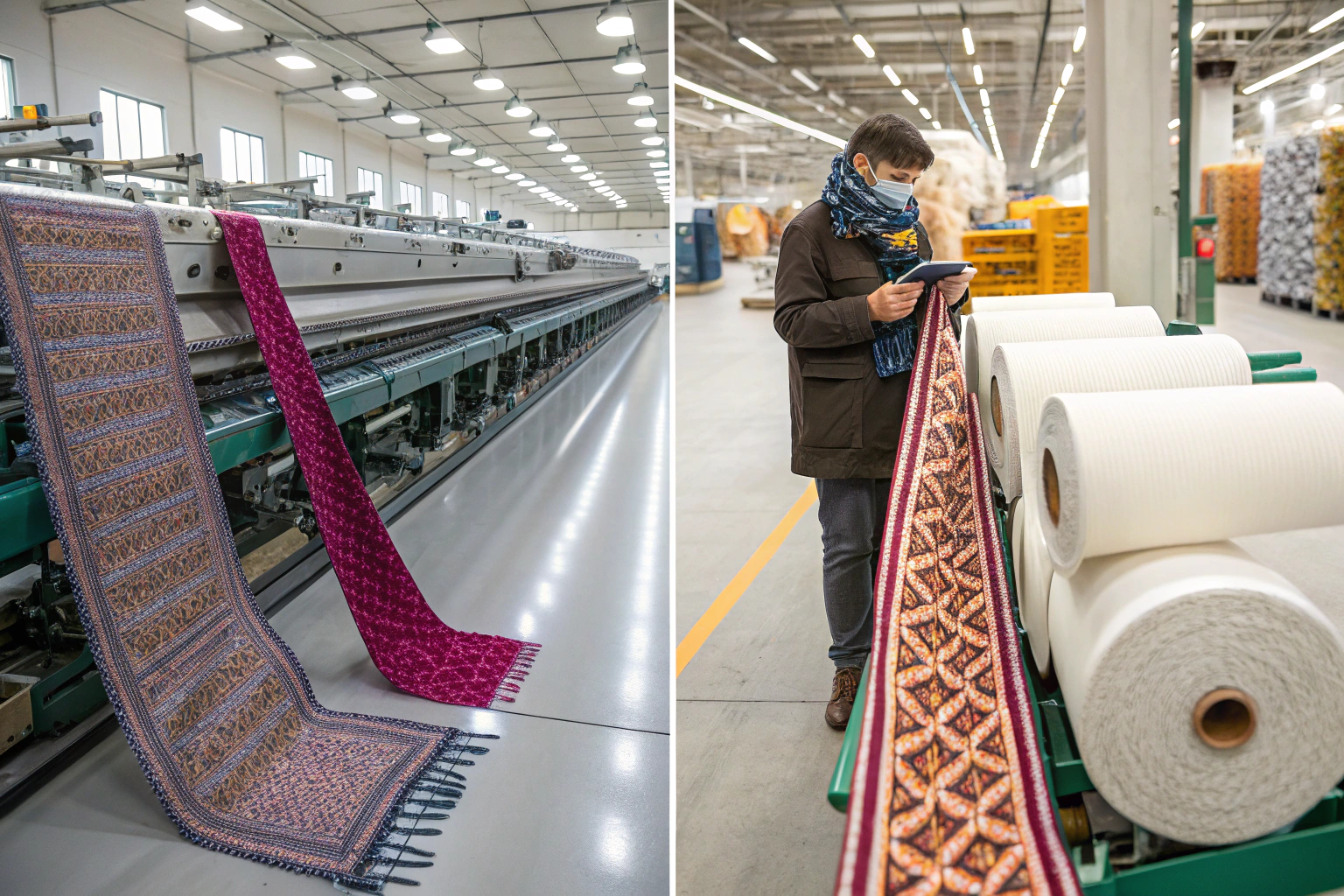
A brand owner from Milan once sat across from me, visibly frustrated. His fall collection needed both ultra-soft, chunky ribbed knitted scarves for his casual line, and crisp, jacquard-woven logo scarves for his tailored outerwear. His existing supplier—a specialized knitting mill—could do the knits beautifully, but told him to find a separate weaver for the flat scarves. He was looking at two suppliers, two minimum order quantities, two shipping schedules, and worst of all, two different shades of "charcoal grey" that almost certainly wouldn’t match. He asked me if he was doomed to manage a fragmented supply chain for a single cohesive collection.
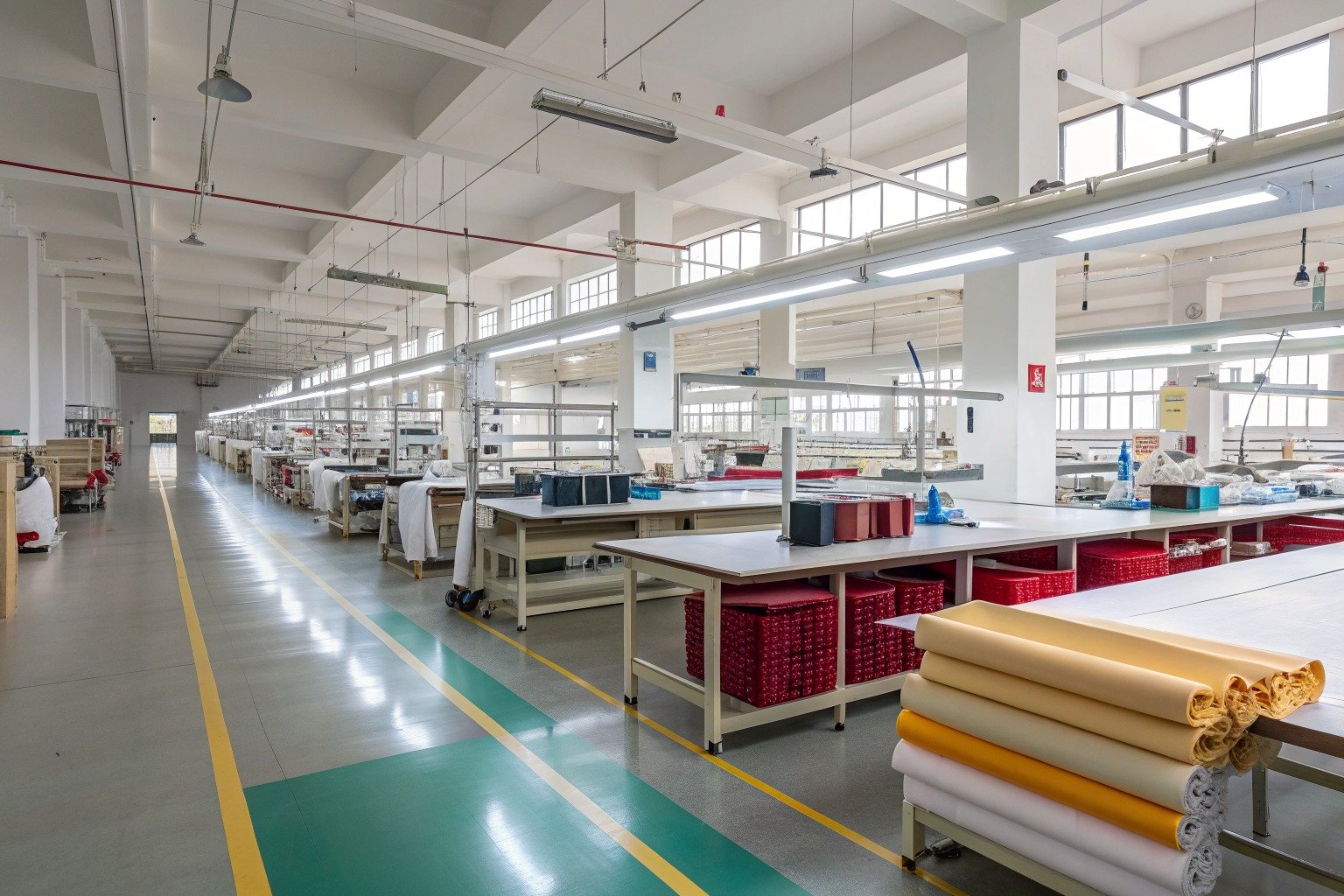
The answer is an emphatic yes. We can produce both knitted and woven scarves under one factory roof. This is not a common capability in the textile industry—most factories specialize in either knitting or weaving because the machinery, the yarn preparation, and the technical expertise are fundamentally different. But at our Zhejiang factory, we have intentionally invested in both production technologies under one management team, one quality control system, and one color matching laboratory.
I want to walk you through how these two distinct production lines coexist in our facility, what technical challenges we solve that separate specialists cannot, and why running both knitting and weaving under one roof transforms the experience for a brand building a cohesive scarf collection.
How Are Knitted and Woven Scarf Production Lines Different?
The difference between a knitted scarf and a woven scarf begins at the molecular structure of the fabric. A knitted fabric is constructed from interlocking loops of yarn. Each loop is pulled through the previous loop, creating a structure that is inherently stretchy, porous, and elastic. A woven fabric is constructed from two sets of yarns—the warp threads running lengthwise and the weft threads running crosswise—interlaced at right angles on a loom. The resulting structure is stable, flat, and non-stretchy unless an elastic fiber like spandex is added.
These two fabric structures require completely different machinery, different yarn preparations, and different finishing processes. A knitting machine cannot produce a woven fabric, and a weaving loom cannot produce a knitted fabric. Running both production lines in one factory means maintaining two entirely separate sets of equipment, two sets of technician expertise, and two sets of raw material inventories. It is a significant capital investment that most factories choose not to make.
How does a jacquard loom differ from a circular knitting machine?
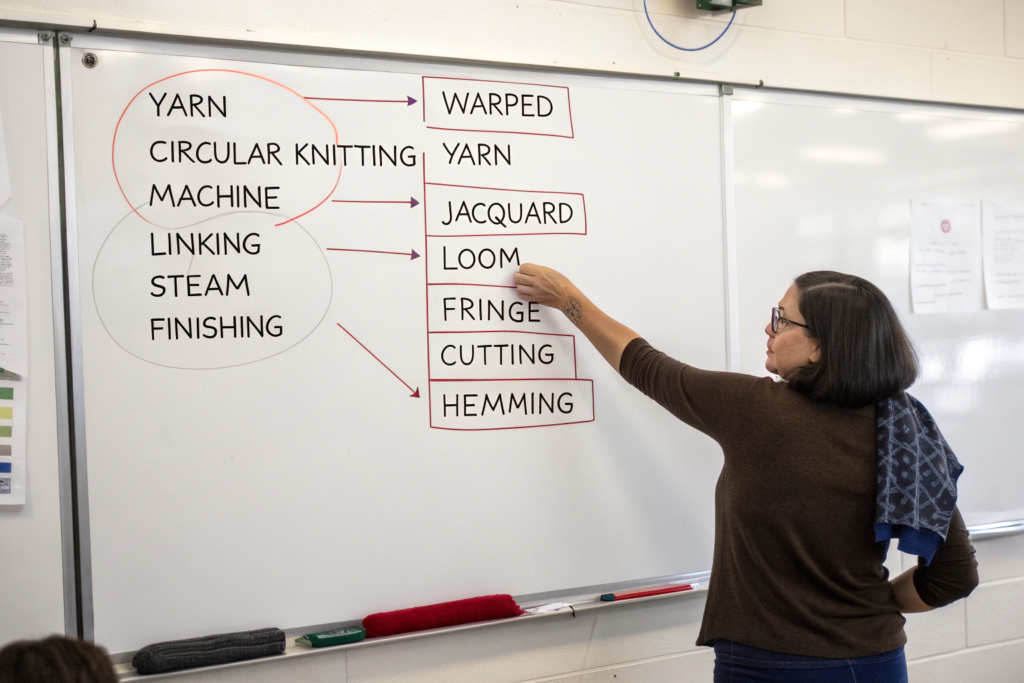
A jacquard loom uses a computerized system that controls each individual warp thread independently, raising or lowering it with each pass of the weft. This allows the loom to create intricate, multi-color patterns, photographic-like tonal designs, and even brand logos that are physically woven into the fabric structure. A circular knitting machine uses a rotating cylinder of latch needles that pull loops of yarn through each other continuously. Jacquard knitting machines add pattern capability by selectively engaging different needles, but the fabric remains a knit structure with inherent stretch. The woven scarf from a jacquard loom is crisp, flat, and drapey. The knitted scarf from a circular machine is soft, bulky, and stretchy. Each has its place, and a brand designing a complete collection often needs both. This jacquard weaving versus knitting resource explains the technical distinctions.
Why do yarn preparation and finishing processes differ between knit and woven?
Woven scarf production requires the warp yarns to be wound onto a large beam under precisely controlled tension. This warping process is a critical quality step; uneven warp tension creates stripes, puckers, and weaving defects. Knitted scarf production feeds yarn directly from cones into the knitting machine without a warping step. The finishing processes also differ. A woven scarf typically undergoes a washing or scouring step to remove sizing agents, followed by framing to set the width, and then a fringing or hemming step at the ends. A knitted scarf is often steamed to relax the yarn and set the stitch structure, then the ends are linked or fringed. Running both processes in one factory means we maintain both a warping beam and a steaming table, and our technicians are cross-trained to understand the quality requirements of both fabric types.
What Are the Advantages of Sourcing Both Scarf Types from One Factory?
The primary advantage of sourcing both knitted and woven scarves from one factory is color consistency across the collection. When two different factories produce two different scarf types for the same brand, they use different dye houses, different dye formulations, and different color approval processes. The charcoal grey knit from Factory A will almost certainly not match the charcoal grey woven from Factory B when they sit side by side on a retail shelf or in an e-commerce gallery. A single factory with an in-house laboratory and a single digital color standard can manage the cross-material color matching centrally.
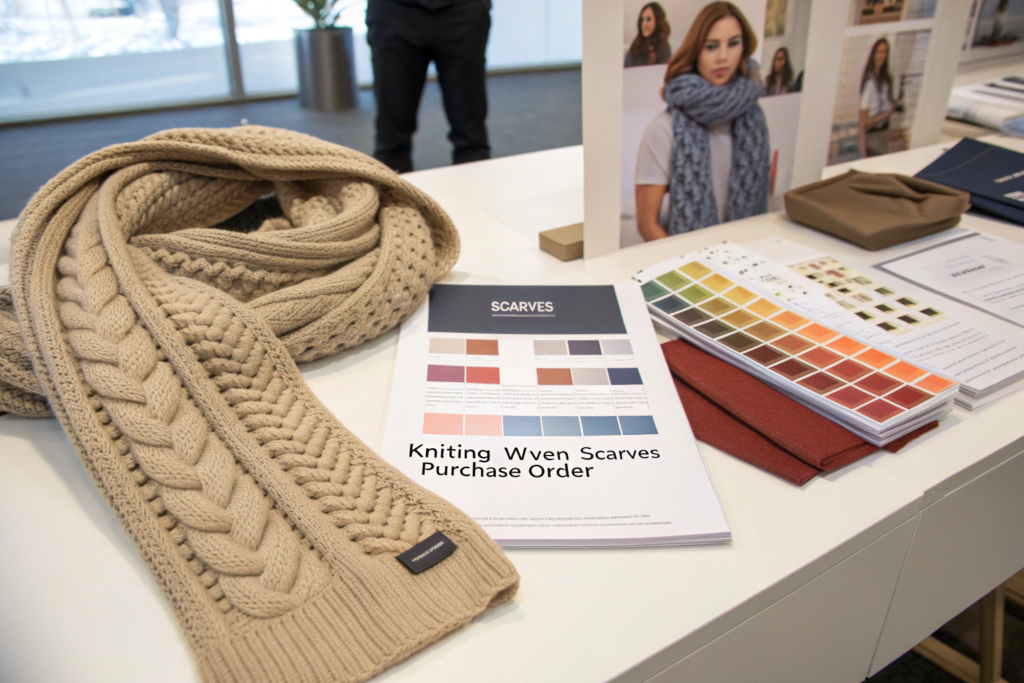
Beyond color, the advantages include consolidated logistics, a single quality control standard, and a single point of contact for production updates. The brand issues one purchase order, receives one set of shipping documents, and tracks one shipment. When a production delay affects one scarf type, the project manager can coordinate the schedule across both lines to optimize the consolidated shipment.
How does a unified color management system ensure matching across knit and woven fabrics?
A knit fabric and a woven fabric, even when made from the exact same yarn color, can appear slightly different because the surface texture interacts with light differently. The looped surface of a knit scatters light, making the color appear slightly muted. The flat surface of a woven reflects light more directly, making the same color appear slightly brighter. Our in-house color management system accounts for this "texture shift." We establish a single digital color target using a spectrophotometer. We then develop separate dye formulations for the knit yarn and the woven yarn that produce the same perceived color when viewed under a D65 daylight lightbox, even though the spectral curves differ slightly. This cross-material color matching is a specialized skill that only a factory with both capabilities can perform effectively. This cross-material color matching science is at the core of a unified production approach.
How does a single project manager streamline a mixed scarf order?
When a brand splits a collection between two separate factories, the brand’s sourcing manager becomes the project manager, coordinating timelines, chasing updates, and resolving miscommunications between two independent companies in different locations. When both scarf types are in one factory, our internal project manager handles that coordination. They see the real-time production status of both the knitting floor and the weaving floor on a single dashboard. They can adjust the schedule dynamically, accelerating the woven line if the knitted line is ahead, to ensure both scarf types finish within the same shipping window. They communicate one weekly update to the brand covering the entire scarf order. This single point of accountability simplifies the brand’s workload and reduces the risk of miscommunication. This project management in manufacturing efficiency is a direct benefit of unified production.
What Quality Control Challenges Are Unique to a Dual-Capability Factory?
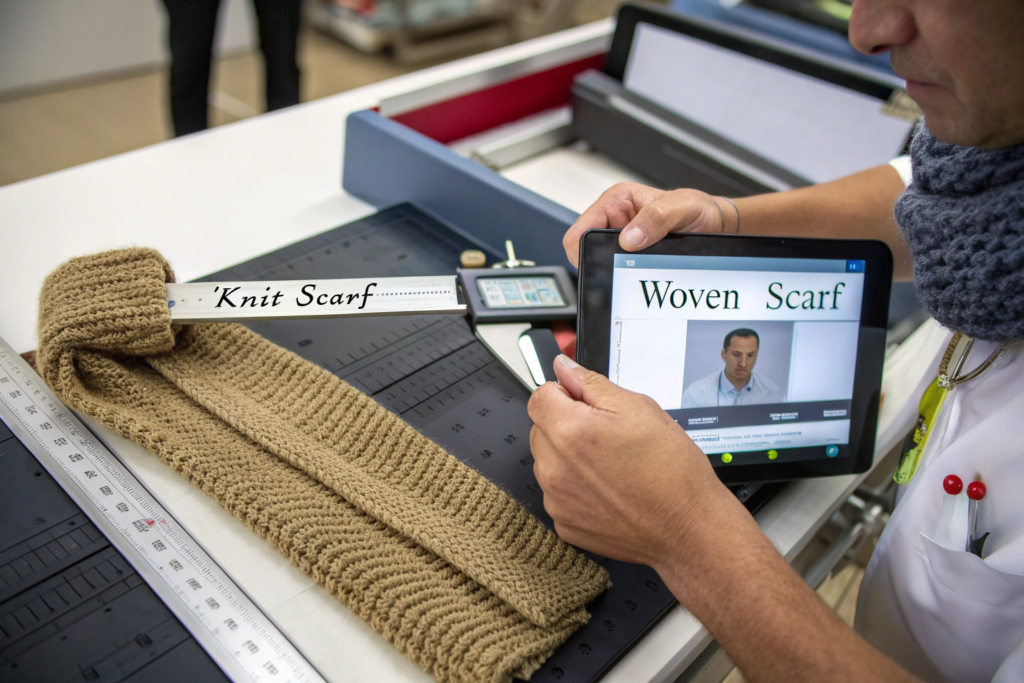
Quality control in a factory that produces both knitted and woven scarves requires two distinct inspection protocols. The defects that plague a knitted scarf—dropped stitches, barre marks, uneven linking—are completely different from the defects that plague a woven scarf—broken warp threads, selvage curling, uneven fringing. The QC team must be trained to inspect both fabric types with equal expertise, and the inspection checklist must be fabric-specific.
We manage this by maintaining two specialized QC squads within our quality department. The knit squad focuses on stitch integrity, tension uniformity, and linking seam strength. The woven squad focuses on warp alignment, pattern registration at the seams, and fringe consistency. A senior QC supervisor oversees both squads and ensures that the overall acceptable quality limit standard is applied uniformly across the entire order, regardless of fabric type. This dual-expertise QC system is what enables us to ship a mixed scarf order with confidence.
What specific knit defects require a different inspection eye than woven defects?
A dropped stitch in a knitted scarf creates a visible hole or a vertical "ladder" that runs down the length of the fabric. This defect has no equivalent in weaving. A barre mark, a horizontal stripe of uneven texture caused by yarn tension variation, is a uniquely knit defect. The knit QC inspector uses a stitch magnifier to examine the loop structure at multiple points across the scarf width. The woven QC inspector, by contrast, looks for broken warp ends, which create thin vertical lines, and for reed marks, which are gaps in the weft caused by improper reed spacing. The inspector also checks the selvage, the finished edge of the woven fabric, for curl or fraying. These defect categories require completely different inspection training and tools. This knitting and weaving defect guide explains each defect type in detail.
How do you ensure the same AQL standard applies across both production lines?
The Acceptable Quality Limit, or AQL, is a statistical sampling methodology that defines how many units are inspected and how many defects are allowed. The AQL standard itself—for example, 2.5 for major defects—is the same number regardless of fabric type. The challenge is ensuring that the definition of a "major defect" is calibrated consistently across the knit and woven inspection teams. A loose thread that is considered a major defect on a woven scarf might be considered a minor defect on a chunky knit scarf where the aesthetic is more relaxed. We maintain a unified defect classification manual with photographic examples for each scarf type and each defect grade. The senior QC supervisor holds cross-calibration sessions where the knit inspector and the woven inspector review the same samples and discuss their grading to ensure alignment. This AQL sampling and defect classification discipline is the backbone of consistent quality across a mixed product line.
How Can a Mixed Knit and Woven Order Simplify Your Fall Collection Logistics?
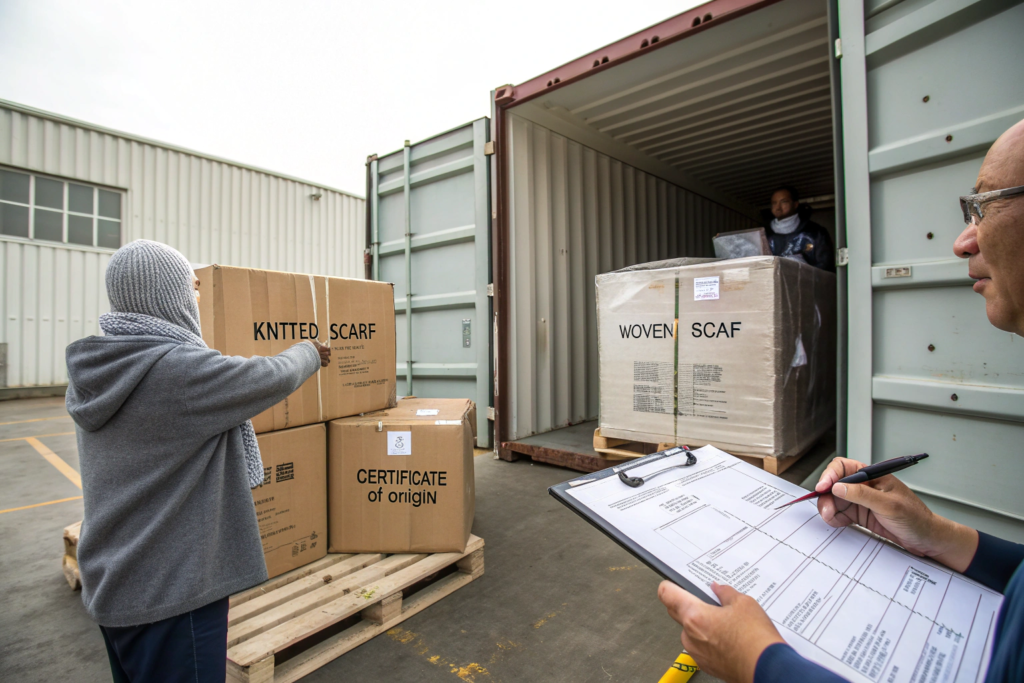
The logistics of a fashion collection are often more costly and complex than the production itself. Shipping two half-container loads from two different factories doubles the freight complexity, doubles the customs clearance work, and creates two separate delivery windows that must both align with the retail floor-set date. Consolidating both scarf types into one factory eliminates this fragmentation.
A mixed knit and woven scarf order fills a container more efficiently. The lightweight, flat woven scarves pack densely into cartons, while the bulky, airy knitted scarves take up more volume per unit. By optimizing the carton configuration—mixing knit and woven cartons on the same pallet, or dedicating pallets to each type and loading them into the same container—we can achieve a higher container utilization than either product alone would achieve at a comparable order volume. This reduces the freight cost per unit for the entire collection.
How does a single shipment reduce your customs brokerage costs?
Customs clearance involves a set of fixed costs per shipment: the customs bond, the brokerage fee, the merchandise processing fee, and the documentation charges. Two separate shipments from two factories incur these fixed costs twice. A single consolidated shipment from one factory incurs them once. For a small to mid-size brand, this difference alone can justify the decision to source from a dual-capability factory. The unified shipment also simplifies the receiving process at the brand’s distribution center. One truck arrives, one set of documents is verified, and one team unloads the pallets. The knit and woven scarves are received into inventory simultaneously, ready for allocation to retail stores or e-commerce orders. This import logistics cost consolidation delivers immediate savings.
How does a unified production schedule ensure both styles arrive for the same floor set?
A retail floor set date is the date on which a collection must be available on the store shelf, fully stocked and looking perfect. If the knitted scarves arrive on time but the woven scarves are delayed, the store display is incomplete, and the collection narrative is broken. A unified production schedule, managed by one project manager in one factory, aligns the completion of both product types. The project manager can start the slower product line earlier, or allocate additional machines to it, to ensure both lines finish within the same three-day window. The goods are then packed into one container that sails on one vessel and arrives on one date. This retail delivery compliance planning is a core competency of a factory that serves fashion brands.
Conclusion
A factory that produces both knitted and woven scarves under one roof is an integrated textile house, not a fragmented workshop. It maintains two distinct machine fleets, two yarn preparation systems, and two quality control protocols, all managed by a single project management team and a single color laboratory. This integration solves the core problems that plague scarf collections: mismatched colors, split shipments, fragmented communication, and misaligned delivery dates.
We have explored the mechanical differences between knitting and weaving, the advantages of unified color management and project oversight, the specialized quality control systems for each fabric type, and the logistics consolidation that saves money and simplifies the brand’s workload. For a brand building a cohesive fall or winter collection, the ability to place one order for all scarves—knit and woven—and receive one shipment that arrives on time and in perfect color alignment is not just a convenience. It is a competitive advantage.
If you are developing a scarf collection that includes both knit and woven styles and want to explore the efficiency of a single-factory solution, we can provide samples of our knit and woven capabilities in your brand’s color palette and discuss a unified production schedule. Our Business Director Elaine manages our scarf accessory programs and can coordinate the technical and logistical details. Contact her directly at elaine@fumaoclothing.com. One collection, one factory, one delivery date. That is the power of integrated manufacturing.