I have been manufacturing accessories for over 15 years. Bags and totes became a significant part of our business about eight years ago. I remember the moment clearly. A long-time client from a major European supermarket chain came to me with a problem. They wanted to phase out plastic bags. They needed reusable shopping bags. They needed custom designs. They needed them in large quantities. And they needed them fast. They had tried other suppliers. Some had poor quality. Some were unreliable. Some could not handle the volume. They asked me, “Can you do this?” I said yes. And then I had to figure out how. I visited bag factories. I learned about materials, printing techniques, and construction methods. I made mistakes. I had shipments rejected. But I learned. Today, we produce hundreds of thousands of custom reusable shopping bags and totes every year. I want to share what I have learned so you can avoid the mistakes I made.
Finding a supplier for custom reusable shopping bags and totes requires evaluating three key areas: material sourcing capabilities, printing and customization expertise, and production capacity with quality control. The right supplier should offer multiple material options, including non-woven polypropylene, cotton, canvas, and recycled materials. They should have in-house printing capabilities, whether screen printing, heat transfer, or digital printing, to ensure consistent, durable graphics. They must demonstrate the production capacity to meet your volume needs and the quality control systems to ensure every bag meets your specifications. At Shanghai Fumao, we have built our bag production around these principles. We source materials directly, operate our own printing equipment, and maintain strict quality standards.
I know that finding a supplier in China can feel overwhelming. There are thousands of factories. Many claim to be manufacturers but are actually traders. Many promise quality but deliver poorly made products. I have seen it all. That is why I want to give you a practical guide. I will walk you through the key factors to consider, the questions to ask, and the red flags to watch for. By the end, you will know exactly what to look for in a supplier for custom reusable bags and totes.
What Materials Should You Consider for Reusable Shopping Bags?
The material you choose for your reusable bags is the most important decision. It affects the cost, the durability, the environmental impact, and the look of the final product. I have worked with many clients who came to me with a fixed idea of what material they wanted. Sometimes it was the right choice. Sometimes it was not. I learned to ask questions. How will the bags be used? Will they carry heavy items? Will they be used for groceries or for fashion? What is your target price point? The answers to these questions guide the material selection.
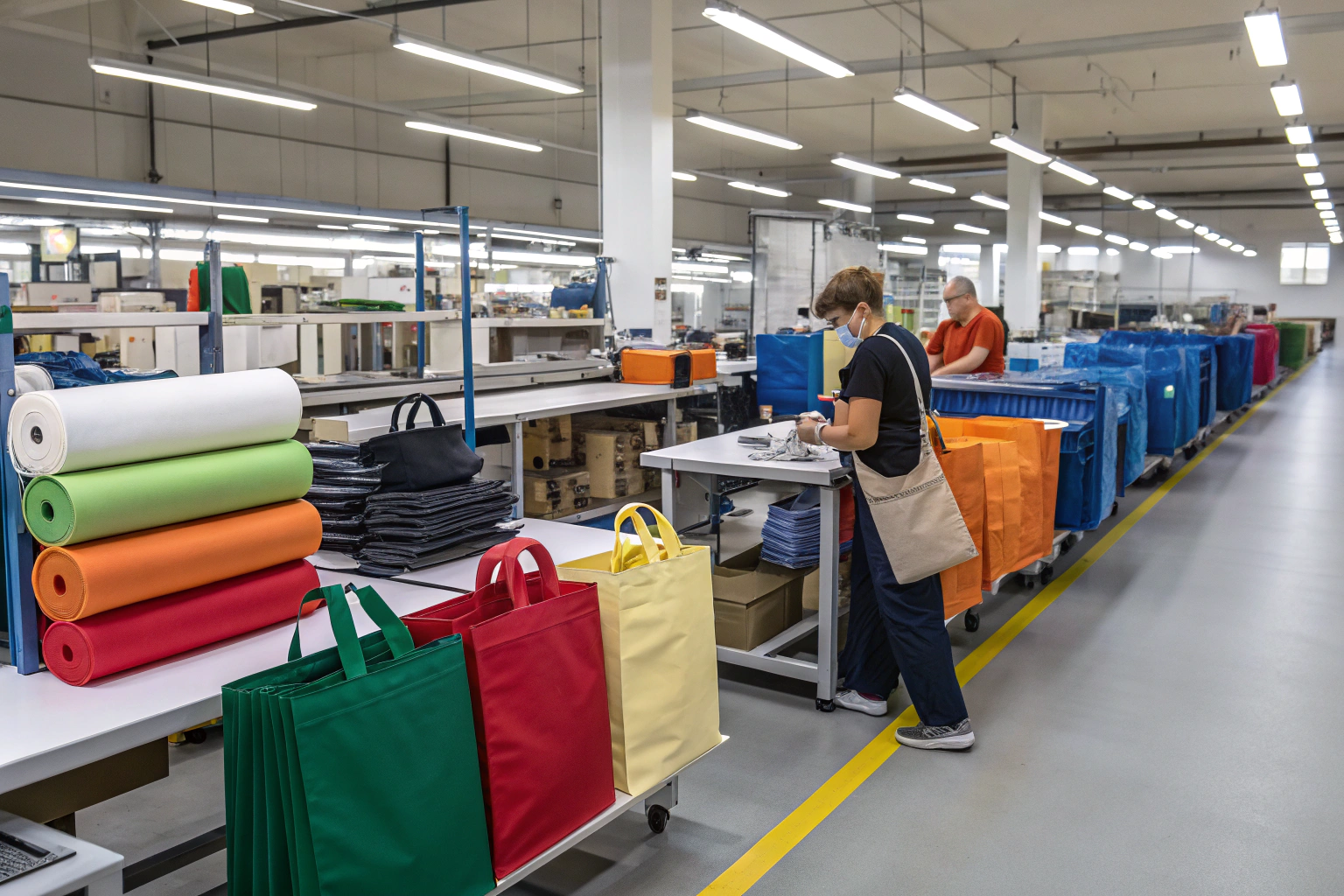
The most common materials for custom reusable shopping bags and totes are non-woven polypropylene, cotton canvas, recycled PET, and jute. Non-woven polypropylene is the most cost-effective option. It is lightweight, durable, and water-resistant. It is ideal for promotional bags and grocery totes. Cotton canvas is a premium option. It is strong, natural, and has a high-quality feel. It is popular for fashion totes and retail bags. Recycled PET, made from recycled plastic bottles, appeals to environmentally conscious customers. Jute is a natural fiber that offers a rustic, eco-friendly aesthetic. Each material has its strengths, and the right choice depends on your brand positioning and use case.
I want to be honest with you about material costs. Prices fluctuate. Non-woven polypropylene is tied to oil prices. Cotton prices vary with agricultural conditions. Recycled PET depends on the availability of recycled plastic. A good supplier will help you navigate these fluctuations. They will offer alternatives when prices spike. They will also help you choose the right material weight. A bag that is too thin will tear. A bag that is too thick will be unnecessarily expensive. Finding the balance is key.
What Are the Pros and Cons of Non-Woven Polypropylene?
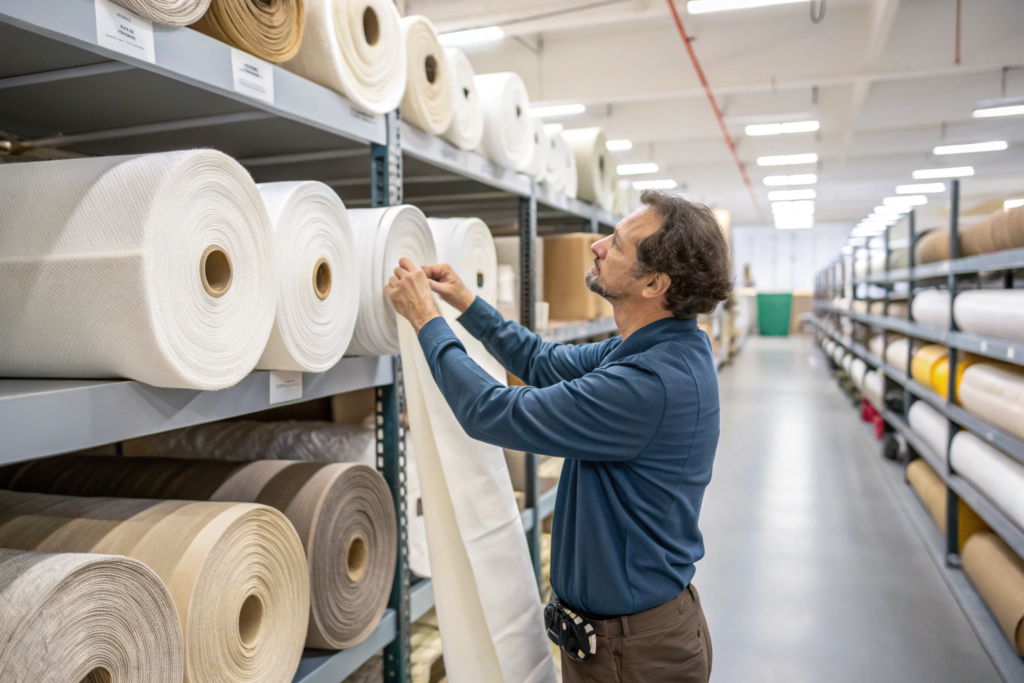
Non-woven polypropylene, often called non-woven PP, is the workhorse of the reusable bag industry. It is the material used for most promotional totes and grocery bags. The pros are significant. First, it is affordable. Non-woven PP is the lowest-cost material for reusable bags. Second, it is lightweight. This reduces shipping costs. Third, it is durable. A well-made non-woven PP bag can be used hundreds of times. Fourth, it is water-resistant. It does not absorb moisture like natural fibers. Fifth, it takes printing very well. Screen printing on non-woven PP produces crisp, durable graphics. The cons are also worth considering. Non-woven PP is a synthetic material. Some customers prefer natural fibers. It is also less breathable than cotton or jute. And while it is recyclable, the recycling infrastructure for non-woven PP is not as widespread as for other materials. For most commercial applications, non-woven PP is an excellent choice. It balances cost, durability, and functionality. We produce millions of non-woven PP bags every year. We offer various weights, from 80 grams per square meter to 120 GSM. Heavier weights are stronger and feel more substantial. We also offer options like reinforced handles and bottom inserts for extra durability.
When Should You Choose Cotton Canvas or Recycled PET?
Cotton canvas and recycled PET are premium options. They are more expensive than non-woven PP, but they offer distinct advantages. Cotton canvas is natural, breathable, and has a high-end look and feel. It is ideal for fashion brands, retail stores, and any application where the bag itself is part of the brand experience. The quality of cotton matters. We use primarily 100% cotton canvas in weights from 6 ounces to 12 ounces per square yard. Heavier canvas is stronger and holds its shape better. The printing methods also differ. Screen printing works well on cotton, but we also offer heat transfer and embroidery for a more premium look. Cotton canvas bags can be washed and reused many times. They develop a soft, worn-in look that some customers love. Recycled PET, or rPET, is made from recycled plastic bottles. The material is strong, lightweight, and has a smooth, slightly shiny surface. The environmental story is a major selling point. Many brands use rPET to appeal to eco-conscious consumers. The printing options are similar to non-woven PP. Screen printing produces good results. We also offer options like custom labels and hang tags to enhance the branding. The choice between cotton canvas and rPET often comes down to your brand identity. If you want a natural, organic feel, choose cotton. If you want a modern, recycled story, choose rPET. Both are excellent choices for premium custom totes.
What Printing Methods Deliver Durable Custom Graphics?
Your logo or design is the reason you are ordering custom bags. It is your brand identity. It is what your customers will see every time they use the bag. If the printing is poor, it reflects poorly on your brand. I have seen bags where the logo started peeling after a few uses. I have seen colors that faded in the sun. These are problems that start with the printing method. Choosing the right printing method for your material is essential.
The most durable printing methods for custom reusable bags are screen printing, heat transfer, and digital printing with proper pretreatment. Screen printing is the industry standard. It forces ink through a mesh screen onto the bag, creating a thick, durable layer that bonds with the fabric. It works well on non-woven PP, cotton, and canvas. Heat transfer uses heat and pressure to apply a pre-printed design onto the bag. It allows for detailed, full-color designs and works well on synthetic materials. Digital printing offers the most flexibility for small runs and complex designs but requires proper pretreatment to ensure durability. Each method has its strengths, and the best choice depends on your material, design complexity, and order quantity.
I want to share a lesson I learned about printing. Early on, I used a printing supplier who promised high-quality results. The samples looked good. But when we ran full production, the quality was inconsistent. Some bags had smudged logos. Others had the logo placed off-center. We had to reject thousands of bags. That experience taught me to value in-house printing capabilities. When a factory controls the printing process, they control the quality. That is why we invested in our own printing equipment and trained our own technicians.
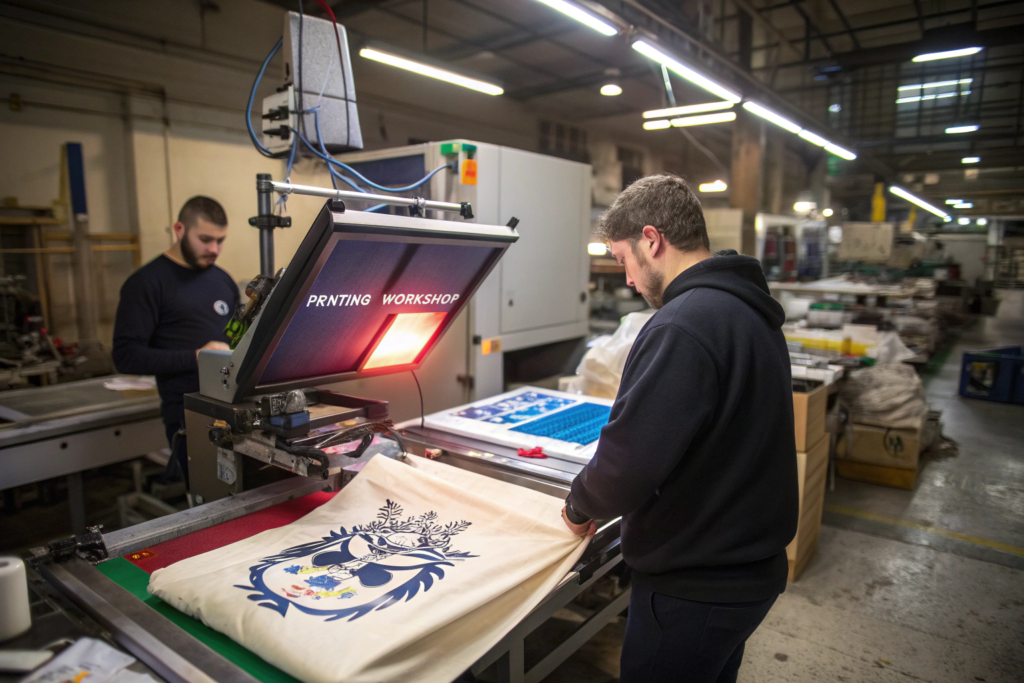
How Does Screen Printing Work and When Is It the Best Choice?
Screen printing is the most common and most reliable method for printing on reusable bags. The process starts with creating a stencil, or screen, for each color in the design. The screen is placed over the bag. Ink is pushed through the screen onto the fabric. Each color requires a separate screen and a separate pass. The result is a layer of ink that sits on top of the fabric. Because the ink is thick and contains binders, it bonds well with the material. Screen printing is best for designs with a limited number of colors. Each additional color adds cost, so most screen-printed bags use one to four colors. The durability of screen printing is excellent. The ink can withstand washing, folding, and regular use. It is the standard for promotional bags and retail totes. At our factory, we use automatic screen printing presses for large orders. This ensures consistent placement and ink thickness. We also offer manual printing for smaller runs or complex placements. The key to quality screen printing is the ink formulation and the curing process. The ink must be properly cured, usually with heat, to ensure it bonds permanently. We have screen printing expertise built into our production process. When you order from us, you get consistent, durable graphics.
What Are the Advantages of Heat Transfer and Digital Printing?
Heat transfer and digital printing offer advantages for certain applications. Heat transfer involves printing a design onto a special transfer paper using a digital printer. The transfer is then placed on the bag and pressed with a heat press. The heat and pressure cause the design to bond to the fabric. The advantage of heat transfer is that it allows for full-color, detailed designs with gradients and fine details. It is ideal for complex logos or photographic images. It works well on non-woven PP, cotton, and canvas. The durability is good, though not quite as high as screen printing for heavy use applications. Digital printing directly onto the fabric is the most flexible method. It uses inkjet technology to print the design directly onto the bag. There are no screens to set up, so it is ideal for small runs and prototypes. The cost per bag is higher for large volumes, but for small orders, it is very cost-effective. The challenge with digital printing is durability. The ink must be properly fixed to the fabric. For synthetic materials like non-woven PP, we use specialized inks and a curing process to ensure the design does not rub off. For natural fibers like cotton, we use reactive inks that bond with the fibers. Our digital printing capabilities allow us to offer flexible solutions for clients with varying needs. Whether you need 100 bags or 100,000, we have a printing method that will deliver durable, attractive results.
What Production Capacity and Quality Control Should You Expect?
I have seen many clients come to me after bad experiences with other suppliers. The pattern is often the same. The supplier promised fast delivery. The supplier promised high quality. But when the order arrived, the bags were poorly made. Seams were weak. Handles were attached crooked. The printing was off-center. The client was stuck with unusable products. These problems start with production capacity and quality control. A supplier that does not have enough capacity will rush orders. A supplier without quality control will ship defects.
You should expect your bag supplier to have clear production capacity and a documented quality control system. Production capacity means the supplier can handle your order volume without compromising quality. They should have enough sewing machines, printing equipment, and trained workers to meet your timeline. Quality control should include incoming material inspection, in-process checks during production, and final inspection before shipment. A reputable supplier will provide inspection reports and will be willing to discuss their quality standards openly. At AceAccessory, our bag production line operates with these principles. We have dedicated QC staff who inspect at every stage. We maintain our equipment regularly. We train our workers continuously.
I want to give you a realistic picture of what to expect. A supplier that claims they can produce 100,000 bags in two weeks with perfect quality is likely not being truthful. Quality takes time. A good supplier will give you realistic timelines. They will also be transparent about their capacity. They will tell you if they have other large orders running at the same time. They will explain how they plan to allocate resources to your project. This transparency is a sign of a reliable partner.
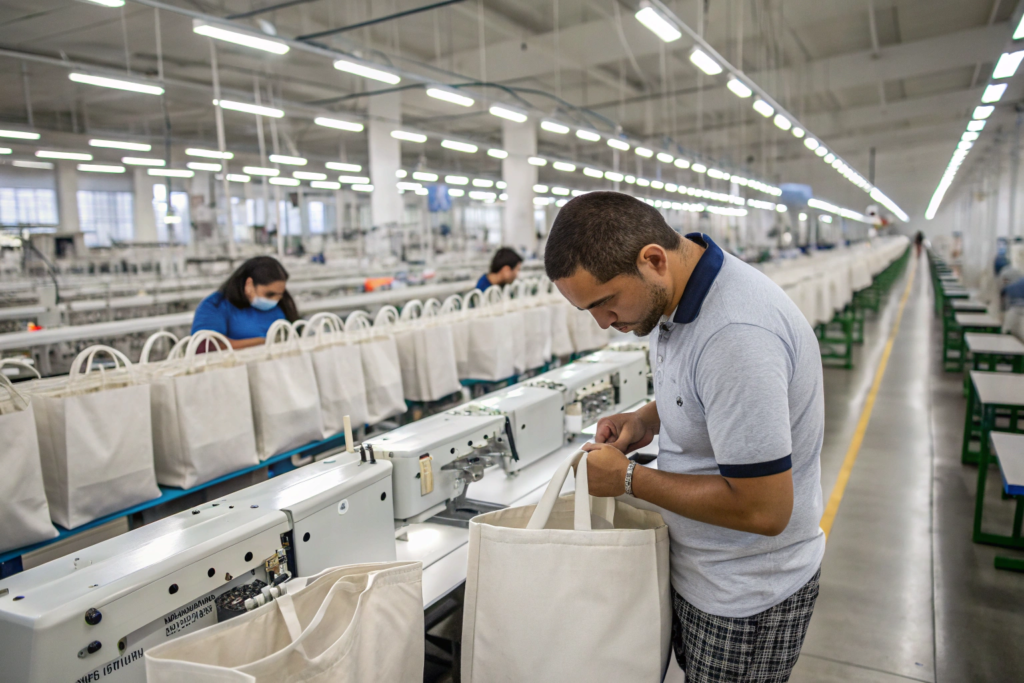
How Do We Manage Quality Control for Bag Production?
Quality control for bag production starts with materials. Every roll of fabric that enters our factory is inspected. We check for color consistency, thickness, and defects. If the material does not meet our standards, it is rejected. This step is critical because defects in the material will show in the finished bag. Next comes the cutting process. We use precision cutting machines to ensure all pieces are the correct size and shape. Inconsistent cutting leads to crooked assembly. During assembly, our QC team conducts in-process inspections. They check seams for proper stitching. They check handle attachment for strength. They check printing for alignment and clarity. The final inspection happens after the bags are fully assembled and packed. Every bag is inspected visually. A sample is pulled for more detailed testing, including pull tests on handles and abrasion tests on printing. Only after passing these checks do we pack and ship. We document all inspections. We can provide quality control reports to our clients upon request. This systematic approach ensures that the bags you receive meet your expectations.
What Questions Should You Ask About Production Capacity?
When evaluating a supplier, you should ask specific questions about production capacity. Here are the questions I recommend. First, ask about their daily production volume. How many bags can they produce per day? This tells you if they can meet your timeline. Second, ask about their current workload. Are they running at full capacity? If so, can they add your order without delaying others? Third, ask about their equipment. How many sewing machines do they have? How many printing stations? A supplier with limited equipment will struggle with large orders. Fourth, ask about their workforce. Do they have enough trained workers? High turnover in factories often leads to inconsistent quality. Fifth, ask about their contingency plans. What happens if a machine breaks down? What happens if a key worker is absent? A good supplier has backup plans. At AceAccessory, we are transparent about our capacity. We will tell you honestly if we can meet your timeline. If we cannot, we will tell you that too. We would rather be honest than promise something we cannot deliver. This commitment to reliability is what sets us apart.
How Can AceAccessory Simplify Your Custom Bag Sourcing?
I have walked you through the key considerations for sourcing custom reusable shopping bags and totes. Materials, printing methods, production capacity, quality control. It is a lot to manage. I understand that as a buyer, you have many responsibilities. You may not have the time to become an expert in bag manufacturing. That is where we come in. We have already done the work. We have built the relationships. We have invested in the equipment. We have trained the people. We are ready to be your partner.
AceAccessory simplifies your custom bag sourcing by offering a complete, integrated service. We handle everything from material selection to final shipment. Our in-house design team can help you refine your artwork for optimal printing results. Our material sourcing team ensures we have the fabrics you need in stock. Our production line is equipped for both screen printing and heat transfer, so we can match your design requirements. Our quality control team inspects every batch. Our project managers keep you informed at every stage. You have one point of contact. One supplier. One responsibility. This integrated approach saves you time, reduces your risk, and ensures a consistent result.
I want you to think about the alternative. You could find a material supplier, a printing supplier, and a bag assembly supplier separately. You would have to coordinate between them. You would have to manage the logistics of moving materials between factories. If something went wrong, you would have to figure out who was responsible. That is a lot of work. It is also risky. When you work with us, you eliminate that complexity. We are the one factory that does it all.
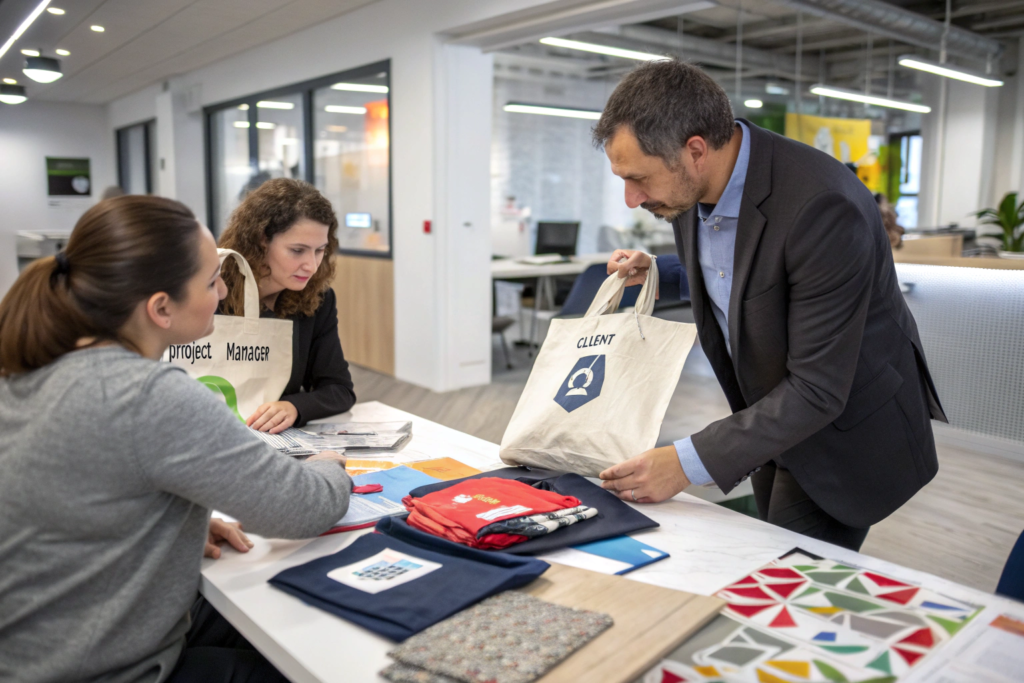
What Makes Our Integrated Bag Production Different?
The difference is control. Because we control the entire process, we can guarantee consistency. We do not rely on outside suppliers for critical steps. We do not have to hope that the printing factory will do a good job. We do it ourselves. This control also gives us flexibility. If you need to make a change to your design, we can do it without coordinating with multiple parties. If you have a rush order, we can shift resources internally to meet your timeline. Our bag production line is designed for this integrated approach. We have our own fabric inventory. We have our own printing equipment. We have our own sewing lines. We have our own QC team. All of this is under one roof. This means we can offer competitive pricing because we are not adding margins for middlemen. It also means we can offer better lead times because we are not waiting on outside suppliers. When you order custom reusable bags from us, you are working with a manufacturer, not a trader.
How Do Our Project Managers Support Your Order?
Our project managers are the key to a smooth experience. When you place an order, a dedicated project manager is assigned to your account. They become your single point of contact. They will work with you to finalize the specifications. Material, size, printing method, handle type, all of these details are documented. They will provide you with a digital proof for your approval before production starts. This step is critical. It ensures that we are all aligned on what the final product should look like. During production, your project manager monitors progress. They check that materials have arrived. They confirm that printing is on schedule. They ensure that assembly is proceeding as planned. If any issues arise, they address them immediately. They do not wait for problems to become crises. They keep you informed with regular updates. You will never have to wonder what is happening with your order. After production, they oversee the quality control process. They ensure the inspection results meet your standards. They coordinate the shipment. They prepare the documentation for customs clearance. This professional project management is part of our service. It is what allows you to focus on your business while we handle the details.
Conclusion
Sourcing custom reusable shopping bags and totes does not have to be complicated. The key is finding a supplier who understands materials, has in-house printing capabilities, maintains strong quality control, and has the production capacity to meet your needs. When you find that supplier, you gain more than just a vendor. You gain a partner who helps you create products that represent your brand well.
At Shanghai Fumao, we have built our business on being that partner. We started in accessories, and we have grown into bags because our clients asked us to. They trusted us with their belts, their hats, their hair accessories. When they needed custom bags, they came to us. We invested in the capabilities to serve them well. Today, we are proud to offer custom reusable bags made with the same attention to quality that we bring to all our products.
Whether you need non-woven PP promotional bags for a supermarket chain, cotton canvas totes for a retail brand, or recycled PET bags for an eco-conscious collection, we have the expertise and the capacity to deliver. Our in-house printing ensures your logo looks sharp. Our quality control ensures every bag is well-made. Our project managers ensure your order is on time. The reusable bag market is growing. Customers want alternatives to single-use plastic. They want bags that are durable, attractive, and aligned with their values. By offering custom reusable bags, you are meeting this demand. You are also building brand visibility. Every time a customer uses your bag, they are promoting your brand.
Let us help you create bags that your customers will love to use. Let us show you how our integrated approach makes sourcing simple and reliable. Please contact our Business Director, Elaine, at elaine@fumaoclothing.com to discuss your custom reusable bag project. We can help you select the right materials, printing methods, and specifications to create bags that represent your brand perfectly.