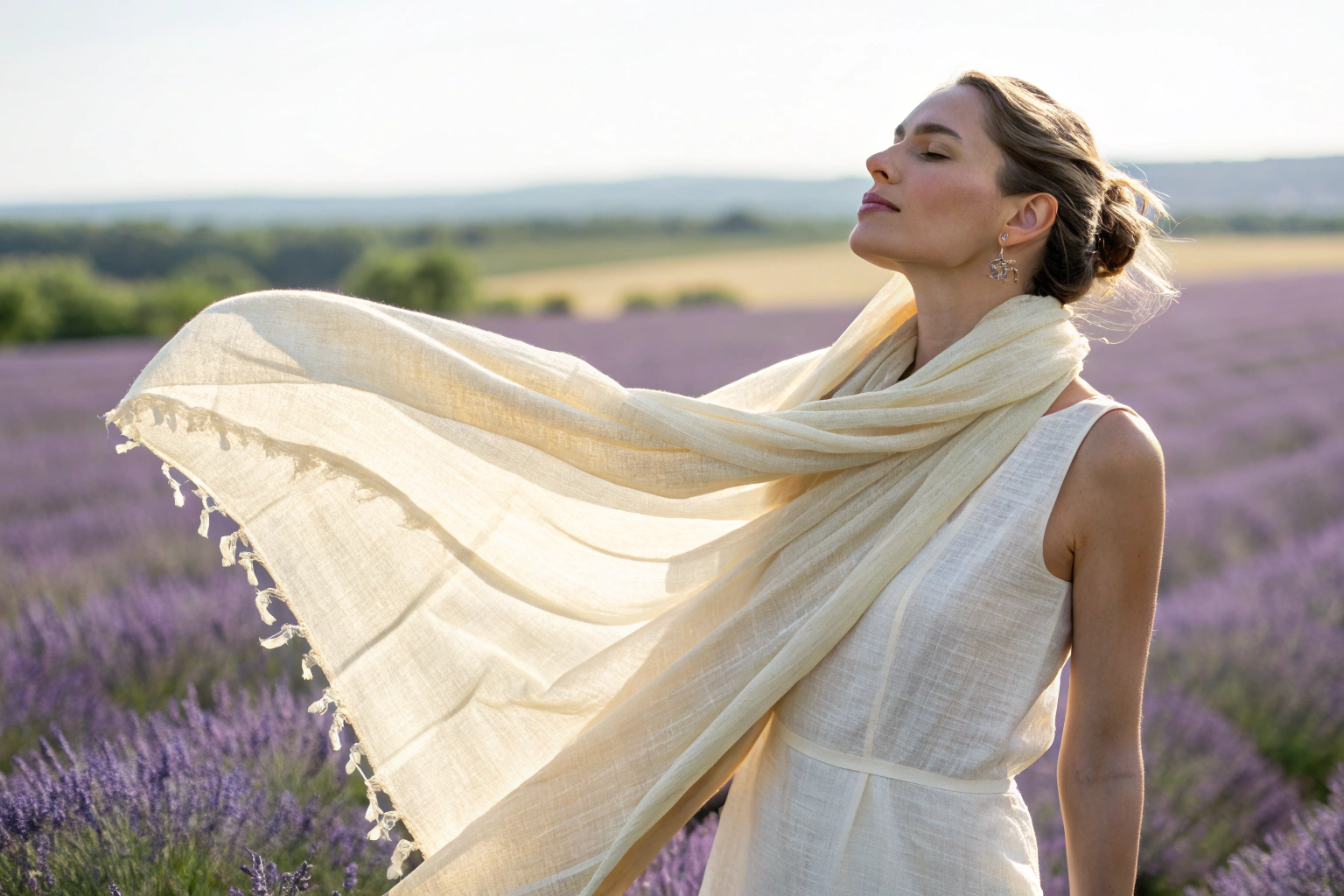
As a manufacturer who has been producing fashion accessories for over two decades, I’ve handled countless fabrics. Yet, I always come back to linen with a sense of respect. It’s one of the oldest textiles known to man, and for good reason. However, not all linen is created equal. I’ve seen clients, especially those new to the material, get disappointed by scarves that feel scratchy, wrinkle excessively, or lose their shape. The problem is that the market is flooded with low-grade linen or linen-like fabrics that simply don’t deliver on the promise of this amazing material.
The key features of a high-quality linen scarf are its use of long-staple fibers, a balanced and even weave, superior softness that improves with age, and excellent colorfastness. These attributes are the difference between a scarf that becomes a cherished favorite and one that gets relegated to the back of the closet after one season.
For a discerning buyer like Ron, who values quality and development capacity, understanding these nuances is crucial. It’s about recognizing the subtle markers of craftsmanship that translate into a superior product for your customers. At Shanghai Fumao Clothing, we pride ourselves on sourcing the right materials to create accessories that last. Let’s unwrap the specific features you should look for when evaluating a linen scarf.
Why Do Long-Staple Fibers Matter Most?
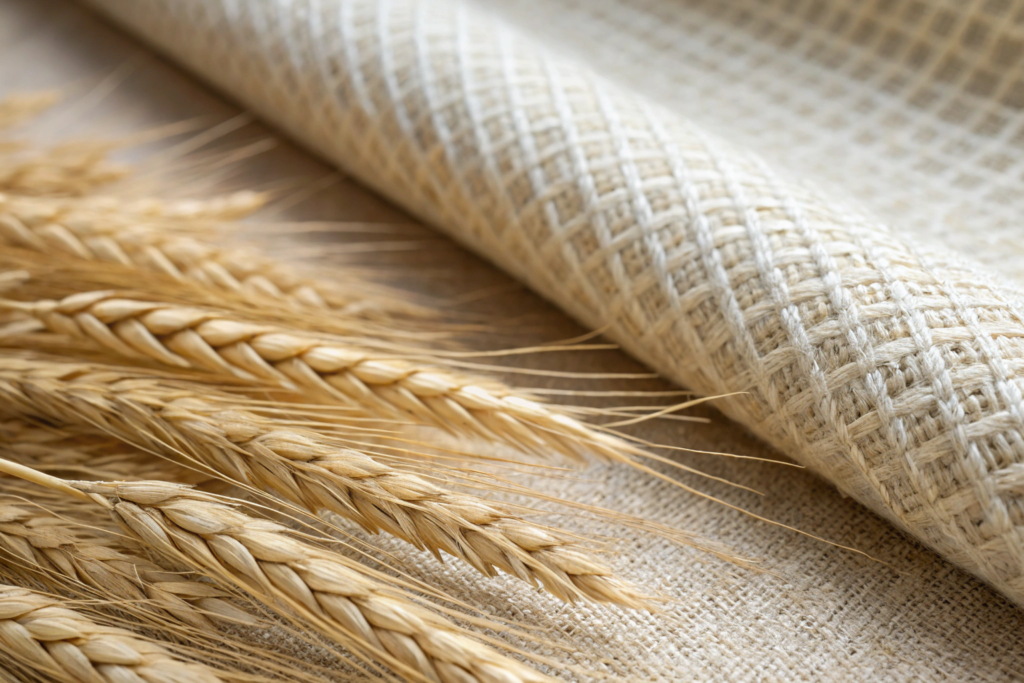
The foundation of any great linen fabric lies in the raw material: the flax fiber. The most significant pain point with low-quality linen is that it feels rough and produces a lot of lint. This is almost always because it’s made from short, broken flax fibers, known as "tow." These short fibers have many ends that poke out from the yarn, creating a scratchy feel and a fabric that weakens over time.
A high-quality linen scarf is made from long-staple flax fibers, often referred to as "line" linen. These fibers can be several inches long, resulting in a smoother, stronger, and more lustrous yarn. Because there are fewer fiber ends, the resulting fabric is significantly softer, more durable, and less prone to linting. When you run your hand across a scarf made from long-staple linen, you can feel the difference immediately—it’s smoother and has a subtle, elegant sheen. This is the single most important indicator of quality.
Sourcing this superior raw material is a critical first step in our production process. While it’s more expensive, the investment pays off in the final product’s longevity and luxurious feel. A scarf made from long-staple linen won’t just last for years; it will actually get softer and more beautiful with each wash. This unique aging process is a hallmark of premium linen and a key selling point for customers who appreciate quality.
Where does the best flax come from?
Historically and currently, some of the world’s finest flax is grown in Western Europe, particularly in the regions of Normandy (France), Belgium, and the Netherlands. The unique climate and rich soil in this "flax belt" are ideal for growing plants that yield the long, strong fibers required for high-quality linen. When a product is marketed as "European Flax", it’s a certification that guarantees the origin and quality of the raw material.
What are "slubs" in linen?
Slubs are the small, soft, thick spots you often see in linen fabric. They are a natural part of the material’s character, caused by slight variations in the thickness of the flax yarn. However, in high-quality linen made from long-staple fibers, these slubs should be minimal, fine, and evenly distributed. If you see a fabric with large, coarse, and frequent slubs, it’s often a sign that it was woven from lower-quality, short-staple yarns. It’s a key detail to look for when assessing textile quality.
How Does the Weave Affect Quality and Appearance?
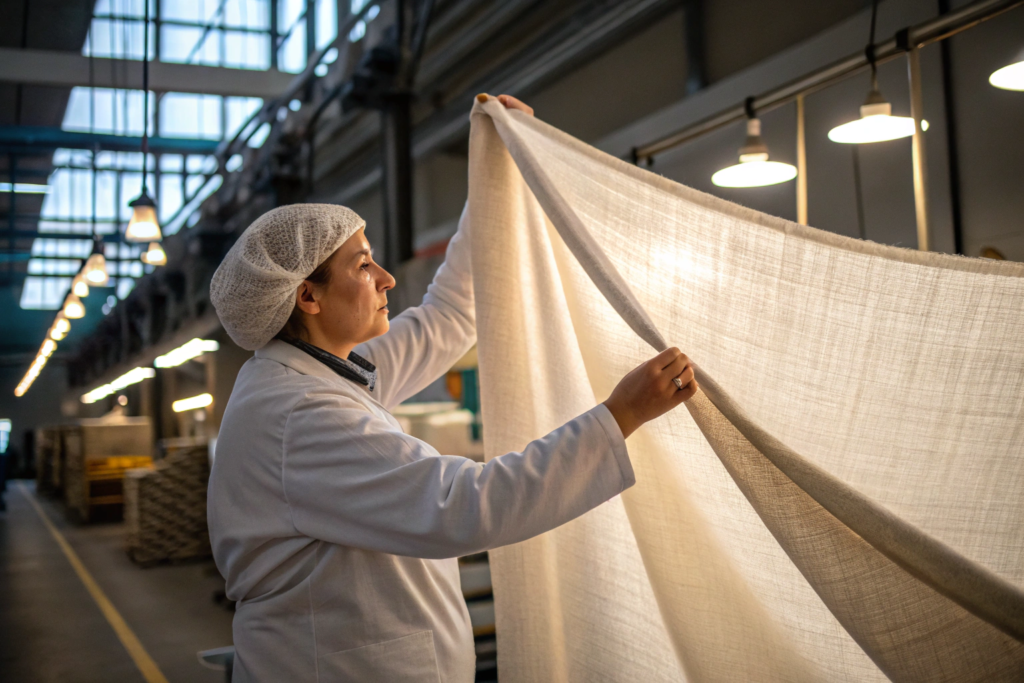
You can start with the best fibers, but if the weaving process is poor, the quality is lost. A common issue with cheap linen scarves is an uneven, loose weave. If you hold it up to the light, you might see gaps, dense patches, or a grid that looks distorted. This not only looks cheap but also means the scarf is more likely to snag, stretch out of shape, and wear out quickly.
A top-tier linen scarf will have a consistent and balanced weave. This means the number of threads per inch is uniform in both the warp (lengthwise) and weft (crosswise) directions. This creates a stable fabric that drapes beautifully and maintains its rectangular shape. The density of the weave can vary—a looser weave is great for a light, airy summer scarf, while a denser weave offers more substance. The key is consistency. The spacing between the yarns should be even and precise throughout the entire scarf.
Achieving this level of precision requires skilled artisans and well-maintained looms. During our quality control process, we pay close attention to the fabric’s "hand," which is directly affected by the weave. A well-woven linen feels smooth and substantial, not flimsy or rigid. We also check the finishing of the edges. A high-quality scarf will have a meticulously finished hem, such as a fine eyelash fringe or a neat, machine-rolled edge, which prevents fraying and adds to the overall polished look.
What is "thread count" in linen?
While often associated with cotton sheets, thread count is also relevant to linen. It refers to the total number of threads woven into one square inch of fabric. However, unlike cotton, a super-high thread count isn’t always the goal with linen. A high-quality linen scarf might have a thread count anywhere from 80 to 150. The focus is less on a specific number and more on the balance and evenness of the weave for the intended style and weight of the scarf.
What is an "eyelash fringe"?
An eyelash fringe is a delicate, decorative edge finish created by pulling away a few of the crosswise (weft) threads at the end of the scarf. This leaves the lengthwise (warp) threads exposed, creating a very fine, short fringe that resembles eyelashes. It’s a popular and elegant finish for lightweight scarves, like those made of linen or silk, as it provides a soft, natural edge without the bulk of a sewn hem. It’s a detail often found on high-end pashminas and scarves.
Why Does Linen Get Softer Over Time?
One of the most magical—and often misunderstood—properties of linen is its ability to improve with age. A brand new, high-quality linen scarf might feel slightly crisp to the touch. Some consumers mistake this for a lack of quality, but it’s actually the opposite. This initial crispness is a sign of the natural, strong flax fibers. The pain point is when a scarf starts soft because it has been treated with chemical softeners, which wash out and can reveal a lower-quality, scratchy fabric underneath.
The true magic of premium linen is that it gets softer with every wash and wear. The pectin that binds the flax fibers together gradually breaks down, and the fibers themselves soften and relax without losing their strength. This natural softening process is something synthetic fabrics simply cannot replicate. A high-quality linen scarf is an investment piece that doesn’t degrade over time; it evolves. It becomes more comfortable, more supple, and develops a unique, beautiful patina.
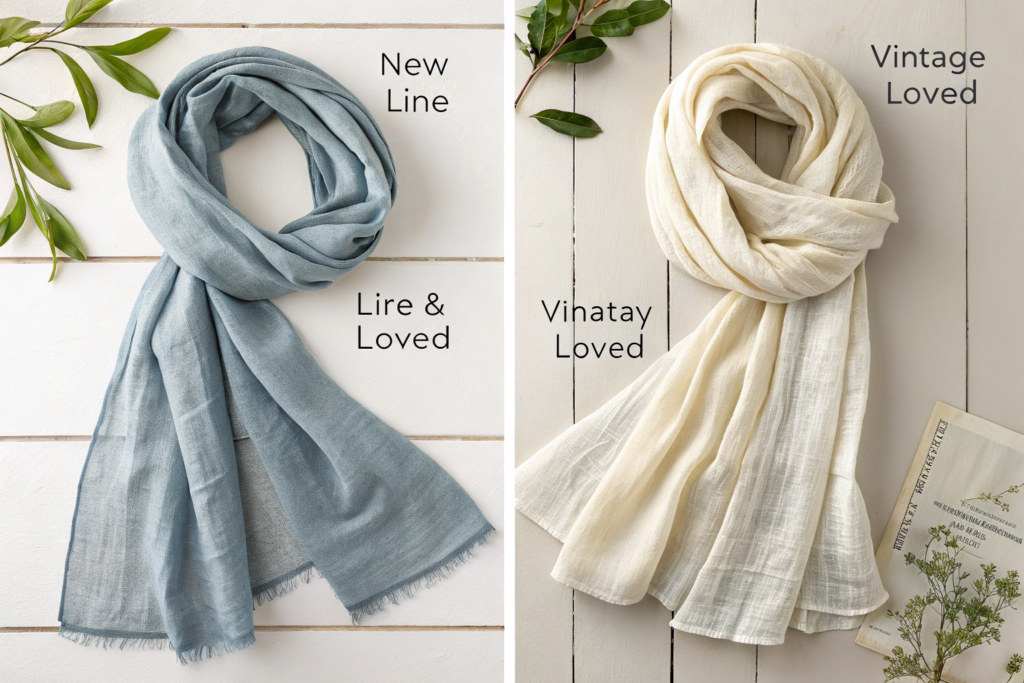
This unique characteristic is a powerful selling point. When we develop linen products for our clients at Shanghai Fumao Clothing, we often recommend "garment washing" or "stone washing" the scarves as part of the production. This process accelerates the initial softening, giving the customer a wonderfully soft product from day one, with the promise that it will only get better. It’s a way to deliver that luxurious, lived-in feel while still using the highest quality, long-staple linen.
What is "stone washing"?
Stone washing is a textile finishing process used to give a fabric a softer feel and a slightly worn, faded look. The fabric is literally washed in a large industrial machine with stones (often pumice). The stones abrade the fabric, softening the fibers and creating a desirable, lived-in appearance. It’s a very common process for denim and is also used on linen to jump-start the natural softening process, as explained by resources like the Textile School.
How should you wash a linen scarf?
To care for a linen scarf and encourage it to soften, it’s best to wash it in cool or lukewarm water with a mild detergent. You can machine wash it on a gentle cycle or hand wash it. It’s important not to use bleach or fabric softeners, as they can damage the natural fibers. The best way to dry it is to either tumble dry on low heat or simply hang it to air dry. It will get softer and more absorbent after each wash, a key benefit highlighted by many laundry care guides.
How Is Color Quality Maintained in Linen?
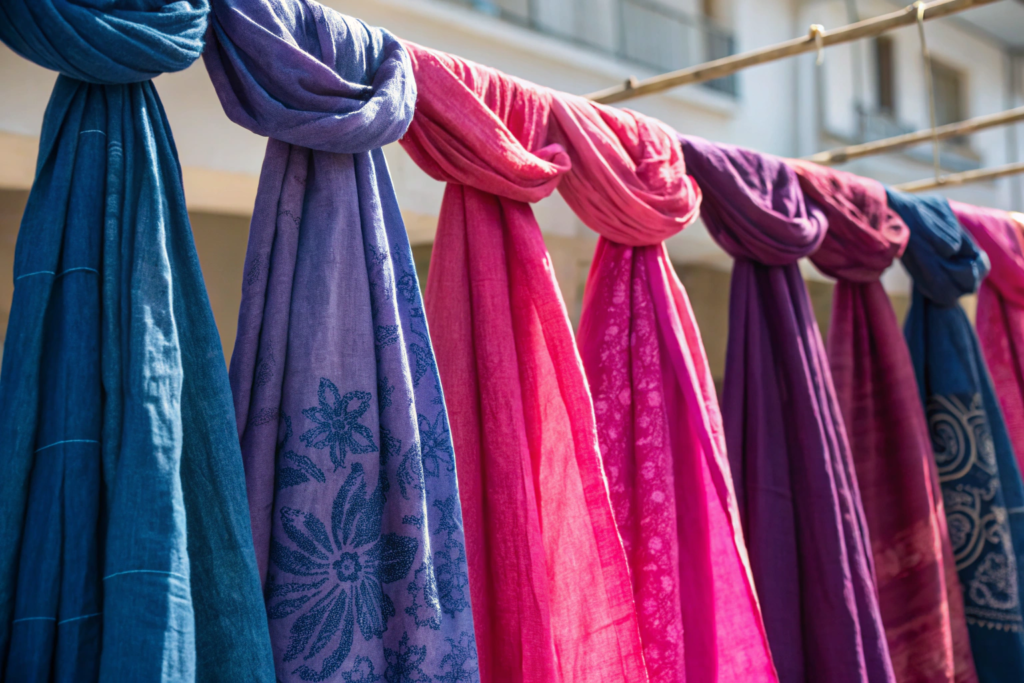
You’ve found a scarf with beautiful fibers, a perfect weave, and a soft hand-feel. But if the color fades dramatically after one wash or bleeds onto a white shirt, the quality is meaningless. Color quality, which encompasses both the richness of the shade and its ability to last (colorfastness), is the final, critical feature of a high-quality linen scarf. A common problem with cheaply made scarves is the use of low-quality dyes that are not properly fixed to the fabric.
High-quality linen is known for how beautifully it takes and holds dye, resulting in rich, deep, and nuanced colors. This is achieved through proper preparation of the fabric and the use of high-grade, fiber-reactive dyes. These dyes form a molecular bond with the cellulose in the flax fibers, making the color a permanent part of the fabric. This ensures the color remains vibrant and won’t bleed during washing or fade significantly in the sun.
When we produce colored linen for our clients, we adhere to strict standards for colorfastness, testing for resistance to washing, light, and crocking (color rubbing off). This guarantees that the beautiful color that attracted the customer in the first place will last for the lifetime of the scarf. Whether it’s a solid color, a classic stripe, or a complex print, the integrity of the color is a hallmark of quality that protects both the customer’s wardrobe and the brand’s reputation.
What is "yarn-dyed" linen?
Yarn-dyed linen is a fabric where the yarns are dyed before they are woven. This process results in a deeper, more thorough color penetration than "piece-dyeing" (dyeing the whole fabric after it’s woven). For patterns like stripes or checks, yarn-dyeing is essential. It creates crisper patterns and a richer look. A classic example is chambray fabric, which is yarn-dyed, typically with a colored warp and a white weft.
What does "colorfastness rating" mean?
Colorfastness is measured on a standardized scale, usually from 1 to 5, where 5 is the highest level of resistance. A fabric is tested for different conditions, such as "colorfastness to washing" or "colorfastness to light." A reputable manufacturer will be able to provide the test results for their fabrics. For a high-quality accessory, you should look for a rating of 4 or higher, which indicates that the color will remain stable through normal use and care.
Conclusion
In the world of textiles, linen stands apart. A truly high-quality linen scarf is not just an accessory; it’s an experience. It’s the product of superior raw materials in the form of long-staple fibers, the precision of a balanced weave, the unique magic of a fabric that softens with age, and the beauty of rich, lasting color. By understanding these four key features, you can confidently distinguish a premium, lasting product from a cheap imitation.
Our philosophy is built on this appreciation for quality. We believe in creating products that deliver lasting value to our clients and their customers. Our team in Zhejiang combines modern manufacturing with a deep understanding of textiles, ensuring every accessory we produce meets the highest standards of craftsmanship.
If you are looking to develop a line of linen accessories, or any fashion accessory where quality is paramount, we have the expertise and the passion to be your ideal production partner. Please get in touch with our Business Director, Elaine, at elaine@fumaoclothing.com to discuss your project.