You’ve decided to launch your own private label line of drinkware or umbrellas. The market potential is huge, but so are the risks. You’ve heard horror stories: products that arrive with crooked prints, handles that break on first use, umbrellas that invert in a light breeze. The wrong manufacturing partner can turn your brand dream into a logistics and financial nightmare, leaving you with unsellable inventory and damaged customer trust.
Choosing the right partner for private label cup and umbrella manufacturing requires a supplier with specialized production expertise, rigorous quality control systems for functional products, and proven experience in handling custom branding from design to fulfillment. This goes beyond general accessory manufacturing. You need a factory that understands the specific material science of Tritan plastic or stainless steel, the mechanics of a robust umbrella frame, and the durability requirements of daily-use items. The right partner acts as an extension of your quality assurance team.
Let’s break down the critical factors you must evaluate to find a manufacturer who can reliably translate your brand vision into durable, market-ready products that your customers will love and trust.
What Specialized Manufacturing Capabilities Are Non-Negotiable?
Private label cups and umbrellas are not simple fashion accessories; they are complex functional products. A factory that excels at producing scarves may lack the machinery and know-how for injection molding, double-wall vacuum sealing, or precision metal frame construction. Partnering with a generalist is the fastest route to product failure. The non-negotiable capabilities are those that directly impact product safety, durability, and performance—the core reasons customers will pay a premium for your brand.
For private label success, your manufacturer must have in-house or directly controlled expertise in key processes: injection molding for cups, frame engineering for umbrellas, and advanced printing/decorating techniques like sublimation or laser engraving for lasting branding. At Shanghai Fumao Clothing, our dedicated division for hard goods oversees these specialized lines. For cups, this means controlling the molding process to ensure no BPA leaching and consistent wall thickness for insulation. For umbrellas, it involves testing wind tunnels for frame resilience and using automated sewing for precise canopy tension. This vertical control is what separates a true partner from a middleman.
Why Is In-House Mold Making and Tooling Critical for Cups?
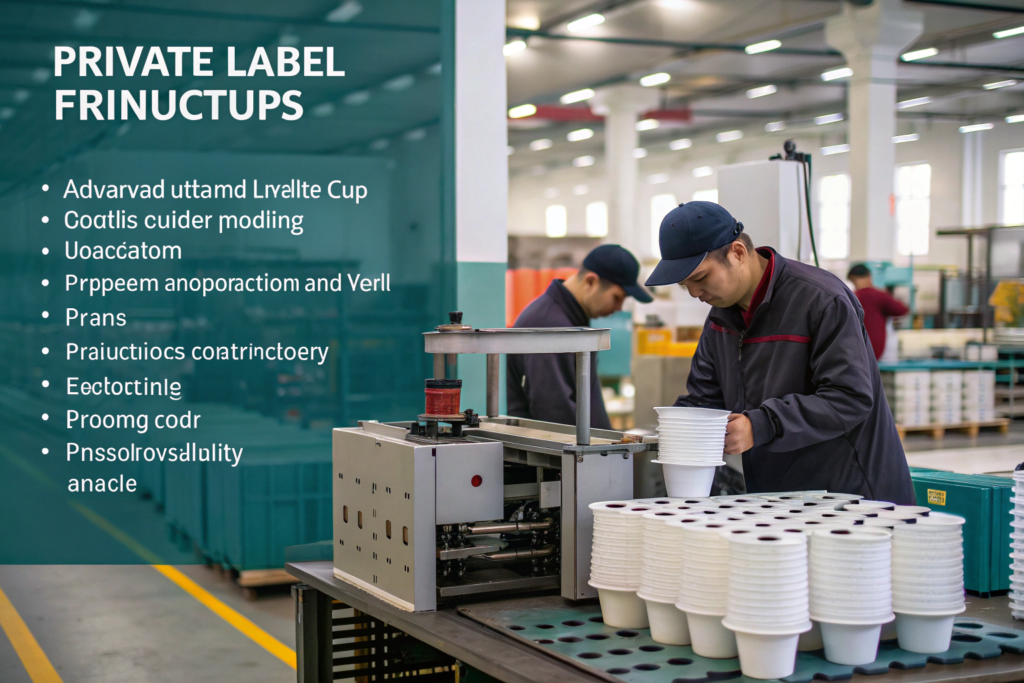
The quality of a drinkware product is fundamentally determined by its mold. Outsourced or low-precision molds lead to defects like seam lines, uneven walls, and lids that don’t seal properly. A manufacturer with in-house mold design and tooling capabilities has ultimate control over this first critical step. They can design molds for optimal material flow, which reduces waste and ensures structural integrity. When you need to modify a design—adding a new handle shape or a straw hole—the process is faster and more cost-effective. This capability also allows for rapid prototyping. You can evaluate a physical sample from the actual production mold much sooner, catching design flaws before committing to mass production. Investing in quality tooling, as governed by standards from the Society of the Plastics Industry (SPI), is an investment in your product’s consistency and longevity.
What Umbrella Frame and Canopy Tests Ensure Durability?
An umbrella’s value is defined by its performance in bad weather. Therefore, your manufacturer must have a rigorous testing protocol for both the frame and canopy. Key durability tests include:
- Wind Resistance Test: The umbrella is opened in a wind tunnel to simulate storm conditions, checking for frame inversion and joint failure.
- Open/Close Cycle Test: The mechanism is operated thousands of times to ensure smooth, reliable function over the product’s lifetime.
- Canopy Fabric Tests: Checking for water repellency (spray test), colorfastness to UV light, and seam strength.
A reliable partner will conduct these tests in their own lab and provide you with the results. They should source frames from certified suppliers who use quality materials like fiberglass or steel alloys. The canopy fabric, whether it’s pongee, polyester, or a technical fabric, must be tested for waterproof rating and tear strength. Understanding these tests, similar to those recommended by the American Apparel & Footwear Association (AAFA) for performance gear, is key to evaluating a supplier’s seriousness about quality.
How to Verify Quality Control for Custom Branded Products?
With private label, your brand name is physically on the product. A quality failure is no longer just a product defect; it’s a direct hit to your brand reputation. Standard QC might check if a hair clip closes, but private label QC must ensure that your logo is printed perfectly centered, with the exact Pantone color, and that it won’t wash off or fade after the first dishwasher cycle. The verification process must be meticulous and documented at every stage.
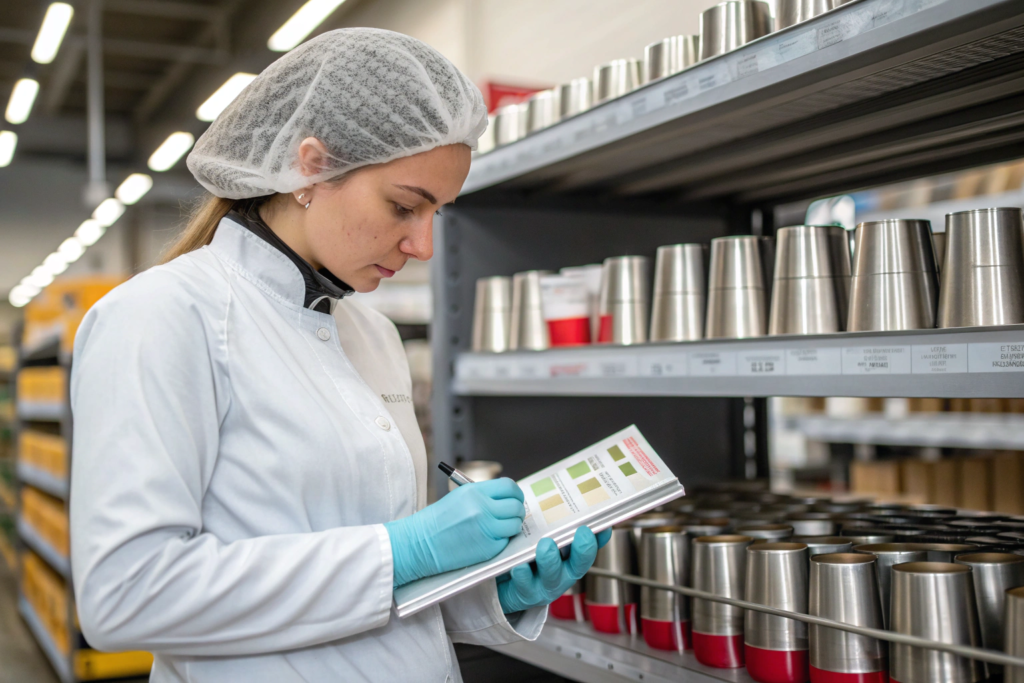
Verifying quality control requires auditing the factory’s multi-stage inspection process, reviewing their documentation for previous private label orders, and insisting on pre-production samples (PP samples) that serve as the binding quality contract. We implement a checkpoint system specifically for branded goods. After production, but before final packaging, every single unit is inspected for branding accuracy. This includes checking print alignment, engraving depth, label stitching, and the clarity of any included user instructions with your logo. We provide inspection reports with photos for each batch, giving you digital proof of compliance before shipment.
What Should a Pre-Production Sample (PP Sample) Guarantee?
The Pre-Production Sample (PP Sample) is the single most important sample in your private label journey. It is not a prototype; it is made using the exact production materials, molds, decorating methods, and on the actual production line that will be used for your bulk order. You must approve this sample in writing. This approval then becomes the quality standard against which your entire order will be measured. The PP sample guarantees:
- Final Design & Dimensions: The exact size, weight, and shape.
- Material Specification: The correct grade of plastic, stainless steel, or fabric.
- Branding Execution: The final print, color, placement, and finish of your logo.
- Functionality: That lids seal, umbrellas open/close smoothly, etc.
Before approval, subject the PP sample to real-world tests: wash the cup, use the umbrella, check the feel. Once approved, keep it as your physical reference. Any deviation from this sample in mass production is grounds for rejection, protecting your investment.
How Does In-Line Inspection Prevent Branding Disasters?
Final inspection catches errors, but in-line inspection prevents them from happening on a large scale. This involves QC staff checking products at key points during the production process. For example:
- After Printing/Engraving: Checking the first 50 cups off the decorating line to ensure the logo alignment and color are perfect before running 10,000 units.
- During Assembly: Verifying that umbrella ribs are correctly attached to the runner before the canopy is sewn on.
If a defect is found, the line is stopped immediately, and the issue is corrected. This real-time intervention is far more effective and cost-efficient than discovering 10,000 misprinted cups during final inspection. A factory that uses in-line inspection demonstrates a proactive quality culture, which is essential for protecting your brand from costly recalls and rework.
Can the Supplier Manage End-to-End Logistics and Compliance?
Sourcing is only half the battle. The logistical complexity of importing bulk goods—especially items like umbrellas that are bulky or cups that require careful packaging to prevent scratching—can overwhelm a first-time brand owner. Navigating customs, arranging cost-effective freight, and ensuring products arrive shelf-ready are challenges where an experienced manufacturing partner adds immense value. They should be a guide, not just a producer.
A capable private label partner should offer comprehensive logistic support, including export documentation, packing customization, freight coordination, and expertise in the compliance certifications required for your target market. Our project managers handle the entire process from our factory gate to your chosen port (FOB) or even doorstep (DAP). We design retail-ready packaging that protects the product during transit and presents it beautifully on shelf. Crucially, we ensure all products meet relevant safety standards, such as FDA food-contact compliance for cups or CPSIA regulations for general consumer goods in the US, and provide the necessary test reports and documentation.

What Does Retail-Ready Packaging and Fulfillment Support Include?
Retail-ready packaging is designed to minimize your touchpoints before the product hits the shelf. This can include:
- Individual Poly Bags or Boxes: Protecting each cup or umbrella from dust and scratches.
- Hangtags and Barcodes: Pre-applied according to your specification.
- Master Carton Design: Optimized to maximize container space (to reduce shipping costs) and strong enough for palletized transport.
- Labeling: Correct shipping marks and compliance labels on the outer cartons.
A good partner will consult with you on packaging design to balance protection, aesthetics, and cost. Furthermore, they can often connect you with reliable freight forwarders or, for larger orders, manage the booking process directly, providing you with real-time tracking updates. This end-to-end support is a core part of the service at Shanghai Fumao Clothing.
Which Compliance Certifications Are Essential for the US/EU Market?
Legal compliance is non-negotiable. Your manufacturer must be knowledgeable about the key certifications for your product category and target region. Essential certifications include:
- For Cups (US Market): FDA Title 21 CFR compliance for food-contact materials. This ensures the plastic or stainless steel is safe for beverage contact.
- For General Consumer Goods (US): CPSIA (Consumer Product Safety Improvement Act) compliance, which may require lead and phthalate testing.
- For EU Market: CE marking where applicable, and compliance with REACH regulations concerning chemical substances.
A reputable factory will have these certifications for their standard materials and processes on file. They should be able to provide you with a Supplier’s Declaration of Conformity (SDoC) or test reports from accredited third-party labs like SGS or Intertek. Never take verbal assurances; always demand documented proof.
How to Assess Communication and Project Management Style?
Even with the best technical capabilities, a partnership can fail due to poor communication. Time zone differences, language barriers, and slow response times can turn a simple question into a week-long delay, jeopardizing your launch date. You need a team that is proactive, transparent, and speaks your language—both linguistically and in terms of business priorities.
Assess a supplier’s communication style by requesting a trial project discussion, evaluating the clarity of their proposals, and confirming they provide a dedicated project manager as your single point of contact. During our initial talks, we aim to demonstrate this by providing detailed, itemized quotes, clear answers to technical questions, and proposing a realistic timeline. We assign a dedicated PM who communicates in fluent English, provides weekly update reports with photos during production, and is available via email, WhatsApp, or video call for urgent matters. This structured approach ensures you are never in the dark.
What Questions Expose a Supplier’s Operational Transparency?
Ask direct questions that reveal how they operate internally:
- "Can you walk me through your workflow from receiving my logo file to having a printed sample?" (Tests their process understanding).
- "What is your protocol if a production delay is discovered? How and when do you inform the client?" (Tests their communication ethics).
- "May I see a sample of a recent QC inspection report (with client details redacted)?" (Tests their documentation rigor).
- "Who would be my main contact, and what is their backup if they are unavailable?" (Tests their team structure).
Vague answers are a red flag. A professional partner will have clear, structured answers and be willing to share examples of their processes.
Why Is a Dedicated Project Manager Worth Their Weight in Gold?
A dedicated project manager (PM) is your advocate inside the factory. They translate your requirements to the production team, chase down samples from the workshop, coordinate with the QC department on your behalf, and liaise with the shipping team for documentation. They own the timeline and are responsible for keeping you informed. This eliminates the frustration of dealing with a generic sales email that goes unanswered or being passed between departments. The PM ensures accountability and provides a consistent, reliable channel for all communications, saving you immense time and stress. This level of organized, client-focused service is what turns a supplier into a true long-term partner for your private label business.
Conclusion
Choosing the right manufacturing partner for private label cups and umbrellas is a strategic decision that impacts your product quality, brand reputation, and operational sanity. The ideal partner combines specialized technical expertise with rigorous, brand-protecting quality systems, offers seamless logistical support, and communicates with transparency and professionalism. They don’t just manufacture a product; they help you build and safeguard your brand asset.
By thoroughly vetting potential suppliers against these critical criteria, you move from a position of hope to one of confident partnership. You gain a reliable extension of your team that is invested in making your private label line a success from the first sketch to the final delivery. If you are looking for a partner who embodies this integrated approach to private label manufacturing of cups, umbrellas, and other promotional accessories, let’s start a conversation.
Ready to develop your branded product line with a partner you can trust? Contact our Business Director, Elaine, at elaine@fumaoclothing.com to discuss your project requirements. Let Shanghai Fumao Clothing be the foundation of your private label success.