Choosing the right fabric for a winter scarf is a critical decision that balances aesthetics, comfort, performance, and cost. A scarf must be warm yet breathable, soft against the skin yet durable enough for daily wear and washing, and stylish while being functional. The secret to achieving this balance often lies not in a single fiber, but in intelligent fabric blends.
The best fabric blends for durable and stylish winter scarves combine natural warmth and luxury with synthetic strength and practicality. Key blends include Wool/Acrylic, Cashmere/Silk, and Cotton/Polyester, each offering a unique balance of softness, thermal retention, pill resistance, and easy care. At Shanghai Fumao Clothing, we leverage these blend technologies to create scarves that meet both performance demands and fashion-forward design.
Let’s explore the specific blends that dominate the market and understand why they are engineered for success.
Why Are Blends Superior to Pure Fibers for Winter Scarves?
While pure fibers like 100% merino wool or cashmere have their prestige, blends are the workhorses of the commercial scarf industry. They solve the inherent weaknesses of individual fibers, creating a more balanced and consumer-friendly product.
Blends are superior because they synergize the best properties of different fibers: synthetics add durability, shape retention, and cost-effectiveness, while natural fibers contribute breathability, softness, and premium hand-feel. This results in a scarf that is warmer, more durable, easier to care for, and often more affordable than its pure-fiber counterparts. For brands, this means higher customer satisfaction and fewer returns.
How Do Blends Enhance Durability and Longevity?
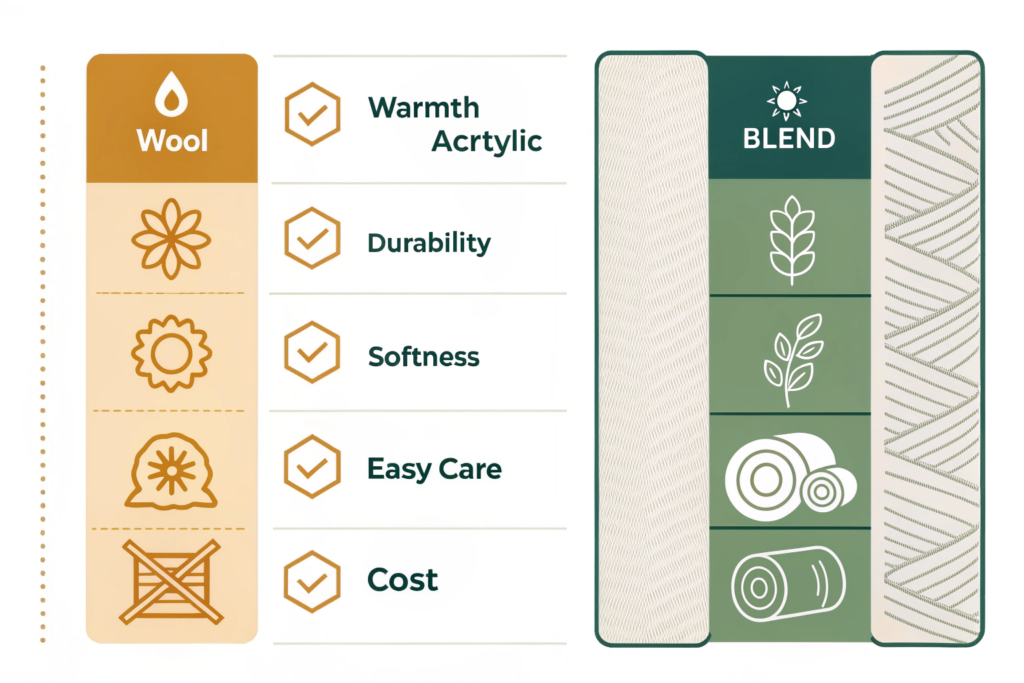
Pure wool can be prone to pilling and felting (shrinking) with improper washing. Pure cotton can become heavy and lose shape when wet. Blends address this directly:
- Acrylic in a wool blend drastically improves resistance to pilling and maintains vibrant colorfastness.
- Polyester in a cotton blend adds tensile strength, reduces shrinkage, and speeds up drying time.
- Nylon or Polyamide (even in small percentages) can add incredible strength and abrasion resistance to delicate fibers like cashmere or mohair, preventing tears and extending the scarf’s life.
This engineered durability is crucial for a product meant for seasonal reuse.
How Do Blends Improve Functionality and Care?
Winter scarves face snow, rain, and frequent washing. Blends enhance performance:
- Moisture Management: Wool naturally wicks moisture, but adding a small amount of polypropylene or specific polyester can enhance this property, keeping the wearer drier.
- Wrinkle and Crush Resistance: Synthetic fibers like polyester help a scarf emerge from a bag or suitcase looking neat, a key selling point for travel scarves.
- Easy Care: Blends with synthetics often allow for machine washing on gentle cycles, whereas pure wool or cashmere typically requires hand washing. This convenience is a major purchase driver for everyday consumers.
What Are the Top Performing Blends and Their Ideal Applications?
Different blend ratios serve different market segments and style purposes. Understanding these applications allows you to select the perfect fabric for your target customer and price point.
The top blends are Wool/Acrylic for everyday value and durability, Cashmere/Silk for luxury and drape, Cotton/Polyester for lightweight warmth and printability, and innovative blends with recycled fibers for sustainable appeal. Each has a defined role in a brand’s assortment.
Wool/Acrylic Blends: The Everyday Workhorse
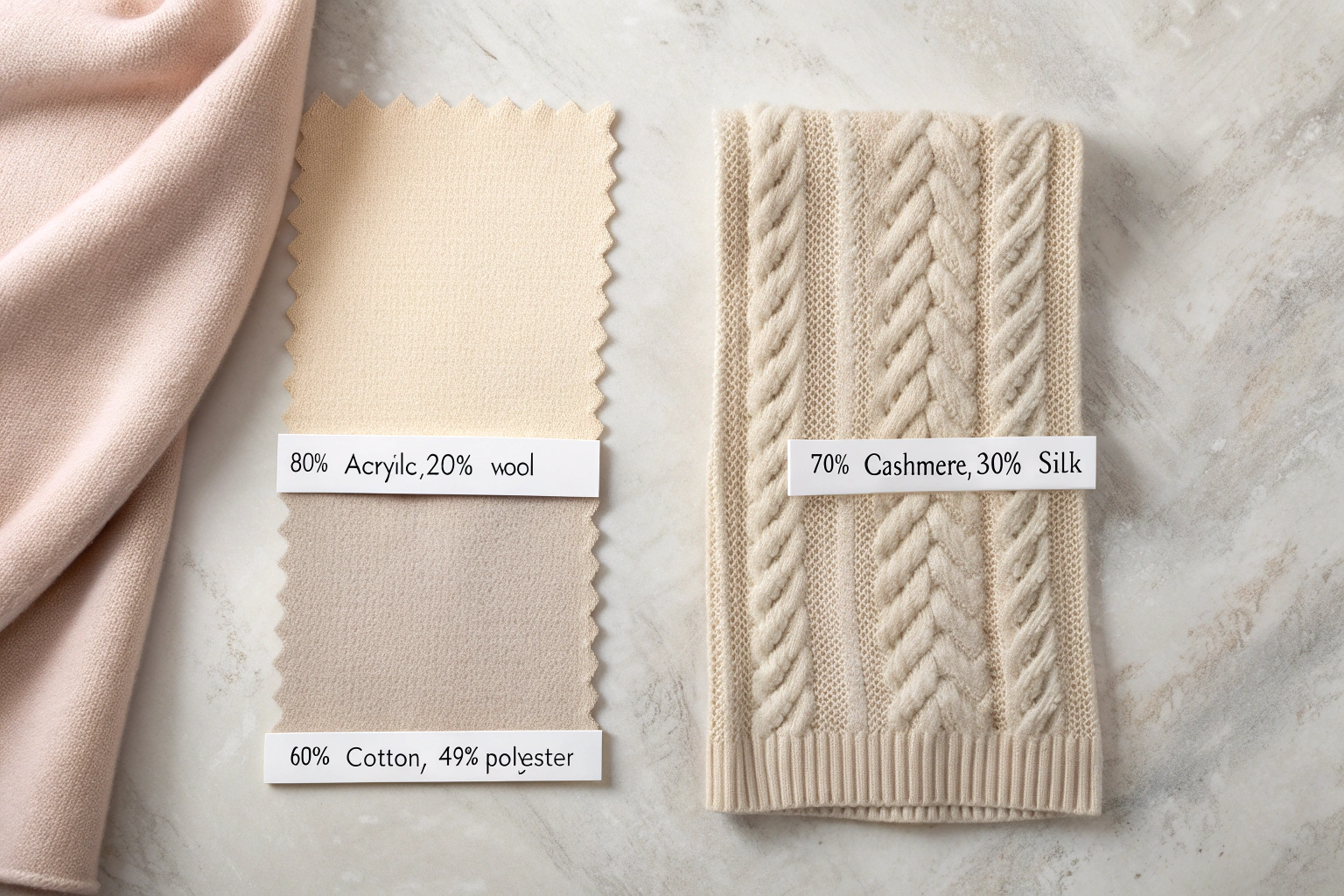
- Typical Ratios: 70/30, 80/20, or 50/50 (Acrylic/Wool).
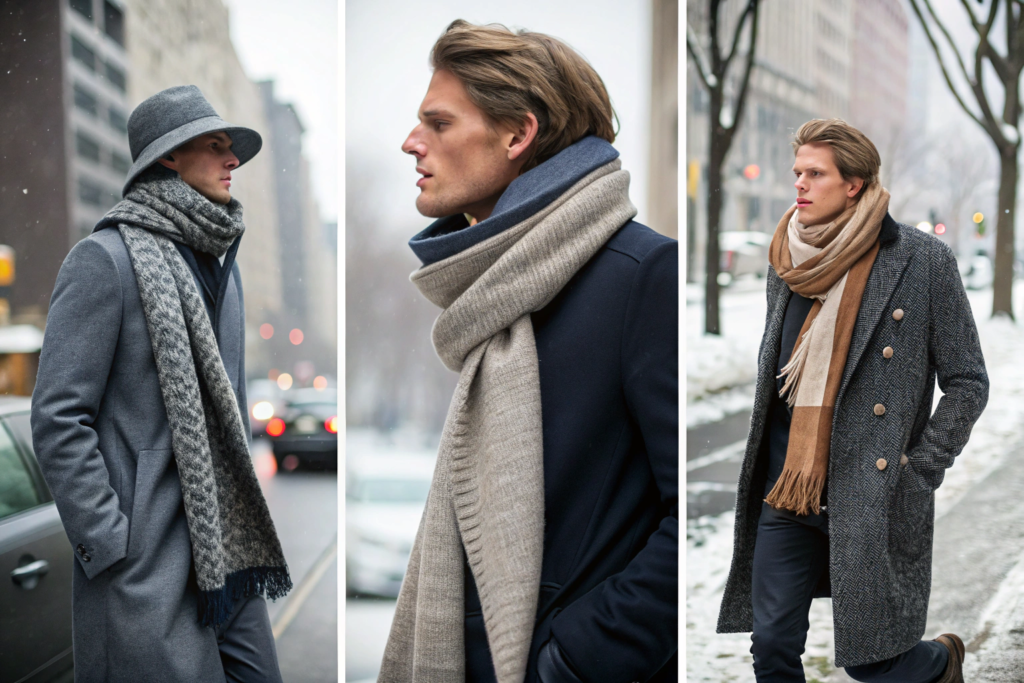
- Why it Works: This is the most common and commercially successful blend. The acrylic provides affordable bulk, excellent color retention, and pill resistance. The wool (often merino or lambswool) adds natural warmth, breathability, and a premium feel. It’s ideal for chunky knit scarves, infinity loops, and classic plaids.
- Brand Application: Perfect for fast-fashion, mainstream retail, and promotional collections where style, warmth, and value are paramount.
Cashmere/Silk or Cashmere/Wool Blends: Luxury with Performance
- Typical Ratios: 70/30 or 80/20 (Cashmere/Silk) or (Cashmere/Merino Wool).
- Why it Works: Pure cashmere is incredibly soft but can be delicate and expensive. Silk adds strength, a beautiful luminous drape, and reduces pilling. A cashmere/wool blend makes luxury more accessible while retaining much of the softness and boosting durability. This blend is used for fine-gauge, lightweight yet warm scarves with an elegant finish.
- Brand Application: For premium brands, boutique labels, and holiday gifting where perceived value and tactile luxury are key.
Cotton/Polyester (especially Brushed or Fleece): For Lightweight Warmth & Prints
- Typical Ratios: 60/40 or 50/50 (Cotton/Polyester).
- Why it Works: Cotton provides softness and breathability, while polyester adds warmth, structure, and durability. When brushed to create a polar fleece or microfleece, this blend becomes exceptionally soft, lightweight, and warm-for-its-weight. It is also the ideal base for vibrant sublimation or digital printing.
- Brand Application: Excellent for sports-luxe brands, travel scarves, seasonal graphic prints, and children’s wear where softness and easy care are priorities.
How to Source and Specify These Blends with a Manufacturer?
Knowing the ideal blend is one thing; ensuring your manufacturer delivers it consistently is another. This requires clear technical communication and sourcing collaboration.
Work with your manufacturer to request and approve physical fiber blend swatches, specify the yarn weight (e.g., 2/28Nm) and fabric GSM (grams per square meter), and verify certifications for both natural and synthetic components. Your tech pack must be precise.

What Technical Details Must Be Defined?
- Exact Fiber Percentage: "70% Acrylic, 30% Wool" is a specification, not a suggestion. Reputable mills must adhere to this.
- Yarn and Fabric Construction: Is it a single ply or twisted ply yarn? Is the fabric woven (twill, jacquard) or knitted (circular knit, flat knit)? This affects the drape, texture, and warmth.
- Weight (GSM): A scarf’s warmth and substance are directly related to GSM. A lightweight summer scarf might be 120 GSM, a mid-weight winter scarf 250 GSM, and a chunky blanket scarf over 400 GSM.
- Finish: Is it brushed for a fuzzy feel, mercerized for a cotton sheen, or sanded for extra softness?
Why are Certifications and Testing Critical?
To ensure quality and compliance, insist on:
- OEKO-TEX Standard 100: This is non-negotiable. It certifies the finished fabric is free from harmful levels of over 100 substances, crucial for a product worn around the neck and mouth.
- RWS (Responsible Wool Standard): If using wool, this ensures ethical animal treatment.
- GRS (Global Recycled Standard): If using recycled polyester (rPET) or other recycled content.
- Performance Test Reports: For claims like "anti-pilling," request Martindale or ICI pilling test results. For color, request wash and light fastness tests.
What are the Emerging Sustainable and High-Tech Blends?
The market is evolving with a focus on eco-consciousness and enhanced performance. Leading manufacturers are innovating with next-generation blends.
Emerging blends incorporate recycled materials (rPET, recycled wool), bio-based fibers (Tencel™, Cupro), and performance synthetics with moisture-wicking or temperature-regulating properties. These blends cater to the values-driven and tech-savvy consumer.
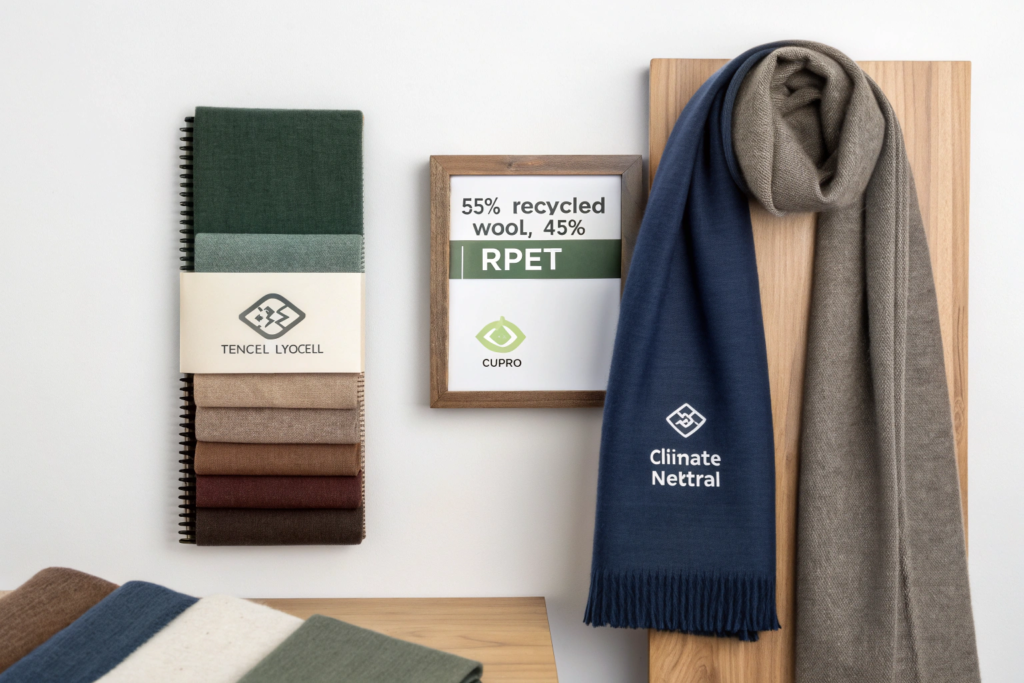
Examples of Forward-Thinking Blends
- Recycled Wool / rPET Blends: Combines post-consumer recycled wool with polyester made from recycled plastic bottles. It offers a great story, reduces waste, and maintains high performance.
- Merino Wool / Tencel™ Lyocell Blends: Tencel™, made from sustainably sourced wood pulp, adds a beautiful drape, incredible softness, and natural moisture-wicking properties. This blend feels ultra-luxurious and is highly sustainable.
- Performance Blends with Phase Change Materials (PCM): Some advanced synthetics can be engineered with micro-encapsulated PCMs that absorb, store, and release heat to help regulate body temperature. These are ideal for high-performance outdoor scarves.
How to Partner with a Manufacturer on Innovation?
A proactive manufacturer like Shanghai Fumao Clothing will have a material development library. Don’t just ask for existing blends; ask: "What new sustainable or performance blends are you developing for next season?" This collaborative approach can give your brand a first-mover advantage with cutting-edge fabrics that align with market trends.
Conclusion
The quest for the perfect winter scarf fabric is answered not by a single miracle fiber, but by strategic blends that marry the best of nature and technology. From the dependable Wool/Acrylic workhorse to the luxurious Cashmere/Silk and the versatile Cotton/Polyester, each blend serves a specific purpose in creating scarves that are as durable as they are stylish.
Success lies in partnering with a knowledgeable manufacturer, specifying blends with precision, and embracing both proven compositions and emerging innovations. This ensures your scarf collection delivers on its promise of comfort, style, and season-after-season wear.
If you are looking to develop a winter scarf line with expertly engineered fabric blends, we have the material expertise and production capability to bring your vision to life.
To discuss creating a durable and stylish scarf collection with the ideal fabric blends, feel free to contact our Business Director Elaine. Her email is: elaine@fumaoclothing.com.