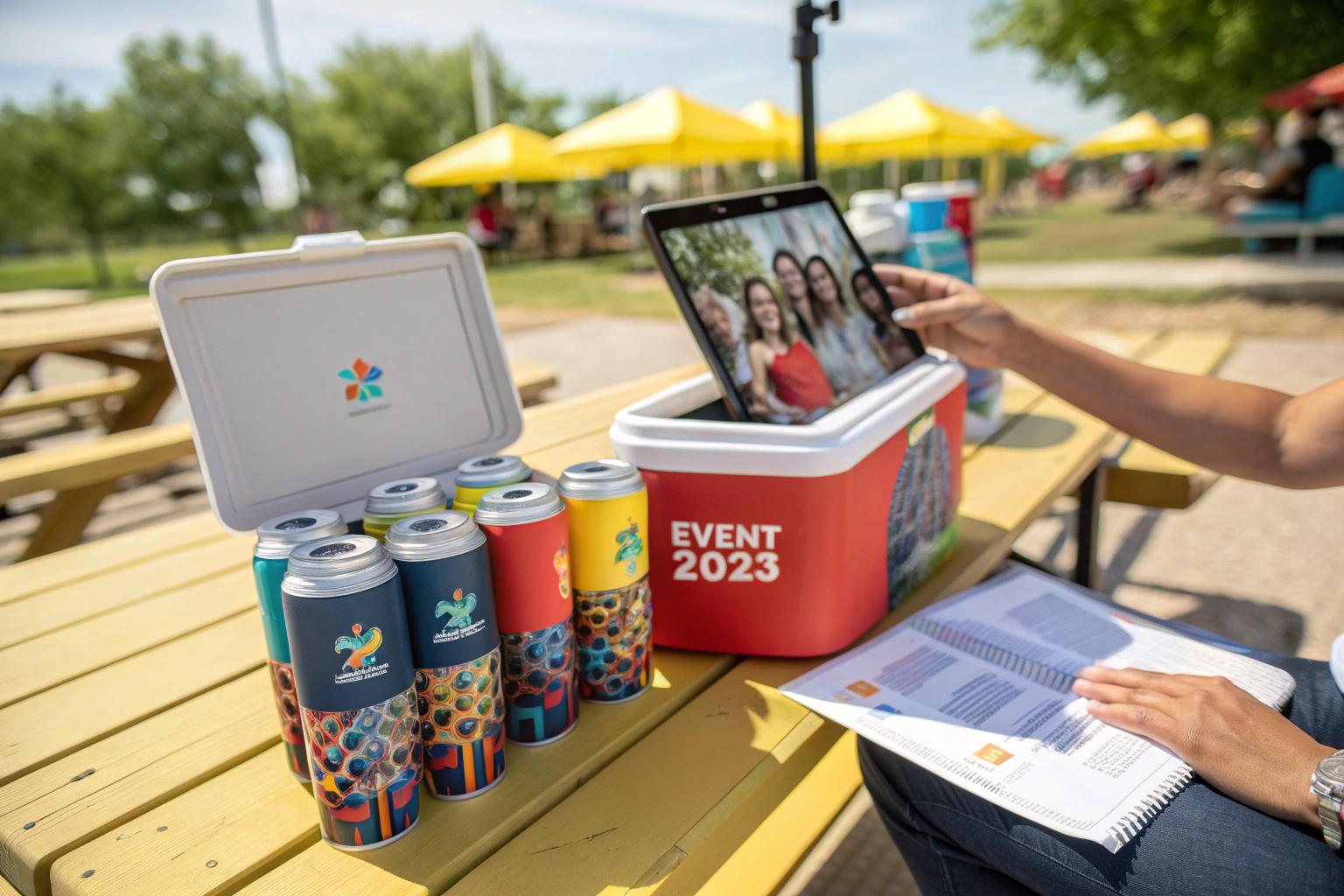
I once received a late-night email from a marketing director for a major brewery chain. He was in full panic mode. His summer promotional campaign was launching in six weeks, and the supplier who had promised 20,000 custom koozies had just backed out, quoting a factory backlog. He needed a partner who could handle a massive, high-speed order without sacrificing the crisp, full-color logo that his brand demanded. We got it done, and those koozies were in the hands of beer drinkers from coast to coast. That experience taught me that the custom koozie market often struggles to reconcile urgency, quality, and minimum order quantities.
The minimum order for custom printed koozies typically starts at 100 to 300 pieces for digital printing and 500 to 1,000 pieces for traditional screen printing. The exact number is driven by the printing method you select, the complexity of your logo, and the material style of the koozie itself. Understanding these variables is the key to unlocking a cost-effective order without overcommitting your promotional budget.
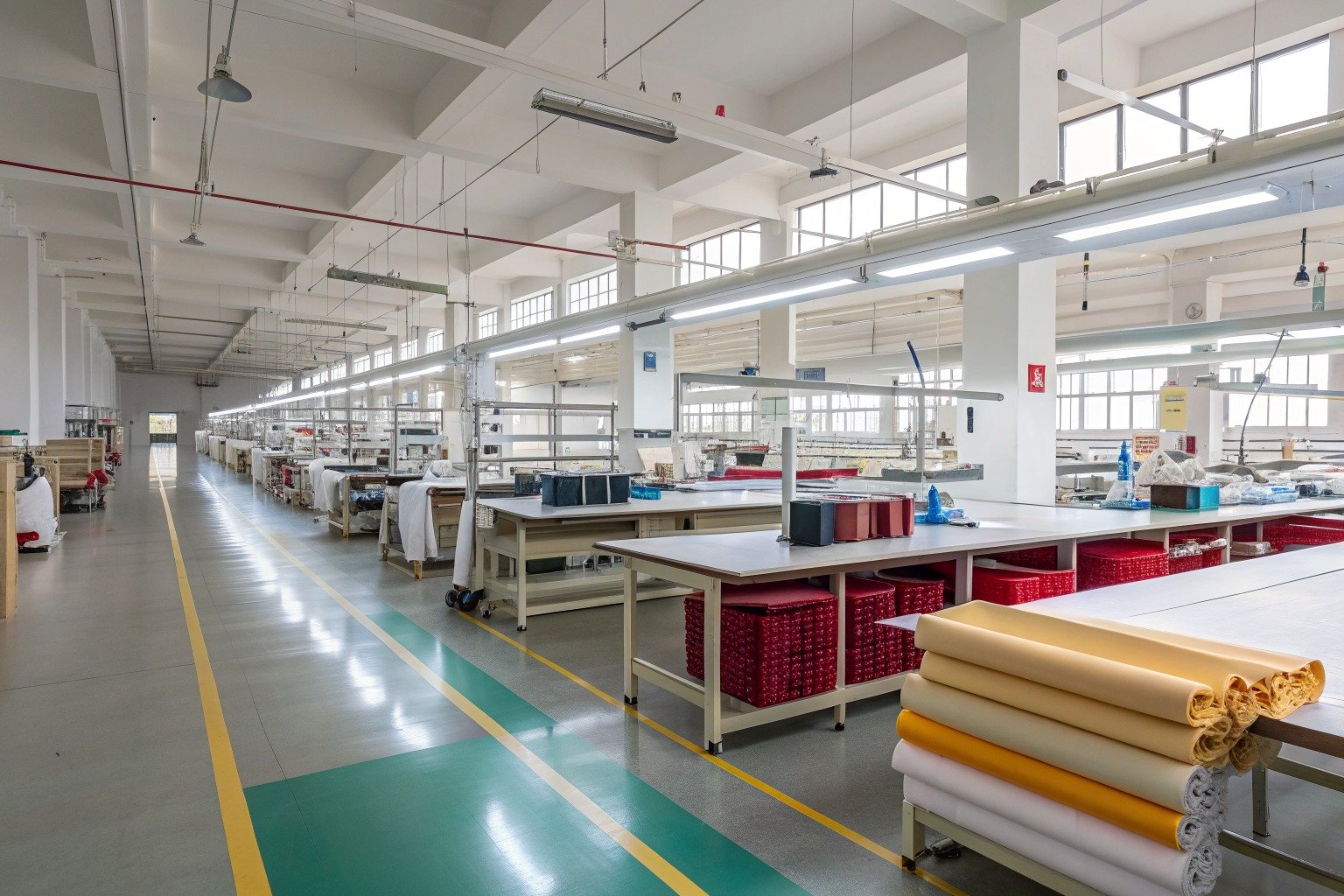
At our factory in Zhejiang, we are recognized as a leading professional manufacturer and exporter of accessories. We have integrated high-speed digital printing lines that bridge the gap between ultra-low minimums and bulk production. I want to walk you through the specific printing methods that determine these minimums, the difference between material grades, and how to structure your artwork to get the best price and fastest turnaround for your next event.
What Printing Methods Determine the MOQ for Custom Koozies?
The printing method is the single largest driver of minimum order quantity. A koozie is a functional canvas, and how you print on that canvas determines the setup costs and the volume required to make the order viable.
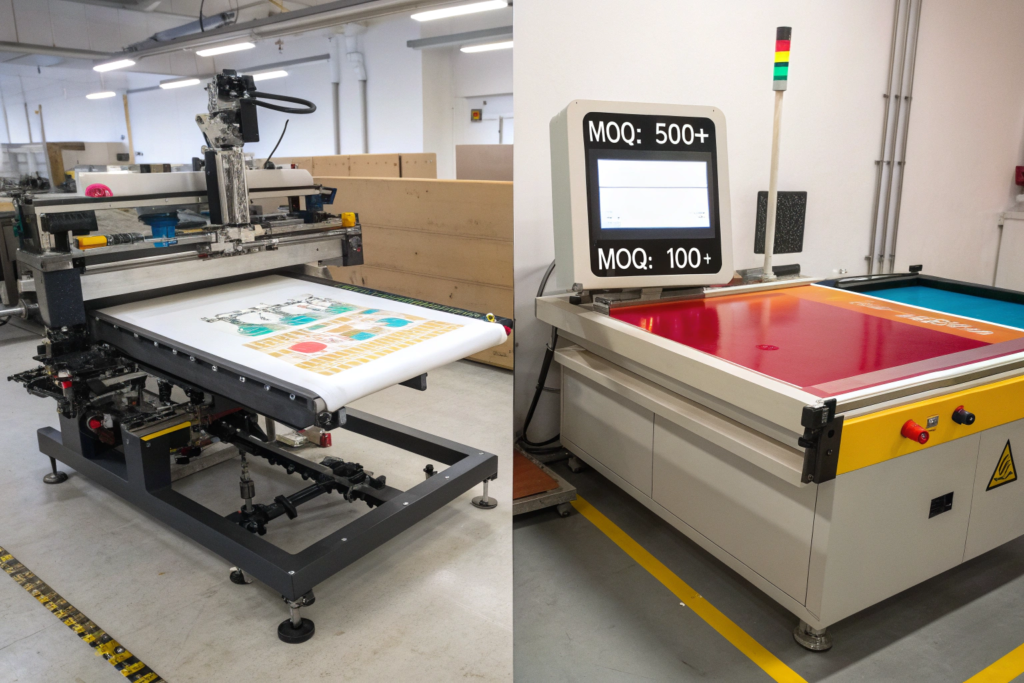
Traditional screen printing involves creating a physical mesh screen for each color in the design. Ink is pushed through the screen onto the neoprene or fabric. This method is incredibly durable, wash-resistant, and cost-effective at scale. However, creating the screens is a fixed cost. The minimum order exists because the factory needs to amortize that screen creation cost over enough units. Digital printing, specifically UV or dye-sublimation printing, sprays the ink directly onto the material from a digital file. There is no screen to build, so the setup cost is negligible. This allows for much lower minimums but a slightly higher per-unit cost on very large runs.
Why does screen printing require a higher MOQ than digital printing?
The economics are driven by the screen setup. A four-color logo requires four separate screens, each of which must be precisely manufactured, coated in emulsion, exposed to UV light, and washed out. This process requires skilled technician time and specialized equipment. The cost of this setup is fixed, regardless of whether you print 10 koozies or 10,000. The MOQ for screen printing is the point at which the setup cost, spread across the units, drops to an acceptable level. For screen-printed koozies, this is typically 500 to 1,000 units. If your design has fewer colors, the screen cost is lower, and the MOQ may be slightly lower. Conversely, a complex six-color design may have a higher threshold. This screen printing setup costs resource explains the economic dynamics.
How does dye-sublimation enable full-color printing with no minimum?
Dye-sublimation printing uses a heat press to transfer a design from a special paper directly into the fibers of the polyester fabric koozie. The ink converts to a gas under high heat, penetrates the material, and solidifies permanently. It allows for unlimited colors and photographic detail at no extra cost, and the setup is simply the cost of printing the transfer paper. Because there is no physical screen, the MOQ for sublimation drops to 100 pieces or sometimes even lower. The trade-off is that the process only works on white or light-colored polyester materials, and it is slightly slower per unit than screen printing at very high volumes.
How Do Material and Style Choices Affect the Custom Koozie Minimum?
The substrate you are printing on—the koozie itself—also affects the minimum order. The three most common materials for custom koozies are neoprene, polyester fabric, and open-cell foam. Each material has different manufacturing processes and different inventory practices at the factory.
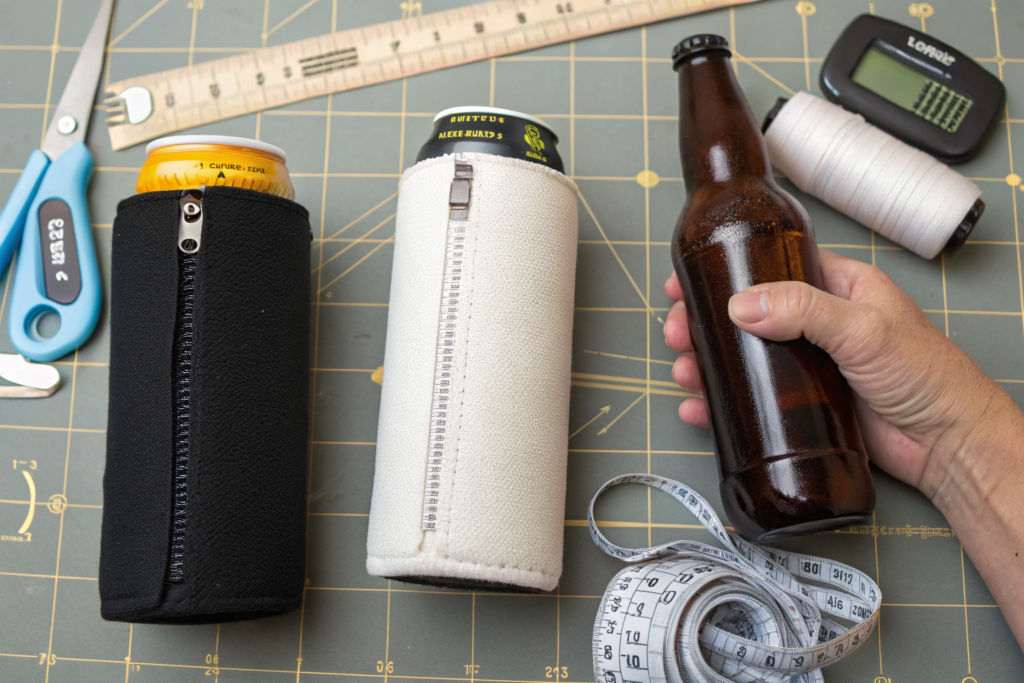
Neoprene koozies, which are essentially mini wetsuits for cans, are made from a thick, rubbery sheet material. They are cut, sewn, and then printed. Polyester koozies are made from a fabric that can be sewn into collapsible styles or used to wrap foam cores. Open-cell foam koozies are the cheapest and most lightweight option, typically bright colors with a screen-printed logo. The factory’s inventory of these blank materials often determines the MOQ. If the factory stocks the blank material in its warehouse, the material minimum is zero. If you require a custom color material, such as a specific shade of neon green neoprene, the factory must order that material from the mill, which carries its own minimum.
Why do sewn neoprene koozies have a different minimum than collapsible polyester ones?
Neoprene koozies involve a labor-intensive cut-and-sew process. The neoprene sheet is die-cut, the edges are folded, and a precise stitch line is sewn to form the cylindrical shape. This sewing labor is a significant part of the unit cost. For the factory to set up a dedicated sewing line for a custom koozie order, the labor setup cost must be covered. This typically results in a slightly higher base MOQ for sewn neoprene styles, often around 300 to 500 pieces. Collapsible polyester koozies, which are often stamped or welded from pre-made fabric, can have lower labor setup costs and thus lower minimums.
What is the difference between a stock blank and a custom-colored koozie?
A stock blank is a pre-made koozie in a standard color—usually black, white, navy, red, or royal blue—that the factory already has in inventory. Because the material is already purchased and in stock, the factory can print on it with no material minimum. You can order 100 pieces. A custom-colored koozie requires the factory to source neoprene or polyester in a specific Pantone shade. The material mill that produces the colored fabric or foam has its own minimum order, often by the roll. This forces the factory to buy more material than your order might need, which increases the MOQ for custom colors. If you need a lower quantity, choosing a stock blank color is the most effective way to reduce the minimum.
What Is the Best Way to Prepare Artwork for a Promotional Koozie Order?
The quality and format of your artwork file directly affect both the speed and the cost of your custom koozie order. A perfectly prepared vector file moves straight into the printing queue. A poorly prepared file—low resolution, wrong color space, missing bleed—triggers a graphic design revision cycle that adds time and often a small art preparation fee.
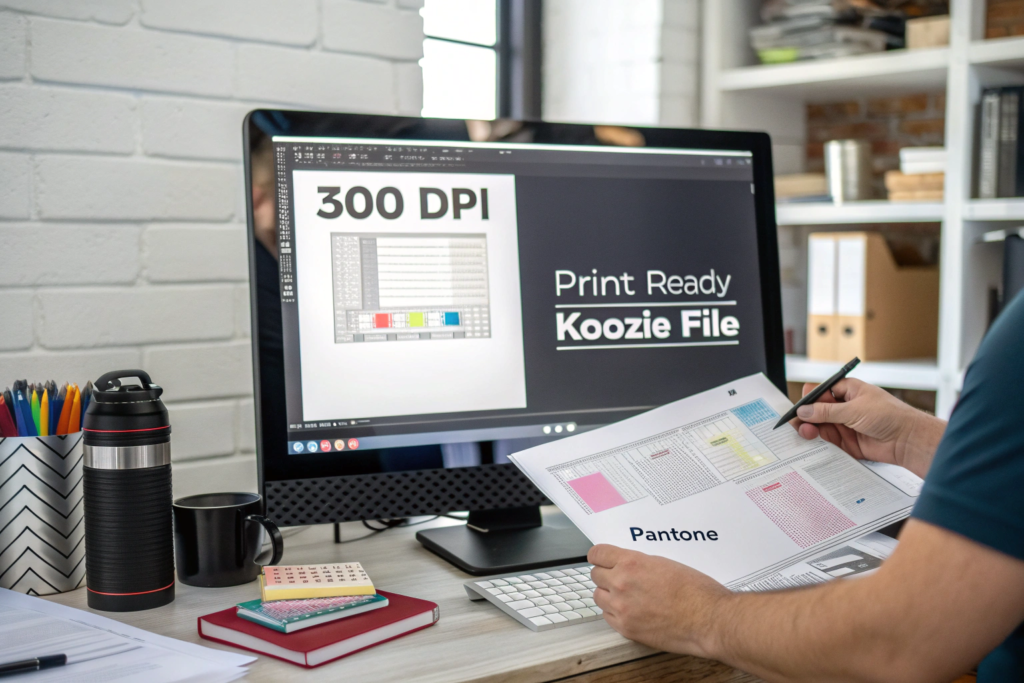
The ideal artwork for a screen-printed koozie is a vector file, typically an Adobe Illustrator file with the extension .ai or .eps. Vector art is composed of mathematical paths rather than pixels, so it can be scaled to any size without losing sharpness. The file should have the text converted to outlines and the colors separated into spot colors with Pantone references. For a digitally printed or dye-sublimated koozie, a high-resolution raster file at 300 DPI in the CMYK color space is the standard. In both cases, the design should include a small bleed area around the edges to prevent white slivers on the final product if the cutting or stitching shifts slightly.
Why is a vector file preferred over a JPEG for screen printing?
A JPEG image is a grid of pixels. When you enlarge a JPEG, the software guesses what the missing pixels should be, resulting in a blurry, jagged edge. A vector file defines the shape mathematically. When you scale it, the math simply recalculates, and the edge remains perfectly sharp. For screen printing, the image must be transferred to a screen at a very high resolution. A vector file ensures that your logo is crisp and professional, not blurry and amateurish. If you only have a JPEG, our design team can redraw it as a vector, but this adds time and cost.
How does the "bleed area" prevent white edges on the final koozie?
A koozie is a three-dimensional object that is cut and sewn. During the cutting or the heat-pressing process, the alignment can shift by a millimeter or two. If your design stops exactly at the intended edge, any slight shift will reveal a thin, unprinted white line along the seam or the rim. A bleed area extends the background color of your design a few millimeters beyond the intended trim line. This ensures that even if the cut shifts, the edge is still fully covered by your design. We recommend a 3mm to 5mm bleed for all koozie artwork.
Conclusion
The minimum order for custom printed koozies is not a single, inflexible number. It is a variable determined by your choice of printing method, material, and color. Digital dye-sublimation and UV printing have made orders as low as 100 to 300 pieces economically viable for brands that need full-color, photographic-quality designs. Screen printing remains the workhorse for bold, simple logos at higher volumes, with minimums generally around 500 to 1,000 pieces. Selecting a stock blank color over a custom material match further reduces the barrier.
We have explored the economic logic behind these minimums, the material differences between neoprene, polyester, and foam styles, and the artwork preparation steps that ensure a fast, flawless production run. A koozie is a small accessory, but it carries the weight of your brand image in every photo and every handshake at a promotional event.
If you are planning a promotional campaign or a retail drinkware launch and need custom koozies, we can provide a detailed quote for your specific logo and quantity. Our Business Director Elaine manages our promotional accessory programs and can coordinate the artwork review and sampling process. Contact her directly at elaine@fumaoclothing.com. A great koozie is an accessory your customer keeps long after the event is over. Let’s make sure it carries your brand perfectly.