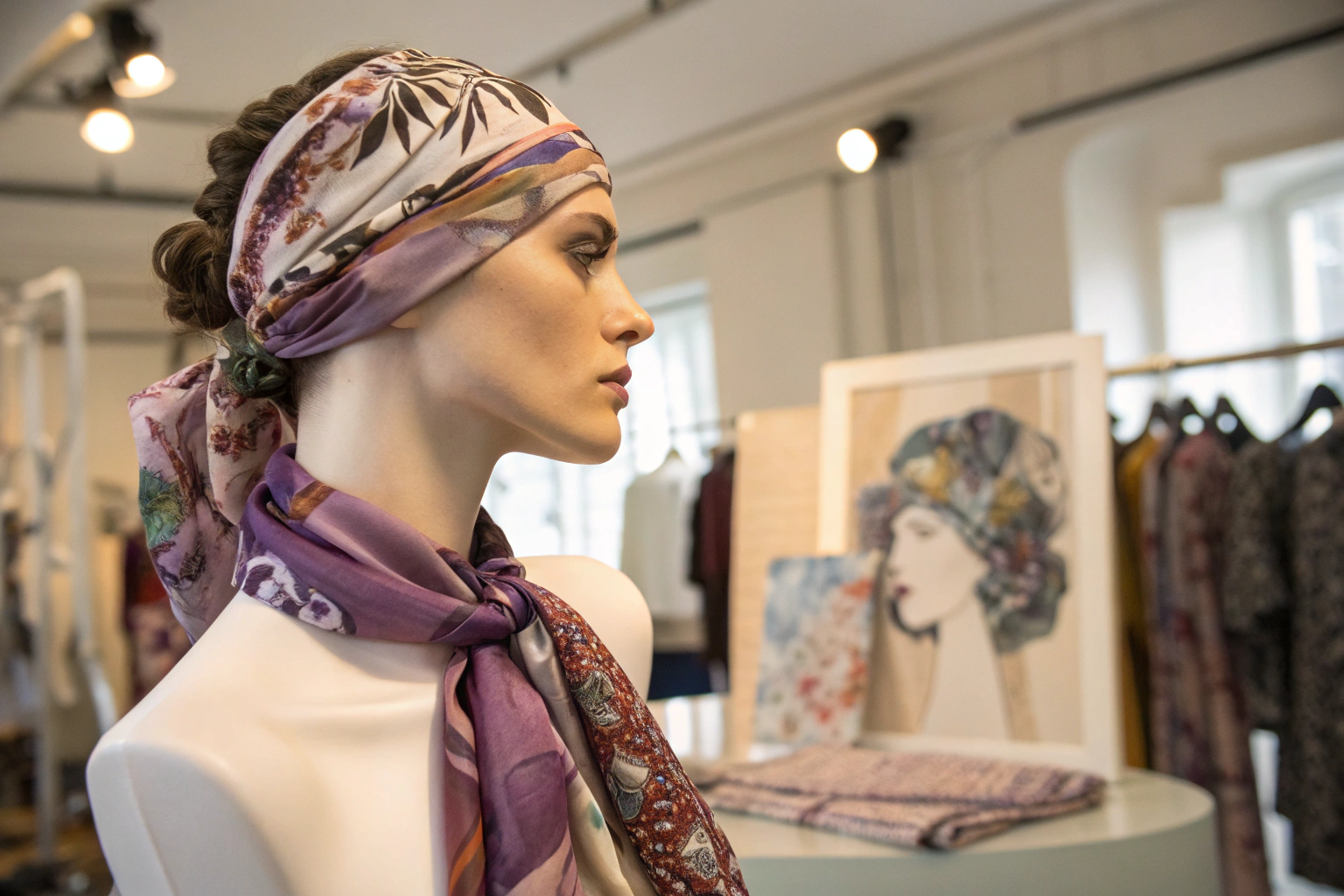
Last spring, a boutique owner from Paris showed me a single product that generated 40% of her monthly accessory revenue. It was not a new category. It was a simple rectangle of printed fabric that her customers wore as a headband on Monday, a neck scarf on Wednesday, and a bag tie on Friday. Her traditional headband sales, the rigid plastic kind with a fixed shape, had fallen off a cliff. Her customers wanted one item that could morph to fit their mood, their outfit, and the moment. That conversation rewired how I think about product development. The future of headwear is not in adding more categories. It is in collapsing categories into a single, brilliantly versatile piece.
The 2026 trends for convertible headband-scarf hybrids center on three core movements: the "modular multifunctional" design philosophy that prioritizes embedded shaping wires and hidden buttonholes, the "sheer layering" aesthetic that uses translucent organza and gossamer silk blends, and the "statement digital print" direction that treats the unfolded scarf as a wearable canvas for exclusive artwork. The consumer demand driving this trend is clear. Shoppers are tired of single-use accessories. They want value density. They want a travel piece that replaces three separate items in a carry-on bag. They want a morning headband that transforms into an evening neck scarf without returning to the hotel room to change.
In our Zhejiang factory, I have retooled our cutting and finishing lines specifically to support these hybrid products. It requires a different sewing approach than a classic fixed headband. The edges must be finished on all four sides with a delicate rolled hem because they are visible in scarf mode. The internal shaping wire must be removable or soft enough to be forgotten when worn around the neck. The fabric must drape beautifully in both orientations. This is a more demanding product to manufacture than a single-function item, and getting it right separates a premium brand from a discount bin filler. I want to walk you through exactly what styles are trending, how they are engineered, and how your brand can claim a piece of this fast-growing segment.
What Design Features Make a Headband-Scarf Hybrid Work in 2026?
A convertible hybrid is not just a long piece of fabric with a clever marketing name. It is a carefully engineered accessory that must perform equally well in two fundamentally different use cases. As a headband, it needs enough structure to hold its shape against the crown of the head without slipping backward. It needs a way to secure the ends so they do not flop into the wearer’s eyes. As a neck scarf, it needs to lose all that structure. It must drape softly around the neck, tie comfortably without bulky knots, and feel gentle against the sensitive skin of the throat. Reconciling these two opposing sets of requirements is the central design challenge.
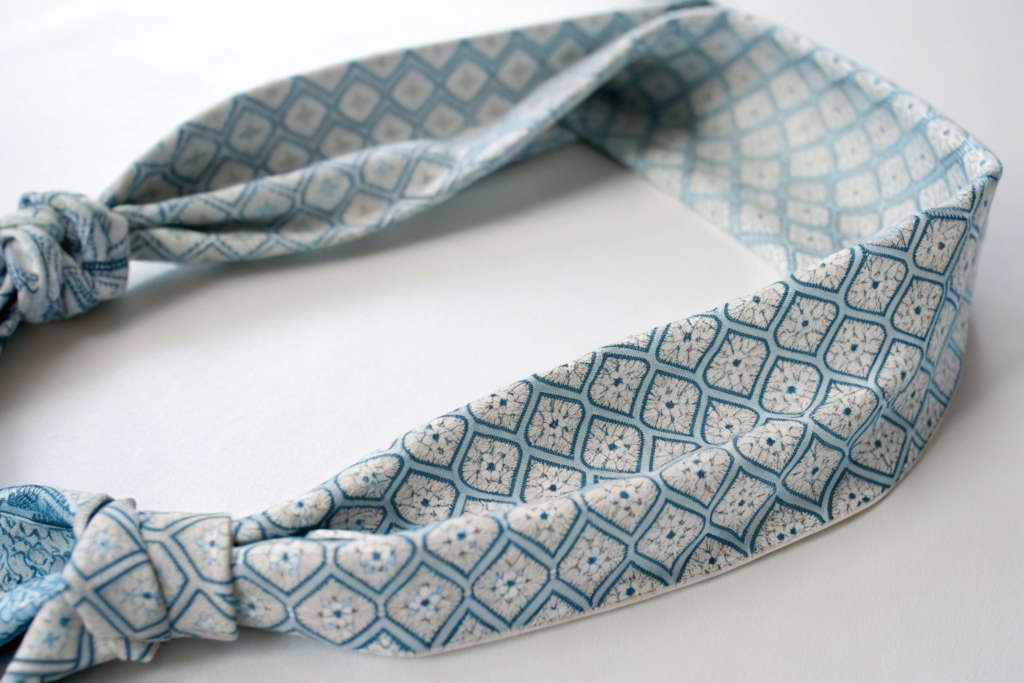
The solutions that have emerged for 2026 involve clever, minimal-hardware construction. The most successful designs use an internal, removable shaping wire made from flexible silicone-coated steel. The wire slides into a narrow channel stitched along the center seam. When worn as a headband, the wire is inserted, and the wearer can mold the scarf to the exact shape of their head. When worn as a neck scarf, the wire is pulled out through a small hidden opening, and the fabric becomes completely soft. Other designs use a system of hidden, fabric-covered snaps that allow the scarf to be folded and secured into a pre-formed headband bow shape.
How does the hidden wire channel system work without sacrificing comfort?
The wire is the skeleton of the headband mode, but it must be invisible and imperceptible in scarf mode. We achieve this by using a wire with a diameter of no more than 2 millimeters, coated in soft, skin-safe silicone. The wire channel is a narrow fabric tube sewn from the same face fabric as the scarf body, positioned along the longitudinal center line. The channel is open at one end with a small, fabric-bound slit. The wire is slightly shorter than the total scarf length so that it does not poke into the ends. When inserted, the wire provides gentle, poseable structure along the entire crown area. The wearer can bend the ends down behind the ears for a secure fit that does not require an elastic band. This is the critical comfort innovation for 2026. Traditional headbands rely on a tight elastic or a rigid plastic arch that creates pressure points behind the ears. A wire-framed scarf distributes pressure evenly across the entire scalp. There is no single pinch point. This makes it wearable for hours without causing the headache that rigid headbands are notorious for. We source the memory wire component from specialized suppliers who certify it for skin contact safety. The wire must survive repeated bending without work-hardening and snapping. We test every batch by cycling it through 500 bend-and-straighten repetitions. A broken wire inside a fabric channel ruins the product and creates a sharp hazard. This is a quality detail that a general garment factory might overlook.
Why are snap-button conversions becoming popular for structured bow styles?
Not every hybrid customer wants a sleek, knotted turban look. A large segment of the market wants the classic oversized bow headband silhouette, but they want to be able to untie it and wear it as a flowing scarf when they leave the house. The engineering solution is a system of hidden snap fasteners. The scarf is constructed with fabric-covered snaps positioned at strategic points along the body. When the wearer folds the scarf in a specific sequence and snaps the points together, the fabric transforms into a perfectly shaped, voluminous bow with trailing tails. When unsnapped, the scarf returns to a flat rectangular shape with no visible hardware. The snaps are covered with the same face fabric so they are invisible in scarf mode. This construction requires precise placement of the snaps to ensure the bow shape is symmetrical and the snap tension is firm enough to hold through a day of movement but not so tight that the wearer struggles to unsnap it. We use a snap fastener system with a tested pull-apart force that we calibrate for the specific fabric weight. A heavy jacquard fabric needs a stronger snap than a sheer chiffon. The placement is calculated based on the finished scarf dimensions to create the correct bow loop proportions. This modular bow design is especially popular for the children’s and tween market, where parents appreciate a single accessory that works for school photos with a bow and weekend outings with a scarf. It also appeals to the bridal and special occasion market, where a matching bow-scarf set for bridesmaids is a highly giftable, photogenic item.
Which Fabrics and Patterns Are Dominating the 2026 Hybrid Scarf Trend?
The fabric is the product. In a convertible hybrid, the fabric must satisfy two distinct tactile expectations. The headband mode requires a fabric with enough body to hold a shape and enough grip to stay in place on smooth hair. The scarf mode requires a fabric with fluid drape and a soft hand-feel against the neck. If you choose a fabric that is too stiff, the scarf mode feels like wearing a cardboard collar. If you choose a fabric that is too slippery, the headband mode slides off within minutes. The sweet spot is a fabric with moderate body, a soft hand, and a subtle texture that provides grip without friction damage to fine hair.
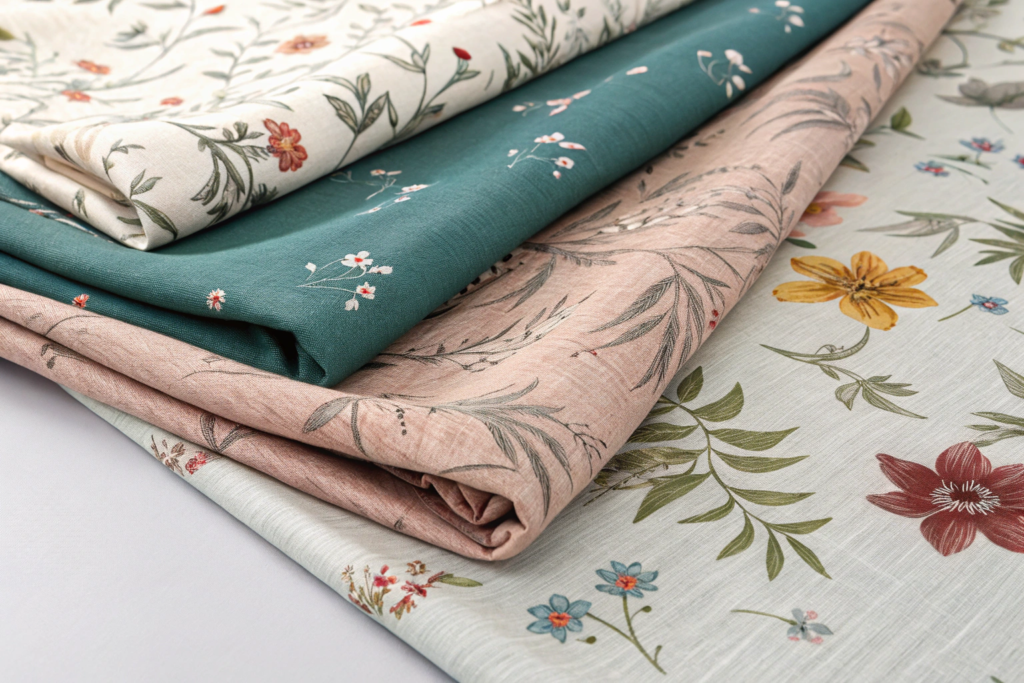
For 2026, the dominant fabric choices are silk-modal blends, lightweight jacquard weaves, and textured crinkle chiffons. Each offers a different balance of drape and structure, and each carries a different price point and market positioning. The pattern direction has shifted decisively away from small, repeating micro-florals and toward large-scale, placement digital prints and abstract painterly designs that look intentional when the scarf is unfolded to its full size.
Why are silk-modal blends the premium choice for hybrid scarves?
Silk-modal blend fabric has become the gold standard for the high-end convertible scarf market. The blend typically combines 30% mulberry silk for its natural sheen and temperature-regulating properties with 70% modal for its softness, durability, and reduced cost compared to pure silk. Modal is a semi-synthetic fiber made from beechwood pulp. It is significantly more absorbent than cotton, which means it wicks moisture away from the skin in headband mode. It also has a naturally smooth fiber surface that does not snag or roughen the hair cuticle. The silk component provides the subtle luster that photographs beautifully and signals luxury to the consumer. The blend creates a fabric that drapes fluidly around the neck without clinging statically, yet has enough weight to hold a tied knot shape in headband mode. We print on this fabric using reactive digital printing, which bonds the dye molecules directly to the fiber for exceptional colorfastness. The silk-modal fabric properties make it ideal for the "quiet luxury" aesthetic that continues to dominate the fashion conversation. The fabric takes color with a depth and richness that polyester cannot replicate. For brands targeting the premium boutique and resort-wear market, a silk-modal hybrid scarf commands a retail price of $45 to $85, and the customer feels the value the moment she touches it. We source our modal from Lenzing, which guarantees that the beechwood is harvested from sustainably managed forests and processed in a closed-loop system. This provides a legitimate sustainable fabric certification story for your marketing.
How are digital placement prints changing the scarf design game?
In 2024 and 2025, most printed scarves used a repeating pattern. A small floral motif that tiled across the fabric. This works fine for a neck scarf, but it creates a problem for the headband mode. When the scarf is folded and tied into a headband, the repeating pattern becomes a jumbled, unrecognizable fragment of the original design. The bow or knot shows a random slice of a flower petal or half a geometric shape. It looks unintentional, almost accidental. The 2026 solution is the digital placement print. A placement print is designed with the final folded product in mind. The graphic designer maps the artwork onto the exact dimensions of the scarf, placing key visual elements at the specific locations that will be visible when the scarf is tied in its most popular headband configurations. For example, a bold floral motif might be centered exactly where the front knot will sit, so the knot becomes a focal bloom. The tail ends might feature a gradient that fades from the main color to a complementary tone, creating an intentional ombre effect when the tails hang down. This design approach is only possible with digital fabric printing technology, which does not require screens or plates and can print edge-to-edge with no repeat grid. We work with our clients’ graphic designers to understand their most popular tying tutorials and then engineer the print layout so that every fold and knot reveals a curated view of the artwork. This elevates the product from a piece of printed fabric to a designed fashion object. It also creates a powerful visual demonstration for social media content, where a flat scarf is shown transforming into a perfectly composed headband print.
How Are Sustainability and Ethical Production Shaping the 2026 Hybrid Market?
The convertible hybrid customer is often a conscious consumer. She is buying one item to replace two or three, which is inherently a more sustainable consumption pattern. She expects the product’s materials and production story to align with that ethos. If you market a "buy one, wear three ways" sustainability message but manufacture the scarf from virgin petroleum-based polyester in a factory with unregulated wastewater discharge, the cognitive dissonance will destroy your brand credibility. The 2026 consumer is too informed and too connected to be fooled by greenwashing.
Sustainable production for hybrid scarves touches three areas. The raw material source, the dyeing and printing chemistry, and the end-of-life circularity plan. I have invested significant resources in our Zhejiang facility to ensure that we can offer verifiably sustainable production options that meet the standards of the most demanding European and North American eco-conscious brands. This is not a marketing veneer. It is a fundamental shift in how we source, process, and finish our textiles.
What recycled and circular materials are trending for eco-friendly scarves?
The leading material story for 2026 is recycled polyester made from post-consumer PET bottles, but with a crucial upgrade. The early generations of recycled polyester had a slightly rough hand-feel and limited color vibrancy. The latest generation, produced through advanced mechanical and chemical recycling processes, is virtually indistinguishable from virgin polyester in softness and color brilliance. We source our recycled polyester yarn from a supplier certified to the Global Recycled Standard, which traces the recycled content from the bottle collection point through to the finished fabric. For the premium natural segment, TENCEL lyocell remains the strongest choice. It offers a fully biodegradable end-of-life option that synthetic fibers cannot match. A new development for 2026 is the emergence of recycled silk blends. These fabrics use silk fibers recovered from pre-consumer cutting room waste and post-consumer silk garment recycling. The fibers are mechanically shredded and re-spun, often blended with virgin modal or organic cotton to achieve the required strength for a lightweight scarf. The result is a fabric with the luster and hand-feel of silk at a lower environmental cost. We are also seeing growing demand for circular fashion textiles that are designed from the outset to be recycled at end-of-life. For a hybrid scarf, this means using mono-material construction. A 100% polyester scarf with polyester thread and a polyester care label can be fully recycled in a polyester chemical recycling system. A polyester-cotton blend with nylon thread cannot. We advise our sustainability-focused clients to choose mono-material construction even if it slightly limits the design options, because the recyclability claim is a powerful differentiator in the market.
How does waterless digital printing reduce the environmental footprint?
Traditional rotary screen printing consumes enormous quantities of water. The screens must be washed between color changes, the fabric requires multiple washing and steaming steps, and the wastewater carries dye chemicals that must be treated before release. Waterless digital printing eliminates most of this. The ink is applied directly to the fabric by piezoelectric print heads that deposit microscopic droplets with extreme precision. There is no screen to wash, no excess dye bath to dispose of, and no post-print washing step for most fabric types. The ink is cured by heat and pressure, bonding directly to the fibers. The water savings are dramatic, up to 90% compared to traditional methods. The waterless textile printing technology we use also reduces energy consumption because the fabric does not need to be dried after a wet treatment. For a sustainability-marketed hybrid scarf, this production story is a powerful asset. You can truthfully claim that each scarf saved a certain volume of water compared to conventional printing. We provide environmental impact data sheets that quantify the savings for each production run. This data can be used on your product page, your hang tags, and your sustainability report. In addition to water savings, we use inks that are certified by OEKO-TEX Eco Passport, which verifies that the ink chemistry is safe for human skin contact and environmentally benign in the manufacturing process. This combination of eco-certified ink chemistry and waterless application represents the current best practice for sustainable accessory production.
What Are the Best Packaging and Display Strategies for Hybrid Scarves?
The hybrid scarf is a product that requires explanation. A customer walking past a shelf might see a folded rectangle of fabric and assume it is a standard neck scarf. They will not understand that it transforms into a headband and a wrist wrap unless the packaging actively demonstrates that capability. Your packaging is not just a protective wrapper. It is the instruction manual, the sales pitch, and the brand experience all in one. Getting this wrong means the product sits on the shelf while a less innovative but better-communicated competitor sells out next to it.
We have worked with dozens of brands to develop packaging solutions that bridge the gap between a folded fabric rectangle and a multifunctional accessory in the customer’s mind. The most effective strategies combine visual instructions, tactile sampling opportunities, and digital content triggers like QR codes that link to video tutorials. The packaging design must also support the retail display environment, whether that is a boutique shelf, a department store hook, or a subscription box unboxing experience.
How can packaging educate the customer on multiple styling options?
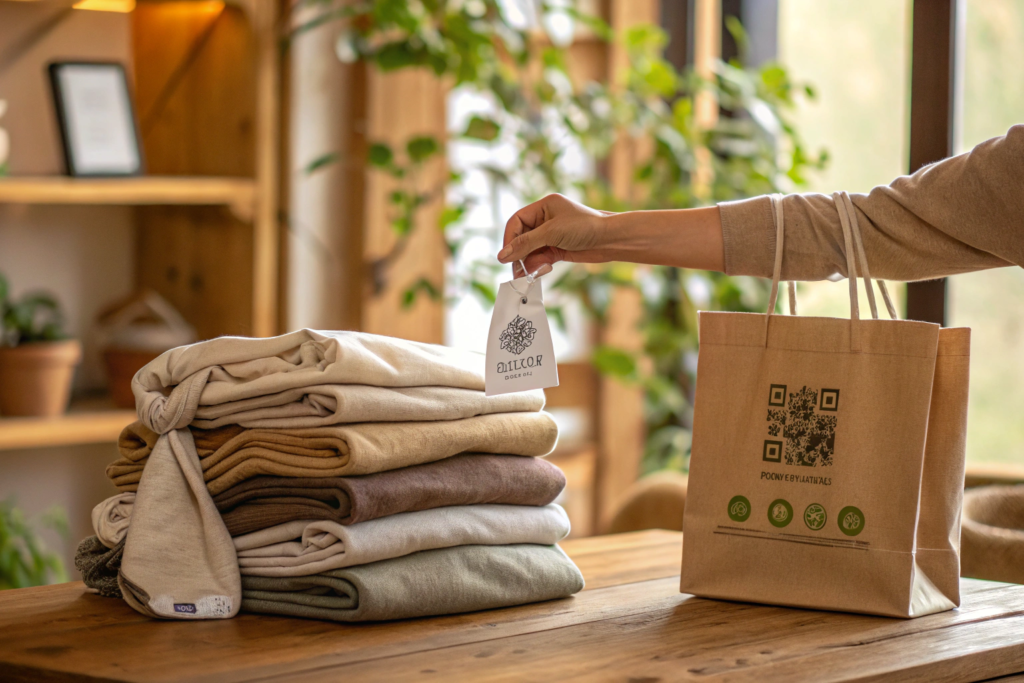
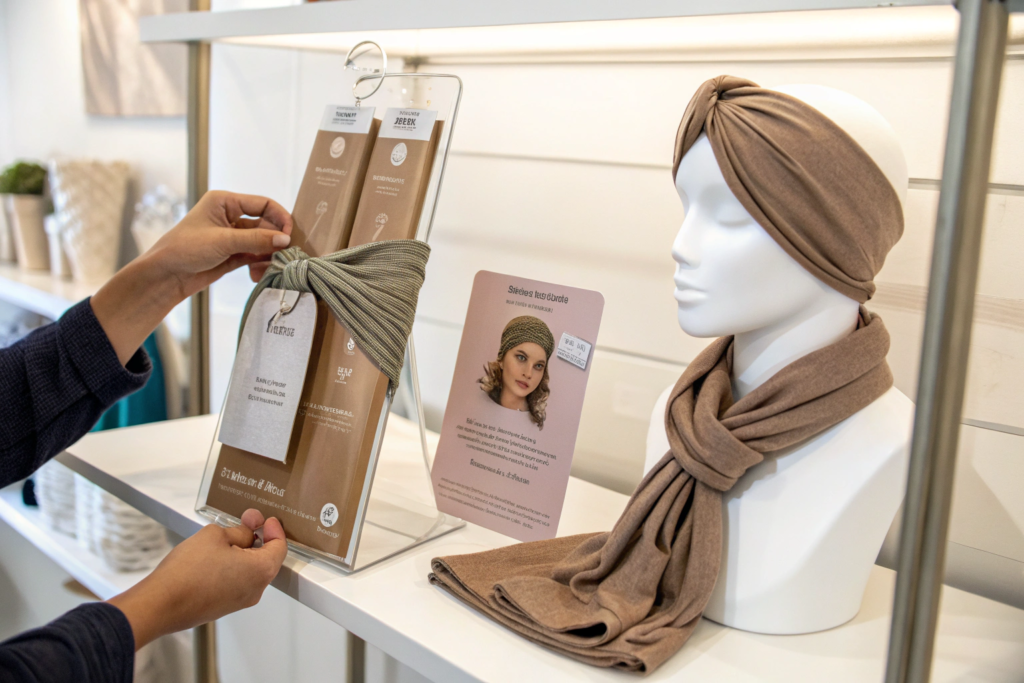
The most effective packaging for a hybrid scarf includes a visual styling guide directly on the product. We produce belly bands and hang tags that feature a sequence of three simple illustrations. Step one shows the scarf folded and tied as a headband. Step two shows it wrapped as a neck scarf. Step three shows it twisted as a wrist accessory or bag tie. The illustrations are clean, minimal line drawings that communicate across language barriers. The band itself is made from uncoated kraft paper with a soft, tactile finish that reinforces the natural, premium feel of the product. We also print a QR code on the hang tag that links directly to a mobile-optimized video styling tutorial hosted on your brand’s website or YouTube channel. The video shows a model demonstrating the three looks in under thirty seconds, with close-up shots of the tying technique. This video content is also the most effective social media ad creative for the product. We encourage our brand clients to film this content during their sample approval phase so it is ready to launch simultaneously with the product. The combination of the physical visual guide and the digital video tutorial reduces the perceived complexity of the product. The customer feels confident that they will know how to use it, which directly increases conversion rates. We also offer a premium packaging option where the scarf is pre-tied into its headband configuration on a display card, with the scarf tails elegantly draped. The customer sees the finished look immediately and understands the potential.
What retail display methods maximize the perceived value of a hybrid scarf?
The way the product is presented in the retail environment directly impacts the price the customer is willing to pay. A scarf tossed into a bin with a $9.99 sign communicates disposable fast fashion. The same scarf displayed on a half-mannequin head with coordinated accessories communicates curated boutique style and justifies a $39.99 price point. For boutique and department store retail, we recommend a point-of-sale display that shows the product in action. This can be as simple as a small acrylic head form wearing the scarf in headband mode, placed next to the folded inventory. The customer sees the transformation and the value proposition instantly. For the folded inventory itself, we produce a custom retail display card with a hanger hole for pegboard displays. The card features the brand logo, a lifestyle photo of a model wearing the scarf, and a clear call-out of the multifunctional feature. The scarf is folded neatly and secured to the card with a single, easily removable stitch or a recyclable clear band. The card itself is designed with a unified visual language across the entire collection so that the display wall looks like a cohesive brand story rather than a jumble of individual items. For e-commerce fulfillment, the packaging shifts to prioritize unboxing experience. The scarf is wrapped in tissue with a branded sticker, placed in a mailer box, and includes a thank-you card with styling tips. This presentation is designed for the social media unboxing moment that generates organic brand exposure.
Conclusion
The convertible headband-scarf hybrid is not a fleeting gimmick. It is a logical evolution of the accessories market driven by a consumer who values versatility, sustainability, and design intelligence. We have seen how the internal engineering, whether it is a removable wire channel or a hidden snap system, must be invisible in scarf mode and functional in headband mode. We have explored the fabric trends that balance drape and structure, from silk-modal blends to recycled polyester, and the digital placement prints that turn a folded scarf into a composed work of art. We have examined how sustainable production practices and clever packaging close the loop between an innovative product and a compelling brand story.
The brands that win in this category are the ones who treat the hybrid not as a single product but as a platform for ongoing innovation. A new print drop every month. A seasonal fabric update. A limited-edition artist collaboration. The basic product engineering stays consistent, and the surface design keeps the assortment fresh. This approach builds a collector mentality among customers and drives repeat purchases far beyond what a standard headband or scarf line can achieve.
If you are developing a convertible scarf program for your 2026 collection, I would welcome the chance to discuss materials, construction options, and packaging strategies. We can send you a sample kit of our trending fabrics, including the silk-modal blends and the recycled polyester twills, along with examples of our wire channel and snap-button construction. Our Business Director Elaine manages our hybrid accessory development partnerships. She can walk you through the design-to-delivery process and provide a timeline that aligns with your launch calendar. Reach out to her directly at elaine@fumaoclothing.com. Let’s create the one accessory your customer reaches for every single day, no matter where she is going.