
A promotional products distributor from Chicago called me in a panic last June. Her corporate client, a major beverage brand, had just approved a 10,000-piece order of full-color wrapped stainless steel tumblers for a nationwide summer campaign. The original supplier had quoted eight weeks, then pushed it to ten. The launch date was non-negotiable. The campaign billboards were already printed. She had exactly thirty-five days to get the cups onto gift bags at twenty different event locations across the country. She told me she was ready to lose the account if we could not deliver. I told her to send the artwork and breathe.
We can produce 10,000 custom cups with a full-color wrap in approximately 20 to 25 working days from final artwork approval to dispatch. This timeline includes the digital proofing stage, the full-color wrap printing or sublimation transfer, the precision application process, the quality control inspection, and the bulk packaging. When a client faces an urgent deadline, we can compress this further to 15 to 18 working days with an expedited production slot and air freight logistics.
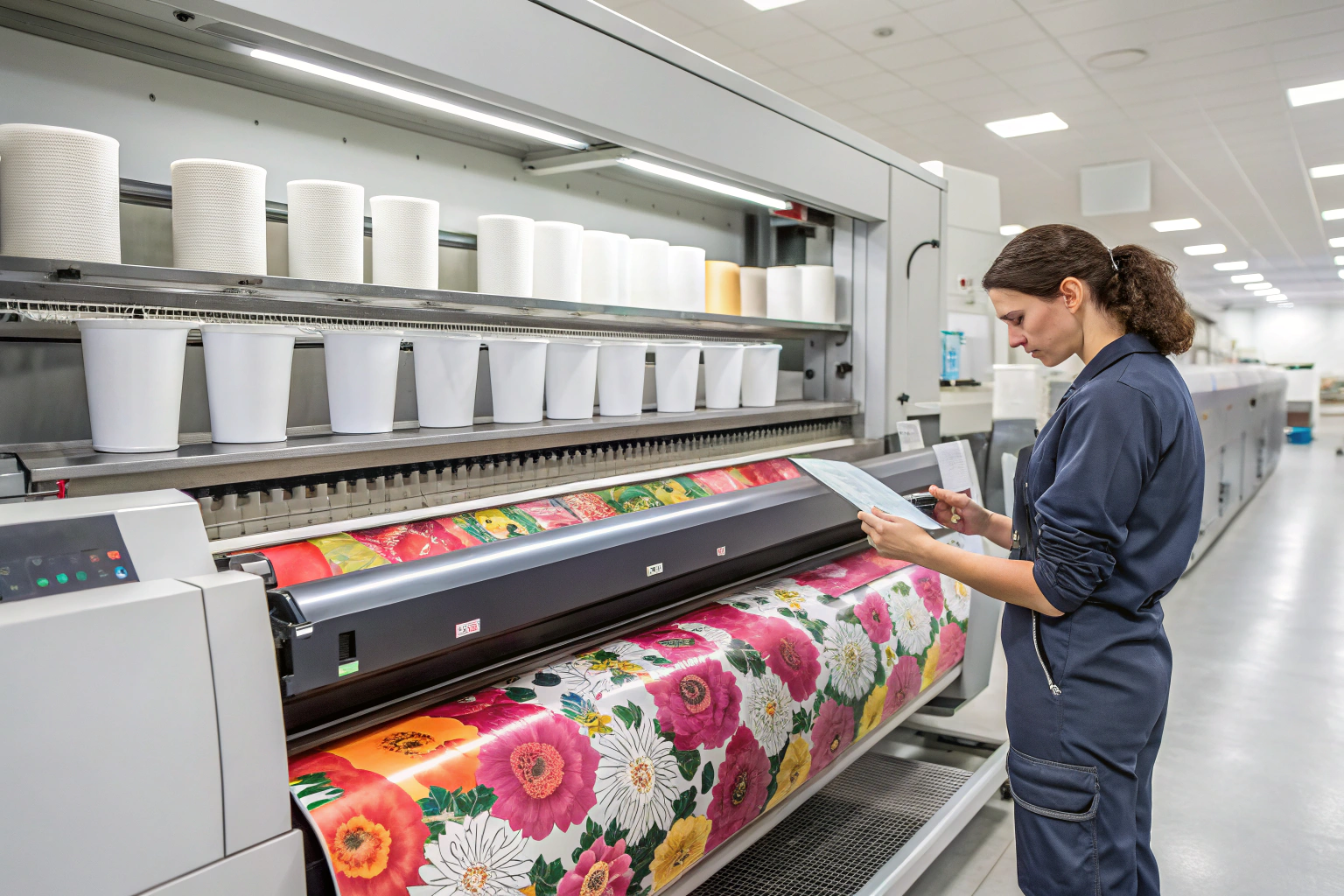
At our factory in Zhejiang, we have invested heavily in high-speed digital cylindrical printing lines and a dedicated in-house sublimation workshop specifically to handle these large-volume, time-sensitive promotional and retail cup orders. A 10,000-piece order is not a disruption to our workflow. It is the volume we are engineered to handle. I want to walk you through exactly how the production timeline breaks down, what factors can accelerate or delay the process, and how we ensure that speed does not come at the expense of print quality or color consistency.
What Are the Key Stages in the 10,000-Piece Cup Production Timeline?
Producing 10,000 cups is not a single action. It is a tightly choreographed sequence of interdependent operations. Each stage must be completed correctly and completely before the next stage can begin. A delay in artwork approval cascades through the entire timeline. A quality issue caught at the inspection stage prevents a costly recall later but does add time to the schedule. Understanding each stage helps you plan your launch date realistically and communicate effectively with your manufacturing partner.
The production journey for a full-color wrapped cup breaks down into six distinct stages: artwork preparation and proof approval, substrate preparation or blank cup inspection, full-color wrap production, application and curing, quality control and AQL sampling, and final packaging and palletization. Each stage has a defined duration based on the 10,000-piece quantity. The total lead time is the sum of these durations, minus any overlapping processes we can run in parallel.

How does the artwork proofing process affect the overall lead time?
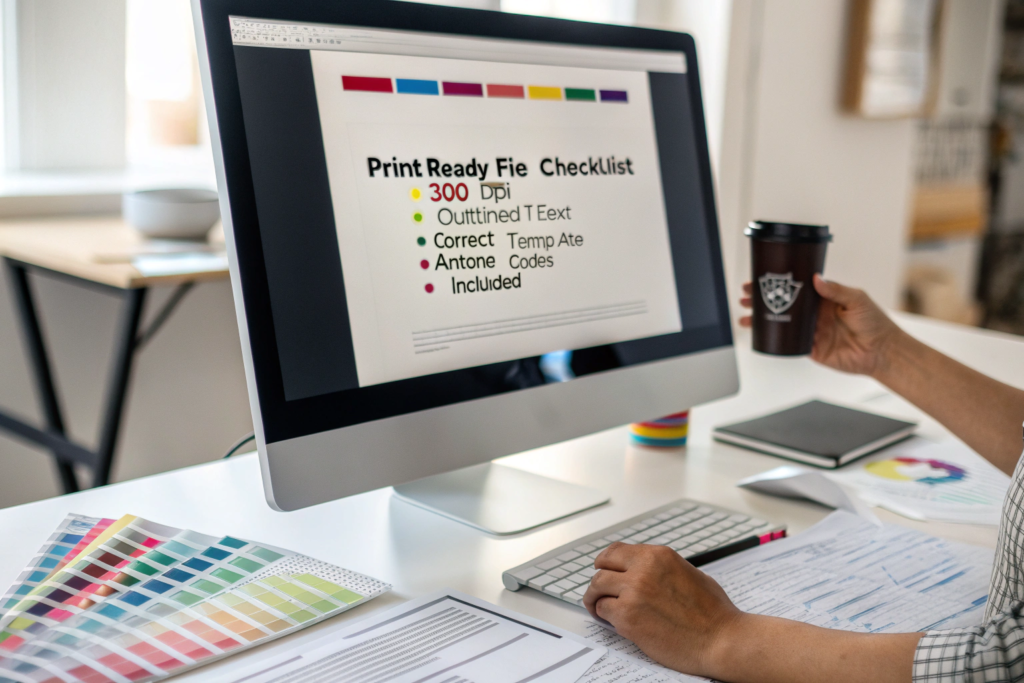
Artwork proofing is the stage most likely to cause a schedule slip, and it is the stage where the client has the most direct control. When you submit your artwork, our pre-press team checks the file for resolution, color mode, bleed margins, and text safety zones. We generate a digital proof, a 3D rendering of exactly how the wrap will look on the cup curvature, and send it to you for approval. If your file is print-ready, with at least 300 DPI resolution, CMYK color space, and correct dimensions for the cup template, the proofing stage takes approximately 24 to 48 hours. If the file requires adjustments, if the logo is too close to the rim, if the background color is in RGB rather than CMYK, or if the text is not converted to outlines, the back-and-forth correction cycles can add three to five days to the timeline. The most effective way to keep your order on schedule is to request our print-ready artwork template before you begin designing, and to submit files that match the template specifications exactly. This single step can save more time than any production acceleration we can perform on the factory floor.
What is the typical printing and curing duration for 10,000 units?
Once the proof is approved and the blank cups are inspected, the printing or sublimation process begins. For stainless steel or aluminum cups, full-color wraps are typically applied using heat sublimation transfer. The artwork is first printed onto a special transfer paper using sublimation inks. The paper is then wrapped precisely around the cup and loaded into a heat press machine. Under high temperature and pressure, the ink converts from a solid directly to a gas and penetrates the coated surface of the cup, creating a permanent, scratch-resistant, and dishwasher-safe image. A single high-speed heat press station can process approximately 40 to 60 cups per hour. With a bank of multiple stations running in parallel, we can comfortably produce 1,000 to 1,500 finished cups per day. For a 10,000-piece order, the bulk printing and curing phase takes approximately 7 to 10 working days. This dye-sublimation printing process is the gold standard for full-color drinkware because the image becomes part of the coating, not a sticker on the surface.
What Factors Can Accelerate or Delay a Large Cup Order?
A 20-day timeline is the standard. A 15-day timeline is possible under the right conditions. A 35-day timeline happens when specific, avoidable factors are present. Knowing what accelerates and what delays your order allows you to make informed trade-offs during the design and planning phase. Many of these factors are under your control before you even contact the factory.
The production schedule is elastic within a defined range. It stretches when complexity increases and compresses when design choices align with manufacturing efficiency. A simple, well-prepared order moves through the factory like water through a clear pipe. A complex, poorly prepared order encounters friction at every stage. The difference in lead time between these two scenarios can be two weeks or more.
How do cup material and shape complexity impact production speed?
A straight-walled stainless steel tumbler is the fastest shape to wrap. The surface is a simple cylinder with a consistent diameter from top to bottom. The heat press makes even contact across the entire print area. The sublimation transfer is uniform, and the reject rate is very low. A tapered cup, a curved mug, or a cup with a contoured grip area introduces complexity. The transfer paper must be cut to a curved template. The heat press must apply different pressure zones to ensure the wrap bonds evenly to the varying surface. The application time per cup increases, and the reject rate rises because the risk of a misaligned seam or a blurred curve is higher. Material also matters. Stainless steel with a white or light-colored sublimation coating accepts the transfer quickly and cleanly. A darker base color requires a white underbase layer, which adds a printing step. A plastic cup cannot withstand the high heat of sublimation and must use a different process, such as UV digital printing or shrink sleeve application. This material compatibility in printing is a critical pre-production consideration. Choosing a standard straight-wall stainless steel cup with a white coating is the single most effective way to maximize speed on a large order.
Why does packaging complexity add days to the final timeline?
Packaging is the final frontier where many fast orders slow down. A standard bulk pack, where each cup is placed in a simple poly bag and packed 50 to a master carton, adds approximately two days to the shipping timeline for 10,000 units. A retail-ready gift box with a die-cut foam insert, a multi-page instruction booklet, and a hang tag requires a completely different packing line. Each cup must be hand-assembled into its box. The insert must be folded and placed. The booklet and tag must be attached. This labor-intensive process can take three to five times longer than bulk packing. If you need the cups to arrive shelf-ready, factor this additional time into the schedule. We offer a hybrid approach where the cups are printed and cured at maximum speed, and the packaging is handled on a parallel assembly line to minimize the total schedule impact. Discuss your custom packaging requirements early in the planning process so we can allocate the correct packaging line resources to your order.
How Do We Ensure Print Quality on a Rushed 10,000-Piece Cup Order?
Speed without quality is just a faster way to produce garbage. A rushed order that arrives with misaligned wraps, color shifts, or peeling edges is worse than a late order. It damages the brand relationship, triggers returns, and destroys the factory’s reputation. We never sacrifice quality for speed. Instead, we have built quality assurance into the high-speed workflow so that every cup is verified without slowing the line to a crawl.
The quality system for a large-format cup order operates on three levels: in-line monitoring during the printing and heat-pressing stage, a statistically valid AQL sampling inspection after the cups come off the line, and a final pre-shipment check that includes functional testing of the cup lid, the vacuum seal if applicable, and the dishwasher resistance of the wrap. This layered approach catches defects at the source and prevents them from reaching the customer.
What is an AQL inspection and how does it work for cups?
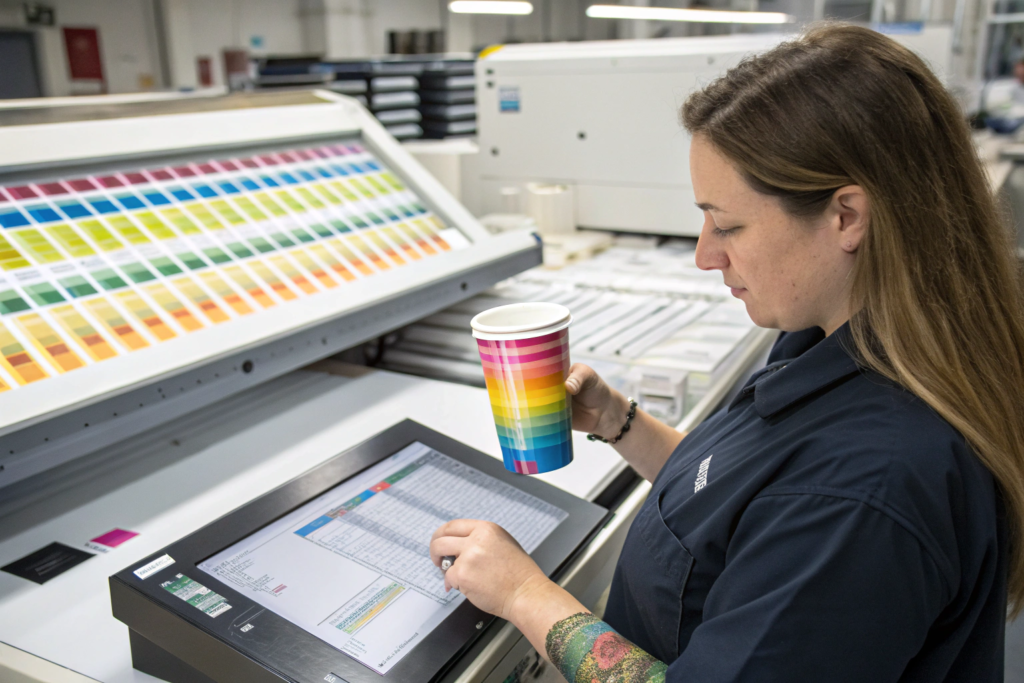
AQL stands for Acceptable Quality Limit. It is a statistical sampling methodology defined by international standards that determines how many units from a production lot must be randomly inspected and how many defects are permitted before the lot is rejected. For a 10,000-piece cup order using General Inspection Level II with an AQL of 2.5 for major defects and 4.0 for minor defects, the inspector examines a random sample of 200 cups. Major defects on a cup include a misaligned wrap seam, a color shift exceeding a Delta E of 2.0, a scratch on the printed surface, or a sharp burr on the rim. Minor defects might include a slight dust speck under the coating or a packaging scuff that does not affect functionality. If the number of major defects exceeds the acceptance number from the AQL table, the entire lot is held for 100% inspection and rework. This AQL quality control method provides a scientifically valid, internationally recognized standard for accepting or rejecting a production batch. We provide the AQL inspection report to every client with their shipment documentation.
How do we guarantee color consistency across all 10,000 cups?
Color consistency is the most visible quality metric on a full-color cup order. If the corporate blue on cup number one is a slightly different shade than the corporate blue on cup number 5,000, the client notices. We maintain color consistency through a calibrated digital color management system. The CMYK values from the approved proof are locked into the printer’s color profile. During the print run, a spectrophotometer measures color patches on a control strip printed alongside the cup wraps at regular intervals. If the measured Delta E, the numerical difference between the measured color and the approved standard, exceeds 1.5, the printer is paused and recalibrated. This real-time spectrophotometric color control ensures that the first cup and the last cup in a 10,000-piece run are visually identical under standard D65 daylight lighting. For brand colors that require an exact Pantone match, we can achieve this through a custom ink formulation for spot color printing or through a carefully calibrated CMYK conversion that we test on a physical sample before the bulk run begins.
How Should a Client Prepare Files and Instructions for the Fastest Turnaround?
The single most effective way to get a fast turnaround on a 10,000-piece cup order is to submit print-ready files and complete instructions on the first contact. When we receive a perfect file, the pre-press stage takes hours instead of days. The production slot is locked immediately. The entire factory workflow engages without interruption. When we receive a file that requires correction, the clock stops until the corrections are made and approved. That stoppage can cost more days than any machine speed can recover.
A print-ready file is a specific, technical document. It is not the same as a social media graphic or a website banner. It must meet the dimensional, resolution, and color space requirements of the specific printing process and the specific cup template. Preparing this file correctly is the most valuable contribution you can make to your order’s speed.
What are the essential specifications for a full-color cup wrap artwork file?
The artwork file must be set up at the exact dimensions of the cup’s printable surface area, which we provide as a downloadable template for each cup model. The template includes the bleed area, typically 3mm to 5mm beyond the trim edge, to prevent white slivers at the seam. The resolution must be at least 300 dots per inch at full scale. Any image placed at 72 DPI from a website will print as a pixelated, blurry mess. The color space must be CMYK, not RGB. RGB colors, which look vibrant on a screen, can shift dramatically when converted to printable CMYK inks. A bright neon green on screen may become a dull olive on the cup if the file is not properly converted. All text must be converted to outlines or the font files must be embedded. This prevents font substitution errors where the printer defaults to a generic font if your custom typeface is not installed. We provide a comprehensive print file preparation guide to every client. Following this guide is the most impactful time-saving action you can take.
Why is a physical Pantone reference better than a digital color preview?
Digital screens emit light. Cups reflect light. This fundamental difference means that a color on a screen will never perfectly match a color on a physical object, regardless of how well the screen is calibrated. A Pantone Solid Coated swatch book provides a physical, standardized color reference that both you and we can hold under the same lighting conditions. When you specify a Pantone number, we mix the ink or calibrate the printer to match that physical standard exactly. We then produce a physical proof cup and ship it to you for approval. You compare the proof cup to your Pantone swatch under the same lighting conditions that your customer will use. This physical color matching loop eliminates the guesswork and the revision cycles that occur when colors are discussed over email with digital images. The Pantone Matching System is the universal language of color in manufacturing. Using it is the fastest path to color approval.
Conclusion
The question "how fast" is never just about the machine speed. It is about the alignment of a well-prepared client file, a well-organized production line, a rigorous quality system that prevents rework, and a logistics plan that matches the deadline. A 10,000-piece full-color wrapped cup order can leave our factory in as few as 15 working days when all these elements align. It will take the standard 20 to 25 working days under normal conditions. It will take longer if the artwork requires multiple revision cycles or if the packaging demands complex hand-assembly.
We have walked through the key production stages, the factors that stretch or compress the schedule, the quality control systems that protect your brand identity during a fast run, and the file preparation steps that you control to ensure the fastest possible turnaround. The takeaway is simple: speed is a partnership. We provide the manufacturing capability. You provide the print-ready vision. Together, we hit the deadline.
If you have a corporate campaign, a retail launch, or a promotional event that requires 10,000 custom cups with a flawless full-color wrap, and you need a reliable timeline commitment from a factory that has the capacity to deliver, I invite you to contact us. Send us your artwork or your rough concept. We will provide the cup template, the file setup guide, and a firm production schedule with milestone dates. Our Business Director Elaine manages high-volume custom cup orders and can walk you through the timeline and options. Reach out to her directly at elaine@fumaoclothing.com. Your deadline is our deadline. Let’s make it together.




