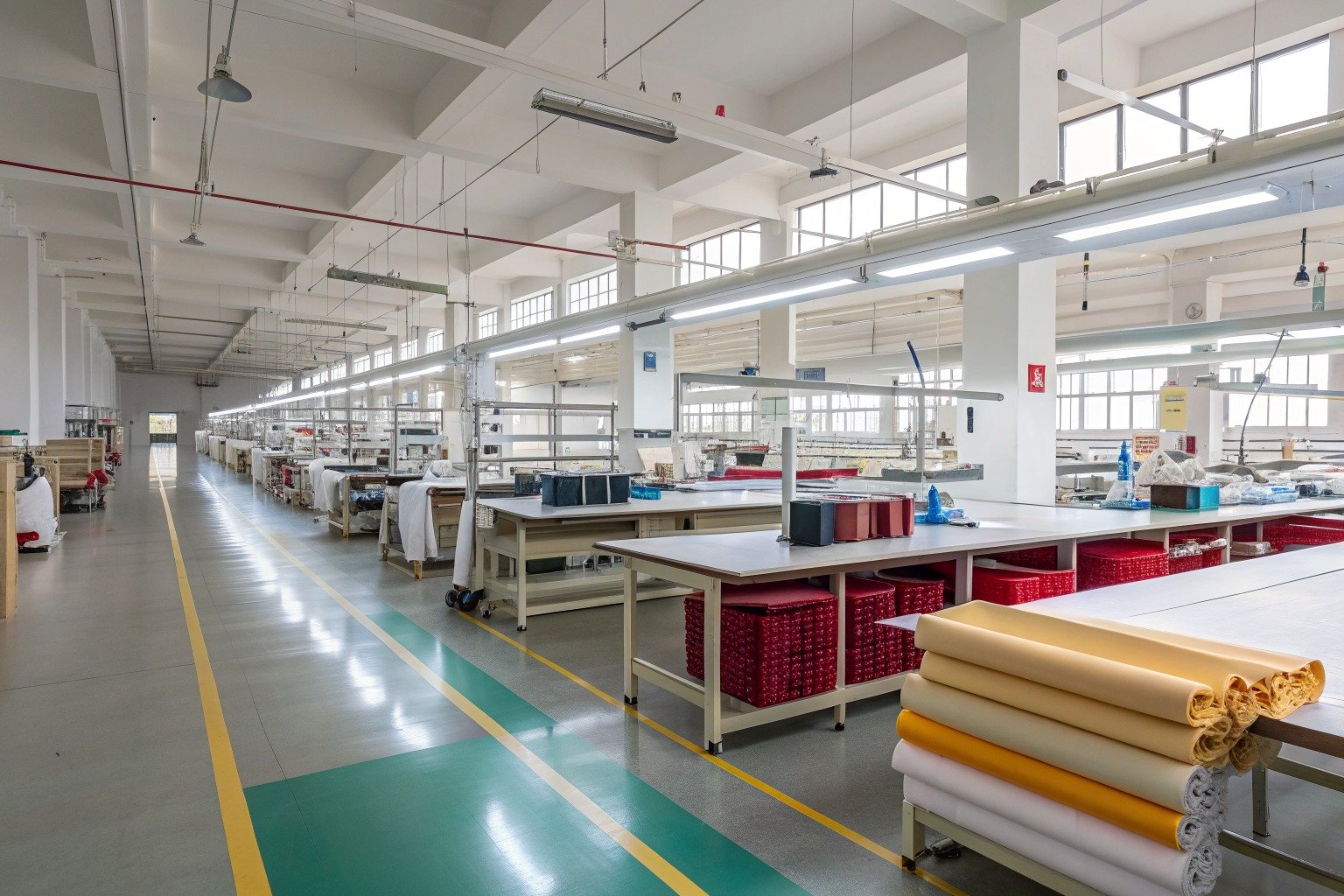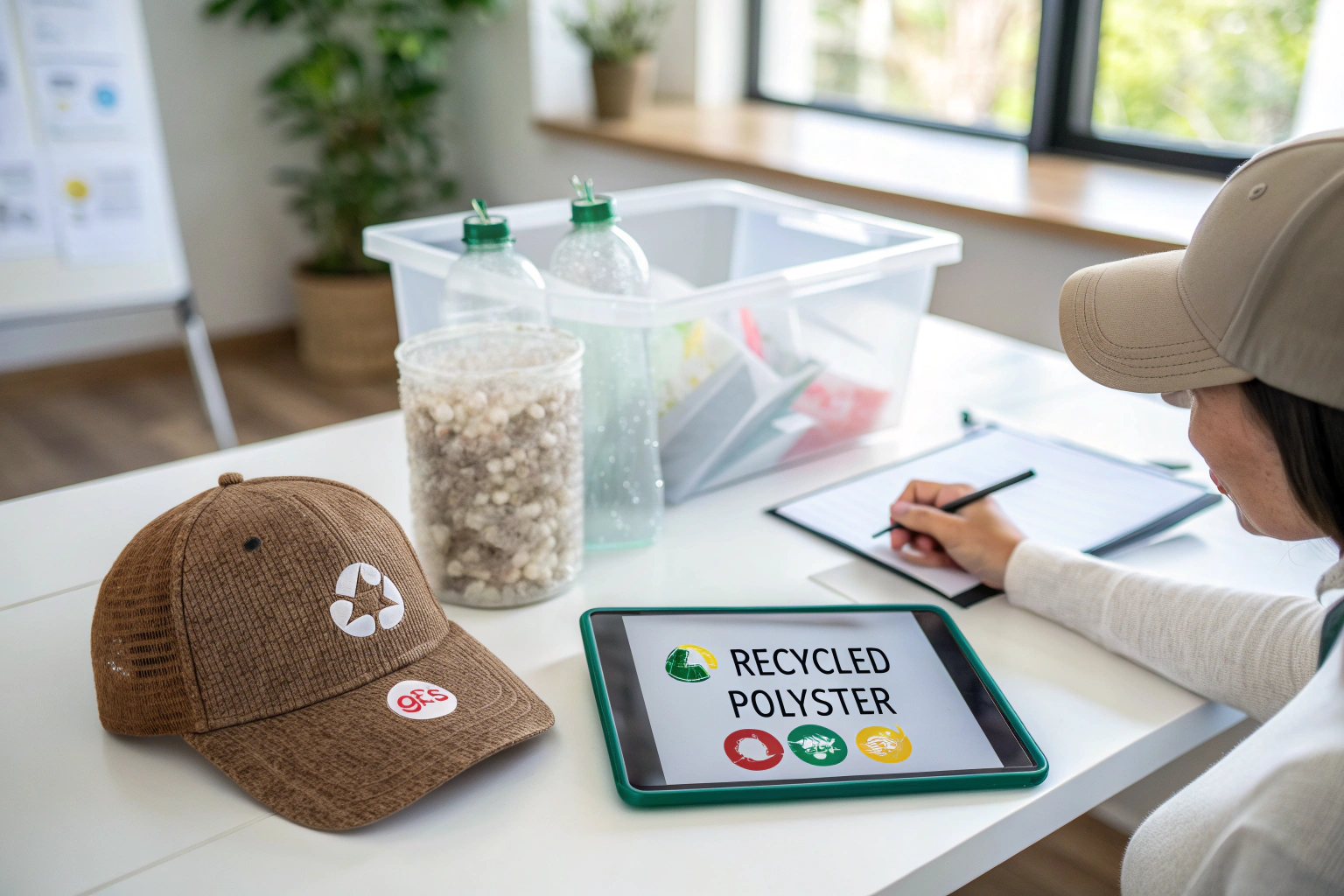
A few years ago, a sustainable streetwear brand from Berlin reached out to me with a problem. They had spent months searching for a baseball cap factory in China that could deliver a fully recycled polyester cap, not just a cap with a recycled front panel and a virgin visor, but a truly 100% recycled shell with a recycled brim insert, recycled sweatband, and recycled adjustable closure. Every supplier they contacted either could not do it, or claimed they could but could not produce a single certification to back up the claim. By the time they found us, they were exhausted and skeptical. We sent them our GRS certificate, a sample cap with a full recycled bill of materials, and a live video tour of our recycled polyester fabric inventory. Their first order shipped eight weeks later, and that cap is now one of their best-selling products.
You find a Chinese baseball cap factory that offers genuine recycled polyester options by searching with specific, verifiable keywords, demanding third-party certifications before engaging, and testing the supplier’s knowledge with technical questions about recycled materials that a trading company cannot answer. The search is not difficult, but it requires a different approach than searching for a conventional cap factory. You are not just looking for a manufacturer. You are looking for a manufacturer that has invested in a certified, traceable, recycled material supply chain.
Over the past five years, our factory has transitioned a substantial portion of our baseball cap production to recycled polyester. We did this because our brand clients demanded it, and because we believe sustainable manufacturing is the future of our industry. I have learned what separates a genuinely capable recycled cap factory from one that simply puts a green hangtag on a conventional product. I want to share exactly how to search, what to verify, and what questions to ask so that you find a partner who delivers what your eco-conscious customers expect.
What Specific Search Terms Identify Genuine Recycled Cap Factories?
The words you type into a search bar determine the quality of suppliers you find. Generic searches like "China cap factory" or "baseball cap manufacturer" return thousands of results, most of which are conventional factories that may or may not have any recycled capability. They will tell you they can do recycled polyester because they want the business, but they will source the fabric from whatever supplier is cheapest on any given day, with no certification and no traceability.
Effective search terms filter for commitment. A factory that has invested in recycled polyester capability wants to be found for that specific capability. They use specific language in their website content, their Alibaba product listings, and their trade show materials. Your search terms should combine the product category with the material specification and the certification standard. This approach filters out the generalists and surfaces the specialists.
Why do "GRS certified" and "recycled PET" filter out unqualified suppliers?
GRS stands for Global Recycled Standard, a certification issued by Textile Exchange that verifies the recycled content in a product and tracks it through the entire supply chain from the recycling facility to the finished goods factory. A factory that holds a valid GRS scope certificate has undergone an independent audit of its recycled material handling, its documentation systems, and its chain of custody procedures. Searching for "GRS certified baseball cap factory" immediately eliminates any supplier that has not made the investment in certification. Similarly, "recycled PET" is specific. PET, which stands for polyethylene terephthalate, is the plastic used in beverage bottles. Recycled PET fabric is made from post-consumer bottles. A factory that uses the term "recycled PET" rather than the vague "eco-friendly fabric" knows the material and is likely sourcing from a legitimate recycled yarn supplier. The combination of "GRS certified" and "recycled PET" in your search terms targets the factories that are serious about recycled production. The GRS certification standard is the benchmark. Ask for the certificate number and verify it on the Textile Exchange database.
What role do trade show directories and B2B platforms play in the search?
Trade show directories and B2B platforms provide a different filter: the filter of public commitment. A factory that exhibits at a major trade show like Magic in Las Vegas, Premiere Vision in Paris, or Intertextile in Shanghai has made a significant financial investment in its market presence. These shows increasingly have dedicated sustainable sourcing sections. Searching the exhibitor directories of these shows for "recycled polyester," "sustainable headwear," or "eco-friendly caps" yields a curated list of factories that have been vetted by the show organizers at least for basic legitimacy. On Alibaba, the search function allows filtering by "Custom Manufacturer" and "GRS" or "Recycled Materials" tags. However, the presence of a tag on Alibaba is not verification. Many suppliers check every filter box available without possessing the actual certification. The B2B platform supplier verification tools are a starting point, not an endpoint. Use them to build a long list, then apply the rigorous verification steps to narrow it down.
What Certifications Must a Recycled Cap Factory Provide?
A certificate is not a piece of paper. It is a verifiable, audited statement of fact about a factory’s supply chain. A genuine recycled cap factory can provide specific, current, and independently verifiable certifications. A factory that is pretending will offer vague assurances, expired documents, or certificates that belong to a different company. The difference is discoverable in minutes if you know what to ask for and where to verify it.
The foundational certification for recycled polyester is the GRS. Without a valid, current GRS scope certificate that lists the specific factory and the specific product category, any recycled content claim is unsubstantiated. Additional certifications add layers of assurance. OEKO-TEX Standard 100 verifies that the finished product is free from harmful substances. A social compliance audit report from an accredited third-party auditor verifies that the factory meets acceptable working conditions. Together, these documents create a profile of a factory that is transparent, accountable, and professionally managed.
How do you verify a GRS certificate on the official database?
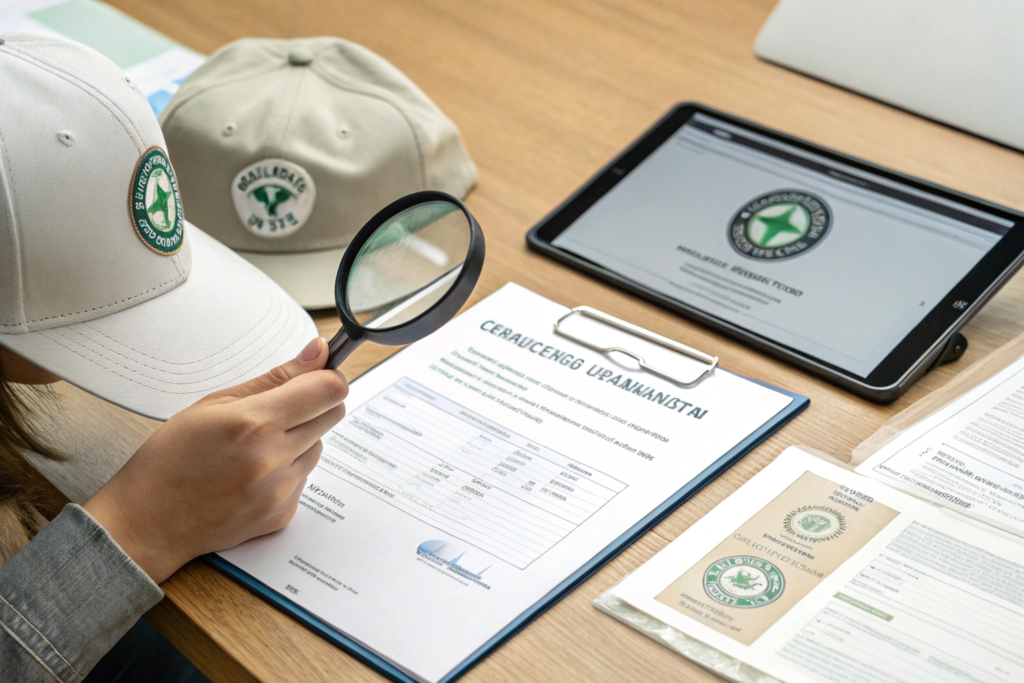
The verification process is simple and takes less than five minutes. Ask the supplier for their GRS scope certificate number. A legitimate supplier will provide it immediately, often with a copy of the certificate itself. Go to the Textile Exchange public database, enter the certificate number, and search. If the certificate is valid, the database will display the certified company’s name, which must match the name of the supplier you are talking to. It will list the certified site address, the product categories covered, and the certificate’s issue and expiration dates. A GRS certificate is valid for one year and must be renewed annually. If the certificate number returns no results, the certificate is fake. If the company name does not match, the supplier is using someone else’s certificate. If the certificate is expired, the supplier has not maintained their certification. Any of these outcomes is a red flag that disqualifies the supplier. This GRS certificate verification portal is a public resource. Use it.
What does an OEKO-TEX Standard 100 certificate add to recycled claims?
A GRS certificate verifies recycled content. It does not test for harmful chemicals. Recycled polyester made from post-consumer bottles can, in some cases, contain residual chemicals from the original bottle contents or from the recycling process if it is not properly managed. An OEKO-TEX Standard 100 certificate verifies that the finished cap has been tested by an independent laboratory and found free from a comprehensive list of over 100 harmful substances, including heavy metals, phthalates, formaldehyde, and carcinogenic dyes. This certification is particularly important for caps that will be worn during exercise, where sweat and skin contact increase the risk of chemical migration. The combination of GRS and OEKO-TEX tells a complete story: the material is recycled, and the product is safe. This OEKO-TEX certification is the standard demanded by responsible brands and retailers worldwide.
What Technical Questions Reveal a Factory’s Real Recycled Expertise?
A trading company can learn to say "yes, we have recycled polyester" in five minutes. They cannot learn the technical details of recycled yarn manufacturing, fabric construction, and certification requirements in the same time. Asking specific, technical questions about the recycled material supply chain is the most effective way to separate a genuine factory from a reseller. A genuine factory will answer immediately with specific data. A reseller will deflect, give vague answers, or promise to check and get back to you.
The questions should probe the source of the recycled material, the physical properties of the fabric, and the factory’s handling procedures for recycled inputs. These are not trick questions. They are standard inquiries that any factory with real recycled capability handles routinely. The answers reveal whether the factory controls its material supply chain or simply buys whatever fabric is available on the wholesale market.
Why ask about the source and denier of the recycled polyester yarn?
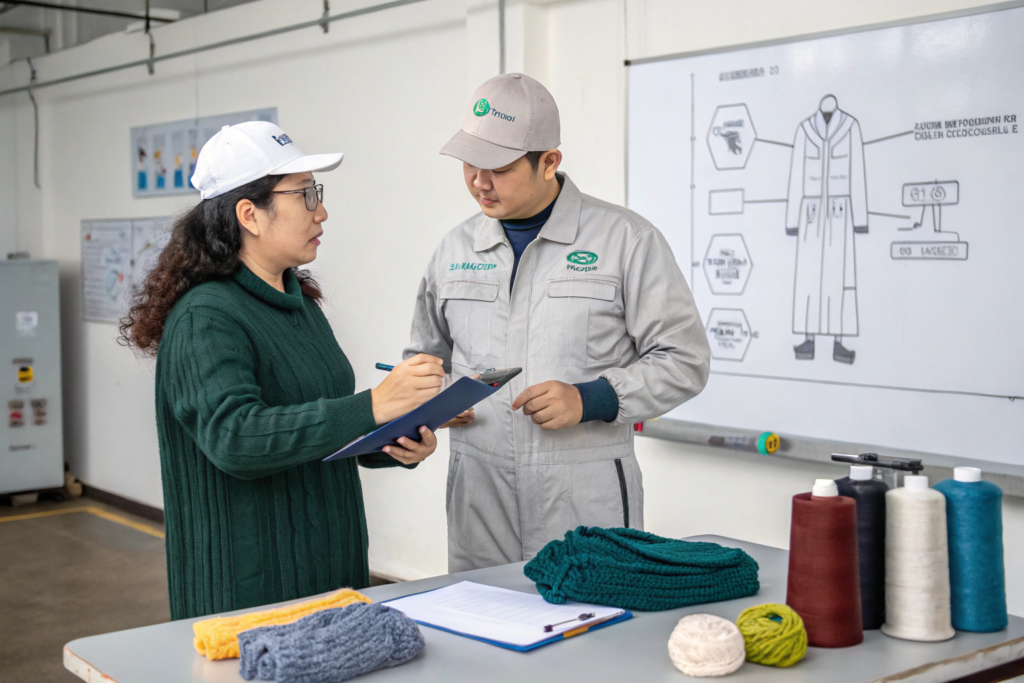
Recycled polyester yarn comes from specific sources with specific physical properties. The source, post-consumer PET bottles, post-industrial fiber waste, or ocean-bound plastic, determines the sustainability narrative and the certification pathway. A capable factory knows the source of its recycled yarn and can provide the supplier’s name and certification. The denier of the yarn, a measure of its thickness, and the filament count determine the fabric’s hand-feel, durability, and surface texture. A 150-denier yarn with 48 filaments produces a different fabric than a 300-denier yarn with 96 filaments. A cap designed for outdoor performance needs a different yarn specification than a fashion cap. A factory that can discuss recycled polyester yarn specifications with specific numbers understands the material. A factory that says "it is good quality, don’t worry" does not.
What does a factory’s in-house recycled fabric inventory indicate?
A factory with genuine recycled capability maintains an inventory of recycled fabrics. They have rolls of recycled polyester twill, recycled canvas, and recycled mesh on their shelves, ready to cut. They can show you these fabrics on a video call. They can send you swatches within days. A factory without genuine capability orders fabric after receiving your order. They may or may not receive what they ordered. They may or may not receive it on time. The presence of an in-house recycled fabric inventory is a visible, verifiable signal of real commitment to recycled production. It means the factory has invested working capital in recycled materials. It means they produce recycled caps regularly, not just as a one-off for your order. Ask to see the fabric inventory on a live video call. This factory inventory management visibility is a direct indicator of capability.
How Should You Verify Recycled Claims Before Placing an Order?
Verification is the bridge between a supplier’s claims and your confidence. You have found a factory that speaks knowledgeably about recycled polyester. You have verified their GRS certificate. You have asked technical questions and received satisfactory answers. Before you wire a deposit, there is one final verification stage that protects your order and your brand’s reputation.
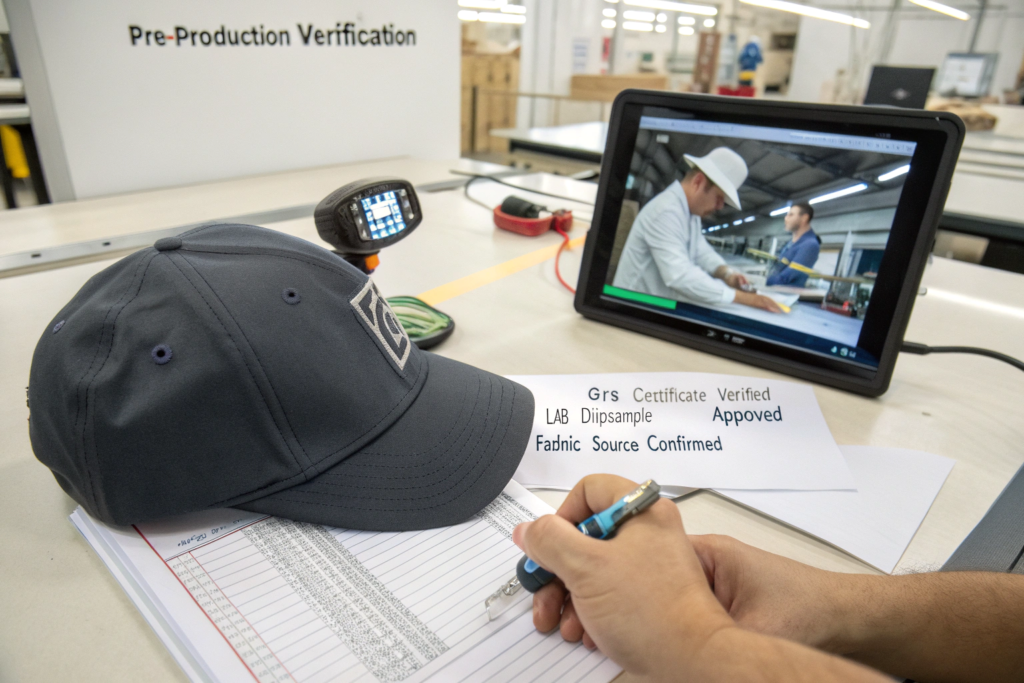
This stage involves testing the specific material that will be used for your caps, not a generic sample, and documenting the chain of custody that will be applied to your order. A genuine recycled factory will facilitate this verification. A factory with something to hide will resist it. The verification process is your last line of defense against greenwashing.
How can a lab test confirm the recycled content of a sample cap?
A physical sample can be tested by an independent laboratory to verify its recycled content. Laboratories accredited to perform textile fiber analysis can determine the chemical composition of the fabric and, using specific testing protocols, can distinguish between virgin and recycled polyester. This is not a routine test for every order, but it is a powerful tool when establishing a relationship with a new supplier. You request a pre-production sample, send it to an independent lab, and receive a report confirming the fiber content and, if the test protocol supports it, the recycled nature of the fibers. We provide a sample from the actual fabric lot that will be used for production. We encourage clients to test it independently. This textile fiber testing is the ultimate verification of material claims.
What is a GRS transaction certificate and why must it match your order?
A GRS transaction certificate, or TC, is the document that tracks a specific batch of recycled material through the supply chain. When we purchase recycled yarn from a certified supplier, we receive a TC that states the quantity, the recycled content percentage, and the certification number. When we ship your finished caps, we issue a TC that links your order to the original yarn purchase. This creates an unbroken chain of documented custody from the recycling facility to your warehouse. Before placing a production order, confirm that the factory can and will provide a GRS transaction certificate for your specific order. The TC is the proof that your caps contain certified recycled material. A factory that cannot provide a TC for your order cannot substantiate its recycled claims at the order level. The GRS transaction certificate system is the mechanism that makes recycled content claims auditable.
Conclusion
Finding a Chinese baseball cap factory that offers genuine recycled polyester options is a process of disciplined searching, rigorous verification, and technical questioning. It is not difficult, but it requires that you refuse to accept vague assurances and green-tinted marketing as substitutes for documented, certified, verifiable recycled content.
We have walked through the specific search terms that filter for committed factories, the certifications like GRS and OEKO-TEX that must be presented and independently verified, the technical questions about yarn source and denier that separate manufacturers from resellers, and the pre-production verification steps including lab testing and transaction certificates that protect your brand’s integrity.
The market for sustainable accessories is growing rapidly, and the brands that succeed are the ones that build their products on a foundation of verifiable truth. Your customers are educated, skeptical, and increasingly willing to verify the claims on your hangtag. You need a supply chain that can withstand that scrutiny.
If you are searching for a baseball cap factory with genuine recycled polyester capability, we invite you to apply the verification process described in this article to us. Request our GRS certificate and verify it on the Textile Exchange database. Ask us about our recycled yarn suppliers and yarn specifications. Request a pre-production sample and send it to an independent lab if you wish. Our Business Director Elaine manages our sustainable headwear partnerships and can coordinate all verification steps. Contact her directly at elaine@fumaoclothing.com. Let’s build a cap that your customers can wear with pride, from the recycled fiber to the finished product.