Every summer, I watch the same thing happen on social media. A woman with a beautiful wide-brim straw hat gets into a car, and the brim bends against the headrest. She takes the hat off, and it is warped. She stuffs it in a beach bag, and it comes out looking like a crushed paper plate. You see this frustration online, and you know your customers see it too. They want the sun protection and the style of a big straw hat, but they also want the convenience of tossing it in a suitcase without destroying it. This is why so many buyers in the U.S. and Europe are searching for a folding straw hat design.
Getting a Chinese factory to make a folding straw hat is not as simple as just adding a crease to a standard design. You need a manufacturer who understands the structural integrity of the straw braid, the placement of internal wires, and the hardware required to hold the shape after hundreds of folds. At AceAccessory, we have been perfecting this specific product niche for several seasons because we saw the same demand you are seeing. It takes a different approach to material sourcing and pattern making.
You might think any factory with a sewing machine can do this. I can tell you from experience, they cannot. The first time we tried to make a rollable straw hat, we used the same soft braid we used for a standard floppy hat. It folded fine, but it never held its shape again. It looked like a sad pancake. We had to go back to the drawing board, re-engineer the brim edge, and source a different grade of paper straw. This is the kind of development work that separates a real manufacturing partner from a simple vendor.
What Materials Are Best for a Foldable Travel Straw Hat?
The material is everything when it comes to a folding hat. You cannot use the stiff, lacquered straw you might find on a cheap cowboy hat from a party store. That will snap like a twig the first time you try to roll it. You also cannot use a braid that is too loose, because the structure will sag after the wire is removed from its storage pouch. We spend a lot of time with our suppliers in the Zhejiang region testing the "memory" of the straw.
The material choice dictates the entire user experience. A customer who buys a foldable hat expects it to pop back open with a shake. If it requires five minutes of reshaping and steaming, they will return it. That return lands on your seller rating, not the factory’s. So we are very particular about the paper straw and polyester blend we use for these specific items. We look for a material that has a natural spring to it.
Why Is Viscose Paper Straw Better Than Natural Raffia for Crease Retention?
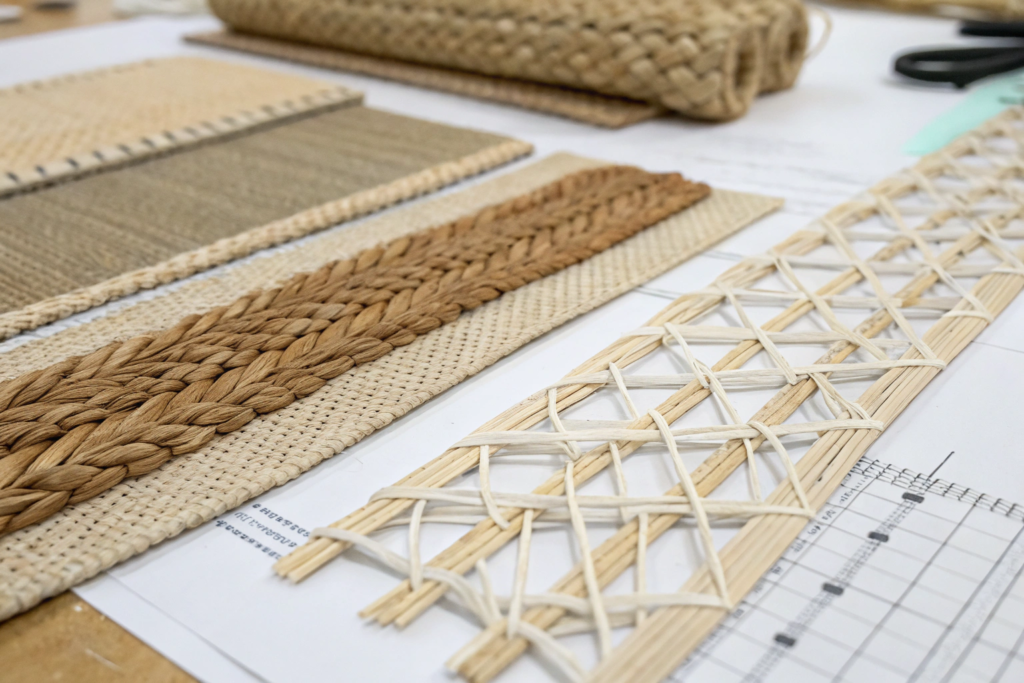
Natural raffia is beautiful. It has a rustic, beachy texture that photographs well. But it is also brittle. The fibers in natural raffia are short and do not have the elasticity to withstand being bent at a sharp angle repeatedly. After about ten folds, the fibers start to break, and you get a fuzzy, worn look right at the fold line.
For a true folding hat design, we almost always recommend viscose paper straw. This is a man-made material derived from wood pulp. It is extruded into a consistent, smooth fiber that is much stronger than natural raffia. More importantly, it has what we call "flexible memory." You can bend it, and it wants to return to its flat, woven state. We source our paper straw braid specifically from mills that treat the viscose with a softening agent during the twisting process. This prevents the material from becoming brittle in dry climates or during air travel. The result is a hat that can be folded along the same seam hundreds of times without the straw material fraying or losing its color at the stress point. This is the hidden detail that prevents customer complaints six months after purchase. If you want to explore our full range of custom hats, we have dozens of base shapes ready for your design.
How Do Internal Wire Frames Impact the Rollability of a Folding Straw Hat?
The second critical component is the skeleton. You cannot rely on the straw alone to hold a circular shape, especially after it has been folded flat. The brim needs a continuous ring of memory wire. Not all wire is the same. We use a specific coated steel wire that is spring-tempered. This is different from the soft aluminum wire used in some costume pieces. Soft aluminum wire bends easily, but it does not un-bend. If a customer accidentally crimps the aluminum rim while folding it into a beach bag, the hat will have a permanent dent.
The memory wire we use is designed to snap back to a perfect circle. It is sewn into a channel on the very edge of the brim. The gauge of the wire is critical. Too thick, and the customer cannot roll it small enough to fit in a carry on luggage. Too thin, and the brim will wobble in the wind. We also have to consider the ends of the wire. They must be capped with a soft plastic tip and overlapped slightly inside the channel to prevent the sharp metal edge from poking through the straw over time. This is a quality control checkpoint that inexperienced factories often miss, leading to scratched fingers and returned merchandise. We also apply this same attention to detail when producing our line of fashion belts where metal tips and buckles require similar safety checks.
How Do You Communicate Foldable Hat Specs to a Zhejiang Manufacturer?
This is where the language barrier can kill a project. You might send a photo of a competitor’s hat from a website and write "I want this, but it folds." That is not enough information for a factory to produce a reliable, mass-market item. You need to speak the language of technical specifications. You need to define where it folds, how it folds, and what holds it in the folded position.
I have seen buyers get frustrated because the sample they received looked like a taco shell instead of a hat. The issue was not the factory’s skill. The issue was the lack of clear, visual instruction. We have developed a specific set of terms and diagrams that bridge the gap between a buyer’s vision and the production floor. It starts with the Tech Pack, which is the blueprint for the hat.

What Key Measurements and Tech Pack Details Prevent a Lumpy Folded Shape?
You cannot just take a standard hat pattern and add a fold. The geometry of the crown and brim must change. A standard hat has a continuous, flat brim. A folding hat has a deliberate break in that plane. If you fold a standard brim in half, the opposite side of the brim buckles and creates a lump. That lump is what warps the hat over time.
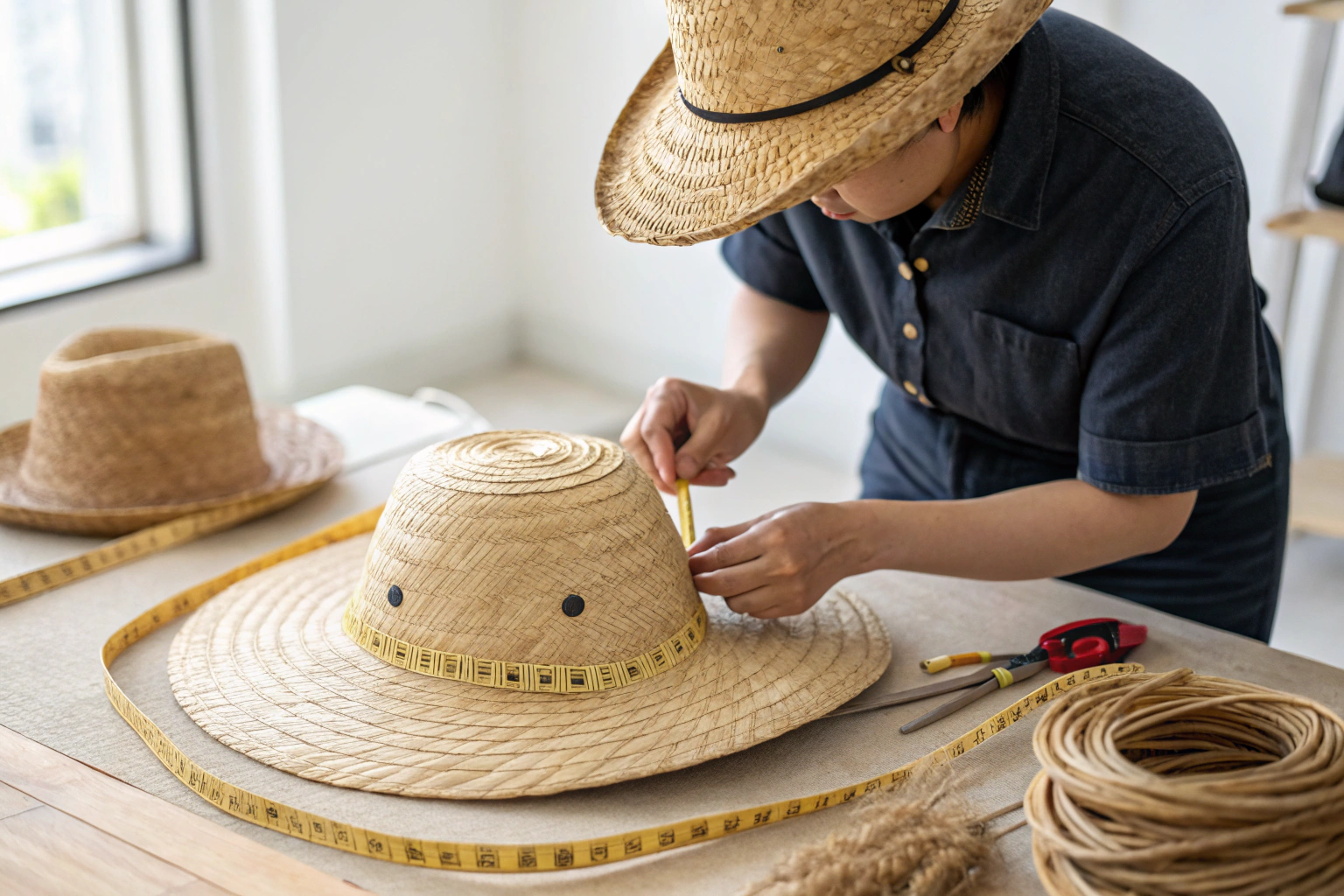
The Tech Pack must specify the exact placement of the twist seam. Usually, this is a straight line from the front center of the brim to the back center. We also need to adjust the brim width at the sides. For a folding straw hat, we often make the side brim slightly narrower than the front and back. This reduces the amount of material that has to be compressed when the hat is folded. Here is a simple comparison of how the spec sheet changes for a folding design versus a rigid design:
| Specification Point | Standard Rigid Straw Hat | Foldable Travel Straw Hat |
|---|---|---|
| Brim Wire Type | Single wire, 2.0mm Steel | Double spring wire, 1.5mm Steel |
| Brim Seam Structure | Continuous circle | Circle with defined flexible hinge point |
| Crown Height | 4.5 inches | 4.0 inches (reduced to allow easier rolling) |
| Trim Placement | Anywhere | Cannot cross the designated fold line axis |
The trim placement is a huge detail. You cannot put a stiff leather band or a wooden bead exactly where the hat is supposed to crease. It will prevent the fold. We mark the "No Trim Zone" clearly on the design file. This level of detail ensures the first sample comes back functional, saving weeks of back-and-forth sampling. Our design team is trained to spot these potential conflicts before the first cut is made.
How Do We Test Snap Buttons and Elastic Loops for Frequent Use?
The mechanism that holds the hat closed is just as important as the fold itself. We use two primary methods: a snap button on a fabric tab or a sewn-in elastic loop. The failure rate on these small parts is high if they are not tested.
For snap buttons, we do not use the cheap plastic ones found on fast fashion. We use a specific metal snap with a strong spring interior. We test these snaps using a pull-force gauge. The snap must hold tight enough to keep a rolled hat secure in a weekender bag, but not be so tight that a customer with arthritis or long nails cannot undo it. We look for a release force of around 2 to 3 kilograms. Anything less, and the hat pops open. Anything more, and it is a usability issue.
For elastic loops, the enemy is UV light and salt air. A cheap rubber elastic will dry out and snap after one summer season. We spec a woven elastic made from polyester wrapped around a rubber core. It is more expensive, but it lasts for years. We also do a stretch test on the sewing line. Each loop is pulled to 150% of its resting length to ensure the stitching holds and the elastic does not whiten or show stress marks. These are the small details that ensure a hat bought for a trip to Hawaii is still functional for a trip to the Caribbean next year. This same level of component testing is applied to all our hair bands and other accessories that rely on elastic tension.
What Are the Minimum Order Quantities for Custom Folding Straw Hats?
This is the question that stops a lot of small brands and online store owners in their tracks. You see a beautiful folding hat design and think, "I could sell 100 of these easily." Then the factory tells you the MOQ is 1,200 pieces per color. That kills the deal. It is a valid concern because setting up the specific machinery for a folding brim is more complex than a standard cut-and-sew hat.
The reality of manufacturing is that the folding feature requires custom components. The spring wire has to be cut to a specific circumference. The pattern has to be graded across sizes. The trim has to be placed carefully. But that does not mean you need to order a full container load to get started. We have structured our production line at Shanghai Fumao to accommodate the growth trajectory of emerging brands.

Can Small Boutiques Order Under 500 Units of a Custom Foldable Design?
Yes, but with an asterisk. The asterisk is about customization level. If you want a completely new shape of crown that requires a new wooden molding block, then 500 units is too low. The cost of the mold alone would make the unit price uncompetitive.
However, if you are willing to work with our existing block shapes and simply apply your custom trim—like a specific color of ribbon, a unique printed sweatband, or a branded hangtag—then a smaller quantity is absolutely possible. We often work with boutiques on orders of 300 to 500 pieces total, mixed across 2 or 3 colors. The key is to use a base material we already stock, like natural viscose or a bleached white paper braid. Then we add the folding wire mechanism, which we cut in-house. This approach gives you a unique product for your online store without the upfront investment of full private-label tooling. It is a middle ground that allows you to test the market for a foldable travel hat without overcommitting on inventory.
How Does Material Dyeing Affect Lead Times for Folding Straw Hats?
Color is the biggest driver of lead time and MOQ in this category. Natural straw color is easy. We keep tons of it in stock. But if you want a specific shade of "Dusty Rose" or "Sage Green," we have to consider the dyeing process.
Straw hats are typically dyed after they are woven into braid, or sometimes after the hat body is sewn. This is called "piece dyeing." The dye bath for straw material has a minimum capacity. You cannot dye just 5 kilos of material; you need enough to fill the vat for consistent color absorption. This usually pushes the MOQ higher if you require a custom Pantone match. The lead time also extends by about 10 to 14 days for custom colors.
There is a workaround we use for many online boutique clients: over-dyeing natural stock. If we have natural hats ready, we can over-dye them in smaller batches. It is faster, but there is a slight limitation on the vibrancy of the color compared to dyeing the raw fiber. We are transparent about this trade-off. We show you a lab dip on the actual hat body so you see the final effect before we commit to the order. This ensures that the folding function is not compromised by a dye process that makes the straw too stiff or too limp. You might also want to browse our shawls and scarves which use similar piece-dyeing techniques for seasonal color updates.
How Do You Ensure a Foldable Straw Hat Survives International Shipping?
You have nailed the design. The sample folds perfectly and pops open like magic. You place an order for 2,000 pieces. They arrive in Long Beach, and you open the container to find that half of them have been crushed under the weight of the cartons above them. The wire rims are bent into figure-eights. This is a nightmare scenario that we have learned to prevent through specific packaging engineering.
Shipping a folding hat is counter-intuitive. You might think, "It folds, so it is small and tough." That is wrong. A folded hat is under tension. The wire wants to spring open. If the carton is not strong enough to resist that outward pressure, the boxes bulge and get crushed by the forklift operator. We have developed a packaging protocol specifically for foldable items to address this unique stress point.
What Is the Best Way to Pack a Folding Hat to Prevent Wire Damage?
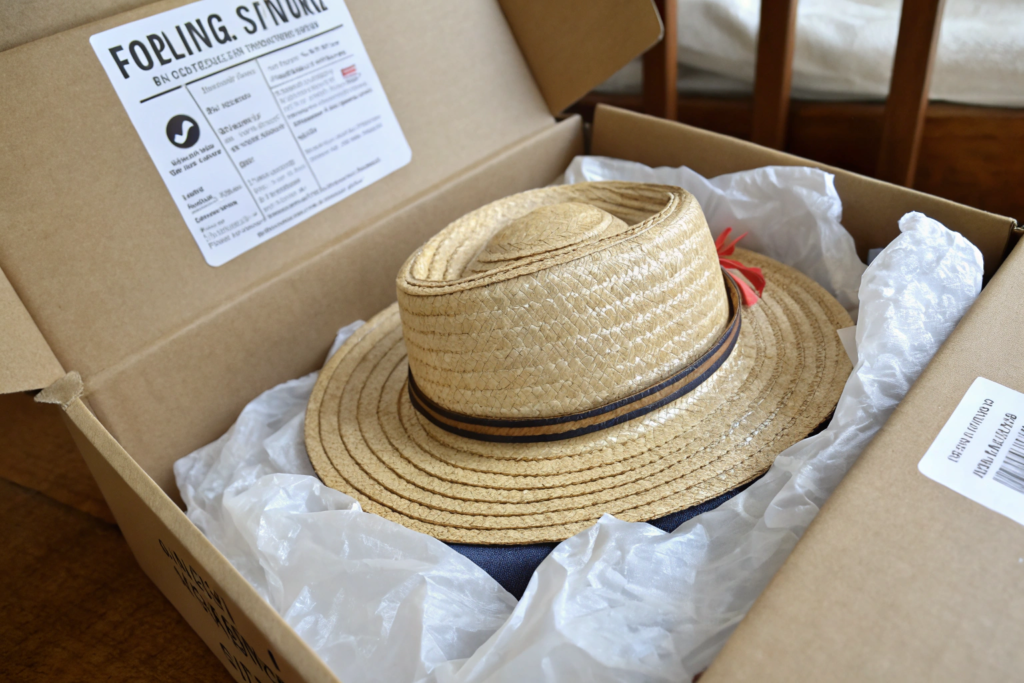
The key is to immobilize the folded shape. You cannot just toss ten folded hats into a polybag. They will shift against each other, and the friction will abrade the straw and dislodge the wires.
We use a specific inner packing method. Each hat is folded and secured with its own snap or elastic. Then, it is placed into a small individual polybag. This bag is not loose. It is sized to be snug around the folded hat. Then, we use a corrugated divider inside the master carton. Think of it like a wine box. Each hat sits in its own little cell. This prevents the hats from piling up on top of each other. For larger brims, we sometimes use a cardboard ring insert that sits inside the folded hat to act as a skeleton, preventing the side walls of the carton from pushing in. This might add 15 cents to the cost of goods, but it saves thousands in chargebacks for damaged merchandise. We apply similar protective packaging logic when shipping fragile items like our decorative hair clips with delicate embellishments.
Why Is Vacuum Packing Bad for Paper Straw Hats with Memory Wire?
I have had buyers ask me to vacuum seal the hats to save on shipping volume. It sounds smart. Squeeze out all the air, make the box tiny. Do not do this. Ever.
Vacuum packing is death for a paper straw hat with a memory wire. First, the vacuum pressure crushes the fibers of the viscose straw. It removes the natural loft and makes the hat look flat and lifeless. Second, it forces the spring wire into an unnatural, compressed shape for weeks. Even spring steel has a limit. If you hold it in a tight compression for a month at sea, it will lose its "spring." The hat will come out of the bag limp and unable to hold a round shape. We only use breathable, non-compressive packaging. The goal is to protect the hat, not to shrink it into a pancake. A slightly larger carton is a small price to pay for a hat that looks like the sample you approved. This same principle guides how we package our knit hats and beanies to prevent fiber compression and maintain loft.
Conclusion
Creating a folding straw hat that actually works is a collaboration between a buyer with a vision and a factory with the right technical expertise. It is not as simple as bending a regular hat in half. It requires a specific understanding of materials like viscose paper straw, the tension of spring wire, and the geometry of the pattern to avoid a lumpy, awkward silhouette. We have walked through the entire journey, from the first sketch on a tech pack to the moment the carton is sealed for the voyage across the ocean.
At Shanghai Fumao, we have made these mistakes so you do not have to. We have seen the failed elastic loops and the crushed brims. We took those lessons and built a process that reliably produces travel-ready hats that retain their shape and style. Whether you are a large department store looking for a private label program or a small online boutique testing the waters with a few hundred units, the principles remain the same: clear communication, quality components, and protective packaging.
If you are ready to develop a folding straw hat that your customers will actually want to pack in their suitcase, we are here to help. Our design team can walk you through the material options and the available block shapes to keep your costs in line with your budget. We handle the technical heavy lifting so you can focus on selling.
To discuss your specific requirements or to get a quote on a folding hat program, please reach out to our Business Director, Elaine. She can coordinate samples and provide you with a realistic timeline for production. You can contact her directly at elaine@fumaoclothing.com. Let us help you create a hat that travels as well as your customers do.