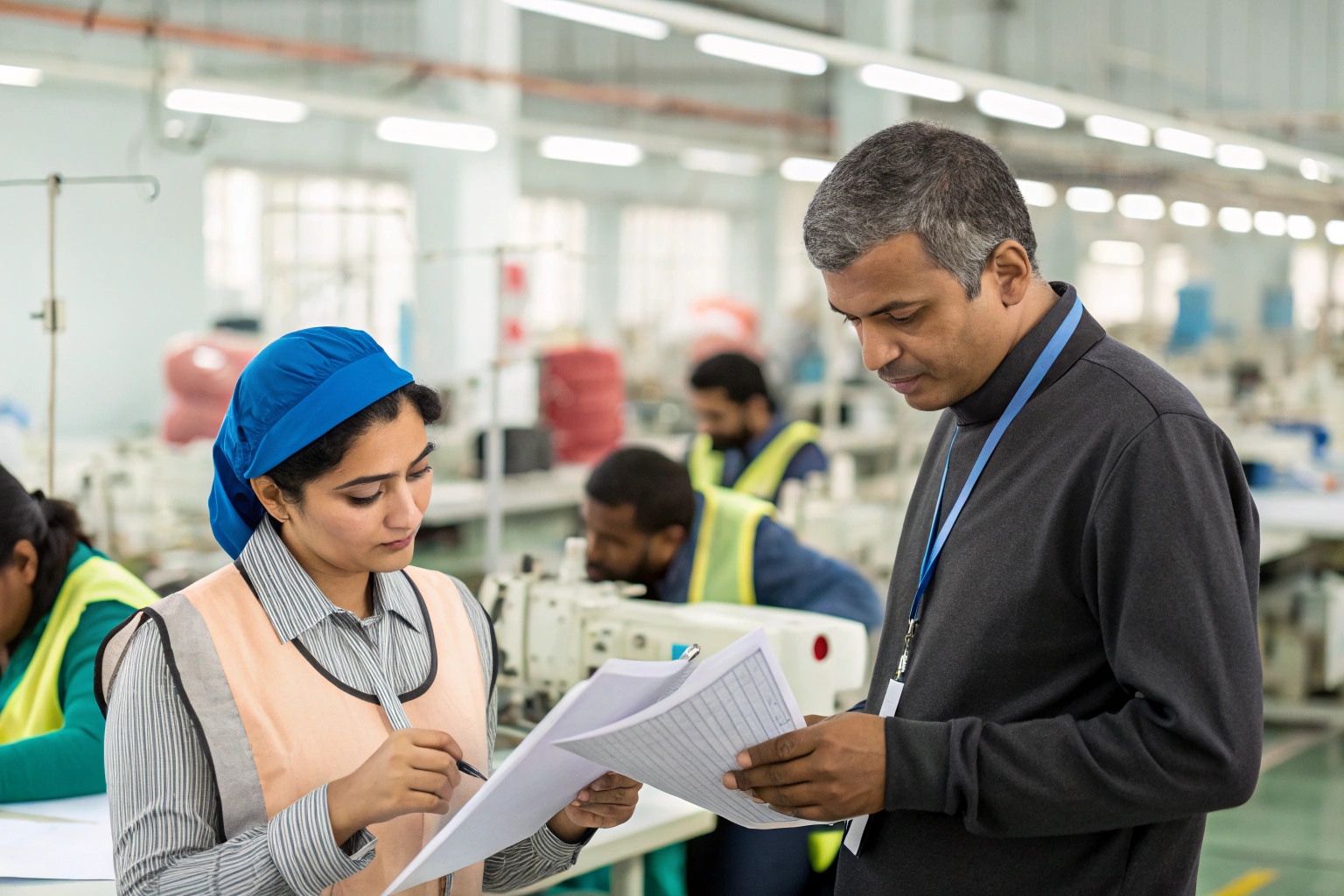
You are finalizing a new supplier relationship with a factory in China. The samples are perfect. The price is competitive. Your brand is built on values of ethical production and sustainability. Your customers trust you to do the right thing. You ask the factory salesperson, "Do you use child labor?" The answer is an immediate and emphatic "No, of course not." But how do you know? A verbal assurance is not enough. You need verifiable, objective evidence that the factory's workforce is of legal working age and that the employment is voluntary. You are not just sourcing a product. You are staking your brand's reputation on the integrity of your supply chain.
Verifying child-labor-free production requires a multi-layered approach that goes far beyond a simple question. It involves requiring a recent, unannounced third-party social compliance audit from a recognized firm like SGS or Intertek, personally reviewing the auditor's findings on age verification procedures, observing the workforce during an unannounced video call, and cross-referencing the audit report with your own direct observations and documentation requests.
I manage Shanghai Fumao in Zhejiang, and I welcome this scrutiny. A factory that is genuinely committed to ethical labor practices has nothing to hide. We have the systems, the documentation, and the audit history to prove our compliance. Let me explain the specific tools and methods you should use to verify a factory's labor practices and protect your brand.
Why Is a Third-Party Social Compliance Audit the Gold Standard?
A verbal assurance from a factory salesperson is not verification. It is a starting point. The only credible, objective way to verify labor practices, including the absence of child labor, is a third-party social compliance audit. This is an on-site inspection conducted by an independent, accredited auditing firm, such as SGS, Bureau Veritas, Intertek, or QIMA. The auditor is not employed by the factory. Their job is to uncover the truth.
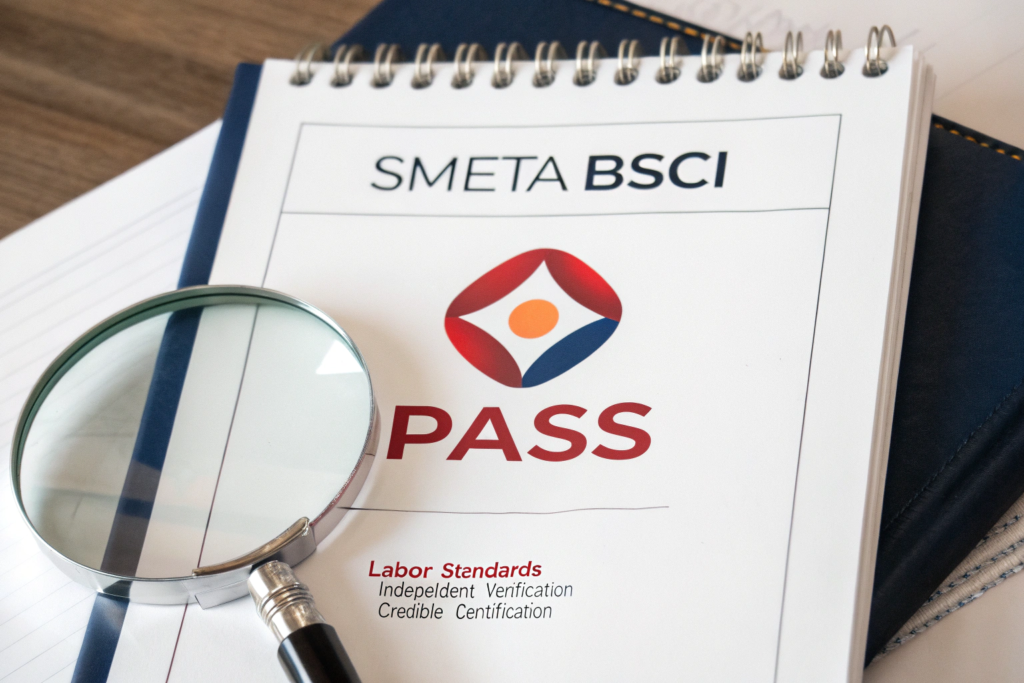
A comprehensive social compliance audit, such as a SMETA 4-Pillar or an amfori BSCI audit, dedicates significant time and rigor to verifying the age and employment status of the workforce. The auditor reviews a randomly selected sample of personnel files. They check government-issued identification cards for every worker in the sample to verify age. They cross-reference these files with payroll records and time cards to check for inconsistencies. They conduct confidential, one-on-one interviews with workers, away from management, to ask about their age, their hiring process, and their working conditions. The audit report will contain a specific section on "Child Labor" or "Young Workers." This is the document you need to request. This SMETA and BSCI social compliance audit process for verifying child labor free production is the most reliable evidence you can obtain.
What Is the Difference Between an Announced and Unannounced Audit?
This is a critical distinction. An announced audit, where the factory knows the date and time of the inspection weeks in advance, has some value. It verifies that the factory has systems in place. However, it also allows the factory to prepare. A factory with something to hide could theoretically coach workers on what to say or even temporarily remove underage workers for the day. An unannounced or semi-announced audit, where the auditor arrives with minimal notice, is a much stronger verification tool. It reveals the day-to-day reality of the factory. At AceAccessory, we participate in both announced and unannounced audits for different clients and programs. We are confident in our daily practices, so the level of notice does not change the outcome. This value of unannounced versus announced social compliance audits for detecting labor violations is an important factor in assessing the credibility of the audit.
How Do You Read the Labor Section of an Audit Report?
When you receive an audit report, you must know what to look for. Do not just glance at the overall grade. Dive into the specific section on Labor Standards or Child Labor. Look for the auditor's description of the age verification process. Did they review original ID documents? Did they interview young-looking workers? Look for any "Non-Conformances" or "Findings" listed. A clean report in this section is what you want to see. If there are findings, read them carefully. A minor finding related to incomplete documentation is different from a major finding of an actual underage worker. At AceAccessory, our audit reports in this section are consistently clean. We provide these reports to our clients for their review. This how to interpret the child labor and young worker section of a social compliance audit report is a key skill for responsible sourcing.
What Other Documentation Can You Request to Verify Age?
In addition to the audit report, you can request specific documentation directly from the factory. A transparent and compliant factory will be able to provide this information without hesitation. This documentation provides a paper trail that supports the audit findings. The most important documents relate to the factory's internal age verification process.
You can request a copy of the factory's written policy on child labor and young workers. This policy should state the factory's commitment to only hiring workers above the legal minimum age. You can request a blank copy of the employment application form. It should include a field for the applicant's date of birth and national ID number. You can request to see a sample, with personal information redacted for privacy, of a worker's personnel file. It should contain a copy of the worker's government-issued ID card. The key is that the factory has a systematic, documented process for verifying the age of every single worker before they are hired. This key documentation to request for verifying factory age verification procedures provides additional layers of evidence.
What Is a Reliable Form of Age Identification in China?
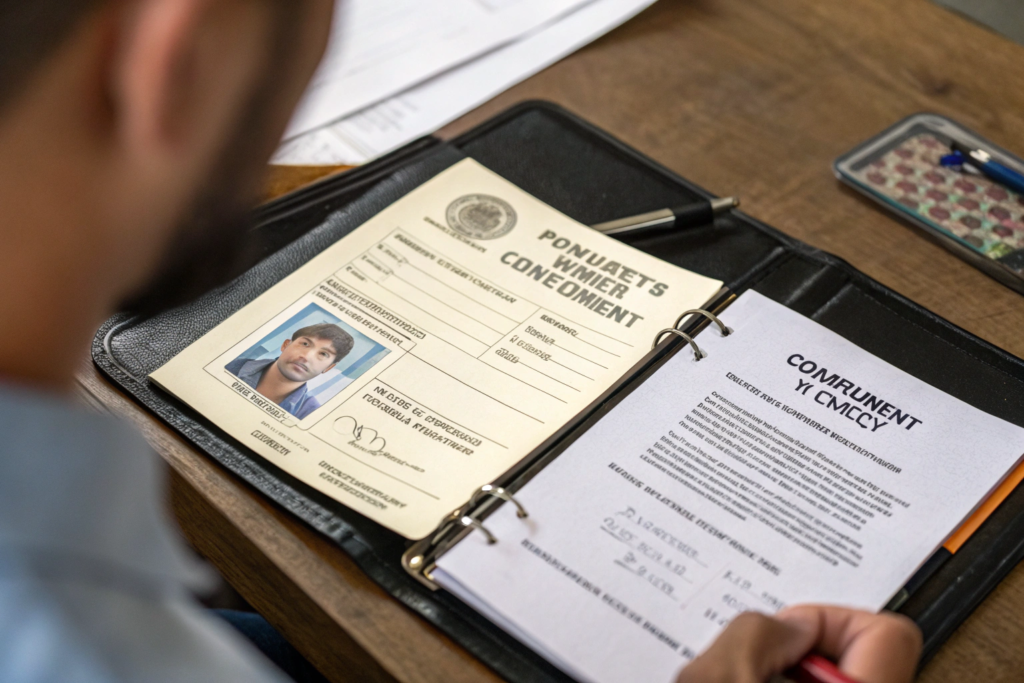
The most reliable and universally used form of identification in China is the Resident Identity Card. This is a government-issued card that every Chinese citizen over the age of 16 is required to carry. It contains the individual's name, photograph, date of birth, and a unique, verifiable ID number. A compliant factory will require every job applicant to present their original Resident Identity Card. They will make a photocopy of the card and place it in the worker's personnel file. The auditor will check these cards during the audit. This is the primary document used to verify age. This Chinese Resident Identity Card as proof of age for employment verification is the standard for compliance.
How Do You Verify the Authenticity of an Audit Report?
Unfortunately, fraudulent audit reports exist. A factory might provide a fake or altered report. You must verify the authenticity of any report you receive. Most major auditing firms have an online verification portal. You can enter the unique report number or scan a QR code on the report to confirm it is genuine and to see the official results. If a factory is hesitant to provide the report number or if the online verification fails, that is a major red flag. Always verify. At AceAccessory, we provide our clients with the necessary information to independently verify our audit reports. This how to verify the authenticity of a social compliance audit report online is a crucial step in your due diligence.
How Can You Use Video Calls to Observe the Workforce Directly?
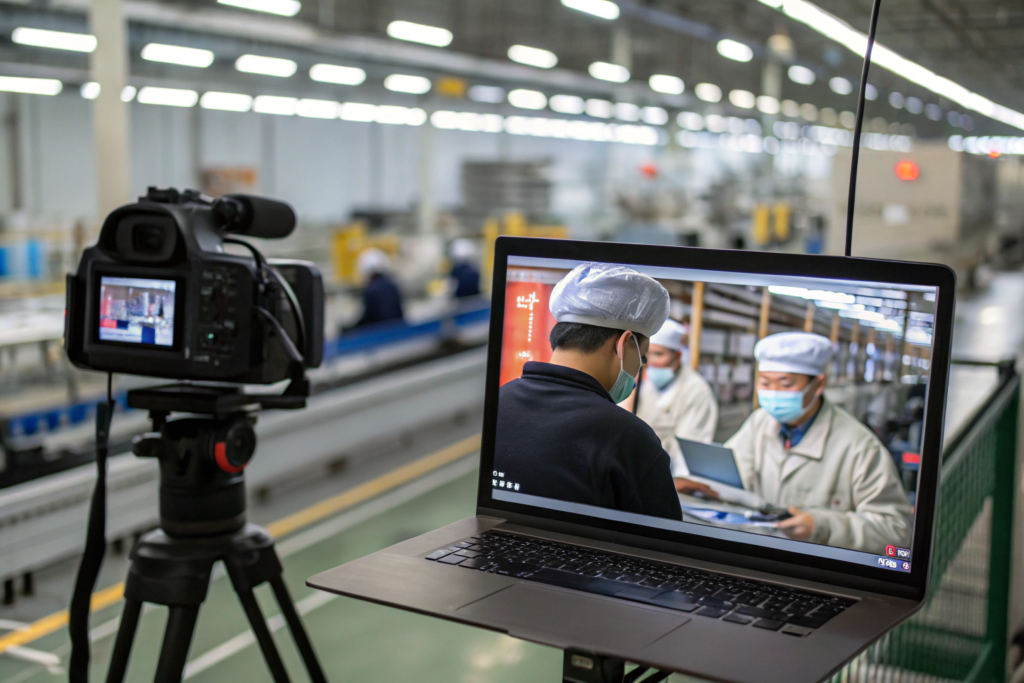
While an audit is the most thorough verification, you can also use unscripted video calls to make your own direct observations. This is not a substitute for an audit, but it is a valuable supplemental tool. It allows you to see the factory in real-time and get a feel for the working environment. The key is that the video call must be unscripted and spontaneous. Do not schedule a formal "tour" for a specific time and date. Instead, during a routine project update call, ask your contact to simply walk the floor with their phone and show you the production area. A factory with nothing to hide will do this immediately and without hesitation. A factory that makes excuses, "The camera is broken," "The factory floor is closed for cleaning," may be hiding something.
During the walkthrough, observe the workers. Do they look like adults? A workforce will naturally have a range of ages. You are looking for the absence of anyone who appears clearly underage. Observe the general atmosphere. Does it look organized, clean, and professional? Your own eyes can provide a useful, if informal, layer of verification. This using unscripted video calls for remote visual inspection of factory labor practices is a modern tool for transparency.
What Should You Look for During a Video Walkthrough?
Go beyond just looking at faces. Observe the workstations. Are they appropriate for adult workers? Observe the pace of work. Does it seem reasonable and sustainable? Observe the general housekeeping. A clean, organized factory is more likely to be a well-managed, compliant factory. Ask your contact to show you the posted labor policies or the required legal postings. A compliant factory will have these displayed. The goal of the video walkthrough is not to conduct an audit yourself. It is to gather visual impressions that either support or contradict the findings of the formal audit report. This key observations to make during a live video walkthrough of a factory helps you use this tool effectively.
What If the Factory Refuses a Video Walkthrough?
A refusal to conduct a spontaneous video walkthrough is a significant red flag. While there may be legitimate, occasional reasons, such as a proprietary production process for a specific client, a blanket refusal suggests a lack of transparency. You should weigh this refusal heavily in your sourcing decision. A factory that is proud of its operations and has nothing to hide will be eager to show you its facility. At AceAccessory, we conduct video walkthroughs for prospective and current clients almost daily. It is a standard part of our communication and transparency. This implications of a factory refusing a live video inspection request is a serious concern.
What Is the Factory's Responsibility Regarding Young Workers of Legal Age?
It is important to distinguish between illegal child labor and the legal employment of young workers. In China, the legal minimum age for full-time employment is 16. Workers aged 16 to 18 are considered young workers. Their employment is legal, but it is subject to specific protections. A compliant factory will have a policy for managing young workers. This policy typically prohibits young workers from performing hazardous tasks, such as operating certain heavy machinery or working with dangerous chemicals. It may limit their working hours and require more frequent breaks. A good audit report will note if the factory employs young workers and, if so, will verify that the factory is adhering to all legal protections for them. The presence of properly managed young workers is not a compliance failure. It is a demonstration that the factory is providing legal employment opportunities. This legal employment of young workers aged 16 to 18 in China and required protections is a nuanced area of labor compliance.
How Does the Factory Prevent Unauthorized Subcontracting?
This is a major risk in the industry. A factory might be clean and compliant, but they may subcontract your order to a smaller, unaudited workshop to meet a deadline. These unauthorized subcontractors are where labor violations, including child labor, are most likely to occur. You must address this risk directly. Ask the factory about their policy on subcontracting. A compliant factory will have a strict policy against unauthorized subcontracting and will require client approval for any necessary subcontracting. During your video walkthrough, observe if the production volume matches the factory's stated capacity. If they claim to produce 50,000 units a month but have only a few sewing lines, they are likely subcontracting. We at AceAccessory manufacture in our own audited facility. We do not subcontract without explicit client approval. This preventing and detecting unauthorized subcontracting in fashion accessory supply chains is a critical part of ensuring your goods are made where you think they are.
How Does a Long-Term Partnership Reduce This Risk?
Building a long-term, direct relationship with a factory like AceAccessory is one of the most effective ways to ensure ethical production. When you work with a factory repeatedly, you develop trust and transparency. You get to know the management team. You understand their values. You visit the facility. A transactional relationship with a different low-cost supplier for every order creates an environment where corners are more likely to be cut. A long-term partner has a vested interest in protecting your brand and maintaining their own reputation. They will not risk the relationship with a labor violation. This value of long term direct factory partnerships in ensuring supply chain ethics is a strategic approach to responsible sourcing.
Conclusion
Verifying child-labor-free production is not a one-time checkbox. It is an ongoing process of due diligence and verification. It requires a combination of credible, independent third-party audits, direct documentation review, personal observation, and a long-term, transparent relationship with your factory partner. You cannot rely on a simple verbal assurance. You must demand and verify evidence. The reputation of your brand and the trust of your customers depend on it.
At Shanghai Fumao, we do not just claim to be ethical. We prove it. We open our doors to auditors. We maintain meticulous records. We welcome your video calls and your questions. We believe that transparency is the foundation of a strong and lasting partnership. We want you to be as confident in our labor practices as you are in the quality of our products.
If you are vetting a new supplier and want to discuss our compliance credentials and audit history, I encourage you to contact our Business Director, Elaine. She can provide a summary of our recent audit reports and walk you through our labor policies. You can email Elaine at: elaine@fumaoclothing.com. Let us give you the confidence that your products are made with integrity.