You open a letter from the United States Consumer Product Safety Commission. It is a Notice of Violation. A shipment of your brand’s faux leather belts has been flagged at the Port of Los Angeles for excessive lead content in the buckle coating. The CPSC demands a recall of all units already in distribution, a penalty of $100,000 per violation, and a written corrective action plan within 30 days. Your stomach drops. You ordered the belts from a factory that assured you, in an email, that "all materials are compliant." You did not request a third-party lab test. You did not specify restricted substance limits in your purchase contract. You trusted a verbal assurance, and now your brand is facing a recall, a fine, and a permanent stain on your compliance record with major retailers. A banned substance is invisible, odorless, and looks exactly like a compliant material. The only defense is documented testing, not trust.
You avoid banned substances in imported fashion accessories by implementing a four-step compliance system: one, you identify which regulations apply to your specific product category, materials, and destination market, such as CPSIA for children’s products, REACH for Europe, and California Proposition 65 for the US market; two, you specify the exact restricted substance limits and the required test standards in your purchase contract with the factory, not in a separate email; three, you require a third-party laboratory test report from an ISO 17025 accredited lab, such as SGS, Bureau Veritas, or Intertek, for every production batch before the goods ship; and four, you conduct random verification testing on received inventory at least once per year to ensure the factory’s quality system has not drifted.
The global regulatory landscape for chemicals in consumer products becomes stricter every year. A substance that was legal in 2023 may be restricted in 2026. I want to explain exactly which substances are most commonly found in fashion accessories, how they enter the supply chain without the factory’s malicious intent, and how our Zhejiang facility manages chemical compliance across every material, every component, and every production batch.
What Are the Most Commonly Found Banned Substances in Accessories and Where Do They Hide?
A fashion accessory looks simple: fabric, metal, plastic, glue. But each of these materials is a chemical mixture, and banned substances enter the mixture through innocent-seeming routes. The factory owner may genuinely believe the product is compliant because their raw material supplier told them it was. But the raw material supplier may have substituted a cheaper, non-compliant plasticizer to meet a price target.
The most commonly found banned substances in imported fashion accessories and their typical hiding places are: lead, hiding in the surface paint or electroplating on metal buckles, zippers, and snap buttons, and in the PVC plastic used for faux leather and soft plastic components; phthalates, specifically DEHP, DBP, BBP, DINP, DIDP, and DnOP, hiding in the PVC or soft plastic used for hair clip grips, belt backing, and elastic cores; formaldehyde, hiding in the anti-wrinkle resin finish on cotton scarves and in the adhesive used to bond leather layers; azo dyes releasing carcinogenic aromatic amines, hiding in the synthetic dyes used on brightly colored polyester scarves and fabric headbands; and organotin compounds, hiding in the stabilizers used in PVC and in the antimicrobial treatment on sports gloves.
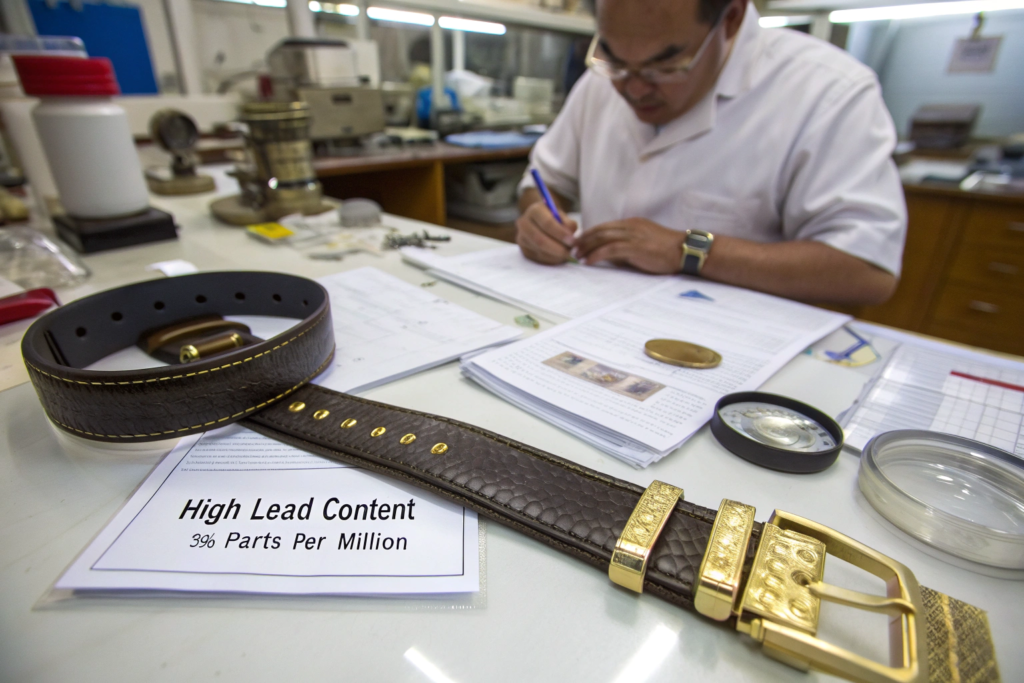
Last year, our incoming inspection flagged a batch of gold-plated belt buckles for lead content at 340 parts per million, well above the 100 ppm limit for children’s products and the 300 ppm limit for adult products under CPSIA. The plating subcontractor had added a small amount of lead to the gold electroplating bath to improve the brightness of the finish, a known but non-compliant practice. The batch was rejected before it touched a leather strap. This is why we test every incoming material lot, not just the finished product.
Why is lead still found in metal accessories when it has been regulated for decades?
Lead is added to metal alloys for specific functional reasons: it improves the flow of molten brass into complex mold cavities, producing sharper detail on a cast buckle; it acts as a stabilizer in PVC, preventing the plastic from degrading during heat processing; and it is a pigment in some paints, producing bright yellows, oranges, and reds that are difficult to achieve with lead-free pigments. Cheap supply chains use lead because it is an easy technical shortcut, and the alternatives, lead-free brass alloys and organic pigments, cost more.
How do phthalates end up in a hair clip that looks like hard plastic?
A hair clip body is hard acetate, phthalate-free. But the small silicone grip pad on the inside of the clip, the soft, rubbery strip that prevents the clip from sliding, is made from PVC softened with phthalate plasticizers. The pad may weigh only 0.5 grams, but it can contain 30% to 40% phthalates by weight. A CPSIA test on the entire clip will flag the total phthalate content above the 0.1% limit for each restricted phthalate because the lab grinds the entire product for testing. Our product safety compliance program specifies phthalate-free silicone for all grip components, eliminating this risk at the material specification stage.
What Regulations Must a US or EU Accessory Brand Comply With by 2026?
The regulatory landscape is a patchwork of national, state, and retailer-specific requirements. A single accessory sold on Amazon in the US and in a boutique in Paris must comply with different chemical limits, different testing standards, and different labeling requirements.
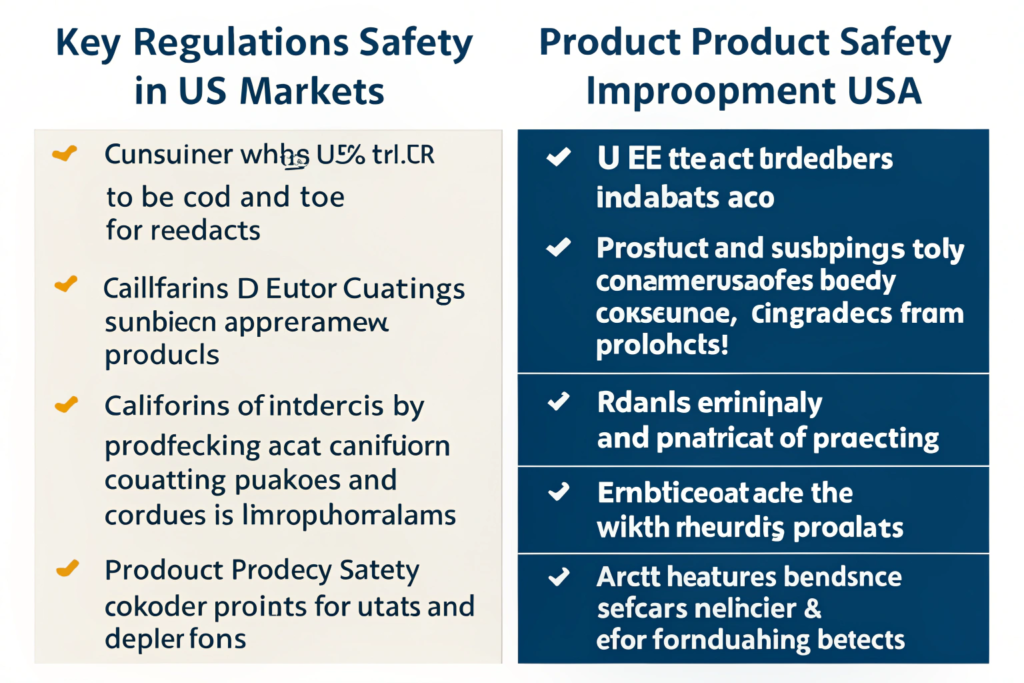
For the US market, the key regulations are: the Consumer Product Safety Improvement Act, which limits total lead in surface coatings to 90 ppm and total lead in substrates to 100 ppm for children’s products, and restricts six phthalates to less than 0.1% each in children’s toys and child care articles; California Proposition 65, which requires a warning label for products exposing consumers to any of over 900 listed chemicals above a safe harbor level, with lead at 0.5 micrograms per day and phthalates at varying limits; and the Federal Hazardous Substances Act, which covers flammability and sharp points for general use products. For the EU market, the key regulation is REACH, which restricts lead, phthalates, azo dyes releasing 22 carcinogenic amines, organotin compounds, and many other substances, and requires disclosure of Substances of Very High Concern above 0.1% in any article.
The EU REACH restricted substance list is updated every six months, and a substance not restricted today may be restricted tomorrow. Brands that sell in both the US and EU must design their compliance program around the most restrictive limit for each substance, typically the REACH limit, and apply that standard globally. This simplifies the supply chain and prevents a product from being compliant in one market and illegal in another.
What is the difference between a children’s product and a general use product under CPSIA?
A children’s product is defined as a consumer product designed or intended primarily for children 12 years of age or younger. A hair clip marketed with cartoon characters, packaged in bright colors with child-oriented graphics, and sold in a children’s section is clearly a children’s product and must meet the stricter lead and phthalate limits. A hair clip marketed to adults in sophisticated packaging is a general use product and is subject to the less restrictive limits under the FHSA.
How does California Proposition 65 differ from federal CPSIA requirements?
Proposition 65 does not ban any substance. It requires a "clear and reasonable" warning before exposing a person to a listed chemical. However, the practical effect for a brand is that a product containing a Prop 65 chemical above the safe harbor level without a warning label is subject to citizen enforcement lawsuits. These lawsuits are filed by private plaintiffs’ attorneys, not by the state, and they cost brands millions of dollars annually in settlements. The most prudent strategy is to design products to avoid Prop 65 listed chemicals entirely, eliminating the need for a warning label.
How Do You Write a Purchase Contract That Bans Specific Substances?
A factory’s verbal promise that the goods are "REACH compliant" or "CPSIA compliant" is worthless in a legal dispute. The factory may not know what those terms actually require, and the phrase is too vague to be enforced. The purchase contract must specify exact substance limits, exact test methods, and the consequences of a failed test.
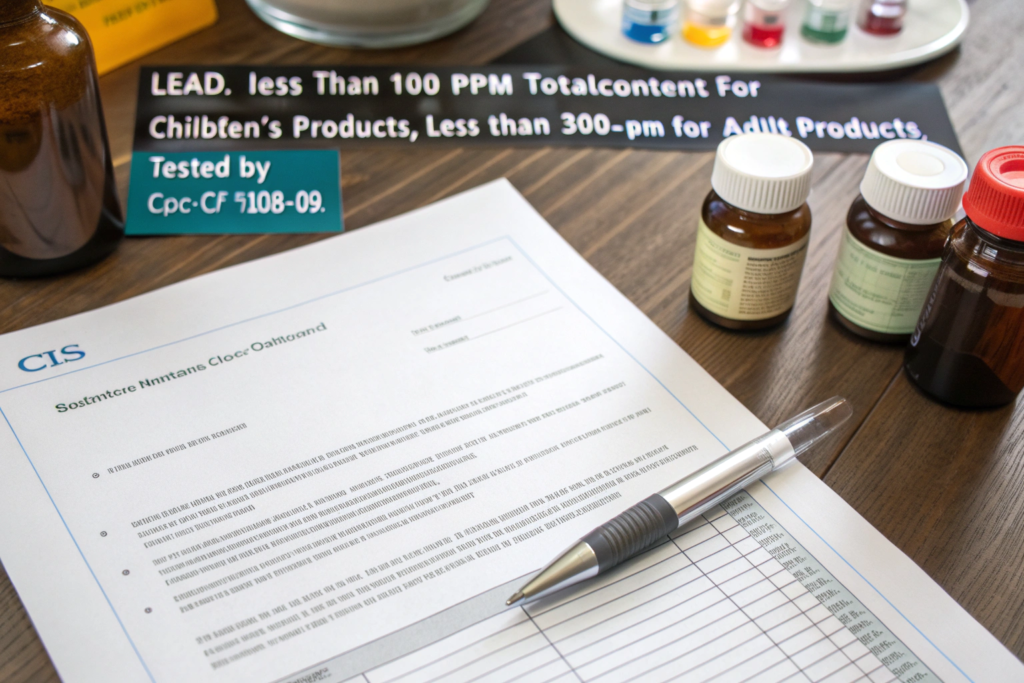
An effective restricted substances clause in a purchase contract specifies: the list of restricted substances with their maximum allowable concentration, for example, "Lead: less than 100 ppm total content for children’s products, less than 300 ppm for adult products, tested by CPSC-CH-E1003-09.1"; the test method and the accredited laboratory that will perform the testing; the requirement for a batch-specific test report before shipment; the buyer’s right to conduct random verification testing on received inventory; and the financial consequences of a failed test, including the factory’s responsibility for the cost of the failed goods, the testing cost, the return freight, and any recall expenses.
We include this restricted substances clause as a standard appendix to every purchase contract. We do not argue against it. We have our own compliance program that already meets these requirements. A factory that resists signing a restricted substances clause is signaling that they do not have a documented compliance program.
Can you rely on a factory’s own "in-house" test report?
A factory’s in-house test may be genuinely well-intentioned, but it is not legally defensible because the testing equipment may not be calibrated to an ISO standard, and the factory has a conflict of interest. The accepted standard for legal compliance is a test report from an ISO 17025 accredited third-party laboratory. The lab’s accreditation number must be printed on the report. We provide SGS, Bureau Veritas, or Intertek test reports with every shipment.
What is the cost of a comprehensive CPSIA and REACH test for a single accessory SKU?
A full CPSIA test package, lead in paint, lead in substrate, and six phthalates, for a single material and color typically costs $180 to $350. A full REACH Annex XVII test for the restricted substances most relevant to accessories, azo dyes, organotins, phthalates, and heavy metals, costs $350 to $600. For a collection with multiple colors, the lab can test a "worst-case" sample, the brightest red or the softest plastic, which is most likely to fail, and apply those results to the other colors, reducing total testing cost.
What In-House Pre-Screening Tools Catch Banned Substances Before Final Testing?
A full third-party lab test on every incoming material lot is cost-prohibitive and time-consuming. A smart factory uses rapid, in-house pre-screening tools to identify high-risk materials before they enter the production stream, reserving the expensive third-party lab tests for final batch verification.
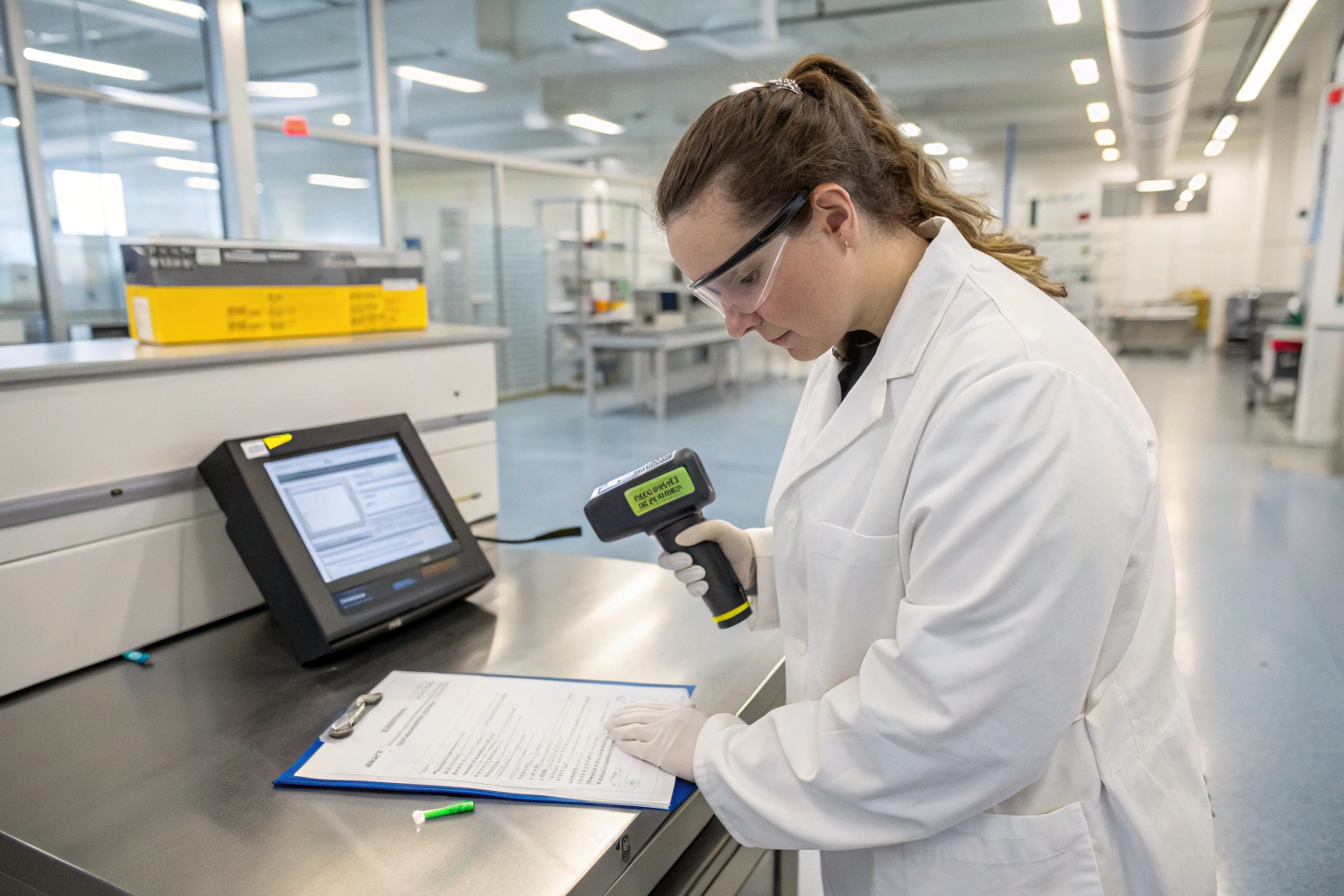
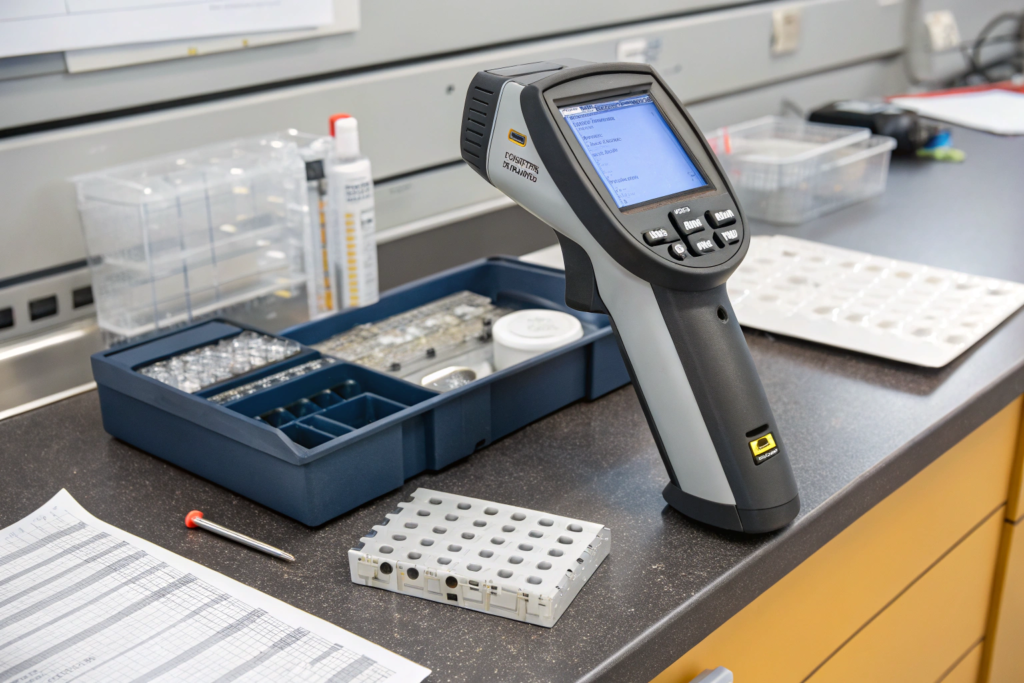
Our in-house pre-screening tools include: a handheld X-ray fluorescence analyzer for total lead, cadmium, and other heavy metals in metal and plastic components, giving a result in 30 seconds; a dimethylglyoxime spot test kit for nickel release on metal components that will contact the skin; a Fourier Transform Infrared spectrometer for identifying plastic polymer types, distinguishing PVC from polypropylene and polyethylene; and a phthalate screening solvent test that provides a color-change indication for the presence of phthalate plasticizers in soft plastics.
The XRF analyzer is the workhorse of our incoming inspection program. Every incoming lot of metal buckles, snap buttons, zippers, and plastic components is scanned with the XRF before the lot is released to the production floor. A lot that scans above 50 ppm total lead is quarantined and sent to the third-party lab for confirmatory testing. This pre-screening catches 95% of potential compliance failures before the component touches a product.
What is the limitation of an XRF analyzer for lead testing?
XRF measures total lead at the surface of the material. It does not measure lead that is deeply embedded in a thick coating or lead that is present in a component that cannot be accessed by the analyzer’s beam. A complex assembled product with internal components must be disassembled for accurate XRF testing. The XRF is a screening tool, not a substitute for the destructive wet chemistry test method that a third-party lab uses.
How do you keep your in-house screening equipment calibrated?
We maintain a calibration schedule where the XRF analyzer is checked weekly against a certified reference material with a known lead content. The FTIR is checked against a polystyrene reference film. The calibration records are maintained in a logbook that is reviewed during our annual GOTS and ISO 9001 audits.
Conclusion
Avoiding banned substances in imported fashion accessories requires a four-step compliance system: identify the applicable regulations by market and product type, specify exact restricted substance limits in the purchase contract, require an ISO 17025 accredited third-party lab test report for every production batch before shipment, and conduct random verification testing on received inventory. The most commonly found banned substances, lead, phthalates, formaldehyde, azo dyes, and organotins, hide in specific materials and can be pre-screened with in-house tools like XRF analyzers and DMG spot test kits before the expensive third-party lab tests.
Our Zhejiang factory operates this compliance system on every production run. We pre-screen all incoming materials with XRF and chemical spot tests. We specify restricted substance limits in every purchase contract with our own raw material suppliers. We provide the SGS or Bureau Veritas test reports with every shipment. We maintain the calibration records and the compliance documentation that a CPSC or REACH enforcement action would demand.
If you need an accessory manufacturer whose chemical compliance program is already built and documented, contact our Business Director, Elaine. She will send you our standard restricted substances list, a sample third-party test report, and our restricted substances purchase contract clause for your legal review. Write to her at elaine@fumaoclothing.com. Let’s build a compliance system that keeps your products on the shelf and out of the recall notice.