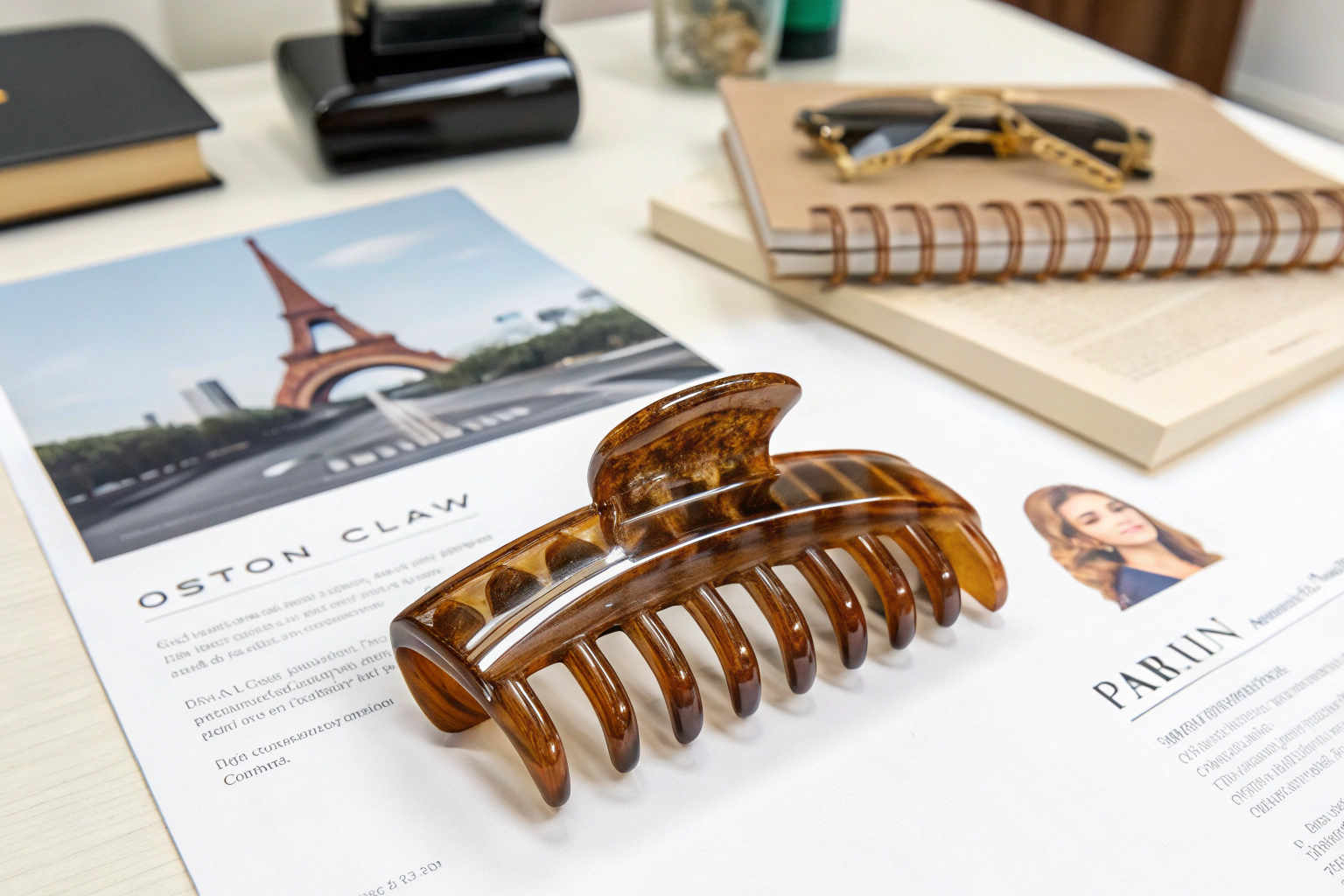
A Parisian accessories brand owner called me on a Monday morning in a state of controlled panic. She had a buyer meeting with Galeries Lafayette scheduled for the following Friday. Her existing supplier had just informed her that the custom resin hair claw sample she needed for the presentation would be delayed by three weeks due to a mold issue. She needed a high-quality, fully customized sample in her hands in Paris within eleven days, or she would lose the opportunity to present her collection to one of the most important department store buyers in France. I told her to send me the design sketch immediately. Our design team digitized the file that afternoon. The mold was cut by Tuesday evening. The first resin pour was done on Wednesday. By Friday, we had a finished sample that passed our internal QC. We shipped it via express courier, and it arrived at her Paris office the following Tuesday, nine days after her initial call. She presented the claw, won the account, and has been a loyal client ever since.
Our factory can ship a sample of a custom resin hair claw to Paris in as fast as 7 to 10 business days from design approval, using our express prototyping workflow and international priority courier service. This timeline includes digital design file preparation, CNC mold cutting, first-shot resin pouring and curing, hand-finishing and polishing, quality control inspection, and express air shipping with full customs documentation. For simpler designs with no intricate hand-painting or embedded elements, we have achieved sample delivery to Paris in as little as 5 business days when all design assets are approved upfront and no revisions are required.
Speed in sampling is not just about logistics. It is about having a production system designed for rapid iteration. A custom resin hair claw is a complex little object. It requires a precision mold, the right resin formulation, careful curing, and skilled hand-finishing. Many factories treat samples as a low-priority interruption to mass production. We treat samples as the most important product we make, because a great sample wins the order. A slow sample loses it. At AceAccessory, we have built a dedicated rapid sampling cell within our resin accessories workshop specifically to serve brands that need to move fast for buyer meetings, trade shows, and influencer seeding. Let me walk you through exactly how we achieve these timelines and what factors influence the speed.
What Is the Fastest Sampling Timeline for Custom Resin Hair Claws
The fastest sampling timeline for a custom resin hair claw depends on the complexity of the design and the availability of approved design assets. A simple, single-color resin claw with a standard spring mechanism, where the client provides a complete, production-ready 3D CAD file, can be sampled and shipped in 5 to 7 business days. A complex, multi-color claw with hand-painted details, embedded glitter or flowers, and a custom-shaped metal spring mechanism might require 10 to 14 business days for the first sample. The clock starts when we receive the approved design, not when the inquiry email arrives. The design approval stage itself can take anywhere from a few hours to several days, depending on how prepared the client’s design assets are.
The typical fast-track sampling timeline for a custom resin hair claw breaks down as follows. Day 1 is digital design review and CAM programming for the mold. Day 2 is CNC machining of the aluminum or steel mold cavity. Day 3 is the first resin pour and initial curing cycle. Day 4 is demolding, hand-finishing, and polishing. Day 5 is quality control inspection, photography for client approval, and packaging. The sample is handed to the courier at the end of Day 5. Express shipping to Paris typically takes 2 to 3 business days, which means the sample arrives on Day 7 to Day 8. This timeline assumes immediate client approval at each stage and no unexpected technical issues with the mold or the resin chemistry.
This is an aggressive timeline that requires everything to go right. It is not the timeline we quote for every project, but it is the timeline we have achieved repeatedly for clients with urgent needs. The key enablers are in-house mold making, which eliminates the week or more that most factories spend waiting for an external mold shop, and a resin formulation library that allows us to select a pre-tested resin with the right cure time, color, and mechanical properties without starting from scratch. Let me explain the two most time-sensitive steps.
How Quickly Can a Prototype Mold Be Produced?
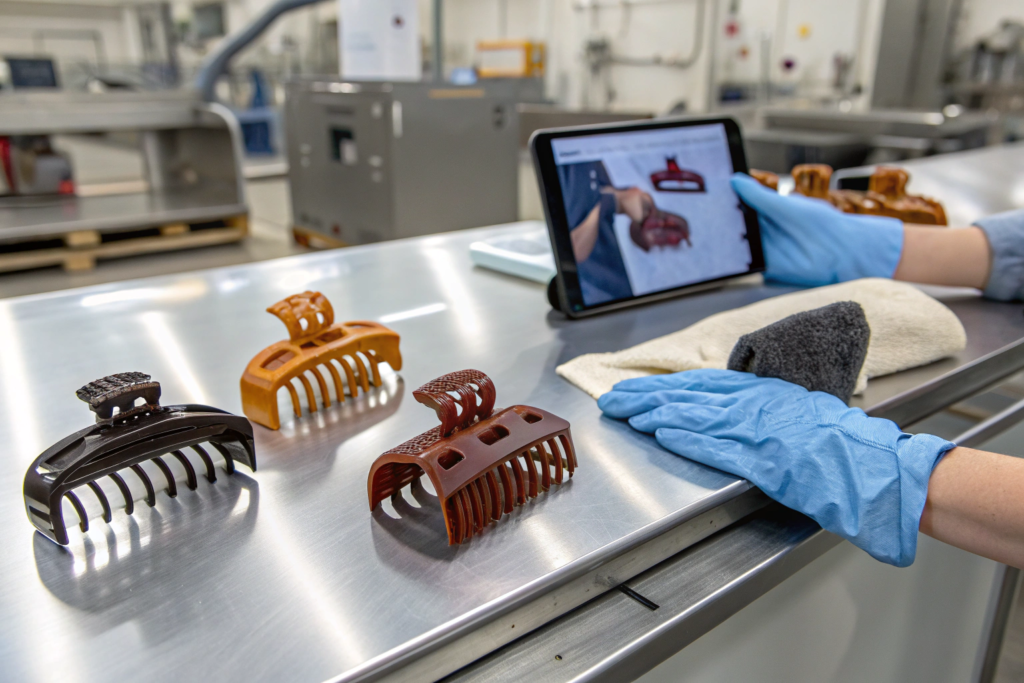
The mold is the critical path item in any custom resin accessory project. Without the mold, nothing else can happen. Traditional mold making involves sending a design to an external tooling shop, where it joins a queue of other jobs. The mold maker programs the CNC machine, cuts the steel, hand-polishes the cavity, and sends it back. This process typically takes two to three weeks, and that is for a standard priority job. We eliminated this bottleneck by bringing mold making in-house. Our resin workshop has a dedicated CNC machining center specifically for prototype and sample molds. The CAM programmer sits next to the CNC operator. The design file goes from the designer’s screen to the machine in hours, not days. For a prototype mold intended for sampling, we often use aluminum rather than hardened steel. Aluminum cuts faster, is easier to polish, and is perfectly adequate for producing a few dozen sample pieces. A typical hair claw mold cavity can be roughed and finished on our CNC in 4 to 6 hours of machine time. Hand polishing the cavity to a mirror finish takes another few hours. So a prototype mold can be completed within a single working day if we prioritize it. For urgent projects, we can run the CNC overnight and have the mold ready for pouring by the next morning. The mold design itself also influences speed. A simple two-part open-and-shut mold is faster to produce than a mold with side actions or multiple inserts. When a client comes to us with an urgent sampling need, our design team may suggest slight modifications to the claw design that simplify the mold geometry without compromising the aesthetic. For example, reducing an undercut that would require a side action can shave a full day off the mold-making time.
What Curing Methods Accelerate Resin Sample Production?
Resin curing is a chemical reaction that takes time. Traditional room-temperature curing of cast resin can take 8 to 24 hours, which is too slow for rapid sampling. We use accelerated curing methods that dramatically reduce the cycle time without compromising the physical properties of the finished part. The first method is heat-assisted curing. The resin formulation is selected to be compatible with elevated temperature curing. After the resin is poured into the mold, the mold is placed in a controlled-temperature oven at approximately 60 to 80 degrees Celsius. The heat accelerates the cross-linking reaction, reducing the cure time from hours to as little as 30 to 60 minutes for small parts like hair claws. The temperature is carefully controlled to prevent thermal stress, which can cause warping or cracking, especially in intricate shapes. The second method is UV curing, which we use for specific types of clear or translucent resin. UV-curable resins polymerize almost instantly when exposed to high-intensity ultraviolet light. The curing time can be as short as a few seconds to a few minutes. UV curing is particularly useful for sample projects where the claw has embedded elements like dried flowers or glitter, because the rapid cure freezes the elements in place before they can settle or shift. The limitation of UV curing is that it only works for resins formulated for UV initiation, and the UV light must penetrate the entire thickness of the part. Very thick or opaque parts may require a hybrid approach, UV cure followed by a thermal post-cure. For standard colored resin claws, our go-to rapid sampling method is the heat-assisted cure. A small batch of sample claws can be poured in the morning, cured in the oven during lunch, and be ready for demolding and finishing by early afternoon. This is how we turn a mold completed on Tuesday morning into finished sample parts by Tuesday evening.
What Factors Influence the Speed of Custom Hair Claw Sampling
The timeline I described above represents the best-case scenario. Several factors can extend the sampling timeline, and being aware of them helps you plan your project realistically. The most common cause of delay is design revisions that occur after the mold has been made. Changing the shape of the claw by even a millimeter requires modifying or remaking the mold, which resets the clock. Other factors include the complexity of the color and finish, the type of spring mechanism, and the availability of specialized raw materials. A well-prepared client who provides complete design specifications upfront will always receive a faster sample than one who is still refining the design after production has begun.
The key factors that influence the speed of custom resin hair claw sampling are design readiness and stability, which is the single most important variable, and a design that changes mid-process adds days or weeks. The complexity of the resin finish also matters, as a single solid color is fast, whereas multi-color swirls, hand-painted details, or embedded inclusions each add processing time. The spring mechanism type is another factor, as standard off-the-shelf springs ship immediately, while custom-shaped or custom-finished springs require their own sampling lead time. Finally, the packaging requirements, if you need custom branded packaging for the sample to present to a buyer, that packaging must be produced in parallel and can add to the total timeline.
Understanding these factors allows you to make informed trade-offs. If speed is the absolute priority, we can guide you toward design choices that accelerate the process. A single-color gloss claw with a standard spring mechanism is the fastest path to a sample. A multi-color marbled claw with gold foil inlays and a custom logo-engraved spring is a beautiful product, but it will take longer. Here is a deeper look at two of the most impactful factors.
How Does Color Matching Extend the Sampling Process?
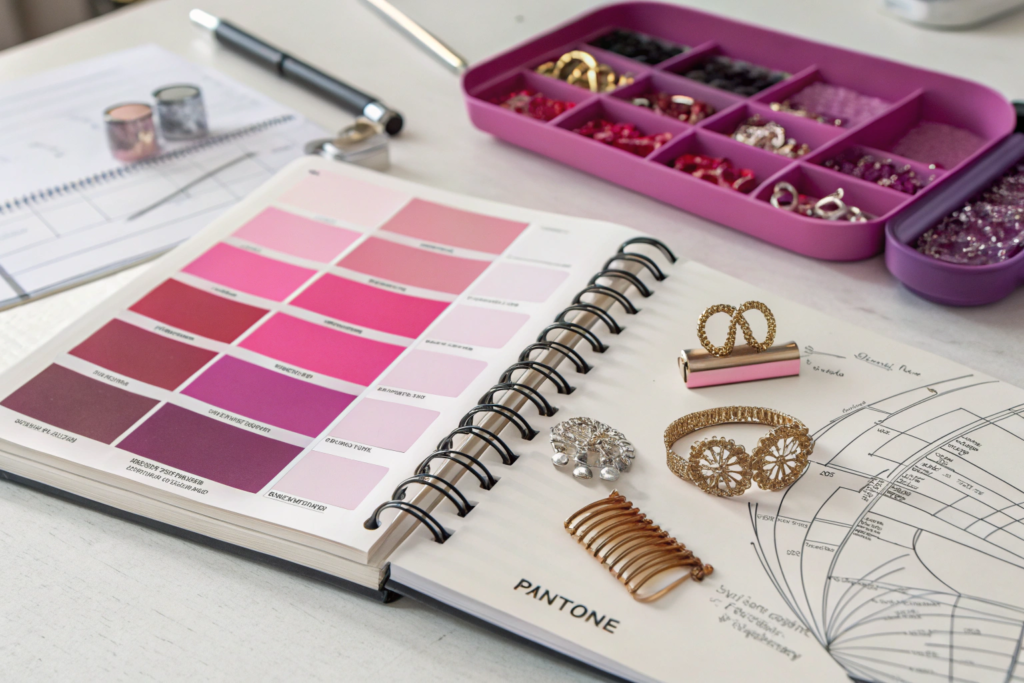
Color is the most subjective and iterative part of custom accessory sampling. A client may describe a color as "soft ballet pink" or "vintage jade green." Our resin technician interprets that description, mixes a color batch, pours a sample chip, and sends a photo for approval. The client looks at the photo on their screen and says, "It needs to be slightly warmer" or "More muted, less saturated." The technician adjusts the pigment ratio and pours another chip. This back-and-forth can go through three, four, or five rounds before the color is approved. Each round takes at least a day. This is why color approval is the most common source of sampling delay. We have developed several methods to accelerate color matching. The best method is for the client to provide a physical color reference, a Pantone code, a fabric swatch, a painted chip, that we can match in our lab. Physical references eliminate the distortion of screen color calibration and allow our technician to achieve a match in one or two rounds. If a physical reference is not available, we use a spectrophotometer to read the digital color and translate it into a resin pigment formula. This gets us close on the first attempt, but a visual adjustment round is usually still needed. For urgent projects, we sometimes pour multiple color variations in a single batch, a slightly warmer version, a slightly cooler version, a slightly lighter version, and send photos of all of them at once. The client selects the best match, and we proceed immediately. This parallel approach compresses what would be multiple sequential rounds into a single round. It requires a little more material and labor, but it saves days on the timeline. The finish also affects color perception. A color that looks perfect on a matte sample chip may look completely different on a high-gloss polished claw. We always recommend approving the color on a sample with the actual finish that will be used on the final product.
Why Does the Spring Mechanism Choice Affect Lead Time?
The spring mechanism is the functional heart of a resin hair claw. It is the metal piece that provides the tension to hold the claw open and closed. Most hair claws use a standard coil spring with two wire arms that insert into holes in the resin body. If your design uses a standard, off-the-shelf spring size, we stock a range of these springs in our components inventory. They are available immediately, and they add zero time to the sampling process. However, many custom hair claw designs require something different. A larger claw may need a longer spring with more tension. A luxury brand may want a spring with a custom finish, gold-plated, rose gold, or antique brass, rather than the standard silver nickel. A brand may want a custom-shaped spring with a decorative coil or a logo-engraved cap on the exposed end. These custom springs are not off-the-shelf items. They must be manufactured by our spring supplier to our specification. The spring supplier has their own sampling lead time, typically 7 to 14 business days for a custom spring prototype. If your custom resin hair claw project requires a custom spring, that spring sampling timeline runs in parallel with the resin mold making. It does not necessarily extend the total timeline if it is started at the same time. But if the custom spring is ordered late, after the resin parts are already finished, it becomes a bottleneck. I recommend that clients identify the spring requirement early in the design process. If you can use a standard spring with a standard finish, your sample will be faster. If you need a custom spring, we initiate that order on Day 1, at the same time as the mold design, so that both components arrive at the assembly stage together.
How Does Express International Shipping to Paris Work for Samples
Shipping a sample from our factory in Zhejiang to Paris is a well-rehearsed process. We ship samples to European fashion capitals on a weekly basis, and we have optimized every step from customs documentation to carrier selection. The physical transit time is only part of the equation. Customs clearance is often where delays occur, and proper documentation is the key to avoiding them. A sample that is properly documented as a commercial sample with no commercial value, correctly classified with the harmonized system code, and accompanied by a complete commercial invoice, will sail through French customs. A sample with sloppy paperwork can sit in customs for days or even weeks.
Express international shipping of custom hair claw samples to Paris is handled through major courier services like DHL, FedEx, and UPS, with typical transit times of 2 to 3 business days from our factory door to the recipient’s address in Paris. We use a dedicated sample shipping protocol that includes a properly completed proforma invoice marked "Commercial Sample, No Commercial Value, For Customs Purposes Only," the correct HS code for resin hair accessories, 9615.11 for combs, hair slides, and similar articles of plastics, and a detailed packing list. For shipments valued under the de minimis threshold, we can clear customs with minimal duties. For higher-value sample collections, we coordinate with the client’s customs broker to ensure smooth clearance.
The choice of courier and service level also matters. We have negotiated corporate rates with the major international carriers, which allows us to offer express shipping to our clients at competitive rates. The shipping cost for a small sample box to Paris is typically quite reasonable, and we can either include it in the sample development fee or bill it separately, depending on the client’s preference. Here are the specifics on carrier options and customs documentation.
What Courier Services Offer the Fastest China-to-Paris Delivery?
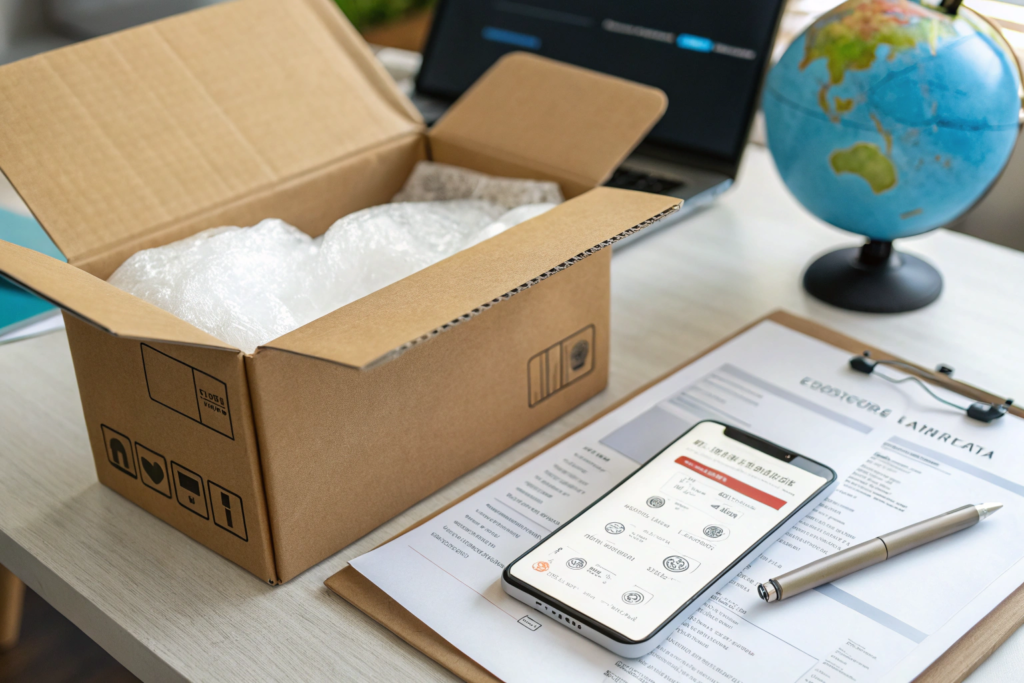
DHL Express is our primary carrier for sample shipments to Paris. DHL has the most extensive and reliable express network between China and France, with dedicated daily flights from major Chinese hubs like Shanghai Pudong and Hong Kong to Paris Charles de Gaulle. A DHL Express Worldwide package picked up from our factory on a Monday afternoon typically arrives at a Paris address by Wednesday morning or Thursday at the latest. The service includes door-to-door tracking, so both we and the client can monitor the package’s progress in real time. FedEx International Priority is a comparable alternative with similar transit times. We sometimes use FedEx when the delivery address is in a specific Paris arrondissement that FedEx services more efficiently. UPS Express Saver is our third option, though we find it is sometimes half a day slower to Paris than DHL or FedEx. For the absolute fastest delivery, we can use a dedicated courier hand-carry service, where a courier physically carries the sample package onto a commercial flight and delivers it directly upon landing. This is the fastest method, with door-to-door delivery possible in 24 to 36 hours, but it is significantly more expensive and is only justified for truly critical samples where a buyer meeting or a photoshoot is at stake. We once hand-carried a sample collection of resin hair accessories to a client in Paris for a Vogue editorial shoot that had been rescheduled at the last minute. The cost was high, but the editorial placement was worth far more to the client.
What Customs Documentation Prevents Sample Delivery Delays?
French customs, like all EU customs authorities, are meticulous about documentation. The most common cause of sample delivery delays is an incorrectly completed commercial invoice. For samples, the invoice must clearly state that the goods are commercial samples of no commercial value. The phrase "Commercial Samples, Value for Customs Purposes Only" must appear on the invoice. This distinguishes the shipment from a commercial sale and can reduce or eliminate duty charges. Even though the sample has no commercial resale value, we must still declare a nominal value for customs purposes. We typically declare the actual production cost of the sample, not the retail value. This keeps the declared value low, which minimizes any potential duties or taxes, and accurately represents the nature of the shipment. The HS code must be correct. For resin hair claws, the appropriate code is 9615.11, which covers combs, hair-slides, and similar articles of hard rubber or plastics. Using the wrong code can cause the shipment to be flagged for manual inspection, adding days to the clearance process. The invoice must also include the country of origin, which is China, and a detailed description of the item. "Resin hair claw sample" is sufficient, but we add more detail, such as "One (1) custom resin hair claw, acetate-like finish, for buyer evaluation only." This clarity helps the customs officer quickly understand the nature of the shipment and process it without questions. We also include a packing list and a copy of the air waybill inside the package, attached to the outside in a clear document pouch. If customs opens the package, they find all the documentation immediately. There is no searching, no confusion, no delay.
How to Prepare Your Design File for Rapid Resin Claw Sampling
The single most effective thing a client can do to accelerate their custom resin hair claw sample is to provide a complete, production-ready design file. I have seen timelines stretch from one week to one month simply because the initial design file was a rough sketch on a napkin rather than a dimensioned technical drawing or a 3D CAD file. Our design team is skilled at translating concepts into production-ready files, but that translation takes time and requires back-and-forth communication. When a client provides a file that is already in the correct format with the necessary specifications, we can skip the interpretation phase and go directly to mold making.
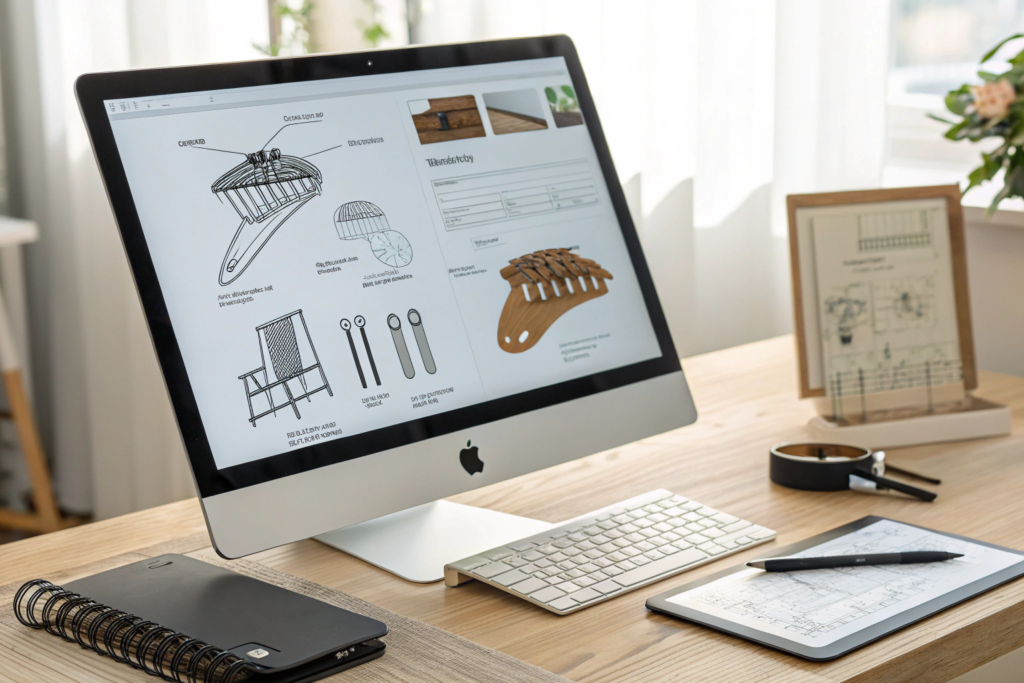
Preparing a design file for rapid resin claw sampling requires providing either a 3D CAD file in STEP or IGES format, or a 2D technical drawing with front, side, back, and cross-section views fully dimensioned in millimeters. The file should specify the overall length, width, and thickness of the claw. It should define the spring mechanism type and the position of the spring holes. The intended material finish, high-gloss polish, matte, soft-touch, or textured, should be noted. The exact color reference, preferably a Pantone code or a physical color swatch that we can match, should be included. If the claw has any decorative elements like embedded glitter, foil, or dried flowers, the type, density, and placement of these elements should be specified. Finally, any branding elements like a logo position or engraving detail should be clearly indicated.
This may sound like a lot, but it is the language of production. A clear specification eliminates ambiguity, reduces revisions, and shaves days off the sampling timeline. Let me explain the two most important file types and what makes them useful.
What 3D File Formats Are Best for CNC Mold Making?
For clients who have access to a 3D designer, providing a CAD file is the gold standard. The file formats we can work with directly are STEP, with the extension .stp or .step, and IGES, with the extension .igs or .iges. These are neutral, standardized 3D file formats that can be read by our CAM software without conversion errors. Native file formats from specific software like SolidWorks, Rhino, or Fusion 360 can also be used, but we prefer the neutral formats to avoid version compatibility issues. The 3D model should represent the final shape of the claw as a solid body, not just a surface shell. It should include the holes for the spring mechanism, positioned and dimensioned correctly. It should include any undercuts or design details that might affect the mold design. A well-made 3D model can be imported directly into our CAM software. The CAM programmer uses it to generate the toolpaths for the CNC machine that will cut the mold cavity. No translation, no manual redrawing, no guesswork. The mold cavity will be an exact negative of the 3D model, and the resulting resin part will be an exact replica of the digital design. This direct digital pipeline from the designer’s screen to our CNC machine is the fastest and most accurate way to produce a sample. For clients who do not have 3D capability, we can create the 3D model from a 2D drawing or even from a detailed sketch with reference photos. This adds a design modeling step to the timeline, typically one to two days, but it is a service we offer as part of our sample development process.
Why Should You Provide Physical Color and Material References?
Digital color is inherently unreliable. Every screen displays color differently. A Pantone code is a good starting point, but even Pantone colors on a screen are approximations. For the most accurate and fastest color matching, a physical reference is invaluable. A fabric swatch from your collection, a painted color chip, a previously produced accessory in the desired color, a physical object of any kind that represents the color you want, all of these are far more useful than a digital color value. Our resin technician will take the physical reference into the color matching lab, illuminate it under standardized D65 daylight, and mix a resin pigment formula to match it visually. The first iteration based on a physical reference is typically very close, often close enough for immediate approval. If a physical reference is not available, the next best option is a Pantone code from the Fashion, Home + Interiors guide, or from the Plastic Standard Chips set. These are physical Pantone swatches, not digital approximations. We have these guides in our lab and can match to them directly. A digital hex code or RGB value is the least reliable method and almost always requires multiple adjustment rounds. For material finish references, a physical sample is equally valuable. Words like "matte," "satin," and "gloss" mean different things to different people. A physical sample of a finish you like, even if it is on a completely different product, gives our finishing team a clear target to replicate. We can match the surface texture, the level of gloss, and the tactile feel much more accurately from a physical reference than from a written description.
Conclusion
Shipping a custom resin hair claw sample to Paris quickly is a function of preparation, process, and partnership. The physical transit from China to France is fast, just 2 to 3 days, thanks to the excellent express courier networks connecting our factory in Zhejiang to the fashion houses of Paris. The real speed advantage comes from what happens before the package is handed to the courier. A dedicated in-house rapid sampling cell, with its own CNC machine, resin pouring station, and finishing bench, compresses the mold-making and production timeline to as little as 5 business days. A well-prepared design file, ideally a 3D CAD model with clear specifications for color, finish, and spring type, eliminates the iterative back-and-forth that is the most common cause of sampling delays. And meticulous customs documentation, with the correct HS code, a properly completed commercial invoice, and a clear description of the sample’s purpose, ensures that the package clears French customs without holdups.
At AceAccessory, we understand that a sample is not just a product. It is a sales tool, a proof of concept, and often the single most important factor in winning a new account or securing a seasonal order. Our project managers treat every sample request with the urgency it deserves. They will walk you through the design file requirements, help you select the fastest production path, and keep you updated with tracking information and delivery confirmation. We have shipped samples to every major fashion city in Europe, and we know the Paris-to-China logistics corridor intimately.
If you need a custom resin hair claw sample, for a buyer meeting, a trade show, a photoshoot, or a celebrity seeding opportunity, and you need it fast, contact our Business Director, Elaine, at elaine@fumaoclothing.com. Tell her about your design, your timeline, and your delivery address in Paris. She will provide a sampling timeline estimate, a quotation, and a checklist of the design assets we need to get started. Let us turn your sketch into a sample that wins the order.