A British accessories brand owner called me in late 2021, about six months after the post-Brexit trade rules had fully taken effect. He was exhausted and financially bruised. He had just paid a £3,500 VAT and duty bill on a shipment of scarves and caps that he had not budgeted for. The cash flow hit meant he could not pay his digital marketing agency on time. His product launch was delayed. He told me, "I need a supplier who understands this. I cannot keep paying tax on goods before I have even sold them." That conversation was the start of our deep dive into bonded warehousing solutions for our UK clients. What we discovered transformed how we serve the British market. We now have partnerships with UK bonded warehouse operators and a logistics process that allows our UK clients to defer all import charges until their goods are actually sold and leave the warehouse.
To find a factory that offers bonded warehouse in the UK after Brexit, you need to look for a supplier who either operates their own bonded facility in the UK, a rare but growing option, or who has an established partnership with a third-party bonded warehouse operator and can seamlessly ship goods into that facility under customs suspension. The factory should be able to demonstrate a clear, documented process for shipping goods from the factory in China to the bonded warehouse in the UK, with the correct customs procedure codes, an EORI number, and a deferment account or a customs agent who handles the clearance. The bonded warehouse should be located near major logistics hubs like Manchester, Birmingham, or the London periphery, and should offer services including pick and pack, labelling, and last-mile delivery to your customers or retail locations. The key benefit is that VAT and customs duties are not paid when the goods enter the UK. They are paid only when the goods are sold and removed from the warehouse, dramatically improving cash flow and eliminating the risk of paying tax on unsold inventory.
Brexit fundamentally changed the trading relationship between the UK and the European Union, and it had a knock-on effect on direct trade between the UK and China as well. UK importers who previously might have routed goods through a European distribution center can no longer do so without facing double taxation. The bonded warehouse model has become one of the most effective solutions for UK-based accessory brands, online retailers, and wholesalers who source from China. At AceAccessory, we have made it a priority to offer this solution because we believe our job is not just to manufacture products but to help our clients get those products to their customers efficiently and affordably. Let me walk you through exactly how bonded warehousing works in the post-Brexit landscape and how to find a factory partner who can make it work for you.
What Is a Bonded Warehouse and How Does It Work After Brexit
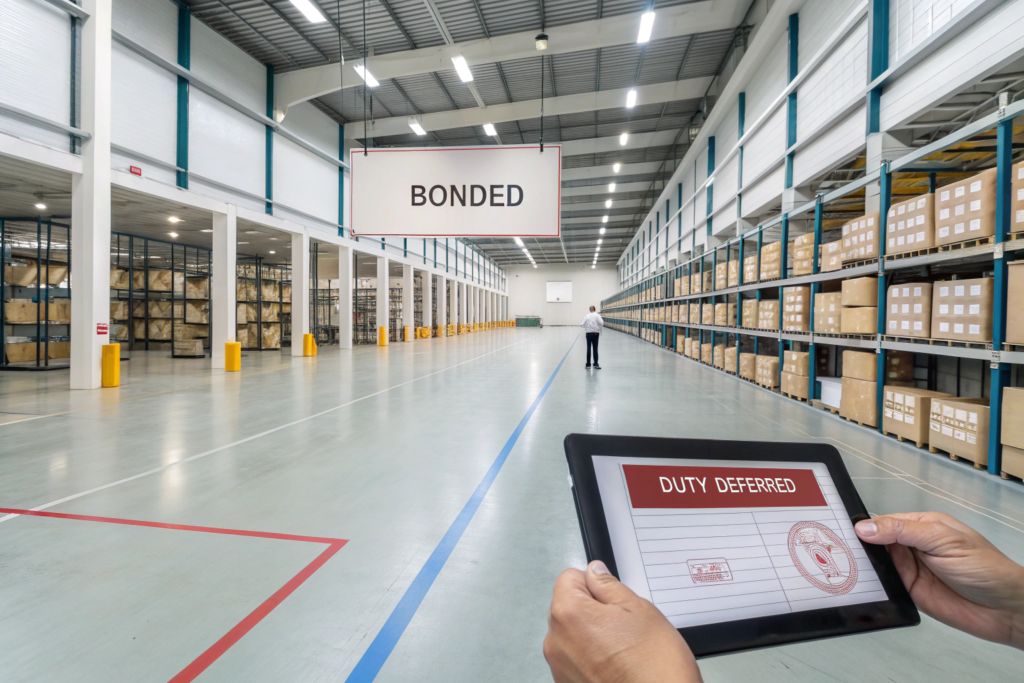
A bonded warehouse, officially known in UK customs law as a customs warehouse, is a secure facility that is authorized by His Majesty’s Revenue and Customs, HMRC, to store imported goods without the payment of import VAT and customs duties. The goods enter the UK physically but do not enter the UK economically until they are removed from the warehouse and released into free circulation. While the goods sit in the bonded warehouse, the tax liability is suspended. This is not a loophole. It is a well-established customs procedure that has existed for decades and is used extensively by importers of all sizes to manage cash flow and defer tax payments until the point of sale.
A bonded warehouse works by placing imported goods under a customs special procedure. When the goods arrive at the UK port or airport, they are not declared for free circulation. Instead, they are declared under Customs Procedure Code 71, which authorizes their movement to a designated customs warehouse. The goods travel under customs control to the bonded facility, where they are checked in and stored. No import VAT is charged. No customs duty is charged. The tax liability is suspended. When a UK customer purchases a product, the goods are removed from the bonded warehouse. At that point, a customs declaration for free circulation is submitted, Customs Procedure Code 40, and the import VAT and duty are calculated and paid based on the value at the time of removal, which is typically the wholesale cost price, not the retail price. The goods are then packed and shipped to the customer. This model has become particularly important after Brexit because UK importers can no longer use the EU’s customs warehousing procedures to defer tax on goods destined for the UK market. Every direct import from China to the UK now faces an immediate tax charge unless bonded warehousing is used.
The cash flow benefit is substantial. A traditional import model requires the importer to pay VAT, often 20 percent of the goods’ value, and duty, which varies by product but for accessories is typically between 2 and 12 percent, within days of the goods arriving in the UK. The importer pays this tax before they have sold a single unit. If it takes three months to sell the inventory, the importer has effectively provided an interest-free loan to HMRC. With bonded warehousing, the tax is paid only when the goods are sold. The importer uses the customer’s payment to cover the tax. The cash flow profile of the business is transformed. Let me explain the two most common types of bonded warehouses.
What Is the Difference Between Type R and Type U Bonded Warehouses?
HMRC classifies customs warehouses into two main types. Type R and Type U. The distinction is important because it affects who can operate the warehouse and how the goods are accounted for. A Type R, or type 1, customs warehouse is a public bonded warehouse. It is operated by a warehouse keeper who provides bonded storage as a service to multiple importers. The warehouse keeper is authorized by HMRC and is responsible for the security of the facility and the customs compliance of the goods stored within it. The importer, the brand owner who buys the goods from the factory, does not need their own customs authorization. They simply use the warehouse keeper’s authorization. Type R warehouses are the most practical option for small and medium-sized UK accessory brands. The setup is straightforward. The brand opens an account with the bonded warehouse operator, provides their EORI number, and authorizes the warehouse to receive goods under their name. The warehouse handles the customs paperwork and the inventory management. Type U, or type 2, customs warehouse is a private bonded warehouse. It is operated by the importer themselves, on their own premises, under their own HMRC authorization. The importer must apply to HMRC for customs warehouse authorization, demonstrate that they have a secure facility with proper inventory controls, and may need to provide a financial guarantee. Type U is suitable for larger businesses with significant import volumes and their own warehousing infrastructure. It offers maximum control and eliminates third-party storage fees, but the compliance burden is higher. For most accessory brands sourcing from China, a Type R public bonded warehouse is the right solution. The factory partner should be able to recommend or arrange access to a Type R facility.
How Does the Customs Declaration Process Work for Bonded Goods?
The customs declaration process for bonded warehousing involves two declarations. An entry declaration and an exit declaration. The entry declaration is submitted when the goods arrive in the UK. The goods are declared under Customs Procedure Code 71, which means "goods entered to customs warehouse." The declaration includes the commodity codes for the products, the customs value, usually the price paid to the factory plus freight and insurance costs, the country of origin, which is China, and the EORI number of the importer. The declaration also identifies the specific customs warehouse to which the goods will be moved and the warehouse keeper’s authorization number. Once the declaration is accepted by HMRC, the goods are released from the port and moved to the bonded warehouse. The movement must be done under customs control, which in practice means using an authorized carrier and not opening or tampering with the shipment during transit. The exit declaration is submitted when the goods are removed from the warehouse. The goods are declared under Customs Procedure Code 40, which means "removal from customs warehouse to free circulation." This declaration calculates the import VAT and duty that are now due. The tax is calculated on the customs value, which is the same value declared on the entry declaration. The importer or their customs agent pays the tax, usually through a deferment account which gives 30 days to pay, and the goods are released for delivery to the customer. The record-keeping requirements are strict. The warehouse keeper must maintain a stock record that tracks every item entering and leaving the bonded area. HMRC can audit this record at any time. The importer must keep all customs declarations and commercial invoices for at least four years. A good factory partner will work with a customs agent who handles the declaration process and ensures compliance.
Why Is Bonded Warehousing Important for UK Importers After Brexit
The importance of bonded warehousing for UK importers has increased dramatically since Brexit for several interconnected reasons. The most obvious is the loss of the EU distribution center model. Before Brexit, a UK brand could ship goods from China to a warehouse in Rotterdam or Hamburg, defer EU import charges, and then move goods to the UK as needed under the EU’s free movement rules. That model is now gone. Goods shipped directly from China to the UK face an immediate tax charge unless bonded warehousing is used. The second reason is the growth of direct-to-consumer e-commerce. Many UK accessory brands now sell primarily online, often through their own websites or marketplaces. They hold inventory and ship to customers as orders come in. The timing of tax payments matters enormously to their cash flow.
Bonded warehousing is critical for UK importers after Brexit because it solves three pressing business problems. Cash flow management is the primary benefit. By deferring VAT and duty until the point of sale, importers can use their working capital for marketing, product development, and business growth rather than pre-paying tax on inventory that may sit for months. Inventory flexibility is the second benefit. Goods in a bonded warehouse can be re-exported to non-UK customers without ever paying UK import tax. A UK brand that sells to customers in the US or Europe can hold global inventory in a UK bonded warehouse and only pay UK tax on the portion sold to UK customers. The goods sold internationally leave the warehouse under customs control and UK tax is never charged. Pricing competitiveness is the third benefit. The VAT and duty costs are not embedded in the upfront product cost. This means the brand can price products more competitively and does not need to factor tax financing costs into their margins. Additionally, some bonded warehouses offer fulfilment services, picking, packing, and shipping directly to the end customer, creating a fully integrated, tax-efficient supply chain from Chinese factory to UK consumer.
The brands that adopt bonded warehousing gain a structural financial advantage over competitors who pay tax upfront. In a market where margins are tight and cash flow is king, that advantage can be decisive. Let me explore the two most impactful benefits.

How Does Duty Deferral Improve Cash Flow for Small Brands?
Cash flow is the lifeblood of a small accessory brand. A typical small brand might place an order worth £20,000 from a Chinese factory. The sea freight costs another £2,000. When the goods arrive in the UK, the brand faces a VAT bill of £4,400, 20 percent of the £22,000 total, and a duty bill of perhaps £1,000, around 4.5 percent for many accessories. That is £5,400 that must be paid to HMRC within days of the goods arriving. The brand has now spent £27,400 before a single scarf or cap has been sold. If the brand’s monthly sales are £10,000 with a 60 percent gross margin, it will take nearly five months to recover that cash outlay. During those five months, the brand has no money for advertising, for new product samples, for a trade show booth. The business is starved of growth capital. With bonded warehousing, the same brand pays the £5,400 in VAT and duty incrementally as the goods are sold. If they sell £5,000 worth of goods in the first month, they pay about £1,200 in tax. The customer’s payment funds the tax. The brand’s cash balance stays healthier. The £5,400 that would have been paid upfront remains in the bank, available for business-building activities. Over the course of a year, this cash flow advantage compounds. The brand can place larger orders, secure better factory pricing, and grow faster. I have seen small brands transform their growth trajectory simply by switching to a bonded warehouse model. The financial engineering is not complicated, but the business impact is profound.
Can Bonded Warehouses Serve as UK Fulfilment Centres?
Yes, and this is the model that many of our most successful UK clients use. A bonded warehouse that also offers fulfilment services becomes the brand’s entire UK operations hub. The goods arrive from our factory in China, enter the bonded warehouse under customs suspension, and are stored in the warehouse management system. When a customer places an order on the brand’s website, the order is transmitted electronically to the warehouse. The warehouse staff pick the item from the shelf, generate the customs exit declaration, pay the VAT and duty, pack the item, attach the shipping label, and hand it to the courier. The customer receives their scarf or cap within one to two days. The brand owner never touches the product. They never see a customs form. They manage their business from a laptop. This model is particularly powerful for brands that sell on marketplaces like Amazon FBA, where goods need to be in the UK and available for rapid delivery. Bonded fulfilment warehouses can often integrate directly with Amazon’s systems, automatically feeding inventory levels and processing Prime-eligible orders. The cost of bonded fulfilment is slightly higher than non-bonded fulfilment because of the additional customs procedures. However, the tax deferral benefit usually far outweighs the extra fulfilment cost. A fulfilment fee of £2.50 per order instead of £2.00 is negligible compared to deferring £5.40 in VAT and duty. The convenience factor is also significant. The brand owner can focus on design, marketing, and customer relationships rather than logistics and customs paperwork. A factory partner who can arrange bonded warehousing with fulfilment is providing an end-to-end solution that dramatically simplifies the business of importing.
How to Verify a Factory’s Bonded Warehouse Capabilities
Not every factory that claims to offer bonded warehousing actually has a working, compliant solution. Some factories misunderstand the term and think any UK storage is "bonded." Others may have a loose arrangement with a warehouse that is not properly authorized. As a buyer, you need to verify the bonded warehouse capability before you commit your inventory and your business to the arrangement. The verification process involves checking the warehouse’s HMRC authorization, understanding the goods’ movement process, and confirming the financial and operational details.
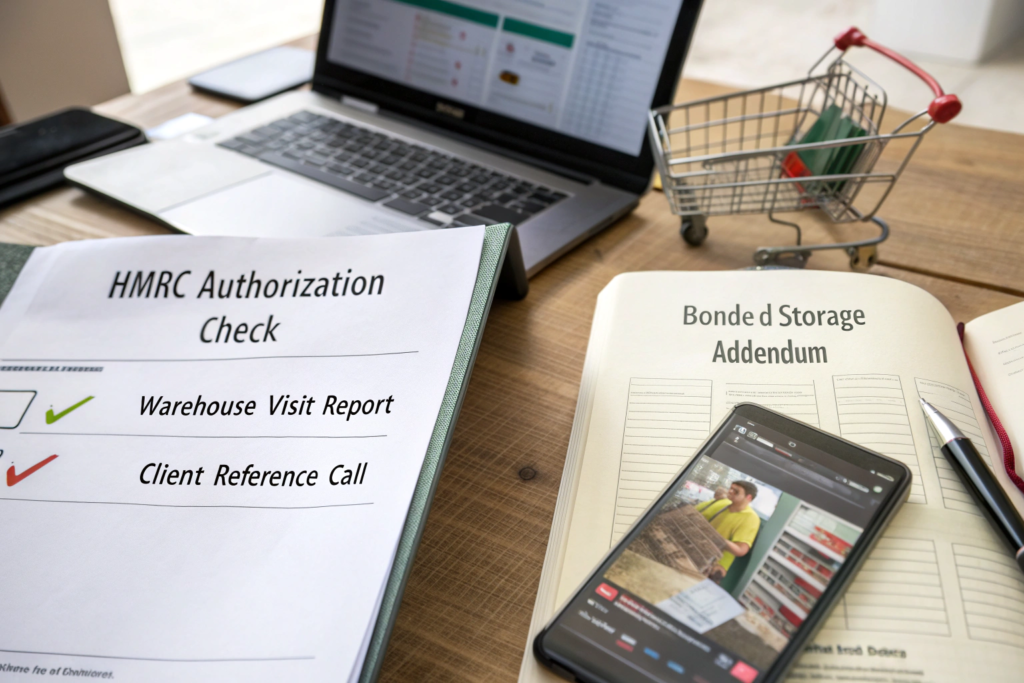
To verify a factory’s bonded warehouse capabilities, request and review four pieces of evidence. The HMRC customs warehouse authorization number, which every legal bonded warehouse in the UK must have. This number can be verified by asking the warehouse to provide their authorisation letter from HMRC, or by requesting the warehouse keeper’s name and checking it against HMRC’s published list of authorised warehouse keepers, though this list is not always fully public and may require a direct inquiry. A detailed process flow document that explains every step from the arrival of the goods at the UK port to the delivery to the end customer, including the customs procedure codes used at each stage, the responsible parties for each step, and the documentation that will be provided to you as the goods owner. A service level agreement that specifies the storage fees, the handling fees, the customs clearance fees, the insurance coverage, the inventory reporting frequency, and the procedure for removing goods from the bonded warehouse. Client references, ideally from other UK businesses that have used the same factory’s bonded warehouse arrangement, who can confirm that the process works as described and that there were no customs compliance issues.
Verification should be done before the first shipment is sent. The cost of a compliance failure, a shipment seized by HMRC, a penalty for incorrect customs declarations, a demand for immediate payment of back taxes, is far greater than the cost of thorough verification. Here are the two most important verification steps.
What HMRC Authorisation Should a Bonded Warehouse Hold?
The fundamental requirement is that the warehouse must be authorised by HMRC as a customs warehouse keeper. This authorization is granted under the Customs and Excise Management Act 1979 and the Customs (Special Procedures and Outward Processing) (EU Exit) Regulations 2018. The authorization is specific to the warehouse premises and to the types of goods that can be stored. A warehouse authorized to store textiles and accessories cannot necessarily store food or alcohol. The authorization is also specific to the type of warehouse, Type R public or Type U private. The warehouse should be able to provide a copy of their HMRC authorization letter. This letter will state the name and address of the authorized warehouse keeper, the premises address, the authorization number, and the date of authorization. It may also include any specific conditions. If the factory is using a third-party warehouse, they should be able to provide the warehouse’s authorization details and a copy of the contract between the factory, or the factory’s logistics partner, and the warehouse operator. A red flag is a warehouse that is reluctant to provide their authorization number or that provides a number that cannot be verified. Another red flag is a warehouse that uses vague language like "we handle the customs" without specifying the customs procedure codes. A legitimate bonded warehouse operator will be transparent about their authorization and will provide documentation freely. You can also check the warehouse’s EORI number, Economic Operators Registration and Identification number, which is required for all businesses that interact with UK customs. The EORI number format is GB followed by a 12-digit number. This number should appear on all customs declarations relating to your goods.
What Questions Should You Ask Before Shipping to a Bonded Facility?
Before you ship your first container or pallet to a bonded warehouse, you should have clear, documented answers to a specific set of questions. First, who is the importer of record? This is the legal entity that is responsible for the customs declarations and the payment of any tax due. In a bonded warehouse arrangement, you, the brand owner, are usually the importer of record, even though the goods are stored in a third-party warehouse. You must have your own EORI number. The warehouse cannot use their EORI number for your goods. Second, what are the all-in costs? Request a detailed breakdown of every fee. The storage fee, usually per pallet per week. The in-handling fee for receiving the goods. The customs clearance fee for the entry declaration. The customs clearance fee for each exit declaration. The pick and pack fee per order. The postage and packaging costs. Any account management fees. Some warehouses bundle these fees. Others charge them separately. Get the total picture. Third, what happens if goods are damaged or lost in the bonded warehouse? The warehouse should have insurance, and you should have your own cargo and inventory insurance. Understand who bears the risk at each stage. Fourth, how is inventory reported, and how often? You need a clear, regular inventory report that shows what is in the bonded warehouse, what has been removed, and what tax has been paid. This report is essential for your own accounting and for your VAT returns. Fifth, how do you reclaim VAT if goods are re-exported? If you sell goods from the bonded warehouse to a customer in France, those goods leave the UK without ever entering free circulation. No UK VAT is charged. The warehouse should provide you with proof of export, usually a customs export declaration, that you can use to justify why no VAT was paid.
What Are the Alternatives to Bonded Warehousing for UK Importers
Bonded warehousing is a powerful tool, but it is not the only way to manage post-Brexit imports from China. The right solution depends on the brand’s sales volume, sales channels, product range, and financial situation. A very small brand selling a few hundred units per year may find the bonded warehouse fees outweigh the tax deferral benefit. A brand that sells exclusively through a marketplace that handles fulfilment, like Amazon FBA, may not need its own warehousing at all. It is important to understand the alternatives so you can make an informed decision.
The main alternatives to bonded warehousing for UK importers are traditional importing with immediate customs clearance and duty payment, which is the simplest approach but has the worst cash flow implications. Drop shipping directly from the factory in China to the UK customer, which eliminates UK warehousing entirely but has longer delivery times and requires careful management of customs charges at the point of delivery. Using a third-party logistics provider with non-bonded warehousing, which offers the fulfilment service without the tax deferral. And using an EU-based bonded warehouse with subsequent movement to the UK, a more complex model that can work for brands that sell in both the UK and EU markets. Each alternative involves a trade-off between simplicity, speed, cost, and cash flow.
The best solution is often a hybrid. A brand might use bonded warehousing for their core, high-volume SKUs and drop shipping for new product tests or low-volume items. The factory partner should be able to support whichever model or combination of models works best for the brand. Let me explain the two alternatives that are most often considered alongside bonded warehousing.

Is Drop Shipping a Viable Alternative to Bonded Storage?
Drop shipping from China directly to the UK customer avoids UK warehousing entirely. The customer places an order on the brand’s website. The brand forwards the order to the factory. The factory picks, packs, and ships the individual item directly to the customer’s UK address. The brand never holds inventory. The brand never pays for warehousing. The brand never deals with UK customs declarations for bulk shipments. Drop shipping sounds ideal, but it comes with significant trade-offs. The delivery time is long. A parcel from China to the UK typically takes 7 to 15 days by standard air freight, longer if there are customs delays. For a UK customer accustomed to next-day delivery, this is a competitive disadvantage. The customer experience is less controlled. The packaging, the presentation, the unboxing experience, all of these are handled by the factory, not by the brand. Quality control is harder. The brand cannot inspect every unit before it goes to the customer. Customs charges can create a poor customer experience. If the parcel is valued over £135, the customer will be charged import VAT and possibly duty by the courier before the parcel is delivered. The customer may not have expected this charge and may refuse the delivery. Customs charges on low-value parcels are handled differently. For goods valued under £135, the overseas seller, which may be the factory or the brand depending on how the transaction is structured, is responsible for registering for UK VAT and charging VAT at the point of sale. This is a significant compliance burden. Drop shipping can work well for low-volume, high-value items where the longer delivery time is acceptable and the per-unit economics support the air freight cost. For high-volume, lower-priced accessories, bonded warehousing usually provides a better balance of customer experience and cost.
How Does Traditional Importing Compare on Cost and Complexity?
Traditional importing is the default model that most small UK brands start with. The goods are shipped from China, cleared through UK customs upon arrival, VAT and duty are paid immediately, and the goods are delivered to a non-bonded warehouse, a spare room, a storage unit, or a third-party fulfilment centre. The advantage is simplicity. There is no bonded warehouse authorization to verify. There are no special customs procedures to manage. The customs declaration is a standard import entry. The goods are in free circulation and can be moved anywhere in the UK without any customs paperwork. The disadvantage is the immediate tax cost, as we have discussed. The other disadvantage is that VAT becomes a permanent cost. Once VAT is paid on import, it cannot be recovered if the goods are later exported. If a UK brand pays import VAT on a shipment and then sells some of those goods to a customer in Germany, the UK import VAT is not refundable. The brand has paid tax unnecessarily. With bonded warehousing, goods destined for export never incur UK VAT. For brands that sell both domestically and internationally, this is a meaningful financial difference. Traditional importing is the right choice for brands with very small import volumes, brands that sell exclusively within the UK, and brands that have sufficient cash reserves that the upfront tax payment does not constrain their growth. For everyone else, bonded warehousing offers a compelling financial and operational advantage.
Conclusion
Finding a factory that offers bonded warehouse in the UK after Brexit is about finding a partner who understands that manufacturing is only one part of the supply chain. The best factory partner thinks about what happens to the goods after they leave the loading dock. They think about your cash flow, your customer experience, and your compliance obligations. A factory that offers bonded warehousing, either through their own facility or through a vetted third-party partnership, is a factory that is invested in your business success, not just in filling production orders. We have walked through what a bonded warehouse is, a customs-controlled facility where VAT and duty are suspended until the goods are sold, and how the Type R public warehouse model is the most accessible option for small and medium-sized UK brands. We have explored why bonded warehousing has become so important after Brexit, as the old EU distribution center model is no longer available and UK importers face immediate tax charges on direct imports from China. The cash flow benefit is transformative, and the ability to fulfil UK orders directly from bonded storage turns a tax solution into a complete logistics solution. We have covered how to verify a factory’s bonded warehouse claims, by checking HMRC authorization, understanding the cost structure, and talking to existing clients. And we have compared bonded warehousing to the alternatives, drop shipping and traditional importing, each of which has its place depending on the brand’s scale and business model.
At AceAccessory, we serve a growing number of UK-based accessory brands who rely on our bonded warehouse solution to manage their post-Brexit supply chain. We do not own the bonded warehouse ourselves. We partner with established, HMRC-authorised Type R bonded warehouse operators in the Manchester and Midlands logistics corridors. Our logistics team handles the entire process, from our factory in Zhejiang to the bonded warehouse to the end customer’s doorstep. Our UK clients pay tax only when their products sell. They sleep better at night knowing their cash flow is protected and their customs compliance is handled by professionals.
If you are a UK accessory brand, a retailer, or an online seller sourcing from China, and you want to understand how bonded warehousing can improve your business, I invite you to contact us. Reach out to our Business Director, Elaine, at elaine@fumaoclothing.com. Tell her about your product range, your sales volumes, and your current import challenges. She can provide a detailed explanation of our bonded warehouse process, a cost comparison against traditional importing, and an introduction to our bonded warehouse partners. Let us help you navigate post-Brexit trade with a supply chain solution that puts your cash flow first.