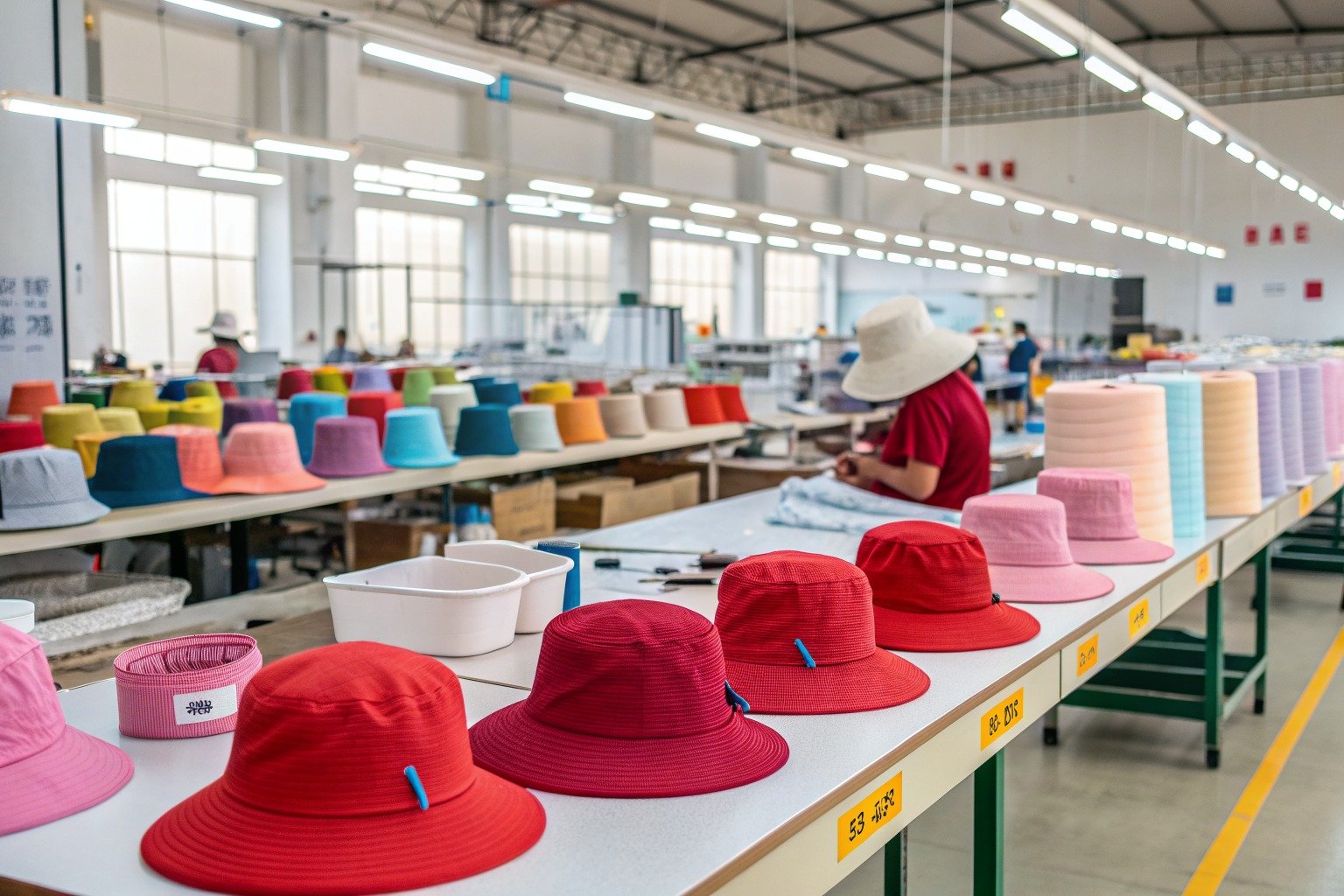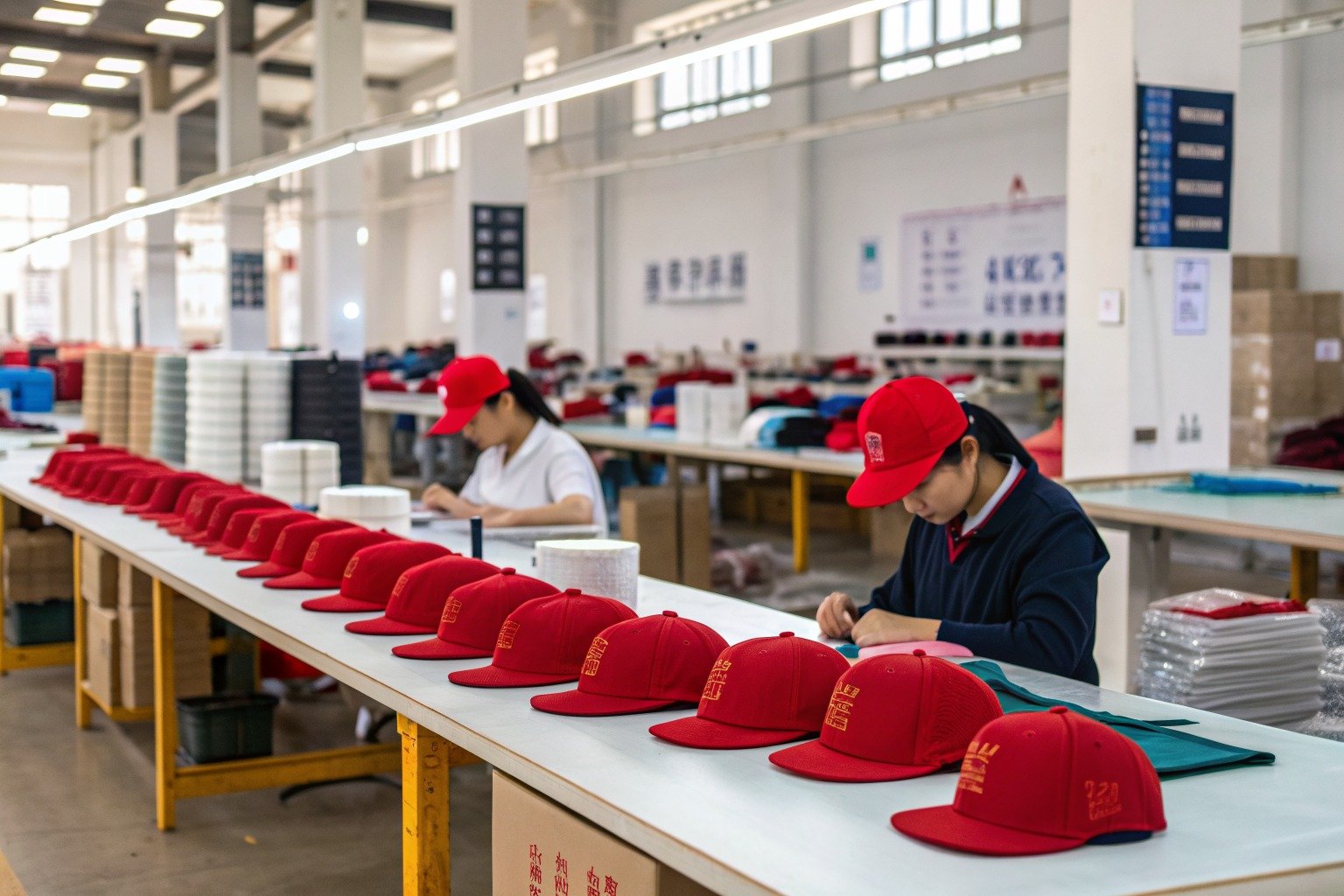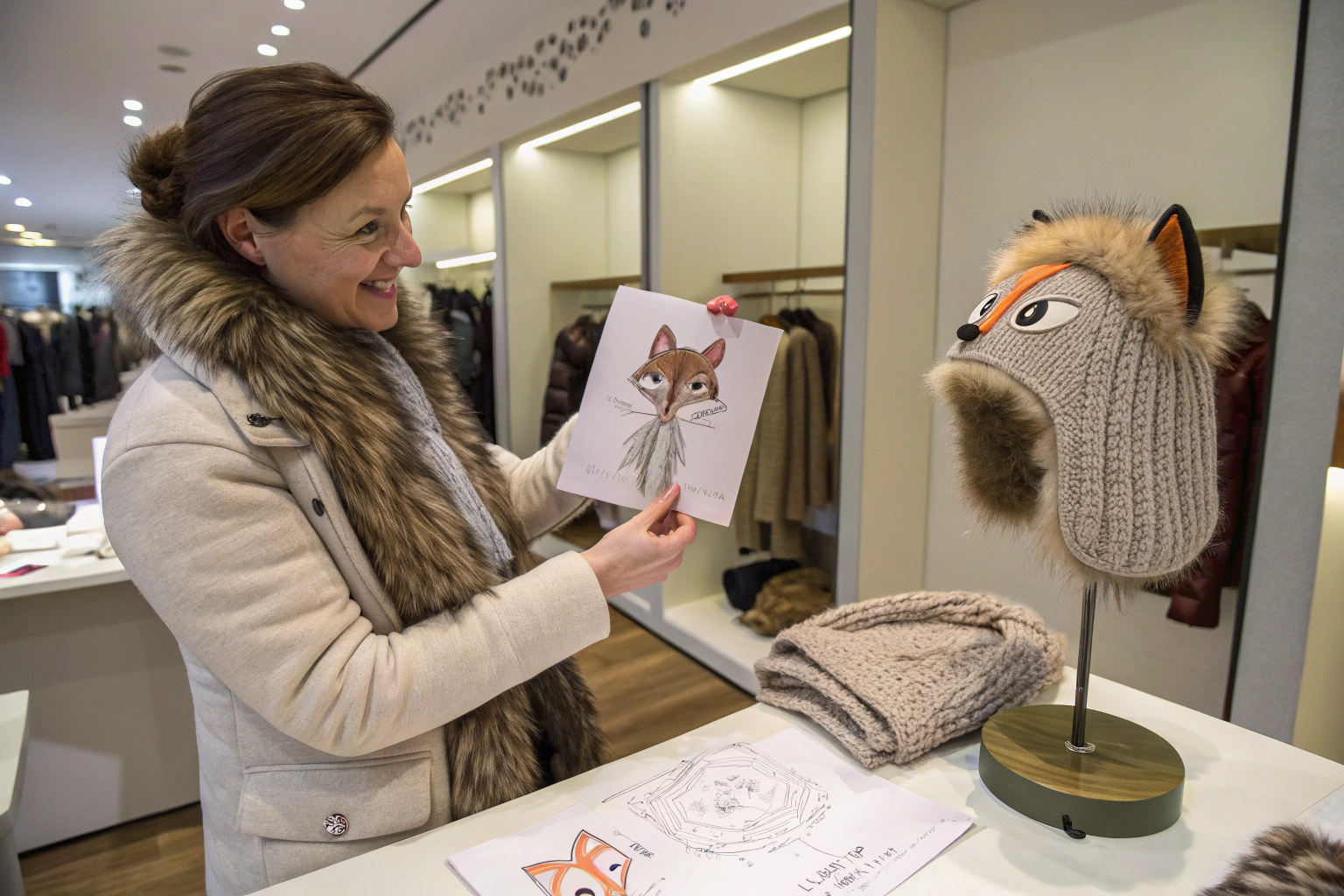
A buyer from a Scandinavian lifestyle brand visited our Zhejiang showroom two winters ago with a sketch that made me smile. She wanted an ear warmer shaped like a fox, with pointed ears, an embroidered face, and a fluffy tail detail at the back. She had already visited four factories. Two told her the shape was too complex. One quoted a minimum order of 10,000 units. Another said they could do it but only in a basic fleece, not the textured faux fur and knit combination she envisioned. She was frustrated and ready to compromise her design. I looked at her sketch and told her we could make it exactly as she imagined. Six weeks later, her fox ear warmers were in stores across Oslo and Stockholm. They sold out in ten days. That project reminded me why I love what we do. A custom shaped ear warmer is not just a functional winter accessory. It is a statement piece, a gift item, a brand signature. Getting it right requires a factory that embraces complexity instead of running from it.
Yes, our factory produces fully custom shaped ear warmers in virtually any silhouette, from classic animal ear designs like cats, bears, and foxes to brand-specific shapes like logos, seasonal motifs like snowflakes and stars, and abstract sculptural forms. We can execute these designs in a wide range of winter-appropriate materials including faux fur, shearling, cable knit, polar fleece, and quilted nylon, with internal headband structures that provide a secure, comfortable fit. Our in-house pattern making team, embroidery and printing capabilities, and material sourcing network allow us to develop unique ear warmers that stand out in a crowded winter accessories market.
An ear warmer might look like a simple product. Two ear covers connected by a band. But when you move beyond the basic rectangle into custom shapes, the engineering becomes surprisingly complex. The shape must hold its form. The band must provide the right tension without being too tight. The materials must be warm, soft, and durable. The seams must be smooth against the skin. At AceAccessory, our winter accessories division has developed specialized expertise in shaped ear warmers, and we have shipped them to boutiques, department stores, and online brands across Europe and North America. Let me walk you through exactly how we bring a custom ear warmer from sketch to finished product.
What Custom Shapes Can You Create for Ear Warmers
The range of custom shapes we can produce is limited primarily by two factors. The physics of how the ear warmer sits on the head, and the properties of the materials used. The ear warmer must wrap around the back of the head or sit over the top of the head with enough tension to stay in place, but not so much that it causes discomfort. The ear covering portions must be large enough to actually warm the ears, even if they are shaped into decorative forms. Within these functional constraints, the creative possibilities are vast. We have produced animal ears, geometric shapes, brand logo silhouettes, seasonal motifs, and abstract sculptural designs.
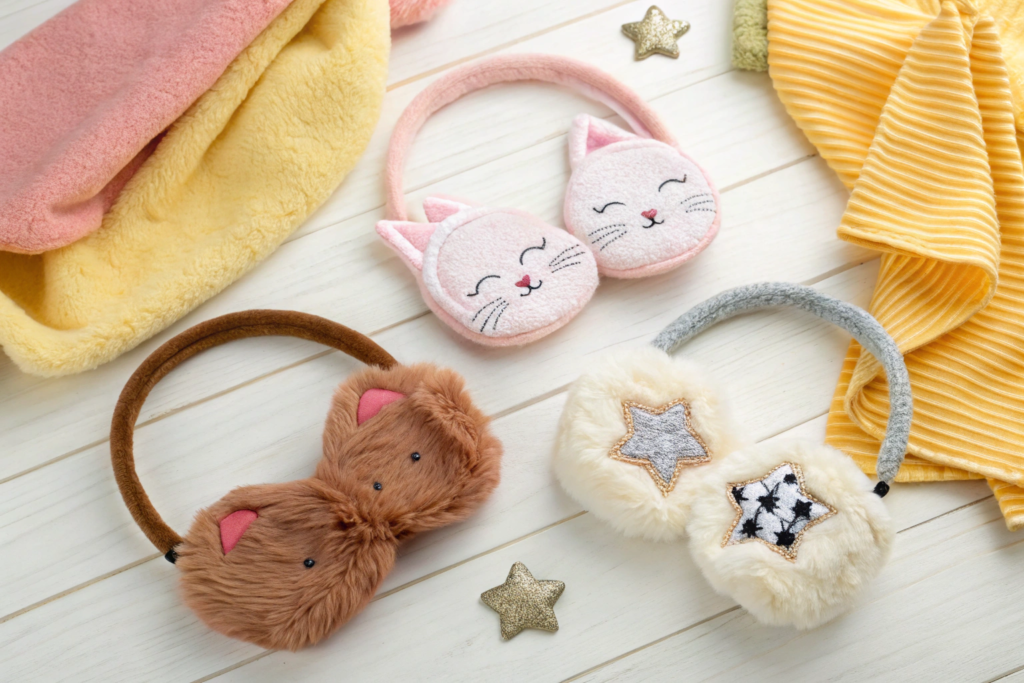
Our factory can produce custom shaped ear warmers in four broad categories. Animal-inspired shapes, including cat ears, bear ears, fox ears, bunny ears, and deer ears, which are consistently the most popular category for both children and playful adult accessories. Geometric and novelty shapes, such as stars, hearts, snowflakes, flowers, and abstract asymmetrical forms, which are popular for fashion-forward brands and seasonal holiday collections. Brand-specific shapes, where the ear warmer silhouette is designed to mirror a brand logo or a signature motif, creating a unique branded accessory. And sculptural or layered shapes, which combine multiple materials and three-dimensional elements, like a knitted ear warmer with faux fur pom-pom accents or a quilted shape with embroidered details that extend beyond the basic ear covering.
Each category requires a different approach to pattern making and construction. A simple cat ear shape can be achieved with a two-part pattern, a front and back with the ear points formed by the seam shape. A complex brand logo shape might require a multi-part pattern with internal support structures to maintain the silhouette. Let me explain the two most important aspects of custom shape development.
How Do You Create Animal Ear and Novelty Shapes?
Animal ear shapes are deceptively technical. A cat ear is not just a triangle sewn onto a headband. The ear shape must have volume, a slight three-dimensionality that makes it look like an ear rather than a flat cutout. We achieve this through pattern engineering. The front and back pattern pieces for the ear portion are cut with different curves. When they are sewn together, the seam pulls the fabric into a slightly cupped, three-dimensional form. A small amount of padding, typically a thin foam or a layer of polyester wadding, is inserted between the fabric layers to help the ear hold its shape and provide a soft, plush feel. The transition from the ear shape to the headband is the most critical part of the design. If the ear shape abruptly meets the band, the ear warmer looks like two separate pieces stuck together. We design a graduated transition where the ear shape flows smoothly into the band. This often requires a separate gusset piece or a carefully shaped dart. The placement of the decorative details, the eyes, nose, and whiskers on an animal face ear warmer, must be positioned so that they are visible and correctly oriented when the ear warmer is worn. We create a fitting sample on a head form and adjust the embroidery placement based on how the fabric stretches and curves on the actual head. For novelty shapes like stars and hearts, the challenge is maintaining the shape’s recognizability. A star shape that wraps around the head will be distorted by the curvature. We compensate for this by slightly exaggerating the points of the star in the flat pattern, knowing that they will soften and round out when the ear warmer is worn. It is a bit of optical illusion engineering, and it comes from experience with many, many samples.
Can You Match a Brand Logo Silhouette in an Ear Warmer?
Yes, and this is one of our favorite types of projects because it produces a truly unique branded product. The process starts with the brand’s logo file, typically a vector format like Adobe Illustrator. Our pattern maker traces the logo silhouette and adapts it into a wearable ear warmer shape. This adaptation is the key skill. Not every logo shape will work as an ear warmer without modification. Very thin, delicate elements might not be structurally sound. Very complex shapes with many internal cutouts might be difficult to manufacture or uncomfortable to wear. Our design team works with the brand to simplify and adapt the logo while preserving its essential recognizability. For example, a brand with a mountain logo might want an ear warmer shaped like a mountain range. The sharp peaks of the logo work beautifully as the top profile of the ear warmer. The base of the mountain becomes the headband that wraps around the back of the head. We might add a subtle contrast binding along the mountain ridgeline to emphasize the shape. A brand with a circular logo might want a round ear warmer with a debossed or embroidered logo detail in the center. The round shape frames the face beautifully and creates a distinctive silhouette that is unmistakably the brand’s. For structural logos, we use internal materials to help the ear warmer hold its shape. A thin, flexible plastic frame or a dense foam interlining can be inserted between the fabric layers to give structure to shapes that would otherwise collapse. This is common for shapes with straight edges or sharp angles. The internal structure is completely enclosed and padded, so the wearer never feels it. Logo ear warmers are particularly effective as corporate gifts, employee uniforms for outdoor workers, or limited edition merchandise for brand activations. They are functional, highly visible, and they generate conversation.
What Materials Work Best for Shaped Winter Ear Warmers
The material choice for a custom shaped ear warmer is both an aesthetic decision and an engineering decision. The material determines how the shape holds up, how warm the ear warmer is, how it feels against the skin, and how it wears over time. A material that is perfect for a simple rectangular ear warmer might be completely wrong for a complex custom shape. The material must be able to hold the seam curves without puckering. It must have enough body to maintain the silhouette, but enough flexibility to conform to the head. It must not fray excessively when cut into intricate shapes. And of course, it must be soft and comfortable against the ears.
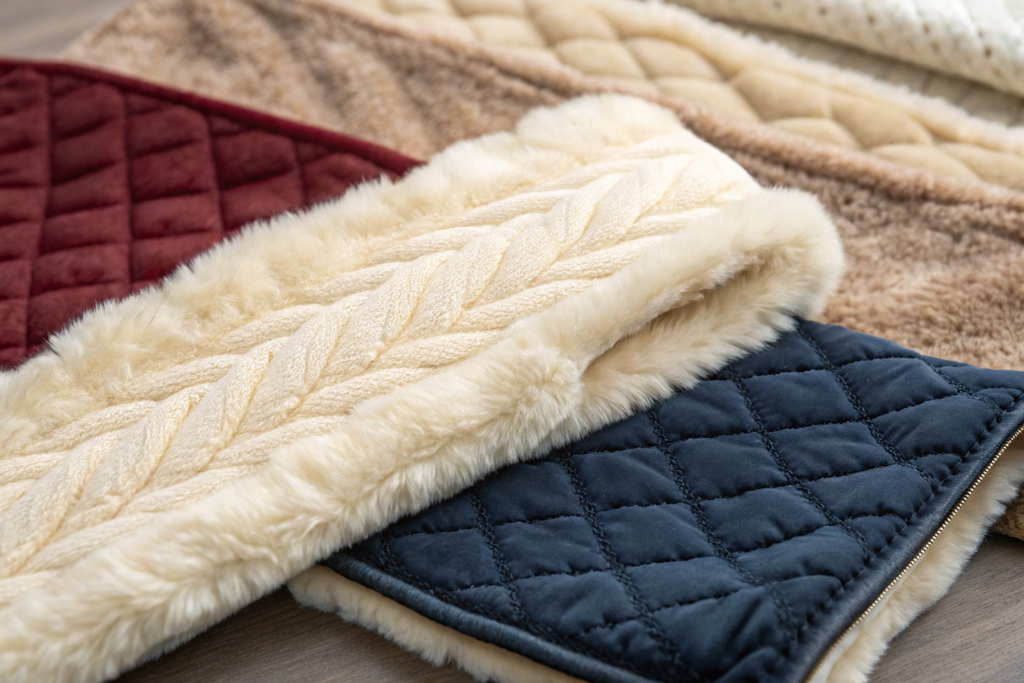
The best materials for custom shaped ear warmers are those that combine warmth, structural integrity, and a soft hand feel. Faux fur is the top choice for animal ear designs and plush novelty shapes because it holds volume beautifully, hides seam lines in its pile, and feels luxurious. Cable knit and chunky knit fabrics offer a classic, heritage aesthetic with natural stretch that conforms to complex curves. Polar fleece and Sherpa fleece are lightweight, cost-effective options that come in a wide range of colors and are easy to cut and sew into precise shapes. Quilted nylon or polyester with a thin foam interlining provides a sleek, sporty look and excellent wind resistance, though it works best for simpler, geometric shapes. Shearling and faux shearling offer a premium, textural option with a suede-like backing that adds structure.
Each material has its own cutting, sewing, and finishing requirements. Our production team adjusts the machine settings, needle types, and seam constructions based on the material specified for each design. Here is a closer look at two of the most popular material categories.
Why Is Faux Fur Ideal for Animal and Plush Designs?
Faux fur is the material of choice for animal ear warmers and plush novelty designs for several technical reasons. The long pile, the fluffy fibers that stand up from the fabric backing, hides seams. When two pieces of faux fur are sewn together with the pile facing outward, the fibers naturally cover the stitch line. The seam disappears into the fluff. This is a huge advantage for shaped designs where visible seams would interrupt the clean silhouette. With a flat fabric like fleece, every seam is visible, and the seam placement must be carefully designed to be aesthetically pleasing. With faux fur, the seams can go where they need to go structurally, and the pile covers them. Faux fur also holds volume. The pile fibers create a natural loft that fills out the ear shapes and gives them a plush, three-dimensional appearance. A cat ear made from faux fur looks round and full. The same ear made from a thin, flat fabric might look limp and deflated. The pile can be brushed, trimmed, or sculpted to create different effects. A longer pile around the ear edges creates a soft, fuzzy halo. A shorter, denser pile on the face area creates a smooth surface for embroidery or applique details. We use different pile lengths on different parts of the same ear warmer to create visual depth and texture. Faux fur is also very warm, which is the primary function of an ear warmer, and it feels incredibly soft and comforting against the skin. For children’s ear warmers, the tactile appeal of faux fur is a major selling point. Kids want to touch it, wear it, and keep it on.
How Does Stretch Knit Fabric Handle Complex Ear Warmer Shapes?
Stretch knit fabrics, including cable knits, rib knits, and jersey knits, offer a different set of advantages for shaped ear warmers. The primary advantage is the inherent stretch. A knit fabric can stretch to conform to complex, compound curves without wrinkling or puckering. This makes it excellent for sculptural shapes that would be difficult to achieve with a non-stretch woven fabric. The stretch also provides a comfortable, adaptable fit. A knit ear warmer gently hugs the head and ears without needing a separate elastic component. The fabric itself provides the tension. The texture of knit fabrics adds visual interest. A cable knit ear warmer in a classic shape like a star or a heart combines the novelty of the silhouette with the timeless appeal of knitwear. It feels like a cozy sweater for your ears. The challenge with knit fabrics is that their stretch can also work against a structured shape. A heavy cable knit might stretch out over time and lose the crisp definition of the custom shape. To prevent this, we often back the knit fabric with a thin, stable knit lining or a lightweight fusible interfacing in the critical areas that define the shape. The lining stabilizes the knit without affecting the outer appearance or the overall stretch of the headband. Another consideration is the cut edge. Knit fabrics can unravel if the cut edge is not properly finished. We use a variety of edge finishing techniques depending on the design. A fold-over elastic binding provides a clean, stretchy edge. A merrow stitch or overlock stitch encases the raw edge in thread. For a seamless look, we can also fully line the ear warmer, sewing the outer knit and the inner lining right sides together and then turning it, so all raw edges are hidden inside. This construction is more labor-intensive but produces a beautiful, high-quality finish that premium brands demand.
How Does the Headband Structure Work for Shaped Ear Warmers
The headband is the engineering core of the ear warmer. It is the part that the wearer does not see but definitely feels. A poorly designed headband will slip off, squeeze too tight, or lose its shape after a few uses. A well-designed headband disappears from the wearer’s awareness, providing just enough tension to hold the ear warmer securely in place without causing pressure points or headaches. For custom shaped ear warmers, the headband design is even more critical because the decorative ear portions add weight and bulk that the headband must support without sagging or shifting.
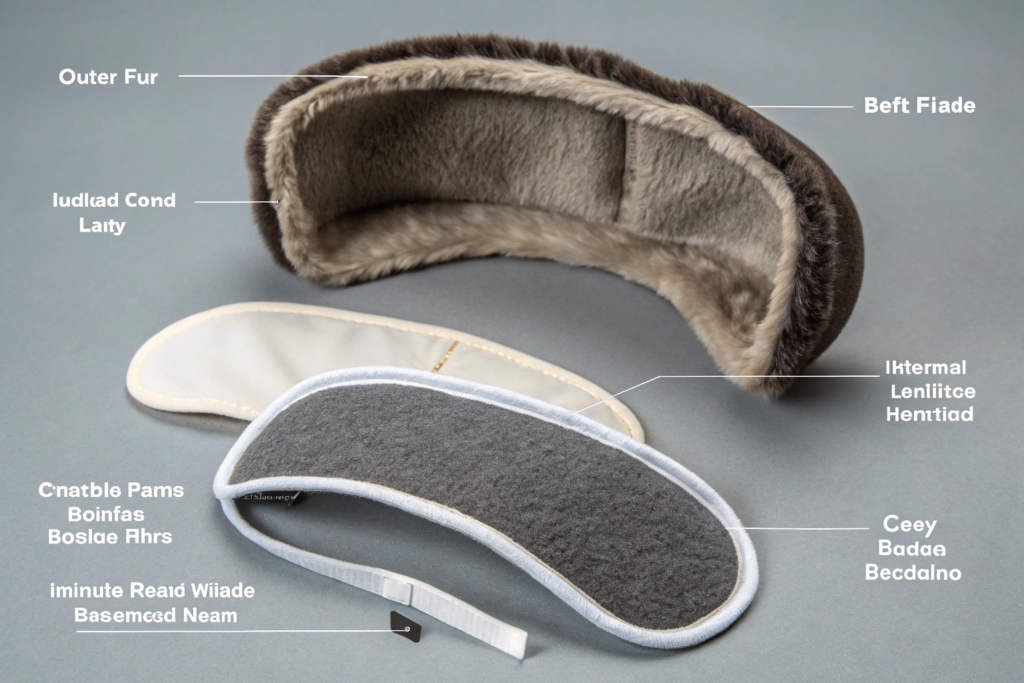
Our custom shaped ear warmers use one of three headband structural systems depending on the design requirements. A flexible internal plastic frame, typically a narrow band of polypropylene or nylon, provides the most secure and shape-retentive structure. This frame is inserted into a fabric sleeve that runs across the top of the head or around the back of the head. An elasticated fabric band, using a wide elastic insert enclosed in a fabric casing, provides a softer, more flexible fit that is popular for children’s styles and lightweight designs. A structured fabric wrap, which relies on the combination of a shaped, multi-layer fabric construction and a non-stretch binding to create tension, offers the most seamless and minimalist appearance, with no rigid internal components. The choice of headband system affects the fit, the comfort, the durability, and the overall look of the finished ear warmer.
The position of the headband, over the top of the head or around the back, is another design decision that interacts with the custom shape. A top-of-head band works well with symmetrical shapes that sit over the ears, like animal ears or geometric shapes. A behind-the-head band works well with shapes that wrap around the back of the head, like a continuous sculptural form. Here are the specifics on the two main structural approaches.
What Internal Frames Help Maintain Custom Shapes?
For ear warmers with tall, upright shapes like cat ears, fox ears, or decorative points, an internal frame is essential. Without a frame, the weight of the fabric and the force of gravity will cause the ears to flop over or sag after a short period of wear. The frame provides a lightweight, flexible skeleton that holds the shape upright. The most common frame material is a thin, flat strip of polypropylene plastic, similar to what is used in some headbands. The plastic is cut into a shape that matches the internal profile of the ear warmer design. For an animal ear design, the frame would have a central band that goes over the head and two arms that extend up into the ear points. The plastic is then encased in a soft fabric sleeve or sandwiched between layers of foam padding so the wearer never feels a hard edge. The frame is flexible enough to bend slightly and conform to different head shapes, but it has a memory that returns it to its original shape. For less structured support, we also use a dense, closed-cell foam as a semi-rigid internal layer. The foam is cut to the exact shape of the ear warmer and quilted or fused between the outer fabric and the lining. It provides enough body to hold a shape like a star or a heart without the need for a separate plastic component. This is a popular option for children’s ear warmers because it is soft and comfortable even if the child falls asleep wearing it. The internal frame or foam must be carefully designed to avoid creating pressure points. The edges are beveled or skived to a thin taper. The plastic tips are rounded and padded. Comfort testing is a mandatory part of our sample development process. We have real people wear the samples for extended periods and report any discomfort.
How Do You Size an Ear Warmer for Different Age Groups?
Sizing an ear warmer correctly is about the circumference of the head, the distance across the top or around the back where the band sits, and the relationship between the ear covering position and the actual ears. A poorly sized ear warmer will have the decorative ears sitting too high on the head, or the ear coverings not fully covering the ears. We have developed a set of standard size blocks based on anthropometric data for different age groups. For adults, the standard headband length accommodates a head circumference of approximately 55 to 58 centimeters, which fits the majority of women and many men. We also offer a larger size for men and a smaller size for petite women. For children, we have blocks for toddlers, ages 2 to 4, head circumference approximately 48 to 50 centimeters, young children, ages 5 to 8, 50 to 53 centimeters, and older children, ages 9 to 12, 53 to 55 centimeters. These are starting points, and we adjust the pattern for each specific design based on how the custom shape affects the fit. A design with large, heavy ear shapes may need a slightly tighter band tension to keep the ear warmer from sliding backward. A design intended for active wear, like running, may need a more secure fit than a fashion design intended for casual walking. We can also incorporate adjustability into the design. A small elastic loop and button, a sliding cord lock, or a discreet Velcro adjustment at the back allows the wearer to customize the tension. Adjustable ear warmers are popular for gift items because they accommodate a wider range of head sizes and reduce the need for multiple size SKUs. The sizing samples are tested on fit models in the target age range. We photograph the fit from multiple angles, measure the tension with a simple force gauge, and make adjustments to the pattern before production begins.
What Decorative Techniques Can You Apply to Ear Warmers
Decoration is what transforms a well-made ear warmer into a memorable, sellable product. The decorative elements are what catch the eye on a retail shelf or in an Instagram post. They are what make a customer choose your ear warmer over a plain one. Custom shaped ear warmers provide a larger canvas for decoration than standard rectangular ear warmers. The shape itself is decorative, and the surface of the shape can be further enhanced with embroidery, applique, printing, beading, and embellishment techniques that add texture, color, and personality.
Our factory offers a full range of decorative techniques for custom ear warmers. Embroidery is the most popular choice, used to create facial features on animal designs, brand logos, and decorative patterns like snowflakes or florals. Applique involves sewing a separate piece of fabric onto the ear warmer surface to create contrasting ears, patches, or design elements, and is very effective for adding different textures. Heat transfer printing allows for full-color, photographic-quality designs, which is perfect for brand mascots, detailed illustrations, or seasonal motifs. Pom-poms, whether faux fur, yarn, or fleece, add a playful, tactile element that is incredibly popular on social media. Beading and sequin embellishment provide a touch of sparkle for holiday and fashion-forward designs. Embossed or debossed effects, created with heat and pressure on specific fabrics, add a subtle, premium branding detail that is visible upon close inspection.
The choice of decorative technique depends on the base material, the design complexity, the target price point, and the desired aesthetic. Faux fur is more challenging to embroider than a smooth fleece, but it is possible with the right stabilizer. A heavily embellished ear warmer with multiple techniques will have a higher production cost but can command a significantly higher retail price. Let me explain the two techniques that add the most perceived value.
How Does Embroidery Enhance Animal Face Ear Warmers?
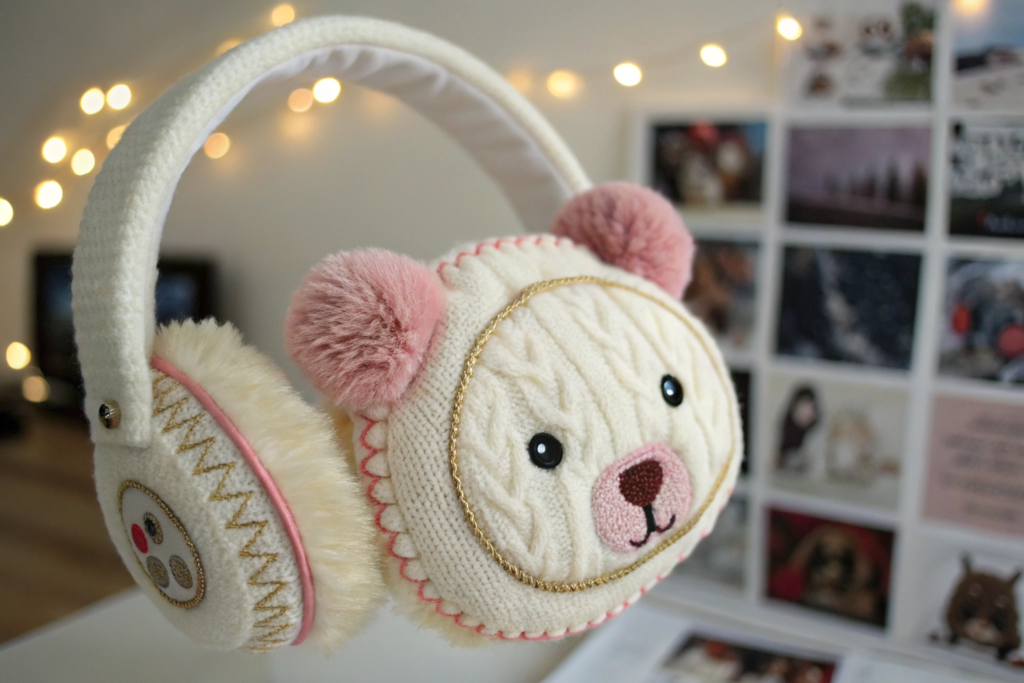
Embroidery is the defining technique for animal face ear warmers. The eyes, nose, mouth, and whiskers of a cat, bear, fox, or other animal character are almost always created with embroidery. Embroidery provides a precise, durable, and high-quality finish that other techniques cannot match. A printed eye might fade or peel over time. A plastic safety eye, the kind used on stuffed animals, can be uncomfortable against the ear. An embroidered eye is soft, permanent, and can be created with multiple thread colors to achieve a realistic or stylized look. We use a specialized embroidery process for ear warmers. Because the fabric is often thick, stretchy, or has a pile, we apply a tear-away or water-soluble stabilizer to the back of the embroidery area. This stabilizer prevents the fabric from puckering or stretching during the embroidery process. The embroidery design is digitized with specific underlay stitches that create a stable foundation for the top thread. The density is adjusted for the fabric type. Too dense, and the embroidery will feel stiff and uncomfortable against the ear. Too sparse, and the fabric will show through. We have an embroidery digitizing specialist on our design team who optimizes every design for the specific material and shape of the ear warmer. For premium animal face designs, we often use a combination of embroidery and applique. The eyes and nose are embroidered. The inner ears, the muzzle, or other accent areas are created with a separate fabric piece that is appliqued onto the base before the embroidery outlines it. This combination of textures, the smooth embroidery thread next to the soft knit or the plush faux fur, creates a rich, dimensional look that photographs beautifully and feels substantial in the hand.
Can You Add Pom-Poms, Sequins, or Embellishments Securely?
Yes, and the security of the attachment is the most critical quality factor for these embellishments. A pom-pom that falls off after three wears, or a sequin that scratches the wearer’s face, is worse than no embellishment at all. It creates a negative customer experience and can be a safety hazard, especially for children’s products. Faux fur pom-poms are attached using a two-stage process. First, the pom-pom is constructed with a strong elastic cord or a fabric tab sewn into its core. Then, this cord or tab is securely stitched through all layers of the ear warmer, from the outside to the inside, and the thread is locked with multiple backstitches. The attachment point is reinforced with a small piece of interlining on the inside to prevent the thread from pulling through the fabric. For children’s products, we also conduct a pull test on every embellishment. A force of 90 newtons, which is the standard for small parts on children’s products under both European and US safety regulations, is applied to the pom-pom. It must not detach. Sequins and beads are attached with a lockstitch machine using a strong, UV-resistant thread. Each sequin is individually stitched with multiple passes to ensure it cannot be pulled off by normal wear and tear. We avoid continuous sequin strands, where a single thread holds many sequins, because if the thread breaks at one point, all the sequins downstream will come loose. Instead, each sequin is independently locked. For safety, we do not recommend small, individual beads or sequins on ear warmers intended for children under three years old, as they are a choking hazard if detached. For these products, we use embroidered or printed alternatives that provide a similar sparkle effect without the detachment risk. Our QC team inspects every embellished ear warmer under a magnifying lamp during final inspection. They tug on every pom-pom, check every sequin, and verify that no sharp edges or loose threads are present.
Conclusion
A custom shaped ear warmer is one of those rare products that combines function, fashion, and fun in equal measure. It keeps ears warm, which is the practical purpose. It makes a style statement, which is the fashion purpose. And it brings a smile to the wearer and to those who see it, which is the joy purpose. We have walked through the entire development journey, from the initial shape concept to the final embellished product. You now know that animal ears, geometric shapes, and brand silhouettes are all achievable with the right pattern engineering and material choices. Faux fur, knit fabrics, and fleece each bring different properties to the design, and the choice must be aligned with the shape’s structural needs. The internal headband, whether a flexible plastic frame, an elasticated band, or a structured fabric wrap, is the hidden engineering that determines whether the ear warmer stays in place comfortably. And the decorative techniques, embroidery, applique, pom-poms, and more, are what give the ear warmer its personality and its Instagram-worthy appeal.
At AceAccessory, we love making ear warmers that are anything but ordinary. Our winter accessories team has the pattern making expertise, the material sourcing network, and the embellishment capabilities to turn a creative sketch into a retail-ready product that stands out in a crowded market. We have produced custom ear warmers for boutique brands, major department stores, and online influencers. We understand the safety requirements for children’s products, the quality expectations of premium brands, and the speed-to-market demands of seasonal winter accessories.
If you have a custom ear warmer design in mind, a whimsical animal, a sleek brand logo, a festive holiday shape, or something entirely new, I invite you to bring it to us. Contact our Business Director, Elaine, at elaine@fumaoclothing.com. Send her your sketch, your reference images, and your material preferences. She will work with our design team to provide a feasibility assessment, a sampling timeline, and a quotation. Let us create the ear warmer that your customers will reach for on every cold morning, and that they will post about on social media because it is just too cute not to share.