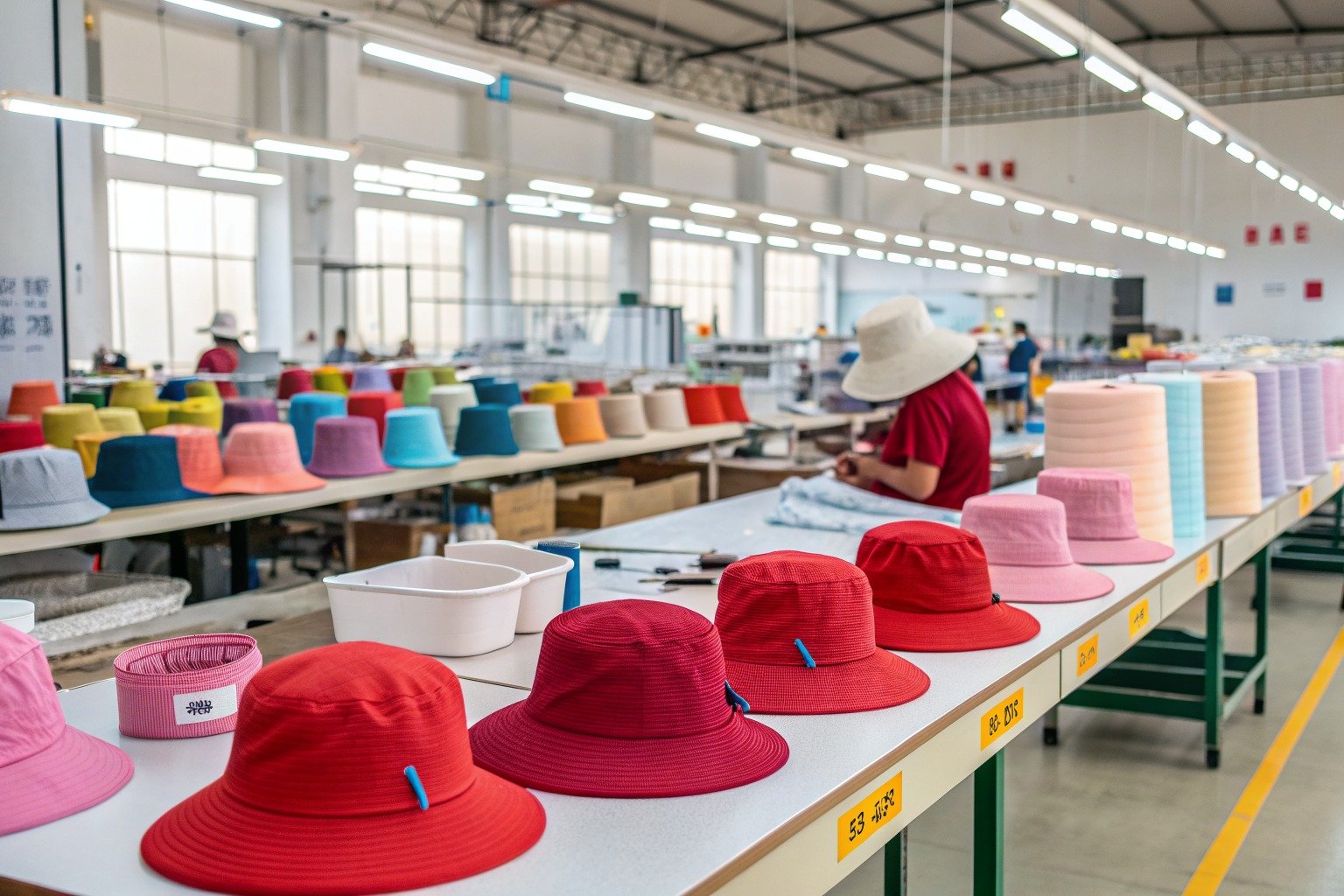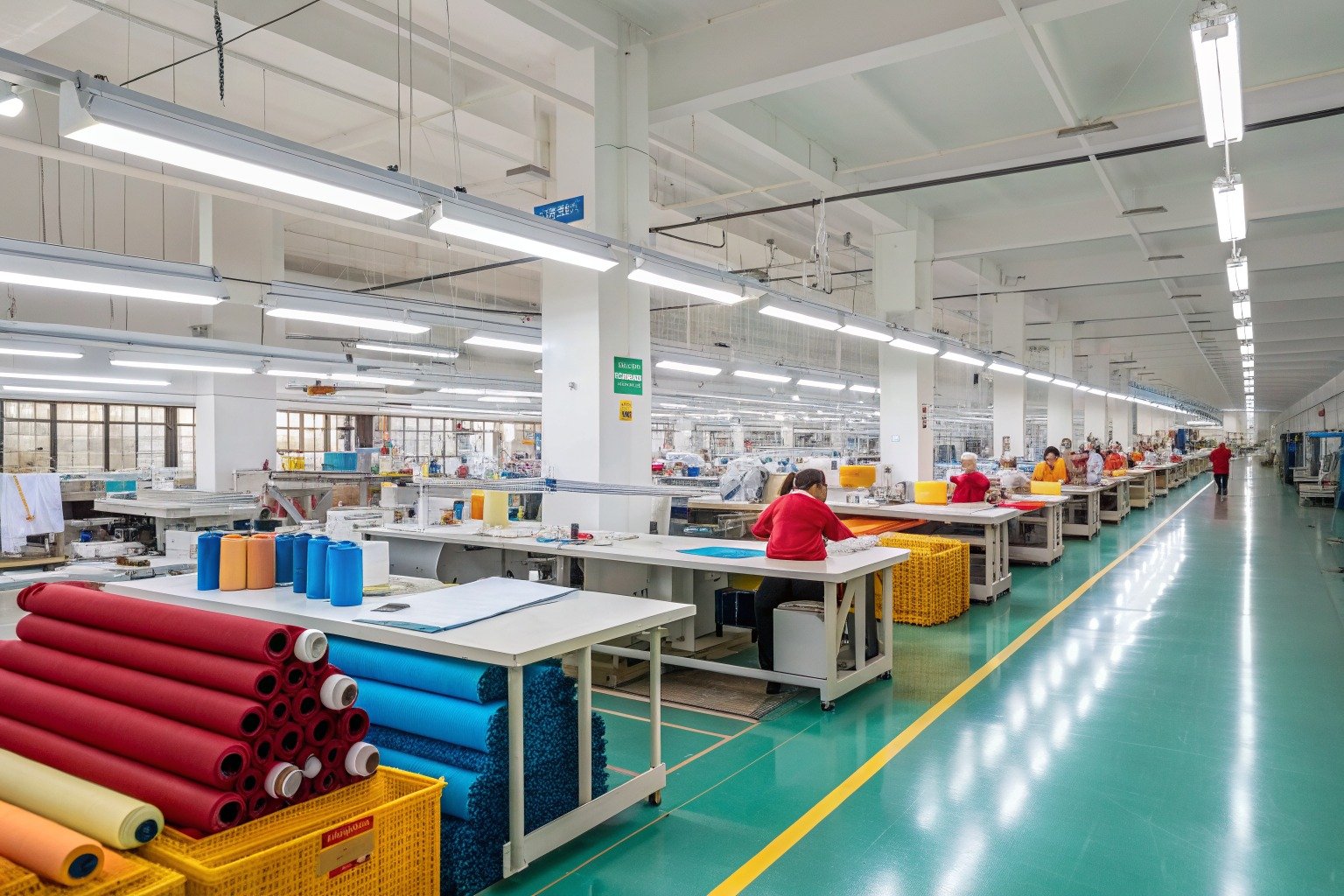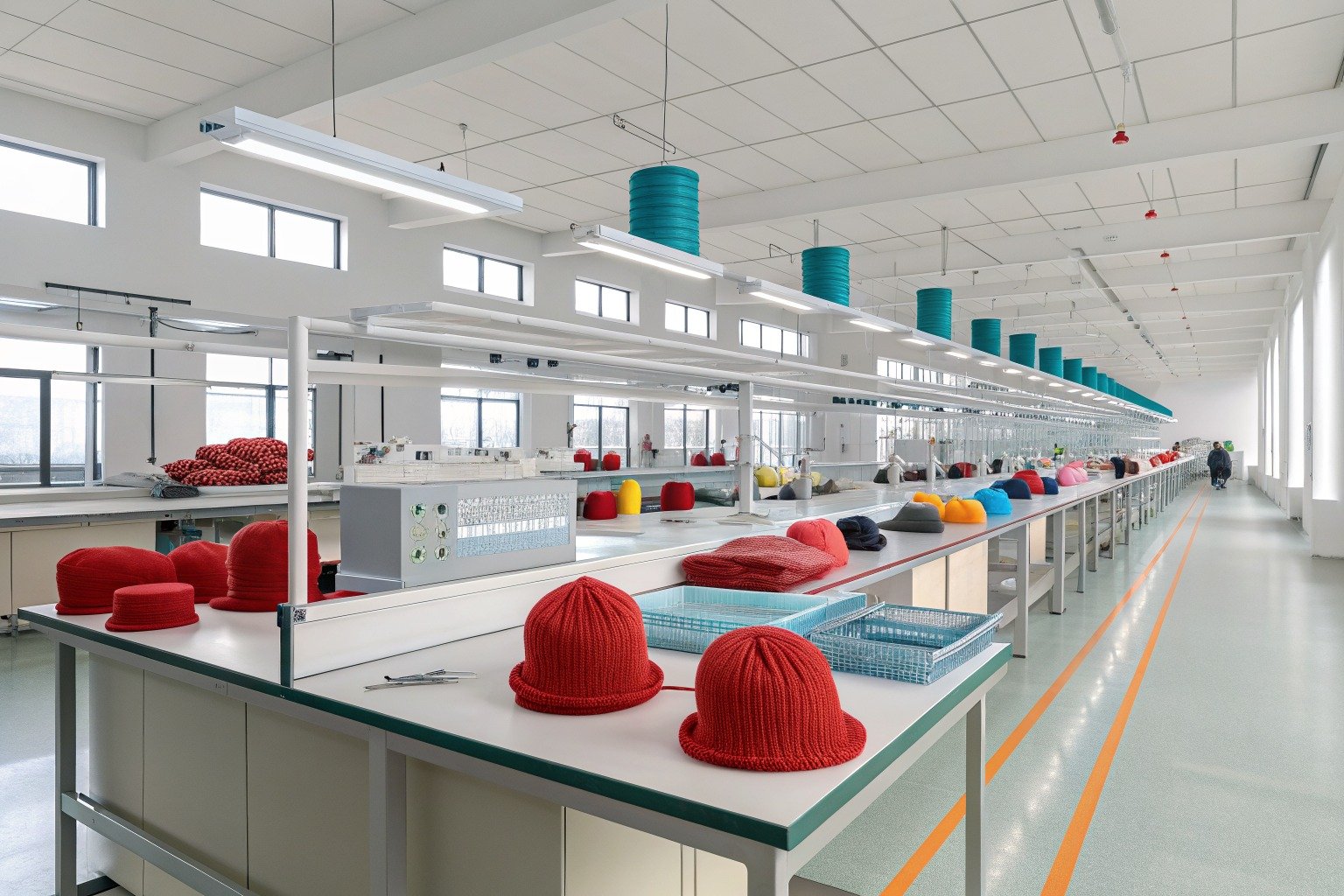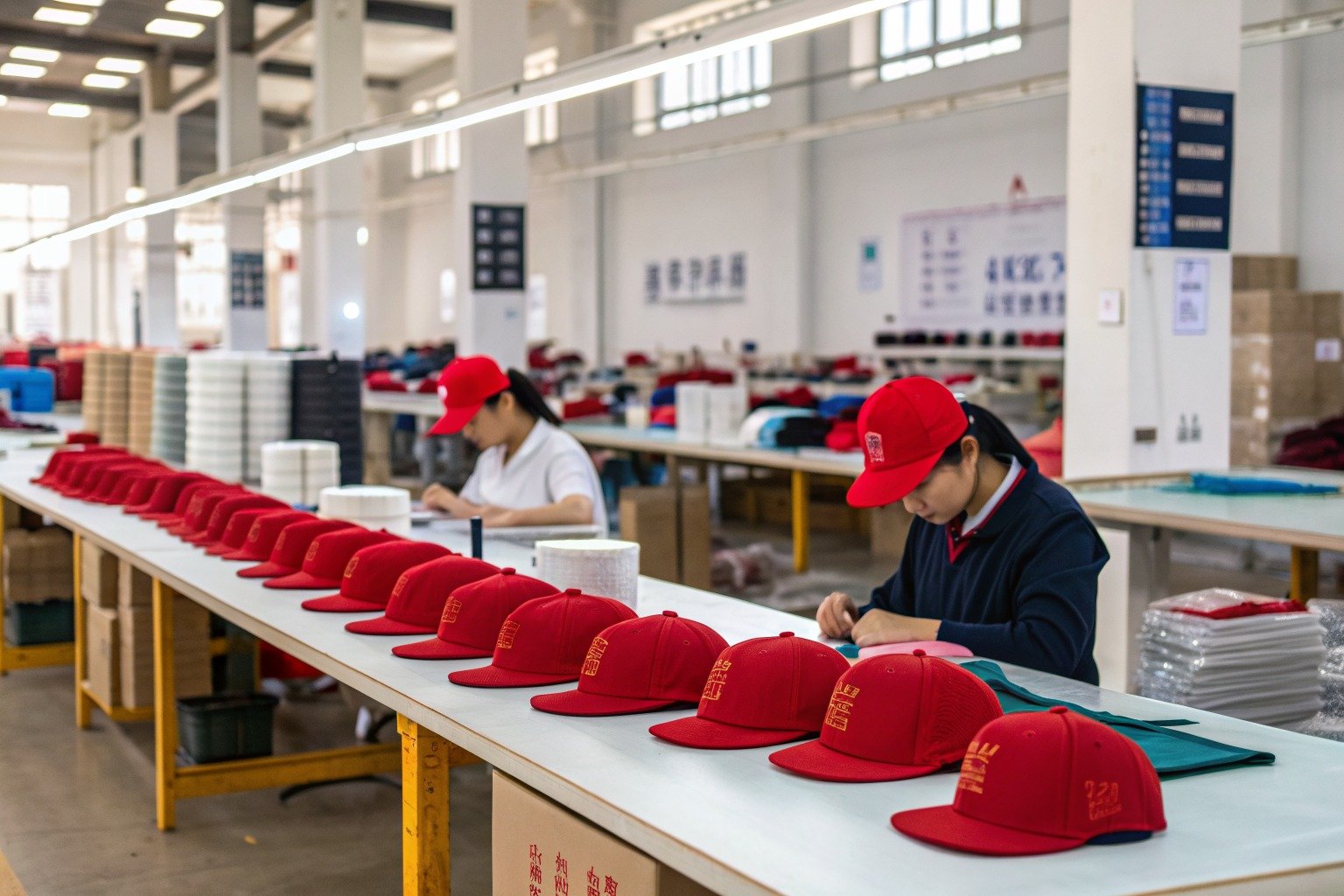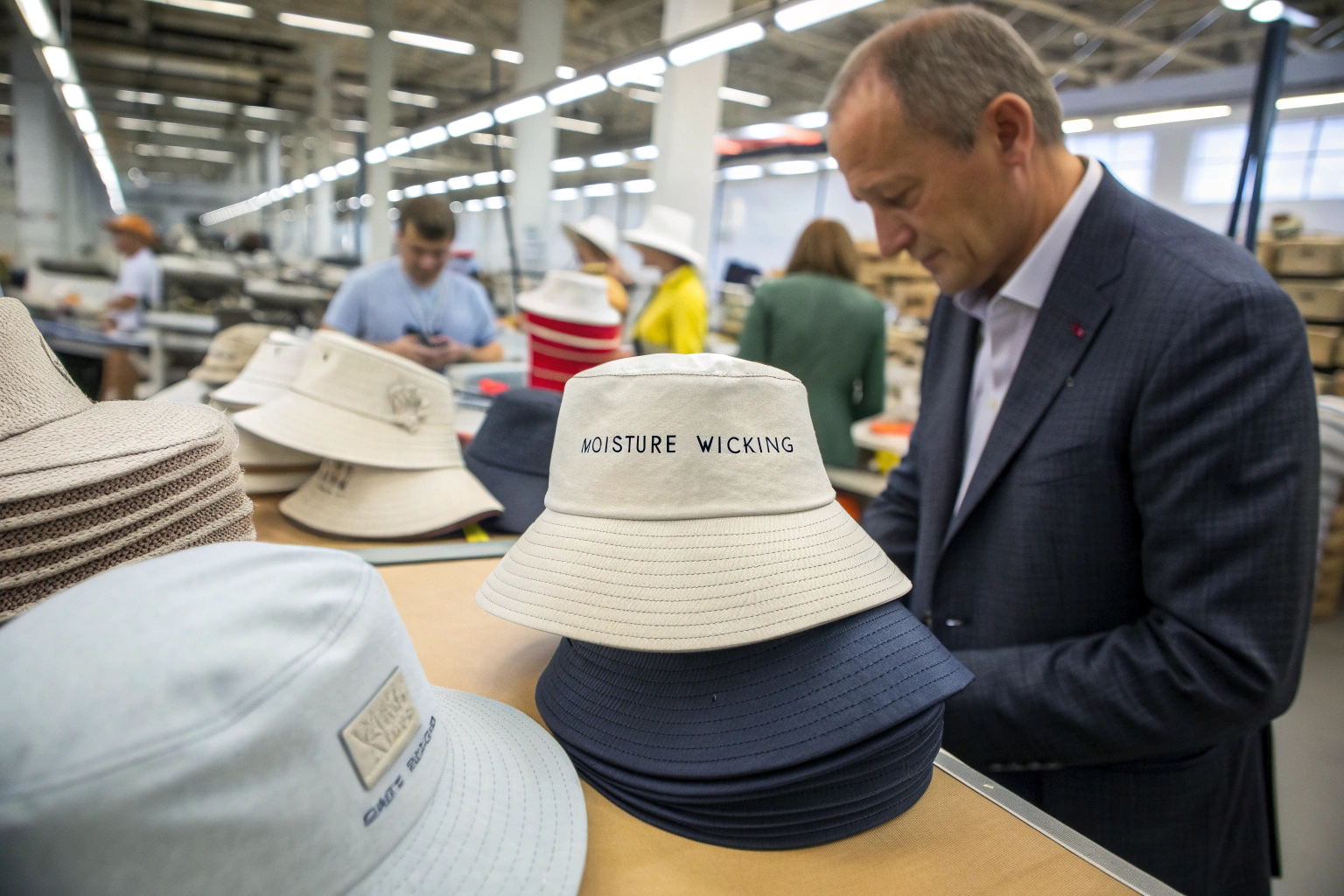
A Moscow-based distributor of outdoor accessories visited our factory two summers ago with a specific complaint. He had been importing summer hats from a competitor factory for three seasons. The hats looked great. The cotton was good quality. The stitching was clean. But his customers, Russian retailers and end consumers, kept asking the same question. "Is this hat moisture-wicking?" The competitor’s hats had no moisture-wicking treatment and no label indicating any such property. The hats absorbed sweat, became heavy and damp, and left the wearer feeling uncomfortable during Russia’s surprisingly hot summer days. He lost retail accounts to brands that offered labeled moisture-wicking hats. He came to us with a clear mandate. Every summer hat in his new collection must have genuine moisture-wicking performance and must carry a visible, credible label stating that fact. That order marked the beginning of our specialized moisture-wicking hat production for the Russian market.
Russian buyers require moisture-wicking labels on summer hats because the Russian consumer market has developed a strong, educated demand for functional performance features in everyday accessories. This demand is driven by three factors. First, Russia’s summer climate is more extreme than many outsiders realize, with temperatures routinely exceeding 30 degrees Celsius in cities like Moscow, Krasnodar, and Volgograd, creating a genuine need for sweat-managing headwear. Second, the Russian retail landscape is flooded with imported products, and a labeled performance feature like moisture-wicking provides a clear, verifiable point of differentiation that justifies a higher retail price and builds brand trust. Third, Russian consumer protection law, specifically the Law on Protection of Consumer Rights, requires that product labels accurately disclose functional properties. A hat labeled as moisture-wicking must actually perform that function, or the seller faces legal liability. The label, whether it is a hangtag, a sewn-in tag, or a heat-transfer print, must state the moisture-wicking property in the Russian language, and it is often expected to reference the specific technology or treatment used.
The Russian market for summer accessories is sophisticated and demanding. Russian consumers have access to global brands, and they compare products rigorously. A hat is not just a fashion item. It is functional gear expected to perform in real conditions, at the dacha, on a fishing trip, at a summer festival, or simply navigating the sweltering Moscow Metro in July. At AceAccessory, we have developed specific moisture-wicking treatments and labeling protocols for our Russian clients because we understand that a label is not just a sticker. It is a promise, and that promise must be kept. Let me walk you through the climate, the market, the legal framework, and the technology behind moisture-wicking hats for Russia.
What Climate Conditions Drive Moisture-Wicking Demand in Russia
The global perception of Russia is dominated by images of snow, ice, and bitter cold. This perception causes many international suppliers to completely misunderstand the Russian summer accessories market. The reality is that much of European Russia experiences a humid continental climate with hot, sometimes sweltering summers. Moscow regularly sees temperatures above 30 degrees Celsius in June, July, and August. Southern cities like Volgograd, Rostov-on-Don, and Krasnodar routinely hit 35 degrees and above. Sochi, on the Black Sea, has a humid subtropical climate similar to the southeastern United States, with summer temperatures combining heat and high humidity. This is not a dry heat. It is the kind of sticky, oppressive heat that makes moisture management essential for anyone spending time outdoors.
The Russian summer climate creates a genuine physiological need for moisture-wicking headwear. The human head is one of the body’s primary sweat zones, with a high concentration of sweat glands. In temperatures above 30 degrees Celsius, especially with humidity, the scalp and forehead produce significant perspiration. A non-wicking hat, such as a basic cotton baseball cap, absorbs this sweat into the fabric. The hat becomes wet, heavy, and uncomfortable. The trapped moisture against the skin can cause skin irritation, sweat rashes, and, in extreme cases, heat-related discomfort. A moisture-wicking hat actively pulls perspiration away from the skin and spreads it across the fabric’s outer surface, where it evaporates quickly. This keeps the wearer’s head cooler, drier, and more comfortable. The physical difference is immediately noticeable, and Russian consumers, many of whom are avid outdoor enthusiasts, fishermen, gardeners, and sports fans, have learned to seek out this performance feature.
The demand is not limited to sportswear. Russian consumers expect moisture-wicking functionality in casual summer hats, fashion caps, and even children’s sun hats. The functional expectation has crossed over from performance gear into everyday apparel. This is a trend that brands and importers cannot afford to ignore. Let me explain the specific climatic regions and the activities that drive this demand.
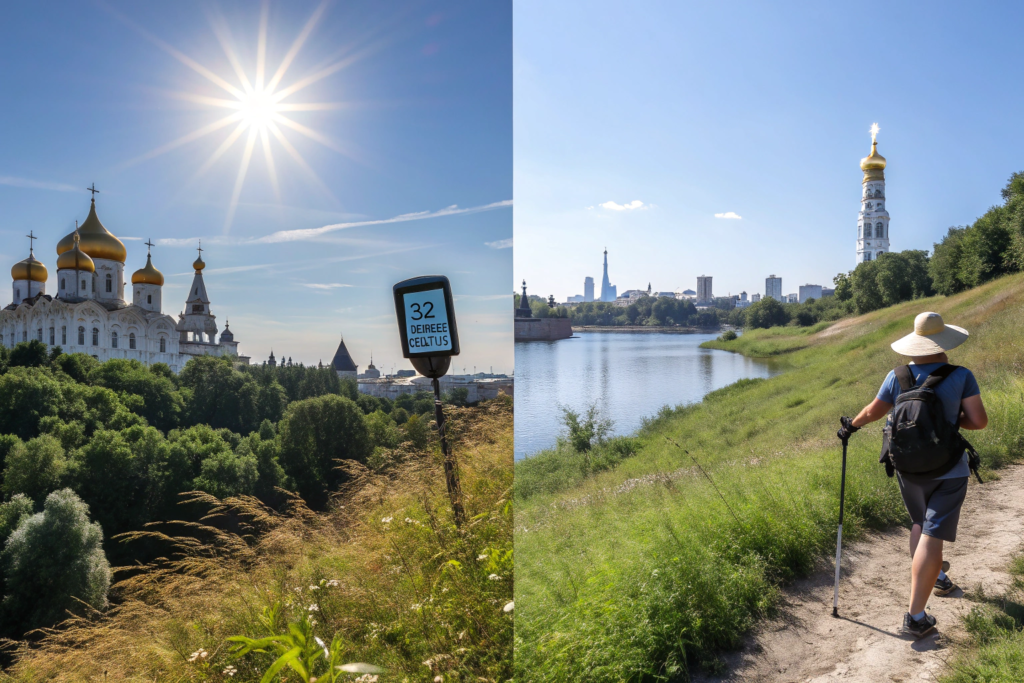
How Hot Do Russian Summers Actually Get?
The data tells a clear story. Moscow’s average high temperature in July is around 24 degrees Celsius, but that average masks frequent heatwaves where temperatures exceed 30 degrees for days or weeks at a time. In 2010, Moscow experienced an unprecedented heatwave with temperatures reaching 38 degrees Celsius, and summer heatwaves have become more frequent and intense in the years since. The urban heat island effect makes the city even hotter than the surrounding countryside. The Moscow Metro, one of the busiest public transportation systems in the world, can become stiflingly hot in summer, with platform temperatures significantly exceeding outdoor temperatures. A commuter wearing a non-wicking hat on a hot Metro platform is going to be deeply uncomfortable. Southern Russia is significantly hotter. Krasnodar, a major city near the Black Sea, has average July highs of 30 degrees and regularly exceeds 35 degrees. The region is a major agricultural area, and many residents spend significant time outdoors. Volgograd, formerly Stalingrad, has a more continental climate with summer temperatures frequently exceeding 35 degrees and occasionally reaching 40. Astrakhan, near the Caspian Sea, is one of the hottest cities in Russia, with a semi-arid climate and summer temperatures that can reach 40 to 45 degrees. In these cities, a moisture-wicking hat is not a luxury. It is a practical necessity for anyone spending time outdoors. Even in Siberia, summers can be surprisingly warm. Novosibirsk, Russia’s third-largest city, has average July highs around 25 degrees, with heatwaves pushing temperatures well above 30. The continental climate means the sun is intense, and a hat that manages sweat is highly valued during the short but hot Siberian summer.
What Outdoor Activities Increase the Need for Wicking Hats?
Russian outdoor culture is rich and deeply ingrained. The dacha tradition, where urban families spend weekends and holidays at their country cottages, involves extensive outdoor work and leisure. Gardening, building repairs, barbecuing, and simply relaxing in the sun are typical dacha activities, all of which generate sweat and require sun protection. A moisture-wicking hat is the perfect dacha accessory. Fishing is one of the most popular male hobbies in Russia, and it is a year-round activity. Summer fishing, whether from the bank of a river or from a boat on a lake, involves hours of direct sun exposure. A hat that wicks sweat and dries quickly after being splashed is highly valued. Hiking and nature tourism are growing in popularity, particularly in regions like Altai, Karelia, and the Caucasus Mountains. Summer hiking requires functional gear, and a wicking hat is a basic essential. Sports, both spectator and participatory, drive hat demand. Football is the national sport, and summer matches in open stadiums require head protection and sweat management. Running, cycling, and outdoor fitness are popular in Russian cities, and the athleisure trend has brought performance fabrics into everyday wardrobes. Even urban walking, a common leisure activity in Russian cities, generates enough perspiration in summer to make a wicking hat noticeably more comfortable than a non-wicking one. The cumulative effect of these activities is a consumer base that has experienced the discomfort of a sweat-soaked hat and is willing to pay more for a hat that stays dry and comfortable.
How Does Russian Consumer Law Affect Functional Label Claims
Russian consumer protection law is a significant factor in the moisture-wicking label requirement. The Russian Federation has a robust legal framework that protects consumers from misleading product claims. This framework is enforced by Rospotrebnadzor, the Federal Service for Surveillance on Consumer Rights Protection and Human Wellbeing. Rospotrebnadzor has the authority to conduct inspections of retail products, test their compliance with labeled claims, and impose fines and sanctions on sellers and importers of non-compliant goods. A hat labeled as moisture-wicking in the Russian market is making a legally enforceable claim. The product must actually perform that function, or the seller faces legal and financial consequences.
Russian consumer law affects functional label claims on summer hats through the Law on Protection of Consumer Rights, which requires that product information provided to consumers be accurate, complete, and in the Russian language. Article 10 of this law specifically requires that product labels include information on the basic consumer properties of the product. If a moisture-wicking property is claimed on the label, that property is a basic consumer property that must be truthfully represented. A misleading claim constitutes a violation, and Rospotrebnadzor can impose administrative fines under the Code of Administrative Offenses. Fines for legal entities can reach 500,000 rubles, approximately 5,000 US dollars, for repeat or serious violations. Beyond fines, Rospotrebnadzor can order the removal of non-compliant products from sale, issue public warnings, and, in extreme cases, suspend the operations of the offending business. Russian buyers, importers and distributors, bear the primary legal responsibility for product compliance in the Russian market. They are the ones who will face Rospotrebnadzor enforcement actions. This is why they are so insistent that the factory provide not just a moisture-wicking treatment, but a properly documented, credible label that can withstand regulatory scrutiny.
The legal risk creates a powerful incentive for accuracy. A Russian buyer would rather have no moisture-wicking label at all than a false one. The label must be supported by evidence. Let me explore the two most important legal considerations.
What Russian Regulations Govern Textile Performance Claims?
The regulatory framework for textile performance claims in Russia is multi-layered. The foundational document is the Law on Protection of Consumer Rights, which establishes the general principle that product information must be truthful. More specific requirements are found in the Technical Regulations of the Customs Union, particularly TR CU 017/2011 on the Safety of Light Industry Products. This regulation covers textile products, including hats, and sets requirements for labeling, chemical safety, and physical performance. The labeling requirements in TR CU 017/2011 mandate that textile products carry a label with specific information, including the product name, the manufacturer’s details, the fiber composition, the care instructions, and the date of manufacture. While the regulation does not specifically mandate moisture-wicking labeling, it requires that any additional information provided on the label, such as performance claims, must be accurate and not misleading. The GOST R system of national standards provides further guidance. GOST R 55306-2012, for example, covers the classification of textile materials by their moisture management properties. This standard defines test methods and classification criteria for moisture-wicking, moisture-absorbing, and quick-drying textiles. A product labeled as moisture-wicking in Russia should, ideally, be tested according to this GOST standard or an equivalent international standard like AATCC 79 or ISO 11092, and should meet the defined performance thresholds. Compliance with GOST standards is often voluntary, but adherence provides a strong legal defense if a claim is challenged. Russian buyers who are knowledgeable about the regulatory environment will ask for test reports that demonstrate the hat fabric meets recognized moisture-wicking standards. They need this documentation in their files in case Rospotrebnadzor conducts an inspection.
What Must a Russian-Language Functional Label Include?
A Russian-language moisture-wicking label on a summer hat must meet both the general labeling requirements of TR CU 017/2011 and the specific requirement of truthful functional claim. The label must be in the Russian language. This is non-negotiable. An English-only label is not compliant, even if the hat is imported. The label can be bilingual, but the Russian text must be clear, legible, and at least as prominent as any other language. The label must include the standard required information: the product name, such as "hat" or "cap," in Russian, the country of manufacture, the manufacturer’s name and address, the importer’s name and address if different from the manufacturer, the fiber composition as a percentage, the care symbols with Russian explanatory text, and the date of manufacture. The moisture-wicking claim must be stated clearly. Common phrasings include "Влагоотводящая ткань," which means "moisture-wicking fabric," "Технология отвода влаги," meaning "moisture-wicking technology," or "Быстросохнущий," meaning "quick-drying." The claim should be specific enough to be meaningful but not so specific that it becomes legally risky. A vague claim like "comfort technology" does not create a legal obligation but also does not provide the marketing benefit. A very specific claim like "reduces skin temperature by 3 degrees" requires robust test data to support it. The most common approach is to state the moisture-wicking property and reference the treatment or technology used. For example, "Обработано влагоотводящим составом," meaning "treated with moisture-wicking finish." This is accurate, informative, and defensible if the treatment has been applied. Some brands also include a small icon or pictogram that visually communicates moisture-wicking, such as a droplet with an arrow. This is acceptable as long as the Russian text is also present. The label must be durably attached to the hat. A hangtag that is removed before use is not sufficient as the sole carrier of functional claims. The information should be on a sewn-in label or a heat-transfer print that remains with the product.
What Technologies Are Used for Moisture-Wicking Hat Fabrics
Moisture-wicking is not a single technology. It is a performance outcome that can be achieved through several different approaches, each with its own cost, durability, and performance profile. Understanding these technologies is essential for a buyer who wants to specify a moisture-wicking hat and for a brand that wants to make credible claims. The right technology choice depends on the fiber content of the hat, the target price point, the expected wash durability, and the specific performance level required.
Moisture-wicking in summer hats is achieved through three main technology approaches. Chemical wicking finishes are the most common and cost-effective method, where the finished hat or the fabric is treated with a hydrophilic, water-loving, chemical finish that alters the surface tension of the fibers, causing moisture to spread out rapidly across the fabric surface rather than beading up and absorbing into the fiber core. Polyester and synthetic hats are most commonly treated with this method, though cotton can also be treated. Yarn-level wicking is a higher-performance approach where the moisture-wicking property is built into the yarn itself during the fiber extrusion process. Synthetic fibers like polyester are extruded with a modified cross-section, such as a cross, star, or channel shape, that creates capillary channels along the length of the fiber. These channels physically wick moisture along the fiber surface. Fabric construction wicking is an approach that relies on the knit or weave structure rather than chemical or fiber modification. A fabric with a specific combination of face yarns and back yarns, often a hydrophobic yarn on the inside touching the skin and a hydrophilic yarn on the outside, creates a push-pull effect that moves moisture from the skin side to the air side.
The most effective moisture-wicking hats often combine two or more of these approaches. A polyester hat with a modified cross-section fiber, a wicking finish, and a double-layer knit construction will deliver exceptional moisture management. But the cost and complexity increase with each added technology. The right choice balances performance with commercial viability. Let me explore the two most common technologies used for the Russian market.
How Does a Chemical Wicking Finish Work on Cotton Hats?
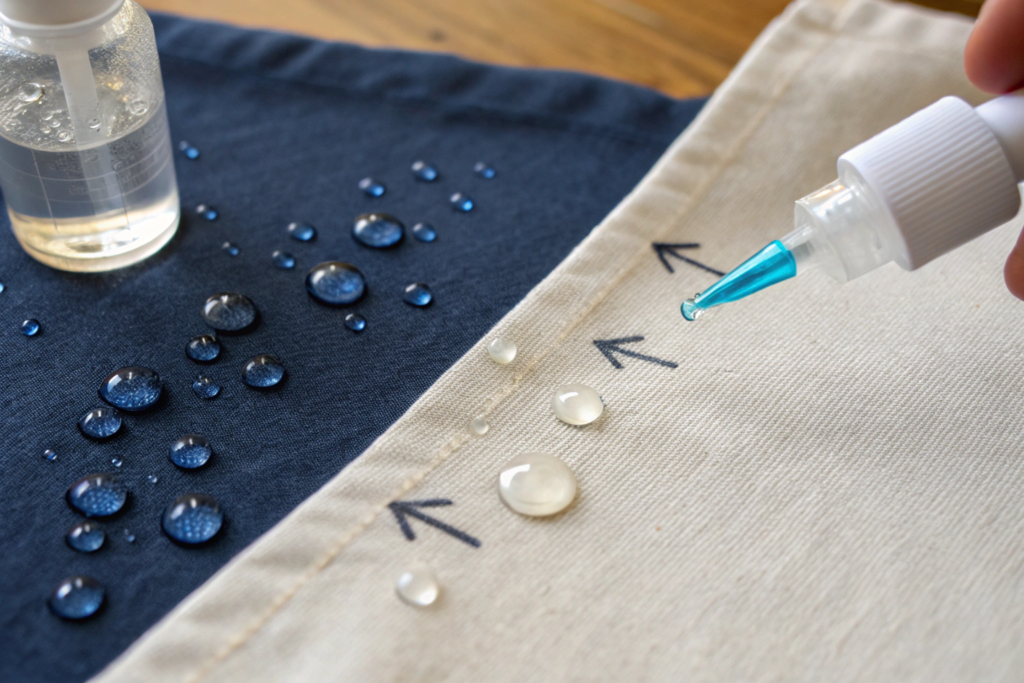
Cotton is naturally hydrophilic. It loves water. This sounds like it should be good for moisture management, but it is actually the opposite of what is needed. Cotton absorbs moisture into the core of the fiber, where the water molecules bond with the cellulose. The cotton fiber swells, the fabric becomes saturated, and the moisture is trapped. The fabric feels wet, heavy, and clammy against the skin. It dries slowly because the water is held inside the fiber. A chemical wicking finish changes this behavior. The finish is a hydrophilic polymer that is applied to the surface of the cotton fibers, typically through a pad-dry-cure process. The fabric is dipped in a solution of the wicking agent, passed through rollers to squeeze out the excess, dried, and then heat-cured to bond the polymer to the fiber surface. The polymer coating has a higher surface energy than the cotton fiber itself. When a sweat droplet contacts the treated fabric, the high surface energy pulls the liquid across the fiber surface, spreading it into a thin film over a large area. This thin film has a large surface area exposed to the air, which allows it to evaporate quickly. The moisture does not penetrate into the fiber core. The cotton stays dry to the touch. The wicking finish is particularly important for cotton hats because untreated cotton performs so poorly in sweat management. A treated cotton baseball cap will feel significantly drier and more comfortable during summer wear than an untreated one. The durability of the chemical finish is a key consideration. Home laundering gradually removes the finish, typically over 20 to 30 wash cycles. For a summer hat that is washed occasionally, this is usually sufficient for a season or two of use. For hats that require longer durability, a yarn-level or fabric construction approach may be more appropriate. We test the wicking performance of treated fabrics using the AATCC 79 drop test, where a drop of water is placed on the fabric and the time for the drop to absorb and spread is measured. A well-treated fabric will absorb the drop in under 3 seconds.
What Is Coolmax and Why Is It Popular for Russian Summer Hats?
Coolmax is a branded polyester fiber developed by Invista, now owned by the Lycra Company. It is the best-known and most widely recognized moisture-wicking fiber technology in the global market, and it has strong brand recognition among Russian consumers who are informed about performance textiles. Coolmax is not a chemical finish. It is an engineered fiber. The polyester is extruded with a unique four-channel or six-channel cross-section. These channels run the entire length of every fiber, creating capillary pathways. When moisture contacts a Coolmax fabric, the capillary action pulls the moisture along the channels, spreading it rapidly across the fabric surface. The channels also increase the surface area of the fiber, which accelerates evaporation. The result is a fabric that wicks moisture quickly, dries fast, and feels dry against the skin. Because the wicking property is built into the fiber structure, it is permanent. It does not wash out. A Coolmax hat will retain its moisture-wicking performance for the life of the product. This durability is a strong selling point. The Coolmax brand provides a marketing advantage. The Coolmax name and logo can be used on hangtags and labels, under license, which adds credibility and consumer recognition. A Russian consumer who sees a Coolmax hangtag on a hat knows immediately that the product has genuine, durable moisture-wicking performance. The brand recognition translates into a willingness to pay a higher price. Coolmax is available in several variants. Coolmax Everyday is a standard wicking fiber suitable for casual hats. Coolmax Pro is a higher-performance variant for intense activity. Coolmax EcoMade is made from recycled polyester and appeals to environmentally conscious consumers. For the Russian summer hat market, Coolmax Everyday is the most popular choice. It provides excellent performance at a reasonable cost, and the brand recognition is a significant asset. We source Coolmax-certified yarns from Invista’s authorized spinning mills and produce Coolmax hats under the appropriate licensing. We can provide the certification documentation that proves the yarn is genuine Coolmax, which is important for Russian buyers who need to substantiate their label claims.
How Should Moisture-Wicking Labels Be Presented on Russian Market Hats
The presentation of the moisture-wicking label on the hat is a decision that affects consumer perception, legal compliance, and production cost. The label must be visible enough to influence the purchase decision at the point of sale. It must be durable enough to remain with the product through its useful life. It must contain the required information in the Russian language. And it must be credible, using specific terminology and, ideally, referencing a recognized technology or standard. The labeling strategy should be developed collaboratively between the factory and the Russian buyer, because the buyer knows their target consumer and their retail environment best.
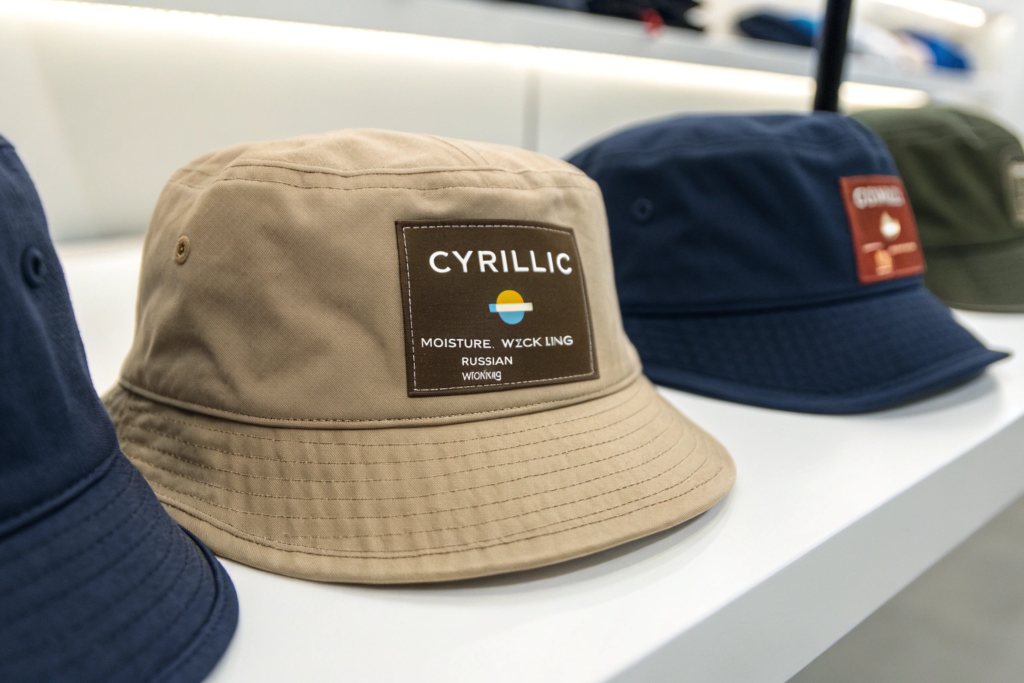
Moisture-wicking labels on Russian market summer hats should be presented using a multi-label strategy that combines a permanent product label with a promotional hangtag. The permanent label, sewn into the hat, should include the standard required information, fiber composition, care instructions, country of origin, and the moisture-wicking claim in Russian language, ideally referencing the specific technology used, such as "Coolmax" or "Влагоотводящая обработка." This permanent label ensures the functional claim remains with the product and is available to the consumer and to any regulatory inspector. The promotional hangtag provides a larger canvas for marketing messaging. It can include a more detailed explanation of the moisture-wicking technology, usage and care instructions that preserve the wicking performance, and branding elements like the Coolmax logo or a proprietary brand technology icon. The hangtag should also carry the EAC mark if the hat is being sold in the Eurasian Economic Union, which includes Russia. The hangtag is removed by the consumer before use, so it does not replace the permanent label for compliance purposes, but it is the primary tool for communicating the value proposition at the retail shelf.
The choice of label materials and attachment methods matters. A label that frays, fades, or falls off after a few uses undermines the credibility of the performance claim. The label is part of the product quality experience. Let me explain the two main labeling formats.
Should Wicking Information Be on a Hangtag or Sewn-In Label?
The answer is both, but they serve different purposes. The sewn-in label is the compliance document. It must contain the mandatory information required by TR CU 017/2011. It must also contain the moisture-wicking claim, because the claim is part of the product’s basic consumer properties. The sewn-in label is typically a woven satin polyester label, soft, durable, and capable of holding detailed printed or woven text. It is sewn into a seam, usually the side seam of a baseball cap or the inner seam of a bucket hat crown. The text must be in Russian, legible, and of a reasonable font size. A tiny label with microscopic text does not satisfy the legal requirement for accessible information. The hangtag is the marketing document. It is the salesperson on the retail shelf. It can be larger, more colorful, and more visually engaging than the sewn-in label. It can use icons, diagrams, and benefit-oriented language. For example, a hangtag might show a droplet of water spreading across a fabric surface with a checkmark, alongside text that reads, "Moisture-wicking technology keeps your head cool and dry." The hangtag is typically made of coated paper or synthetic paper, attached with a swift tack or a safety pin. It is removed before the hat is worn. Because it is temporary, it can include information that does not need to survive washing, such as the technology brand story, or a QR code linking to a video demonstration. The hangtag is also the place for the EAC conformity mark, if applicable, and for any certification logos like OEKO-TEX. The combination of a compliant sewn-in label and a persuasive hangtag covers both the legal and the commercial requirements. Some brands also add a third label element, a heat-transfer print on the inside sweatband. This is a subtle, premium detail. A moisture-wicking icon or a brief phrase printed on the sweatband is visible to the wearer every time they put on the hat, reinforcing the performance message.
What Russian Terminology Resonates With Consumers for Wicking?
The language used on the label matters for consumer understanding and trust. Russian consumers are generally familiar with performance textile terminology, particularly those who buy outdoor and sports products. The most commonly used and well-understood term is "Влагоотводящий," which translates directly to "moisture-wicking." It is a compound word combining "влага," moisture, and "отводящий," leading away or diverting. This is the technical, accurate term. "Влагоотводящая ткань" means "moisture-wicking fabric." This phrasing is appropriate for the sewn-in label because it is precise and legally defensible. Another common term is "Быстросохнущий," meaning "quick-drying." This is slightly different from moisture-wicking. Quick-drying means the fabric dries rapidly after getting wet, which is often a result of moisture-wicking but is not exactly the same thing. A fabric can be quick-drying without actively wicking moisture away from the skin. For accuracy, "влагоотводящий" is preferred if the fabric has a wicking treatment or fiber. "Дышащий," meaning "breathable," is another term that is sometimes used, but breathability refers to air permeability, not moisture management. A fabric can be breathable without being moisture-wicking. Using "дышащий" on a wicking hat could be considered misleading if the hat does not also have enhanced breathability. The most consumer-friendly approach is to combine a technical term with a benefit statement. For example, "Влагоотводящая технология – остается сухим в жару," meaning "Moisture-wicking technology – stays dry in the heat." This tells the consumer what the technology is and what it does for them. If the hat uses a branded technology like Coolmax, the brand name should be used in conjunction with the Russian descriptive term. "Coolmax – влагоотводящая ткань" leverages the recognized brand while providing the required Russian-language functional description. The terminology should be consistent across the sewn-in label, the hangtag, and any online product description. Consistency builds trust and avoids confusion.
Conclusion
The Russian buyer’s requirement for moisture-wicking labels on summer hats is not a quirk or an arbitrary preference. It is a rational response to the intersection of climate, consumer expectation, market competition, and legal obligation. Russian summers are hotter than the country’s wintery stereotype suggests, with temperatures routinely exceeding 30 degrees Celsius in major population centers and creating a genuine physiological need for sweat-managing headwear. Russian consumers, avid outdoor enthusiasts, have developed a sophisticated understanding of performance textiles, and they actively seek out products that deliver functional benefits. A labeled moisture-wicking hat stands out on a crowded retail shelf, commands a higher price, and builds the brand trust that drives repeat purchases. The legal framework, anchored by the Law on Protection of Consumer Rights and the Technical Regulations of the Customs Union, requires that functional claims be truthful and substantiated. A false or misleading moisture-wicking claim exposes the importer and the retailer to fines, product withdrawals, and reputational damage. This creates a powerful incentive for Russian buyers to work only with factories that can provide genuine moisture-wicking performance and proper, Russian-language labeling.
At AceAccessory, we have built our Russian market hat production around these requirements. We offer multiple moisture-wicking technology options, from chemical finishes for cotton hats to Coolmax and other engineered fibers for synthetic hats. Our labeling team produces compliant sewn-in labels and marketing hangtags in accurate, consumer-tested Russian language. We provide the test reports, the fiber certification documents, and the EAC compliance documentation that Russian buyers need to import and sell with confidence. We understand that a label is a promise, and we help our clients keep that promise.
If you are sourcing summer hats for the Russian market and you need a manufacturing partner who understands the moisture-wicking requirement, the labeling regulations, and the consumer expectations, I encourage you to contact us. Reach out to our Business Director, Elaine, at elaine@fumaoclothing.com. Tell her about your hat styles, your target retail price point, and the performance features you want to offer. She can provide samples of our moisture-wicking fabrics, examples of our Russian-language labels, and a quotation for a production run that meets the highest standards of the Russian market. Let us help you sell hats that keep Russian consumers cool, dry, and loyal to your brand.