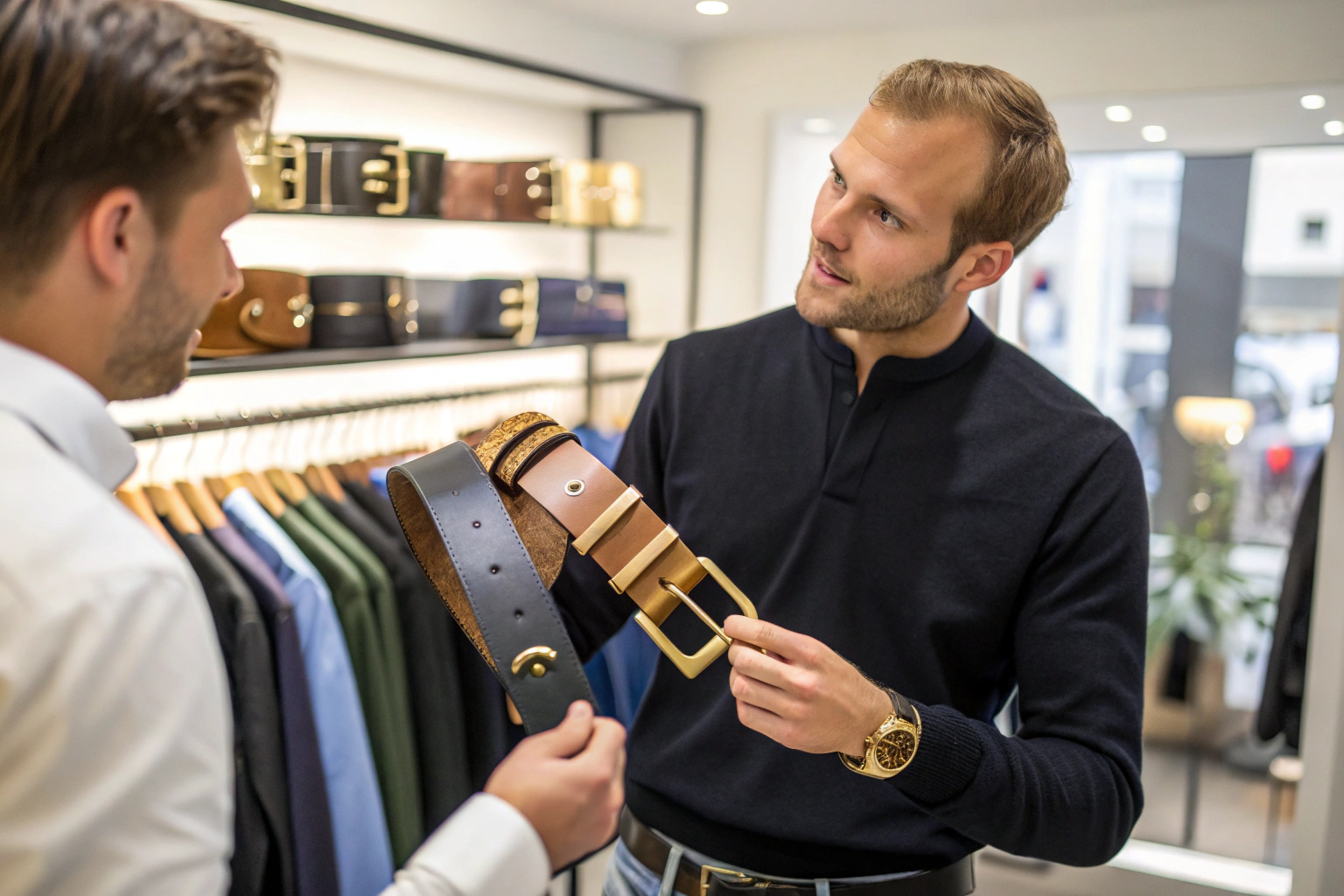
A menswear buyer from a Scandinavian brand visited our showroom last month with a problem I hear more and more often. He held up two belts, one with a shiny polished gold buckle and one with a matte gunmetal buckle. "My customers are changing," he said. "The polished gold that sold out three seasons ago is now sitting on the clearance rack. But I do not know which finish to bet on for 2026. If I pick the wrong one, I am stuck with inventory that looks dated before it even hits the shelves." I walked him through our trend analysis and showed him the finishes our design team is prioritizing for the coming season. We looked at physical samples, reviewed our order data from European and North American brands, and mapped out what is actually selling versus what is just runway noise. By the end of the meeting, he had a clear direction and placed an order that reflected the finishes his customers would actually want in 2026.
The most common belt buckle finishes for men’s fashion in 2026 are matte gunmetal and dark brushed nickel for the dominant minimalist and utility trends, antique brass and aged bronze for the growing heritage and vintage-inspired menswear segment, and satin-finished stainless steel for the clean, modern luxury look that bridges casual and formal. High-polish gold and shiny silver are declining rapidly, replaced by subdued, textured finishes that communicate quality through subtlety rather than shine. The overarching theme for 2026 buckle finishes is understated, durable, and versatile, reflecting a broader shift in men’s fashion toward longevity and quiet confidence.
This shift is not just about aesthetics. It is about how men are building their wardrobes. The days of buying a belt to match a single pair of shoes are fading. Men in 2026 want a belt that works with multiple outfits, transitions from office to weekend, and looks better as it ages rather than looking scratched and worn. The buckle finish is the most visible part of the belt, and it sets the tone for the entire accessory. At AceAccessory, we produce belts for major retailers and boutique menswear brands across Europe and North America. Our design team tracks buckle finish trends continuously, and I want to share what we are seeing for the season ahead.
What Are the Trending Metal Finishes for Men’s Belt Buckles in 2026
The metal finishes trending for 2026 are defined by what they are not. They are not shiny. They are not reflective. They are not bright. The consumer sentiment in menswear has shifted hard toward subtlety. A buckle that flashes and catches the light feels like it is trying too hard. A buckle that absorbs light, reveals its texture upon close inspection, and feels solid and substantial in the hand, that is what men are reaching for. This trend aligns with the broader movement toward quiet luxury and stealth wealth aesthetics, where quality is communicated through materials and craftsmanship rather than logos and shine.
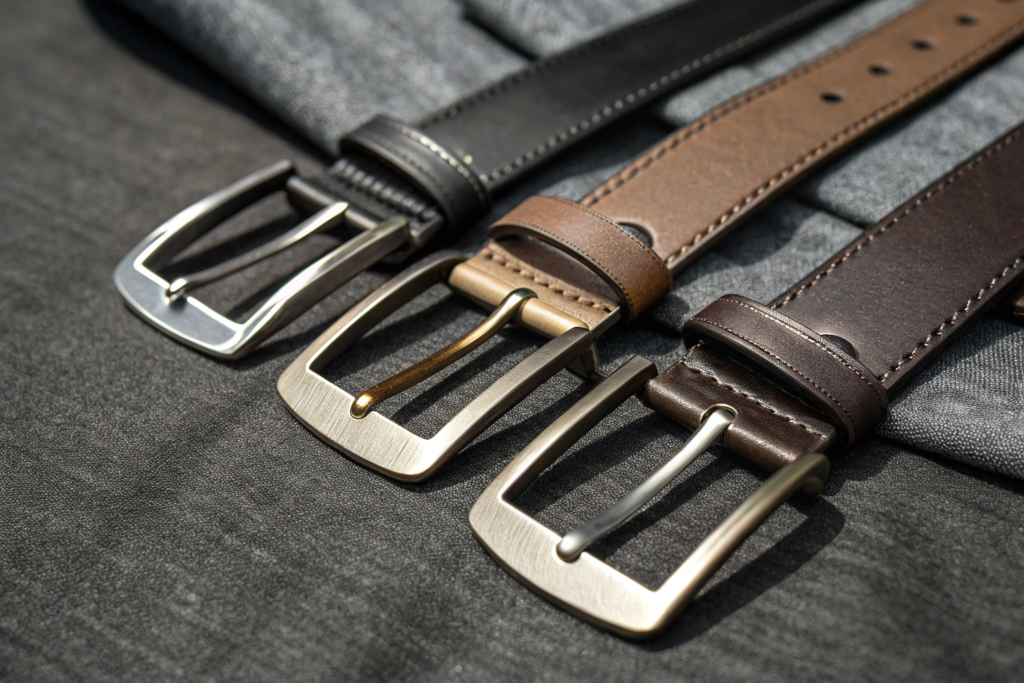
The dominant metal finishes for men’s belt buckles in 2026 are matte gunmetal, a dark gray-black finish with a non-reflective surface that pairs perfectly with both casual and tailored looks. Dark brushed nickel, which features a fine, linear grain texture that masks scratches and fingerprints. Antique brass with a deliberately aged, darkened patina that gives a new belt the character of a vintage heirloom piece. And satin stainless steel, which has a soft, diffused sheen without the mirror-like reflection of polished steel, making it appropriate for both business and casual wear.
These four finishes are not just popular. They are versatile. A matte gunmetal buckle works on a casual canvas belt with jeans and on a refined leather belt with chinos. An antique brass buckle adds warmth to earth-toned outfits and pairs beautifully with the textured leathers and suedes that are trending in men’s footwear. Let me break down why each of these finishes is winning.
Why Is Matte Gunmetal Dominating Men’s Accessory Hardware?
Matte gunmetal has become the default choice for men’s accessories because it solves a problem that shiny finishes create. A polished buckle shows every fingerprint, every micro-scratch, and every bit of tarnish. After a few months of wear, it looks tired. Matte gunmetal, by contrast, is almost indestructible in appearance. The matte surface diffuses light, so fingerprints are invisible. The dark gray-black color hides minor scratches and scuffs. The finish actually develops a subtle patina over time, a slight darkening in the areas that are handled most, which adds character rather than looking like damage. This durability of appearance is extremely appealing to men who do not want to baby their accessories. Gunmetal also offers maximum versatility. It sits neutrally between silver and black tones, which means it coordinates with both cool-colored and warm-colored outfits. It works with black leather belts, brown leather belts, and fabric belts. It looks appropriate in a business casual office and at a weekend brunch. The color psychology of gunmetal also aligns with the 2026 menswear mood. It feels strong, understated, and slightly industrial. It communicates a no-nonsense, functional masculinity that resonates with the current fashion landscape. From a manufacturing perspective, achieving a quality matte gunmetal finish requires a multi-step process. The buckle base is typically zinc alloy or stainless steel. It is electroplated with a dark nickel or black nickel layer, then finished with a fine glass-bead blasting or a ceramic tumbling process to create the uniform matte texture. A final clear lacquer is applied to protect the finish from wear. This process is more involved than simple polishing, but the result is a buckle that looks premium and performs over time.
How Does Brushed Nickel Differ From Polished Silver Finishes?
Brushed nickel and polished silver are both silver-toned finishes, but the similarity ends there. Polished silver, whether it is actual silver plating or a polished chrome or stainless steel, is a mirror finish. It reflects light and images clearly. It is formal, traditional, and associated with dress belts and special occasions. Brushed nickel is the polar opposite in visual effect. The surface is covered with fine, directional scratches, called the grain, that are created by running the metal past an abrasive belt or wheel. These microscopic lines break up the light reflection, creating a soft, satin-like glow rather than a sharp reflection. The grain also serves a practical function. Just like matte gunmetal, the textured surface hides fingerprints and minor scratches. A brushed nickel buckle will look presentable after months of daily wear, whereas a polished silver buckle will show its age quickly. Brushed nickel also has a slightly warmer tone than polished chrome or stainless steel. Nickel naturally has a faint yellowish or warm undertone, whereas chrome is blue-white. This warmth makes brushed nickel more forgiving when paired with brown leathers and warm-toned outfits. It bridges the gap between silver and gold tones, making it a versatile choice for men who want a single belt that works across their wardrobe. The 2026 iteration of brushed nickel features a darker, slightly charcoal-leaning tone. This is achieved through a dark nickel plating applied before the brushing process. The result is a finish that sits between silver and gunmetal, offering the lightness of a silver-tone accessory with the subtlety of a darkened finish.
How Are Heritage and Vintage Finishes Influencing Belt Buckle Design
The heritage trend in menswear shows no signs of slowing down for 2026. Men are increasingly drawn to products that tell a story, that look like they have a history, even when they are brand new. This has created a strong demand for buckle finishes that mimic the effects of age and wear. The appeal is emotional. A belt with an antique brass buckle feels like it was found in a grandfather’s closet, a piece with permanence and character in a world of disposable fast fashion. This trend aligns with the rise of heritage workwear, vintage military styling, and the general movement toward sustainability and buying fewer, better things.
Heritage and vintage finishes are influencing 2026 belt buckle design by popularizing intentionally aged metal treatments. Antique brass, which is chemically treated to create a dark patina in the recessed areas while leaving the raised surfaces lighter. Aged bronze, which develops a rich, warm brown-green patina over the base metal. And hand-rubbed blackened iron, which mimics the look of forged metalwork with a dark, smoky finish. These finishes are often combined with slightly irregular, hand-finished buckle shapes to reinforce the artisanal, non-industrial character of the product.
This trend presents both an opportunity and a challenge for manufacturers. Creating a convincing, durable antique finish requires chemical expertise and quality control discipline. A poorly done antique finish looks fake and painted on. A well-done antique finish is indistinguishable from natural aging and adds significant perceived value. Here is how the two most important heritage finishes work.
What Makes Antique Brass a Top Choice for Premium Belts?
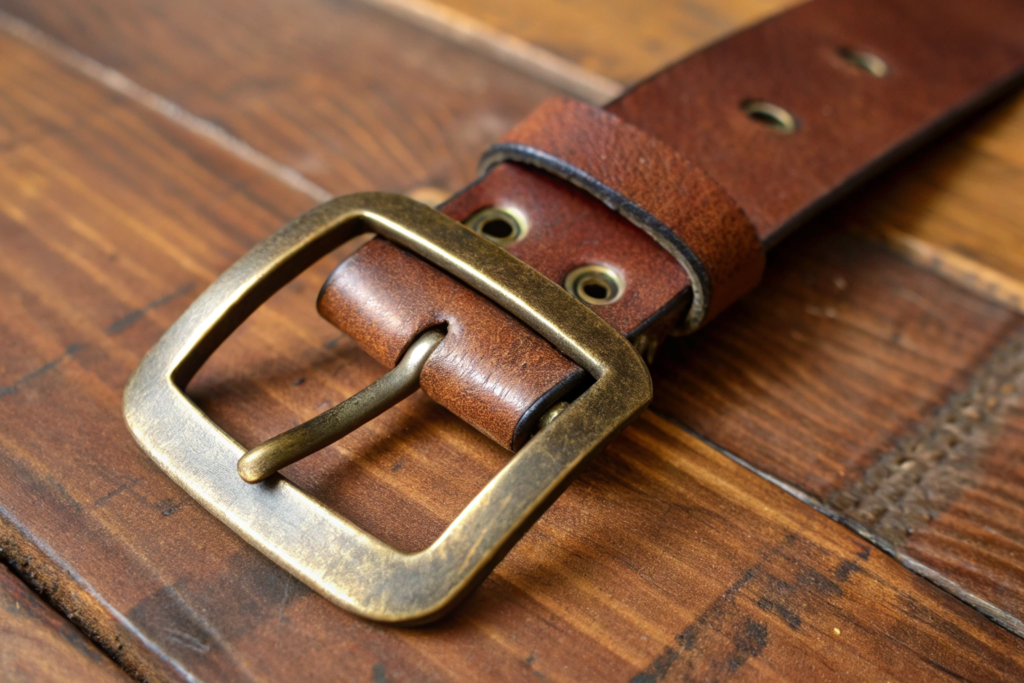
Antique brass is not just a color. It is a process. The base buckle, typically made of solid brass or a zinc alloy with brass plating, is first polished to the desired base level of shine. It is then treated with a chemical darkening agent, often a solution containing liver of sulfur or a similar sulfide compound. This chemical reacts with the copper in the brass, creating a dark patina on the surface. The buckle is then selectively hand-polished or tumbled to remove the patina from the raised areas, the high points of the design that would naturally be touched and rubbed during wear. The recessed areas, the corners, the creases around the prong hole, retain the dark patina. This contrast between light and dark creates the illusion of a belt buckle that has been worn and loved for decades. The final step is a clear protective lacquer that seals the finish and prevents further, uncontrolled oxidation. The skill in creating a good antique brass finish lies in the balance. Too much darkening, and the buckle looks dirty or poorly made. Too little, and it looks like a failed attempt at polishing. The best antique brass finishes have a warm, honey-gold base with chocolate-brown patina accents. They feel rich and historical. Antique brass is particularly popular for belts paired with brown leathers, earth-tone outfits, and the kind of textured tailoring, tweed jackets, corduroy trousers, knit ties, that is central to the heritage menswear look. It is also a favorite of brands that emphasize craftsmanship and traditional manufacturing, as the finish itself communicates those values silently.
Why Are Rustic and Blackened Iron Finishes Gaining Popularity?
Blackened iron and rustic forged-metal finishes represent the most extreme expression of the heritage trend. These finishes reject the very idea of preciousness. A blackened iron buckle is not trying to look like jewelry. It is trying to look like a tool, something a blacksmith might have hammered out of raw metal. The finish is typically a very dark gray or charcoal black, often with subtle surface irregularities, hammer marks, or file marks intentionally left visible. The color is achieved through a chemical blackening process, similar to gun bluing, or through a high-temperature oil quench that creates a durable, matte black oxide layer. Rustic finishes take this a step further by allowing slight surface rust or oxidation to form in a controlled manner, which is then stabilized with a clear sealant. The result is a buckle that looks like it was dug out of an archaeological site, with a unique pattern of wear and oxidation that cannot be replicated exactly. This finish appeals to a specific but growing segment of the menswear market. Brands that lean into workwear, rugged outdoor aesthetics, and artisanal craft narratives are adopting blackened iron and rustic buckles as a point of differentiation. The buckle becomes a conversation piece, a visible signal that the wearer values authenticity and character over polish and perfection. From a production standpoint, these finishes are challenging. The chemical processes are sensitive to temperature, humidity, and the exact composition of the base metal. Batch-to-batch consistency is difficult to achieve. Each buckle is slightly unique, which is the point. The MOQ for these specialty finishes is typically higher because the chemical setup costs must be amortized, but the premium pricing that these buckles command in the market offsets the production complexity.
What Sustainable and Eco-Friendly Buckle Finishes Are Emerging
Sustainability has moved from the periphery to the center of consumer purchasing decisions in menswear. Men are asking questions about where their accessories come from, how they are made, and what happens to them at the end of their life. This scrutiny extends to belt buckles. A shiny, electroplated finish that involves toxic chemicals and produces contaminated wastewater is becoming a liability, not just an environmental one, but a brand reputation one. The 2026 market is seeing the emergence of buckle finishes that are achieved through cleaner processes, use recycled metals, or eliminate the plating step entirely in favor of the natural beauty of the base material.
Emerging sustainable buckle finishes for 2026 include unplated, mechanically finished recycled brass and stainless steel, where the buckle’s surface is created through tumbling, brushing, or sandblasting rather than chemical electroplating. Raw brass with a natural, uncoated finish that develops a unique patina over time is also gaining traction, as is PVD, Physical Vapor Deposition, coating, a clean, dry process that produces extremely durable, wear-resistant finishes without the chemical baths and heavy metal contamination of traditional electroplating.
These sustainable finishes are not just an ethical choice. They are a design choice. A raw, unplated brass buckle has a warm, golden color that is different from plated brass. It feels more honest, more connected to the material. A PVD-coated gunmetal buckle has a depth and durability that electroplated gunmetal cannot match. The sustainability story enhances the product’s appeal rather than limiting it.
How Does Raw, Unplated Brass Offer an Eco-Friendly Option?
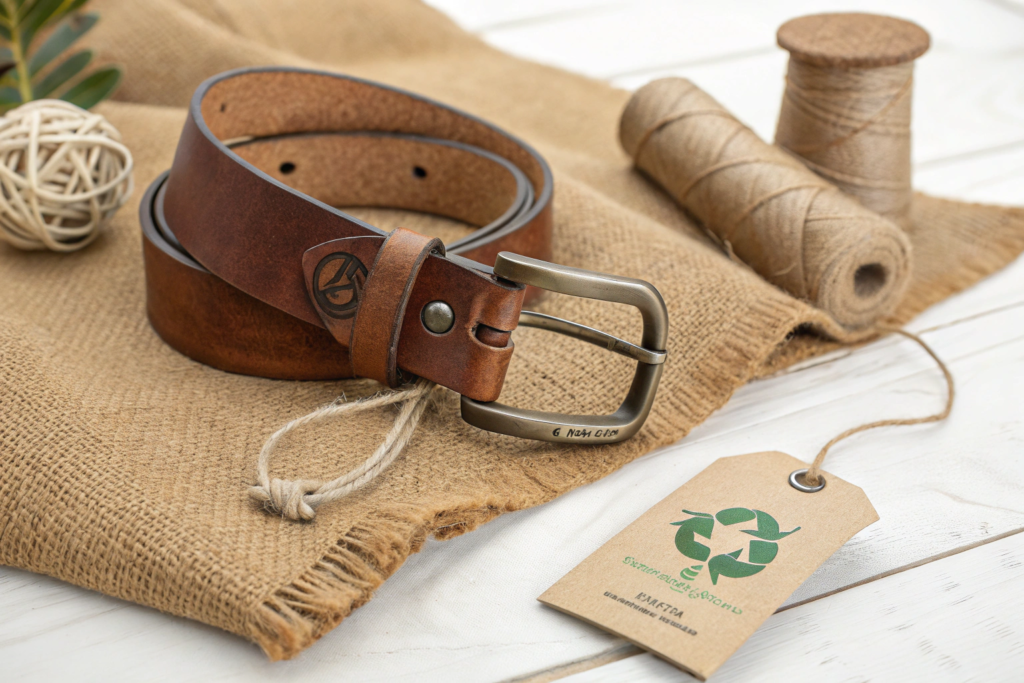
Raw brass is exactly what it sounds like. The buckle is machined or cast from solid brass, and then it is finished mechanically, tumbled with ceramic media, brushed with an abrasive belt, or micro-blasted with glass beads, to achieve the desired surface texture. No electroplating is applied. No chemical darkening agents are used. The brass is left in its natural state, a warm, pale gold color that is slightly softer and more muted than polished, plated brass. The environmental advantage is significant. Electroplating involves baths of metal salts, acids, and cyanide compounds. The wastewater from these processes must be carefully treated to prevent environmental contamination. Mechanical finishing, by contrast, uses no chemicals. The waste products are small amounts of brass dust and used tumbling media, both of which are recyclable. Raw brass also offers a unique user experience. Because there is no protective lacquer, the metal reacts with the wearer’s skin oils, the humidity in the air, and the tannins in the leather belt. Over weeks and months of wear, the buckle develops a natural patina. The areas that are handled frequently become darker and richer. The recessed areas stay lighter. The patina is unique to the individual wearer, making the belt a personal, evolving object. This appeals strongly to the menswear consumer who values authenticity and the story of a product that ages with him. The challenge of raw brass is that it tarnishes in unpredictable ways, and some men do not like the smell of brass on their hands. Clear communication and care instructions are essential when marketing this finish.
What Is PVD Coating and Why Is It a Sustainable Choice?
PVD stands for Physical Vapor Deposition. It is a high-tech coating process that is fundamentally different from traditional electroplating. In PVD, the coating material, typically a metal like titanium, zirconium, or chromium, is vaporized in a vacuum chamber. The vaporized metal atoms then condense onto the buckle surface, forming an extremely thin, extremely hard, and extremely durable coating. The process is dry. There are no liquid chemical baths, no acid dips, and no heavy metal wastewater. The only byproduct is a small amount of solid metal residue that can be recycled. This makes PVD one of the cleanest metal finishing technologies available. The performance benefits of PVD are remarkable. A PVD coating is many times harder than the underlying brass or zinc alloy. It is highly resistant to scratches, abrasion, and corrosion. A PVD-coated gunmetal buckle will look virtually new after years of daily wear. The coating can be applied in a range of colors, including dark gunmetal, warm gold tones, rich bronze, and deep black, all with a consistent, high-quality finish. PVD is also hypoallergenic. Because the coating is inert and contains no nickel, it is safe for wearers with metal sensitivities. The initial setup cost for PVD is higher than electroplating, which is why it has historically been used mainly for high-end watches and premium products. However, the cost is decreasing as the technology becomes more widespread, and for premium menswear belts in the 2026 market, PVD is becoming the finish of choice for brands that want to combine sustainability, durability, and a premium look. We have invested in PVD capability at our production facility, and we are seeing strong demand from our European and North American brand clients for PVD finishes on their 2026 belt collections.
How to Choose the Right Buckle Finish for Your Menswear Brand
Choosing the right buckle finish for your menswear brand is a strategic decision. It is not about picking the finish you personally like best. It is about aligning the finish with your brand identity, your target customer, and the rest of your product range. The buckle finish is a signal. It tells the customer what your brand stands for before he reads a single word of marketing copy. A matte gunmetal buckle signals modernity, minimalism, and urban functionality. An antique brass buckle signals heritage, craftsmanship, and a connection to tradition. A satin stainless steel buckle signals clean, versatile luxury that works across occasions.
Choosing the right buckle finish for your 2026 menswear brand requires defining your brand’s core aesthetic first. If your brand is modern and minimalist, matte gunmetal and dark brushed nickel are your primary finishes. If your brand is heritage and craft-focused, antique brass and aged bronze tell your story. If your brand is versatile and luxury-oriented, satin stainless steel and PVD-coated warm gunmetal bridge all occasions. You should also consider the leather colors in your collection, as the buckle finish must harmonize with the strap. Cool-toned finishes pair best with black, gray, and navy leathers. Warm-toned finishes pair best with brown, tan, and cognac leathers.
The decision also has practical implications. Different finishes have different costs, different MOQs, and different production lead times. An antique brass finish with hand-polishing is more labor-intensive than a matte gunmetal finish with automated tumbling. A PVD-coated buckle has a higher per-unit cost but offers a premium sustainability story that can justify a higher retail price. Let me guide you through matching finishes to your specific brand identity.
What Finish Matches a Modern Minimalist Brand Aesthetic?
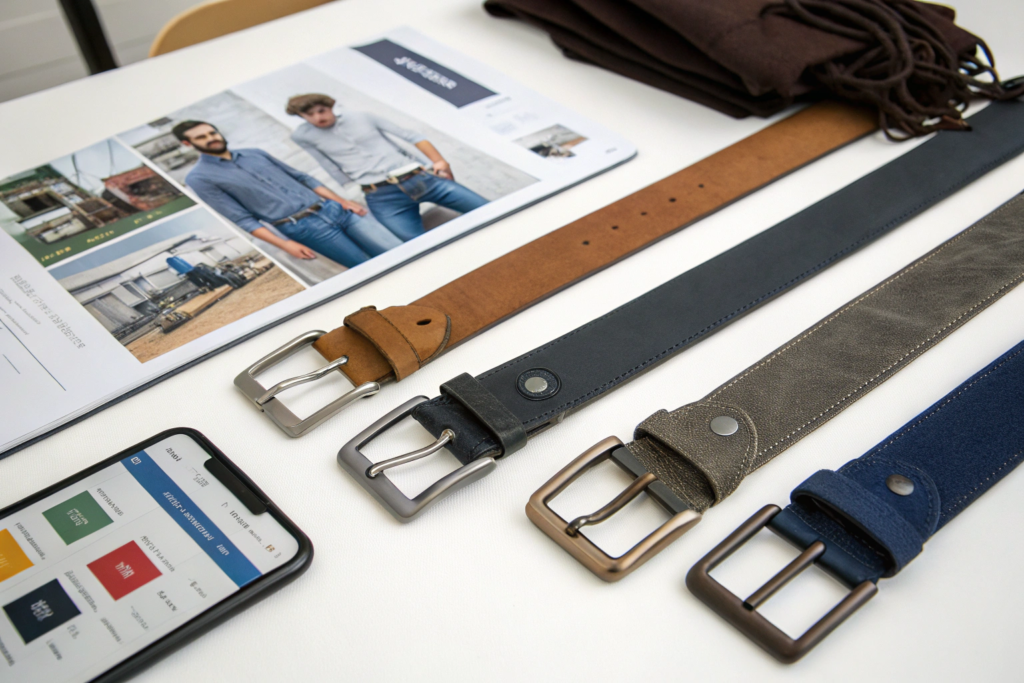
A modern minimalist menswear brand is defined by clean lines, neutral colors, and an absence of unnecessary decoration. The brand’s customer values functionality, versatility, and quality that reveals itself through subtle details rather than loud statements. For this brand, matte gunmetal is the primary buckle finish. It is the most neutral, the most understated, and the most versatile metal finish available. It aligns perfectly with the minimalist color palette of black, white, gray, and navy. Dark brushed nickel is the secondary finish, offering a slightly lighter, cooler tone that works when the collection includes more gray and blue tones. Both finishes should be executed with a very fine, consistent grain or a perfectly uniform matte blast. The quality is in the precision of the finish, not in any decorative element. The buckle shape for a minimalist brand should also be simple. A clean rectangular frame, a flat plate, or a subtle curved profile. No engraving, no embossed logos, no textured patterns. The finish itself is the decoration. A matte gunmetal buckle on a black vegetable-tanned leather strap, with no visible branding except perhaps a tiny, debossed logo on the inside of the strap, is the archetypal minimalist belt. It communicates sophistication through restraint. This combination works for brands targeting the 25 to 45-year-old urban professional who wants one belt that works with his entire wardrobe and will last for years.
Which Buckle Finishes Suit a Heritage or Workwear Brand?
A heritage or workwear brand is built on a narrative of tradition, craftsmanship, and rugged authenticity. The brand’s customer is drawn to products that feel like they have a past, that are made to be used and abused, and that get better with age. Antique brass is the foundation finish for this brand identity. The warm, aged look of antique brass immediately communicates a sense of history and handcraft. It pairs perfectly with the thick, full-grain leathers in brown, tan, and oxblood that are staples of heritage menswear. The buckle shape can be slightly heavier and more substantial, perhaps a classic harness buckle or a rounded rectangular frame. Aged bronze and blackened iron are the secondary finishes for this category. Aged bronze offers a richer, more reddish-brown patina that works with the warmer, rust-toned outfits in a heritage collection. Blackened iron is the most rugged option, suited for the workwear end of the spectrum, brands that reference vintage mining, railroad, or military aesthetics. For a heritage brand, the finish should not look perfect. Minor variations between buckles, slightly uneven patina distribution, and visible hand-finishing marks are desirable. They reinforce the artisanal narrative. The packaging and marketing should tell the story of the finish. How the brass is hand-aged by skilled craftspeople. How each buckle is unique. How the patina will continue to evolve with the wearer. This narrative adds value that justifies a premium price point. A heritage brand selling a belt with an antique brass buckle can price significantly higher than a generic brand selling a belt with a standard brass buckle, because the customer is buying the story as much as the product.
Conclusion
The belt buckle finish landscape for men’s fashion in 2026 tells a clear story. Men are moving away from flashy, high-maintenance, disposable accessories and toward finishes that are subdued, durable, and rich with character. Matte gunmetal and dark brushed nickel lead the modern minimalist movement, offering a versatile, understated foundation that works across outfits and occasions. Antique brass and aged bronze feed the growing appetite for heritage and vintage aesthetics, providing warmth, history, and a tactile connection to craftsmanship. Satin stainless steel bridges the gap, delivering clean luxury that feels appropriate in the boardroom and the bar alike. The sustainability wave is also reshaping the finish options, with raw, unplated brass and advanced PVD coatings offering environmentally responsible alternatives that do not compromise on quality or durability.
At AceAccessory, our design team tracks these finish trends continuously and translates them into production-ready buckles for our menswear brand clients. Our factory in Zhejiang is equipped with electroplating, PVD coating, mechanical finishing, and hand-patination capabilities, all under one roof. This means we can produce a complete belt collection with multiple finish types, coordinated leather straps, and consistent quality across every piece. Our project managers work with brands to select the finishes that align with their identity, target price point, and sustainability goals.
If you are developing your 2026 menswear belt collection and need a manufacturing partner who understands buckle finishes at both the trend and technical levels, I encourage you to reach out. Contact our Business Director, Elaine, directly at elaine@fumaoclothing.com. Tell her about your brand aesthetic, your target customer, and the finishes you are interested in exploring. She will arrange a consultation, provide physical finish samples, and help you build a belt collection that positions your brand exactly where the 2026 market is heading.