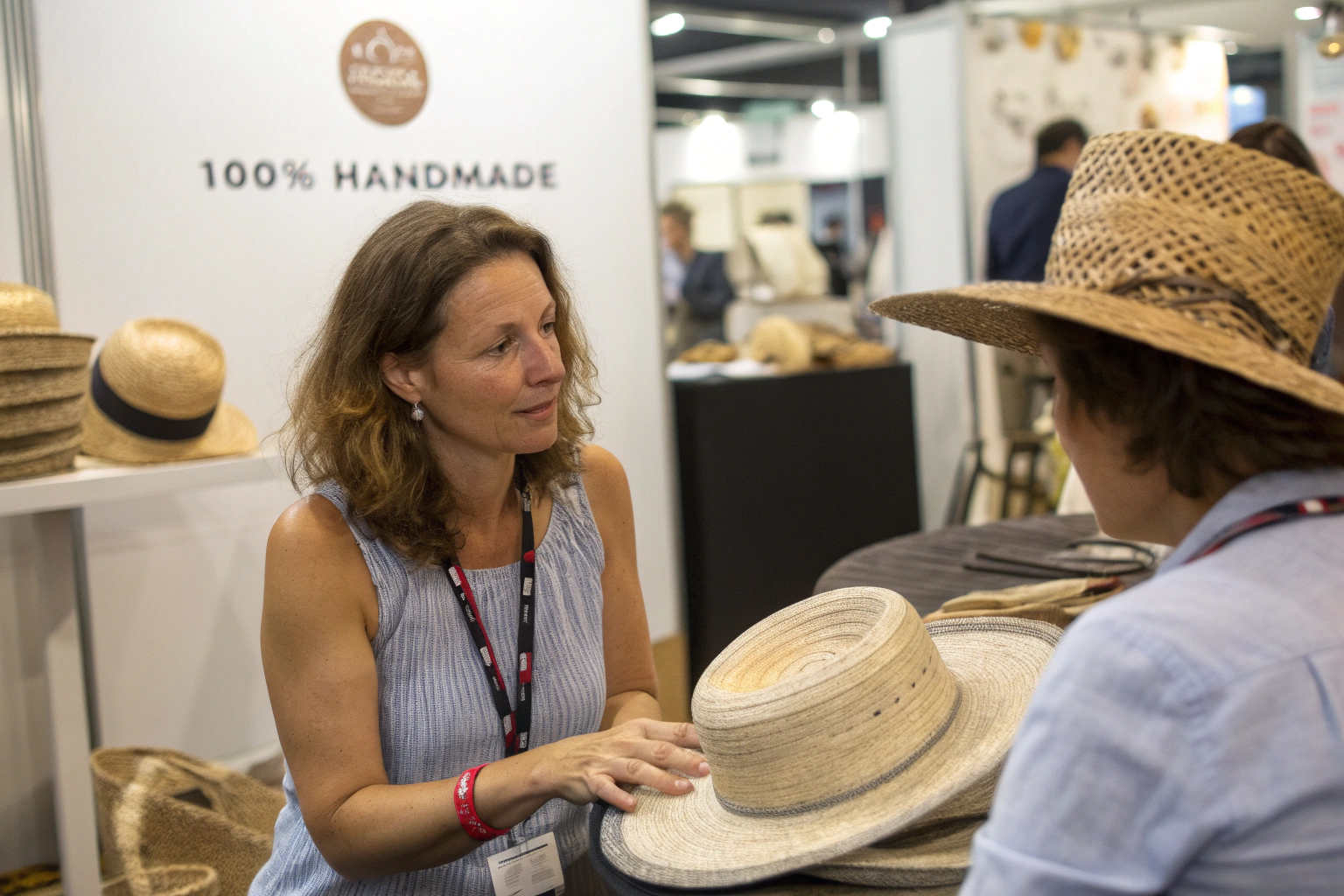
A buyer from a premium resort brand in California sat across from me at a trade show in Florence last summer. She had a beautiful straw hat in her hands, one she had sourced from a supplier who promised it was "100% handmade." She had paid a premium price, marketed it as artisanal, and sold it to her high-end customers. Then a customer sent her a photo from a competitor’s website. The exact same hat, identical in every detail, was being sold as a mass-produced machine-made product for a third of the price. She felt betrayed and embarrassed. I examined the hat carefully, turned it over in my hands, looked at the brim edge and the crown apex, and pointed out five specific indicators that it was, in fact, machine-made. She had been misled. That conversation stuck with me. Too many buyers are paying handmade prices for machine-made products because they simply do not know what to look for.
To verify that a factory’s straw hats are genuinely handmade and not machine-made, you must inspect five specific physical characteristics. These are the presence of hand-tied knots at the crown center rather than machine-locked stitching, slight but consistent irregularities in the weave pattern that indicate human hand tension, individually finished brim edges with hand-folded straw rather than uniformly glued or heat-sealed edges, subtle variations in the diameter and shape between hats of the same size, and the absence of burn marks or melted fiber ends that are characteristic of high-speed mechanical cutting and sewing.
These indicators are not secrets known only to industry insiders. They are observable, physical evidence of the manufacturing process. Once you know what to look for, you can examine a straw hat and determine its production method with a high degree of confidence. At AceAccessory, we produce both handmade and machine-made straw hats for different market segments, and I believe in absolute transparency with my buyers about which is which. A machine-made hat is not necessarily inferior. It is simply different, and it should be priced and marketed accordingly. Let me walk you through exactly how to tell the difference.
What Are the Visible Signs of a Handmade Straw Hat
A handmade straw hat carries the evidence of its creation in every fiber. The human hand works differently from a machine. A machine applies uniform tension, uniform spacing, and uniform speed. The result is perfect uniformity. A human hand applies slightly varying tension from moment to moment, slightly different spacing from one straw to the next, and works at a rhythm that has natural pauses and variations. These imperfections are not flaws. They are the signature of handcraft. When you know how to read them, they tell you the story of how the hat was made.
The most reliable visible signs of a handmade straw hat are found in four key areas. First, the crown starting point should show a hand-tied knot or a hand-braided spiral beginning, not a machine-stitched lock stitch. Second, the weave pattern should exhibit micro-irregularities, tiny variations in the spacing and tension that create a subtle, organic texture distinct from the rigid uniformity of machine weaving. Third, the brim edge should be finished by hand-folding and hand-stitching the straw ends, often with a visible binding thread that shows slight variations in stitch length. Fourth, the overall hat should show minor dimensional variations when compared to another hat of the same stated size, as handmade products are never identical.
These signs are cumulative. One indicator alone might be ambiguous. All four together create a conclusive picture. I teach every new buyer who visits our factory how to do this inspection. It takes about two minutes once you are trained, and it will protect you from paying artisanal prices for industrial products. Let me walk you through the two most definitive indicators.
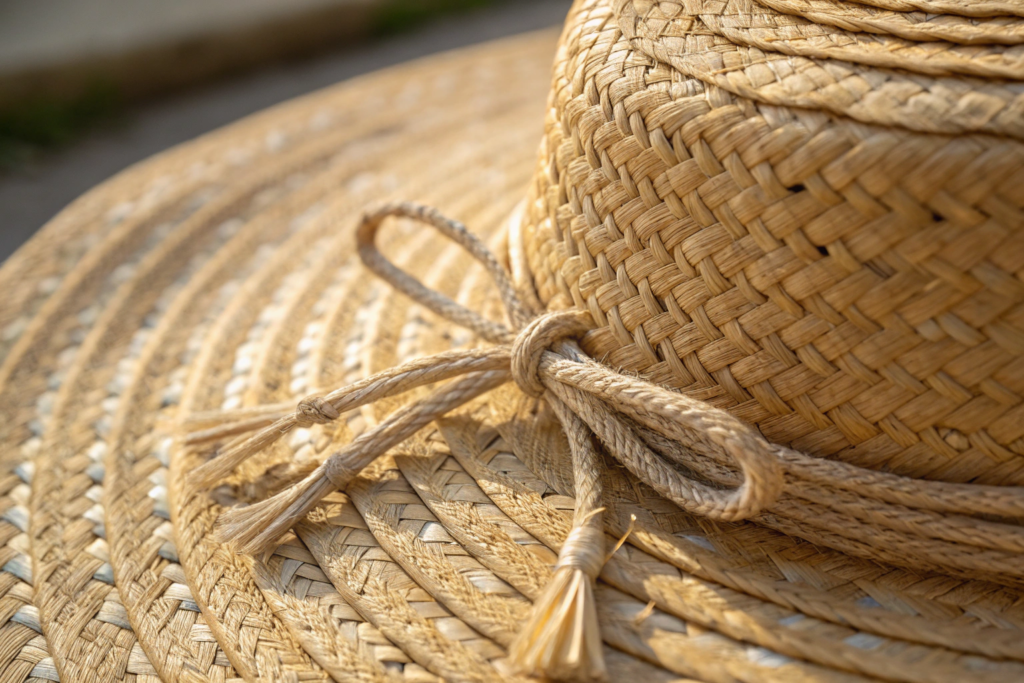
How Can You Identify Hand-Tied Knots at the Crown Center?
The crown center, the very top of the hat where the weave begins, is the most revealing single point on any straw hat. In a handmade hat, the weaving process starts at this exact point. The artisan takes a bundle of prepared straw fibers and either ties them together with a small knot or begins a braided spiral that radiates outward. This starting point is the foundation of the entire hat. In a true handmade hat, you will see a small, visible knot or a tight spiral start. It may be slightly asymmetrical. It may have a tiny tail of straw fiber tucked underneath. The weave around it will show a slight learning curve as the artisan found their rhythm in the first few rows. It is a human signature. In a machine-made hat, the crown center tells a different story. Machine weaving typically starts from a pre-cut straw fabric sheet that is pressed into shape, or it is woven on a circular loom that begins with a mechanically locked stitch. The center of a machine-made hat often shows a perfectly uniform starting point with no visible knot. Instead, you may see a small, perfectly round depression where the mechanical form pressed the material. You may also see a tiny melted spot or a drop of glue where the machine locked the starting thread. Under a magnifying glass, the fibers at the center of a machine-made hat are often crushed or melted from the heat of the forming press. Handmade hats show cut fiber ends that are clean and natural, not melted. I carry a small jeweler’s loupe in my pocket at trade shows specifically for this inspection. The crown center does not lie.
What Does Irregular Weave Tension Tell You About Production?
Machine weaving is governed by a computer or a mechanical cam system. The tension on every straw fiber is identical. The spacing between every row is mathematically constant. The result is a weave that looks almost printed, perfectly uniform from edge to edge. This uniformity is efficient and produces a clean product, but it lacks the organic quality of handwork. Hand weaving involves a human being making thousands of micro-decisions per hat. The artisan pulls each straw fiber to a tension that feels right to their trained fingers. That tension varies slightly from one fiber to the next, from one row to the next, and from the beginning of the workday to the end. The result is a weave with a subtle, living texture. When you hold a handmade straw hat up to the light, you will see tiny variations in the density of the weave. Some areas will let through a fraction more light than others. The straw fibers themselves will have slight variations in their alignment. Some may twist slightly. Some may sit a tiny bit higher or lower than their neighbors. These variations are not defects. They are evidence that a human hand, not a machine program, guided each strand into place. Machine-made hats, when held to the light, show a dead-even density. The light transmission is identical across the entire surface. The fibers are perfectly aligned. There is no variation. It looks precise, and it is, because a machine did it. Another tell is the way the hat feels when you gently flex the brim. A handmade hat often has a slightly more flexible, less rigid feel because the hand tension is not as brutally tight as machine tension. The hat breathes a little more. It has a softer hand feel. This is why handmade hats are often more comfortable to wear for long periods.
How Do Factory Visits Confirm Authentic Handmade Production
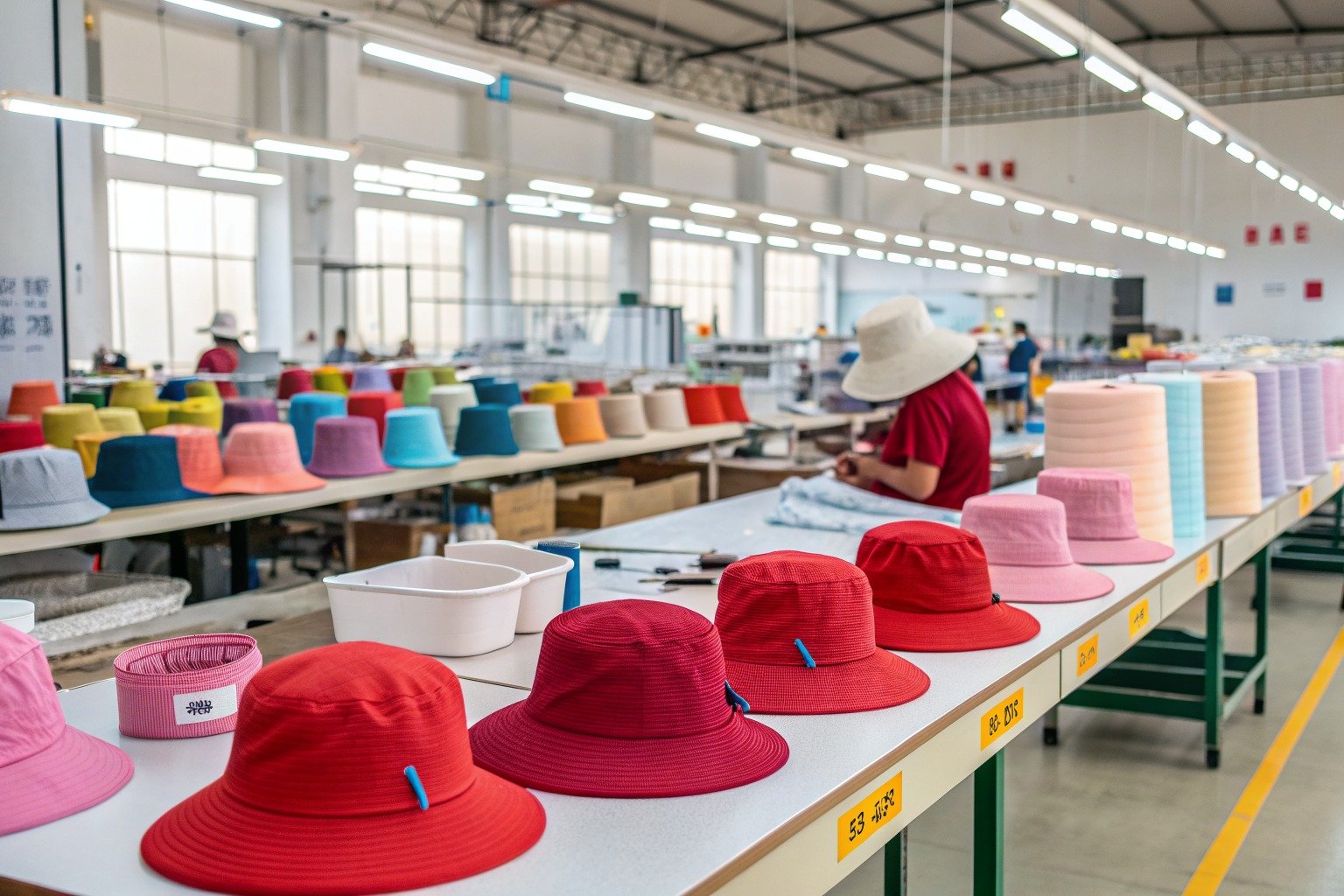
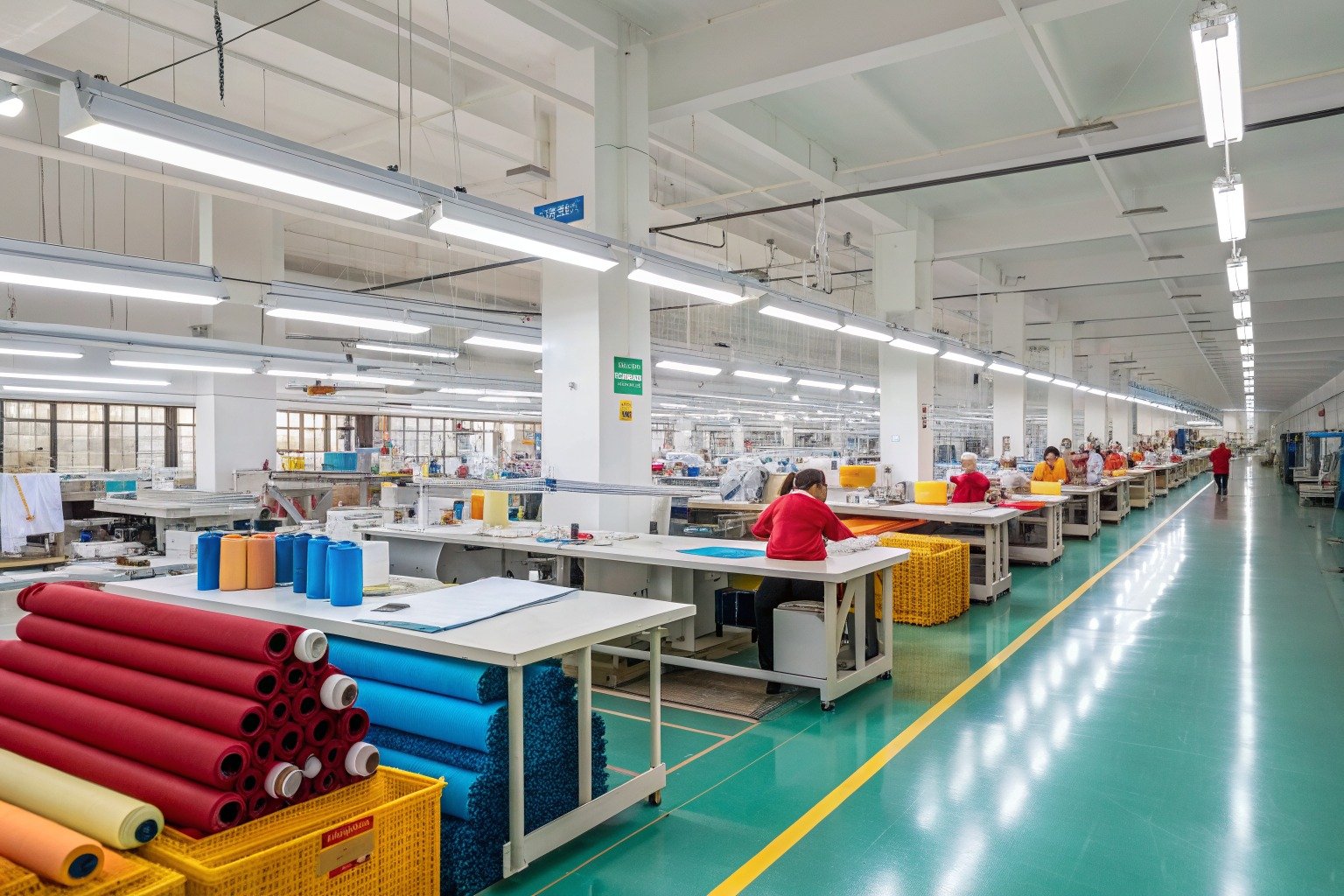
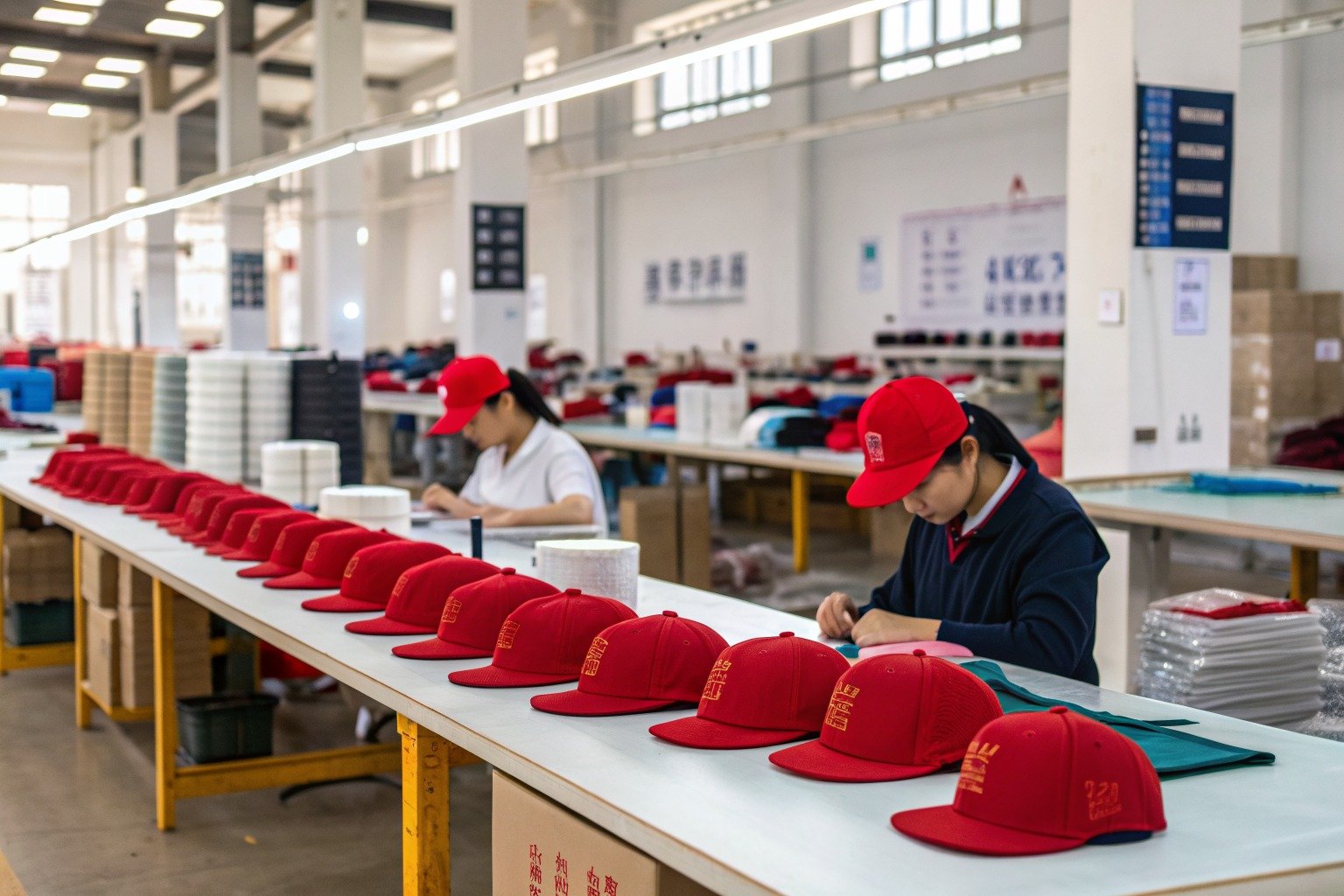
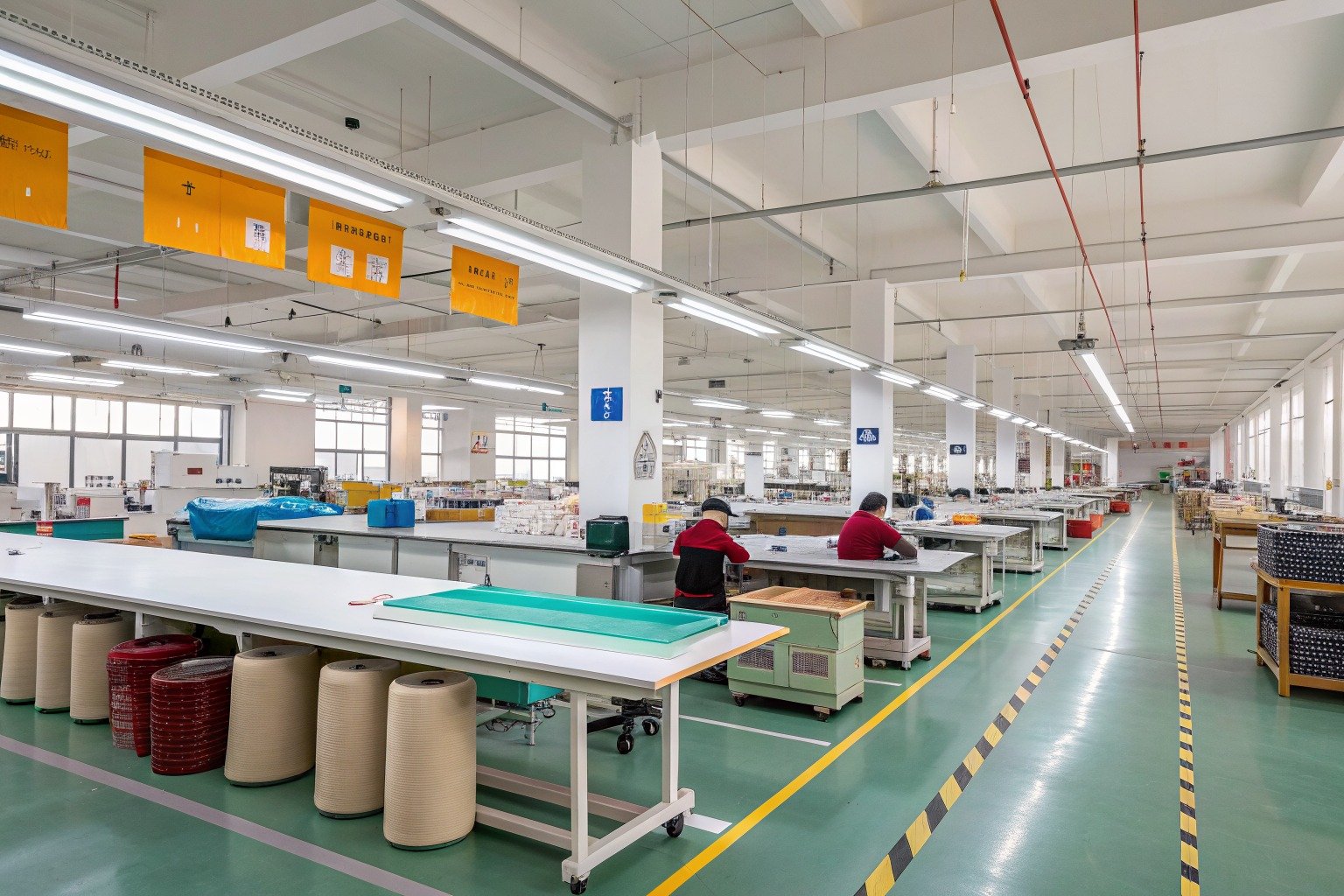
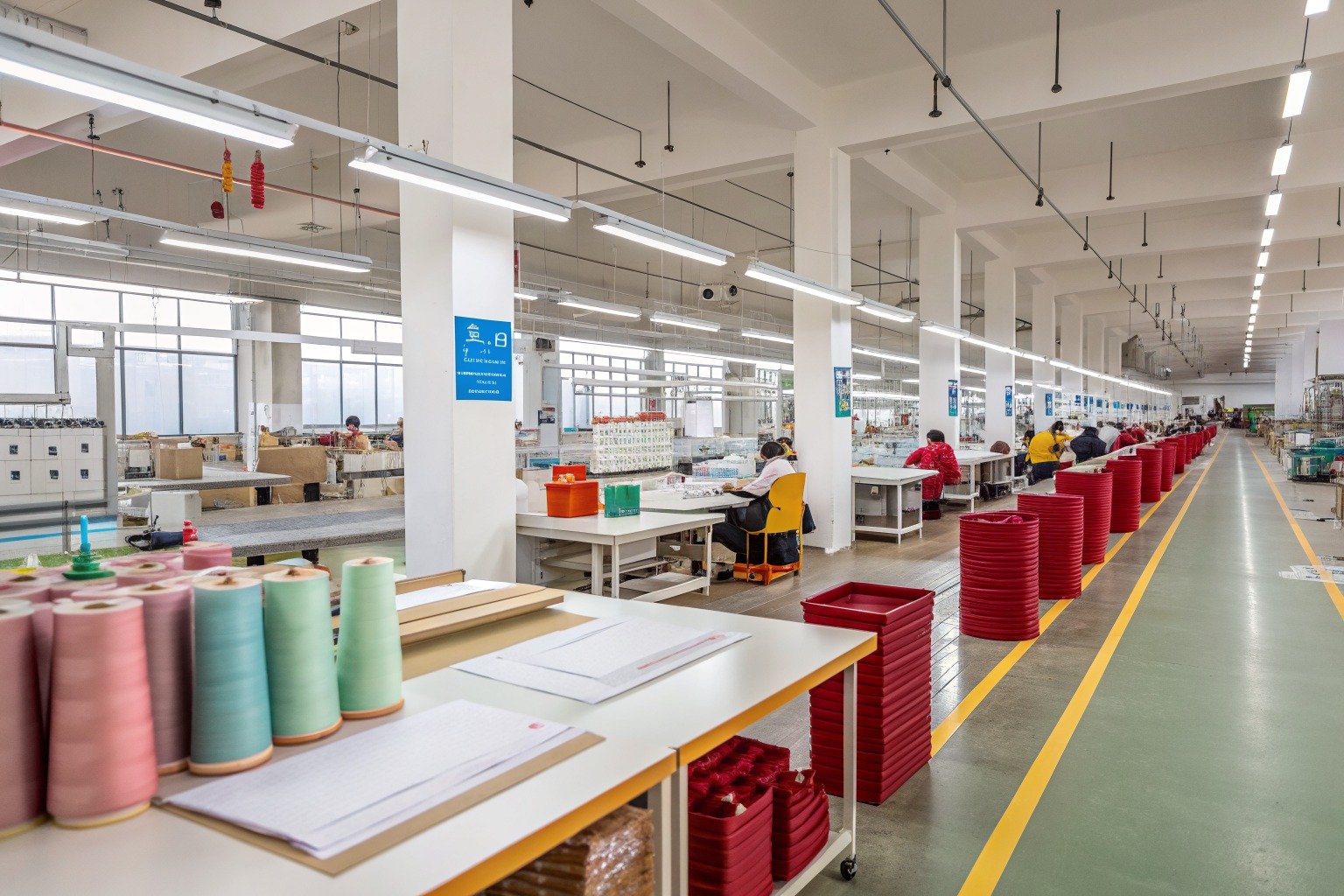
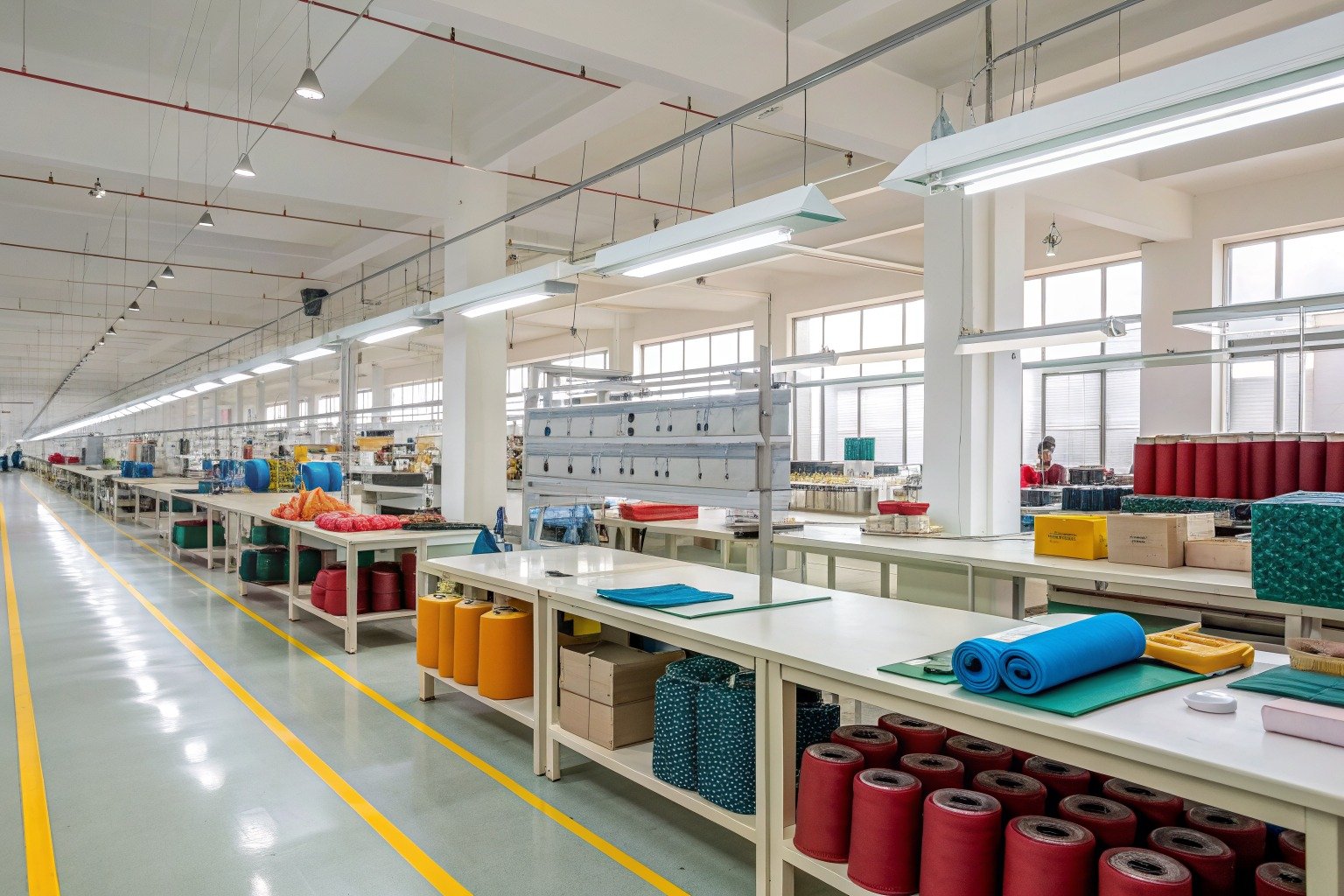
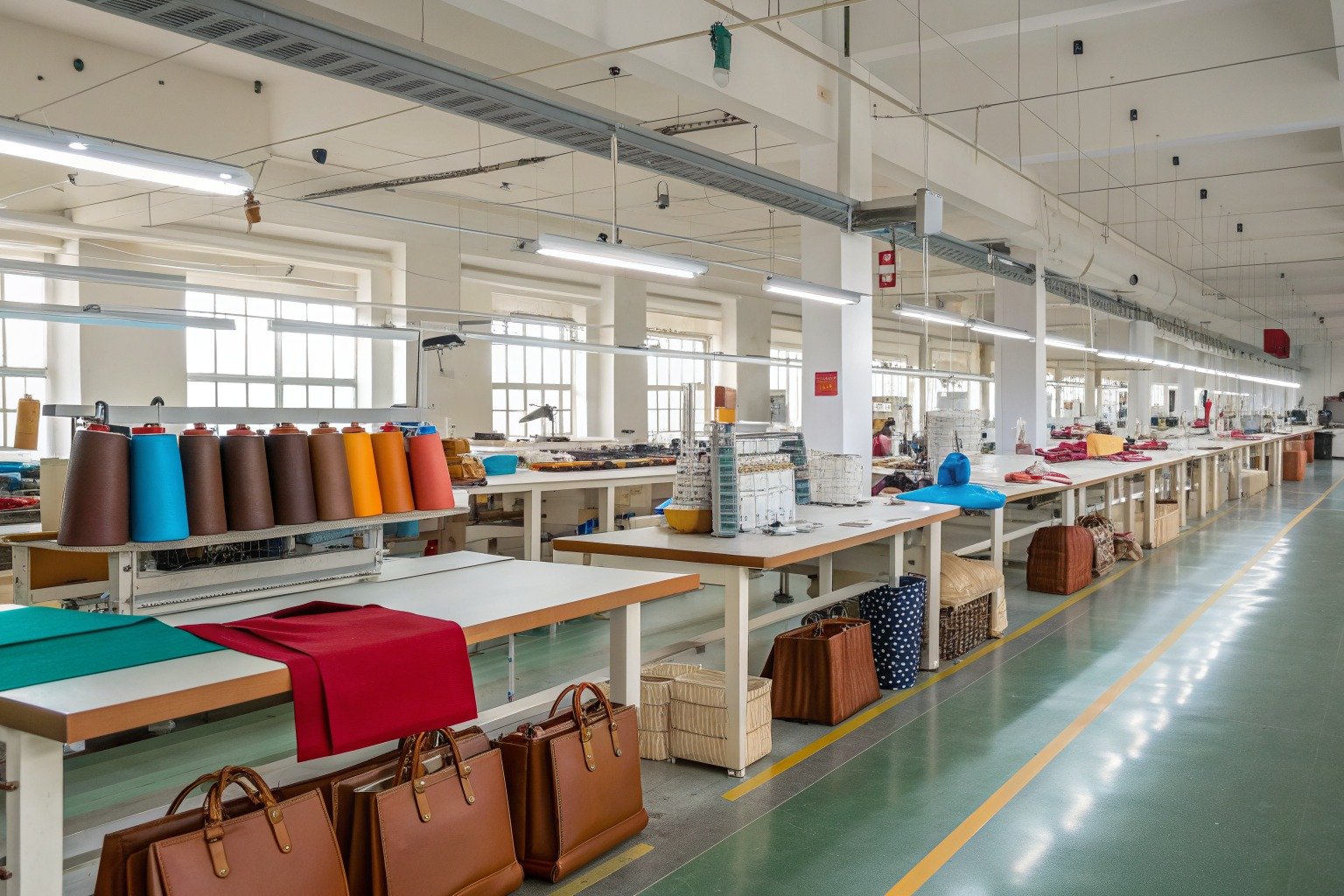
A factory visit is the most powerful verification tool you have. Photos and videos can be staged. A few artisans can be placed in a corner for show while the real production happens on machines elsewhere. A physical visit, especially one that is unannounced or arranged on short notice, reveals the true production environment. I welcome buyer visits to our Zhejiang factory precisely because I want them to see the real process. When you walk through our straw hat workshop, you see rows of artisans working by hand. You hear the quiet rustle of straw, not the mechanical hum of loom machines. You see hats in every stage of completion, from the first crown knots to the final brim finishing.
A factory visit confirms authentic handmade production when you observe at least three conditions. First, the ratio of human workstations to machines must heavily favor hand-work areas, with manual weaving stations visibly outnumbering any mechanical equipment in the straw hat department. Second, you must see work-in-progress at various production stages that demonstrate the full hand-making sequence, not just one finishing step. Third, the workers must be able to demonstrate their technique on request, showing you how they start a crown or finish a brim edge, and their movements should be skilled, fluid, and practiced, consistent with years of experience.
A visit also allows you to assess the working conditions, the quality of the raw materials, and the overall professionalism of the operation. These factors correlate strongly with product quality and supply reliability. Here are the two most important things to observe during your visit.
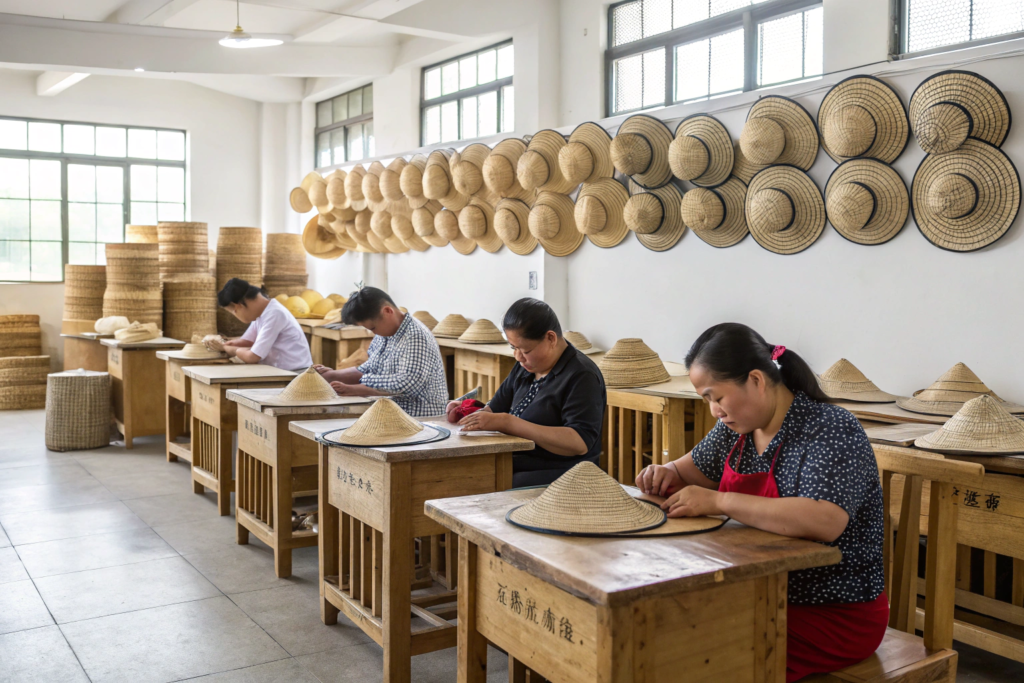
What Should You Observe at the Weaving Workstations?
The workstation tells you everything about the production method. A hand-weaving workstation is simple. It typically consists of a wooden block or a head-shaped form that the artisan uses as a base. There will be a pile of prepared straw material next to the worker, often sorted by length and thickness. The tools are minimal. Scissors, a small awl or needle, perhaps a thimble, and a water spray bottle to keep the straw pliable. There is no electricity required at the station itself. The artisan sits and weaves, often in silence or with quiet conversation. When you observe a skilled straw hat weaver, you will notice the rhythm. The hands move in a steady, practiced pattern. The fingers feel the tension. The eyes check the alignment. The process is slow. A full hat may take hours or even days depending on the complexity. A machine production area looks and sounds completely different. There will be loom machines, hydraulic presses, and motorized sewing stations. The noise level is higher. The pace is faster. Workers at machine stations are feeding material into machines, removing finished pieces, and checking for jams. They are operators, not artisans. If you visit a factory that claims to produce handmade hats and you see a room full of loom machines with only one or two hand-weaving stations set up near the window, you are looking at a machine-made operation with a handmade showcase. The real work happens on the machines. I recommend asking to see the production schedule or the daily output records. A genuine handmade workshop will have realistic output numbers. An artisan might produce two to five hats per day depending on the style. If the factory claims to produce hundreds of handmade hats per day with only a few weavers, the numbers do not add up.
How Can You Test Worker Skill During a Factory Tour?
A polite, respectful request for a demonstration is perfectly acceptable and highly revealing. Ask the factory manager if you can watch one of the artisans start a new hat crown. A genuine hand-weaver will be able to do this immediately. They will pick up the straw fibers, prepare them with a quick moistening, and begin forming the center knot or spiral. Their fingers will move with the automatic confidence of long practice. They will not hesitate or fumble. The demonstration will look exactly like the work you observed when you first walked in. A factory that is staging a handmade illusion will struggle with this request. The manager might make excuses. "The artisan is on break." "We only do that step in the morning." "It is better to see the finished product." If you do get a demonstration, the worker’s movements may be slow, clumsy, or uncertain. They might produce something that looks different from the "handmade" samples you were shown earlier. Another test is to ask a technical question through the manager to the artisan. Ask something like, "How do you adjust the tension when you switch from the crown to the brim?" A genuine artisan will be able to explain, even if through translation, that they loosen their grip slightly or switch to a different weaving angle. The answer will be specific and physical. A machine operator posing as an artisan will give a vague or confused answer. These small interactions are incredibly valuable. They cut through the marketing narrative and reveal the reality of the production floor.
What Are the Differences Between Handmade and Machine-Made Straw Materials
The materials used for handmade straw hats are fundamentally different from those used for machine-made hats. This is not a matter of quality. It is a matter of compatibility. A human hand works best with natural, slightly irregular materials that respond to touch and moisture. A machine works best with perfectly uniform, standardized materials that feed through without jamming. The raw material itself can often tell you how the hat was made, even before you examine the construction details.
Handmade straw hats typically use natural, minimally processed straw fibers such as wheat straw, raffia, or toquilla palm. These materials retain their natural color variations, subtle thickness differences, and organic surface texture. Machine-made straw hats predominantly use paper-based straw braid, which is manufactured from wood pulp or recycled paper, extruded into perfectly uniform strips, and often coated with a subtle plasticizer for strength and consistency. The material difference is visible in the color uniformity, the surface sheen, and the way the fiber ends look under magnification.
Understanding the material also helps you verify the marketing claims. A hat made from natural toquilla palm straw, handwoven in the traditional Ecuadorian style, is a genuine Panama hat, a premium product. A hat made from paper straw braid, pressed into shape by a machine, is a fashion straw hat, a perfectly good product for a different market segment. The problem arises when one is sold as the other. Here is how to tell the materials apart.
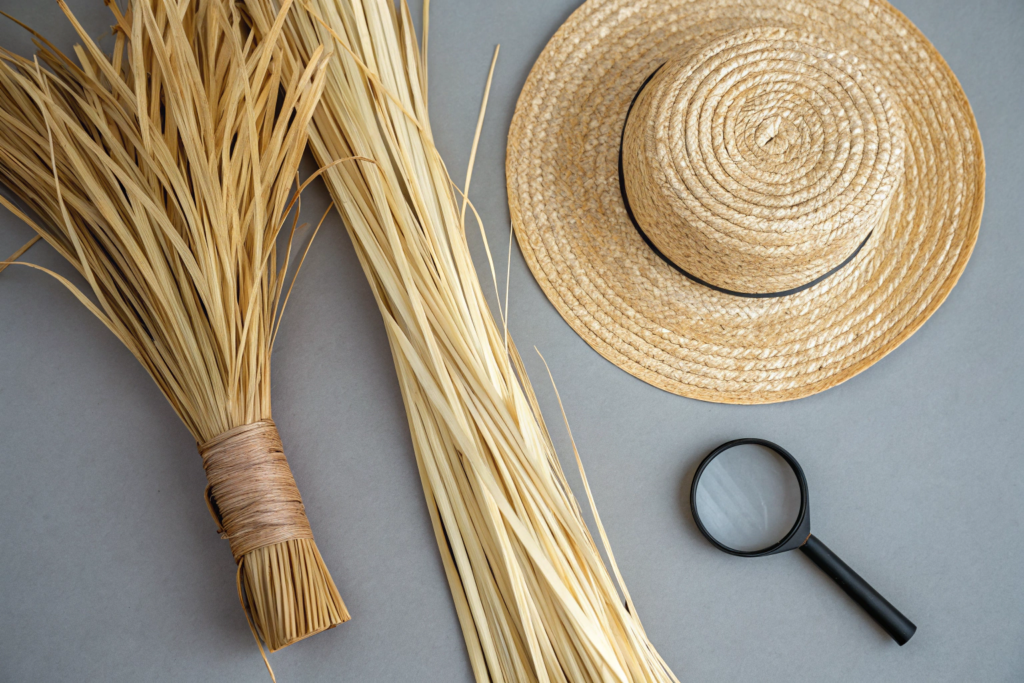
How Do Natural Straw and Paper Straw Differ Under Inspection?
Natural straw is a plant stem. It has a cellular structure. Under a magnifying glass, you can see the natural nodes, the slight ridges along the length of the fiber, and the porous end grain where the stem was cut. Natural straw varies in color from strand to strand. A bundle of wheat straw will contain strands ranging from pale cream to light golden brown. This color variation is natural and desirable. It gives the finished hat depth and character. Natural straw also responds to moisture. If you lightly mist a small, hidden area of a natural straw hat with water, the fibers will become slightly more pliable. When they dry, they will return to their original stiffness. Paper straw is manufactured. It is made by pulping wood or recycled paper, extruding it through a die to create a uniform strip, and then rolling or braiding it. Under magnification, paper straw looks homogeneous. There is no cellular structure, no nodes, no porous end grain. The surface often has a slight, uniform sheen from the binding agents and plasticizers used in the manufacturing process. The color is perfectly uniform. Every strand in a roll of paper straw braid is the exact same shade. There is no natural variation. The end of a paper straw strip looks like a clean, solid cut with no internal structure visible. Another test is the burn test, though I only recommend this on a loose fiber sample, not on a finished hat. Natural straw burns like plant material, with a papery, woody smell and a fine gray ash. Paper straw, depending on its plasticizer content, may melt slightly, bead up, or produce a chemical odor. This test is definitive but destructive, so use it only when you have a loose strand.
What Does the Brim Edge Reveal About Hat Construction?
The brim edge is where the weaving or braiding ends and the hat is finished. It is the second most revealing area after the crown center. In a handmade hat, the artisan finishes the brim by hand-folding the ends of the straw fibers back into the weave and securing them with a hand-sewn binding or a hand-stitched overwrap. The binding material is typically a cotton or polyester thread, and the stitching is done by hand. Look closely at the stitches. Hand stitching shows slight variations in stitch length and spacing. The tension may vary subtly. The thread may be waxed by hand, giving it a slightly uneven finish. This is craftsmanship. In a machine-made hat, the brim edge is finished by machine. A common method is a machine-sewn binding where a strip of fabric is folded over the brim edge and stitched in place by an industrial sewing machine. The machine stitching is perfectly uniform. Every stitch is exactly the same length. The tension is perfectly consistent. Another method, common on very cheap machine-made hats, is a heat-sealed or glued edge. The straw braid is cut to length, and the cut edge is sealed with a line of hot-melt adhesive or simply melted together with a heated press. Under inspection, a glued edge will show a visible clear or colored adhesive line. A heat-sealed edge will show melted, deformed fiber ends that have lost their natural texture. If you see a perfectly straight, shiny, plastic-looking edge on a "handmade" hat, you are almost certainly looking at a machine-made product with a heat-sealed finish. Handmade hats never have melted brim edges. The straw fibers at the edge of a handmade hat will look like the cut ends of plant stems, because that is what they are.
How to Use Quality Control Reports to Verify Production Methods
Quality control documentation is your verification when you cannot be physically present at the factory. A well-structured QC report, conducted by a trusted third party or by an internal team that you have reason to trust, should specifically address the indicators of handmade production. A generic QC report that only checks dimensions and color will not catch a machine-made hat sold as handmade. You need a report that asks the right questions and provides photographic evidence of the specific indicators we discussed.
An effective quality control report for verifying handmade straw hat production must include macro photographs of the crown center with a scale reference, macro photographs of the brim edge finish, a weave uniformity assessment performed under standardized lighting, a dimensional comparison across a sample of hats from the same size to document the expected variations of handwork, and a material verification that identifies the straw type through visual inspection against a reference library of natural and synthetic straw materials.
At AceAccessory, our QC team uses a customized inspection checklist for handmade products that goes beyond the standard AQL sampling tables. We know that our buyers, especially premium resort and boutique brands, are making marketing claims based on the handmade nature of the product. They need evidence to back up those claims. We provide that evidence. Here is how a thorough QC process works.

What Specific Checks Should a QC Inspector Perform on Straw Hats?
The inspector must be trained to look for the five key indicators we have discussed. I recommend creating a specific "Handmade Verification" section within your standard QC checklist. The first check is the crown center photograph. The inspector should take a high-resolution macro photo of the crown center of every hat in the sample, or at minimum the first and last hats in each size run. The photo must be clear enough to zoom in and see whether the center features a hand-tied knot or a machine-locked stitch. The second check is the weave tension assessment. The inspector holds each hat up to a standardized light source, such as a lightbox or a bright window, and photographs the light transmission pattern. A handmade hat will show subtle variations in light transmission. A machine-made hat will show dead-even transmission. The inspector notes this observation on the report. The third check is the brim edge inspection. The inspector examines the brim edge under a magnifying lamp and classifies the finish as hand-folded and hand-stitched, machine-sewn binding, or heat-sealed. A photograph documents the finding. The fourth check is the dimensional variation test. The inspector measures the brim width and crown height on five hats of the same stated size. In handmade hats, these measurements will vary slightly, typically by 2 to 5 millimeters. In machine-made hats, the measurements will be identical or within a 1-millimeter tolerance. The report should list the individual measurements, not just an average. The fifth check is the material verification. The inspector examines a loose straw fiber or a trimmed end under a portable microscope or a high-magnification loupe. They compare the fiber structure to reference images of natural straw and paper straw. The observation is documented.
How Can Video Documentation Support Authenticity Claims?
Video documentation adds a layer of verification that still photographs alone cannot provide. A continuous video of the QC inspection being performed on randomly selected hats, with the inspector showing the crown center, the brim edge, and the weave under the magnifying lamp, creates a record that is much harder to fake. We offer our buyers a live video inspection service. Instead of receiving a static report, the buyer joins a video call with our QC inspector. The inspector walks through the warehouse to the buyer’s specific cartons, opens them on camera, and performs the handmade verification checks in real time. The buyer can ask questions. "Can you zoom in on that crown center again?" "Can you show me the brim edge of the third hat in the stack?" This interactive process builds enormous trust. It also allows the buyer to see the overall production environment in the background, which provides additional context. For brands that are building their entire marketing story around artisanal, handmade production, I recommend requesting a short documentary-style video of the production process. Our marketing team can produce a 60-second video showing our artisans at work, starting a crown, weaving the body, and finishing the brim. The video does not need to be polished or commercial. In fact, a raw, authentic look at the workshop is more convincing than a slick production. This video can be used by the brand on their website and social media to support their handmade claims. It also serves as a permanent record of the factory’s production methods.
Conclusion
Verifying that a straw hat is genuinely handmade and not machine-made is a skill that combines visual inspection, material knowledge, and a willingness to ask direct questions. You now know to look for the hand-tied knot at the crown center, the signature of a human hand starting the weave. You understand that micro-irregularities in the weave tension are not defects but evidence of artisanal production, while dead-even uniformity points to a machine. The brim edge tells a clear story. Hand-folded and hand-stitched edges come from a workshop. Heat-sealed or perfectly machine-sewn edges come from a factory line. The straw material itself, natural plant fibers with their organic variations versus uniform paper braid with its synthetic sheen, provides another layer of evidence. A factory visit, when possible, confirms everything through direct observation of the workstations, the worker skills, and the production rhythm. And when you cannot visit, a properly structured QC report with macro photography, dimensional variation measurements, and live video inspection provides the documentation you need to stand behind your handmade marketing claims.
At AceAccessory, we do not blur the line between handmade and machine-made. We produce both categories, and we label them honestly. Our handmade straw hat workshop in Zhejiang is staffed by skilled artisans who have spent years perfecting their craft. They produce hats that carry the unmistakable signature of handwork, hats that premium brands are proud to sell as artisanal products. Our machine-made straw hat production line uses modern equipment to produce clean, consistent, affordable hats for a different market segment. Both are good products. The key is knowing which one you are buying and paying the appropriate price.
If you are sourcing straw hats and want a factory partner who will be transparent about production methods, who can provide the QC documentation to verify handmade claims, and who can produce consistent quality regardless of the production method, I invite you to reach out. Contact our Business Director, Elaine, directly at elaine@fumaoclothing.com. Tell her about your brand, your target price point, and whether you are seeking genuine handmade hats or quality machine-made hats. She will arrange a consultation, provide samples, and make sure you get exactly what you are paying for. Do not let another supplier sell you a machine-made hat at a handmade price.