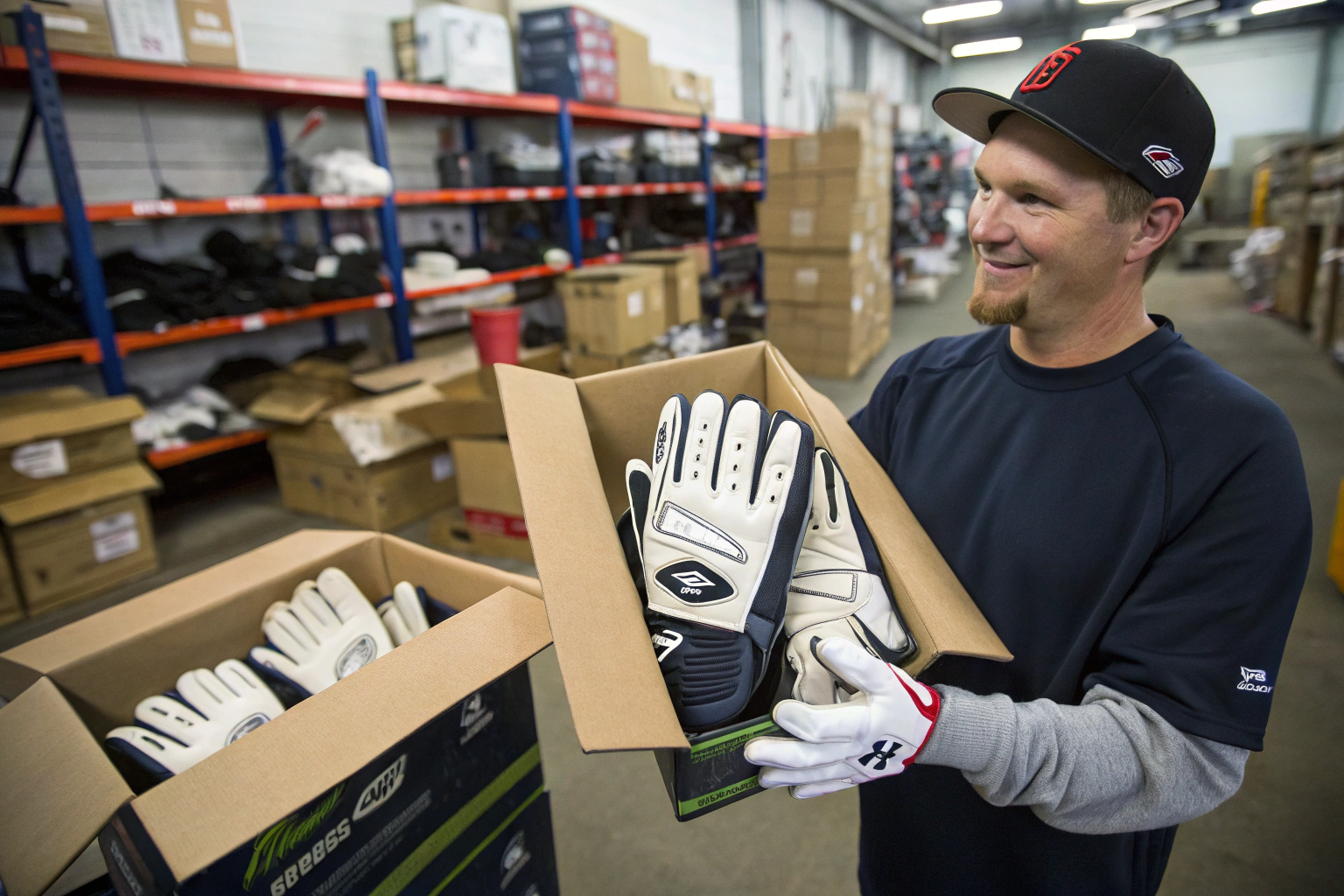
A baseball equipment buyer from a growing brand in Texas called me last spring with a problem that had been driving him crazy. He had been sourcing batting gloves from a general sports glove factory for two seasons. Every shipment, he would open the cartons and find the same issue. The left-hand gloves fit perfectly, but the right-hand gloves felt off. The thumb angle was wrong. The palm padding sat slightly twisted. His customers, serious players who spend hours in the batting cage, noticed immediately. Returns were piling up. The factory simply did not understand that a batter’s hands are not mirror images in function. The top hand, the hand that guides the bat, and the bottom hand, the hand that generates power, do completely different jobs. Treating them as identical shapes reversed for left and right is a fundamental design error. I told him to send me his specs. Two months later, he had a shipment of truly handed batting gloves that fit both hands correctly, and his return rate dropped to nearly zero.
Yes, our factory produces both left and right-handed baseball batting gloves, and we do so with anatomically distinct patterns for each hand rather than simply mirroring a single glove design. The top hand and bottom hand on a bat perform different biomechanical functions, requiring different palm padding placement, thumb gusset angles, and finger articulation. We also manufacture true left-handed batter gloves, which are a completely separate product line with the reinforced padding on the right hand and the flexible grip on the left, designed specifically for the 10 percent of players who bat left-handed.
This is a topic that separates general accessory factories from those with genuine sports equipment expertise. At AceAccessory, our glove production division has developed specific pattern blocks and quality control protocols for baseball batting gloves because we understand the biomechanics of the swing. A batting glove is not just a fashion glove with some silicone grip printed on it. It is a piece of athletic equipment that must protect the player’s hands from vibration and abrasion while providing maximum feel and control of the bat. Let me walk you through exactly how we approach handedness in batting glove design and production.
What Is the Difference Between Left and Right-Hand Batting Gloves
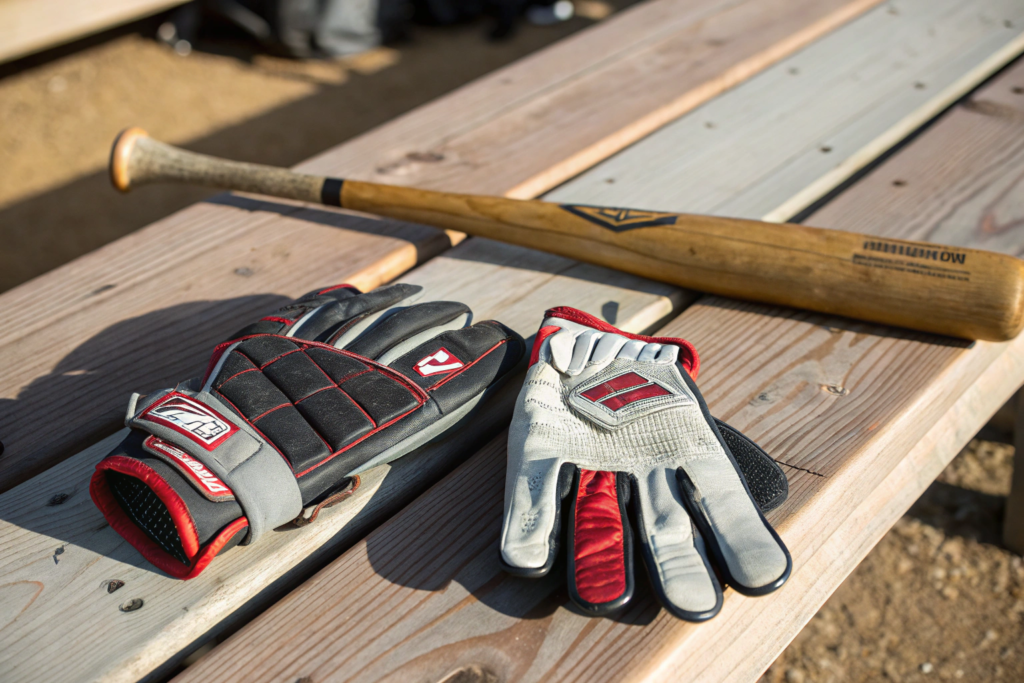
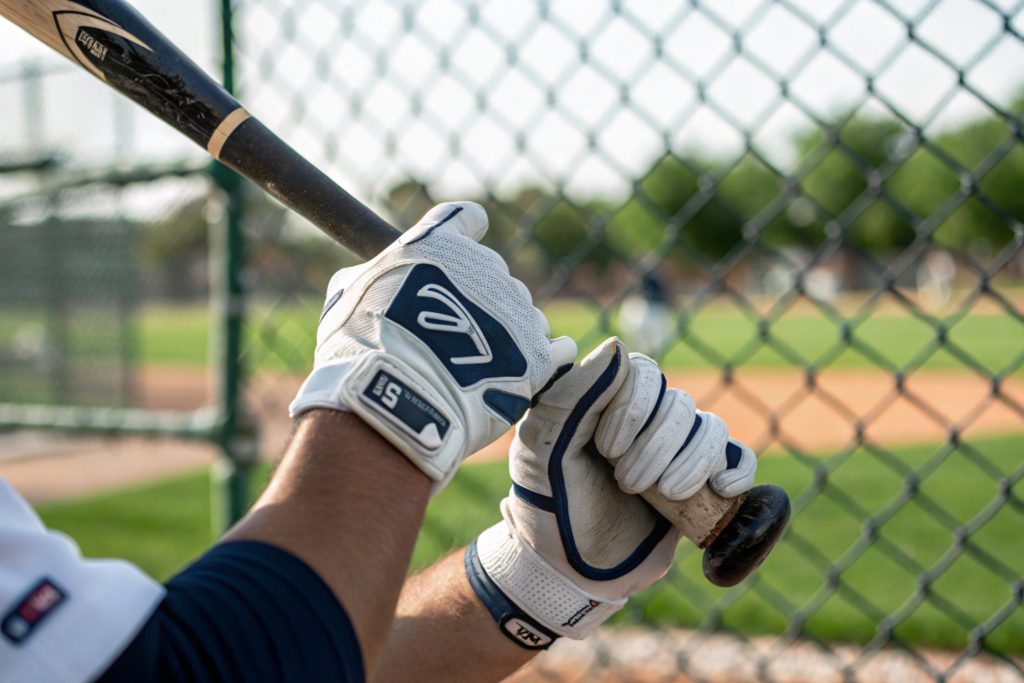
The difference between a left-hand batting glove and a right-hand batting glove starts with the grip. When a batter grips the bat, the two hands are not in symmetrical positions. The bottom hand, for a right-handed batter this is the left hand, sits at the knob of the bat. This hand bears the brunt of the torque when the bat whips through the strike zone. The palm of the bottom hand presses hard against the bat handle, and the pinky and ring fingers take most of the pressure. The top hand, the right hand for a right-handed batter, sits above the bottom hand and acts as the guide. It controls the bat path and provides stability. The thumb of the top hand wraps over the bat handle and is exposed to vibration on mishits.
A proper left-hand batting glove for a right-handed batter features dense palm padding concentrated on the lower palm and the pinky and ring finger zones to absorb the torque and pressure from the bat knob. The right-hand batting glove features a reinforced thumb panel to protect against sting and vibration, with more flexibility in the finger joints to allow precise bat control. The thumb gusset angle is also different, with the left glove thumb cut more vertically to accommodate the grip position at the knob, while the right glove thumb is cut at a slightly wider angle to wrap over the top of the grip.
These differences are not subtle. A player can feel them immediately. When a factory produces batting gloves by simply cutting two identical pieces and flipping one over, the padding lands in the wrong places. The seams rub against the wrong parts of the hand. The fit is uncomfortable, and the protection is compromised. Let me explain the specific anatomical requirements for each hand.
Why Does the Bottom Hand Need Different Palm Padding?
The bottom hand is the power hand. For a right-handed batter, the left hand sits at the very end of the bat, often with the pinky finger partially wrapped around the knob. When the batter swings, the bat rotates forcefully in the bottom hand. The knob digs into the hypothenar region of the palm, the fleshy area opposite the thumb at the base of the pinky. Without proper padding, this repeated pressure causes bruising, blisters, and over time, something called hamate bone irritation, which is a common injury among serious baseball players. The padding on the bottom hand glove must be concentrated in this specific zone. We use a dense, viscoelastic foam pad, about 2.5 to 3 millimeters thick, strategically placed to cover the lower palm and extend into the pinky and ring finger joints. The pad is not a single flat piece. It is molded with a contoured shape that matches the curve of a gripped bat handle. This contouring prevents the pad from bunching up when the hand closes around the bat. The padding material is also perforated with micro-vents to allow heat and moisture to escape. The bottom hand glove typically has less padding on the index and middle fingers. These fingers need maximum feel for the bat, especially on the initial grip and during the load phase of the swing. Over-padding these fingers creates a numb, disconnected feeling that batters hate. The balance is protection where the pressure is highest and sensitivity where the control is needed.
How Does the Top Hand Glove Protect Against Bat Sting?
The top hand has a completely different protection requirement. When a batter hits a ball off the end of the bat or makes contact on a cold day, a sharp vibration, called bat sting, travels up the bat handle and into the hands. The top hand thumb, which wraps over the top of the handle, is the most exposed and vulnerable point. A bad sting can cause numbness, pain, and even micro-fractures in the thumb over a long season. The top hand batting glove addresses this with a reinforced thumb panel. We use a layered construction. The outer layer is the same premium cabretta leather or synthetic microfiber as the rest of the glove for grip consistency. Underneath, we insert a thin layer of D3O or a similar non-Newtonian impact-absorbing material. This material is flexible and soft during normal movement, but it stiffens instantly upon impact to disperse the vibrational energy. This technology was originally developed for motorcycle protective gear and has migrated into high-end batting gloves. The thumb panel extends from the tip of the thumb down to the carpometacarpal joint at the base, covering the entire thumb bone. The rest of the top hand glove is designed for flexibility. The knuckle zones have articulated panels with minimal padding to allow the fingers to adjust their position on the bat during the swing. The back of the hand is covered with a breathable, four-way stretch mesh that moves with the hand and keeps it cool. The combination of targeted thumb protection and overall hand flexibility is what makes a right-hand batting glove functionally different from a left-hand batting glove for the same batter.
How to Design Batting Gloves for Left-Handed Hitters
Left-handed batters are not just right-handed batters in reverse. They represent a distinct market segment with specific product needs that many suppliers overlook. A true left-handed batter stands on the right side of home plate and swings the bat with the right hand as the bottom power hand and the left hand as the top guide hand. This means the padded bottom hand glove for a left-handed batter is the right-hand glove. The thumb-protected top hand glove is the left-hand glove. It sounds simple, but in production, it requires a completely separate set of pattern pieces and a separate production run.
Designing batting gloves specifically for left-handed hitters requires reversing the entire padding and protection architecture. The right-hand glove becomes the power glove with dense lower palm and pinky padding for the bottom hand position at the knob. The left-hand glove becomes the control glove with the reinforced, impact-absorbing thumb panel for the top hand. This is not a matter of flipping a pattern. It requires dedicated left-hander-specific patterns, separate cutting dies for the padding components, and a production run dedicated to the left-handed orientation.
Left-handed hitters make up approximately 10 percent of the baseball-playing population. While that is a smaller market segment than right-handed hitters, it is a very loyal and underserved one. Left-handed players know the frustration of walking into a sporting goods store and finding 50 right-handed batting glove options and maybe two left-handed models, if they are lucky. A brand that offers a well-designed, truly handed left-handed batting glove can build a fiercely loyal customer base.
Why Can’t You Just Flip a Right-Handed Glove Pattern?
Flipping a pattern sounds like an obvious solution, and it is the shortcut that many factories try to take. The problem is that batting glove construction is not flat. The leather or synthetic palm is cut and sewn with a specific grain direction. The stretch mesh on the back of the hand is oriented to stretch in specific directions. The thumb gusset, the separate piece of material that forms the thumb tube, is cut on a bias to allow the thumb to move naturally in the gripping motion. When you flip a pattern designed for a right-handed batter to create a left-handed version, the grain direction of the leather is now wrong. The leather will stretch and wear differently. The stretch mesh will pull in the wrong direction when the hand closes. The thumb gusset bias will work against the natural thumb motion instead of with it. The result is a glove that might look correct on a shelf but feels twisted and uncomfortable in use. We cut dedicated left-hander patterns. Our pattern maker creates a completely new set of digital pattern pieces, mirroring the shape but also adjusting the grain lines, the stretch orientation, and the seam placement for the left-handed grip biomechanics. This requires a separate digitizing session, separate sample development, and separate cutting dies. It costs more upfront, but the result is a glove that fits a left-handed batter correctly. Serious players can feel the difference, and they will pay a premium for a glove that is engineered for their specific needs.
What Market Demand Exists for Left-Handed Batting Gloves?
The market demand for left-handed batting gloves is steady, underserved, and willing to pay a premium. Around 10 percent of baseball players bat left-handed. In some demographics, the percentage is even higher. Left-handed batters are overrepresented in professional baseball because left-handed hitters have a platoon advantage against right-handed pitchers, who are the majority. This means that at elite levels of play, the demand for left-handed batting gloves is proportionally higher than 10 percent. Left-handed batters are also active in softball, where left-handed slap hitters and power hitters both need properly handed gloves. The youth baseball market is another significant segment. Young left-handed hitters are often forced to wear right-handed gloves reversed, which can lead to poor grip habits and hand discomfort. Parents who notice this are actively looking for properly fitted left-handed options. The competitive landscape for left-handed batting gloves is less crowded. Major brands produce left-handed models, but the variety is limited. This creates an opportunity for smaller, specialized brands to capture market share by offering multiple styles and colorways in true left-handed configurations. A brand that offers a left-handed youth batting glove, a left-handed adult batting glove, and a left-handed batting glove in multiple color options is meeting a demand that the mass market often ignores. Our factory can produce short runs of left-handed batting gloves that make economic sense for boutique brands and specialty retailers. We do not impose the same MOQ penalties for left-handed styles that many large factories do, because we have designed our production workflow to accommodate orientation changes efficiently.
What Materials Perform Best in Baseball Batting Gloves
The material selection for baseball batting gloves is a balancing act between grip, durability, breathability, and protection. A material that excels in one area often falls short in another. The palm must provide a secure, non-slip grip on a wooden or metal bat handle, even when wet with sweat or light rain. The back of the hand must be flexible and breathable, allowing the hand to move freely and stay cool during a long at-bat or a double-header. The padding must absorb shock without adding bulk. Every material we select is tested for its specific performance attribute before it is approved for production.
The best materials for high-performance baseball batting gloves are premium cabretta leather for the palm and finger fronts due to its natural tackiness, durability, and ability to mold to the player’s hand over time. Four-way stretch polyester mesh is the optimal choice for the back of the hand because it provides unrestricted movement and maximum ventilation. For padding, viscoelastic gel or low-profile D3O foam offers the best vibration absorption without sacrificing bat feel. Silicone grip printing on the palm and fingers adds an extra layer of slip resistance in all weather conditions.
At AceAccessory, we source these materials from established suppliers and test every batch for consistency. A batch of leather that is slightly thicker or stiffer than the standard will change the fit and feel of the finished glove. Our QC team measures the thickness, tensile strength, and elongation of every incoming material lot against our approved reference samples. Let me dive deeper into the two most critical material choices.
Why Is Cabretta Leather Preferred for Palm Construction?
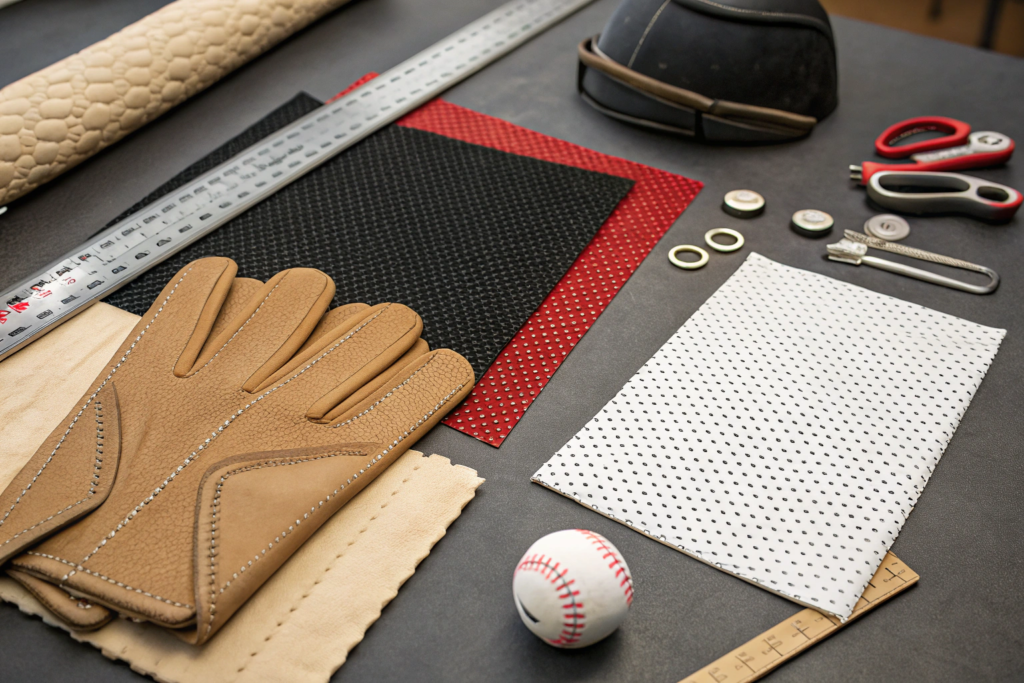
Cabretta leather comes from hair sheep, a type of sheep with hair instead of wool. The leather is exceptionally soft, thin, and strong. It has a naturally tacky surface that provides excellent grip on a bat handle without feeling sticky or artificial. This natural tackiness actually improves with a little moisture, so a player with sweaty hands often gets better grip with cabretta leather, not worse. The leather is also highly breathable, more so than cowhide, which helps keep the hands dry. Cabretta leather has a very fine grain structure, which means it can be cut very thin, typically 0.5 to 0.7 millimeters, without losing tensile strength. Thinness is critical for a batting glove because the player needs to feel the bat. Every tenth of a millimeter of material between the hand and the bat reduces tactile feedback. Cabretta leather provides the best balance of strength and thinness. It also conforms to the player’s hand over time. The leather stretches slightly and molds to the unique shape of the individual’s grip. A well-made cabretta leather batting glove actually fits better after a few weeks of use than it does out of the package. This break-in period is something that serious players appreciate and expect. The downside of cabretta leather is cost and care. It is more expensive than synthetic alternatives, and it requires a little more care to prevent drying and cracking. For premium and pro-level batting gloves, it is the gold standard. For youth and recreational gloves, a high-quality perforated synthetic microfiber can provide good performance at a lower price point.
How Does Silicone Grip Printing Enhance Bat Control?
Silicone grip printing is a performance feature that has become standard on modern batting gloves. The concept is simple. A pattern of silicone ink is printed directly onto the palm and finger surfaces of the glove. The silicone cures into a slightly raised, rubbery texture that dramatically increases the coefficient of friction between the glove and the bat. The patterns vary by brand and by position on the glove. The palm might have a honeycomb pattern for maximum surface contact. The fingers might have horizontal grip bars that align with the bat handle grooves. The thumb might have a circular dot pattern to provide grip during the grip-and-wrap motion. Silicone printing adds grip without adding bulk. A typical silicone print layer is only 0.2 to 0.4 millimeters thick. It does not interfere with the tactile feel of the leather or synthetic underneath. It also adds durability to the high-wear areas. The silicone layer protects the underlying material from abrasion against the bat handle and from the friction of the grip-and-regrip motion that batters do between pitches. We use a high-quality, platinum-cure silicone ink that remains flexible at a wide range of temperatures. Cheap silicone inks can become hard and slippery in cold weather or soft and gummy in hot weather. Our silicone prints maintain consistent grip characteristics from a chilly early-spring game to a sweltering mid-summer tournament. The silicone also needs to bond securely to the leather or synthetic substrate. We perform a peel adhesion test on every batch of printed gloves. The silicone must withstand 50,000 cycles of a rub test without delaminating. This durability ensures that the grip performance lasts the life of the glove, not just the first few games.
What Quality Tests Ensure Durability in Sports Gloves
A batting glove that looks good on a shelf but falls apart after three games is a brand reputation destroyer. Baseball players are hard on their equipment. They grip and regrip the bat dozens of times per at-bat. They slide into bases, their gloves scraping against dirt and turf. They play in rain, mud, and blistering heat. The glove must survive all of this and still perform. At AceAccessory, we subject every new batting glove design and every production batch to a series of standardized durability tests. These tests simulate the worst conditions a glove will face over a full season, compressed into a few hours in our QC lab.
Our quality testing protocol for baseball batting gloves includes a seam tensile strength test to ensure stitching does not rupture under grip pressure, a Martindale abrasion test to verify that palm and grip materials withstand 50,000 rub cycles without failure, a wash durability test that subjects the glove to 20 machine wash cycles with performance checks after each cycle, and a fit consistency test using calibrated hand forms to ensure every glove in a size run matches the approved measurement specifications within a 2-millimeter tolerance.
These are not tests we invented. They are adapted from international textile and sporting goods testing standards, specifically ASTM and ISO methods. We document every test result and include the reports in the shipment documentation for brands that require third-party testing verification. Here are the two tests that I consider most critical for batting glove durability.
How Does a Seam Tensile Test Prevent In-Game Failures?
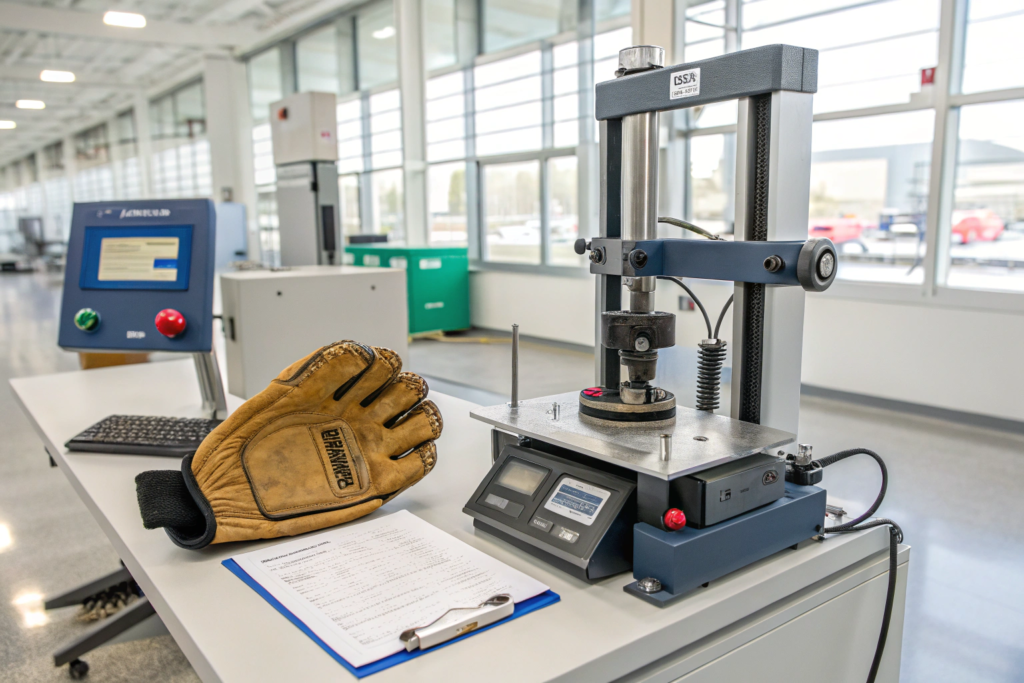
The seams are the most vulnerable part of any glove. A batting glove has multiple seam types. The finger seams join the front and back panels. The thumb gusset seam connects the thumb to the palm. The back-of-hand seams join the stretch mesh to the leather or synthetic panels. Each seam is subjected to repeated stress as the hand opens and closes. A seam failure during a game is not just annoying. It is dangerous. A blown-out finger seam can cause the player to lose grip on the bat mid-swing. The seam tensile test measures the force required to pull a seam apart. We cut test specimens from production gloves, each specimen containing a specific seam type. The specimen is clamped into a universal testing machine, also called a tensometer. The machine pulls the two sides of the seam apart at a controlled speed of 100 millimeters per minute. We record the maximum force in newtons before the seam fails. Our internal standard requires a minimum seam strength of 80 newtons for finger seams and 100 newtons for palm seams. These values exceed the forces generated during even the most powerful swing. We test samples from the beginning, middle, and end of each production run to catch any drift in sewing machine tension or thread quality. If a batch falls below the minimum, we quarantine the entire lot and investigate the root cause. It might be a dull needle that damaged the thread, or a batch of thread with lower tensile strength. We do not ship until the issue is resolved and the batch passes re-testing.
Why Is an Abrasion Resistance Test Critical for Palm Grip?
The palm of a batting glove rubs against the bat handle thousands of times per game. Each grip, regrip, and swing cycle causes microscopic wear on the palm material and the silicone grip print. Over time, this abrasion can wear through the leather, flatten the silicone texture, and reduce the glove’s grip performance. The Martindale abrasion test is the industry standard for measuring this wear. We mount a circular specimen of the glove palm onto the Martindale machine. A standard abrasive fabric, specified by the test method, is pressed against the specimen with a defined weight. The machine then rubs the two surfaces together in a Lissajous figure pattern, a complex looping motion that ensures the wear is not just in a straight line. We run the test for 50,000 cycles. After every 10,000 cycles, we stop the machine and inspect the specimen. We check for any holes worn through the material. We check the silicone print for flattening or peeling. We measure the coefficient of friction of the worn area using a friction tester and compare it to the unworn baseline. A passing result requires no holes after 50,000 cycles, no peeling or delamination of the silicone print, and a coefficient of friction that remains above 70 percent of the original value. This test gives us and our brand clients confidence that the gloves will perform through a full season of regular play. For youth gloves, we also run a modified test that includes exposure to common substances like sports drink spills and sunflower seed oil, because kids put their gloves through a different kind of abuse.
Conclusion
Producing both left and right-handed baseball batting gloves is a matter of understanding biomechanics and committing to the engineering required to execute them correctly. A batting glove is not a simple accessory. It is protective athletic equipment where the difference between a well-designed glove and a poorly designed one is felt in every swing. We have explored why the bottom hand and the top hand have fundamentally different padding and protection needs, with the bottom hand requiring dense palm and pinky padding to absorb knob torque and the top hand requiring a reinforced thumb panel to defeat bat sting. Left-handed batters, often an afterthought for mass-market brands, need fully engineered left-hander-specific patterns with correct grain lines and stretch orientations, not a lazily reversed image of a right-handed glove. The materials that make all of this work, cabretta leather for its tactile grip and conforming fit, and silicone grip printing for its all-weather control, are selected and tested for their specific performance attributes. And behind every glove that leaves our factory, a series of rigorous quality tests, seam tensile, abrasion resistance, and wash durability, ensures that the glove will survive the demands of a full baseball season.
At AceAccessory, we treat batting glove production as a specialized discipline within our broader glove manufacturing capability. Our factory in Zhejiang has dedicated pattern makers, material specialists, and QC technicians who focus on sports gloves and understand the performance standards that serious athletes demand. We work with baseball and softball brands of all sizes, from startups launching their first batting glove to established companies expanding their product line. Our project managers can guide you through the entire development process, from initial concept sketches to final production samples.
If you are ready to develop a line of baseball batting gloves that fit correctly, protect effectively, and give your customers the performance edge they are looking for, please reach out. Contact our Business Director, Elaine, directly at elaine@fumaoclothing.com. Tell her about your brand, your target level of play, and your vision for the product. She will connect you with our sports glove specialist and get your sampling process started. Let us build batting gloves that players will trust, swing after swing.