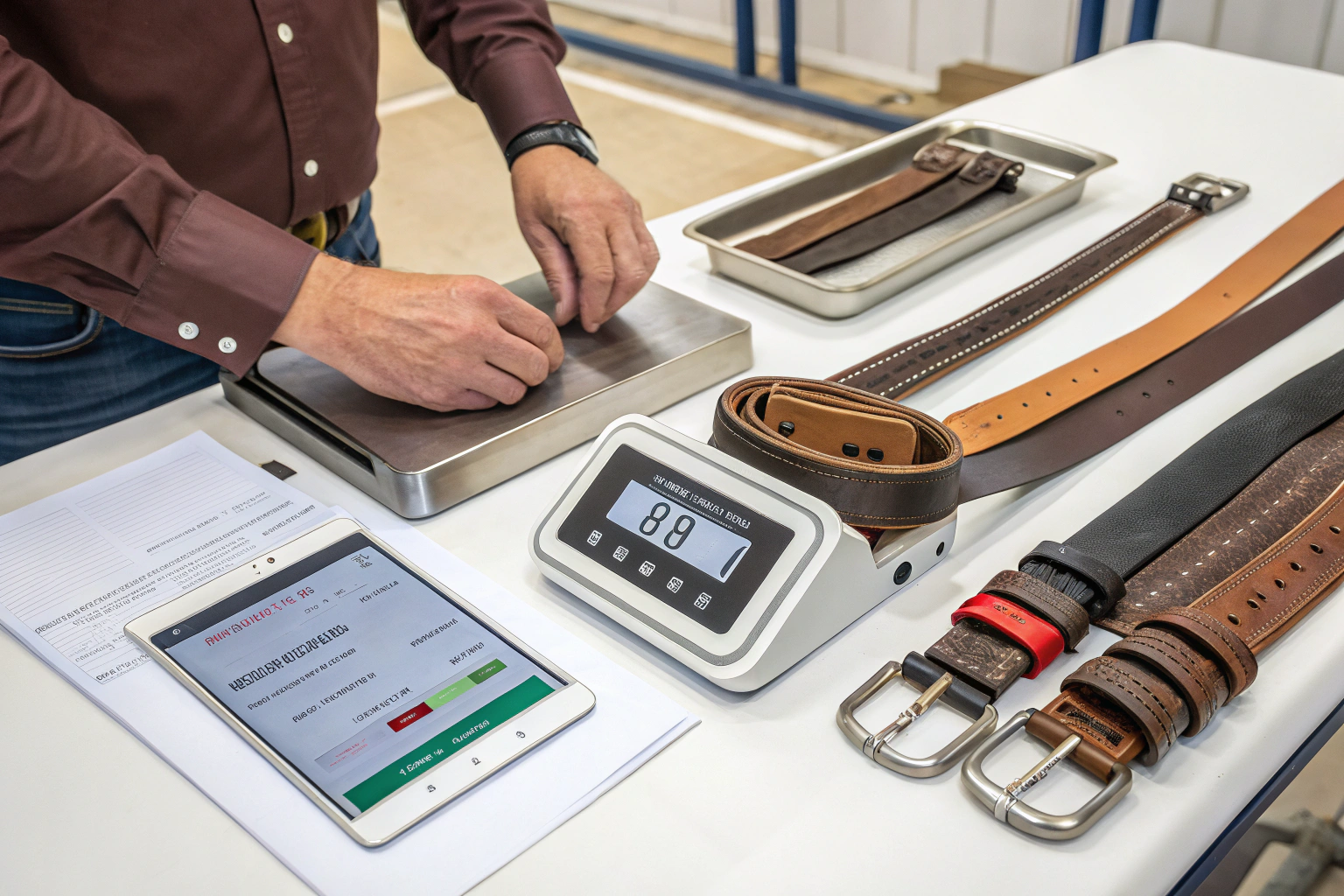
A buyer from a German leather goods brand once received a shipment of 10,000 belts that looked perfect to the naked eye. The leather was beautiful. The stitching was clean. The buckles were shiny. But within weeks of hitting retail shelves, customers began complaining that their belts felt inconsistent. Some were noticeably heavier. Some felt flimsy. The brand’s quality reputation was damaged, and they had no way to identify the defective belts without individually inspecting all 10,000 units. The problem was invisible to visual inspection, but it could have been caught in minutes at the factory. The missing quality check was weight.
Our QC team uses weight checks as a fast, objective, and non-destructive method to detect multiple types of belt defects that are invisible to visual inspection. Every belt component has a known target weight. A deviation from the target indicates a potential defect. A belt that is too light may have a missing reinforcement layer, a thinner leather strap, or a hollow buckle casting. A belt that is too heavy may have excess adhesive, a thicker-than-specified leather, or a wrong component. Weight checks are integrated into our inline and final QC processes.
At Shanghai Fumao, we have learned that the scale never lies. A visual inspector can miss a subtle material substitution or a missing internal component. The scale catches it every time. Let me explain how we use this simple but powerful tool to protect your brand’s quality.
Why Is Weight an Effective Quality Indicator for Belt Production?
A belt is a sum of its components. The leather strap has a target weight per centimetre, determined by the leather thickness, the width, and the density. The buckle has a target weight, determined by the metal alloy, the design, and the plating. The keeper, the stitching thread, the lining, the adhesive. Each component has a known weight. The total belt weight is the sum of these component weights.
When a belt weighs outside the expected range, something is wrong. The component weights have deviated from the specification. The deviation could be in any component, and the weight check flags the belt for further inspection to identify the specific defect. Weight is a screening tool. It does not replace visual inspection, but it makes visual inspection more efficient by directing the inspector’s attention to the belts that are most likely to be defective. This is statistical process control applied to a fashion product. Professional manufacturing quality control using weight analysis is a proven method across many industries.
What Is the Typical Weight Tolerance for a Leather Belt?
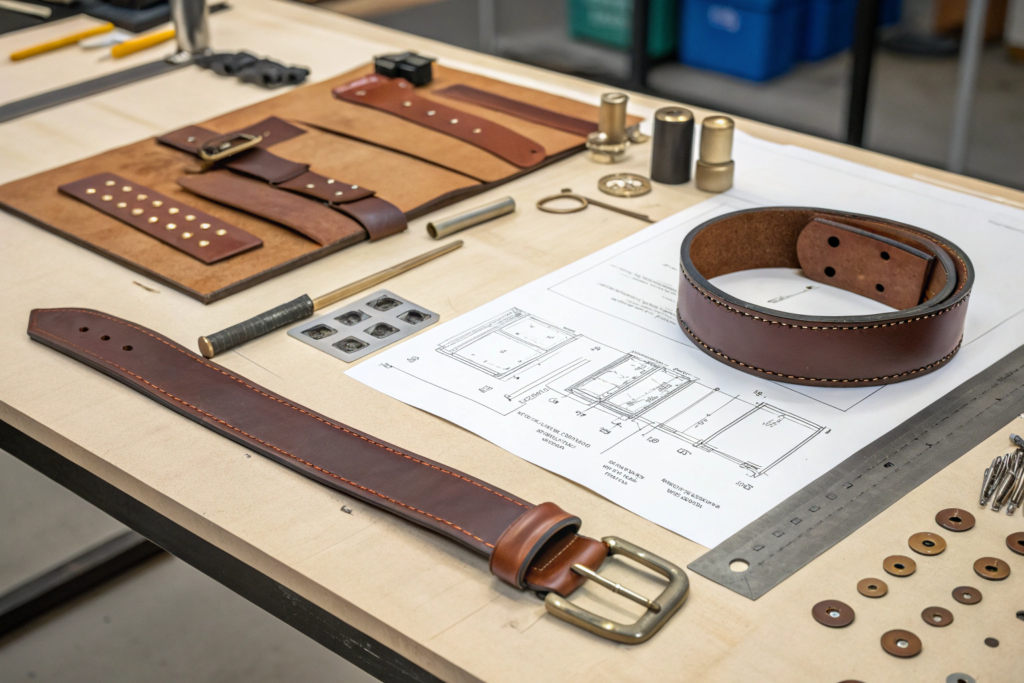
The weight tolerance for a leather belt is typically expressed as a percentage of the target weight. For a standard leather belt, the target weight might be 200 grams, plus or minus 5%, which is a tolerance range of 190 to 210 grams. For a premium belt where consistency is a quality attribute, the tolerance might be tighter, plus or minus 3%.
The target weight and the tolerance are established during the pre-production sample stage. We weigh a sample of belts made exactly to the specification. The average weight of these samples becomes the target weight. The tolerance is set based on the natural variation in the materials and the brand’s quality requirements. The tolerance must be realistic. Leather is a natural material. There is inherent variation in density and moisture content. A tolerance that is too tight will reject acceptable belts. A tolerance that is too wide will miss defective belts. We work with the brand to set the appropriate tolerance for their product and their quality standards.
How Does Leather Thickness Variation Affect Belt Weight?
Leather thickness is the single biggest contributor to belt weight variation. Leather is sold by thickness, measured in millimetres or ounces. A specification might call for leather that is 3.5 to 4.0 millimetres thick. If a tannery delivers leather that is 3.2 millimetres thick, the belt will be lighter. If the leather is 4.2 millimetres thick, the belt will be heavier.
A visual inspection cannot reliably detect a thickness difference of 0.3 millimetres. The belt looks the same to the naked eye. But the consumer feels the difference. A thinner belt feels flimsy. A thicker belt feels stiff. The scale detects the difference immediately. If a batch of belts is consistently over or under the target weight, the first place we investigate is the leather thickness. We measure the thickness of the leather on a sample of the belts using a thickness gauge. If the leather is out of specification, the entire batch is quarantined. Understanding leather thickness measurement and control is essential for consistent belt quality.
What Specific Defects Does a Weight Check Detect?
A weight deviation is a symptom. The QC team’s job is to diagnose the cause. The scale tells us that something is wrong. The inspection tells us what is wrong. The combination of weight screening and targeted visual inspection is powerful.
We have identified dozens of specific defects through weight checks over years of belt production. The most common are leather thickness variation, missing or incorrect internal components, buckle alloy substitution, excess or insufficient adhesive, and incorrect strap length. Each of these defects has a characteristic weight signature. A belt that is consistently lighter by a specific amount points to a specific cause. A belt that is heavier by a different amount points to a different cause. The weight data guides the root cause analysis.
How Does a Weight Check Catch a Missing Internal Reinforcement?
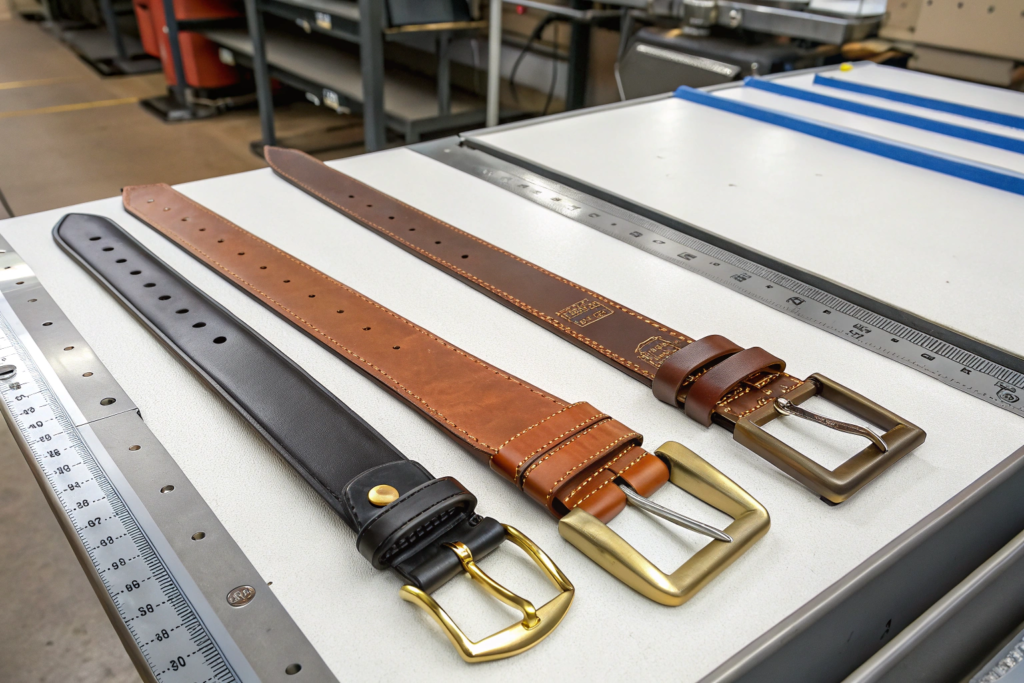
Many quality belts have an internal reinforcement layer between the top leather and the lining. The reinforcement adds strength, prevents stretching, and gives the belt body. The reinforcement material, typically a strip of bonded leather, fabric, or synthetic material, has a specific weight.
If a production worker forgets to insert the reinforcement into a belt, the belt will be lighter by exactly the weight of the missing reinforcement. The belt looks identical from the outside. The leather covers the missing component. The consumer will not discover the defect until the belt stretches out of shape after a few weeks of wear. The scale catches the defect immediately. If the target belt weight is 200 grams and the reinforcement weighs 15 grams, a belt weighing 185 grams or less is flagged for inspection. The inspector cuts open a sample of the flagged belts and confirms the missing reinforcement. The entire production batch is then reworked or rejected, depending on the brand’s instructions. This defect, which would have caused customer complaints and returns, is caught and contained at the factory.
Why Does Buckle Weight Matter for Material Authenticity?
The buckle is the second heaviest component of the belt, after the leather strap. A solid brass buckle and a zinc alloy buckle of the same design look nearly identical after plating. They can be distinguished by an expert, but not by a quick visual inspection. They can be definitively distinguished by weight. Brass is denser than zinc alloy. A solid brass buckle weighs approximately 20% more than the same design in zinc alloy.
If a factory substitutes a cheaper zinc alloy buckle for the specified brass buckle, the belt weight will drop. The weight check flags the deviation. The inspector then checks the buckle with a magnet or an XRF analyser to confirm the alloy. This is a critical quality check for brands that specify a particular metal for their buckles, whether for durability, for hypoallergenic properties, or for the luxury perception of solid brass. A weight check is the first line of defence against unauthorised material substitution. Professional metal alloy identification in quality control combines weight checks with material analysis for definitive verification.
How Are Weight Checks Integrated into the QC Process?
Weight checks are not a one-time final inspection activity. They are integrated into the production process at multiple points. The earlier a defect is caught, the cheaper it is to correct. A belt that is flagged for weight at the inline stage can be inspected and reworked immediately. The same belt caught at final inspection might have to be disassembled, and the components may be damaged in the process.
Our QC process includes weight checks at three stages. Incoming material inspection, where we weigh a sample of leather hides, buckles, and other components to verify they meet the target weight specification before they enter production. Inline inspection, where we weigh a sample of belts from each production batch, typically every 30 to 60 minutes, to detect process drift. Final inspection, where we weigh the belts that are part of the AQL sampling plan. The weight data from all three stages is recorded and analysed.
What Is an SPC Control Chart and How Is It Used?
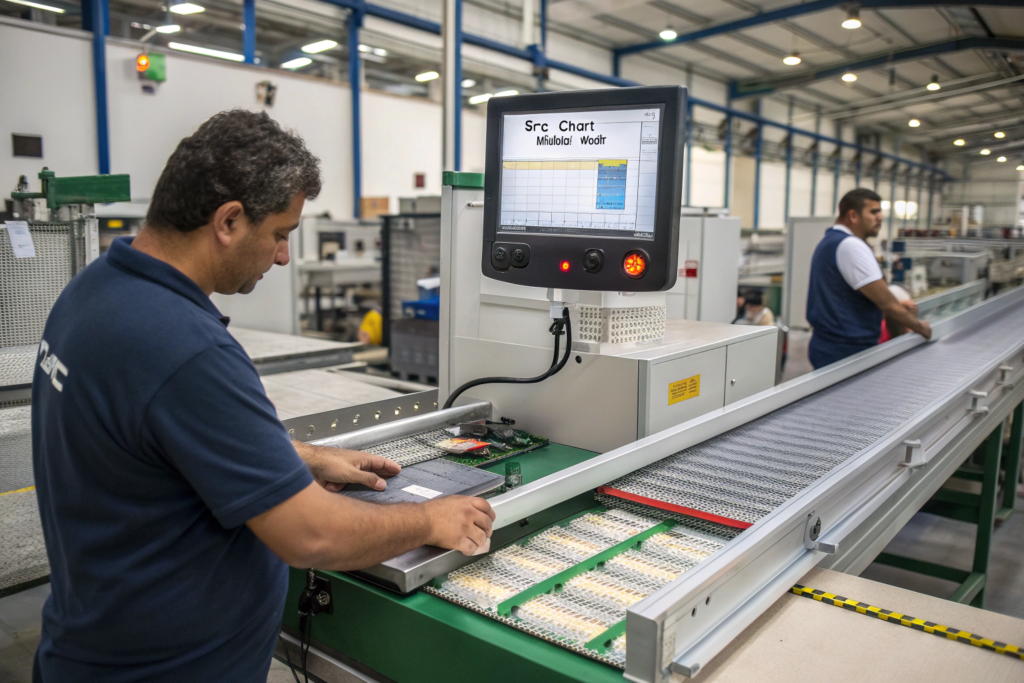
An SPC, or Statistical Process Control, chart is a graph that plots weight measurements over time. The chart has a centre line, which is the target weight. It has an upper control limit and a lower control limit, which define the acceptable variation. The control limits are calculated from the process data and represent the expected natural variation.
As belts are weighed, each measurement is plotted on the chart. The QC technician watches for specific patterns. A single point outside the control limits is an immediate signal to stop the line and investigate. A run of seven consecutive points all above or below the centre line, even if within the limits, indicates a process shift. The leather might be consistently thicker or thinner. The buckle supplier might have changed their casting process. The chart reveals these trends before they produce defective belts. This is proactive quality control. The chart tells us to adjust the process before the product goes out of specification. Professional statistical process control in manufacturing is the foundation of modern quality management.
How Do Final AQL Inspections Use Weight Data?
The final AQL inspection uses weight as one of the inspection criteria. The inspection sampling plan specifies the sample size and the acceptance criteria. For a lot of 10,000 belts at AQL 1.0, the sample size is 200 belts. Every belt in the sample is weighed. The weight of each belt is compared to the target weight and the tolerance.
The inspector records the number of belts that fall outside the weight tolerance. If the number of weight-defective belts exceeds the AQL acceptance number, the lot fails the weight check. The lot is not shipped. It is held for investigation and rework. The weight data from the AQL inspection is also compared to the inline weight data. If the inline data showed the process was in control, but the AQL sample shows weight defects, something happened between inline and final inspection. The discrepancy is investigated. The weight data provides an objective, numerical basis for the lot disposition decision. Understanding AQL sampling and inspection levels ensures the weight check is statistically valid.
Conclusion
Weight checks are a simple but powerful quality control tool that our QC team uses to catch belt defects that are invisible to visual inspection. Every belt component has a target weight. A deviation from that target signals a potential defect: missing internal components, leather thickness variation, buckle material substitution, or incorrect assembly. The scale flags the belt for further investigation.
Weight checks are integrated throughout our production process, from incoming material inspection to inline monitoring to final AQL sampling. SPC control charts reveal process trends before they produce defects. The weight data is objective, numerical, and auditable. It provides a clear basis for lot acceptance or rejection.
At Shanghai Fumao, our QC team treats the scale as an essential quality instrument, alongside the callipers, the colour lightbox, and the tensile tester. The scale never gets tired. It never has a bad day. It never misses a missing reinforcement. It is the silent guardian of your belt quality.
If you are sourcing belts and you want a factory that uses every available QC tool to protect your quality, including systematic weight checks, please contact our Business Director Elaine at elaine@fumaoclothing.com. She can explain our full QC process, provide sample QC data packages, and demonstrate how we ensure every belt that leaves our factory meets your specification. Your customers will feel the quality. The scale helps us deliver it.