
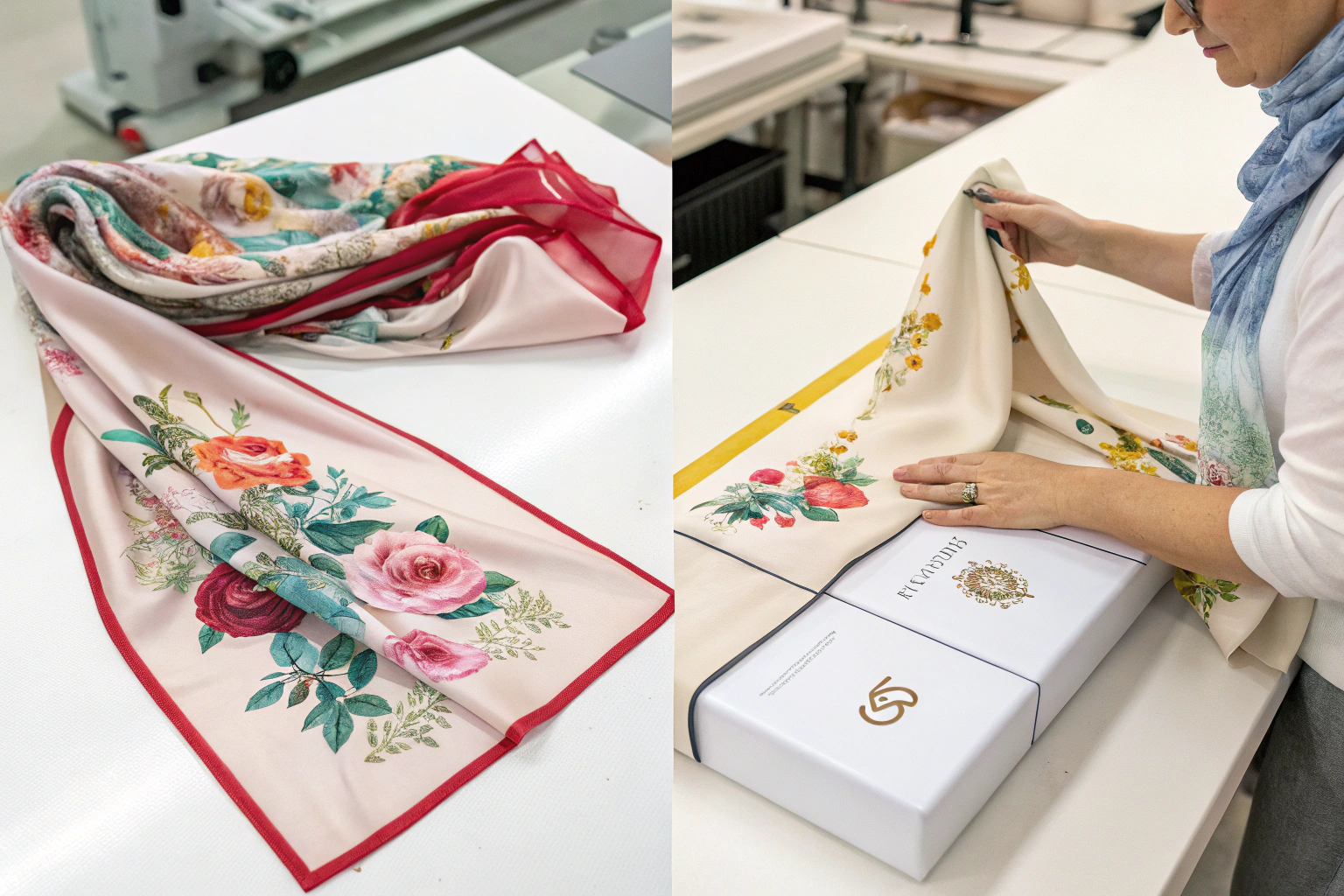
A buyer from a Parisian fashion house once visited our factory with a single purchase order that made other suppliers nervous. She wanted 3,000 scarves for her brand’s spring collection. Half were to be digitally printed silk twill scarves with an intricate archival floral pattern. The other half were to be embroidered cashmere-blend scarves with a minimalist logo and a decorative border stitch. She had approached three factories before us. Two only did printing. One only did embroidery. All three told her she needed to split the order between multiple suppliers. She did not want to split the order. She wanted one shipment, one quality standard, one set of shipping documents, and one factory to call when something needed attention. She asked me if we could do both techniques in one order.
Yes, our factory can produce both printed and embroidered scarves within a single consolidated order. We have dedicated digital and screen printing lines for the printed scarves, and a separate embroidery workshop with multi-head machines for the embroidered scarves. Both techniques run in parallel under the same quality management system, with a single project manager coordinating the entire order to ensure consistent quality and consolidated shipping.
At Shanghai Fumao, we have invested in both printing and embroidery capabilities precisely because brands want to consolidate their scarf sourcing. A collection often spans multiple techniques. A brand should not need multiple factories to execute a single seasonal collection. Let me explain how we make this work and why it matters for your brand.
What Are the Key Production Differences Between Printed and Embroidered Scarves?
Printing and embroidery are fundamentally different textile decoration techniques. Printing applies colour to the surface of the fabric. Embroidery applies thread to the surface of the fabric. The equipment, the skills, the quality checks, and the cost structures are completely different. A factory that excels at one does not automatically excel at the other.
Digital printing on scarves uses inkjet technology to apply dye directly to the fabric. For silk scarves, this is typically done with reactive dyes that chemically bond to the silk fibres. The result is a vibrant, permanent print with photographic detail. The fabric must be pre-treated to accept the dye and post-treated to fix it. Screen printing uses a mesh screen for each colour, with the dye pressed through the screen onto the fabric. It is cost-effective for larger quantities of simpler designs. Embroidery uses a computerised machine with multiple needles to stitch thread onto the fabric in a programmed pattern. The thread sits on the surface, creating texture and a tactile, premium feel. The backing must be stabilised to prevent puckering. Understanding textile printing vs embroidery techniques is the first step to managing a mixed-technique order.
How Does Digital Printing Achieve Photographic Detail on Silk?
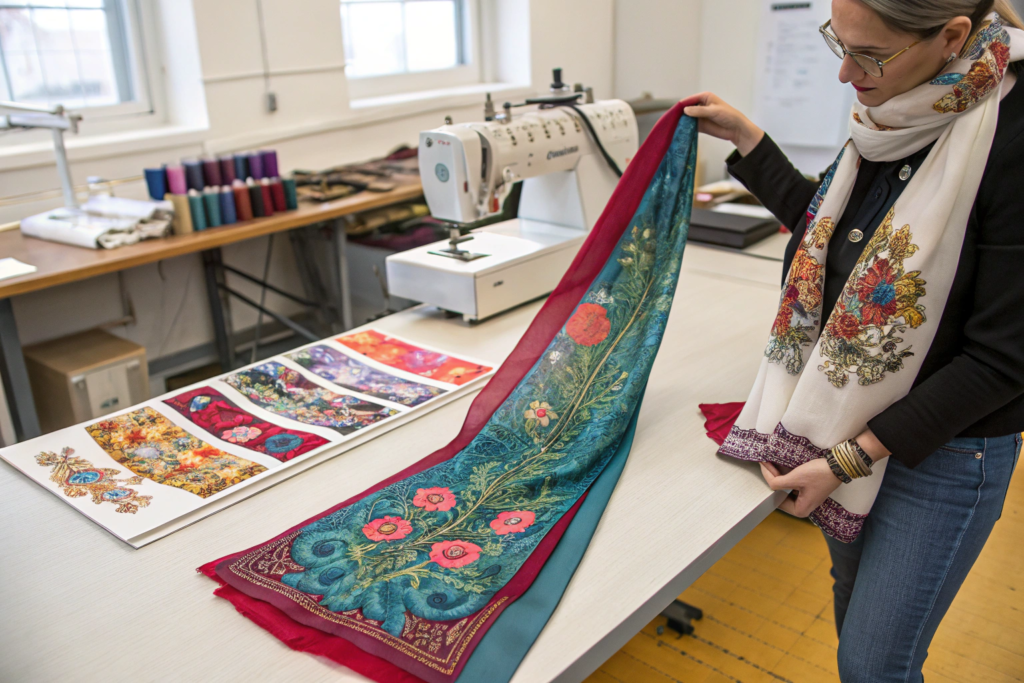
Digital printing on silk is a multi-step process. The silk fabric is first coated with a pre-treatment that helps the dye bond and prevents it from bleeding. The design file is prepared in a high-resolution format, typically 300 DPI or higher. The fabric is fed through a digital textile printer that operates like a large-format inkjet printer. The print heads deposit microscopic droplets of reactive dye onto the fabric surface.
After printing, the fabric is steamed. The steam fixes the dye by opening the silk fibre structure and allowing the dye molecules to penetrate and bond chemically. The fabric is then washed to remove any unfixed dye and the pre-treatment chemicals. Finally, it is dried and finished. The result is a scarf with brilliant, permanent colour and photographic image quality. The colours will not fade with washing or sunlight. The fabric retains its natural softness and drape because the dye is inside the fibre, not sitting on top of it. If you are sourcing digitally printed silk scarves, the quality of the pre-treatment and steaming process is what separates a premium print from one that fades after the first wash.
What Makes Embroidery a Premium, Textural Design Choice?
Embroidery adds a dimension that printing cannot. The thread sits above the fabric surface. It catches light differently depending on the angle. It has a tactile quality that invites touch. The consumer perceives embroidery as a marker of quality and craftsmanship. An embroidered logo on a scarf feels more luxurious than a printed logo, even if the scarf base material is identical.
The embroidery process begins with digitising the design. The digitizer converts the artwork into a stitch file that controls the embroidery machine. The stitch file specifies the stitch type, the stitch direction, the thread colour, and the sequence. The fabric is hooped with a stabiliser backing to prevent distortion. The embroidery machine stitches the design automatically, with an operator monitoring for thread breaks and tension issues. After embroidery, the stabiliser is removed, and the scarf is pressed to remove any hoop marks. The result is a permanent, textured decoration that will not fade, peel, or crack. For a brand that wants to communicate luxury and durability, embroidery is the technique of choice. Professional embroidery digitising and production requires skilled technicians who understand how different fabrics respond to needle penetration and thread tension.
How Does Our Factory Manage Both Techniques in Parallel?
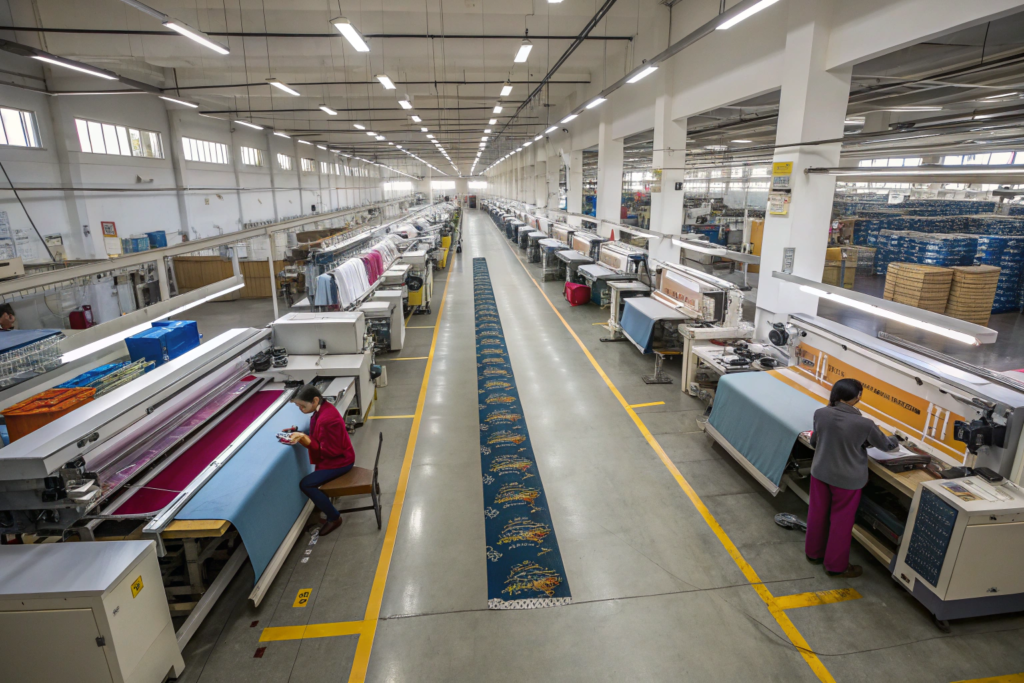
The secret to producing printed and embroidered scarves in one order is not a magical universal machine. It is a factory layout that dedicates separate, specialised zones to each technique, connected by a central project management function. Each zone has the right equipment, the right environment, and the right skilled workers for its specific process.
At Shanghai Fumao, our printing department and our embroidery department operate in adjacent but separate areas on the same factory floor. The printing department is humidity and temperature-controlled to ensure consistent print quality. The embroidery department is organised for efficient workflow from hooping to stitching to finishing. Both departments report to the same production manager and the same quality control team. A single project manager oversees your entire order, coordinating timelines between the two departments to ensure both the printed scarves and the embroidered scarves are completed simultaneously for consolidated packing and shipping.
How Do We Coordinate Timelines for a Mixed-Technique Order?
A mixed-technique order requires careful timeline coordination. The printing process and the embroidery process have different durations and different critical paths. Digital printing is front-loaded. The design preparation, fabric pre-treatment, and printing setup take time, but once the printer is running, output is fast. Embroidery is more linear. Each scarf takes a fixed amount of machine time determined by the stitch count of the design.
Our project manager creates a unified production schedule for your entire order. The schedule shows the start and finish dates for the printed scarves and the embroidered scarves, with both tracks converging at the same QC inspection and packing date. If the embroidery is expected to take longer than the printing, we start the embroidery earlier. If the printing has a longer setup, we begin the print file preparation immediately upon order confirmation. The schedule is shared with you so you can see exactly when each portion of your order will be produced. You are not left guessing whether both techniques will finish on time for consolidated shipping. Professional production scheduling for mixed orders requires this level of cross-departmental coordination.
What Quality Control Standards Apply to Both Techniques?
The printing department and the embroidery department are governed by a single quality management system. The QC standards are technique-specific but equally rigorous. For printed scarves, the QC team checks colour accuracy against the approved Pantone references, print registration, dye penetration, and surface finish. The scarf is examined under a lightbox for colour consistency and under magnification for print defects.
For embroidered scarves, the QC team checks stitch density, stitch tension, thread colour accuracy, design placement, and the absence of puckering or distortion. The back of the embroidery is checked for loose threads and proper securing of thread ends. The scarf is inspected for any fabric damage caused by the needle. Both printed and embroidered scarves are checked for the same base fabric quality, hemming quality, and label placement. The final AQL inspection samples from both techniques and applies the same acceptance criteria. A defect is a defect, regardless of which technique produced it. Understanding quality control for textile decoration ensures your entire order meets a single quality standard, not two different ones.
What Are the Commercial Benefits of Consolidating Techniques in One Order?
Consolidating printed and embroidered scarves with a single factory delivers measurable commercial benefits. The most obvious is shipping cost. One consolidated shipment costs less to freight than two separate shipments. The freight cost per scarf drops. The documentation cost is halved. The customs clearance is one entry, not two.
Beyond freight, the administrative savings are significant. One set of purchase orders. One set of proforma invoices. One set of shipping documents. One payment. One project manager to communicate with. The time saved on coordination alone justifies the consolidation for many of our clients. A brand manager who is managing twelve supplier relationships cannot give each one adequate attention. A brand manager who consolidates to a few strategic suppliers can manage each relationship well.
How Does Consolidated Shipping Reduce Your Total Landed Cost?
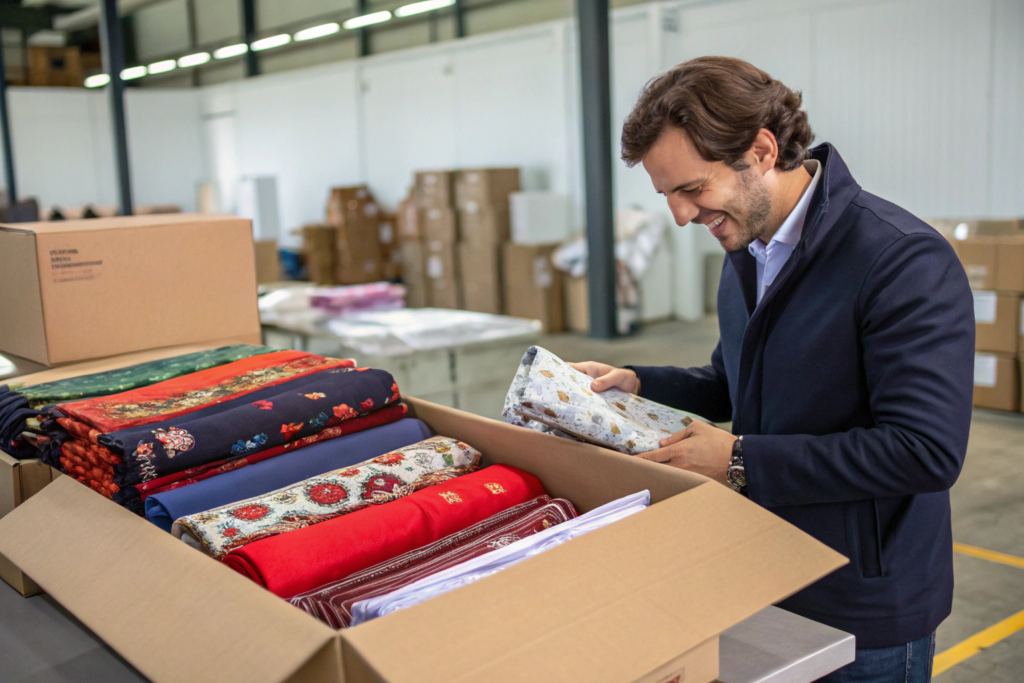
Shipping 1,500 printed scarves from one factory and 1,500 embroidered scarves from another factory means paying for two minimum freight charges, two sets of documentation fees, two customs clearance charges, and potentially two customs bonds. Shipping 3,000 scarves from one factory means one freight charge, one set of documents, and one customs clearance.
The freight cost per unit for the consolidated shipment is lower because the total volume is higher. Freight rates are tiered. A 100-kilogram shipment has a higher rate per kilogram than a 200-kilogram shipment. The combined weight of both scarf types pushes the shipment into a lower rate tier. The savings can be 20% to 30% on the freight cost line. When you are operating on retail margins, a 20% freight saving can be the difference between a profitable collection and a break-even one. Understanding international shipping cost optimisation helps you see the financial logic of supplier consolidation.
Why Does a Single Quality Standard Strengthen Your Brand?
Your brand is a single entity in your customer’s mind. The customer who buys your printed silk scarf and loves it may buy your embroidered cashmere scarf next season. They expect the same level of quality. The hemming should be the same. The label should be the same. The overall attention to detail should be the same. They do not know or care that the two scarves were made by different techniques. They care that they are both from your brand.
A single factory that produces both scarves can apply a unified quality philosophy across your entire collection. The hemming standard, the label placement, the folding method, and the packaging are consistent. This consistency builds brand trust. The customer learns that any scarf with your label meets a certain standard, regardless of the decoration technique. This is how strong accessory brands are built. Consistent brand quality assurance through manufacturing requires a manufacturing partner that sees your full product line, not just isolated techniques.
How Does Our Project Management Simplify a Mixed Order?
When you place a mixed-technique order with us, you are assigned a single project manager who oversees both the printed and the embroidered scarves. You do not communicate with two different departments. You do not receive conflicting updates. You have one point of contact who knows the status of every unit in your order.
Your project manager coordinates the design review, the sampling, the production scheduling, the QC inspection, and the shipping for both techniques. If an issue arises, you are informed immediately and given a solution, not bounced between departments. This single-point accountability is the operational benefit that our clients value most. It turns a potentially complex order into a simple, manageable project.
What Is the Sampling Process for a Mixed Order?
We produce a pre-production sample for each design, regardless of the technique. The printed scarf sample goes through the full pre-treatment, printing, steaming, and washing process. The embroidered scarf sample is digitised and stitched on the exact fabric that will be used in production. Both samples are inspected internally before being shipped to you.
You review the samples side by side. You check the print colours against your Pantone references. You check the embroidery stitch density and thread colours. You feel the fabric hand of both scarves. If any adjustments are needed, you provide consolidated feedback to your project manager. She coordinates the adjustments with both departments. You receive revised samples for approval. Once you approve both samples in writing, they become the sealed reference standards for bulk production. This unified pre-production sample approval process ensures both techniques are signed off before a single bulk unit is produced.
How Does Consolidated Communication Save You Time?
Without a single project manager, a mixed order would require you to email the printing department about the print files, the embroidery department about the thread colours, the QC department about inspection dates, and the shipping department about the Bill of Lading. You would spend hours each week just managing information flow.
With a single project manager, you send one email. She distributes the information to the relevant departments and consolidates their responses into one reply. Your weekly update covers both techniques. Your shipping notification covers the entire order. The time you save on communication is time you can spend on design, marketing, and sales. This is the hidden productivity gain of a consolidated supplier relationship. Professional supplier relationship management recognises that communication efficiency is as valuable as unit cost savings.
Conclusion
One factory can absolutely produce both printed and embroidered scarves in a single consolidated order. The capability requires separate, specialised production zones, a unified quality management system, and a project management function that coordinates both techniques toward a single shipment date. At Shanghai Fumao, we have all of these in place.
The benefits of consolidation are clear. Lower freight costs from combined shipping. Less administrative overhead from a single set of documents. Consistent quality across your entire scarf collection. And the simplicity of a single point of contact for all communication and accountability.
If you are currently splitting your scarf production between a printing specialist and an embroidery specialist, and you are tired of the coordination overhead and the inconsistent quality standards, I invite you to contact our Business Director Elaine at elaine@fumaoclothing.com. Send her your print designs and your embroidery designs. She will provide a consolidated quotation, coordinate sampling for both techniques, and assign a project manager who will own your order from first sample to final shipment. Your scarf collection deserves a manufacturing partner who sees it as one collection, not two separate orders.




