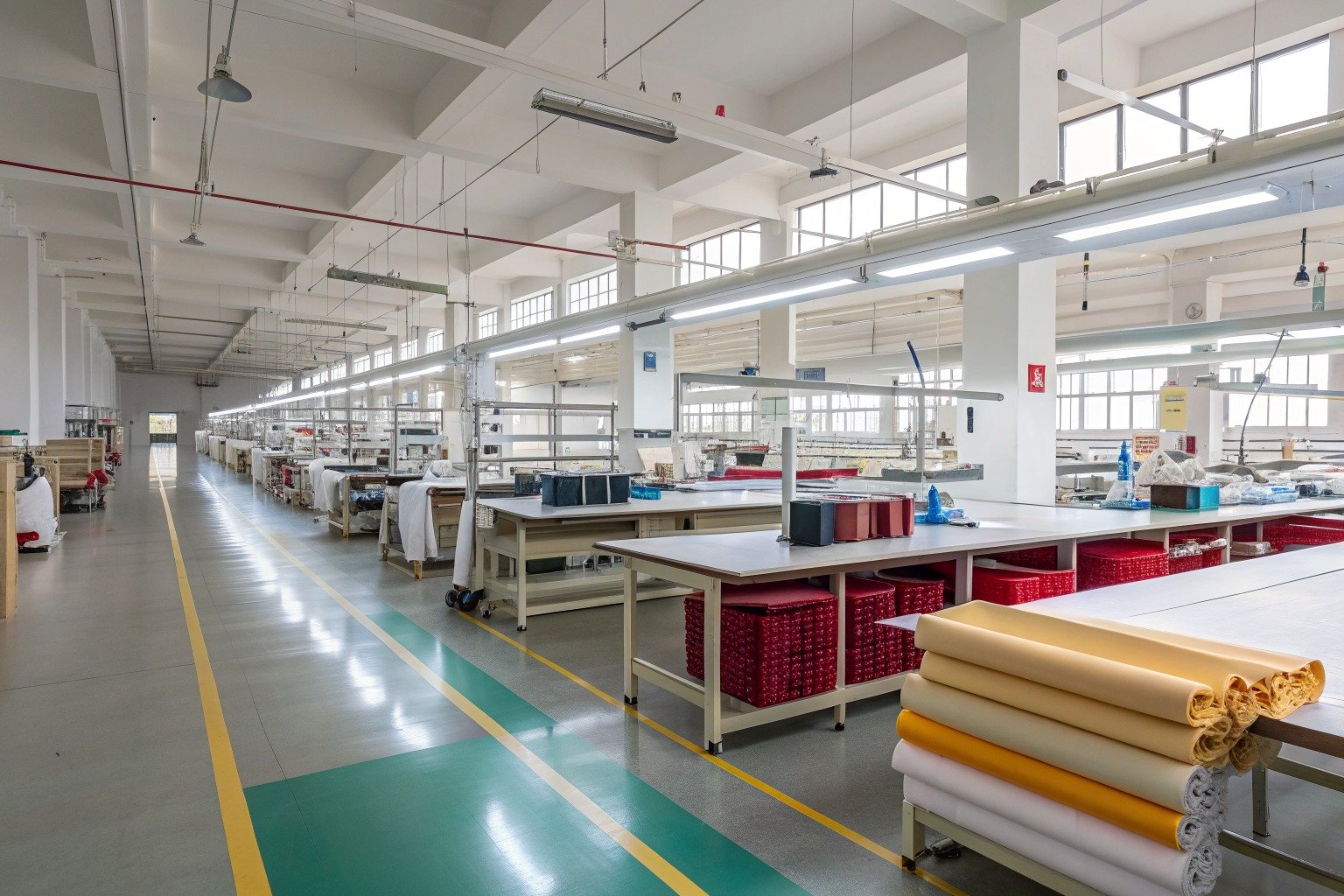
A buyer from a mid-sized US accessories brand once called me with a cash flow problem. He was importing 50,000 hair accessories from China every quarter. Each shipment arrived at the port, and he had to pay the full import duties immediately, before he could take possession of the goods. The duties were $15,000 per shipment. That was $60,000 a year tied up in duties that he had to pay upfront, even though his inventory would take three to four months to sell through to retailers. He was financing the US government, and it was strangling his working capital. He asked me if there was a way to defer those duties until he actually sold the goods. He needed a bonded warehouse.
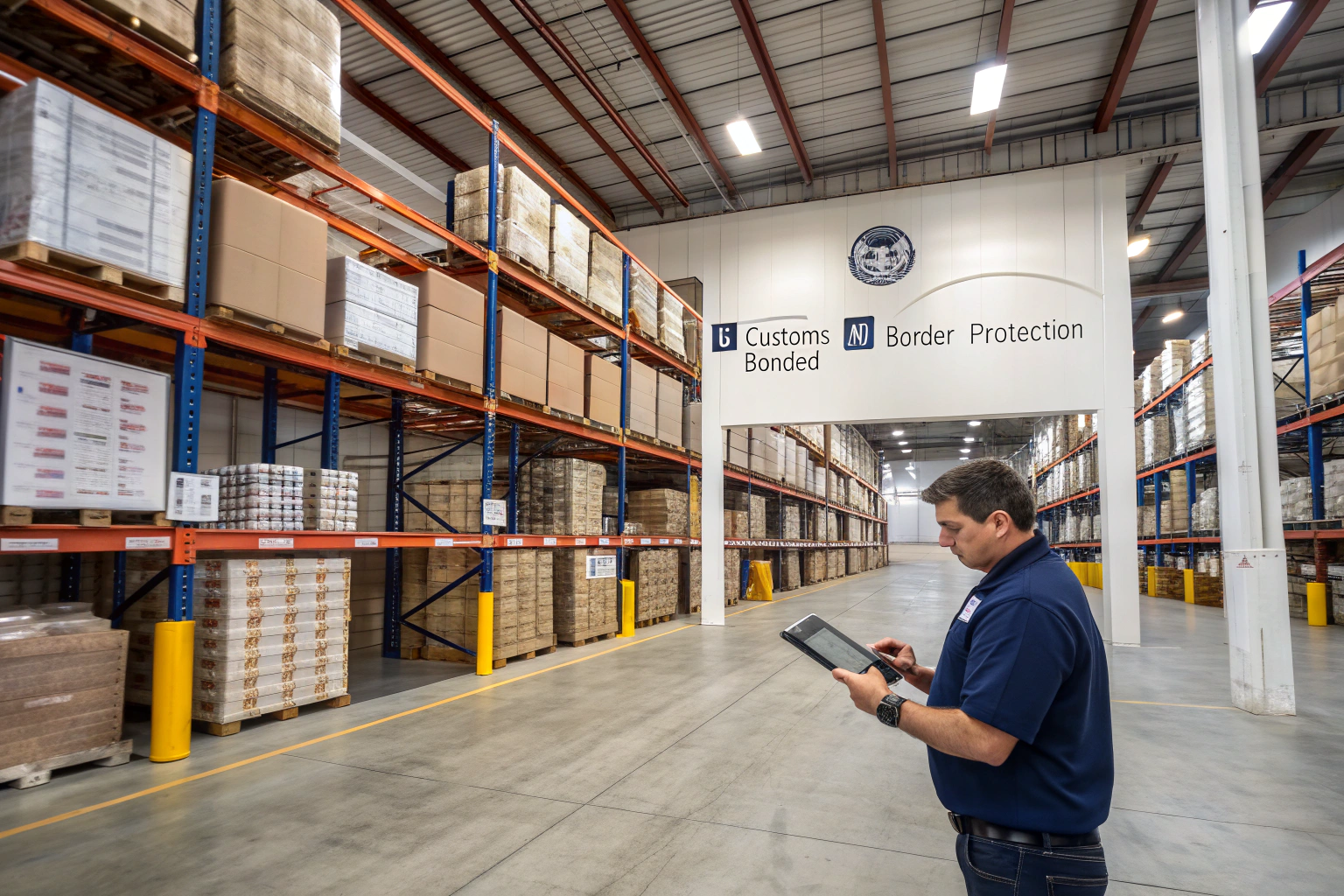
To find a factory that offers a bonded warehouse in the US, you must understand that the factory itself rarely owns or operates the warehouse. The factory partners with a US-based third-party logistics provider that operates a Customs-bonded warehouse under a CBP bond. The right question is not "does your factory have a bonded warehouse," but "does your factory have an established partnership with a US bonded 3PL that can receive, store, and distribute our goods under bond."
At Shanghai Fumao, we have established relationships with bonded 3PL partners on both the West and East Coasts of the United States. Our clients can route their goods through these facilities, deferring duties and improving their cash flow. Let me explain how this works and how to find the right factory-warehouse partnership for your brand.
What Is a US Customs Bonded Warehouse and How Does It Work?
A US Customs bonded warehouse is a secure facility licensed by US Customs and Border Protection to store imported goods without the payment of import duties. The goods enter the warehouse under a Customs bond, which is a legal agreement that guarantees the duties will be paid when the goods are eventually withdrawn from the warehouse for entry into US commerce.
The key financial benefit is duty deferral. You do not pay the import duties when the container arrives at the port. You pay the duties incrementally, only when you withdraw specific quantities of goods from the bonded warehouse to sell to your customers. If you store 50,000 units in the warehouse and withdraw 10,000 units per month for five months, you pay the duties on 10,000 units each month, not on the full 50,000 units upfront. This preserves your working capital and aligns your duty payments with your revenue. The goods can remain in the bonded warehouse for up to five years from the date of import. During that time, they can be repackaged, relabelled, sorted, and even undergo some minor processing, depending on the warehouse’s specific authorisation. Understanding US Customs bonded warehouse regulations is the first step to evaluating whether this solution fits your supply chain.
What Is the Difference Between a Bonded Warehouse and a Foreign Trade Zone?
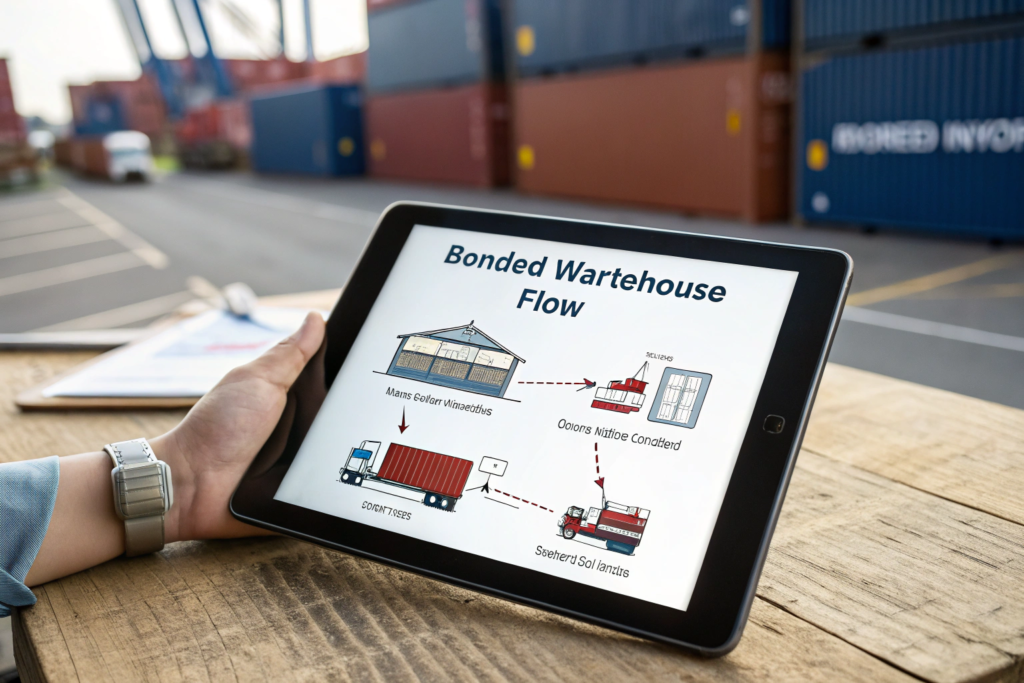
A bonded warehouse and a Foreign Trade Zone, or FTZ, are both CBP-approved facilities that allow duty deferral, but they have important operational differences. A bonded warehouse is a privately owned facility licensed by CBP. It is typically operated by a third-party logistics provider or a large importer. Goods enter under a single entry bond and are tracked by a detailed inventory system. The warehouse operator is responsible for maintaining the bond and ensuring CBP compliance.
An FTZ is a designated geographical area, often encompassing an entire industrial park, that is considered outside the US Customs territory for duty purposes. Goods can enter an FTZ without formal Customs entry. They can be substantially transformed, manufactured, or assembled within the FTZ. The duty is paid only when the finished goods leave the FTZ for US commerce. An FTZ offers more operational flexibility than a bonded warehouse but involves a more complex activation and compliance process. For most accessory importers, a bonded 3PL warehouse is the simpler and more accessible solution. An FTZ is more appropriate for companies doing significant manufacturing or value-added processing in the US. Professional bonded warehouse vs FTZ comparison helps you choose the right structure for your operations.
How Do Duties Get Paid When Goods Leave the Warehouse?
When you are ready to withdraw goods from the bonded warehouse and sell them in the US market, you file a Customs entry for the specific quantity being withdrawn. The entry calculates the duties, taxes, and fees owed on that quantity. You pay those charges. CBP authorises the release. The goods leave the warehouse and are delivered to your customer, your retail distribution centre, or your own warehouse.
The inventory system in the bonded warehouse tracks every unit. CBP has access to this system. The warehouse operator files regular reports with CBP detailing what entered, what remains, and what has been withdrawn. The audit trail is rigorous. This is one of the reasons that bonded warehouse storage costs slightly more than standard warehouse storage. The compliance overhead is higher. The benefit is the duty deferral, which for a business importing significant volume, far outweighs the incremental storage cost. Understanding duty payment procedures for bonded goods ensures you budget correctly for the final cost of your goods.
Why Do US Importers Request Bonded Warehouse Capabilities?
US importers request bonded warehouse capabilities primarily for cash flow management. Duty deferral is a form of interest-free financing from the US government. The importer retains the duty amount in their bank account, where it can be used for inventory purchases, marketing, payroll, or other business needs, until the goods are actually sold.
For a business importing $500,000 worth of accessories annually at an average duty rate of 10%, the annual duty bill is $50,000. If those goods spend an average of three months in inventory before being sold, duty deferral keeps an average of $12,500 in the business’s bank account at all times. That is working capital that can be invested in growth. The calculation becomes more compelling as the import volume and the duty rate increase.
How Does Duty Deferral Improve Cash Flow for Small and Mid-Sized Brands?
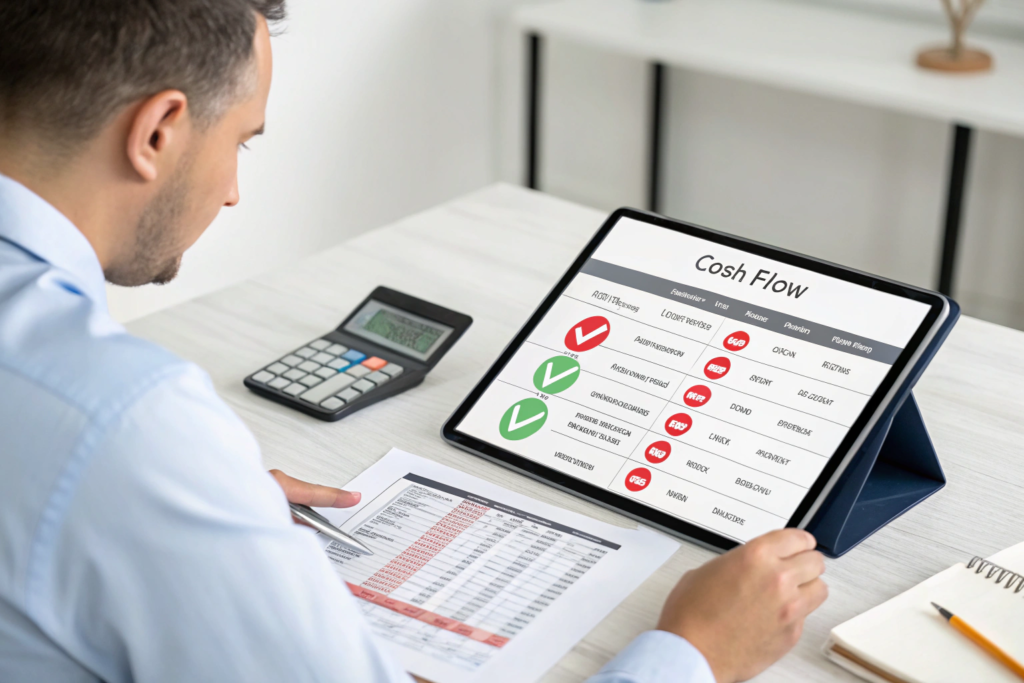
Small and mid-sized brands often operate on tight cash flow. They pay for inventory upfront, pay freight, pay duties, and then wait 30 to 90 days for payment from their retail customers. The period between paying for the goods and receiving payment from the customer is the cash flow gap. Duty deferral shortens this gap by pushing the duty payment to the end of the cycle, when the customer has already paid.
A brand that sells to major retailers on net-60 terms has a two-month gap between paying for goods and receiving payment. Without a bonded warehouse, they also pay duties at the start of that two-month period. With a bonded warehouse, they pay duties after the retailer pays them. The duties are paid from the retailer’s payment, not from the brand’s working capital. This is a meaningful improvement in cash flow efficiency. If you are managing import cash flow for small businesses, duty deferral is a tool that directly impacts your bank balance.
What Other Benefits Does a US-Based Bonded Warehouse Provide?
Beyond duty deferral, a US-based bonded warehouse offers several operational advantages. Faster fulfilment to US customers. Goods stored in a US warehouse can be shipped to a US retailer within one to two days, compared to two to four weeks for goods shipped from China. This speed enables just-in-time inventory strategies and reduces the risk of stockouts.
The ability to inspect goods before paying duties. If a shipment arrives with quality issues, those issues can be identified and addressed before the duties are paid. Defective goods can be re-exported, destroyed, or returned to the supplier without ever paying US duties on them. This is a significant financial protection. The ability to repackage and relabel goods for different retail customers without paying duties on the full shipment upfront. A single import shipment can serve multiple retail accounts, each with different packaging requirements, from within the bonded facility. If you are building a US-based fulfilment strategy for imported goods, a bonded warehouse is a strategic infrastructure asset.
How Can a Factory Facilitate Bonded Warehouse Access?
The factory does not need to own the bonded warehouse. The factory needs to have an established, tested partnership with a bonded 3PL in the US. This partnership means the factory can ship goods directly to the bonded facility, with the correct documentation for bonded entry, and the 3PL will receive, store, and manage the goods according to your instructions.
When you ask a factory "do you offer bonded warehouse in the US," what you are really asking is "do you have a logistics partner in the US who can receive our goods under bond, and can you coordinate the shipping and documentation to make that happen." A factory that has done this before will have a clear, confident answer. A factory that has never done it will hesitate or give a vague response.

What Should a Factory’s Bonded Warehouse Partnership Look Like?
An established factory-warehouse partnership has several characteristics. The factory has shipped to the specific bonded facility multiple times. They know the documentation requirements. They know the labelling requirements for bonded entry. They have a contact person at the 3PL who handles their accounts. The process is documented and repeatable.
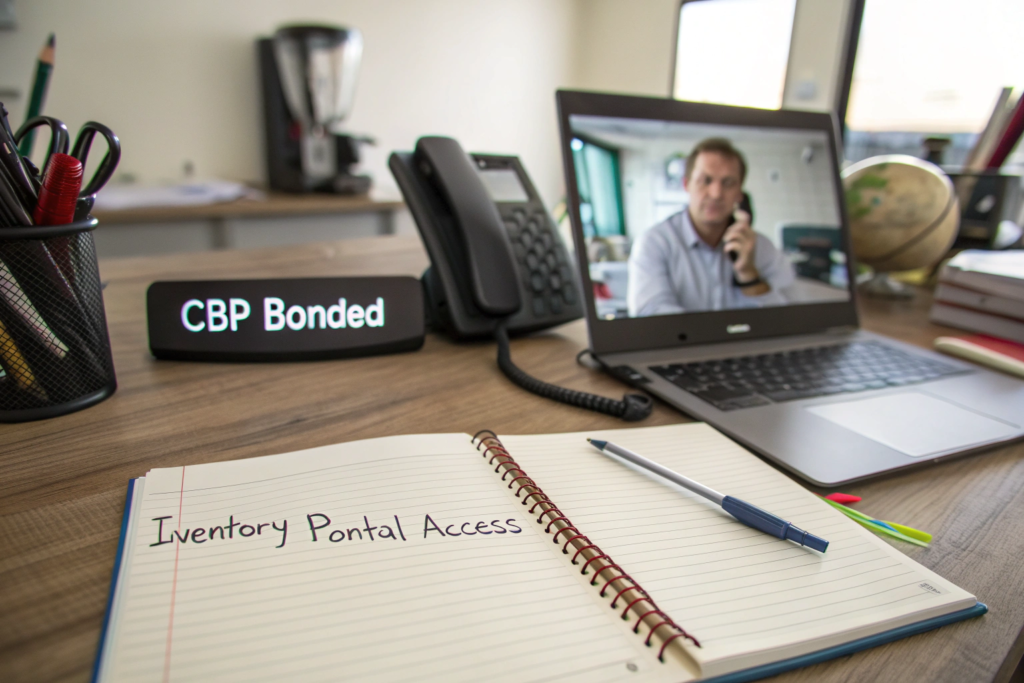
The 3PL should be CBP-bonded and have experience with the specific product category. An apparel and accessories 3PL understands hanging garments, poly bagging, barcode labelling, and the retail compliance requirements of major US retailers. A generalist 3PL that primarily handles industrial goods may not understand the specific handling and storage requirements of fashion accessories. The 3PL should offer a web-based inventory management portal that gives you real-time visibility into your stock levels, withdrawals, and duty payments. You should be able to log in from anywhere and see exactly what is in your bonded inventory. If you are evaluating 3PL partnerships for imported consumer goods, the technology platform is as important as the physical warehouse space.
How Do We Coordinate Shipments to Our Bonded Warehouse Partners?
At Shanghai Fumao, when a client requests bonded warehouse delivery, our logistics team coordinates directly with the designated 3PL. We provide the 3PL with the commercial invoice, the packing list, and the bill of lading. The 3PL files the necessary CBP documentation to admit the goods under bond. The goods are delivered to the bonded facility directly from the port.
We ensure that the carton labelling, the pallet configuration, and the documentation all meet the specific requirements of the 3PL and CBP. A mislabelled carton in a bonded warehouse creates a compliance issue that is more serious than a mislabelled carton in a standard warehouse. The audit trail must be perfect. Our shipping team has the experience to get this right. We also provide our clients with the 3PL’s inventory management portal access so they can see their goods as soon as they are received. The client manages the withdrawals and the duty payments directly with the 3PL. We handle the inbound logistics. The 3PL handles the storage and fulfilment. The client controls the inventory. This is a partnership that works.
What Questions Should You Ask a Factory About Bonded Warehouse Capabilities?
The best time to evaluate a factory’s bonded warehouse capabilities is before you place the order. Ask specific, detailed questions. Vague answers indicate a lack of experience. Clear, confident answers indicate an established capability. Here are the questions I recommend you ask.
"Which specific bonded 3PL do you partner with in the US? Can you provide their name, location, and CBP bond number?" A factory with a real partnership will provide this information immediately. "Can I speak directly with your contact at the 3PL to discuss my account requirements?" A factory that facilitates a direct introduction is confident in their partner. "Can you provide a sample of the bonded entry documentation package you prepare for shipments to this facility?" The documentation should be professional, complete, and compliant. "Do you have experience shipping my product category to a bonded facility, and can you provide a client reference?" A factory that has done this successfully for another accessories brand will be happy to connect you.
What Documentation Should a Factory Provide to Prove Bonded Warehouse Experience?
Ask to see a redacted copy of a previous bonded entry package. This includes the CBP Form 7501 Entry Summary, the commercial invoice, the packing list, and the bill of lading, all marked with bonded warehouse delivery instructions. The documents should show the bonded facility’s name and address as the consignee. The CBP Form 7501 should reference the appropriate bonded warehouse entry type code.
Also ask to see a redacted inventory report from the 3PL’s system showing goods that were received, stored, and withdrawn under bond. This demonstrates that the factory has successfully navigated the full bonded warehouse cycle, from inbound shipping through bonded storage to final withdrawal. A factory that can provide this documentation has real experience. A factory that cannot is learning at your expense. Professional supplier due diligence for logistics capabilities always includes verifying claims with documentation, not just accepting verbal assurances.
How Does the Factory Handle the Commercial Invoice for Bonded Shipments?
The commercial invoice for a bonded warehouse shipment is different from a standard import invoice. It must state that the goods are destined for a CBP-bonded warehouse. It must include the bond number of the facility or the importer’s continuous bond number. It must clearly describe the goods in a way that matches the Harmonised Tariff Schedule classification.
The invoice must not show a duty payment, because no duty is being paid at the time of entry. The invoice must be marked "For Bonded Warehouse Entry Only – Duties to be Paid Upon Withdrawal." These details are critical. An invoice that is incorrectly prepared will cause the goods to be held at the port, incurring demurrage charges that eat into your cash flow before the goods even reach the bonded facility. A factory with bonded warehouse experience knows these documentation nuances. Understanding commercial invoice requirements for US Customs ensures your goods clear entry without delay.
Conclusion
Finding a factory that offers bonded warehouse access in the US is about finding a factory with established 3PL partnerships, not a factory that owns a warehouse. The bonded facility is operated by a CBP-licensed third-party logistics provider. The factory’s role is to ship the goods to that facility with the correct documentation and to coordinate the inbound logistics. The 3PL’s role is to store the goods under bond, manage the inventory, and release them when you pay the duties.
The benefits of this arrangement are significant. Duty deferral improves your cash flow. US-based storage enables faster fulfilment to your retail customers. The ability to inspect goods before paying duties provides financial protection. The ability to repackage and relabel under bond supports multi-retailer distribution strategies.
At Shanghai Fumao, we have established partnerships with bonded 3PL providers on both the West Coast and the East Coast of the United States. Our logistics team has years of experience preparing the documentation and coordinating the shipments. Our clients have access to real-time inventory visibility through the 3PL’s web portal. They control their goods. They defer their duties. They improve their cash flow.
If you are an importer of accessories looking to establish a bonded warehouse solution for your US-bound shipments, I encourage you to contact our Business Director Elaine at elaine@fumaoclothing.com. She can connect you with our 3PL partners, provide sample documentation packages, and discuss how a bonded warehouse strategy can free up working capital for your growing brand.