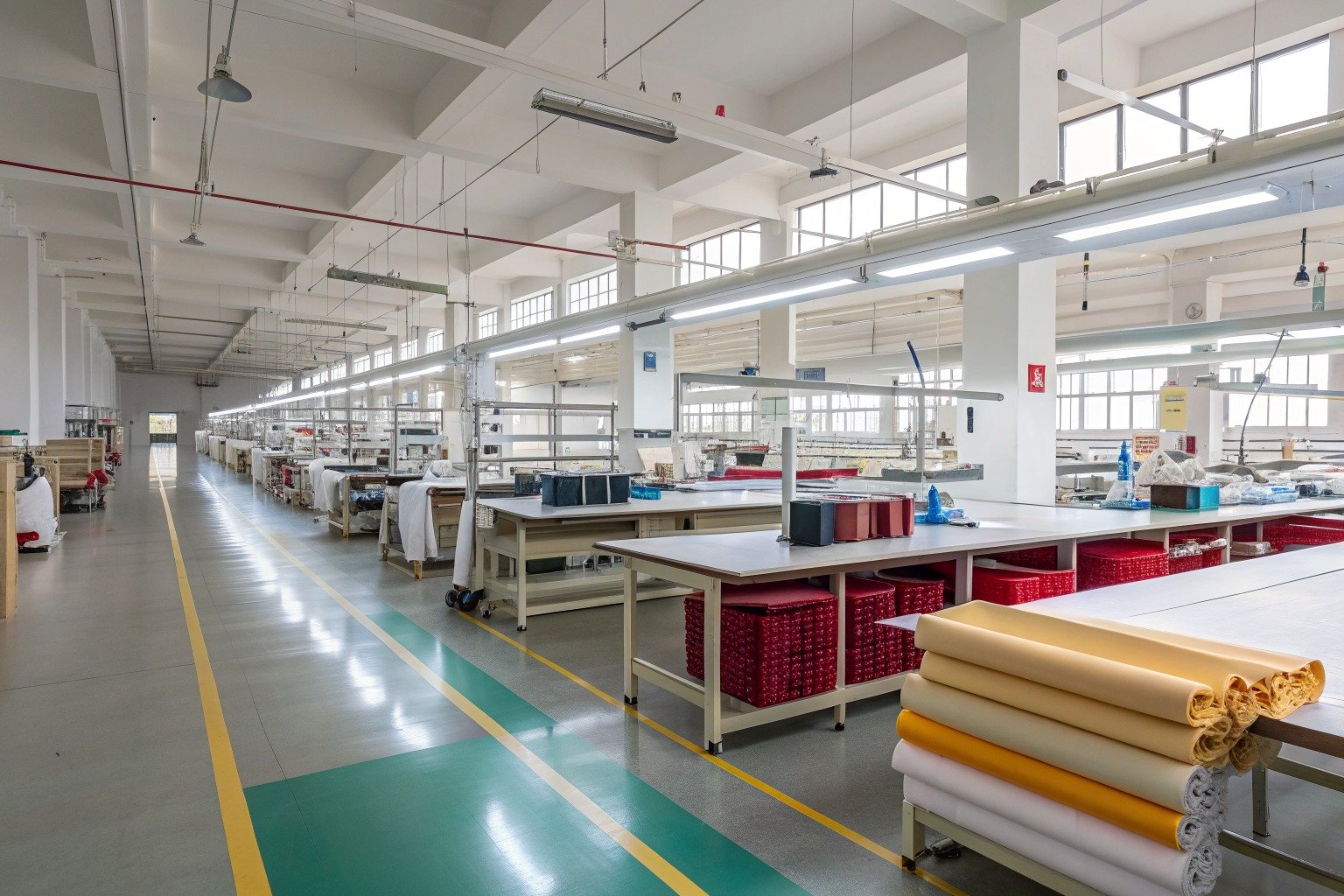
A Russian distributor I have worked with for over a decade once stopped an entire shipment of 20,000 scarves at Sheremetyevo customs. The products were beautiful. The quality was perfect. The packaging was retail-ready. The problem? The care labels were printed in English, French, and Spanish, but not a single word of Russian. Russian customs declared the goods non-compliant with consumer protection regulations and refused entry. The shipment sat in a bonded warehouse for six weeks while we scrambled to produce and ship replacement labels. The distributor lost his shelf placement for the season. I learned a hard lesson about the Russian market that day. The label is not an afterthought. It is a legal requirement, a consumer right, and a brand credibility signal all in one.
Russian buyers require Russian-language labels on all accessories because the Russian Federation’s Law on Protection of Consumer Rights mandates that all consumer goods sold in Russia must bear information in the Russian language. This includes the product name, manufacturer details, importer information, fiber composition, care instructions, and safety warnings. Non-compliant goods are subject to customs seizure, fines, and retail rejection.
At Shanghai Fumao, we produce accessories with Russian-language labeling for clients across the Russian market. We have developed standardized Cyrillic label templates, verified Russian translations, and a labeling compliance process that ensures every shipment clears customs and reaches the retail shelf without delay. Let me explain exactly why this labeling requirement exists and how we help our clients meet it.
What Is the Legal Basis for Russian-Language Labeling on Consumer Goods?
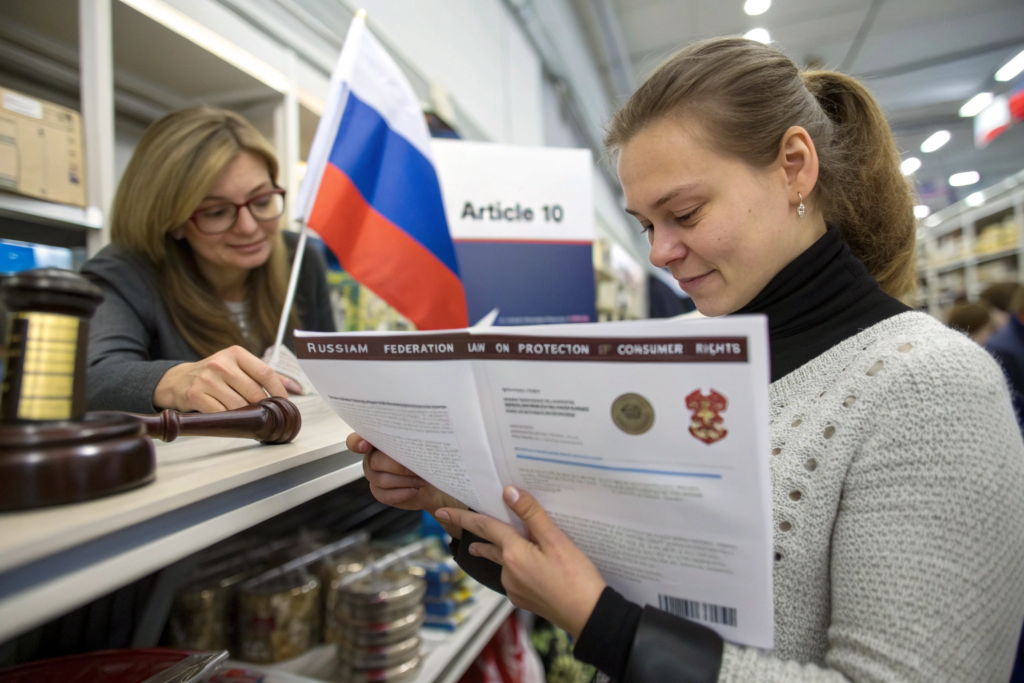
The requirement for Russian-language labeling is not a retailer preference. It is federal law. The Russian Federation Law on Protection of Consumer Rights, originally enacted in 1992 and updated multiple times, establishes the consumer’s right to information about the goods they purchase. Article 10 of this law specifically requires that information about the product be provided in Russian.
This law applies to all consumer goods sold in the Russian Federation, regardless of the country of origin. An accessory imported from China, Italy, or the United States must carry a label with specific information in the Russian language. The law does not require that the label be exclusively in Russian. A bilingual label with English and Russian is acceptable, provided the Russian text is present, legible, and accurate. An English-only label, however, is non-compliant. The law is enforced at the border by customs authorities and at the retail level by Rospotrebnadzor, the Federal Service for Surveillance on Consumer Rights Protection and Human Wellbeing.

What Specific Information Must the Russian-Language Label Contain?
The label must include several specific pieces of information. The product name in Russian. The country of origin in Russian. The name and legal address of the manufacturer. The name and legal address of the importer or authorized representative in Russia. The fiber composition, expressed as a percentage by weight, for textile accessories. Care instructions using the standard symbols and explanatory text in Russian. Any applicable safety warnings or age restrictions. The size or dimensions where relevant. The date of manufacture or lot number for traceability.
For accessories with specific safety considerations, such as children’s hair clips or items with small parts, the label must include the appropriate age warning in Russian. The Chestny ZNAK Data Matrix code, which is required for many accessory categories under Russia’s national traceability system, must be accompanied by explanatory text in Russian. The label must be durable, legible, and permanently attached to the product or its packaging. A removable hangtag is not sufficient if it is the sole source of the required information. The information must remain with the product throughout its shelf life. Understanding Russian consumer protection labeling law is essential for any brand or importer selling in the Russian market.
How Does the Technical Regulation of the Customs Union Affect Labeling?
Russia is a member of the Eurasian Economic Union, or EAEU, along with Armenia, Belarus, Kazakhstan, and Kyrgyzstan. The EAEU has harmonized technical regulations that apply across all member states. The Technical Regulation on Light Industry Products, TR CU 017/2011, and the Technical Regulation on Food Products, TR CU 022/2011, contain specific labeling requirements.
TR CU 017/2011 applies to accessories classified as light industry products, including scarves, shawls, gloves, hats, belts, and hair accessories. It requires that labeling be in the official language of the member state where the product is sold. For Russia, that language is Russian. The regulation specifies the exact information that must appear on the label, the format requirements, and the durability standards. A product that complies with TR CU labeling requirements is eligible for EAEU-wide circulation. A product that does not comply is subject to seizure at the border of any member state. If you are exporting EAEU-compliant consumer goods, understanding the Technical Regulation labeling requirements is non-negotiable.
How Does Russian-Language Labeling Build Consumer Trust?
Legal compliance is the minimum requirement. Consumer trust is the commercial benefit. A Russian-language label signals to the consumer that the brand has invested in the Russian market. It shows that the brand respects the consumer’s right to understand what they are buying. It eliminates the uncertainty and suspicion that an English-only label creates.
Russian consumers are label readers. Market research consistently shows that Russian shoppers examine care labels and composition labels before purchasing apparel and accessories. They want to know the fiber content. They want to know how to wash the item. They want to know who made it and who imported it. An English-only label frustrates this behavior. The consumer cannot read the information. They may put the product back on the shelf. They may choose a competitor’s product that speaks their language. The label is not just a compliance document. It is a sales tool.
Why Do Russian Consumers Distrust Products Without Russian Labels?
A product without a Russian-language label raises questions in the consumer’s mind. Who made this? Is it authentic? Is it safe? Has it been imported legally? The absence of a Russian label is associated with grey market goods, counterfeits, and products that have not passed Russian safety certification.
The Russian market has a significant problem with counterfeit and parallel imported goods. Consumers have learned to be skeptical. The Russian-language label, especially one that includes the EAC conformity mark and the Chestny ZNAK code, is a signal of authenticity. It says that this product entered Russia through official channels, was declared at customs, and meets Russian safety and quality standards. The label is a trust mark. A brand that provides it builds credibility. A brand that omits it raises suspicion. If your brand is building a consumer trust strategy in emerging markets, the local language label is one of the simplest and most effective trust signals you can deploy.
How Does the Label Support the Importer’s Relationship with Retailers?
Russian retailers face their own compliance obligations. They are subject to inspections by Rospotrebnadzor. If an inspector finds a product on the shelf without a Russian-language label, the retailer is fined. The product is removed from sale. The retailer’s relationship with the regulator is damaged. Retailers protect themselves by refusing to accept non-compliant goods.
When your product arrives at a Russian retailer’s distribution center with a correct, complete Russian-language label, the receiving process is smooth. The goods are scanned, checked, and approved for shelf placement. When your product arrives without a Russian label, the goods are rejected. The retailer charges back the logistics costs. The shelf sits empty. The buyer who placed the order with you is embarrassed and may lose internal credibility. The importer who sold your brand to the retailer has to manage the fallout. A correct label protects the entire supply chain. Professional Russian retail compliance requirements start with the label on the product.
How Does Our Factory Ensure Russian-Label Compliance?
At Shanghai Fumao, we treat Russian-language labeling as a core production process, not an afterthought. Our labeling compliance system is designed to ensure that every accessory destined for the Russian market carries a label that meets all legal requirements and satisfies the consumer’s need for clear, accurate information.
We do not use Google Translate to generate Russian text. We work with professional translators who are native Russian speakers and who understand the specific terminology required by Russian regulations. Our Russian label templates are reviewed annually to ensure they reflect any regulatory updates. The labels are printed on durable satin or woven material that survives washing, wear, and retail handling.
What Is Our Process for Creating Compliant Russian Labels?
When a client confirms an order for the Russian market, our project manager initiates the labeling process. The client provides the importer of record information, which is the Russian legal entity responsible for the goods. This information must appear on the label. We do not guess. We use the exact legal name and address provided by the client or their Russian partner.
Our translation team prepares the Russian text based on the product specifications. The product name, the fiber composition, the care instructions, and any safety warnings are translated. The Chestny ZNAK Data Matrix code is integrated into the label layout if required for the product category. The label artwork is sent to the client for approval. The client or the client’s Russian partner reviews the Russian text for accuracy. Only after written approval is the label sent to production. This approval step is critical. A mistranslation on a label that has already been produced in quantity is a costly error. We ensure the text is right before a single label is printed. Professional product labeling translation for regulatory compliance is an investment in market access.
How Do We Verify Label Accuracy and Durability Before Shipment?
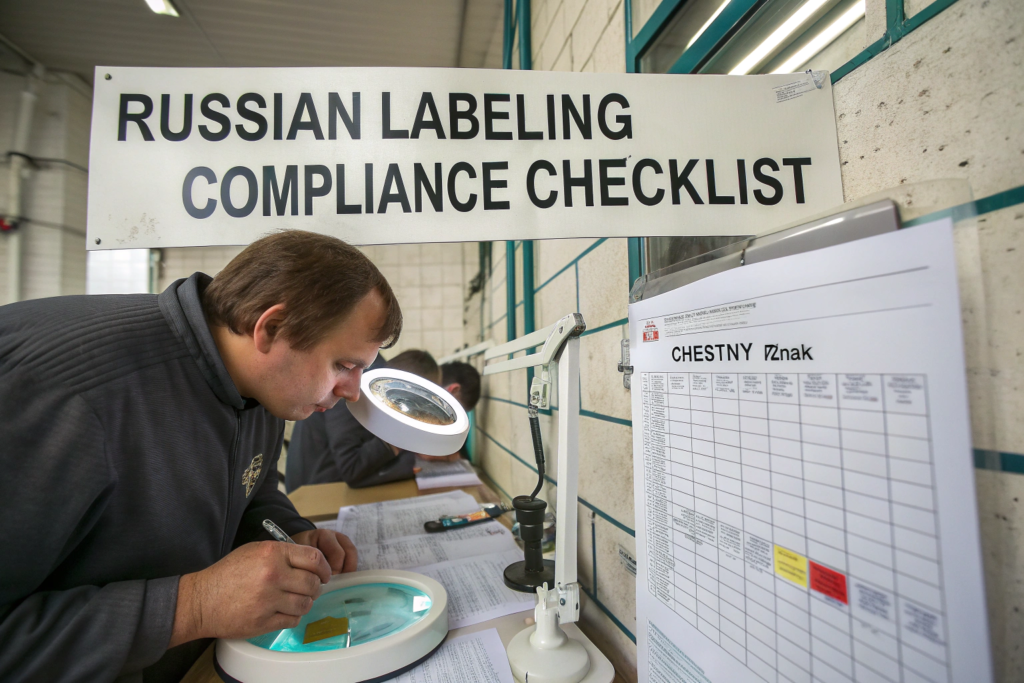
Before labels are sewn or attached to the product, our QC team verifies a sample against the approved artwork. The Cyrillic text is checked character by character. The Data Matrix code is scanned to verify it returns the correct product information. The label dimensions and placement are checked against the specification.
After the labels are applied, we perform a durability test. A sample of labeled products is subjected to simulated handling, folding, and light abrasion. The label must remain legible and attached. For textile labels that will be washed, we perform a wash test. The label must survive the care instructions it describes. If the label says machine washable at 30 degrees, we wash it at 30 degrees and verify that the text remains readable. A label that fades or frays in normal use is a compliance failure, even if the text was correct at the time of application. Understanding textile label durability standards ensures that the information remains with the product throughout its usable life.
Conclusion
Russian buyers require Russian-language labels on all accessories because Russian federal law mandates it, because EAEU technical regulations require it, and because Russian consumers demand it. The Law on Protection of Consumer Rights and TR CU 017/2011 establish the legal obligation. The consumer’s desire to understand what they are buying establishes the commercial incentive. The retailer’s need to avoid fines and regulatory action establishes the distribution requirement.
A Russian-language label is not a courtesy. It is a condition of market access. Goods without it are not legal to sell. They will be stopped at customs. They will be rejected by retailers. They will be viewed with suspicion by consumers. The cost of a compliant label is negligible. The cost of a non-compliant shipment is the full value of the goods, plus the lost sales, plus the damaged reputation.
At Shanghai Fumao, we have been producing Russian-labeled accessories for the Russian market for over a decade. Our translation resources, our label production capabilities, and our compliance verification process are mature and reliable. We treat the Russian label with the same seriousness as the Russian customs authorities treat it. We ensure it is correct, complete, and durable on every product that ships.
If you are developing an accessory collection for the Russian market and you need a factory that understands the labeling requirements from both the legal and the consumer perspective, please contact our Business Director Elaine at elaine@fumaoclothing.com. She can provide samples of our Russian-compliant labels, walk you through the approval process, and ensure your goods arrive at the Russian border ready for customs clearance and ready for the Russian consumer.