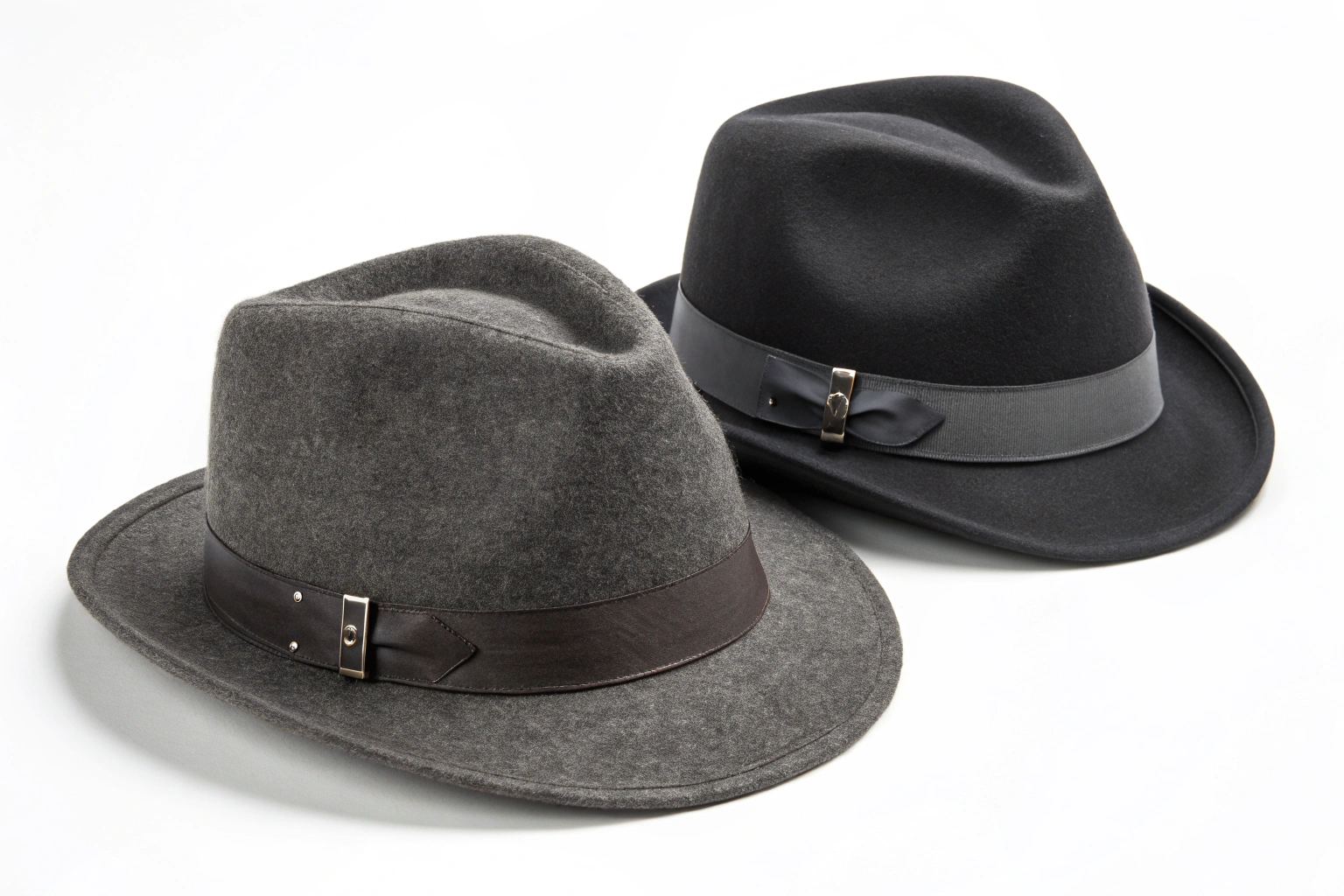
A buyer from a London menswear label once canceled a 5,000-unit order from another factory. He had ordered fedoras. The factory shipped him trilbies. He was not a hat expert. He thought the terms were interchangeable. His customers knew better. The first shipment hit the shelves, and the returns started immediately. "Brim too narrow." "Doesn’t look like the photo." "This is a trilby, not a fedora." The retailer pulled the product from their website. The brand’s reputation for knowing menswear was damaged. He called me to ask how to ensure this never happened again. I told him the difference is in the brim, the crown, and the attitude. Learn those three things, and you will never confuse the two again.
The primary differences between a fedora and a trilby are the brim width and the crown height. A fedora has a wider brim, typically 6 to 8 centimeters, and a taller, fuller crown with a deep center dent. A trilby has a narrow brim, typically 4 to 5 centimeters, often snapped down sharply at the front, and a shorter, more tapered crown. The fedora projects a classic, balanced presence. The trilby projects a sharper, more contemporary edge.
At Shanghai Fumao, we cut and block both fedoras and trilbies for brands across North America and Europe. I can show you the wooden hat blocks, the pattern pieces, and the finished hats that make the difference unmistakable. Let me walk you through every distinction so your purchase order matches your customer’s expectation.
How Do the Brim Width and Shape Define Each Hat?
The brim is the single most reliable way to tell a fedora from a trilby at a glance. If the brim is wider than your palm, it is almost certainly a fedora. If the brim is narrower than three fingers, it is almost certainly a trilby. There is no official governing body that enforces these definitions, but a century of hat-making tradition has established the conventions.
The brim width changes everything about how the hat looks on a person. A wide brim frames the face and creates a balanced, proportional silhouette. A narrow brim elongates the face and creates a sharper, more vertical line. The choice between them is not just about fashion. It is about face shape, body proportion, and the statement the wearer wants to make.
What Are the Standard Brim Measurements for a Classic Fedora?
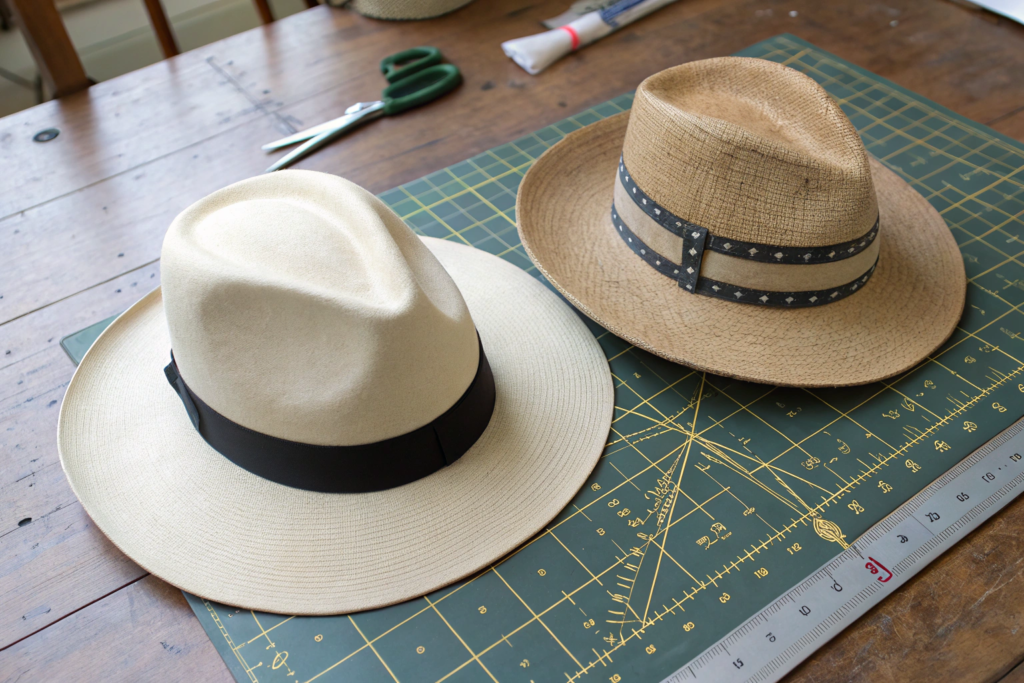
A traditional men’s fedora brim measures between 6 and 8 centimeters, with 7 centimeters being the most common standard. The brim is wide enough to provide functional sun and rain protection. It is shaped with a gentle upward snap at the back and a downward snap at the front, although the brim can be worn up all around, down all around, or snapped in various configurations depending on the wearer’s style.
The fedora brim has a raw edge, a folded edge, or a stitched bound edge depending on the quality level and the design intention. A bound edge, where a thin ribbon is sewn around the brim perimeter, is a mark of a higher-quality hat. The binding protects the felt edge from wear and adds a refined finishing detail. The fedora brim is substantial. It holds its shape. It can be handled by the brim without crushing. This structural presence is part of the fedora’s classic, confident character. If you are sourcing classic men’s fedora specifications, the brim width is the first and most important measurement to verify.
Why Does the Trilby Brim Snap Down So Sharply at the Front?
The trilby brim is fundamentally different. It measures between 4 and 5.5 centimeters, with 4.5 centimeters being typical. The brim is too narrow to snap up all around and look balanced. Instead, the trilby brim is worn snapped down sharply at the front, creating a distinct angle that slopes toward the wearer’s nose. The back of the brim is usually left up or only slightly curved.
This sharp front snap is the trilby’s signature look. It creates a rakish, slightly rebellious attitude. The narrow brim does not shade the face. It frames it. The trilby is not a hat for practical weather protection. It is a hat for style. The sharp snap also creates a visual line that draws the eye downward, elongating the face. This can be flattering or unflattering depending on face shape, which is why trilbies tend to suit narrower faces and can look undersized on broader faces. The brim edge on a trilby is often left raw or finished with a simple overlock stitch rather than a full bound edge. The narrower brim does not require the structural binding that a wider fedora brim benefits from. Understanding trilby hat styling and proportions helps you communicate the correct brim specifications to your factory.
What Are the Crown Height and Shape Differences?
The crown is the second major differentiator. The fedora crown is tall and full, with room inside for the head to sit comfortably without the hat sitting too low on the forehead. The trilby crown is shorter and more tapered, sitting closer to the head and creating a more compact overall silhouette.
These crown differences are not arbitrary. They are dictated by the brim proportions. A wide brim requires a tall crown to maintain visual balance. A tall crown paired with a narrow trilby brim would look top-heavy and unstable. A short crown paired with a wide fedora brim would look squashed and undersized. The crown and brim are a proportional system, not independent variables.

How Does the Center Dent and Pinch Differ Between the Two?
The fedora crown features a deep center dent that runs front to back along the top of the crown. The dent is deep enough to create a distinct valley. On either side of the dent, the crown rises. At the front, a pinch, which is a crease on each side of the crown above the wearer’s eyes, adds definition. The pinch is typically sharp and pronounced on a fedora. The combination of the deep center dent and the sharp front pinch gives the fedora crown its sculptural, architectural quality.
The trilby crown has a center dent as well, but it is typically shallower. The overall lower crown height leaves less room for a deep dent. The front pinch on a trilby is often less pronounced or absent entirely. The trilby crown tends toward a simpler, more streamlined shape. Some modern trilbies omit the center dent entirely and opt for a teardrop or diamond crown shape, which adds a bit of visual interest without the classic fedora dent. The crown shaping is done on a wooden hat block. Each style has its own block shape. A fedora block is taller and fuller. A trilby block is shorter and more tapered. The block determines the fundamental crown architecture. If you are developing custom hat crown shapes, you must start with the correct block for the style you intend to produce.
Why Does Crown Taper Affect the Overall Silhouette?
Taper refers to how much the crown narrows from the base to the top. A fedora crown has minimal taper. The sides are relatively straight and parallel. This creates a more formal, structured appearance. A trilby crown has more taper. The crown narrows visibly from the base toward the top. This creates a more casual, contemporary appearance.
The taper also affects fit. A more tapered crown sits more snugly on the head. A less tapered crown offers a roomier fit. This is not a quality difference. It is a design choice that affects both aesthetics and comfort. A man with a rounder head shape may find a tapered trilby crown uncomfortable because it sits too tightly on the upper head. A man with a narrower head may find a straight-sided fedora crown too roomy. Understanding hat block shapes and head fit helps you design hats that not only look correct but also fit your target customer.
What Materials and Construction Methods Are Traditional for Each?
Both fedoras and trilbies are traditionally made from felt, but the felt quality, the blocking process, and the trim materials differ between the two styles, especially when comparing a premium fedora to a fashion trilby.
The fedora, with its deeper crown and wider brim, demands a felt with enough body to hold its sculptural shape without collapsing. The trilby, with its lower crown and narrower brim, can be made from lighter-weight felts and still maintain its silhouette. This difference in structural demand influences material selection and construction techniques.
What Felt Grades Are Used for Premium Fedoras?
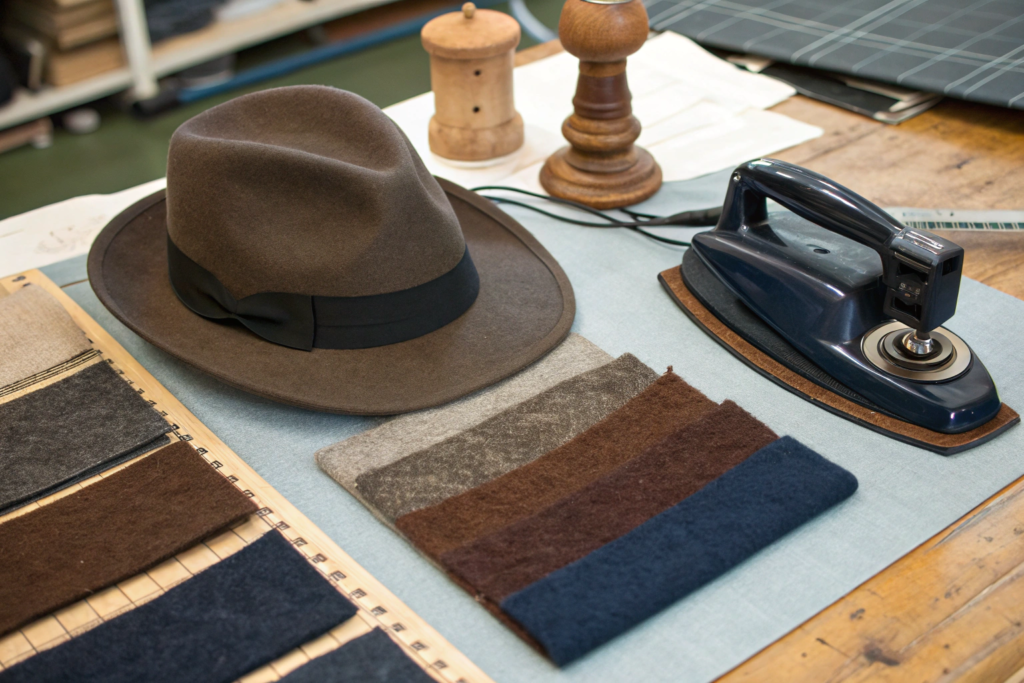
A high-quality fedora is made from fur felt, typically rabbit or hare fur felt. Fur felt is made by matting animal fur fibers together through a process of heat, moisture, and pressure. The fibers are naturally barbed, which allows them to interlock tightly. The resulting felt is dense, smooth, and shapeable. A fur felt fedora can be steamed and reshaped multiple times without damage. It holds a crisp crease. It develops a beautiful patina with age.
The felt weight for a fedora is typically 120 to 180 grams per square meter for the body. The brim requires enough stiffness to hold its shape. The crown requires enough body to hold the deep center dent and front pinch. This stiffness is achieved through the felting process itself and through the application of a stiffening agent, traditionally shellac, during blocking. A premium fedora uses a higher fur content and a more controlled felting process. It also involves more handwork. The brim is hand-shaped over a wooden flange. The crown is hand-ironed on the block. These manual processes create a hat that machine production cannot replicate. If you are sourcing fur felt hat manufacturing, understand that the material and the craft together determine the final quality.
Why Are Trilbies Often Made from Lighter Materials?
The trilby, with its more modest structural demands, can be made from a wider range of materials. Wool felt is common for mid-range trilbies. Wool felt is less expensive than fur felt and provides adequate body for the shorter, more tapered crown and the narrow brim. Wool felt trilbies are popular in the fashion segment where seasonal color and affordability are priorities.
Paper straw, cotton, and linen trilbies are common in spring and summer collections. The narrow brim and low crown work well in straw, creating a hat that is more structured than a floppy beach hat but more casual than a felt fedora. Synthetic felts and blended felts are also used for trilbies at lower price points. The material choice should align with the hat’s intended use, the brand’s quality positioning, and the target retail price. A $30 fashion trilby and a $200 fur felt fedora serve different customers and different occasions. Both can be well-made for their respective market segments. Professional hat material selection for different market segments ensures your product meets customer expectations at its price point.
How Do You Ensure Your Purchase Order Specifies the Correct Hat?
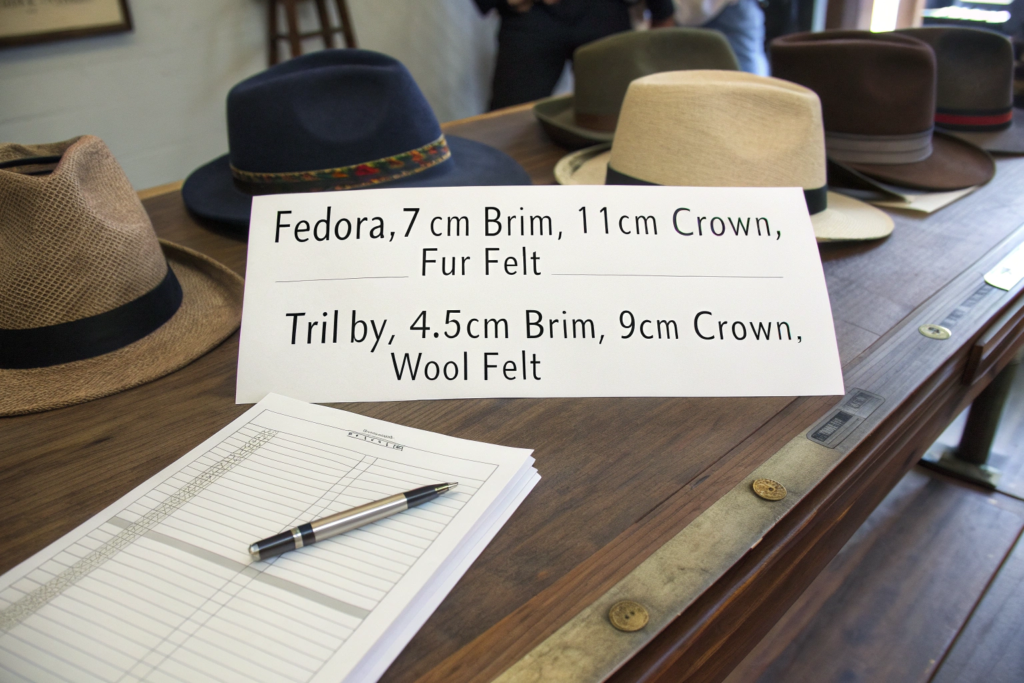
The most reliable way to ensure you receive fedoras when you order fedoras, and trilbies when you order trilbies, is to specify the brim width and crown height as numerical measurements on your purchase order and tech pack. Do not rely on the style name alone. The name can be interpreted differently by different factories. The measurements are objective and indisputable.
At Shanghai Fumao, we recommend that every purchase order for hats include a line drawing or technical flat with key measurements called out. Brim width. Crown height at the front. Crown height at the side. Brim shape notes. Crown dent description. Band width. This level of detail eliminates confusion and provides a clear reference for QC inspection.
Why Should Brim Width Be Specified as a Numerical Measurement?
Names are subjective. One factory’s fedora might have a 6-centimeter brim. Another’s might have an 8-centimeter brim. Both are fedoras. But to your customer, who saw a photo of a specific brim width, only one of them matches their expectation.
Specify the brim width in centimeters or inches. Specify whether the measurement is taken at the front, the side, or the widest point. For a snap brim, specify the brim width before shaping, which is the flat pattern measurement. The measurement method matters. A brim measured flat will be wider than the same brim measured after snapping, because the snap takes up some of the width. To avoid disputes, specify the measurement method. We recommend specifying the flat pattern brim width, which is how the brim is cut before shaping. This is objective and verifiable during production. Professional hat measurement specification standards ensure your factory and your QC team are measuring the same thing in the same way.
How Can Reference Images Supplement the Written Specification?
A picture is worth a thousand words, but only if the picture is annotated. Include reference images of the desired hat style with your purchase order. Mark up the images with arrows and notes. "Brim width like this." "Crown height like this." "Center dent depth like this."
The images should show the hat from multiple angles. Front view. Side view. Three-quarter view. Top-down view. If possible, include an image of the hat on a person so the factory can see the intended proportion relative to a head. The images do not replace the numerical specification. They supplement it. The numbers are the contract. The images are the illustration. If the numbers and the image conflict, the numbers should govern, but the factory should flag the conflict for clarification. This dual specification approach, numerical measurements plus annotated images, is the most robust way to communicate your design intent. It has prevented more factory errors than any other single practice in our twenty years of production. Understanding effective product specification communication protects your orders from costly misinterpretation.
Conclusion
The difference between a fedora and a trilby is measured in centimeters and millimeters, but it is felt in presence and attitude. A fedora has a wide brim of 6 to 8 centimeters, a tall crown of 10 to 12 centimeters, a deep center dent, and a sharp front pinch. It projects classic confidence and balanced proportion. A trilby has a narrow brim of 4 to 5.5 centimeters, a shorter crown of 8 to 10 centimeters, a shallower dent, and a sharp downward front brim snap. It projects contemporary edge and vertical elongation.
Ordering the wrong hat because of a misunderstood term is a preventable error. Specify brim width and crown height as numerical measurements on every purchase order. Supplement the numbers with annotated reference images. Approve a pre-production sample and compare its measurements to your specification. These simple disciplines ensure that the hats in your shipment match the hats in your customer’s expectation.
At Shanghai Fumao, we block and finish both fedoras and trilbies for brands across the menswear spectrum. Our blocking room has master blocks for both styles in a range of sizes. Our finishing team knows the difference between a fedora center dent and a trilby center dent. Our QC team measures brim width and crown height on every style before packing.
If you are planning a hat collection and want to make sure your fedoras are fedoras and your trilbies are trilbies, please contact our Business Director Elaine at elaine@fumaoclothing.com. Send her your style references, your target measurements, and your material preferences. She will provide samples, confirm specifications, and ensure your production order matches your design intent with millimeter precision.