A US importer from a national retail chain once told me she had rejected a shipment of 50,000 hair accessories based on a 90-second video. The video showed the factory’s packaging line shoving products into cartons with no barcode scanning, no poly bag sealing, and no carton labeling. The products themselves were fine. The packaging was chaos. Individual units were missing price tags. Assortment packs were mixed incorrectly. Carton labels were handwritten and illegible. The shipment would have been rejected at the retailer’s distribution center. The 90-second video saved her a $15,000 chargeback, a lost shelf placement, and an uncomfortable conversation with her VP. She told me she now requires packaging line videos from every supplier before every shipment.
US importers request factory videos of the packaging line to verify that packaging specifications are being followed correctly, that barcode and labeling compliance is met, and that the goods are being packed to survive international transit and retail distribution. The packaging line video is a remote, low-cost substitute for an in-person final inspection that catches errors before they become expensive retailer chargebacks.
At Shanghai Fumao, we record and share packaging line videos as a standard part of our pre-shipment process. It is not an extra service we charge for. It is built into our quality assurance workflow because we know our clients need this visibility. Let me explain exactly why US importers ask for these videos and how we use them to protect your shipment.
What Packaging Errors Do US Importers Fear Most?
The US retail supply chain is automated. Distribution centers use barcode scanners, not human eyes, to receive, sort, and route cartons. A carton with a barcode that does not scan, or scans to the wrong product, disrupts the entire automated flow. It is manually sorted. It is delayed. It incurs a chargeback from the retailer to the vendor. The chargeback for a single non-compliant carton can exceed the profit on the entire carton’s contents.
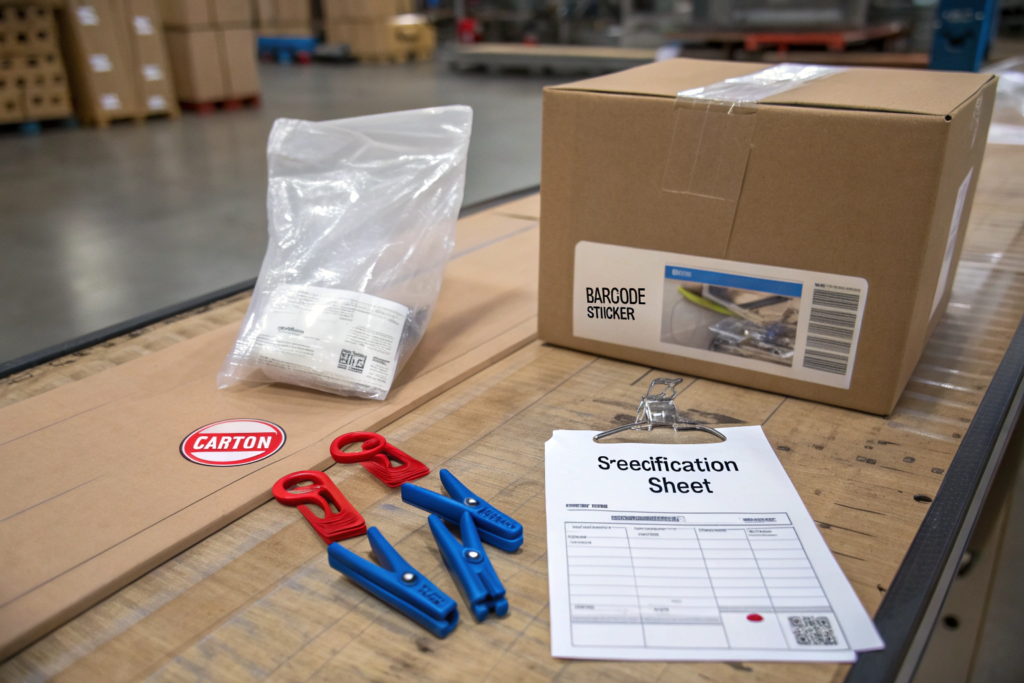
Beyond barcode issues, importers fear assortment errors, missing retail tags, incorrect poly bag sealing, and carton labeling that does not match the retailer’s routing guide. These errors are invisible from photos of the finished product. A photo of a hair clip tells you the clip is correct. It does not tell you the barcode on the poly bag scans to the right SKU, or that the assortment pack inside the poly bag has the correct number of each color. Only a video of the packaging line in operation can provide this assurance.
Why Are Barcode and Labeling Errors So Costly for Retail?
A major US retailer’s distribution center processes thousands of cartons per hour. The system is designed for speed and automation. When a carton arrives with a barcode that does not scan, the entire flow stops for that carton. A human worker must intervene. The worker must identify the product, look up the correct SKU, and manually enter it into the system. This manual intervention costs the retailer time and labor. The retailer passes this cost back to the vendor as a chargeback.
A typical chargeback for a scannable barcode failure is $25 to $50 per carton. For a shipment of 200 cartons with a 5% barcode failure rate, that is 10 cartons times $50, or $500 in chargebacks. The profit on those 10 cartons might have been $200. The vendor loses $300 on the transaction. Multiply this across multiple shipments and multiple retailers, and the financial impact of barcode errors becomes significant. A packaging line video shows the importer that barcodes are being printed, applied, and scanned correctly in real time on the packing line. It is proof that the system is working. Understanding retailer compliance chargeback schedules reveals why importers are so focused on packaging accuracy.
What Assortment and Tagging Mistakes Happen Without Oversight?
Assortment packs are common in the accessory industry. A pack of four hair clips in different colors. A set of three headbands in assorted patterns. The pack must contain exactly the specified assortment. If the specification calls for one red, one blue, one green, and one yellow, and a pack contains two reds and no yellow, the customer receives the wrong product. The retailer issues a return. The return costs more than the product’s margin.
The same applies to retail tags. A hangtag with the wrong price. A missing barcode sticker. A care label that is sewn in upside down. These errors are caught by the retailer’s receiving inspection, but catching them there is too late. The chargeback has already been generated. The packaging line video shows the importer that workers are following the correct assortment procedure and that tags are being applied correctly. The importer can see the assortment being laid out, the tags being attached, and the finished pack being inspected. This visibility provides confidence that the goods arriving at the retailer’s dock will scan correctly and contain what the customer expects. Professional retail packaging compliance standards require this level of process verification.
How Does a Packaging Line Video Differ from a Finished Product Photo?
A finished product photo shows the product. A packaging line video shows the process. The product can be perfect, and the process can be flawed. A single perfect sample pulled from the line and photographed tells you nothing about the 9,999 other units that were packed on the same shift.
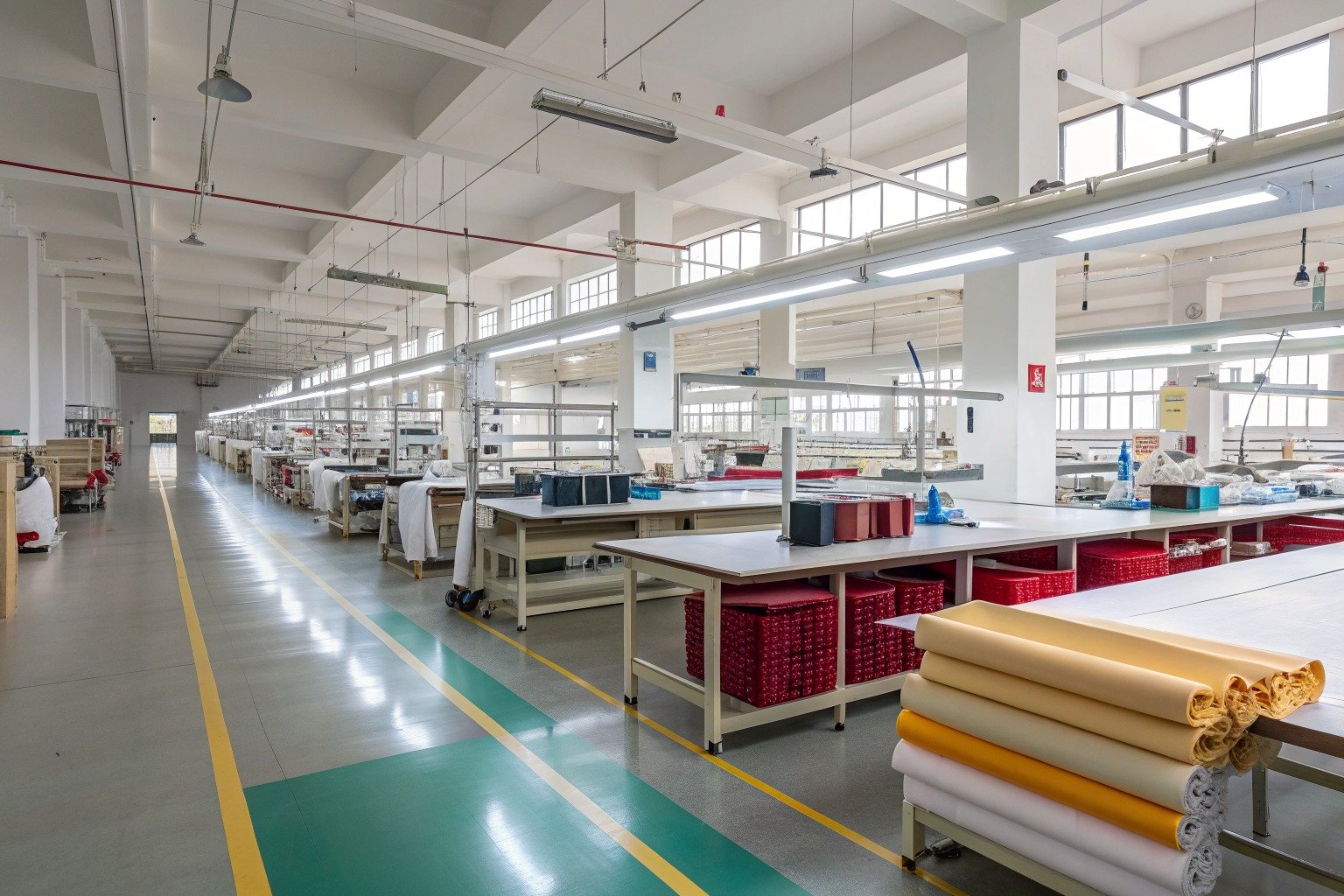
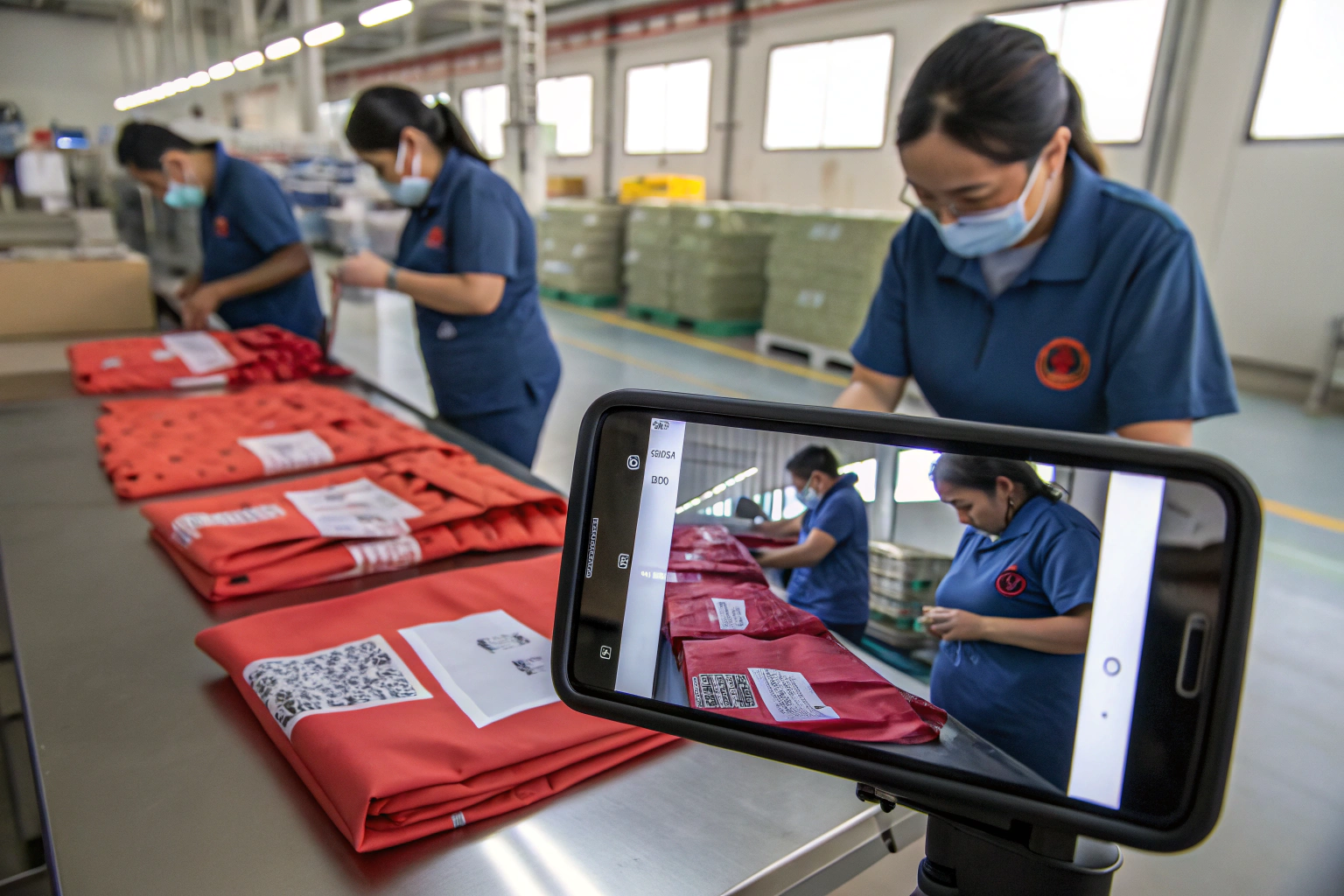
The video captures the packaging line as it operates. It shows the workers, the equipment, the workflow, and the quality checks. It shows whether barcodes are being scanned. It shows whether cartons are being labeled according to the routing guide. It shows whether the packing area is clean and organized. These process indicators are predictive. A messy, disorganized packaging line with no visible QC checks will produce errors. A clean, organized line with visible barcode scanning and label verification will produce compliance. The video provides this predictive insight. The photo does not.
What Process Indicators Does a Video Reveal That Photos Cannot?
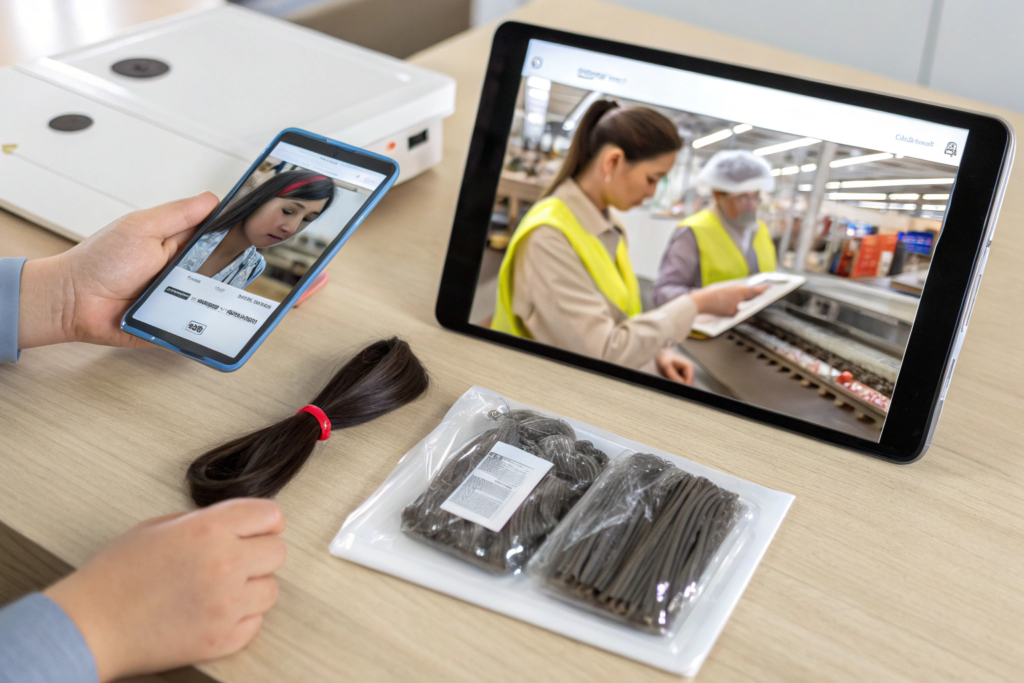
A video reveals the rhythm and the flow of the packaging operation. Are workers rushing, throwing products into cartons? That indicates a production delay upstream and a compressed packing timeline. Rushed packing produces errors. Are the barcode scanners beeping on every unit? That audible cue in the video confirms that every barcode is being scanned. Are the carton labels being printed on-demand from a system, or are they being handwritten? Handwritten labels are a compliance red flag.
A video also reveals the physical setup. Is the packing area well-lit? Are the workstations organized? Are the packing materials, the poly bags, the barcode stickers, and the cartons stored neatly and within reach? A well-organized packing line is a sign of a professionally managed factory. A chaotic packing line is a sign of a factory that is overwhelmed or careless. These indicators are visible in a 60-second video and invisible in any number of still photos. If you are conducting remote factory process audits, video is an essential tool for observing operational reality.
How Can a Video Confirm Retailer-Specific Packaging Requirements?
Every major US retailer has a unique routing guide. The guide specifies carton dimensions, weight limits, label placement, poly bag specifications, and barcode symbology. A factory that packs the same product for multiple retailers must switch between these specifications. A video of the packaging line for your specific order confirms that your retailer’s routing guide is being followed.
The video can show the carton label format. Does it match the routing guide template? The video can show the poly bag. Does it have the required suffocation warning printed on it? The video can show the carton sealing method. Is it the specified tape type and pattern? The video can show the pallet stacking pattern. Does it match the retailer’s pallet specification? These details are specific to each retailer. A factory video that shows these details provides order-level assurance that is far more valuable than a generic certificate of compliance. Professional retail routing guide compliance requires this level of documented verification.
How Does Our Factory Use Packaging Line Videos as a QC Tool?
At Shanghai Fumao, we do not wait for the importer to request a packaging line video. We record one as a standard QC procedure for every shipment to US retailers. The video serves two purposes. It is a verification tool for the client, and it is an internal quality record for us. If a packaging error is ever alleged, we have the video evidence of the packing process.
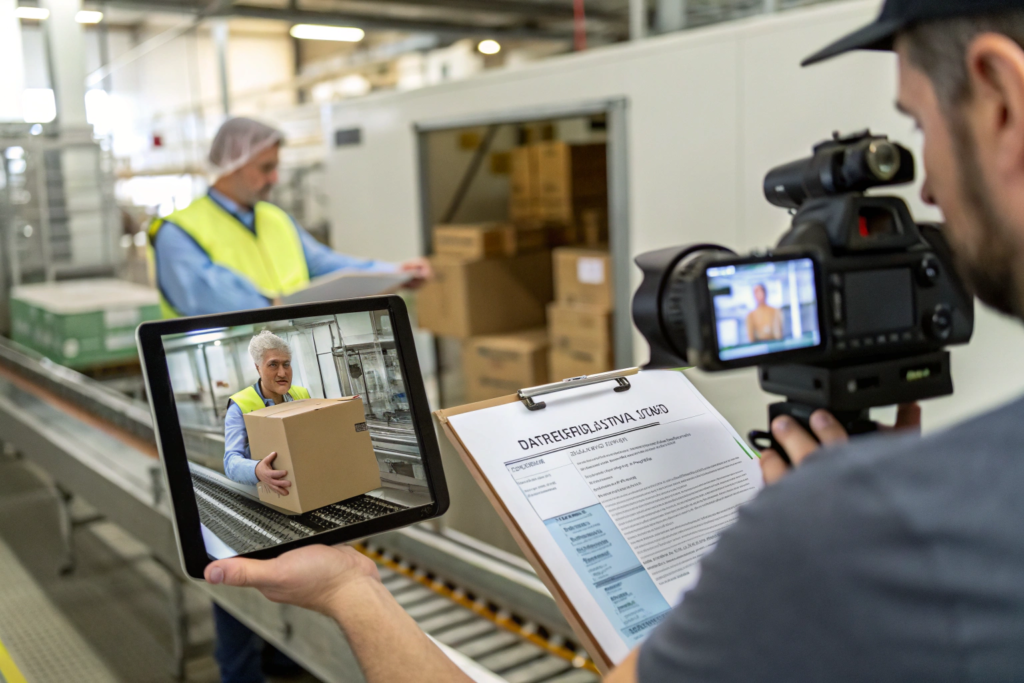
Our packaging line video is not a marketing video. It is not edited to make the factory look good. It is a raw, unedited walk-through of the packaging line in operation. The QC supervisor narrates the video, explaining what the viewer is seeing and confirming compliance with each packaging specification. The video is shared with the client via a secure link before the shipment leaves our factory.
What Does Our Standard Packaging Line Video Show?
Our standard packaging video follows a structured sequence. It starts with a wide shot of the packaging line to show the overall setup and workflow. It then moves to a close-up of the product being packed, showing the unit and its retail packaging. It shows the barcode scanning process, including the audible beep of a successful scan and the data displayed on the scanner screen. It shows the poly bag sealing process and the sealed bag being inspected. It shows the carton labeling process, with a close-up of the printed label and its placement on the carton. It shows the carton sealing process and the sealed carton being moved to the pallet. Finally, it shows a completed pallet with the pallet label visible.
The video is typically three to five minutes long. It is shot on a tablet or smartphone with adequate lighting and steady hands. The QC supervisor speaks in English, stating the order number, the product SKU, and the packaging specification reference at the start of the video. The narration confirms each step as it is shown. This structured format ensures that the video covers all the packaging compliance points that US importers care about. Professional packaging process video standards for export should be part of every factory’s pre-shipment procedure.
How Does the Video Integrate with the Final Inspection Report?
The packaging line video is not a standalone document. It is integrated with our final inspection report. The inspection report includes the AQL sampling results, the product quality findings, and the packaging compliance verification. The video is referenced in the report as visual evidence of the packaging process. The report and the video together provide a complete picture of the shipment’s quality status.
If the AQL inspection found no packaging defects in the sample, and the packaging line video shows a compliant packing process, the importer can have a high degree of confidence that the entire shipment meets the packaging requirements. If the AQL inspection found a packaging issue, the video can help identify the root cause. Was the issue a one-off error by a single worker? Or was it a systemic problem with the packaging line setup? The video enables this diagnostic analysis. It transforms packaging quality from a pass-or-fail statistic into an improvable process. Understanding integrated quality reporting for supply chains elevates the supplier relationship from transactional to collaborative.
Conclusion
US importers ask for factory videos of the packaging line because the packaging is the last quality gate before the goods enter the automated US retail supply chain. A packaging error that would be caught and corrected at the factory costs pennies. The same error caught at a retailer’s distribution center costs hundreds of dollars in chargebacks. The video is a remote, real-time verification that the packaging process is compliant with the retailer’s specific requirements.
The video reveals process indicators that product photos cannot. It shows the workflow, the barcode scanning, the label application, and the carton sealing. It confirms that the packing area is organized and that workers are following the correct procedures. It provides the importer with the confidence to release the balance payment and the evidence to demonstrate due diligence to the retailer.
At Shanghai Fumao, we do not wait for our clients to request these videos. We record and share them as a standard part of our pre-shipment quality assurance process. Our structured video format, narrated by a QC supervisor in English, covers every packaging compliance point from barcode scanning to pallet labeling. The video is integrated with our final inspection report to provide a complete quality data package.
If you are a US importer who has been burned by packaging chargebacks and you want a factory that treats packaging compliance as seriously as you do, please contact our Business Director Elaine at elaine@fumaoclothing.com. She can share a sample packaging line video, walk you through our packaging QC process, and ensure your next shipment arrives at the retailer’s distribution center ready to scan, ready to stock, and ready to sell.