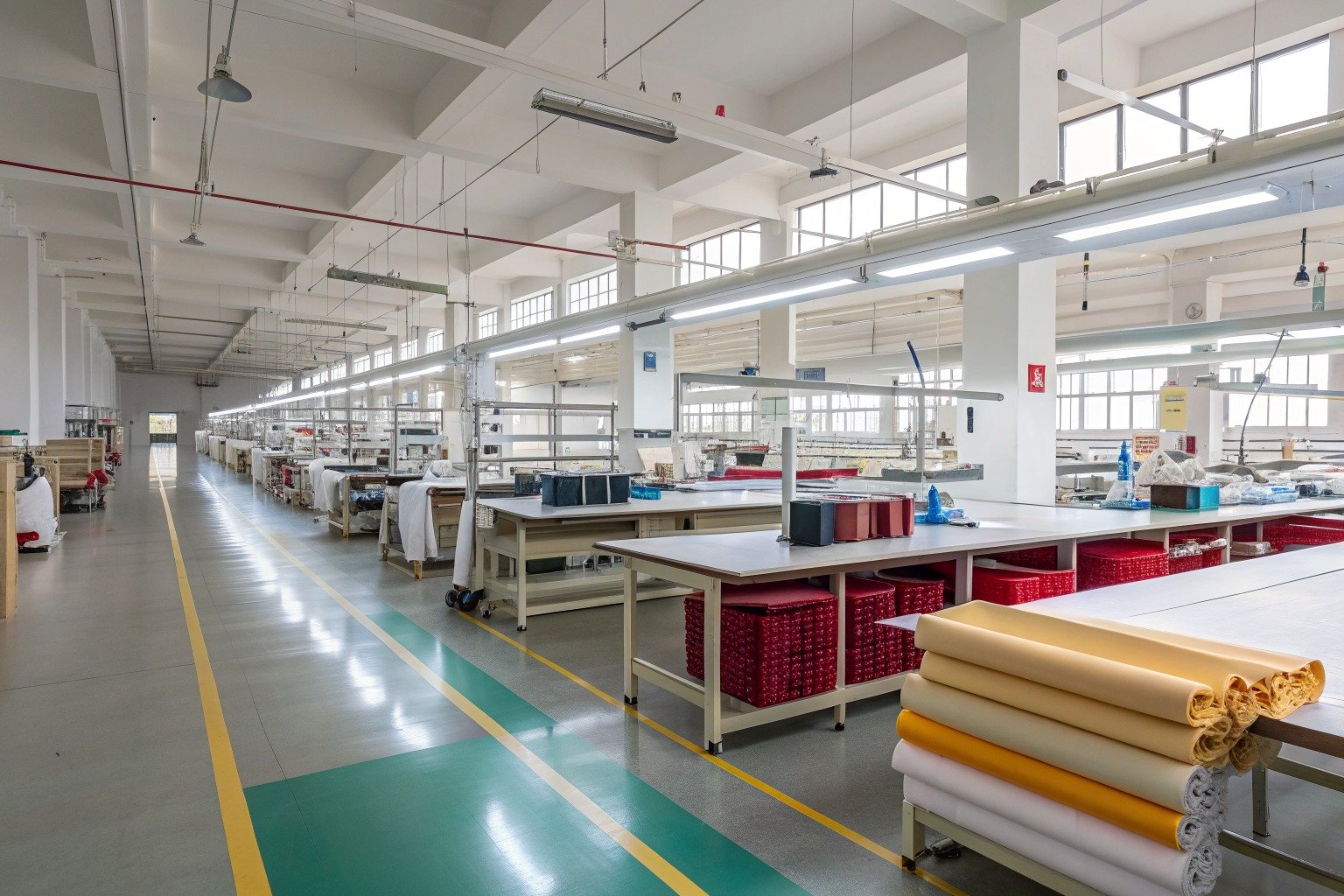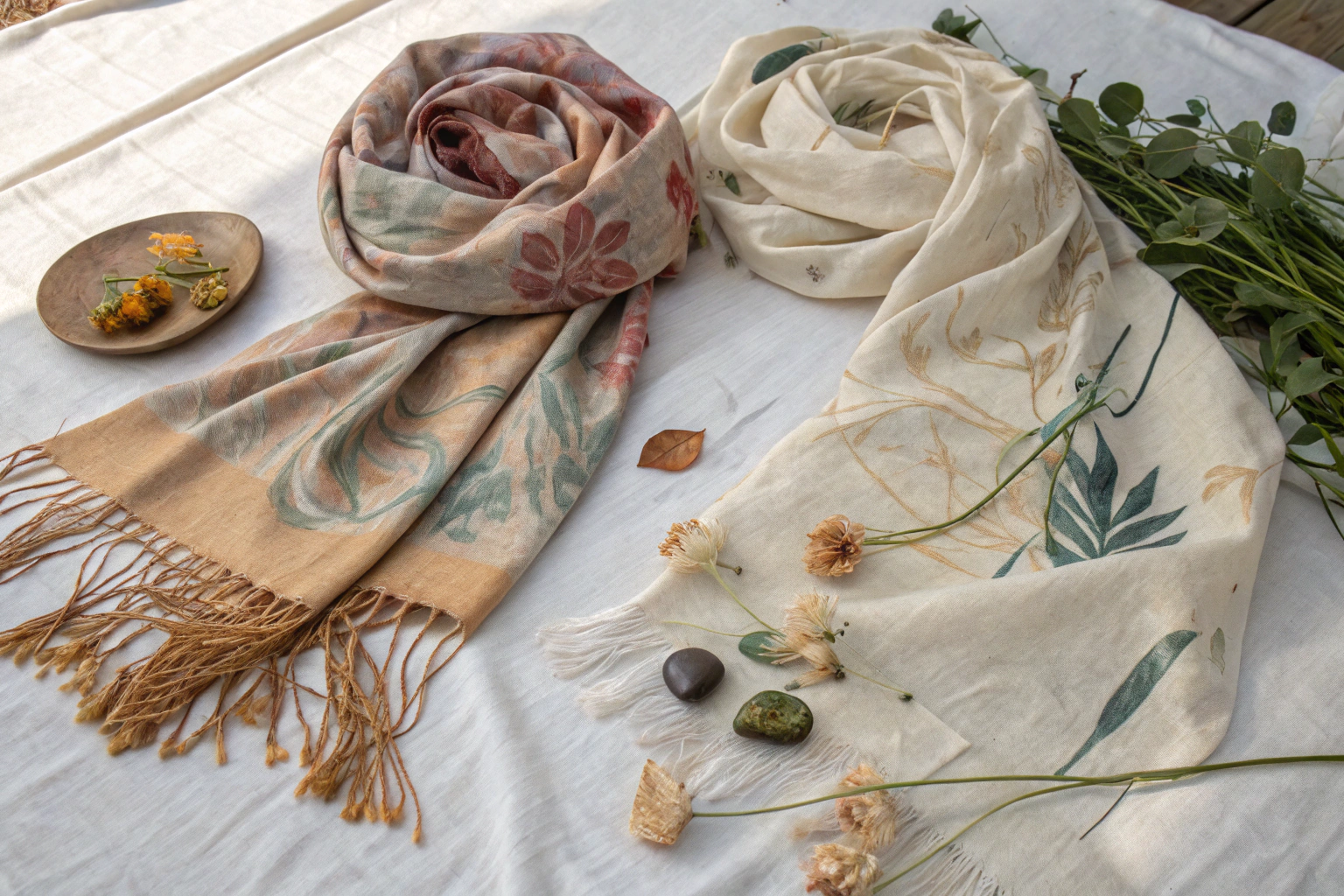
A creative director from a Parisian sustainable fashion house visited our showroom in early 2025. She was frustrated. Her team had developed a beautiful scarf collection using peace silk and natural dyes, but her board had rejected it. Not because of the design. Because the price points were too high, and the lead times were too long. She needed a factory that understood sustainable luxury as more than a buzzword. She needed materials that were genuinely traceable, production that was certifiable, and designs that felt elevated, not compromised. She told me her customer was a woman who reads the care label before she reads the price tag. That conversation shaped everything I am about to share.
The 2026 scarf trends for sustainable luxury brands center on five key directions. Traceable organic and regenerative fibers that tell a story. Circular recycled materials elevated to luxury hand-feel. Natural and bio-based dyes replacing synthetic colorants. Heritage craft techniques reimagined for contemporary design. And digital transparency tools that allow the end consumer to trace a scarf from fiber to finish.
At Shanghai Fumao, our design team has been developing sustainable scarf collections for European and North American luxury brands for over a decade. We track the fiber innovations, the dye chemistry, and the certification landscape. Let me walk you through what is shaping the 2026 sustainable luxury scarf market so your collection leads rather than follows.
Why Are Traceable Organic and Regenerative Fibers Leading the Market?
The sustainable luxury consumer in 2026 is not satisfied with a generic "organic cotton" label. She wants to know which farm grew the cotton. She wants to see a photo of the goats that produced the cashmere. Traceability is the new luxury. Opacity is the new fast fashion. The brands that will win in this space are the ones that can tell a specific, verifiable story about where their fibers came from.
This shift is not marketing. It is a structural change in consumer expectations driven by the digital native generation entering the luxury market. They are accustomed to tracking a package from warehouse to doorstep. They expect the same visibility into their clothing. A scarf that comes with a digital passport showing its journey from a regenerative farm in Mongolia to a boutique in Milan commands a premium that a generic scarf cannot.
What Is Regenerative Silk and How Is It Changing Scarf Production?
Regenerative silk goes beyond organic. Organic silk avoids pesticides. Regenerative silk actively improves the ecosystem where the mulberry trees and silkworms are raised. The farming practices increase soil carbon, improve water retention, and support biodiversity. The silk is not just not harmful. It is net positive.
The challenge with regenerative silk for scarf production is the cost and the limited supply. The fiber is two to three times the price of conventional silk. The supply chain is small and fragmented. We work with a regenerative silk cooperative in India that provides full traceability from farm to yarn. For a luxury scarf brand, this story is worth the premium. The hangtag can state that the scarf sequestered carbon during its raw material phase, a claim that is verified by a third-party audit and that resonates deeply with the climate-conscious luxury consumer. If you are sourcing regenerative textile fibers for fashion, the key is partnering with suppliers who can provide the data to back the claim.
How Does Organic Cashmere Traceability Work?
Cashmere traceability has been a major issue in the luxury industry. Overgrazing by cashmere goats has contributed to desertification in parts of Mongolia and China. The sustainable luxury consumer knows this. She reads about it in the fashion media. She wants cashmere that does not come at the cost of a grassland.
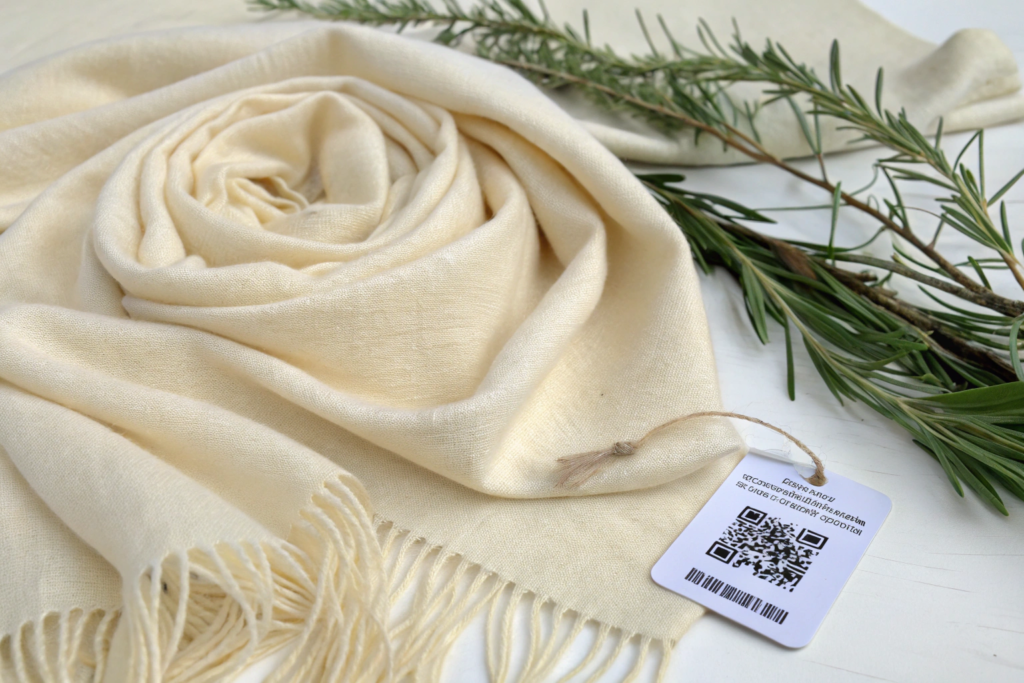
Traceable organic cashmere is sourced from herders who follow sustainable grazing practices certified by organizations like the Sustainable Fibre Alliance. The cashmere is tracked from the herder cooperative through the dehairing, spinning, and knitting stages. Each bale of fiber carries a unique identifier. At the finished scarf stage, the brand can access the full chain of custody data. We integrate a QR code on the care label or hangtag that the consumer can scan to see the herder, the region, and the sustainability certification. This transparency turns the scarf into a conversation piece. It justifies a premium price point and builds brand loyalty that transcends seasonal trends. Understanding sustainable cashmere certification standards is essential for any brand making claims about their cashmere sourcing.
How Are Circular Recycled Materials Being Elevated to Luxury Status?
Recycled materials have historically been associated with eco-basics. Brown, scratchy, unbleached products that appealed to the environmental purist but not the luxury consumer. That era is over. The recycled fibers available in 2026 are of a quality that can sit next to virgin fibers on a luxury boutique shelf.
The technology of mechanical and chemical recycling has advanced dramatically. Recycled cashmere can be as soft as virgin cashmere because the fiber reclamation process sorts, cleans, and re-spins the fibers with minimal damage. Recycled silk retains its luster. Recycled wool can be blended with virgin wool for a fabric that is indistinguishable from a 100% virgin product. The luxury consumer can now have the sustainability story without the sensory compromise.
What Is the Difference Between Recycled Cashmere and Virgin Cashmere?
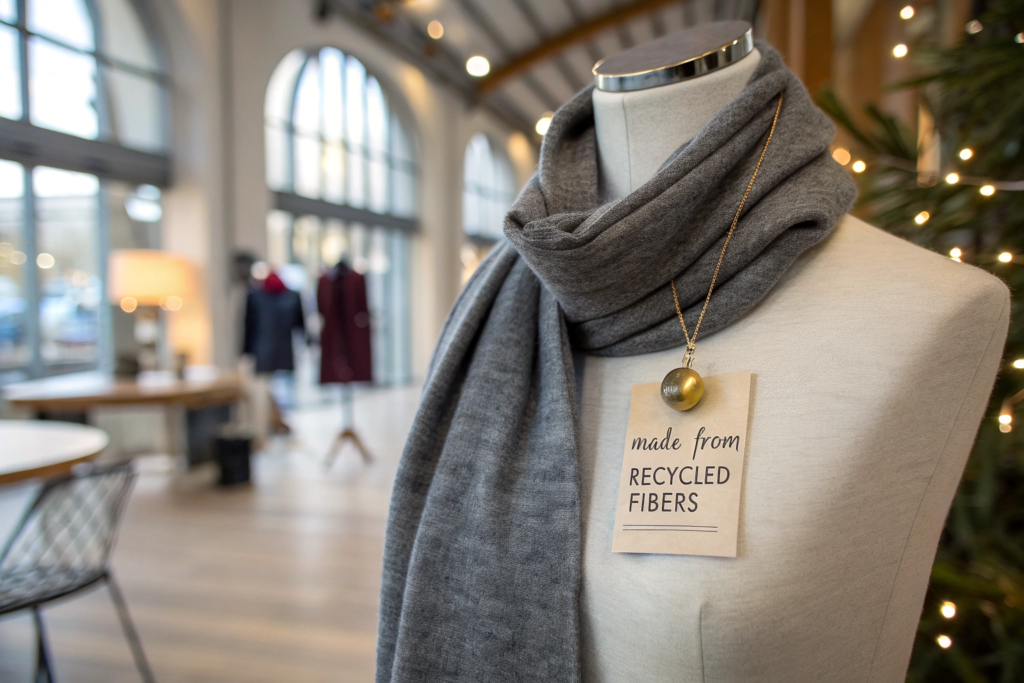
Recycled cashmere is made from post-industrial and post-consumer cashmere waste. Post-industrial waste is the unused fiber from the spinning and knitting processes. Post-consumer waste is old cashmere garments that are collected, sorted by color, and mechanically pulled apart into their constituent fibers. The fibers are then re-spun into new yarn.
The resulting fabric has a slightly different character. It often has a marled or heathered appearance because the recycled fibers come from garments of slightly different shades. This characteristic, once considered a limitation, is now celebrated as a design feature. The heathered look signals the recycled origin without a label. The hand feel is slightly denser than virgin cashmere but still soft and luxurious. The key quality metric is fiber length. Recycled cashmere fibers are shorter than virgin fibers because the mechanical recycling process breaks some fibers. A high-quality recycled cashmere scarf uses a blend of recycled and longer virgin fibers to achieve the required strength and durability. If you are developing recycled cashmere luxury products, work with a supplier who can provide the fiber composition breakdown and the recycling certification.
How Is Recycled Silk Challenging the Virgin Silk Market?
Recycled silk is a more recent innovation than recycled wool or cashmere. Silk fibers are long and strong, which makes them ideal candidates for mechanical recycling. The recycling process preserves much of the original fiber length, resulting in a recycled yarn that retains the characteristic silk luster and drape.
The sustainability story of recycled silk is compelling. Conventional silk production is resource-intensive. It requires vast mulberry plantations, significant water, and energy for the reeling process. Recycled silk bypasses all of this. It uses existing material. The carbon footprint is a fraction of virgin silk. For a luxury scarf brand, recycled silk offers a sustainability narrative that is easy for the consumer to understand. Old silk becomes new silk. Waste becomes beauty. The fabric can be digitally printed with the same vibrancy as virgin silk, opening up design possibilities for patterned scarves. If you are exploring recycled silk fabric for fashion accessories, ensure the recycling process is certified by a recognized standard like the Global Recycled Standard.
What Role Do Natural and Bio-Based Dyes Play in 2026 Luxury Scarves?
Color is emotional. It is the first thing the consumer sees. For sustainable luxury, the color story must be as clean as the fiber story. Synthetic dyes are petroleum-derived. Their production involves toxic chemicals. Their discharge pollutes waterways. The sustainable luxury consumer is increasingly aware of this, and she is voting with her wallet for natural alternatives.
Natural dyes are not new. Indigo, madder, cochineal, and weld have been used for centuries. What is new in 2026 is the sophistication of natural dye application at an industrial scale. The color consistency, the lightfastness, and the washfastness have improved to the point where natural dyes can meet luxury quality standards. The colors are not the harsh, uniform shades of synthetic dyes. They have a depth, a complexity, and a slight variation that reads as artisanal rather than defective.
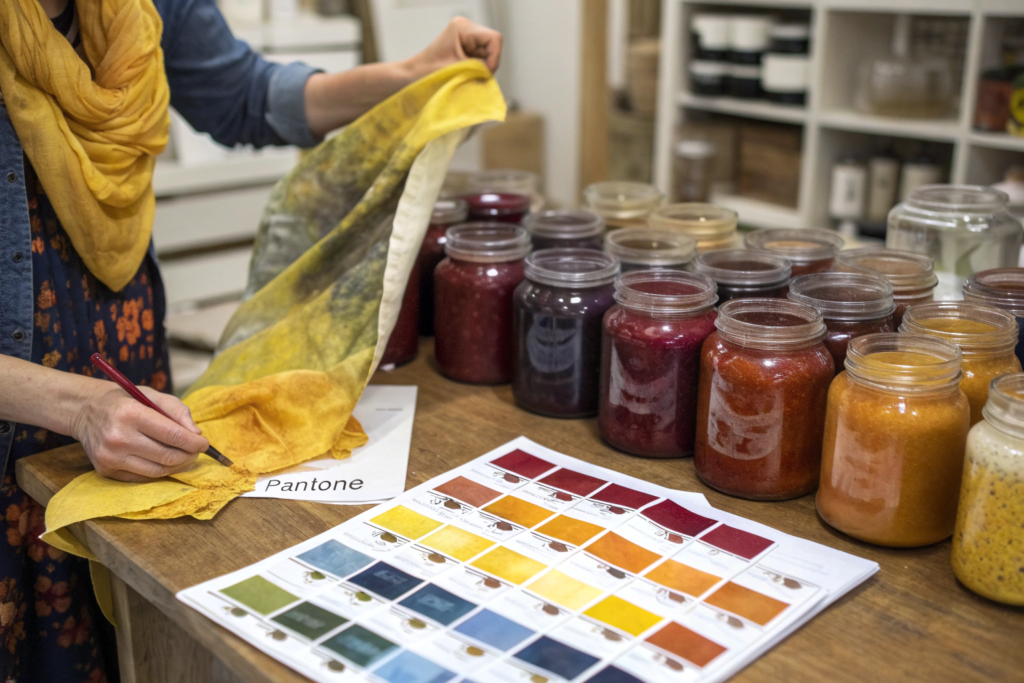
What Are the Most Commercially Viable Natural Dyes for Scarves?
Indigo is the most commercially developed natural dye. It produces a range of blues from pale sky to deep navy. The indigo dyeing process is unique because it is a fermentation process, not a simple immersion. The scarf is dipped into an indigo vat and emerges green. As it oxidizes in the air, it turns blue. Multiple dips create darker shades. The process creates a characteristic unevenness that is the signature of genuine indigo.
Madder root produces a range of reds from soft pink to deep brick. The color depends on the mordant used to fix the dye. Alum mordant produces a clear red. Iron mordant produces a deeper, more muted red. The choice of mordant is itself a sustainability consideration. Some mordants are heavy metals. The sustainable luxury standard is to use only bio-based or mineral mordants that are non-toxic and biodegradable. Other viable natural dyes include marigold for yellows, pomegranate rind for warm browns, and logwood for purples. A full color palette is achievable with natural dyes. It requires more skill and more time than synthetic dyeing, but the result is a color story that is authentic to the sustainability narrative. If you are developing natural dye color palettes for fashion, work with a dye house that can provide lightfastness and washfastness test reports.
How Do Bio-Based Synthetic Dyes Offer a Scalable Alternative?
Bio-based synthetic dyes are a bridging technology. They are chemically identical to petroleum-derived dyes, but the raw materials are plant-based rather than fossil fuel-based. The performance is identical to conventional synthetic dyes. The color gamut is unlimited. The fastness properties are excellent. The difference is in the carbon footprint and the renewability of the feedstock.
For a luxury brand that wants a specific, repeatable Pantone shade and cannot achieve it with natural dyes, bio-based synthetics offer a compromise. The dye is not natural in the traditional sense, but it is not petroleum-derived. The consumer messaging is different. It is about reducing fossil carbon rather than returning to traditional methods. The supply chain for bio-based synthetic dyes is still developing. Availability is limited, and cost is higher than conventional dyes. But for a 2026 luxury collection seeking to reduce its environmental impact without compromising on color precision, bio-based synthetics are an emerging option worth investigating. Understanding bio-based textile dye innovations can position your brand at the forefront of color sustainability.
How Are Heritage Craft Techniques Being Modernized for Contemporary Design?
Sustainability is not only about materials. It is about preserving skills. The luxury consumer in 2026 values human craft. She wants to know that a person, not just a machine, made her scarf. She wants to support artisan communities. She wants a product that carries the energy of the maker.
Heritage craft techniques like hand looming, hand block printing, hand embroidery, and hand knotting are being rediscovered by luxury brands. But the designs are not museum reproductions. The traditional techniques are being applied to contemporary silhouettes, modern color palettes, and relevant patterns. The combination of old skill and new design is potent. It creates a product that is both timeless and of the moment.
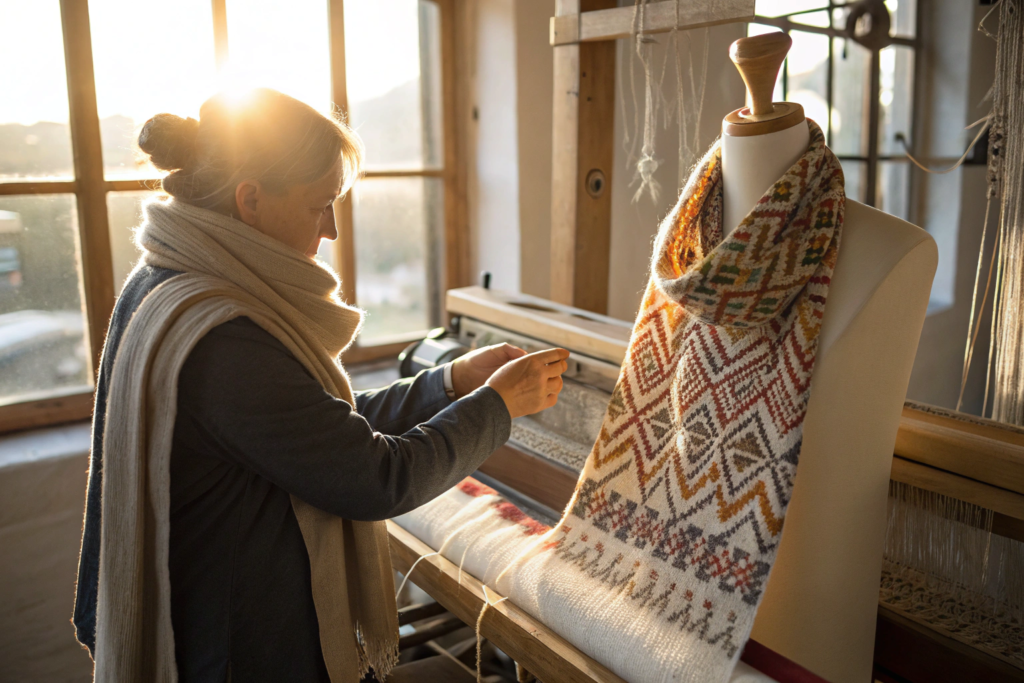
How Is Hand Looming Being Applied to Modern Scarf Design?
Hand looming is a slow process. A single scarf can take a day or more to weave on a traditional wooden loom. The weaver controls every thread. The tension, the beat, the selvedge. The result is a fabric with a character that a power loom cannot replicate. There are slight irregularities. The texture is richer. The drape is softer because the fibers are not stressed by high-speed machinery.
We work with hand-loom cooperatives in rural India and Nepal. The weavers use techniques passed down through generations. Our design team provides the patterns, the color references, and the quality standards. The weavers execute them on their looms. The collaboration is a genuine partnership. The weavers are paid fairly, above local market rates. Their cooperative status is verified. The scarf is tagged with the name of the weaver or the cooperative, adding a human connection that the end consumer values. If you are exploring hand-loomed textile sourcing for luxury brands, the social impact is as important as the product quality.
What Role Does Hand Block Printing Play in Sustainable Luxury?
Hand block printing uses carved wooden blocks to apply dye to fabric. Each color in the pattern requires a separate block. The printer aligns the blocks by eye, creating a continuous pattern across the scarf. The process is entirely manual. No electricity is used. The dyes can be natural or low-impact synthetics. The water consumption is minimal compared to digital or screen printing.
The beauty of hand block printing is its imperfection. The slight misregistrations, the variations in dye density, and the visible wood grain from the block are not defects. They are proof of the human hand. The 2026 sustainable luxury consumer understands this. She does not want a scarf that looks like it came from a machine. She wants one that looks like it came from a person. Hand block printing delivers this aesthetic while supporting artisan communities and minimizing environmental impact. Professional hand block print production for fashion accessories requires working directly with artisan groups who have the skill and the cultural heritage to execute the technique authentically.
Conclusion
The 2026 scarf trends for sustainable luxury brands are not about compromise. They are about elevation. Traceable organic and regenerative fibers tell a story that the consumer wants to hear. Recycled cashmere and silk offer a circular narrative without sacrificing hand feel. Natural and bio-based dyes provide color palettes with depth, soul, and a clean chemistry. Heritage craft techniques connect the consumer to the maker and preserve cultural knowledge.
What unites these trends is a fundamental shift in what luxury means. The old luxury was about rarity of material. The new luxury is about transparency of process. The consumer wants to know the journey of her scarf from fiber to finish. She wants to feel good about wearing it, both aesthetically and ethically. The brands that will succeed are the ones that can provide this transparency credibly, not as a marketing claim but as a verified reality.
At Shanghai Fumao, we have been developing sustainable scarves for luxury brands for over a decade. Our supply chain includes certified organic and regenerative fiber sources, recycled fiber suppliers with Global Recycled Standard certification, natural dye houses with tested fastness properties, and artisan cooperatives with verified social compliance. Our design team can translate these sustainable materials and techniques into a commercially viable collection that meets your brand’s aesthetic and margin requirements.
If you are planning a sustainable luxury scarf collection for 2026 and you need a manufacturing partner who understands both the sustainability landscape and the luxury quality standards, I encourage you to contact our Business Director Elaine at elaine@fumaoclothing.com. She can share our sustainable material swatch book, provide certification documentation, and discuss how we can bring your vision to life with integrity and transparency.