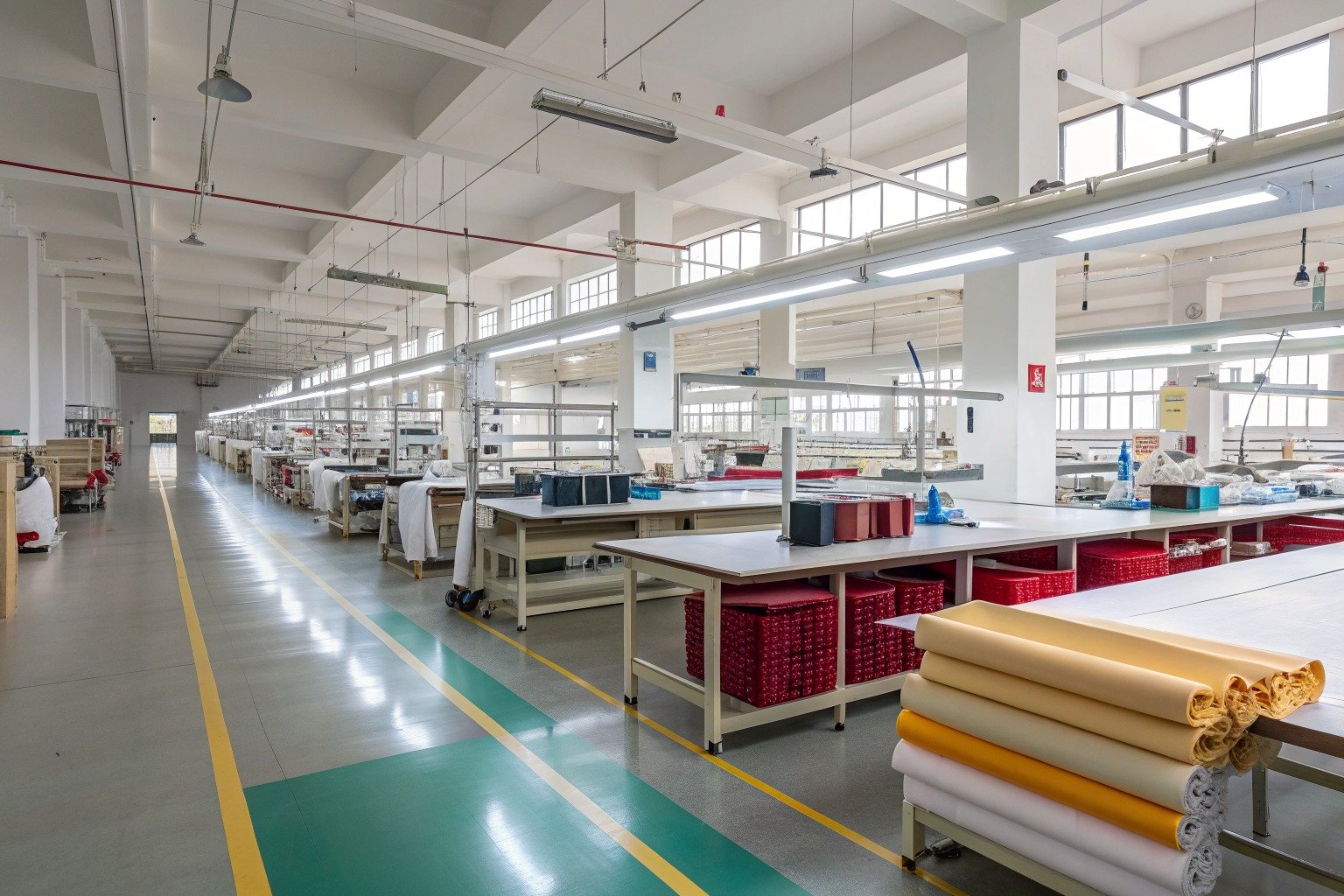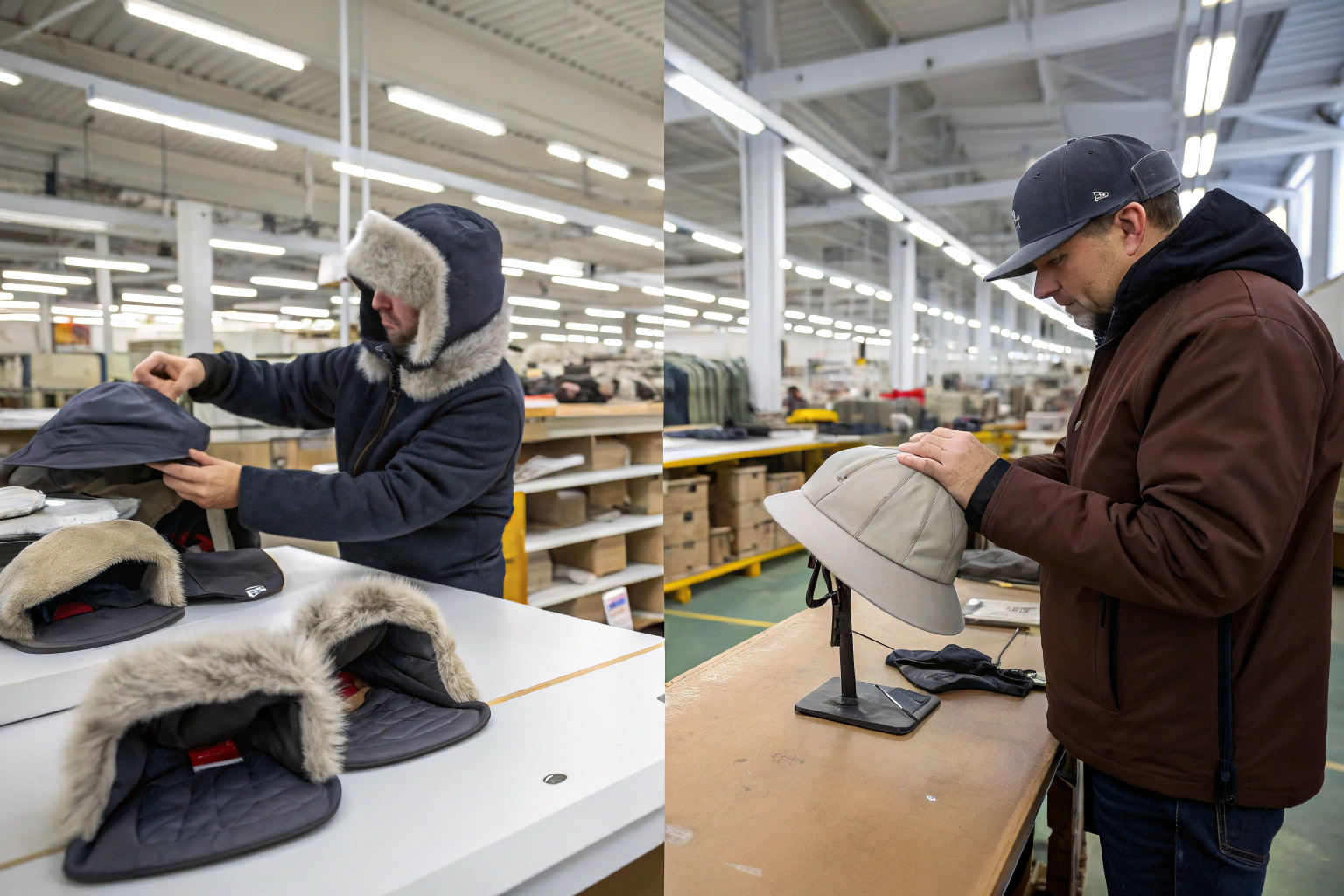
A buyer from a Pacific Northwest outdoor brand once sat in my office looking exhausted. He had been splitting his hat production between two factories for three years. A cold-weather factory in one province made his fleece beanies and insulated trappers. A rain hat factory in another province made his waterproof bucket hats and rain caps. The logistics were a constant headache. Two sets of shipping documents. Two quality standards to manage. Two factory relationships to maintain. When one factory delayed, it threw off his entire seasonal delivery to retailers who expected a complete collection in one shipment. He asked me if one factory could do both. I walked him onto our production floor and showed him insulation being sewn into trapper hats on one line while seam-sealing tape was being applied to rain hats on the very next line.
Yes, a properly equipped factory can produce both cold-weather hats and rain hats under one roof. The capability requires separate material supply chains for insulation and waterproofing, sewing lines configured for different fabric weights and construction techniques, and quality control protocols specific to thermal performance and water resistance. At Shanghai Fumao, we run both categories daily, often producing a winter beanie and a rain bucket hat for the same brand in the same week.
The ability to produce both hat types is not about having a magical universal machine. It is about having the right equipment, the right materials, and a workforce trained in both insulated and waterproof construction. Let me explain how we make this work and why it matters for your brand.
What Are the Essential Production Differences Between Cold-Weather and Rain Hats?
Cold-weather hats and rain hats solve fundamentally different problems. A cold-weather hat exists to trap body heat. A rain hat exists to repel external water. These opposite functions require opposite material properties and construction techniques. A factory that understands both understands why a fleece beanie and a waterproof rain cap share almost nothing except the general category of headwear.
The cold-weather hat uses insulation. The rain hat uses waterproofing. Insulation works by creating trapped air spaces that slow heat loss. Waterproofing works by creating a continuous barrier that water cannot penetrate. These two functions require different fabrics, different seam constructions, different trims, and different quality tests. A production line set up for one cannot simply switch to the other without deliberate changes.
How Do Insulation Materials and Waterproof Fabrics Require Different Handling?
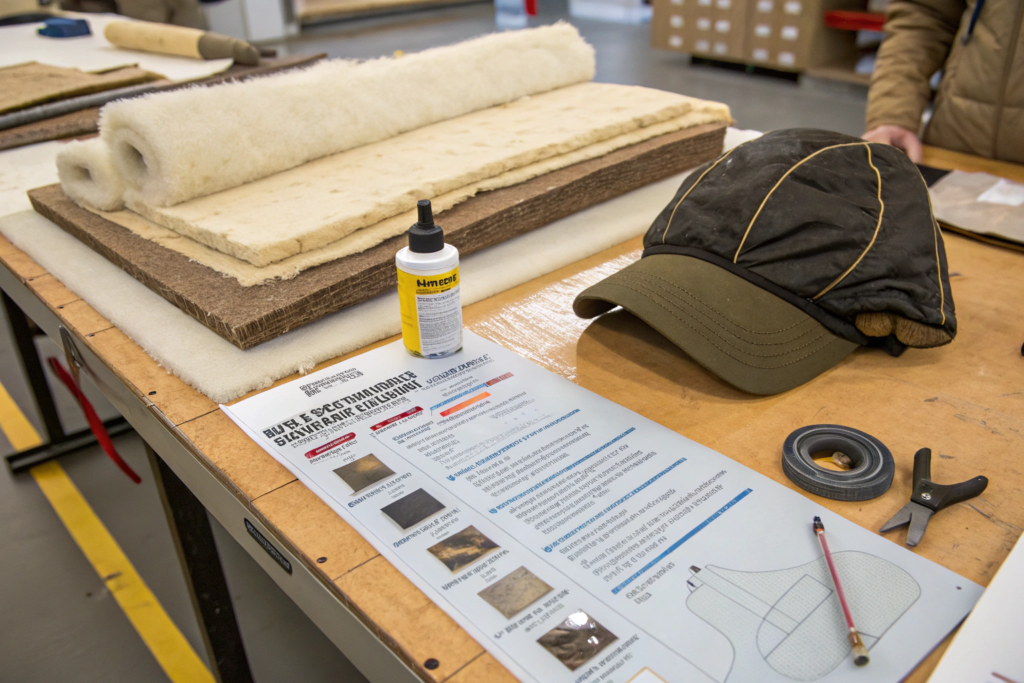
Insulation materials like fleece, Thinsulate, PrimaLoft, and shearling are thick, lofty, and compressible. They require a sewing machine with a higher presser foot lift to accommodate the material thickness. The feed mechanism must handle the material without stretching or compressing the insulation unevenly. Cutting insulation requires a band knife or a die cutter that can handle thick stacks without fusing the synthetic fibers from friction heat.
Waterproof fabrics like coated nylon, laminated polyester, and DWR-treated cotton are thin, slippery, and easily damaged. A needle hole in a waterproof fabric creates a leak point. Seam-sealing tape must be applied with a hot-air taping machine that bonds the tape over every stitch line. The sewing machine needle must be sharp and fine to minimize hole size. The thread must be a water-resistant bonded polyester. The presser foot pressure must be light to avoid marking the fabric surface. These are not interchangeable skills. A sewer trained on bulky fleece will struggle with slippery waterproof nylon, and vice versa. Professional technical textile handling for different material types is a specialized knowledge area that our production team has developed over years of working with both material families.
Why Do Seam Construction and Sealing Techniques Differ Completely?
A cold-weather hat seam exists to join insulation panels without creating a cold spot. The seam is typically a flatlock or a butted seam that minimizes bulk. There is no concern about water penetration. The seam can breathe. In fact, breathability is often desirable in a cold-weather hat to prevent moisture buildup from sweat.
A rain hat seam exists to prevent water from reaching the wearer’s head. Every stitch hole is a potential leak. The seam must be sealed. This is done with seam-sealing tape applied with heat and pressure over the stitch line on the inside of the hat. The tape melts into the fabric and the thread, creating a waterproof barrier. The seam construction itself is typically a simple lockstitch or a topstitched seam that lies flat enough to accept the tape. A French seam or a flat-felled seam adds bulk and makes taping difficult. The seam allowance must be consistent because the taping machine applies a fixed-width tape. An inconsistent seam allowance results in tape that misses the edge of the seam, leaving exposed stitch holes. Understanding waterproof seam sealing techniques is essential for producing rain hats that actually keep the wearer dry.
How Does Our Factory Layout Support Both Product Categories?
The physical layout of our factory is designed for multi-category production. We do not mix cold-weather and rain hat production on the same line at the same time. Each category has its dedicated zone with the appropriate equipment, material storage, and work-in-progress flow.
This zoned approach prevents cross-contamination. Fleece fibers floating in the air will cling to the seam-sealing tape on a rain hat. Waterproof coating particles from cutting will contaminate the soft finish of a fleece beanie. Physical separation eliminates these quality risks. The zones are adjacent, so a single project manager can oversee both simultaneously, but they are operationally distinct.
What Dedicated Equipment Does Each Category Require?
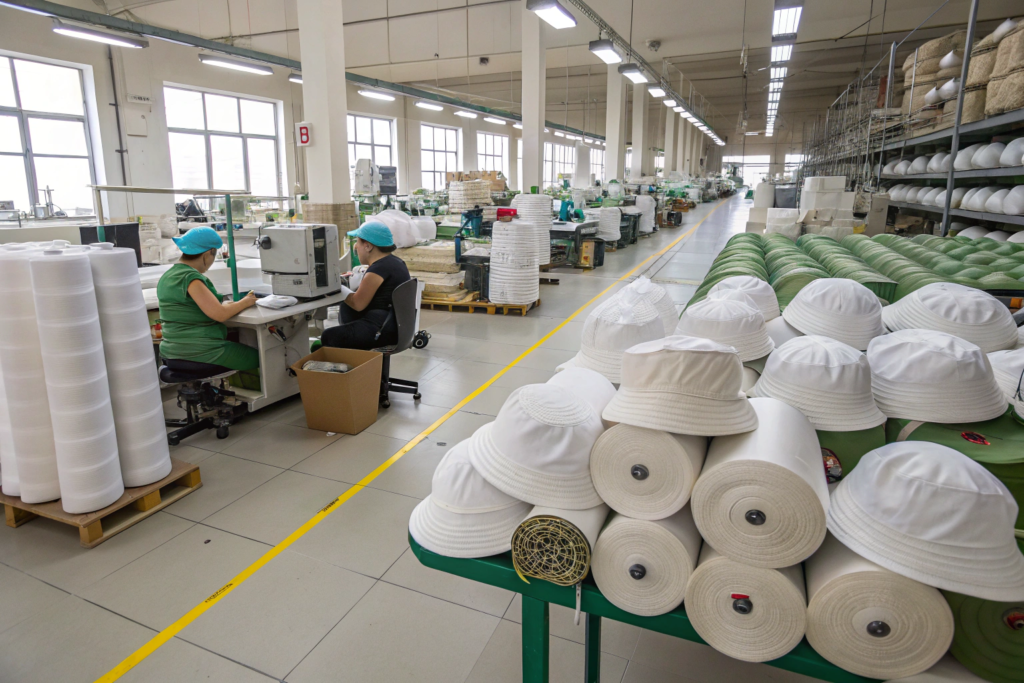
The cold-weather zone is equipped with walking-foot sewing machines that handle thick, lofty materials without shifting. Die-cutting presses cut insulation panels to precise shapes. Stuffing tables allow workers to insert insulation batts between shell and lining fabrics. The zone also has steam irons for shaping wool and felt components used in some winter hats.
The rain hat zone is equipped with single-needle lockstitch machines set up for lightweight slippery fabrics. The critical equipment is the hot-air seam-sealing machine. This machine applies a waterproof tape over every sewn seam. The tape is fed from a roll, heated, and pressed onto the seam in one continuous operation. The machine requires precise calibration. Temperature, speed, and pressure must be set correctly for the specific fabric and tape combination. Too little heat, and the tape does not bond. Too much heat, and the fabric melts. We also have a fabric tension tester to verify that the sealed seam meets the waterproof standard. Our investment in specialized equipment for technical apparel manufacturing is what allows us to produce both categories to a professional standard.
How Are Operators Trained for Both Insulated and Waterproof Construction?
Cross-training is the foundation of our labor flexibility. A sewer hired for the cold-weather line will, after demonstrating proficiency, receive training on the rain hat line. The training covers the different fabric handling techniques, the different machine settings, and the different quality standards.
The cross-training program runs continuously. We do not wait until the cold-weather season ends to train those sewers on rain hats. By then, it is too late. Training happens during slower production periods so that when demand shifts, the workforce can shift with it. An operator who can sew a fleece earflap on Monday and seam-seal a rain hat brim on Tuesday is a valuable asset to the factory and a guarantee of quality consistency for our clients. Professional cross-training in garment manufacturing is a strategic investment that pays off in production flexibility and labor retention.
What Material Sourcing Challenges Exist for Both Categories?
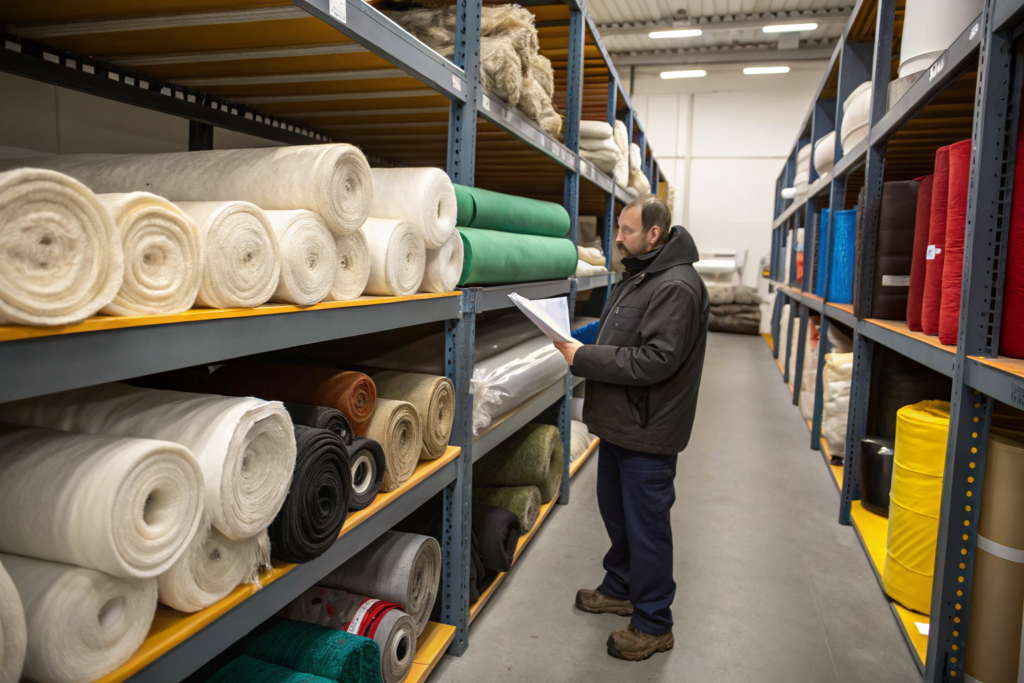
Producing both cold-weather and rain hats means maintaining two distinct material supply chains. The suppliers, the certifications, the minimum order quantities, and the lead times are different for each material category. Managing this complexity is a core competency of a multi-category factory.
At Shanghai Fumao, our procurement team maintains relationships with insulation suppliers, waterproof fabric mills, trim manufacturers, and testing laboratories. We do not buy materials on the spot market for each order. We have established supply agreements that give us priority access to materials and stable pricing.
How Do You Source Insulation That Meets Temperature Ratings?
Insulation for cold-weather hats is often specified by temperature rating or gram weight. Thinsulate, for example, comes in 40-gram, 70-gram, 100-gram, and higher weights. The higher the gram weight, the warmer the insulation. The specification must match the hat’s intended use. A lightweight beanie for autumn jogging needs 40-gram insulation. A trapper hat for Arctic conditions needs 200-gram insulation.
The insulation must also meet flammability standards, especially for children’s products. It must be breathable to prevent sweat buildup. It must be compressible so the hat can be packed. We source insulation from certified suppliers who provide technical data sheets and compliance certificates. The insulation is tested for thermal resistance using the CLO measurement system. A CLO value of 1.0 equates to the insulation required to keep a resting person comfortable at room temperature. Higher CLO values indicate greater warmth. Understanding thermal insulation ratings for apparel helps you specify the correct insulation for your target customer.
What Certifications Should Waterproof Fabrics Have?
Waterproof fabrics for rain hats should have a hydrostatic head rating, measured in millimeters. A fabric rated at 1,500 millimeters will resist light rain. A fabric rated at 10,000 millimeters will withstand heavy rain and wind-driven water pressure. The seams must also be waterproof, which is a function of the tape and the taping process, not just the fabric.
For the European market, waterproof fabrics often need to be free of perfluorinated compounds, or PFCs, due to REACH regulations and environmental commitments. We source PFC-free DWR treatments and recycled waterproof fabrics for brands with sustainability requirements. The fabric should also have a breathability rating, measured in grams of water vapor transmitted per square meter per 24 hours. A breathable waterproof fabric prevents the wearer from feeling clammy inside the hat. Ratings of 5,000 g/m²/24hr or higher indicate good breathability. Professional waterproof fabric specifications for outdoor gear are essential knowledge for developing a rain hat that performs as claimed.
How Does Quality Control Differ Between Insulated and Waterproof Hats?
The quality standards for cold-weather hats and rain hats share almost no common criteria beyond basic sewing quality. A perfectly sewn rain hat that leaks is a failure. A perfectly sewn cold-weather hat that is not warm is a failure. The QC process must evaluate the functional performance that defines each category.
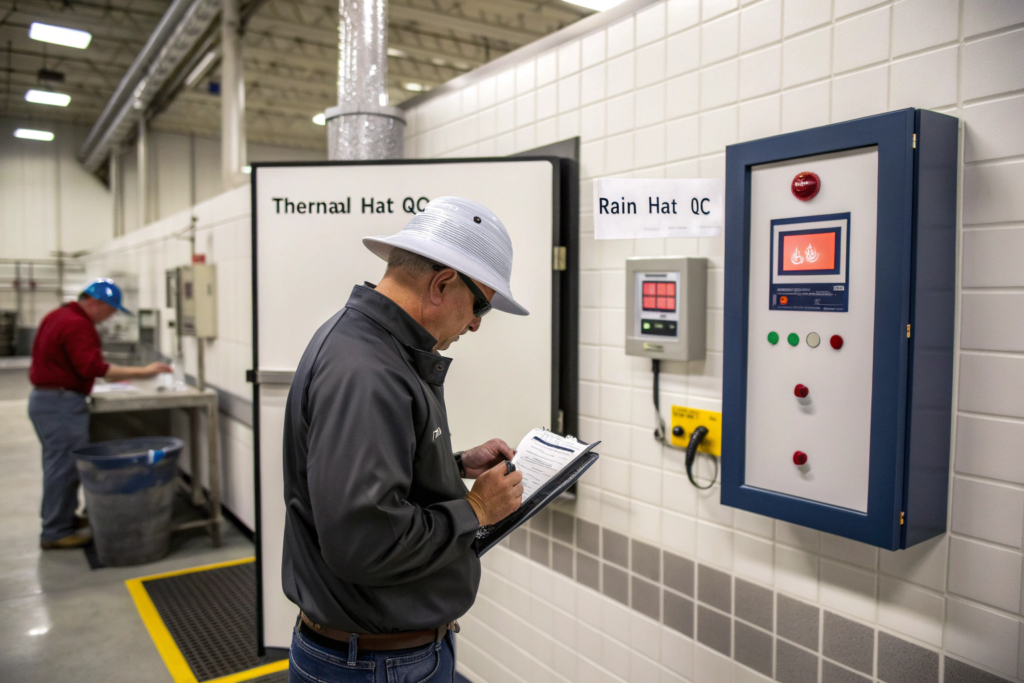
At our factory, the QC checklists are category-specific. A cold-weather hat is checked for insulation distribution, thermal consistency, and lining comfort. A rain hat is checked for seam tape adhesion, hydrostatic resistance, and DWR performance. The inspectors are trained in both standards, but they apply the correct standard to the correct product.
What Thermal Performance Tests Are Conducted on Cold-Weather Hats?
We test insulation distribution by weighing the finished hat and comparing it to the target weight. Significant deviation indicates inconsistent insulation fill. We also cut open a sample from each production lot to visually inspect the insulation layer. It must be evenly distributed, with no thin spots at the crown peak or the ear flaps where cold would penetrate.
A thermal imaging camera is used during product development to identify cold spots in a hat design. The hat is placed on a heated head form in a cold chamber. The camera reveals where heat is escaping. The design is adjusted to reinforce those areas. During bulk production, we perform a manual loft check. The inspector compresses the hat and releases it. The insulation must recover to its full loft within seconds. Insulation that stays compressed has lost its thermal effectiveness. Understanding thermal testing for cold-weather apparel ensures your product lives up to its warmth claims.
How Is Waterproofing Verified on Rain Hats?
Every rain hat design undergoes a hydrostatic head test on the fabric and a seam leakage test on the sealed seams. For bulk production, we perform a random sample test. The hat is placed on a head form in a spray chamber. Water is sprayed at a specified pressure and duration. After the test, the inside of the hat is inspected for any moisture. A single drop of water inside the hat is a test failure.
The seam tape adhesion is also tested. A peel test measures the force required to separate the tape from the fabric. The adhesion must exceed a minimum threshold to ensure the tape will not delaminate during the hat’s service life. The DWR coating is tested by spraying water on the outer fabric surface. The water must bead up and roll off. If the fabric absorbs water, the DWR has failed, and the fabric will become waterlogged even if the membrane underneath remains waterproof. A waterlogged rain hat is heavy, cold, and uncomfortable. Professional waterproof testing standards for outdoor products provide the objective criteria for pass-or-fail decisions.
Conclusion
One factory can absolutely produce both cold-weather and rain hats. The capability requires dedicated production zones, the right equipment for both insulation and waterproofing, a cross-trained workforce, dual material supply chains, and category-specific quality control protocols. At Shanghai Fumao, we have all of these in place.
For a brand, consolidating cold-weather and rain hat production with a single factory delivers concrete benefits. One project manager for your entire hat program. One set of shipping documents and one consolidated shipment. One quality philosophy applied consistently across your collection. Lower total landed cost from combined freight. And the strategic advantage of a factory that understands your full product range, not just one seasonal segment.
If you are currently splitting your hat production between a cold-weather specialist and a rain gear specialist, and you are tired of the coordination overhead and the inconsistent quality, I invite you to contact our Business Director Elaine at elaine@fumaoclothing.com. Send her your hat designs, your material preferences, and your seasonal volume projections. She will provide a consolidated quotation, coordinate sampling for both categories, and demonstrate how a single-factory strategy can simplify your sourcing and strengthen your brand.