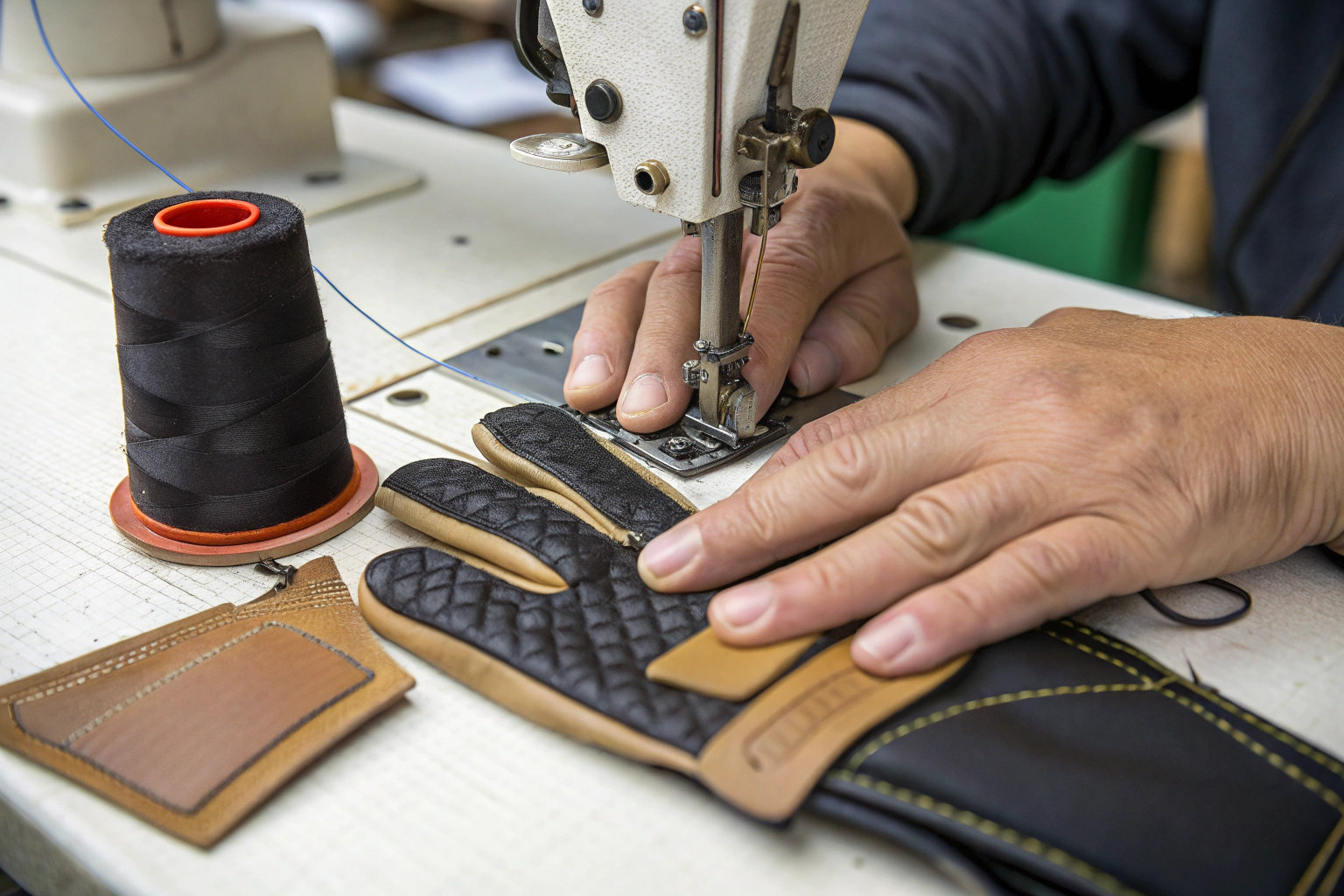
A hardware store chain buyer once showed me a customer return that haunted his quality metrics. A pair of work gloves returned after three weekends of garden use. The glove body was fine. The palm was fine. The fingertips had worn through completely on the thumb and index finger. The customer review attached to the return read, "Great gloves, if you don’t use your fingers." That single review, amplified by the retailer’s review platform, impacted sales of that glove SKU for six months. The buyer asked me how to prevent fingertip failure. He needed a solution that was durable, comfortable, and cost-effective. The answer was not just a thicker glove. It was a designed reinforcement strategy.
To ensure a custom glove order has reinforced fingertips for durability, you must specify the reinforcement method in the technical specification sheet, select appropriate reinforcement materials for the glove’s intended use, validate the reinforcement through standardized abrasion testing, and confirm through a pre-production sample that the reinforcement does not compromise dexterity. The four most common reinforcement methods are double-layer fabric, leather or synthetic patches, silicone printing, and wrapped fingertip construction.
At Shanghai Fumao, we produce gloves for work, sports, and fashion brands. Fingertip durability is the number one performance complaint across all categories. A glove that fails at the fingertips is a glove that failed its primary purpose. Let me explain exactly how we engineer fingertip durability into every custom glove order.
What Are the Most Effective Fingertip Reinforcement Methods?
There is no single best reinforcement method. The right method depends on the glove’s intended use, the base material, the required dexterity, and the target price point. A method that works perfectly for a heavy-duty work glove may be too bulky for a precision sports glove. A method that is ideal for a touchscreen-compatible driving glove may not survive a construction site.
At our factory, we guide clients through the trade-offs. We ask what the glove will be used for, what the primary failure mode has been on previous versions, and what the customer expects to pay. The answers lead us to the appropriate reinforcement strategy.
When Is a Leather or Synthetic Patch the Right Choice?
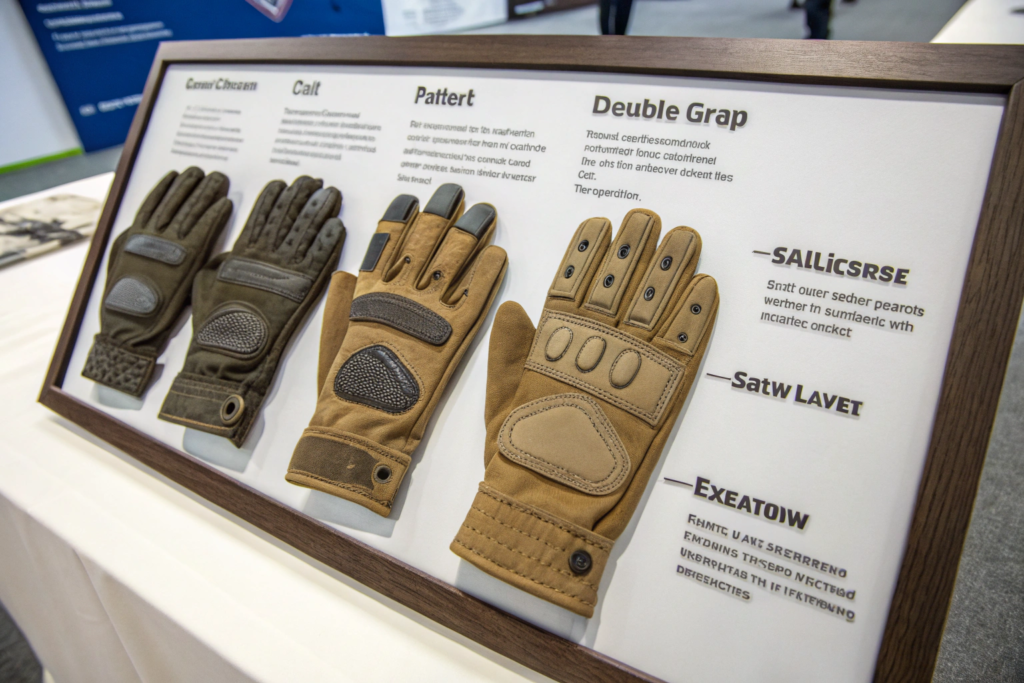
A leather or synthetic patch sewn onto the fingertip is the most durable reinforcement method available. It is the standard for heavy-duty work gloves, tactical gloves, and any application where abrasion against rough surfaces is the primary wear mechanism. The patch absorbs the abrasion instead of the base fabric.
We typically use full-grain leather, split suede, or a high-abrasion synthetic like Clarino or Amara for the patches. The patch is cut to cover the fingertip pad and wrap slightly over the tip. It is sewn in place with a lockstitch using heavy-duty bonded nylon or polyester thread. The stitch line must be positioned away from the highest wear area. A stitch line across the center of the fingertip pad will abrade and fail before the patch material wears through. We place the stitch line along the sides of the finger where abrasion is lower. The patch edges are skived, which means thinned down, to eliminate a bulky ridge that the wearer would feel. A patch that is too thick or has harsh edges will cause discomfort and reduce dexterity, defeating the purpose of the reinforcement. If your glove application involves high-abrasion work environments, a leather or synthetic patch is the most protective option available.
Why Is Silicone Printing a Lightweight Alternative for Grip and Wear?
Silicone printing applies a pattern of liquid silicone directly onto the glove fabric. The silicone cures to a flexible, high-friction, abrasion-resistant surface. It is thinner and lighter than a sewn patch. It adds grip as well as durability. It works well on lightweight gloves where a sewn patch would be too bulky.
Silicone printing is commonly used on sports gloves, cycling gloves, and lightweight work gloves. The pattern can be customized. Dots, lines, honeycomb, or a solid coating. The pattern affects both grip performance and durability. A solid coating provides maximum abrasion resistance but can feel stiff. A dot pattern provides flexibility and ventilation but less abrasion protection. We advise clients to test different patterns on a pre-production sample. The silicone itself can be formulated for different hardness levels, measured on the Shore A scale. A softer silicone provides more grip on smooth surfaces. A harder silicone provides better abrasion resistance. The formulation is adjusted based on the glove’s primary use case. Silicone printing also allows for branding integration. A logo or brand name can be incorporated into the silicone print pattern on the fingertip, turning a functional reinforcement into a brand touchpoint. Understanding silicone printing for textile applications helps you specify the right pattern and formulation for your glove.
How Do You Specify Fingertip Reinforcement in Your Tech Pack?
The best reinforcement idea in the world is worthless if it is not communicated clearly to the factory. A vague instruction like "make the fingertips stronger" will result in whatever the factory interprets that to mean, which may not be what you intended. The technical specification sheet, or tech pack, is the legally binding document that defines exactly what you will receive.
At Shanghai Fumao, we encourage clients to be as specific as possible. We would rather receive an overly detailed tech pack than a vague one. We can always suggest modifications for manufacturability or cost optimization. We cannot read your mind. If you do not specify the reinforcement method, we will use our standard method for that glove type, which may or may not match your expectation.
What Material Specifications Must Be Included for Reinforcement?
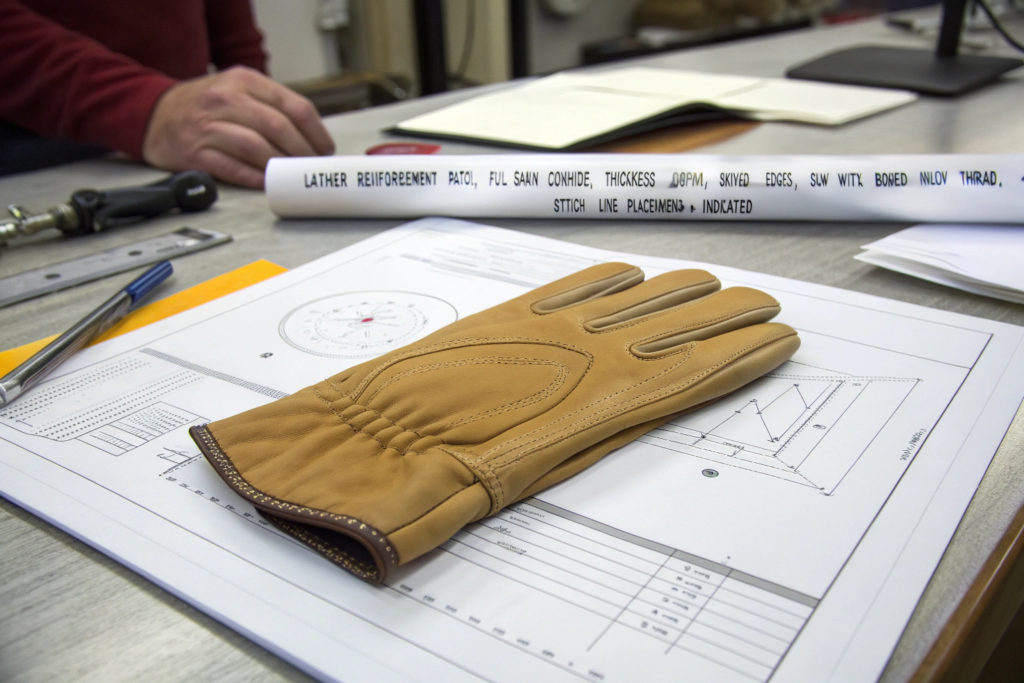
The tech pack must specify the reinforcement material with the same precision as the glove body material. Do not write "leather patch." Write "full-grain cowhide leather patch, thickness 0.8mm to 1.0mm, color to match glove body, skived edges, abrasion resistance minimum 50,000 cycles on Martindale test." This level of detail leaves no room for substitution or interpretation.
Include the material composition, the thickness or weight, the color, and any performance standards the material must meet. If the reinforcement uses the same material as the glove body but doubled, specify the number of layers and the lamination method. If the reinforcement uses a different material, specify why that material was chosen and what performance characteristics are critical. Attach a physical swatch of the approved reinforcement material to the tech pack. The swatch becomes the reference standard against which bulk production is judged. A photo is helpful. A physical swatch is definitive. Professional tech pack creation for apparel manufacturing is the most important skill a brand can develop to ensure consistent production quality.
How Should Stitching and Placement Be Detailed in the Design?
The placement of the reinforcement is as important as the material. The tech pack must include a diagram showing exactly where the reinforcement goes. Which fingers are reinforced? Thumb and index only, which is the most common wear pattern? All five fingers? The fingertips only, or the entire finger pad to the first knuckle? The diagram must be clear and dimensioned.
The stitching specification must be equally detailed. Stitch type, typically a lockstitch for reinforcement patches. Thread type and weight, typically bonded nylon or polyester with a minimum tensile strength. Stitch density, typically 5 to 7 stitches per inch for a reinforcement patch. Stitch line placement, specifically offset from the center of the fingertip pad. Thread color, typically matching the reinforcement material unless contrast stitching is a design feature. These details seem minor when you are designing the glove. They become major when a stitch line fails in the customer’s hand because it was placed in the high-wear zone. If you are not sure what specifications to use, ask us. We can provide our standard specifications for different reinforcement methods based on decades of production experience. Understanding industrial sewing specifications ensures your design intent translates into a durable product.
How Do You Test Fingertip Reinforcement Before Bulk Production?
Specifying the reinforcement is the first step. Proving it works is the second step. Do not wait until 10,000 gloves arrive at your warehouse to discover that the reinforcement fails after minimal use. Test the reinforcement on a pre-production sample before you approve bulk production.
At Shanghai Fumao, we offer in-house abrasion testing on pre-production samples. We also accept test reports from independent third-party laboratories if the client requires certified testing for regulatory or marketing claims. The testing validates that the chosen reinforcement method and materials will deliver the expected durability for the glove’s intended use.
What Is the Martindale Abrasion Test and Why Does It Matter?
The Martindale test is the industry standard for measuring fabric abrasion resistance. A circular specimen of the test material is rubbed against a standard abrasive surface in a controlled, repeating pattern. The test counts the number of cycles until the fabric shows a specified degree of wear, such as thread breakage or the appearance of a hole.
For a glove fingertip reinforcement, we prepare a test specimen that replicates the actual fingertip construction, including the base fabric, the reinforcement material, and the stitching. The specimen is mounted on the Martindale machine and tested. The result is a numerical value, the number of cycles to failure. This number allows you to compare different reinforcement methods objectively. A leather patch might achieve 80,000 cycles. A double-layer fabric might achieve 30,000 cycles. A silicone print might achieve 15,000 cycles. Each number corresponds to a different level of durability and a different appropriate use case. If your glove is marketed as "heavy-duty work glove," the Martindale result supports or undermines that claim. Understanding Martindale abrasion testing standards helps you set a minimum performance requirement in your tech pack.
How Do You Conduct a Real-World Wear Trial for Validation?
The Martindale test provides a standardized, repeatable measure of abrasion resistance. It does not fully replicate the complex movements and stresses of a human hand performing real tasks. A real-world wear trial complements the lab test with actual user feedback.
We recommend a structured wear trial. Produce a small batch of pre-production gloves with the approved reinforcement. Distribute them to a representative group of users who perform the glove’s intended tasks. Ask them to wear the gloves for a specified period and then provide structured feedback. Measure the remaining fingertip thickness with a thickness gauge before and after the trial. Photograph the fingertips at standard magnification. Record any failures and the usage hours at which they occurred. This real-world data either confirms the lab test results or reveals a failure mode that the lab test missed. For example, the Martindale test may show excellent abrasion resistance, but a wear trial may reveal that the reinforcement stitching abrades the adjacent fingers during certain hand movements. This interaction would not appear in a single-material lab test. A well-designed product wear testing protocol provides the real-world validation that gives you confidence to proceed to bulk production.
How Does Our Pre-Production Sample Process Guarantee Reinforcement Quality?
The pre-production sample is the final quality gate before bulk production begins. It is the exact glove you will receive, made with the exact materials, the exact construction, and the exact reinforcement specified in your approved tech pack. Approving the pre-production sample is your commitment that the factory’s interpretation of your specification matches your expectation.
At Shanghai Fumao, we will not start bulk production until you approve the pre-production sample in writing. This is a protection for you and for us. It ensures that there is an agreed physical standard against which the bulk production can be inspected.
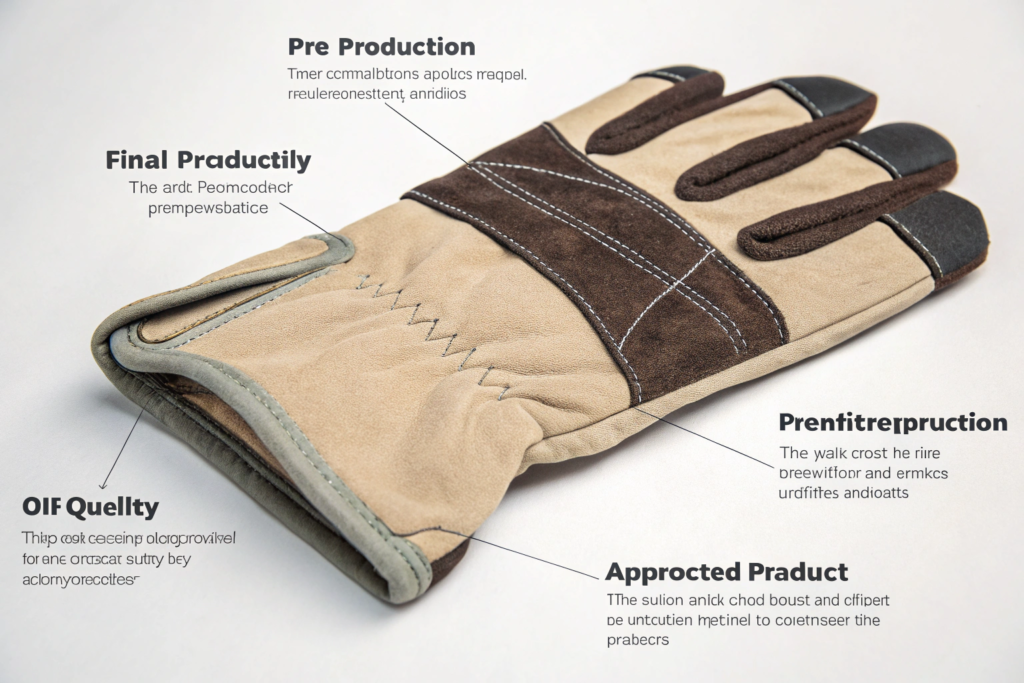
What Should You Inspect on a Pre-Production Glove Sample?
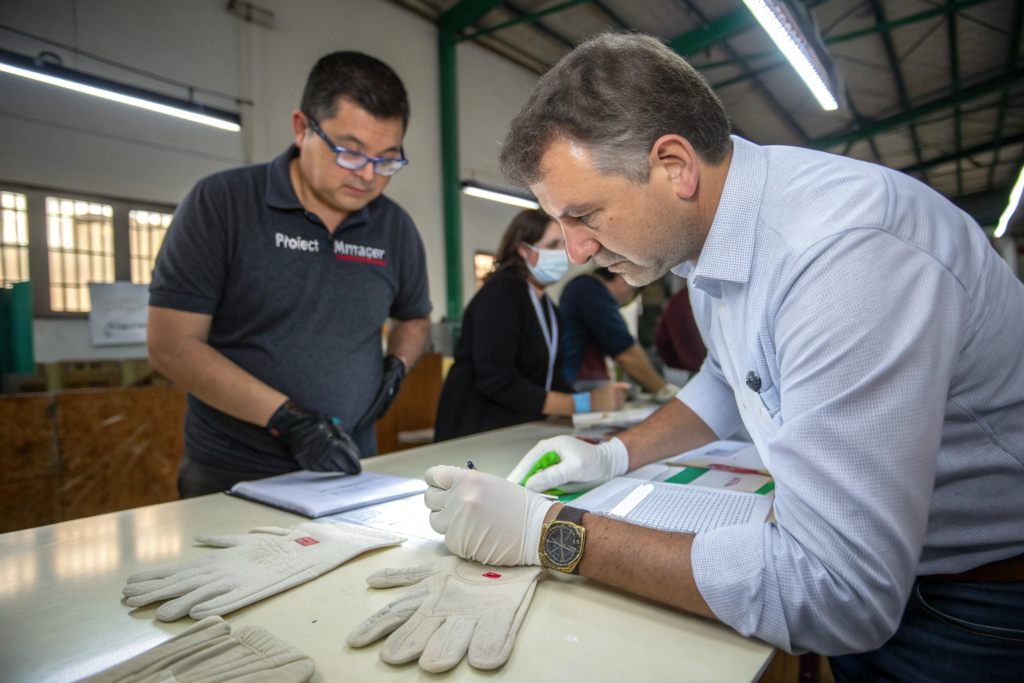
Inspect the pre-production sample methodically. Start with the reinforcement placement. Is it exactly where the tech pack diagram showed? Are the correct fingers reinforced? Is the coverage area correct? Check the reinforcement attachment. Pull on the patch. Does it lift at the edges? Are the stitches tight and even? Is the stitch line in the correct location, away from the high-wear zone?
Check the reinforcement comfort. Put the glove on. Flex your fingers. Make a fist. Pick up a small object like a pen. Does the reinforcement restrict your movement? Do you feel a bulky ridge at the patch edge? Is the inside of the fingertip smooth against your skin? Check the reinforcement appearance. Is the color correct? Is the surface texture correct? Are there any visible defects in the material or the stitching? Take detailed notes. Photograph any issues. Send the feedback to the factory in a structured format. If the sample meets all specifications, approve it in writing with the date and your signature. This approved sample is sealed and retained by both you and the factory. It is the reference for resolving any future quality disputes. Professional pre-production sample approval procedures protect your order from misinterpretation and unauthorized changes.
How Is the Approved Sample Used to Control Bulk Quality?
Once the pre-production sample is approved, it becomes the master reference for bulk production. Our QC team uses it during inline inspection. The production supervisor uses it during shift start-up to confirm the line is set up correctly. The final QC inspector uses it during AQL sampling.
Every reinforcement attribute is compared to the approved sample. Material. Color. Thickness. Placement. Stitch type. Stitch density. Stitch line location. Edge finishing. If bulk production deviates from the approved sample, the deviation is caught and corrected. The approved sample removes subjectivity from quality control. The question is not whether an inspector thinks the reinforcement looks acceptable. The question is whether it matches the approved sample. This objective standard ensures consistency across the entire production run. Your 10,000th glove has the same fingertip reinforcement as your first glove because both are compared to the same master reference. This master sample quality control process is the foundation of consistent production quality at scale.
Conclusion
Ensuring a custom glove order has reinforced fingertips for durability is a process that spans specification, validation, and production control. Specify the reinforcement method, material, placement, and stitching in exact detail in your tech pack. Choose from leather or synthetic patches for maximum durability, silicone printing for lightweight grip, or double-layer fabric for durability with minimal bulk. Validate the reinforcement through Martindale abrasion testing and real-world wear trials before committing to bulk production. Approve a pre-production sample that becomes the master reference for all subsequent quality control.
Reinforced fingertips are not a premium feature reserved for the most expensive gloves. They are a fundamental requirement for any glove that will be worn for work, sport, or frequent use. A glove that fails at the fingertips fails the customer. The cost of a proper reinforcement is a small fraction of the cost of a customer return, a negative review, or a damaged brand reputation.
At Shanghai Fumao, fingertip reinforcement is a standard element of our glove development process. Our design team can recommend the optimal reinforcement method for your glove’s intended use and price point. Our sample room can produce pre-production samples with your specified reinforcement for your testing and approval. Our QC team inspects every bulk production run against the approved sample to ensure consistency.
If you are developing a glove that requires durable fingertips and you want a factory that treats reinforcement as an engineering decision, not an afterthought, please contact our Business Director Elaine at elaine@fumaoclothing.com. Send her your glove design, your durability requirements, and your target price. She will provide reinforcement recommendations, a sample timeline, and a quotation that includes all testing and validation. Your customers deserve gloves that work as hard as they do, down to the very tips of their fingers.